Displaying items by tag: Peter Malone's Movie Reviews
Door with Seven Locks, The
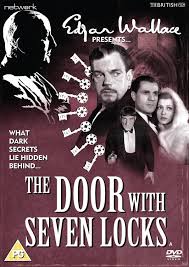
THE DOOR WITH SEVEN LOCKS
UK, 1940, 86 minutes, Black-and-white.
Leslie Banks, Lilli Palmer, Romilly Lunge, Gina Malo, Richard Bird, David Horne, Cathleen Nesbitt, R. Montgomery.
Directed by Norman Lee.
A British thriller of the 1940s. There is a great deal of plot because the film is based on an Edgar Wallace novel.
The film opens with a set-up, an elderly man dying, wanting his usual and to be buried with him to be ready for the bride of his son when he marries. And, as caution, the door has seven locks. They are put in the safekeeping of his lawyer.
However, the audience sees that there is a sinister group led by Leslie Banks as the Spanish doctor, accent and all, who functions locally but also has a huge Museum with souvenirs of torture over the ages, presided over by a picture of Torquemada. There is a couple, a chauffeur, and a very sinister butler (the only film credit for R. Montgomery, surprisingly because he is tall, a sinister face that would be at home with the Munsters or in the Addams Family).
The money is to be inherited by the son of the man who dies, but with an ailment, he lives overseas. The other possible inheritor is a young woman, June, played vigorously by Lilli Palmer, who has lived in Canada.
The action takes place in the present when June receives a message to come to a mysterious stranger in a sanatorium who explains something of the keys and then is shot. Jude is imprisoned and every aspect of the sanatorium and disappears. She then goes to Scotland Yard where there is an attractive detective who is just resigning and his partner who is astute but always nodding off, the sympathetic lawyer explaining to police at Scotland Yard the situation with the seven keys in his keeping, the young man overseas but corresponding with letters.
The rest of the action takes place at the mysterious country mansion, managed by the doctor. There is a visit to his museum – and one of his severe implements trapping him at the end. There is also the tomb in the door with the seven locks.
Gradual revelations of what has been going on, the conspiracy, the reason why the members of the conspiracy are still hanging round, the challenge with June arriving, and the detectives, and a buildup to the various fights, shootouts, and the torture chamber.
And some twists at the end, especially concerning the younger son as well as the lawyer.
Elliot Loves
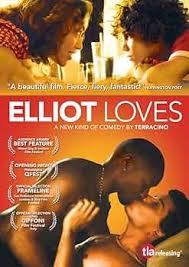
ELLIOT LOVES
US, 2012, 93 minutes, Colour.
Fabio Costprado, Quentin Davis Araujo, Elena Goode, Robin de Jesus, Antoni Parowski, Monte Bezell.
Directed by Terracino.
The film is described as a coming-of-age story. However, it is much more complex than that.
The central character is Elliot (and many explain to him that in German it means loved by God. His mother comes from the Dominican Republic, his father a local New Yorker who has abandoned mother and child. The film is very strong with its New York atmosphere.
The film continually moves from Elliot as a little boy, living with his mother, at home, dealing with her many boyfriends and bad choices, at school, to Elliot as a 20-year-old, living on the streets of New York, hustling, male clients, from his mother, but desperately wanting to be someone and to have someone to love him.
The two actors playing Elliot are both very persuasive in their roles, a surprising performance by the little boy, Quentin Davis Araujo. He is seen initially as very young, in the bathroom, performing a routine of a television ad for a hair lotion. An initial indication that the focus will be on Elliot as gay.
Elena Goode is very convincing as the mother, young, inexperienced, desperate, making wrong choices with men, treated badly, abandoned. She has a love for her son but is erratic in her attitudes towards him building up to the 15-year-old Elliot very angry and walking out from home.
In the present, the narrative is more as expected from this kind of story, though Elliot is certainly a very lively and engaging personality, his clients and casual sex, going to bars, being picked up and imagining that this relationship will be the one, continually disappointed, confiding in some of his friends, but, with his memories and his disappointments, ultimately coming to some kind of decision that he should do something more with his life – and find a reconciliation with his mother.
In some ways a conventional story but, with some persuasive characterisations making the story come more alive. (There is an interesting sequence where Elliot, with something of a Catholic background, goes into a church to sit and pray, looking for a sign – and a young priest approaching and then telling him that the church is closed – and Elliot noting that God is open 24/7.)
Chasing Pavement

CHASING PAVEMENT
US, 2015, 82 minutes, Colour.
Remy Mars, Tokio Sasaki, Antonio Biaggi, Zekee Silos.
Directed by Matthew Doyle.
A summary of the plot written by the writer-director, Matthew Doyle, for the IMDb.
Chasing Pavement stars Remy Mars as Elijah Young, an 'urban' porn star who is preparing to leave the adult entertainment industry and start a new career as a chef. His new roommate, Takeshi, played by Tokio Sasaki, is a Japanese immigrant who is looking for a new start in the information technology field. Takeshi, who feels completely invisible in the United States, becomes obsessed with his extremely visible flatmate. Takeshi's obsession culminates in a violation of boundaries that brings the two together for a moment of intimacy that neither will soon forget. The movie also stars Antonio Biaggi as Bryson Colon, a man with a troubled past who frequently hires Elijah as an escort, but wants much more.
A small budget, brief film, introducing the audience to a gay world (or portraying a gay world for the gay audience). It has much more substance to it, the characters, themes and exploration of themes, than might be expected. In fact, for a non-gay audience, it is a fairly calm and more objective portrayal of the characters and their interactions, helping for understanding the lives of these characters.
The central character is a former porn star, seen signing a contract but then moving back to New York and wanting to start a new life as a chef. At a takeaway, he encounters a Japanese migrant behind the counter who asks him for some accommodation. The Japanese man feels alone and unseen in the US and has ambitions for IT development. The arrangement is that he will stay at the stars apartment and build him a website. The film shows a strong developing friendship in the better qualities of the porn star (and revelations about his real name, unhappy childhood, moving away from home) but he still goes to various clients.
The central scene involves going to a client and a portrait of an eccentric man, wealthy, dominating, exploiting his gay orientation and life.
At another time, there is gathering by the star of a range of friends – an interesting sequence where they sit at the table enjoying the meal but talking, frankly, humorously, sometimes with anxiety, about their relationships and experiences.
The Japanese man is fascinated by the star, also has some prurient gazing at a neighbour and her boyfriend, breaks boundaries by looking at the wardrobe of the star – which leads him to a sexual encounter between the two. However, after this experience, the Japanese man packs up and disappears, leaving the star to ponder his experiences and to prepare for his future and leaving this past behind.
It was just an accident/ Une Simple Accident/Yek tasadof-e sadeh
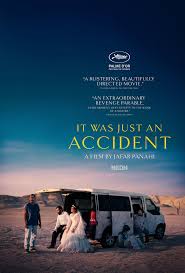
IT WAS JUST AN ACCIDENT/ UNE SIMPLE ACCIDENT/ Yek tasadof-e sadeh
Iran, France, Luxembourg, 2025, 103 minutes, Colour.
Vahid Mobasseri, Mariam Afshari, Ebrahim Azizi, Hadis Pakbaten, Majid Panahi, Mohamad Ali Elyasmehr, Delmaz Najafi.
Directed by Jafar Panahi.
The title is accurate. There is an accident – but, not so simple, not just an accident, but a whole chain of events which reveal some of the reality of public life in Iran, especially in recent years, protests, arrests, torture…
And the film comes from someone who knows what he is talking about. The film has been co-written and directed by multi-award-winning (including from Catholic and ecumenical juries), Jafar Panahi. And, significantly, during the last decade, he has been arrested several times, been imprisoned, been forbidden to leave the country, re-arrested, condemned by the authorities. (But, at the same time, welcomed at International film festivals, his films screened, his being acclaimed as a fine filmmaker as well as a significant world citizen, and this film itself winning the main prize at Cannes, 2025.) He has been able to continue making films secretly, avoiding any intervention by Iranian authorities and censorship.
Actually, there are several accidents. For some minutes, the audience travels in the dark with a mother and father and their young daughter in the back of a car. The mother is pregnant. The little girl is lively. The father much more solemn. And, he hits an animal that has wandered onto the night Road. Then, the car gives out and he calls into a garage to have it fixed.
Another, fatal accident. One of the workers sees and hears him, upset in realising that he has been one of this man’s torture victims in prison. He follows him, knocking him down in the street and abducts him, taking him into the desert, tied up and blindfolded, digging a grave, becoming angrier and angrier as he remembers the past, the taunts, the brutal treatment, and the bound and blindfolded man saying that he is not the torturer.
The rest of the film broadens the theme, the mechanic going to a respected contact who refers him to a photographer who was also a prisoner (and she is taking photographs of a couple about to be married, the fiancee also a victim of torture). The drama is serious, but there are quite a number of scenes offering comic relief. Because they themselves have been blindfolded and heard only the voice, there are some doubts. Although, there is no doubt with another fellow prisoner they get to help, he willing to dispatch the alleged torture instantly.
Panahi knows what he is talking about, collaborating in the screenplay with former prisoners, and, with the protests and high number of killings by authorities in 2025, the film’s whole scenario takes on an even greater urgency. But, it also raises the question of vengeance – and how vengeance can be put into practice and the issue of whether victims then become brutal torturers like those who persecuted them.
One of the values of the film is that, while the victims struggle with the uncertainty as to the truth of the man’s identity, so also does the audience, unsure right up until the end of the film.
Over the decades, the Iranian film industry’s serious filmmaking has won many awards for the dramatisation of human values. And, this despite an oppressive regime since the 1970s. Films like this one, excellent in their filmmaking and storytelling, are important for world consciousness in the 2020s.
- The career of Jafar Panahi, the range of films, perspectives on Iran, later years, his imprisonment, his filmmaking and distribution? This film based on his prison experiences? And his co-writers’?
- Atmosphere, locations, driving at night, the roads, breakdowns, the desert, garages, the city streets, offices, photography sites, hospital…? The musical score?
- The initial driving, pregnant mother, quiet father, lively little girl, the music, the accident with the animal, the father’s response, the breakdown, the garage, the father asking for help, the technician and the phone, offering the repairs?
- The introduction to Vahid, his listening, seeing the man, his limp, his reaction? Following him in the car, towing, coming close to the man, hitting him, violence, in the van, digging the grave in the desert, the man tied up? Vahid and his commentary, remembering the prison experiences, the harshness of cruelty, the voice, the taunts? The bound man denying everything, in the grave, suffocating? His desperation? Vahid and his moments of doubt? Working in the truck? Phoning Salah, going to visit Salar his keeping his distance, urging him to Shiva?
- Shiva, photographer, the wedding couple, the poses? Vihad and his plea, her putting him off, his insistence, the couple, information about Shiva being a prisoner, Goli and her prison memories? Her fiance not knowing this background in detail? Shiva, the phone call to Salar, her warning off Vihad, the couple coming out, trying to identify the bound man, keeping quiet? The arguments, the decision to continue?
- Hamid, his background, his temper, going to meeting, shouting and ranging, condemnation, the others hesitant about retaliation, becoming like their captors?
- On the bridge, the photos, the guards, the approach, interrogation, the bribes, using the credit cards?
- At the shop, getting the earplugs, the sedation for their prisoner?
- The characters of the bride and groom, Hamid, calling the groom outsider, pretty boy? His flying off the handle? Vahid and his gradual change of heart?
- In the desert, at the grave, the arguments? Using the phone, answering the little girl crying, her mother collapsing? The decision to go, caution, thinking of the trap? The little girl, the mother pregnant, the decision to take her in the van, on top of her imprisoned husband? The reaction of the hospital staff, money issues, needing the presence of the father, the money arrangements, the doctor, the birth of the little boy, taking care of the little girl, financing the nurse?
- The result, Hamid and his storming off, the couple leaving?
- Vihad taking the prisoner to the grave, the interrogation, the pressure, Shiva turning up, her fierce interrogation, the prisoner and his fears, eventually relenting, his talking, his contempt for the prisoners, and yet his own needing a job, loyalty to the regime?
- The audience, not knowing whether he was guilty or not, the suspense throughout the film, moral judgements about the use of violence, retaliation? And the effect of knowing the truth about him, as an ordinary man, wanting to see his son, but his participation in wars, injuries, loyalty to the regime, his cruelty?
Send Help
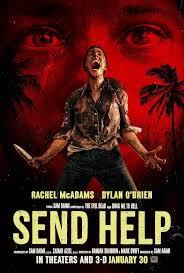
SEND HELP
US, 2026, 113 minutes, Colour.
Rachel McAdams, Dylan O'Brien, Edyll Ismail, Xavier Samuel, Chris Pang, Dennis Hayesbert, Thaneth Warakulnukroh.
Directed by Sam Raimi.
More than 30 years ago director, Sam Raimi, acquired a reputation for successful horror films with The Evil Dead, initiating a franchise which still continues. 25 years ago, he directed his first Spiderman film with Toby Maguire, showing his versatility. In the meantime, he has created quite a number of films ranging from sports dramas to creepy thrillers.
There is something of all of this in Send Help. It is a film of many moves moods for the characters – but also for audience response.
The initial setting is an office, talented but dorky worker, Linda, a lively and versatile performance from Rachel McAdama. Her work is stolen by an ambitious fellow worker, promised promotion and then humiliatingly denied it by the smug new young CEO, Bradley, a challenging role for Dylan O’Brien.
Suddenly, the whole tone changes, Linda invited to accompany the group to Thailand but the plane crashing, her survival and then discovering Bradley washed up on the beach. Moviegoers may immediately remember Castaway with Tom Hanks. And there are echoes of those idyllic stranded couples in Blue Lagoon settings.
The audience has seen Bradley and his cronies mocking a video made by Linda, auditioning for Survivor, exercising all the necessary skills. So, we are not surprised when Linda expertly sets up shelter, water, food (and a strangely comic pursuit and conquering of a huge boar). But, of course, Bradley is surprised, his inherent misogyny surfacing, but ultimately his having to depend on her.
The issue is will they come to terms with being cast away, will there be a rescue? Or, will continue to be a Battle of the Sexes with Linda becoming more dominant (and some memories of Kathy Bates and James Carr in Misery)?
Needless to say, Linda relishes becoming queen of the jungle, so to speak. But, Bradley shrewdly opposes her. She even more subtly subdues him. A rescue? Not.
Most of the critical commentary refers to Send Help as horror. And, certainly Sam Raimi draws on some of the horror conventions. But, it is much more than this. On the one hand, it can be seen as a 21st-century vindication of women, talents and abilities. On the other hand, any men in the audience who are like Bradley, may well be dismayed (or go into denial).
And, where can it end – without revealing an unexpected plot development, the answer is probably that he can end quite cynically.
- The title, the ironies throughout the film?
- The world of big companies, offices, international flights and deals? The contrast with life on the island? The discovery of the mansion? And the end with the world of glamour and celebrity? The musical score?
- The story of Linda, Rachel McAdams performance, initial appearance, gawkish, her age, dedication to work, obsessive? At home, talking to her bird? At the office, awkward interactions, her success with the documentation, done it and taking it over, claiming the work himself, her observing, reactions, resentments? Accosting Bradley, blunt talking, the tuna stain on her lip, her deciding to go to his office, confronting him, plain talk, his reaction? His blunt telling her she did not have the job, the choice of Donovan?
- The company, the founder, his death, his son taking over, the executive in the sun bossing him around, his friends from college, indoor golf? Male camaraderie? Ridiculing Linda? In fear and misogyny?
- Bradley inviting Linda to join the trip to Bangkok? On the plane, her work, their watching her audition for survivor, the details of the video, her enterprise, they’re laughing and mocking? Her reaction, not saving the work she had done on her computer?
- The disaster, the men out the windows of the plane, the crash, the sea, Linda under water, surviving? Bradley surviving on the beach?
- The castaway themes? Possible idyllic blue Lagoon style? Struggle survival, Triangle of Sadness?
- Linda, her enterprise, her survival skills, the water, the shelter, branches, binding, fire, fish…? Her strategies and competence?
- Finding Bradley, his injuries, his leg, unconscious, her caring for him, waking up, water, shelter, food? His negative reaction? His emerging personality, arrogant, misogynistic, suspicious of Linda?
- Time passing, her enterprise, explorations, managing, Bradley, gradually recovering, begging for food, her demands, her power? His response, walking, starting to work? The food? The suggestion for the raft?
- The gradual truce, working together, Bradley recovering, Linda enjoying life on the island, in command? The walk on the cliff, her falling, Bradley saving her?
- Linda, seeing the yacht, not telling Bradley? Her warning him away from the distant rocks? The issue of poison berries? Bradley using them, poisoning Linda, his getting the raft, escaping, the calamity in the waves, stranded again? The contrast with Linda, the poisoned fish, paralysed, pretending to castrate him with the rat? The blood and his terror? Hostilities?
- The tension, I to beat each other, Linda and the encounter with the fiance, the past introduction to her, the ring? The boat, the Thai captain, her leading them over the cliff, the collapsing rock, the fiance falling, heating the captain over the head, their deaths? Not telling Bradley, her having sick days, her nightmare and the fiance struggling to shore and confronting her?
- Bradley, walking off, going to the far island, discovering the mansion? The luxuries, Linda story, seeing the caretakers and the food?
- The buildup to the final confrontation, bargaining, lying, trying to outwit each other, the gun, not firing, Linda and battering Bradley?
- Linda, her motivations, each exercising power over the other, how genuine her feelings, her mental state, emotions? His wanting to survive, dependence, the experience of dependents, manipulative, betrayal?
- The atmosphere of the ending, he later, Linda a celebrity, the book, the film, the interviews, her driving away to a future?
Blue Moon
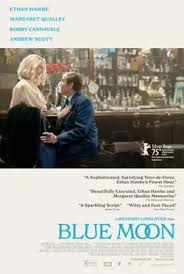
BLUE MOON
US, 2025, 100 minutes, Colour.
Ethan Hawke, Bobby Cannavale, Andrew Scott, Margaret Qualley, Patrick Kennedy, Jonah Lees, Simon Delaney, Cillian Sullivan.
Directed by Richard Linklater.
Blue Moon is probably the most popular song from the writing team, for over twenty-five years, of Richard Rogers and Lorenz Hart. It has a plaintive touch about it. And so does this portrait of Lorenz Hart.
Fans of the old MGM musicals may remember the 1948 Words and Music, a celebration of Rodgers and Hart, some biography but the staging of many of their songs. That is not the case here. This is a serious drama, going to a New York bar over one evening, warts and all portrait of Heart. The diminutive lyricist was played by Mickey Rooney in 1948. Perhaps easy casting. This time Hart is portrayed by Ethan Hawke, with a well-deserved Oscar nomination, the director, Richard Linklater, and camera work diminishing his stature to successfully effect.
The narrative setting is that of the opening in 1944 on Broadway of Rodgers and Hammerstein’s Oklahoma!, Hart replaced by Hammerstein (and the beginning of a very successful writing partnership, South Pacific, Carousel, The King and I, The Sound of Music). And Hart walking out of the opening night.
The Oscar-nominated screenplay by academic, Robert Kaplow, has an overall emphasis on words, The lyricist Hart is articulate, witty, clever, explaining his composing, play on words, internal puns, insight into the lyrics of the thousand songs that he wrote. He complains about the lyrics of Oklahoma (the wheat as high as an elephant’s eye!) But, when Rodgers and Hammerstein arrive, he has earnest conversation with Rodgers, played by Andrew Scott, revealing Hart’s erratic behaviour, the drinking benders and absences, unreliable, living with his mother, his homosexual orientation.
But, prior to the arrival of Rodgers, Hart is in conversation with the bartender, a listening responder, played by Bobby Cannavale. And there is some conversation, relishing words and sentence structures with a visitor who turns out to be E. B. White (author of Charlotte’s Web and Stuart Little). Hart drinks, relishes words, is indulgent in conversation.
And there is a further dramatic focus, how corresponding with the young student, Elizabeth Welland, played by a vivacious Margaret Quallley, who has been corresponding with him, seeing him as a mentor, he becoming more and more infatuated with her. (This part of the screenplay is based on their letters).
In many ways, this is a very sad story, a huge talent, the personal flaws, creativity combined with unreliability – and the pathos that soon after this episode he was to collapse and die.
A very effective behind-the-scenes theatrical drama.
- The title, the popular song, plaintive tone?
- The introduction, Lorenz Hart, in the street, collapse, hospital, his death? His life a wreck?
- A portrait of Hart, audience knowledge of him in his life, career, Rodgers and Hart, 25 years, the Broadway shows, the thousand songs, fame? Hart as a lyricist, Hart as a person?
- The confined action, set, the bar and its interior? The stairs? Eddie the bartender, the presence of E.B. White, the piano player, his military background, Sven the messenger, the waitress, the woman at reception? Atmosphere, music, the playing of Blue Moon?
- The opening night of Oklahoma, Rodgers and Hammerstein, the collaboration with Hammerstein (and indications of work with Stephen Sondheim), Hart walking out, the criticism of the lyrics, elephant high, the number of exclamation marks? His being hurt?
- The emphasis on words and conversation, the love of words, the power of words, Eddie listening and responding, the piano player responding, the conversation with White and the themes, articulate?
- Elizabeth Welland, the correspondence, his infatuation with her, time spent with her, as a mentor, anticipating her arrival, her presence, discussions with Hart, the lengthy private talk, her not loving him “in that way”, her life and relationships? Wanting to meet Rodgers, her mother working for him, going to the party, the effect on Hart?
- And his memories, brother, living with his mother, Richard Rodgers and long friendship, success, his drinking, gay orientation, going on benders, unreliable? Rodgers letting him go?
- Rodgers arriving, his personality, the impact of Oklahoma, and Hammerstein present, the audience response, praise, the critics’ response?
- The conversation between Rodgers and Hart, on the staircase, going back over the past, Rodgers] perspective on the friendship, the collaboration, the unreliability? Inviting him to write more songs for Yankee…?
- Hart and the encounter with Hammerstein?
- The parties, the invitations, the discussions? The crowd, the Mayor of Oklahoma City, atmosphere?
- Hart, finally left with Ed and the staff, Blue Moon?
- The pathos of the end of his life, standing alone, drinking, death?
Three Steps in the Dark
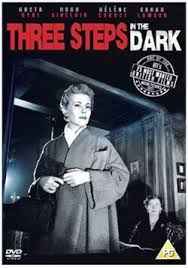
THREE STEPS IN THE DARK
UK, 1953, 61 minutes, Black-and-white.
Greta Gynt, Hugh Sinclair, Nicholas Hannen, John Van Eyssen, Sarah Lawson, Elwyn Brook-Jones, Helene Cordet, Alastair Hunter, Katie Johnson.
Directed by Daniel Birt.
An hour spent with a very British murder mystery, country mansion, a family gathering, issues of the will, financial difficulties…
The patriarch of the family summons his family together, he had been investigating their lives, especially the French fiancee of one of his sons. Later that evening he is killed.
Everybody, of course is a suspect. His daughter is a crime writer, very assured. His oldest son has his own property and races horses. And the family lawyer is present.
There are many scenes of family discussions and arguments – and the solution that many might not have been expecting.
All Hallows Eve

ALL HALLOWS EVE
US, 2013, 83 minutes, Colour.
Katie Maguire, Catherine A.Callahan, Mike Gianelli.
Directed by Damian Leone.
Damian Leone, a young writer-director and special effects man, made a short film, Terrifier featuring Art the Clown. He incorporated this character into All Hallows Eve – and then he was to be featured in Leone’s Terrifier franchise.
For audiences wanting to watch a grisly and gory, hyper-ugly horror film Halloween, or any time, this is a grim candidate.
A babysitter is caring for two young children, one of whom is watching on television. Time to go to bed. However, the boy finds a VHS in his bag of collected sweets for Halloween. Babysitter watches the beginning of the VHS, sinister and ugly corridors, and the story of a young girl at a railway station. The children then watch the video, the boy’s face eagerly absorbed in the horror drama (and a good visual argument against youngsters having access to horror social media).
After the children go to bed, and have some nightmares, the babysitter continues to watch the story, the first with the young girl at the railway station, attacked by the clown, suggestions of satanic ritual, violence, sexual assault. The young girl is imprisoned with three other victims. The story is full aggressive misogyny.
The babysitter continues to watch two other stories, older women, and again the menace, the appearance of the clown, those associated with them killed, and once again the violent misogyny.
By the end, Leone who wrote, directed, special effects supervisor, blends the reality of watching the video with the actual video story, the children dead, the babysitter menaced, and the audience left with a bloodthirsty, bloodstained, gory and gashes Halloween hyper horror.
Murder in the Clouds
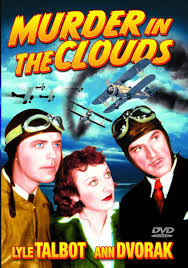
MURDER IN THE CLOUDS
US, 1934, 61 minutes, Black-and-white.
Lyle Talbot, Ann Dvorak, Gordon Westcott, Robert Light, George Cooper, Henry O'Neill, Russell Hicks, Arthur Pierson.
Directed by D Ross Lederman.
This is not really a murder mystery. Rather, it is a 1930s story of industrial espionage.
With the coming of sound, there were all kinds of possibilities for outside photography – leading to developments in aerial photography. And there is a great deal of this, small planes, flights, acrobatics, dangerous action, right throughout the film. It was only 30 years since the Wright brothers. 20 years since the beginning of World War I. Audiences were obviously eager for this kind of visual action in the movies. It was a period of Howard Hawks and flight development and many films on air themes, culminating in the feature in the late 30s, Only Angels Have Wings.
The opening part of the film establishes the aerial skills. Then there is romance, and AnnDvorak as a flight attendant but with plenty of initiative and get up and go. Some praise to George Cooper for his character Wings, a pilot but prone to getting stomach upsets but who has to step up to the cockpit and achieve all kinds of heroics by the end of the film.
There is a flight company and its boss, approached by a government official, veteran Henry O’Neill, for a flight with a scientist with a special formula. He has a spy in his office who contacts the leader of the group, led by veteran Russell Hicks, who want to steal the formula and exploit it in Mexico.
So, the key pilot, Lyle Talbot, is hijacked by hired thugs and unable to take the flight. The heroine’s brother is a co-pilot – and the plane explodes, but later visualised at some length, the death of the pilot, the escape of the sinister pilot member of the game.
So, within the short running time, quite some action, confrontations, car journeys, more flights, shootings and battles in the air – and a happy ending and wedding bells.
One of the more effective short films, supporting features of the first part of the 1930s.
Saipan
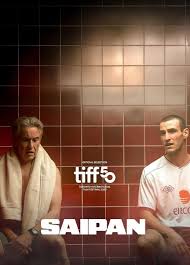
SAIPAN
Ireland, 2025, 91 minutes, Colour.
Eanna Hardwick, Steve Coogan, Peter McDonald.
Lisa Barros D'Sa, Glenn Leyburn.
Football (Soccer for those from Downunder) has a vast world following so this story, from the 2002 World Cup will be of considerable interest, for those who remember vividly, for those who are learning the history. For those not familiar with football, the recommendation is to continue watching because the drama builds up to a strong confrontation, personality conflicts.
And the title? The island of the Northern Marianas in the Pacific, the venue for the specialised training of the Irish team before it transfers to Japan for the competition matches. Saipan has an interesting history, well worth investigating, here with some footage from World War II. The Canary Islands, Tenerife, provided the location for Saipan here.
Saipan introduces its central character, champion footballer, Roy Keane, destined from his childhood talent to achieve great things. In fact, he captained Manchester United under the management of Sir Alex Ferguson. And, so, chosen to be the captain of the Irish team for the World Cup. The other central character for this film is Mike McCarthy, English of Irish descent, player for the Irish team for many years, now its manager.
Roy Keane is played broodingly by Eanna Hardwick (excellent as the sinister conman in the series, The Sixth Commandment). Steve Coogan, veteran of so many dramas and comedies, is persuasive as Mike McCarthy.
On arrival in Saipan, the team finds all kinds of limitations, including the non-arrival even of footballs. The football pitch has potholes. The accommodation is a mixture of luxury and broken down air-conditioners, Keane has his special breakfast, the others having sandwiches, the players being rather more carefree, the management concerned and worried, and Roy Keane becoming more and more individualistic.
He complains. He is aloof. He phones home. He upsets himself, continually criticising the conditions, increasingly moody. The screenplay, offers an initial acknowledgement that this is a true story tweaked. To many, Keane was a hero, hard done by. For others he was spoilt and cantankerous. The screenplay here opts for the latter.
The key scene is the final confrontation, after Keane gives a warts and all interview to a journalist, his standing up to Mike McCarthy, clash of egos, Keane stubborn, petulant, refusing to stand down.
Football lovers will know that what happened in reality. Audiences who do not will be intrigued to discover what actually happened to Ireland in the World Cup, 2002 (and some actual footage during the final credits).
- An Irish story, a football story, a personality clash story?
- Audience knowledge of the characters and occasion, Irish perspective, world perspective, for those knowing nothing about football?
- The background history, Ireland, football, World Cup ambitions? McCarthy, British and Irish background, playing Ireland? Manager of the team? Roy Keane, the scenes of his childhood, talent and ambitions, player for Manchester United, contact with Alex Ferguson?
- The introduction to Roy Keane, as a boy, talent, playing for England, phone call with Ferguson? The captain in the World Cup team, with the other players, friendly, aloof?
- Mike McCarthy, his personality, managing the team? His assistants, the other members of the team?
- The preparation for the match in Saipan? The flight, the accommodation, the hotel, the limitations of the football field, poor air-conditioning, the food, the sandwiches…? Get the welcome, the players adapting? The managing team and press conferences? The television coverage?
- The limitations, the probable is not arriving? The practice sessions, the sauna, golf, partying? The indications of the countdown to the World Match?
- The character of Roy Keane, his manner, presumptions, player for Manchester United, his aloofness, his special breakfast? Interactions with the other members of the team? The player with the books and his Kwik? His room, by himself? His complaints, phone calls home? The building up of attention, the confrontations with Mike McCarthy, the other members of the management?
- Mike McCarthy, managing, limitations, trying to be cheerful? The discussions with Roy Keane? The buildup of the tensions, the complaints, his deciding to go home, the pressure on the management, discussions, persuasion? The media?
- The interview, his offloading all his complaints, the promise not to publish it before the match, the publication, the impact for the players, the management, for Roy Keane himself? The advice to offer an apology?
- The buildup to the meeting, the confrontation, Roy Keane and all his complaints, standing firm, abusing Mike McCarthy? Audience sympathy for him, for his complaints?
- Mike McCarthy, his decisions, worrying, the screaming moment, knocking on the door, offering the opportunities, decisions, the press conference?
- The television coverage, the commentary, the people in the street, for and against?
- Roy Keane flying home, the team going to Japan for training, the continued request lawyer, his stubbornness?
- The subsequent history of the matches, the success without Roy Keane, missing out actual clips during the final credits?
