Displaying items by tag: Ethan Hawke
Blue Moon
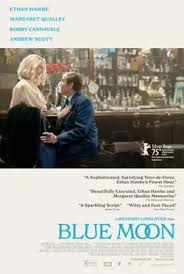
BLUE MOON
US, 2025, 100 minutes, Colour.
Ethan Hawke, Bobby Cannavale, Andrew Scott, Margaret Qualley, Patrick Kennedy, Jonah Lees, Simon Delaney, Cillian Sullivan.
Directed by Richard Linklater.
Blue Moon is probably the most popular song from the writing team, for over twenty-five years, of Richard Rogers and Lorenz Hart. It has a plaintive touch about it. And so does this portrait of Lorenz Hart.
Fans of the old MGM musicals may remember the 1948 Words and Music, a celebration of Rodgers and Hart, some biography but the staging of many of their songs. That is not the case here. This is a serious drama, going to a New York bar over one evening, warts and all portrait of Heart. The diminutive lyricist was played by Mickey Rooney in 1948. Perhaps easy casting. This time Hart is portrayed by Ethan Hawke, with a well-deserved Oscar nomination, the director, Richard Linklater, and camera work diminishing his stature to successfully effect.
The narrative setting is that of the opening in 1944 on Broadway of Rodgers and Hammerstein’s Oklahoma!, Hart replaced by Hammerstein (and the beginning of a very successful writing partnership, South Pacific, Carousel, The King and I, The Sound of Music). And Hart walking out of the opening night.
The Oscar-nominated screenplay by academic, Robert Kaplow, has an overall emphasis on words, The lyricist Hart is articulate, witty, clever, explaining his composing, play on words, internal puns, insight into the lyrics of the thousand songs that he wrote. He complains about the lyrics of Oklahoma (the wheat as high as an elephant’s eye!) But, when Rodgers and Hammerstein arrive, he has earnest conversation with Rodgers, played by Andrew Scott, revealing Hart’s erratic behaviour, the drinking benders and absences, unreliable, living with his mother, his homosexual orientation.
But, prior to the arrival of Rodgers, Hart is in conversation with the bartender, a listening responder, played by Bobby Cannavale. And there is some conversation, relishing words and sentence structures with a visitor who turns out to be E. B. White (author of Charlotte’s Web and Stuart Little). Hart drinks, relishes words, is indulgent in conversation.
And there is a further dramatic focus, how corresponding with the young student, Elizabeth Welland, played by a vivacious Margaret Quallley, who has been corresponding with him, seeing him as a mentor, he becoming more and more infatuated with her. (This part of the screenplay is based on their letters).
In many ways, this is a very sad story, a huge talent, the personal flaws, creativity combined with unreliability – and the pathos that soon after this episode he was to collapse and die.
A very effective behind-the-scenes theatrical drama.
- The title, the popular song, plaintive tone?
- The introduction, Lorenz Hart, in the street, collapse, hospital, his death? His life a wreck?
- A portrait of Hart, audience knowledge of him in his life, career, Rodgers and Hart, 25 years, the Broadway shows, the thousand songs, fame? Hart as a lyricist, Hart as a person?
- The confined action, set, the bar and its interior? The stairs? Eddie the bartender, the presence of E.B. White, the piano player, his military background, Sven the messenger, the waitress, the woman at reception? Atmosphere, music, the playing of Blue Moon?
- The opening night of Oklahoma, Rodgers and Hammerstein, the collaboration with Hammerstein (and indications of work with Stephen Sondheim), Hart walking out, the criticism of the lyrics, elephant high, the number of exclamation marks? His being hurt?
- The emphasis on words and conversation, the love of words, the power of words, Eddie listening and responding, the piano player responding, the conversation with White and the themes, articulate?
- Elizabeth Welland, the correspondence, his infatuation with her, time spent with her, as a mentor, anticipating her arrival, her presence, discussions with Hart, the lengthy private talk, her not loving him “in that way”, her life and relationships? Wanting to meet Rodgers, her mother working for him, going to the party, the effect on Hart?
- And his memories, brother, living with his mother, Richard Rodgers and long friendship, success, his drinking, gay orientation, going on benders, unreliable? Rodgers letting him go?
- Rodgers arriving, his personality, the impact of Oklahoma, and Hammerstein present, the audience response, praise, the critics’ response?
- The conversation between Rodgers and Hart, on the staircase, going back over the past, Rodgers] perspective on the friendship, the collaboration, the unreliability? Inviting him to write more songs for Yankee…?
- Hart and the encounter with Hammerstein?
- The parties, the invitations, the discussions? The crowd, the Mayor of Oklahoma City, atmosphere?
- Hart, finally left with Ed and the staff, Blue Moon?
- The pathos of the end of his life, standing alone, drinking, death?
Black Phone 2
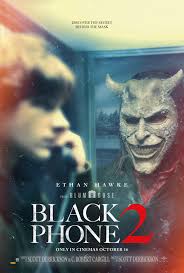
BLACK PHONE 2
US, 2025, 114 minutes, Colour.
Mason Thames, Madalyn McGraw, Ethan Hawke, Jeremy Davies, James Ransone, Miguel Mora, Ariana Rivas, Demian Bichir.
Directed by Scott Derrickson.
In 2022, Black Phone was a very successful menace and horror film. It had strong credentials, basic story from Joe Hill (who, in fact, is the son of Stephen King), director, Scott Derrickson (whose films include The Exorcism of Emily Rose, the two Sinister films, Deliver us from Evil), and a new masked villain played by Ethan Hawke, The Grabber.
Many menacing sequences with the young Finney, played by Mason Thames (who was to go on to star in How to Train a Dragon, Regretting You) vanquishing The Grabber.
Hill and Derrickson have combined for this sequel, bringing The Grabber to life beyond the grave, going back to the original situation at the summer camp with the killing of three children by The Grabber, involving Finney’s mother. And the sequel starts with a prologue back in 1957 with Hope, the mother. But the main action takes place four years after Finney’s destroying of The Grabber.
This time it is Finney’s younger sister, Gwen, Madalyn McGraw, who answers the phone, has relentlessly upsetting dreams, the family having to rescue her to wake her from her restless sleep. And, it is The Grabber on the phone, still menacing, tormenting Gwen.
The main part of the drama is to return to the scene of the crimes, the summer camp, the cooperation with the manager, Armando (Demian Bichir) was there at the time of the killings. Now Gwen has even more fearful dreams, with the group at the camp, Finney, Gwen’s friend, Ernesto, and the father, Terrence, Jeremy Davies, also arriving.
The search takes the group to the lakes, now frozen, and some menacing confrontations, on the ice, and under the ice, The Grabber targeting Gwen, but the group hoping that when they find the bodies of The Grabber’s former victims, there will be some kind of ending.
This sequel has been successful with the public, sympathetic victims who conquer, and The Grabber is installed in the Gallery of successful movie horror villains.
But, we leave the cinema with a smile rather than with any dread.
- The impact of the original film? Horror, menace, victims, survival and confrontation, monster, background story, attacks, death? Expectations for the sequel?
- The continuity from the first film, the return of writers, director, cast members? The return of The Grabber?
- The prologue, 1957, Hope, at the camp, phone, the call, reality and dreams, the boys, carving their names in ice, the end of the call? Hope as the mother of Finney and Gwen? Her death considered suicide, the effect on her husband?
- 1983, the family, Finney and the experience with The Grabber, killing him? Finney’s four years, depression, drugs? Gwen, her age, memories of the past? Their father, distance, drugs?
- Gwen, her dreams, phone, The Grabber, the dead children? Talking to her mother on the phone? The overwhelming effect? With Finney, with her father? Her decision to go to the camp? Persuading Ernesto, brother of the dead Robin? Persuading Finney? Travel, snowed in, the manager and his niece, the two on the staff? Trying to understand Gwen’s dreams?
- The experiences at the camp, Armando remembering Hope, the photos, identifying Wild Bill Hickok as The Grabber? The deaths of the children? Gwen and the continued dreams, the group trying to wake her, understand what was happening?
- The reappearance of The Grabber, beyond death, his appearance’s tied to the mysterious deaths and the disappearance of the boys’ bodies? Armando and his search, the realisation about the lake, the scene for hockey and games, the probable location, the various searches, the ice, breaking, under the ice, finding the bodies?
- Gwen’s continued dreams, the presence of her mother, The Grabber and his taunts, explanations of the past, the boys, his killing Hope? The effect on Gwen, the other is trying to wake her, the consequences?
- The arrival of Terrance, telling him the truth, the impact, when challenging him about his drugs and withdrawal?
- The decision to search, everyone together, going to the lake, The Grabber, the struggles, finding the remains of the children, the confrontation and the destruction of The Grabber?
- The ending with a sense of peace, Gwen as normal, the reconciliation of the family, the mystery solved about the boys, and the final phone call, Hope, and a greeting from heaven?
Stockholm
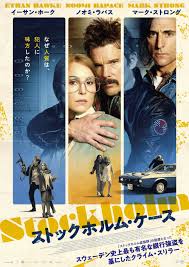
STOCKHOLM
Canada, US, Sweden, 2024, 92 minutes, Colour.
Ethan Hawke, Noomi Rapace, Mark Strong, Christopher Heyerdahl, Bea Santos, Mark Rendall, Ian Matthews, John Ralston.
Directed by Robert Budreau.
Since the 1970s the phrase, Stockholm Syndrome, has been increasingly used to cover the situation where hostages, captives, begin to feel that they are being treated well by their captors and tend to identify with them rather than their rescuers. At the time, one of the prime examples was the abduction of heiress, Patty Hearst.
This film, filmed in Stockholm itself, tells the story (both more and less) of the episode which was the basis for the Stockholm Syndrome.
Ethan Hawke gives a strong performance as Lars, the prisoner, disguising himself in order to hold up a bank. He is definitely a wild card, erratic behaviour in the bank, and with the various personnel. And, his demand is that his friend, in prison, be released. Unexpectedly, he is played by Mark Strong. The police expect him to act as something of a mediator.
And there is the exasperated chief interrupted at a photo shoot and persuaded that the situation at the bank is very serious, some of the mediators, using a gun, creating tension.
Ultimately, there are three hostages, led by Swedish actress from the Stig Larsson Girl series, Noomi Rapace, a bank teller, married with a child, the opposite of many of her roles. There is another teller as well as a man who is found and taken hostage.
The drama shows the interactions between the two men, the treatment of the women, the softening of their attitudes, their actual collaboration in setting up deceptions for the police. The police also try microphones, drilling through the roof, the insertion of gas.
Lars finishes up back in jail, a visit from his hostage and her reflections on her experience, and the beginning of the status of the Stockholm Syndrome.
- The title, the city, the bank, the vistas of the city? The bank heist? The origins of the Stockholm Syndrome?
- The introduction, the use of the word absurd, serious and comic, extreme? Based on a true story?
- The Bob Dylan songs and lies and his urging the singing?
- The introduction to Lars, his behaviour, his disguise, the wig, the bag, weaponry, to the bank, the proclamation of the robbery, his manic behaviour, the reaction of the staff, ushering them out, his declarations, meeting the manager, Bianca, alerting the police, his taking the two women? The police, his demanding that his friend be released from jail? Waiting?
- The reaction of the police, the absurd touch with the photo and the delay, the hurry to the bank, the associates, the associate with the gun and Lars shooting? The demands, the strategies?
- The two women, their fears, finding the other man and his becoming a hostage? The hostage situation? Lars and his interaction with the hostages, the discussions with Bianca, her reaction, his allowing her to phone her husband, the relationship, her children?
- The arrival of Gunnar, the background, the friendship, Lars and his disguise, the conversation, Gunnar supposed to be a mediator, his bond with Lars, the plains, the escape, the car? The threat to the hostages?
- The role of the police, the discussions, strategies, confrontations, the plan with the car, the gun and the shooting of Bianca, the plan for her being shot, the jacket? Continuing the deceit?
- The dangers, the bonding, the cooperation of the women after the fear, in the vault? Discussions, time passing, playing cards…? Bianca and her reactions, change of attitude, Lars, the bonding, the kiss, more?
- The attempts to talk with the Prime Minister, his delay, the media outside, the interviews, the police watching the television interviews, Lars and the group listening to the radio?
- Building up to the deception, the demand for food, medication? The Chief arriving with the bag? The decision to drill through the roof? The microphone? The gas? The group getting out, in the car, the shooting of the tyre? The return to the bank?
- The chief, thinking that Bianca was alive, the gas, the opening of the vault, the rescue? The video that Bianca was alive? Her husband and children watching?
- The confrontation between Gunnar and Lars, shooting? Fight?
- The end, Lars in jail, the visit from Bianca? The voice-over, the teaser at the opening of the film, her comment about her husband, the relationship with Lars?
- The development of the Stockholm Syndrome, captives identifying with the characters rather than the rescuers?
Strange Way of Life
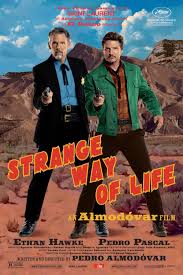
STRANGE WAY OF LIFE
Spain, 2023, 31 minutes, Colour.
Ethan Hawke, Pedro Pascal, Mona Rios, George Steane.
Directed by Pedro Almodovar.
Fans of Pedro Almodovar and audiences around the world would not have been expecting a Western from him. But, here it is, beautifully filmed in Spanish locations reminiscent of the spaghetti westerns, the recreation of the town, the sheriff and his duty, the pursuit of the killer and three guns confrontation. It was written in English, the second English language short film from Almodovar, the first being The Human Voice with Tilda Swinton. He then went on to make the full-length feature in English, The Room Next Door, with Julianne Moore and Tilda Swinton.
Almodovar’s own view of his film: A queer Western, in the sense that there are two men and they love each other. It's about masculinity in a deep sense because the Western is a male genre. What I can tell you about the film is that it has a lot of the elements of the Western. It has the gunslinger, it has the ranch, it has the sheriff, but what it has that most Westerns don't have is the kind of dialogue that I don't think a Western film has ever captured between two men.
Film opens with a mood setting: The title is inspired by the Portuguese poem song by Amália Rodrigues called "Estranha forma de vida" (Strange Way of Life), released in 1959 and sung by Brazilian singer Caetano Veloso and lip-synced by actor Manu Ríos at the beginning of this short film.
The film boasts two strong leads with Ethan Hawke and Pedro Pascal, Pedro Pascal riding into town to confront the sheriff and to save his son who has been accused of the murder of the sheriff’s sister-in-law, a woman with a bad reputation. Ethan Hawke is the sheriff.
The film has, as Almodovar indicated, quite a number of themes.
There is the variation on the western themes, the past gunfighters becoming respectable, working on the land or becoming law enforcers. In fact, the two have not met for 25 years, giving up their gunfighter past, Silver opting for the land, Jake for the law.
Then there is the issue of sexuality and sexual relationships, the flashback to the two young men in years gone by, with a number of señoritas, but then finding the attraction strong between the two of them. And Jake, breaking off the relationship. The impact of the two meeting again, Jake wary, Silver earnest, and their spending the night together and its consequences.
However, Jake is taking the law seriously, Silver leaving to go to his sons Homestead and warn him away, and Jake in pursuit.
There is the theme of the father trying to protect his son while angry and disgusted with him, giving him the chance to escape to Mexico and never come back. This involves wounding Jake but then attending him for his recovery.
In the final theme, Jake angry but convalescing, Silver reminiscing on the final words to give meaning to the film, that they could have spent a life together, especially with caring for each other.
In a Valley of Violence
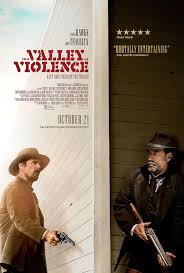
IN A VALLEY OF VIOLENCE
US, 2016, 97 minutes, Colour.
Ethan Hawke, John Travolta, Taissa Farmiga, James Ransone, Karen Gillan, Toby Huss, Burn Gorman.
Directed by Ti West.
Writer-director, Ti West, began his career with ventures into horror films, gaining great deal of attention with the Innkeepers in 2011. What he continued his career with films, his main work was in television until the 2020s when he made a series of films, well received, starring Mia Goth, sometimes a blend of sex and horror, X, Pearl, Maxxxine. However, this is a Western revenge.
Ethan Hawke plays the central character, Paul, ex-army, having left his wife and daughter, wandering, initially encountering a bogus preacher, Burn Gorman, taking his horse, riding into an abandoned mining town.
While minding his own business in the saloon, he is confronted by an exceedingly brash self-centred Healy, James Ransone, who challenges him to a fight. Paul simply knocks him out. However, Gilly is the son of the local Marshall, an interesting role for 60 year old John Travolta. There are two young women running the local hotel,, Karen Gillan, and the young Maryann, Taissa Farmiga, who is attracted to the stranger.
While the Marshall arranges a kind of peace, Paul rides out of town with his dog (whom everybody admires and asks whether he can do tricks, Paul relying that he bites, though we do see a few tricks, especially his wrapping himself in a blanket!), Gilly and his associates kill the dog, threatening Paul, throwing him from a cliff. He survives.
Which means then that he will return, wreak vengeance on each of the members of the group – which he does. And there will be a confrontation with the Marshall.
Audience emotion is on Paul’s side while they are of the conscience issues of the wreaking vengeance (and his strong motivation of revenge because of the killing of the dog).
Quite an effective vengeance Western achieving what it set out to do.
- The title, expectations? The Western context?
- The location photography, town, the streets, bar, Marshall’s office, jail, hotel rooms, the countryside, the mountains? The musical score?
- Paul and his story, background of enlistment, his war experience, the effect on him, leaving his wife and daughter, his companionship with his dog, talking to the dog? The encounter with the priest, hostile, violent, taking his horse? Arriving in the town, searching for Dollar Bill, in the saloon?
- Gilly, boasting, the salesman and his field, ousted, Gilly confronting Paul, silent, the challenge to the fight, the five dollar bet, the barman and his caution? Crowd gathering, Paul punching Gilly, his collapse?
- The Marshall, meeting Paul, the discussions, Gilly his son, Deputy, a father’s care? Willing Paul off? And his encounter with Mary Anne, the bath, flirting, Mary Anne and her relationship with Ellen, Gilly’s fiance, urging him on?
- Paul leaving, camping, with the dog, the ambush by Gilly and his men, the shooting of the dog, threatening Paul, on the is one, pushing him over? His recovery, returning to the town, spirit of vengeance?
- Paul and his return, the welcomed by Mary Anne? Roy, his manner, the bath, with Mary Anne, Paul coming in, the confrontation, killing him, the blood? Ellen and her response?
- The Marshall, confronting Gilly, beating him? Yet protecting him? The plan, Harris going onto the roof, Paul confronting him, the final conversation, Paul merciless, shooting him? Tubby, his fear, urged by the Marshall, his self-assertion, against Tubby, his name Lawrence, standing in the window, shot?
- Gilly, searching for Paul? Paul and the confrontation with the Marshall, out in the street, the Marshall laying down his arms, Gilly confronting, the challenge, the shooting, the death of the Marshall?
- The barn, Gilly searching, the news, the fight? Going to the hotel? The women, Gilly and his protecting them, and her pregnancy, Gilly and his surly response?
- Paul, telling Mary Anne his story, her supporting him? The future?
Leave the World Behind

LEAVE THE WORLD BEHIND
US, 2023, 140 minutes, Colour.
Julia Roberts, Mahershala Ali, Ethan Hawke, Myha’la Herreld, Farrah Mackenzie, Charlie Evans, Kevin Bacon.
Directed by Sam Esmail.
The title is to be taken more literally than we might initially have been expecting. At first, it is used to explain an enjoyable weekend away on Long Island, the family renting a beautiful house, comfortable, swimming pool, access to the beach… And it it has been arranged efficiently by the mother, Amanda, a rather tough Julia Roberts, sales consultant, harshly sour view of clients and human nature. By contrast, Ethan Hawke is Clay, her husband, Professor of literature and media. And there are two children, Archie, 16, and Rose, 13, obsessed, even in the drive to the holiday house, with finishing all the episodes of Friends.
It all seems happy enough and off they go to the beach. Then the first sign – an oil tanker glimpsed out at sea, getting closer, finally barging ashore on the sand. All is not well. The familiar world will have to be left behind.
There are various ominous signs, some deer in the back garden appearing, phones and Wi-Fi going out, no television. Then, mysterious noises at night – and a father and daughter knocking at the door in the early hours, claiming that this was their house, that there were blackouts in New York and they decided to come back home.
Which means then that the audience has got to know the family first, is suspicious of the newcomers, but being asked to identify with the harsh treatment interrogation by Amanda or with the more genial approach by Clay. As it turns out, the owners of the house are GH, a talented financial adviser, played by two-time Oscar winner, Mahershala Ali, and his teenage daughter, Ruth (who can match Amanda in clashes, suspicions and invective) played by Myha’la Herrold.
During the rest of this rather long film, there are more ominous signs, even more deer gathering, flamingos swooping into the swimming pool, brief phone messages to say that there is a blackout and perhaps services being hacked. And, there are scenes of dialogue and interaction, GH and Amanda being able to settle some of their differences, Ruth asking Clay embarrassing questions about his life. And the two teenagers puzzled, exploring the surrounding woods, Archie getting an infection with dire consequences for his teeth, Rose, wandering, watching the deer.
When GH goes to try to get some help and information from neighbours, he discovers chaos, bodies, and an airliner crashing. Clay has tried to drive to town to find help but encountered a frantic Spanish-speaking woman he cannot understand. And a drone follows him dropping leaflets, in Arabic, Death to America.
The audience is invited to share the suspicions, the uncertainties, the growing paranoia. And there is a dramatic scene when GH and Clay take Archie for some medical help from a neighbour, played by Kevin Bacon. Tension, confrontation, defensive…
Is this the end of the world? Who knows? Suggestions of the Russians, Koreans, the Pentagon, finances and deals, creating wariness, hostilities, a destructive civil war, and images of nuclear bombs. Some have been very critical of the final sequence, too laid back all – in a well-stocked bunker, a quiet scene, Rose discovering final episode of Friends…
Older audiences and movie buffs may be reminded of the film and/or television series based on Nevil Shute’s end of the world novel, On the Beach (and the film’s Melbourne ending).
- The title and expectations? The family going on a holiday, leaving everything behind? The change of tone, the end of the world?
- The popularity of apocalyptic themes, disasters, the end of the world? Tradition in literature and cinema?
- The structure of the film, the success of chapters in their tone, meaning?
- The plausibility of the plot, the initial sign of the tanker, menacing, coming closer to the shore, frightening people, on the beach? The loss of communications, phones, Wi-Fi, television? The story of hacking? Stories of powerful people, wealth, defence budgets, conspiracies? Targeting Korea, Russia, Iran, financiers, powerbrokers?
- GH and his explanations, his job and moving money, his contacts, famous people, the Pentagon, plans for a people, hacking, blackouts, loss of communications, falls information, building up to Civil War, bombs and destruction?
- Amanda and Clay, she in public relations, he lecturing in English and media, her statements about hating people, booking the holiday, packing, urging Clay, Archie and Rose? Travelling, the typical family, talk, phones and screens? The holiday weekend?
- The drive, arriving at the mansion, delight, settling in, Amanda going for the groceries, looking at Dennis and his stocking up in the later memories, the visit to Dennis, his work and repairs, defensive, with the gun, his daughter, the request for the medication, confrontations, what any father would do, his giving the pills, Clay paying the money, and the revelation of the well-stocked bunker that he had constructed?
- The family at the beach, the happy holiday, the tanker, the panic? Archie, 16, Rose, 13, obsession with Friends and the final session?
- During the night, the noises, GH and his daughter at the door, sense of fear, menace?
- The audience identifying with Amanda, Clay of the family, wary of GH and Ruth, taking sides, identifying? Amanda and her harshness, suspicions, treatment, justified or not, Clay more amenable? The request for GH to stay the night, his house, the plausibility story, in New York, the music, the blackout, not climbing 14 stories, his house? And the attitudes of his daughter?
- GH and his playing the thousand dollars in cash?
- The interactions between the couples? Amanda and her stances, Clay more amenable, GH in his principles, Ruth and her looking down on Amanda? The information about the emergency, staying the night?
- The next day, the deer at the back, Rose looking at the deer, more and more numbers, going out with Archie, his being stung, finding the hut, mysterious form, looking towards Rose’s room? Amanda, breakfast, everybody a coffee, something of a truce?
- Clay, driving into town, abandoned, the Spanish-speaking woman and her frantic request, his not understanding, driving off? The drone and the dropping of the “Death to America” leaflets? His fears? Ruth, sunbathing, Archie in the pool, photographing her, later watching the photos, in bed? The flamingos in the pool?
- GH, going to the neighbours, finding the devastation, the dead bodies, seeing the plane crash?
- The increasing communication, understandings and misunderstandings? The brief messages about the blackout and the hacking? GH and his time with Amanda, his explanations about his connections, the apologies, playing the music, the dancing?
- Clay, talking with Ruth, her blunt questions, sexuality, Amanda and her comments about Clay and his behaviour?
- Archie, becoming unwell, the morning, his teeth coming out, the drive to Dennis, the confrontation, the money, the tablets, the guns?
- Rose and her disappearance, going to the mansion, the discovery of the videos and DVDs, Friends, the final episode?
- Amanda and Ruth, some understanding, searching for Rose?
- Looking across at the city skyline, the explosion of the bomb? The end, leaving the world behind? And the symbolism of Rose, discovering the bunker, so well-stocked, comfortable, but sitting and watching the last episode of Friends?
