Displaying items by tag: Steve Coogan
Saipan
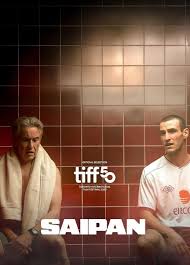
SAIPAN
Ireland, 2025, 91 minutes, Colour.
Eanna Hardwick, Steve Coogan, Peter McDonald.
Lisa Barros D'Sa, Glenn Leyburn.
Football (Soccer for those from Downunder) has a vast world following so this story, from the 2002 World Cup will be of considerable interest, for those who remember vividly, for those who are learning the history. For those not familiar with football, the recommendation is to continue watching because the drama builds up to a strong confrontation, personality conflicts.
And the title? The island of the Northern Marianas in the Pacific, the venue for the specialised training of the Irish team before it transfers to Japan for the competition matches. Saipan has an interesting history, well worth investigating, here with some footage from World War II. The Canary Islands, Tenerife, provided the location for Saipan here.
Saipan introduces its central character, champion footballer, Roy Keane, destined from his childhood talent to achieve great things. In fact, he captained Manchester United under the management of Sir Alex Ferguson. And, so, chosen to be the captain of the Irish team for the World Cup. The other central character for this film is Mike McCarthy, English of Irish descent, player for the Irish team for many years, now its manager.
Roy Keane is played broodingly by Eanna Hardwick (excellent as the sinister conman in the series, The Sixth Commandment). Steve Coogan, veteran of so many dramas and comedies, is persuasive as Mike McCarthy.
On arrival in Saipan, the team finds all kinds of limitations, including the non-arrival even of footballs. The football pitch has potholes. The accommodation is a mixture of luxury and broken down air-conditioners, Keane has his special breakfast, the others having sandwiches, the players being rather more carefree, the management concerned and worried, and Roy Keane becoming more and more individualistic.
He complains. He is aloof. He phones home. He upsets himself, continually criticising the conditions, increasingly moody. The screenplay, offers an initial acknowledgement that this is a true story tweaked. To many, Keane was a hero, hard done by. For others he was spoilt and cantankerous. The screenplay here opts for the latter.
The key scene is the final confrontation, after Keane gives a warts and all interview to a journalist, his standing up to Mike McCarthy, clash of egos, Keane stubborn, petulant, refusing to stand down.
Football lovers will know that what happened in reality. Audiences who do not will be intrigued to discover what actually happened to Ireland in the World Cup, 2002 (and some actual footage during the final credits).
- An Irish story, a football story, a personality clash story?
- Audience knowledge of the characters and occasion, Irish perspective, world perspective, for those knowing nothing about football?
- The background history, Ireland, football, World Cup ambitions? McCarthy, British and Irish background, playing Ireland? Manager of the team? Roy Keane, the scenes of his childhood, talent and ambitions, player for Manchester United, contact with Alex Ferguson?
- The introduction to Roy Keane, as a boy, talent, playing for England, phone call with Ferguson? The captain in the World Cup team, with the other players, friendly, aloof?
- Mike McCarthy, his personality, managing the team? His assistants, the other members of the team?
- The preparation for the match in Saipan? The flight, the accommodation, the hotel, the limitations of the football field, poor air-conditioning, the food, the sandwiches…? Get the welcome, the players adapting? The managing team and press conferences? The television coverage?
- The limitations, the probable is not arriving? The practice sessions, the sauna, golf, partying? The indications of the countdown to the World Match?
- The character of Roy Keane, his manner, presumptions, player for Manchester United, his aloofness, his special breakfast? Interactions with the other members of the team? The player with the books and his Kwik? His room, by himself? His complaints, phone calls home? The building up of attention, the confrontations with Mike McCarthy, the other members of the management?
- Mike McCarthy, managing, limitations, trying to be cheerful? The discussions with Roy Keane? The buildup of the tensions, the complaints, his deciding to go home, the pressure on the management, discussions, persuasion? The media?
- The interview, his offloading all his complaints, the promise not to publish it before the match, the publication, the impact for the players, the management, for Roy Keane himself? The advice to offer an apology?
- The buildup to the meeting, the confrontation, Roy Keane and all his complaints, standing firm, abusing Mike McCarthy? Audience sympathy for him, for his complaints?
- Mike McCarthy, his decisions, worrying, the screaming moment, knocking on the door, offering the opportunities, decisions, the press conference?
- The television coverage, the commentary, the people in the street, for and against?
- Roy Keane flying home, the team going to Japan for training, the continued request lawyer, his stubbornness?
- The subsequent history of the matches, the success without Roy Keane, missing out actual clips during the final credits?
Irreplacelable You

IRREPLACEABLE YOU
US, 2018, 96 minutes, Colour.
Gugu Mbatha-Raw, Michiel Huisman, Steve Coogan, Timothy Simons, Jackie Weaver, Kate McKinnon, Christopher Walken, Zack Cherry, Brian Tyree Henry.
Directed by Stephanie LaIng.
This is a romance, a romantic comedy with quite a difference. It is a film about terminal illness, the period before death, dying. But, despite the sombre themes and some of the implications, this film has a lighter, often more positive touch.
It is an American production but the lead, Gugu Mbatha=Raw, is British – and Steve Coogan appears in a rather understated role as the leader of a therapy group.
The audience knows almost from the beginning that the central character, Abbie, dies, with her partner, Sam (Michiel Huisman) visiting her grave.
Abbie and Sam have been sweethearts since they were toddlers at school, a visit to the aquarium scene, a story about a fish biting another and their becoming one, she biting Sam – and their remaining together all through childhood, teens, adulthood. She is a dominating character, controlling. He is rather passive, a boring lecturer, often withdrawn. But, they are a loving couple.
Thinking she is pregnant, the resulting examination indicates that she has terminal cancers. So, the film is very frank in using the word death and dying rather than simply passing or passing away. Audiences can empathise with Abbie, her reactions, her feelings, the treatments, some of the resistance, her participation in therapy group, including her crocheting and her resistance (and the glimpses of the eccentric characters in the group).
But, one of the main focuses is her wanting to prepare a future for Sam, interviewing women, setting up online information, dominating him, including getting him to go to an art gallery opening, setting him up with the artist.
One of the members of the group, Myron (Christopher Walken at his sympathetic best) befriends Abbie, sharing a lot of her life and her ideas, trying to get her to focus on herself and her experience in the present, to stop her trying to control the future.
Which means then there are ups and downs of the relationship, some feelings of alienation, some frankness, truth-speaking, reconciliation and hope.
So some interesting characters amongst the supporting cast including Kate McKinnon in the group and, towards the end of the film, a key scene with Jackie Weaver.
For audiences interested in frank films naming death and dying, the 2025 Goodbye June is well worth seeing.
- A film about dying, life before death, preparation for death? For the ill person? The partner? The others?
- The New York settings, the city, apartments, doctor’s offices, therapy meetings, hospital, the streets, the rivers, atmosphere? The musical score?
- The opening, the aquarium, the story about the fish fighting and becoming one, Abbie and her biting Sam, the stitches, his telling the story, the young children, playing on the beach, the bond? Growing up, partners, life, his academic lectures, the students bored, his dividends, and in charge, dominant, thinking she was pregnant? The decision to marry, preparations for the wedding ceremony, the cake…?
- Benji, his character, friendship with Sam, support, talk, the opposite? Abbie, her mother, the death of her father, her mother concerned?
- The pregnancy test, the interview with the doctor, the discovery of the tumours, the diagnosis, terminal? Issues of treatment? The encounter with Dominic, his friendship, brashness, helping Abbie? The various sessions, her finally giving up on him?
- The therapy sessions, Mitch and his quiet running of the sessions, the importance of the crocheting, the talk at the meetings, the various members, Kate and her touches of meditation and New Age, Bill, Jim, Meryl and their personalities, comments? Abbie’s reactions, keeping her distance, outbursts?
- The character of Myron, his interest in Abbie, their talking, his terminal illness, his attitude towards life, the outings with Abbie? The discussions? His stories about Estelle, the unwanted couch?
- Abbie, controlling, wanting the best for Sam, her decisions to plan his future, the interviews with the women, looking at the website, preparing his profile, discussions with the artist in the restaurant, organising his going to the opening, Myron and the buying of the clothes, Benji and his comments, Abbie watching with the binoculars? Benji leaving, Sam, awkwardness, the bar, the encounter with the artist?
- And, her reactions, upset, distance from Sam, the effect on his classes? Separation, the meetings, Myron and his talk, bringing her to acknowledge her controlling attitudes? Seeking Sam, the reconciliation?
- The preparation for the wedding, her mother, her mother going to support groups, the wedding dress, the cake? Her final visit to the therapy group?
- Abbie growing weaker, the preparations for the wedding, her death?
- Sam, the decision to have the party, the wedding party, the guests, the dress, the cakes, the dance space? His speech, reading out her letter?
- The phrase, Too soon, for jokes about death, the tone of her letter, hopes for the future, too soon?
Penguin Lessons, The
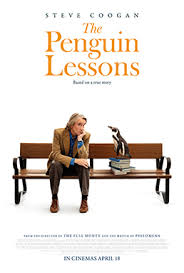
THE PENGUIN LESSONS
UK/Spain, 2024, 111 minutes, Colour.
Steve Coogan, Jonathan Pryce, Julia Fossi, David Herrero, Bjorn Gustafsson, Alfonsina Carroccio.
Directed by Peter Cattaneo.
Films about penguins are always interesting, intriguing, often delightful. 2024 saw the release of My Penguin Friend as well as the Penguin Lessons. Both are set in South America, the former in Brazil, the latter in Argentina. The former is set in the present, the concern for penguins and the environment. The latter is set in 1976.
1976 was a significant year in Argentinian history, civil unrest, the coup by the generals and their continued military dictatorship for the next eight years (including the Falklands War). This is very much the atmosphere of this story. However, the focus is on an Englishman, Tom Michell, the screenplay a fictional adaptation of his memoir (and, as often the case these days, some footage of himself and the penguin during the final credits).
Tom is a teacher, has been drifting for years through the US and Latin America, saddened, isolated, sardonic, not coping with the death of his daughter. He is welcomed by the principal of a privileged high school for the sons of wealthy Argentinians (including generals). The principal is played in a very proper English manner by Jonathan Pryce.
And Tom is played by Steve Coogan, an actor comfortable in both drama and comedy, seen to advantage in the National Theatre Live version of Dr Strangelove where he plays four satiric characters). Here he is rather world-weary, trying to teach his class English language and literature, forced to coach Rugby which he dislikes, intending to coast along in his life and work.
As with any visitor to Buenos Aires, he decides to catch the ferry across the Plata, a visit to Uruguay for some kind of relaxation. Instead, he and a companion from the nightclub, find a penguin covered in oil from a slick. He is happy to abandon it. She wants to clean it, care for it. And, long story short, the penguin becomes his responsibility, getting it through police checks and Customs, concealing it, trying to get rid of it, bringing it back to the school and ensconce it in his apartment.
And, there are many penguin lessons, the penguin becoming in the words of one of the alert students in the class, a metaphor. The penguin, now named, is a hit with the boys, uniting them from their mischief and bullying, paying attention, eager to feed the penguin, its becoming a football mascot.
Interestingly, everybody talks to the penguin, now named Juan Salvador, especially Tom. His rather demanding landlady and her daughter are charmed. His co-teacher from Finland is able to pour out all his personal troubles to the penguin. And, after being initially taken aback, of course, even the principal talks to the penguin. So, happy penguin lessons at the school.
But, this is the year of the coup, the cleaner’s daughter involved in protests, snatched by the police in the street in front of Tom, his not venturing to help, then the disappearance of the shopkeeper who supplied fish to the school, and an episode where Tom with the penguin sees the police chief who headed the abduction, sitting in a cafe, his little daughter patting the penguin, but a severe reprimand for Tom and then his being arrested, interrogated, tortured and released. This atmosphere pervades the latter part of the film.
While there is a happy ending at the school, the boys the better for Tom’s classes and his advocating of social equality and care, and the presence of Juan Salvador, all graduating. And the headmaster decides to use his influence with the parents to obtain the release of the imprisoned cleaner’s daughter.
This is a British film, an adaptation of the memoir, directed by Peter Cataneo (famous for his direction of The Full Monty), some British reserve and reticence as wellais sarcasm and sardonic remarks, which avoids an over-sentimental appeal, but nevertheless has its moments of laughter – and, perhaps to the surprise of some audiences, some tears.
- The title, memoir of the author, based on a true story, fictionalised, the home movie of the penguin during the final credits?
- Argentina, 1976, civil unrest, secret police and arrests, disappearances, the generals, the coup? And its continuing into the mid-1980s? Memories of the Falklands war?
- The city awareness of areas, the school and its interiors, grounds, the city streets, shops, the visit to Uruguay, the countryside, the city? The beaches, the oil slick? The musical score?
- Tom Michel, his story, arriving in Argentina, employed by the school, relationships with the headmaster, various schools in the US and Latin America, age, gradual revelation of the hit run death of his daughter and its effect on him, his wife, loneliness, sarcasm and sardonic, his room in the school, the encounter with the tough housekeeper, meeting Tapio from Finland, his conversations, serious minded, his sad story about his friend and ex-wife?
- The classes, the wealthy students, the fascist backgrounds, taunting the Socialist boy? Disturbances in class? Tom and his classes, sarcasm, Hamlet, literature, John Masefield’s poem, Shelley? Boys and their personalities, presumptions, bullying and targets? The football game, Tom going to lie down, overhearing the conversation between the shopkeeper with the fish and Sofia, reassuring her?
- The decision to go to Uruguay, motives, the trip with Tapio, the bar, the encounter with the women, the dancing, on the beach, finding the penguin, the woman and her compassion, Tom not wanting involvement, back to the hotel, secretly, washing and cleaning it, the kiss, and the woman leaving? The complications with the police and Customs about the penguin, the interrogations, the police threats? Tom bringing the penguin back to the school, in his room, trying to feed it, keeping it on the balcony?
- Audience response to the penguin, the name from Jonathan Livingston Seagull, Tom bringing it to class, the response of the boys, feeding the penguin, behaving better in class, Tom and his getting the boys to lie down, reflect, commentary on the poems, Diego and the focus on metaphor?
- The penguin, in the room, the balcony, with Sofia and her mother, the meal, Tapio and his conversation and revelation to the penguin? And later the headmaster doing the same? Tom and his conversations with the penguin?
- The political situation, lack of freedom, brutality, Sofia’s arrest, the closing down of the fish shop? Tom and Sofia’s arrest, not doing anything, excusing himself to the school, the later confession to Sofia’s mother, with the penguin and seeing the chief of police, his daughter patting the penguin, Tom asking for the release of Sofia, his arrest, torture, release? The reaction of people at the school? The headmaster and his intervention for Sofia? Successful?
- The headmaster, his personality, British, style, colonial? The patronage of the wealthy parents? Closing the school for a week? Suggesting that Tom move on? Talking to the penguin? Change of heart? The boys improving with their studies? The graduation ceremony and the applause for the students?
- Tom, his sad life, the possibility for change, the penguin as reality and metaphor, his staying at the school? And the happiness of Sofia’s release?
- The final information about his staying at the school, return to Wales, finding the old footage?
- The very British sensibility of the characters? Transported from Britain to the uncertainties of the oppression of the generals in Argentina, 1970s-1980s?
Dr Strangelove: National Theatre Live

DR STRANGELOVE: NATIONAL THEATRE LIVE
UK, 2025, 130 minutes, Colour.
Steve Coogan, Giles Terera, John Hopkins, Oliver Alvin-Wilson, Penny Ashmore, Ben Deery, Richard Dempsey.
Directed by Sean Foley.
Stanley Kubrick’s comic masterpiece, Dr Strangelove: or, How I Stopped Worrying and Learntedto Love the Bomb, was released at the end of January 1964. It was in production during the nuclear crisis, the missiles of October, the 13 days, Kennedy and Kruschev, and Cuba, October 1962. It was more than relevant. It was a satire to disturb the American consciousness, to disturb world audiences. It was based on a novel by satirist, Terry Southern. And the screenplay was cowritten by Kubrick himself with Peter George.
The film had a significant cast, most notably Peter Sellers in three roles, with Sterling Hayden, George C.Scott and a young James Earl Jones in the cast. Many of its sequences are part of cinema memory.
British writer and director, Armand Iannucci, well known for his satires including The Thick of It, and the Death of Stalin, has adapted Kubrick’s screenplay for the stage. It stays very close to the film in characters and dialogue and the situations, indicating how a satire for the 1960s can have a similar relevance in a changed world situation, especially the Trump US and world of 2025.
While Peter Sellers played three roles, the British officer Lionel Mandrake, the American President, Merkin Muffley, and the mad scientist, Dr Strangelove, with a Nazi past, and an uncontrollable arm often compelling him to try a Nazi salute, Audiences will be pleased to know that this is enjoyably included here. (One of the other features of the film was the cowboy pilot, TJ Kong, played by Slim Pickens, ending the film by riding the bomb hurtling towards earth with a rodeo yippee, and Vera Lynn’s song, We’ll Meet Again – and these are included in this production.)
The star of this performance is Steve Coogan, reprising very effectively the three Peter Sellers roles but also adding a fourth role, that of the cowboy pilot, Kong. And he does this within two hours of performance time. And, fascinating to see how the production handles Coogan in the four roles, sometimes a stand-in actor for him as president with back to the audience, or having mandrake on the other end of a phone, or having Dr Strangelove appear in a video contact with the War Room -and the amazing speed for him to change costumes and wigs.
The staging of the they is expert, the audience watching the change of scenery, General Jack Ripper’s command post, generals gathered with the President in the War Room but, especially, the three pilots in the cockpit of the plane with filmed background of snowy mountain peaks, their flying steadily towards nuclear apocalypse.
But, it is the satirical dialogue, sometimes very witty, sometimes touches of slapstick, all kinds of misunderstandings, caricatures of American military, the touch of sendup of the British officer and his accent and vocabulary, the portrait of the mad general preoccupied with fluoride and bodily essences and the destruction of America, the gung ho anti-Communist military official, the Russian ambassador…
At first, watching the National Theatre Live version of the stage play, it seems artificial. But, gradually, through the skill of the performances and the wit of the dialogue, we are gradually drawn into the black comedy – but, always realising that through the exaggerations, there is more than a glimpse of truth, always a reality check.
Joker: Folie a Deux
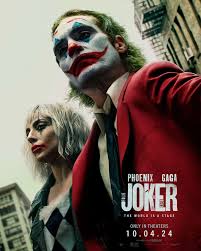
JOKER: FOLIE a DEUX
US, 2024, 138 minutes, Colour.
Joaquin Phoenix, Lady Gaga, Brendan Gleeson, Catherine Keener, Zazie Beetz, Steve Coogan, Harry Lawty, Leigh Gill, Ken Leung, Jacob Lofland, Bill Smitrovich.
Directed by Todd Phillips.
Unexpected – to say the least. Disconcerting… Intriguing…
In 2019, the reworking of the Joker story, many memories of Batman films, was hugely successful, a blend of action and psychological probing of the character of Arthur Fleck, Joker. And, Joaquin Phoenix one the Oscar for Best Actor.
Five years later. Great expectations. A sequel with the intriguing title, Folie a Deux, meaning a shared madness, a psychological description, raising the question of whether the madness of two is the shared madness of Joker and Arthur Fleck or, with the casting of Lady Gaga as Harleen Qninzel, the emerging Harley Quinn, the madness is of the relationship between Joker/Arthur and Harley Quinn.
But, the immediate response to the film on release was highly hostile. Words like “disappointing”, “disaster”, “boring…” resounded through social media, and critics not so enthusiastic either.
This review will be for the affirmative, for Joker Folie a Deux being an intriguing experience of unexpected filmmaking.
Its plot is the aftermath of the original film startlingly recaptured in an opening 3 minute Loony Tunes cartoon. The film is something of an epilogue in terms of the more modest scale of the action. We have seen Joker/Arthur Fleck killing people. Now he is in prison. In fact, quite an amount of the action takes place in the prison, unsympathetic and brutal guards (led by very Irish Brendan Gleeson), some of the inmates supportive, a young quizzical inmate watching Arthur intently and definitely making a final statement about his perspective on Arthur.
Otherwise, the action takes place in the courtroom, his lawyer, Catherine Keener, hoping that Arthur will prove to the court that he is mentally ill. By contrast, lawyer Harvey Dent (Harry Lawty from Industry) more than a touch of the smug, wants to convict Arthur and for Arthur to convicted himself. Fairly straightforward scenario.
But, the other star of the show is Lady Gaga, a presence who creates a limelight around her. And, of course, she sings.
Some promotion discussion has arisen about whether the film should be called a musical or not. From this reviewer’s point of view, it is a musical. There is a huge range of songs listed in the final credits, many of the hits of musical theatre that we are familiar with, think If My Friends could see Me Now, What the World Needs now…, And, finally, poignantly and to the point, Jacques Brell’s If I Go Away…
Already in prison, Arthur Fleck bursts into song, Joaquin Phoenix’s voice distinctive, and, throughout the film, dancing, with Lady Gaga, eventually even a tap dance. And, as in musical theatre, many of the dancers are dream sequences, songs and routines in the fantasies of both Arthur and Harley Quinn. The lyrics, many of which we know so well, are inserted to highlight the mentality of the characters, what they are experiencing.
Which raises the key question of this film: is Arthur Fleck mentally ill? Is he schizophrenic? Is Joker part of his personality or, as it is literally, a mask, a projection? This is discussed in the court case with a number of experts being cross-examined. And it emerges in the court case when Arthur decides to sack his lawyer and do his own defence. Does he defend himself? How does Arthur see the Joker? And who committed the crimes, the mad Joker or the Arthur who grew up in poverty, unloved, a vicious mother…?
It would seem that the very strong finale, the close-up of Arthur himself, of his eyes, does provide an answer.
This is the kind of film which we have seen in the past, reviled on release, reconsidered, eventually becoming something of a cult film as it is understood more and more. With its blend of realism, fantasy, song and dancing, it is something of an arthouse/ comic book creation.
- Sequel, expectations from the original?
- Audience response, low, MD rating, the bloggers, audiences wanting their money back…? Hostility?
- Reimagining of Arthur Fleck and Joker, the title, the folly and madness, of two, Arthur and Joker, in himself? The madness of Arthur/Joker and his relationship with Harley Quinn?
- The immediate tone, the animation, Loony Tunes in the tradition, the cartoon about Joker, recapping the issues of the original film, the murders, the confrontation on television?
- The film is a musical, Arthur and his ambitions, Joaquin Phoenix and his singing and dancing? The songs, in his head, Arthur singing? Dancing? His imagination, the lyrics and the relationship to the themes of the narrative? The popular songs on audience familiarity? Lady Gaga, reputation, singer, the songs in her imagination, with Arthur, song and pants?
- A prison film, the conventions, the harsh prison, the exteriors, interiors, the cells, the television room, the yard? Grim? A court film, the trial, the courtroom, those attending, the judge on the bench?
- The issue of Arthur as Joker, real, make up in mask, after identifying with Joker? His background as a child, abusive mother, orphanage, growing up alone, sensitive, reaction and the killings, ambition for television, the killing of the compere? Age, expectation, hopes? In prison, awaiting trial?
- The guards, conventional, the Irish atmosphere, the stories, wanting a joke from Joker, the brutality, yet happy to have the celebrity?
- Arthur’s lawyer, the discussions, her aims, to prove that Arthur was killed, her performance in court, being sacked?
- Harvey dent, smug, young, style, behaviour in court, the cross examinations, attacking Arthur?
- The judge, handling the situation, his decisions, Arthur imagining bashing the judge and Harvey dent?
- Harley Quinn, her story, her actual name, her version of her story, compared with the reality, her madness within herself, her parents, her actual name, the committee herself, seeing Arthur, the infatuation, wanting to be with him, relate to him, the discussions, the screening of The Bandwagon, That’s Entertainment? Setting the fire? The escape, together, back to jail? The bond, real and imaginary? Her presence in court, intense looking at Arthur? Outside the court?
- The fans, outside, in the court room, the make up, so many as Joker, the reactions, identifying with him? Support?
- The witnesses, serious, doctors, psychologists, the cross-examination, some of their interviews with Arthur, the credibility?
- Arthur, firing his lawyer, defending himself, his manner in the court, the stories, his challenge?
- The confrontation, who the Joker really is, the Joker in action? Or Arthur in action, accepting responsibility, the jury of their findings, the hostile reaction to the findings?
- The bomb, the damage, Arthur, the escape, the fans, in the street, those helping, supporting, the effect on Arthur and his being overwhelmed?
- In jail, the young prisoner and always supporting Arthur? The hostile prisoner, his expectations, the confrontation, killing Arthur? Carving the green on his face?
- Audience shock, the death of Arthur, the destruction of Joker? The brutal song, If you go away, Arthur dying, the close-up on his eye?
- The impact of the film and expectations from the audience? The possibility of audiences understanding this arthouse kind of film, the possibility of being a cult film?
Despicable Me 3
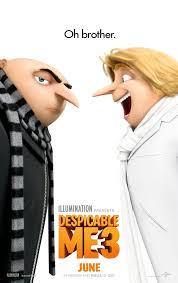
DESPICABLE ME 3
US, 2017, 90 minutes, Colour.
Voices: Steve Carrell, Kristin Wiig, Trey Parker, Julie Andrews, Steve Coogan, Pierre Coffin, Jenny Slate.
Directed by Kyle Balda, Pierre Coffin.
If you have been following the career of intense mastermind criminal, Gru, as well as his conversion to the side of right, and also his devotion to agent, Lucy, then there is no doubt that you will want to see what they are up to in this third Despicable Me film.
And, of course, of course, there are the Minions, still with their bright yellow, still some of them with a touch of personality while there are hosts of almost anonymous others, with their particular intonations and language which we scarcely understand, and their propensity for being on the side of those against the law. The animation is the same and it has delighted audiences, especially younger audiences, in the previous two films and the Minions’ own feature and short films.
While there could have been more of the Minions in this film, they turn up at various times, bringing a sense of comic relief, in their turning against Gru because of his law-abiding missions, rounded up and going to prison and causing more than a rumpus there, escaping and flying through the air in their own contraption and able to help out in final confrontations. Steve Carrell voices again the character of Gru, and Kristin Wiig is Lucy.
If you have seen the trailer, then you won’t be surprised that one of the plot developments is the introduction of a villain par excellence, Balthasar Bratt (voiced by Trey Parker of South Park), a superstar child of 1980s television, a young successful criminal. After a bout of acne, he loses popularity and decides to retire to be a criminal in real life, seeming to have unlimited funds (probably his royalties) to create robots, planes, weapons. Gru has a mission to capture Bratt but just misses out so he is fired from the agency as is Lucy when she stands up for him. They retire to home with their three daughters and all seems to move towards a quiet film.
But, then comes the news that Gru has a twin brother, Dru (also voiced by Steve Carrell but in a higher register), so Gru contacts his making whoopee mother (voiced by, of all people, Julie Andrews!) who tells him the truth and he goes to find his long-lost brother who has yellow hair while Gru has none. The whole family moves into Dru’s luxurious home. But, Bratt is not to be put down and has stolen a jewel from Paris – which means, of course, that Gru will be after him again, with the help of Dru (who actually wants to be a criminal). So, finally, plenty of action as Bratt takes his plane and then his giant robot of himself and laser in a pretty successful attempt to demolish a lot of Hollywood, only to be defeated by Dru – and the Minions coming to the rescue.
And there it is, more or less what we might expect, a lively entertainment, especially for younger audiences.
Reckoning, The/ UK 2023
THE RECKONING
UK, 2023, 4 X 60 minutes, Colour.
Steve Coogan, Mark Stanley, Robert Emms, Gemma Jones, Neal Pearson, Siobhan Finneran, Mark Lewis Jones, Fenella Woolgar.
Directed by David Blair, Sandra Goldbacher.
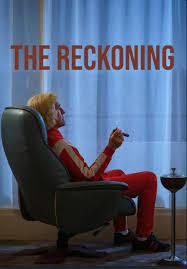
The Reckoning is a strong television series, very difficult to watch. It is the story of the career of television personality, Jimmy Savile, and the revelation, a reckoning, of his abusive life.
The screenplay has been cowritten by Dan Davies, who had seen a television program of Jimmy Savile when he was young, followed through with his interest in Savile and seeming inconsistencies in his persona, eventually many interviews with Savile himself, finally writing an award winning account of several and his crimes.
From Wikipedia: “The boxes containing the many tapes, interview transcripts, newspaper cuttings and research articles that went into my book are taped shut and piled high in a shed. I don't want them in the house in which my three children live.
Davies' book In Plain Sight: The Life and Lies of Jimmy Savile was published in 2014. The book formed part of the basis of the BBC television series The Reckoning, and the series includes many scenes where Davies, played by Mark Stanley, interviews Savile.”
The sequences of interviews with Davies are a framework for the exploration of Savile’s life – and they are uncomfortable watching, Savile sociable, insinuating about his life yet in denial, needing to talk to Davies, the clashing, his calling him back.
With the flashbacks, there is information about Savile and his family, his referring to his mother as the Duchess (played by Gemma Jones), visiting her in Scarborough, grieved at her death, yet revering her as something of a saint. Then there are his early years in television, his eccentric manner, his way of talking, the friendly persona, on the BBC, Top of the Pops – and later his program as he travelled in his caravan interviewing people around the UK and his manoeuvring himself into the television program, Jimmy’ll Fix It.
It was courageous of Steve Coogan to take on the role but he has shown quite versatility in television programs and personas as Well Is in films. He is made up to look like Savile, perform like Savile. And the filmmakers have decided to include quite a range of sequences with the actual Jimmy Savile making Coogan’s performance all the more eerie.
The series is in four parts. By the second part, teenage enthusiasts are introduced, focusing on one girl in particular who is assaulted and commits suicide. While Savile is called before the authorities, he always has an answer and, despite rumours, succeeded in his covering his crimes until he died.
Each episode is framed by testimonies from actual survivors of Savile’s crimes. And, some of their stories are re-enacted, when they were children or young adults, making Samples double life, especially his travelling caravan, all the more sinister, accosting, especially young girls, and assaulting them with dire results.
But, unmarried, capitalising on his freedoms, over the decades he raised millions of pounds for hospitals, acclaimed by Margaret Thatcher who eventually gave him a knighthood (actress Fenella Woolgar doing an excellent impression of Margaret Thatcher), crazed affirmed by Diane, meeting with the Pope, John Paul II during his tour of Britain, a papal knighthood.
However, there were some who are suspicious, especially at the end, the series showing him hanging around hospitals, lurking in the morgue suspiciously, confronting nursing staff who push in the side.
With the revelations after his death, great disillusionment with the British public, to have feted him and believed him for Savile’s many decades, the discovery that he was an abuser, a predator, narcissistic, all show in stating he would put smiles on people’s faces, but interiorly, a loner, lonely, angry…
The series should be seen in conjunction with the BBC documentary, Jimmy Savile: A British Horror Story (2022).
Despicable Me 4
DESPICABLE ME 4
US, 2024, 95 minutes, Colour.
Voices of: Steve Carell, Kristin Wiig, Joey King, Will Ferrell, Sofia Vergara, Miranda Cosgrove, Pierre Coffin, Steve Coogan, Stephen Colbert.
Directed by Chris Renaud, Patrick Delage.
We might wonder how often we use the word “despicable” in real life. However, since 2010 and the first Despicable Me film, the first thing we think of when we hear the word (well, most of those who are younger) are the films and, especially, with all respect to Gru, the Minions. They appeared in Despicable Me 2 in 2013, had their very own film in 2015, reappeared in Despicable Me 3 in 2017. And, of course, these films can be regularly seen on streaming. The Minions are always with us. But, it is something of a surprise to find that it is seven years since the previous film.
It takes up where 3 left off, the Institute for villains, the escapades of some of the graduates, the agency led by Silas Ramsbottom (Steve Coogan) engaging the help of now reformed Gru (the popular Steve Carell).
This time we have a new villain, top graduate to Gru’s jealousy, a Frenchman, Maxime (voiced by Will Ferrell). He is vain, something of a peacock in clothes and strutting, has an odd criminal girlfriend who spends most of her time putting on lipstick, determined to be a worldwide criminal phenomenon.
It doesn’t quite work out that way, Ramsbottom summoning Gru into action. Since we know Gru from the past, we know that this isn’t going to be swift justice being done, a whole lot of situations going wrong, Maxime actually caught and imprisoned but, of course, escaping and continued to threaten.
We have seen it before but we are happy to see it all again! This time we see Gru’s wife and children again but there is a new bundle of joy, a baby son. He is a bundle of joy for his mother, always smiling and goo-gooing, but scowling at his father. Which means then that the baby offers an opportunity for Maxime to take him as a hostage, Gru in pursuit (even on high buildings, on an aircraft, all over the place).
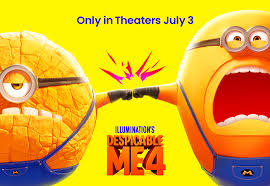
And the Minions, plenty of them, their shapes, yellow colour, range of situations, sometimes awkward, often to the rescue, then mumbling and chirping, even, at one stage, their Academy, and dozens of them there on screen. And we are thinking and feeling, long live the Minions!
Lots of action, lots of colour, lots of comic situations (and the question of how long this kind of action franchise can continue), happy family reunion, and the baby now goo-gooing its daddy.
- The popularity of the Despicable Me series, Gru and his adventures, the presence of the Minions?
- The animation style, colour, movement, settings, real and imaginative? The characters in this style? The range of the Minions? The voice cast? The musical score?
- The continuation from the previous film, the Institute, villains, the management, the awards? The social, Gru dramatic arrival, with the Minions, his expectations, the clash with Maxime? Maxime winning the award? His speech and attitudes? Ambitions? The picture of his girlfriend, Valentina, lips on lipstick?
- Maxime and his career, the clash with Gru, the threats, the threats to the family, their going to the safe house, the continued threats? The visit of the old lady from the Institute?
- Gru, his wife, support, the family, the happy scenes, the teenage daughter, the little children, the scenes with the new baby, severe with his father, smiling at his mother? His finally being abducted, Gru to the rescue, Maxime and his controlling the baby, the baby finally acting, reconciled with father, family?
- Maxime and his actions, crimes, reputation, daredevil? Is arrest, imprisonment? His escape?
- The buildup to the confrontation between Maxime and Gru, the action sequences, in the air, the flight, the baby, over the city, precarious situations?
- Ramsbottom, his organisation, warning Gru, wanting his help, supervision?
- The comedy with the Minions, the characters, behaviour, voices and sounds, action? And the variety of Minions, being called from all occupations, gathering, the Minion force?
- An entertainment for children and adults?
