Displaying items by tag: Peter Malone's Movie Reviews
Mystery Junction
MYSTERY JUNCTION
UK, 1951, 65 minutes, Black-and-white.
Sydney Tafler, Barbara Murray, Patricia Owens, Martin Benson.
Directed by Michael McCarthy.
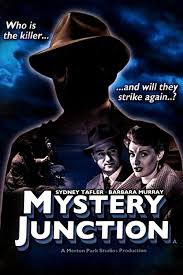 An entertaining 65 minutes. This is a film about a detective story writer, recognised in a train by an old lady passenger, asking him about his work, his narrating the story being dramatised.
A prisoner is handcuffed to a police officer on the train, travelling to a court case, his being protected because he has promised to speak out against other criminals. Then, the police assistant is thrown from the train, the killer disguised as the ticket collector.
The writer and the old lady then discover two show girls hiding out in the luggage compartment, the ticket collector knocked out… The passengers in the carriage are all gathered together and, then, they are stranded at the junction because of the weather.
When the lights go out, the police officer is shot dead – and, gradual revelations of the criminal, his associates on the train, a young man who won’t reveal where he was going, confrontations, the gang driving away returning, and the various interrogations and threats, the arrival of the police in the morning, and the revelation of the killer and why.
An amusing postscript when the old lady is reading her novel and looks up at her fellow passenger and sees characters who are lookalikes of some of the villains in the story!
Heart Knows, The/ Corazon Relator
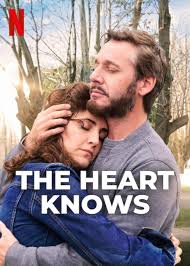
THE HEART KNOWS/ Corazón delator
Argentina, 2025, 89 minutes, Colour.
Benjamin Vicuna, Julieta Diaz, Peto Menahem, Gloria Carra.
Directed by Marcos Carnivale.
Many people would wonder about the effect of a transplant, the influence of the donor on the recipient, especially the donation of a heart.
This is a very heartfelt film from Argentina, brief, but highlighting the issues, the personality of the man who dies, his particular qualities. Then there is his wife and his son. And, of course, the recipient.
The drama is in the status of the recipient, his health, wealth, influence. Then social issues in the town, for families, issues of moving, the taking over of housing for social building. And this affects the widow and her son.
The recipient develops a great sense of charity for the poor, the indication that he has been influenced by the heart of the donor, making contact with the widow and son, his attraction towards her and the son – and, of course, the emotional and dramatic consequences.
- The title, a heartfelt film? The nature of the heart emotions? The heart transplant, a new heart and its effect on the recipient?
- An Argentinian film, the city, the poor neighbourhood, the developers, fighting against development and expulsion? The contrast with the business world, affluence, presumptions?
- The visuals of the city, El Progresso, the neighbourhood, the homes, workplaces, the medical centre? Dilapidated? Neglected? The contrast with the wealthy mansions, comforts, business offices? The musical score?
- The introduction to Pedro, his personality, his work, relationship with his wife, with his son, the birthday, the bike, riding, the accident and his death? The impact on his wife, his son? His being taken to hospital, unable to be revived, the request for the transplant? Vale and her consent?
- The introduction to Juan Manuel, wealth, the company, his sister, negotiations with the Mayor, developments? His comfortable lifestyle? Is playing tennis, vigorous, his collapse? Hospital, in need of a heart transplant? Receiving the heart, three months later and his recovery?
- The credibility of his change of character, influenced by the heart of Pedro? Wanting a more simple lifestyle? His relationship with Nancy, many years, her cooking, her noticing the difference? His wanting her to share a meal? Her helping him with his change of attitudes?
- The people in the neighbourhood, the various characters, their contacts, the meetings and discussions, the boats, to take action? The shopkeeper in opposition and his henchmen, sneering, later sabotEge and violence? Everyone else on side, the meetings, the efforts? The decision to rebuild and do the work themselves?
- Juan Manuel, in the vicinity, meeting the people, moved by them, meeting Vale, her son, sympathetic? Going home, the need for different clothes, to park his car away (and the tires gone)? Helping with the work, continuing to return, the rebuilding, bricks and cement, but is also getting the supplies, even to the new refrigerator? The change in himself, his concerns?
- His friendship with Tony, Tony and the business, disbelief at what Juan Manuel was doing? The suspicions of his sister? The deal with the Mayor, his reluctance to sign the documents, signing?
- The bond with Vale, the discussions, learning more about Pedro, the toy motorbike and the son? His being assaulted and cared for? The attraction to Vale, the night?
- Vale and her discovery of his identity, her reaction? The reaction of the group? Yet the opening of the centre and the joy?
- Juan Manuel, his decisions, the mayor coming to the neighbourhood, the change of heart, promising the development? Juan Manuel and his responsibility for the development?
- The happy ending, Vale learning the truth about the heart, her love for Juan Manuel, his love for her son? And the benefits for the neighbourhood?
Elena Sabe/ Elena Knows

ELENA KNOWS/ELENA SABE
Argentina, 2023, 100 minutes, Colour.
Mercedes Moran, Erica Rivas, Mey Scapola, Miranda de la Serna Agustina Munoz.
Directed by Anahí Berneri.
This is a very emotional drama, a focus on two women, mother and daughter, the personality of the mother, strong and demanding, in her 60s, her health. Then there is her daughter, the relationship between mother and daughter, the daughter’s work, outlets, relationships – and then her death. The emotion is in the response of the mother to her daughter’s death, not believing that her daughter could kill herself.
There are religious and church complications, the priest finding the daughter’s body, the mother’s suspicions, accusations.
Ultimately, with many interactions, especially from the daughter’s friend, Pablo, and the mother, Elena, finally coming to some understanding of her daughter, the nature of the relationship, and some understanding of herself.
- Focus on Elena, her relationship with her daughter, her daughter’s death, the aftermath?
- The Argentinian city, homes, streets, church, medical centre, school?
- The framework of the film, Elena, 65, Parkinson’s, shuffling through the streets, the Metro, the buses, head bowed, falling?
- The transition to Rita, her age, after her mother, exasperated with her mother, sobbing? Taking her to the beauty parlour? Offering to pick her up later? Elena and the beauty treatment, waiting, taken home, the rain, the police arriving, the news of Rita’s death?
- The flashbacks, the building up of the relationship between Elena and Rita, love, tensions, Elena as a dominating figure, the scene on the cliffs, her climbing, the wet towel, bonding with Rita? The scenes at home, Elena’s attitude towards the treatment of Rita at school, her friend Isabel, Rita bringing Isabel home, Elena’s criticisms, the pregnancy and Isabel’s family? The episode with ousting the cat? The effect on Rita, self-image? The visits to the doctor, the medications?
- The emerging portrait of Rita, her early life, relationship with her mother, her working two shifts, financial support, her mother’s care, the relationship with Pablo, the bonding, her breaking it off (anticipating her death?)? The final scene with her mother, sobbing, leaving the beauty parlour?
- The role of the church, Rita and her devotion to the priest, working with him, the gossip of the girls about the relationship, against the church, hanging herself? The priest, the altar boys discovering the body, ringing the authorities, waiting till after Mass? The priest and the ceremony, his prayer, trying to cancel Elena, her fierce reaction against him?
- Elena, viewing the body, the injuries to the neck, her refusing to believe her daughter killed herself, visiting the police, criticisms, her daughter’s diary, making demonstrations, the placard on the street?
- The school, her visit, the memorial service, Rita and the planting of the rosebush, Elena and her discussions with Pablo, his character, bank, helping Elena, his devotion to Rita, sad at the breaking up, at the funeral, his visits to Elena, going to the ceremony?
- The visit to Isabel, lawyer, Elena wanting her to take on the case, that Rita was killed? Memories of the past, Isabel’s resentment, the abortion, the birth, her parents caring for the child?
- Elena, self-centred, dominant, over her daughter, her daughter killing herself, Elena at the end, realising the reasons?
Horror of Frankenstein
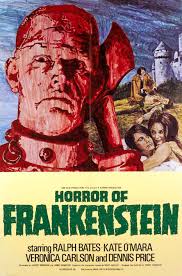
HORRORS OF FRANKENSTEIN
UK, 1970, 95 minutes, Colour.
Ralph Bates, Kate O'Mara, Graham James, Dennis Price, David Prowse, Jon Finch, Bernard Archard, James Hayter, Joan Rice, Veronica Carlson, James Cossins.
Directed by Jimmy Sangster.
In the 1950s, Hammer Studios began a series of films focusing on Frankenstein, Curse of…, Evil of… And Dr Frankenstein was played by Peter Cushing. He does not appear in this film, from 1970, the writer of the first two films, Jimmy Sangster, writer of other horror films, coming again to this theme and directing the film.
Dr Frankenstein, younger, is played by Ralph Bates, arrogant, narcissistic, cruel, killing the opposition, a ladies’ man… And the film capitalising on the more explicit presentations of sexuality and nudity that emerged during the 1960s.
Mary Shelley’s original stories are echoed but the film takes the narrative beyond her original novel.
For fans of the horror films from Hammer Studios – but it does not have the inspiration and quality, style and tone of the original two films.
- The work of Mary Shelley? 18 century? Science and fantasy? Scientist playing God? Creation of creatures, monsters? This variation on characters created by Mary Shelley?
- The setting, Germany/Austria, castles, the forests, costumes and decor? The interiors of the Frankenstein Council? The laboratory?
- The interpretation of Victor Frankenstein, Ralph Bates’ presence and performance, style? Seen in class, drawing, reminded of the teacher, the punishment and Victor’s refusal, his challenging of the teacher, overcoming him? His friendship with William? The presence of the women in the class and the attraction to Victor? The graduation and his return home, with William?
- The scene with his father, his father, sexual liaison with Alice, his demands on his son, refusal for his education? Victor, the gun, altering it, hunting, his father’s death? The funeral? His inheritance?
- The character of Victor Frankenstein here, young, obsessed, narcissistic, obsessive, sociopathic, science, his aims, playing God, creation, but a creator more like Satan than God? His behaviour in the Castle, his reliance on Alice, sexual, criticising her cooking, bringing in Stephan? His continued work with William and William support?
- Employing the gravedigger, having the arm and stealing it from the University, the various body parts, the number of deaths, his drawing of the human body and numbering its parts, filling in the parts?
- Elizabeth, her father, the encounter with the highway men, William wanting to help, Victor and his shrewdness, the rescue, shooting the highway man? Henry, police, past friendship, the investigations?
- The meal with Elizabeth and her father, poisoning him, his death, the gravedigger getting his skull, the brain, the scratch and the deterioration, preserving the brain?
- The doctor, his concern about Victor, his visit, his being electrocuted? The gravedigger, his money, greed, putting him in the that? The unscrupulous deaths?
- Elizabeth, her property, coming to the Castle, in love with Viktor, his being willing to have a recipe housekeeper?
- The experiments with William, William and his suspicions, critique, deciding to leave, Victor killing him?
- The final creation of the creature, the experiments with the animals, electric power bringing them to life, the turtle? The appearance of the creature, giant, not speaking? Victor and his controlling him?
- The creature, out in the countryside, the little girl, the deaths, Henry and the police investigation, Stephane and his being blamed? Imprisoned? Victor’s callous this interest in everything, his lies, covering? The attack on Elizabeth, her testimony, Henry arriving?
- Victor and his sessions with the creature, the police search of the house, Victor and his hiding the creature – in the bath? The little girl playing, turning the taps, the acid, the destruction of the creature, the skeleton?
- Leaving Victor for further experimentation?
Amish Sin, An
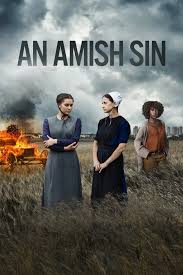
AN AMISH SIN
US, 2022, 85 minutes, Colour.
Dylan Ratzlaff, Kellie Martin, Rukya Bernard.
Directed by Michael Nankin.
Audiences have a fascination with religious groups, sects, cults, especially with movies made for television as this one.
Each film offers a perspective on life within the Amish community, its traditions, its way of life, the place of men and authority, the place of women, the Bishop and his authority… And some films more sympathetic than others.
The focus is on Rachel, initially accepting her place in the community, her relationship with her parents, at the prospect of an arranged marriage especially with the person who abused her when she was young. Rebellion, severity crime the authorities, from family, going to a community where she could be re-formed, escape, the prospects of living another life, a final visit to the community, to the Bishop, and a life decision.
Probably the best film about the Amish way of life is Peter Weir’s 1985, Witness. Also of interest, especially with the shakers, their British origins and moved to the United States, the 2025 The Testament Ann Lee.
- Audience interest in Amish stories? Way of life, religious beliefs, always in the modern world? (And the image of bus tours with gawking tourists?)
- The setting, the community, homes, religious assemblies, work? The contrast with the ordinary world, Grace and her apartment, the art world and photos, the contrast with Amish? The musical score, the hymns?
- Rachel’s story, her age, the opening with the baptism, her acceptance within the church? Her father and his strictness, the severity of her mother’s manner, her sister, the boys and their mischief? The visit of her uncle, her being wary, the encounter with him? Gradual revelation of the past, his behaviour, at age 8, the presumption that she was attempting her uncle? The discussion with her father, his weeping her and blaming her?
- The religious devotion, tested, the Amish beliefs and practice? The superiority of the men, are blamed, the imagery of the and Adam? The film as a protest on behalf of Amish women and sexual abuse?
- Her living the life, the blame, the father’s whipping, the decision to run away, the discussion with her friends, the contact with Grace and her photography? Her being sent to the Centre for the recalcitrant women, the group there, their experiences? The prison like existence, the timetable, the Bible studies, locked in the room at 7 PM? The discussions with the other women? The visit from her father, her mother, standing outside, the decision to run away?
- In the city, Grace seeing her, inviting her in, her clothes, no shoes, the cup of coffee, the room, Grace’s boyfriend coming out, embarrassment? His kindness the next morning? Her loneliness, wanting to go home? The visit from her friend, the talk, the attraction, the sexual advance, her saying no?
- The transformation, clothes, her hair visible, the photo? The clothes? The message about her mother in hospital, the visit, been shunned by everyone?
- The mother’s death, putting on her clothes again, her being shunned, the funeral, the outer? The reception, her talk with her sister? Her father and his apology?
- Grace urging her to know in the herself, going to the assembly, asking the bishop for forgiveness, confession, her assertion, her leaving?
- A new life? The glimpse of the police going to visit her uncle – and nothing further is shown? Her future?
Falsario, Il/ The Big Fake
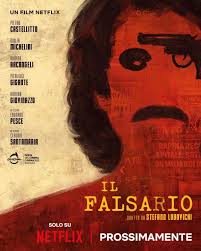
IL FALSARIO/ THE BIG FAKE
Italy, 2025, 116 minutes, Colour.
Pietro Castelletti, Giulia Michelini, Andrea Arcangeli, Pierluigi Gigantge, Eduardo Pesce, Claudio Santamaria, Fabrizio Ferracane.
Directed by Stefano Lodovichi.
The story of three friends is based on actual characters and events, Italy, Rome, politics, revolution in the 1970s.
The central friend is Tony, played by Pietro Castilletti, son of noted Italian actor-director, Sergio Castellitti (Conclave). He is talented as a painter, copying – hence the title, The Forger/The Big Fake. Ambitious, self-centred, he is easily drawn into the world of copying masterpieces for expensive sales, a relationship with his manager, but drawn into the world of international crime, more and more out of his league but trapped.
Another friend is Fabio whose life goes an entirely different direction, in league with the revolutionaries, the era of The Red Brigade, the abduction of Italian Prime Minister, Aldo Moro, the various intrigues, political, criminal.
A surprise is the third friend, Vincenzo, who has become a priest. On the one hand, he seems a fairly worldly cleric, comfortable in the upper echelons, tempted by the high life. On the other hand, he is shown in some kinds of ministries, eventually being caught up in the quite different directions of his two friends, a final challenge to his own integrity.
Interesting as a portrait of three different Italians but a film clearly directed towards an Italian audience and memories of Italian history 50 years earlier.
- Based on actual characters and events? The title, the tone of the English title?
- Rome, the 1970s, the various city locations, vistas, familiar areas? Homes, businesses, studios, the art world? The political atmosphere, neo-fascists, the Red Brigade? The musical score?
- The story of three brothers, so different?
- The focus on Toni and his story, in himself, his relationship with his brothers, sketch artist, sketching the tourists in Rome, the encounter with Donata, and noticing his skills, commissioning the forgery, the sales, the connection with the neo-fascists, Balbo and the introduction to the Mafia? Zu Pippo, his connections, deals? Wanting the painting of David’s Napoleon? Toni and his affair with the assistant, Virginia? The clashes with Donata, his infidelity to her, the issue other commissions? The introduction ofTthe Taylor, sinister, suave, fake documents, the issues of Aldo Moro, his documents?
- The Taylor, his influence, political stances? But the only, the red brigade, the mooring documents?
- Balbo, the clash with the Taylor, cutting the breaks, bumpers accident? As with Toni, the invasion of his studio, breaking his hands?
- Fabione, relationship with his friends, moving to the left, the Red Brigade, the issues of Moro, his abduction death? What him passport? Toni and the Moro documents? The police attack and his death?
- Toni, his relationship with Donata, ups and downs, revelation of her pregnancy
- The role of Vittorio, his place with the brothers, separation, the training to be a priest, his life as a priest, Italy in the 1970s, religious events, the contrast with his lifestyle, the worldliness? Dealing with the authorities, with his brothers, the encounter with The Taylor, the threats, the Moro document, his giving him the information?
- The final complexities, the deals, Toni and his escape with Donata, Vittorio left as victim? The future?
Good Shepherd, The/ The Confessor
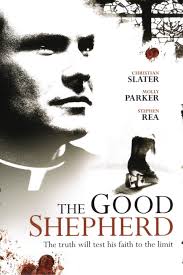
THE GOOD SHEPHERD/THE CONFESSOR
US, 2014, 91 minutes, Colour.
Christian Slater, Molly Parker, Stephen Rea, Gordon Pinsent, Nancy Beatty, Von Flores, Colin Glazer.
Directed by Lewin Webb.
The Good Shepherd winter video at the time of its release, a modest thriller. It was also released under the American title, The Confessor, different emphases for the themes, the Good Shepherd focusing on the person of Jesus, his pastoral ministry and care, the alternate title focusing on the issue of the confessional and its relationship to the murders.
The film has a strong Catholic background, not received entirely sympathetically at the time, especially with its presentation of the clergy, Cardinal, the persistent monsignor, the priest fundraising and the business side of the church, then issues of scandals, saving the reputation of the church, the hierarchy more concerned with legal and reputation issues rather than feeling or showing any compassion.
The film opens with a murder, group of young men living in an institute supported by the church, ran for 20 years by a severe widow. She discovers a priest bending over the body of a murdered young man, a male prostitute. He is arrested, protesting his innocence, but having information from confession and bound by the Seal of confession, holding fast to this, an interview with a television journalist, then his being found hanged in his cell.
The principal character has Christian Slater as Father Clemens, a talented financier, strong on fundraising, able to mix socially, wearing his clerical suit, relied on by the Cardinal to make media reports and save the reputation of the church. A very unsympathetic picture of ecclesiastical bureaucrats.
However, Father Clemens becomes persuaded that the priest is innocent, framed, then murdered in the prison. He makes contact with a reporter with whom he was linked in the past. She interviews the priest, raises further issues. Father Clemens is touched by the situation, defies the Cardinal, offers to take over the parish of the dead priest, leaving aside his clerical suit, trying to reach out to the young people, discovering that they go to confession only when forced to by the woman in charge.
Then some of the young people run away, refuge in the church, and the discovery that the confessions are being taped and being used by the woman in charge, who has a drug problem, and a hold over the young people. Then she is found murdered.
There will be a surprise as to the identity of the killer, his confession, his motivations, his killing himself.
The film ends with Father Clemens, vested, honouring the dead priest and rehabilitating, the hierarchy present.
Molly Parker is the journalist. Stephen Rea is a friend of Father Clemens and supportive in his work.
- The original title, focus on Jesus as the good Shepherd, on pastoral ministry? The alternate title and the focus on confession and the drama and melodrama?
- The American city, the church, rectories, institutes for the young, the business aspects of the church, the pastoral dimensions? The musical score, the inclusion of religious chant?
- The situation, the church, the street, the young men, the pickup, the murder? The background of the dead young man, prostitute, confessions?
- Father Clemens, age and experience, fundraising, the dinner, the hierarchy and the joke, the gift of wine to the donors, his skills? Well-dressed, the later comments about his way of life, golf, associates, dinners…? His being the spokesperson for the diocese? But his travelling also for fundraising and financial meetings? The image of a priest?
- Father Andrews, with the dead boy, his denials, the accusations, arrest, in prison, the reaction of the cardinal, the reputation of the church, no humanity or pastoral outreach? His asking for Father Clemens, the interview, Father Clemens and the touch of disdain, yet believing him, arranging the interview with Maddy, her questions? The sudden news of his alleged suicide?
- The portrait of the Cardinal, nothing spiritual, hard, business, reputation of the church, his demands on Father Clemens? The public statement on the death of Father Andrews? The Bishop associate, a touch more humane, working with the flowers, attentive to the cardinal? The Monsignor, his continued presence, attitude towards Father Clemens, looking and observing?
- The encounter with Maddy, Father Clemens not making contact, the revelation about the past, his choices, her marriage, its fate, her talent as a reporter? The interview, the sharp questions?
- McCaran, his friendship with Father Clemens, his role with the diocese, finance, advice? The meetings, his support?
- Mrs Gallagher, finding Father Andrews with the body, her strictness with the young people? Her personality? The two running away, seeking help from Father Clemens? Her pursuit, harshness?
- The pastoral crisis for Father Clemens, the cardinal and his ultimatum, his decided to give up the fundraising, to go to the centre, to become a pastor, his visit to the church, the spiritual dimension for his life and ministry? The young man coming to confession, revealing that he was obliged to by Mrs Gallagher?
- The youngsters, in the church, their fear of Mrs Gallagher, her approaching Father Clemens and Maddy, Maddy searching, the recording of the confessions?
- Going to the house, finding Mrs Gallagher dead?
- The detective, the interview with Father Clemens, suspicions, Father Andrews being framed?
- The further investigations, Maddy supportive of Father Clemens, the church, McCaran arriving, the revelation that he had done the killings, his motivation, his wife, picking up the young men? The confrontation, the confession, the police arriving, his shooting himself?
- The aftermath, the dedication to Father Andrews, Father Clemens investments, the cardinal others present, praying the Lord’s prayer?
Calling, The/ 2014
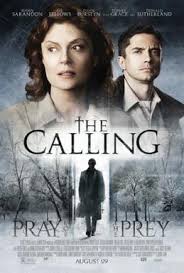
THE CALLING
Canada, 2014, 108 minutes, Colour.
Susan Sarandon, Gil Bellows, Ellen Burstyn, Topher Grace, Donald Sutherland, Christopher Heyerdahl, Ted Whitall.
Directed by Jason Stone.
The Calling is a little-known Canadian detective story. Made in Canada, especially in rather bleak, snowy country areas – with some trips to the city of Hamilton.
This is not a police thriller, not an action show. Rather, Fans will have to slow down, meet the detectives, learn their stories, discover the crimes, the forensic evidence, building theories, receiving clues, making connections, going into action to track the killer.
The star of the film is Susan Sarandon, Hazel, in charge of the police station in the country town, Gil Bellows her assistant. Then, Topher Grace comes the city, not immediately welcomed, but proving invaluable in terms of amassing clues and interpreting them. And they become more numerous.
The film states that it has a Catholic background, a visit to a church and, indeed. Donald Sutherland as a veteran priest, Father Price. However, the religious theory behind the killings is an invention of the screenwriter with very little reference to historical reality, and some of this expressed dates personalities, inaccurately (by Father Price) all kinds of conspiracies and secrecy in the early centuries of the church, range of beliefs in resurrection, believing human sacrifices to achieve resurrection. (And, at the end, when Father Price recites the Lord’s Prayer, he uses the Protestant version rather than the Catholic version.)
What is different is that the audience sees the killer rather early in the piece, initially suspecting him, seeing him in action with a little girl and his offering to heal her, then his contact with various victims, the detectives having photos of the victims, noting their mouths, their seemingly singing, and Father Price interpreting the words as a chant for liberation.
There are psychological problems, Hazel and her relationship with her mother, Ellen Burstyn, and Hazel.
The strong cast and the unusual case mean that is an interesting film thforose who enjoy detection.
- General sounding title, the ominous explanation? Religion, Catholic traditions, screenwriters inventions?
- The Canadian setting, the bleak snowy landscapes, the town, police precincts, homes, diners, the contrast with the Canadian cities? The musical score?
- The detective story, not a police thriller? Detection, the crimes, the clues, forensic evidence, theories, higher authorities, local jurisdictions, police, detectives, medical practitioners?
- Susan Sarandon as Hazel, her age, the back story, marriage, loss of her child, depression, suicide attempt, her back injuries, living with her mother, tension and love between them, waking up, drinking, eating, relationships in the town, Ray, working with her, collaboration, clashes? Andrew, his wife, clashes?
- The dead woman, throat slashed, her son and his arrival, the mystery, investigations, the back story? The post-mortem, theories?
- Wingate, his arrival, Hazel’s and Ray’s reactions, his leaving the city, his explanation about the death of his partner, the gay background? His enthusiasm, the investigation of a number of deaths, the phone calls, information, the photos, the study of the mouthes, the theory of the singing?
- The visit to Father Price, his explanations, the inaccuracy of historical and scriptural details, the screenplay’s invented theories about secrecy, about sacrifices, about victims, about resurrection? But Father Price’s beliefs, doubts, his age and experience, the discussions with Hazel? The impact on her, her religious background? The later revelation about Father Price, his illness, the theories, his helping the brothers, Gabriel’s suicide, his contact with Peter, his offering himself as a victim? His death?
- Catholic background, inaccuracies, the use of a non-Catholic Church, the Protestant recitation of the Lord’s Prayer, the invented theory about sacrifices and secrecy?
- Hazel, going to the city, the clash with Mason, not getting promotion, not getting extra help? The continuing investigations? Wingate, his contacts, the phone number, travelling to the countryside, following the suspect, the discovery of the artist, the formaldehyde body? The later revisit by the police, the body of the suicide brother, ready for resurrection? And the behaviour of the disciples?
- Wingate, coming to the house, the photos, Hazel examining them, her mother’s response, inviting him for the meal?
- The audience knowing the killer early, at the cafe, his tea, the waitress, her story, a little girl collapsing, his going to the house, initial fear, with the little girl, the tea, persuading her to drink, to sing? Hospital, seek, coming back to life, the reference to the Gospel of Mark, the raising of the little girl by Jesus?
- The issue of the mouthes, the song, the Latin, Father Price explaining the of theme of liberation?
- Wingate, going to the house, in phone contact with Hazel, Ray disapproving, risking her job? The killer, attacking Wingate, talking with Hazel on the phone?
- Hazel, at home, the arrival of the killer, the conversation with Hazel, her past, despairs, bound, urging her to drink, her will to live, his defeat, shooting himself?
- Detective work, the serial killer, religious beliefs, their motivations?
Up the Chastity Belt
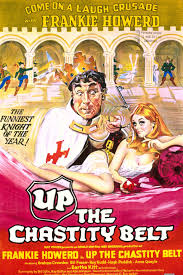
UP THE CHASTITY BELT
UK, 1972, 94 minutes, Colour.
Frankie Howerd, David Kernan, Nora Swinburne, Godfrey Winn, Bill Fraser, Anna Quayle, Graham Crowden, Anne Aston.
Directed by Bob Kellett.
Slapstick in the Middle Ages.
Frankie Howerd was a popular comedian on television and in cinema in the 1960s into the 1980s. His best known series was U[ Pompeii which led to a film of the same name, directed by Bob Kellett who also directed this film and a variation on the Up theme, World War I, Up The Front.
This film was much more lively than the other two Up pictures, the Middle Ages offering a greater variety for stories – medieval life amongst the aristocracy, amongst the poor, the crusades, Robin Hood…
Frankie Howerd actually has the opportunity to act as two characters here, twins, one, Richard the Lionheart, the other, Lurkalot, brought up amongst the pigs and acting as a servant in the Castle of the Sir Coardy Custard (later to be challenged by Sir de Bombast). And, various names accordingly.
It also offers Frankie Howerd the opportunity to take on a number of impersonations throughout the film including participating in a joust, disguising himself as a female, wandering from Europe to the Middle East, discovering that the Crusaders were being hosted by Saladdin who was creating a harem for them. (Some of the jokes seem particularly sexist now, some racist.)
Of course, Frankie Howerd is continually talking to the audience, straight to camera, commenting on the film and its progress and what is suitable or not. There is a surprise at the end when the screenplay turns Robin Hood and his merry men, including Friar tuck, into a very gay troop.
For Howerd fans to enjoy – and a reminder of some of the trends in British comedy, especially at the end of the 1960s, becoming more open, explicit and permissive into the 1970s.
Shoot to Kill
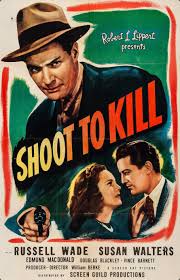
SHOOT TO KILL
US, 1947, 64 minutes, Black-and-white.
Russell Wade, Susan Walters, Edmond MacDonald, Douglas Blackley, Vincent Barnett, Nestor Paiva, Charles Trowbridge.
Directed by William Berke.
This is a better than average small black-and-white supporting feature, from the era of film noir, this time a thriller with murders and political background.
It was directed by William Berke who was famous for so many supporting features in the 1940s and 50s, even more famous for making his films in 12 days!
This film begins with a car crash, the death of the about to be DA and a criminal, the wife of the DA being injured, taken to hospital, recounting the story to her good friend, a top newspaper reporter.
With the story told in flashback, the audience has to be attentive, going back to a court case, the success of the assistant district attorney getting a heavy sentence for a criminal. But, then, an eager young woman wanting to get a job as this man’s secretary, encountering the journalist and confiding in him.
A crime wave in the city, the various factions wanting to get to control, the romance between the assistant DA and his secretary, their marriage, and, quite a twist in the plot in terms of the relationship, in terms of political integrity, in terms of infighting, betrayal and murders.
Spoilers: it turns out that the assistant DA organised lying witnesses to his case, targeted his victim, plays off the different factions against each other. And, spoilers again, quite a surprise when the doctor officiating at the wedding is revealed to be the condemned man in the court case, already married to the secretary…
But, it doesn’t end there, quite number of set-ups, revelations about the secretary and her relationship with the targeted criminal… And all in 64 minutes.
