Displaying items by tag: Gaspar Noe
Tour de Glace, La/ The Ice Tower
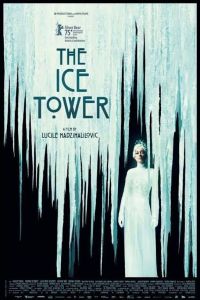
THE ICE TOWER/ LA TOUR DE GLACE
France, 2025, 170 minutes, Colour.
Marion Cotillard, Clara Pacini, August Diehl, Aurelia Pettit, Cassandra Louis Urbain, Gaspar Noe.
Directed by Lucile Hadzihalilovic
A difficult, challenging film to watch, interpret, understand.
This is a response to the film, rather than a review. Over to the critics for further elaboration. The Little White Lies website, refers to it as a ‘mesmerising riff on the famous Hans Christian Andersen fairy tale is a true triumph of imagination’. And, perhaps in the vein of the screenplay, ‘A moonlit metacinematic mountain mystery’. It was awarded the Silver Bear for Artistic Contribution at the Berlin Film Festival, 2025.
The Ice Tower has a particular, serious French sensibility. There is also a female sensibility from its co-writer and director as well as the two central stars and their performances. They have drawn on the fairytale by Hans Christian Andersen and have taken it in the direction of fairy tales with the victim heroine, Snow White, Sleeping Beauty, and their conflict with their vain and self-centred Queens, “Mirror, Mirror on the wall…”.
The film opens with kaleidoscope colliding shapes and images, floating and swirling, inviting the audience to imagine. The narrator tells us that there are so many perspectives. Boundless.
At first, there is the reality of a life story, a young woman, Jeanne, orphaned, foster care, harsh treatment, the desire to move away to live her own life – which she does, even trudging through snow and storms to the city.
But, she reads the story of The Snow Queen to a little girl in the home, Rose, who imagines the story more happily. But she grieves when Jeanne leaves, refusing to eat, persuaded by phone call to eat and Jeanne promises she will tell her stories when she comes home. Rose lives in an imaginative fairytale world.
.
Then the introduction of movies, moviemaking, the realism of the set and the cast, the filming, but also the fact that movies create myths, other worlds, fairy tales which can be grim, fairy tales with happy endings. The Snow Queen is set in a grim, brittle, icy, cold-emotional world.
And then the world of the star, a haughty actress, embodying The Snow Queen in film character as well as on set and in her personal life. Which introduces the theme of the alter ego, the doppelgänger, the character dramatised in the film and her behaviour, the life of the actress herself, comparisons and contrasts.
Jeanne calls herself Bianca, echoes of Snow White, is resourceful, hides out in the studio building, becomes part of the extras, is intrigued by Cristina, the actress, is favoured by her, charmed, promised loving attention – intrigued by both Cristina and the narcissistic Queen. The Queen/Cristina wants the sacrifice of complete love, the temptation to kill herself for the Queen. The fairy tale can be destructive.
Fairytales have jewels, Jeanne with a necklace of beads, one of which she gives to Rose, almost losing the necklace in the snow, and a bead which Cristina finds, a threat to the bond with Rose. And fairytales also have sinister birds, blackbirds, crows and ravens, here as part of the drama of The Snow Queen, Jeanne having to handle’ soothe the bird on set, seeming to kiss it only it to peck at her lip. Symbols.
And, a Prince to rescue the Princess? Enter the character of Cristina’s longtime doctor, protector, who knows the truth about her but who steps in then to rescue Jeanne, to save her and send her back to reality, real life.
And the end of this reality, the end of this destructive fairytale? Jeanne returns to Rose, to the fairytale, giving her the gift of the crystal that she stole from the Queen’s dress, and the camera invites us to draw on what we have experienced and look at the swirling images once more in the crystal. Boundless.
Climax
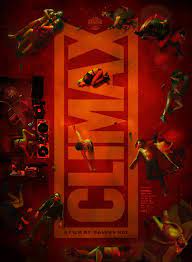
CLIMAX
France, 2018, 95 minutes, Colour.
Sofia Boutella, Romain Guillermic, Souheila, Kiddy Smile.
Directed by Gaspar Noe.
This is a film principally for those who are fans of the writer-director, originally from Argentina but working in France for many decades, Gaspar Noe. For years he has had a reputation as an “enfant terrible”, making an international impression with his 2003 drama of sexual violence, the screenplay working in backwards time, Irreversible. Amongst his other films are the significantly named, Into the Void, as well as the 3-D erotic film, Love.
Climax is not a film for those not interested in experimental content and cinema style and for those who do not know Gaspar Noe and his themes and treatment.
The setting is an unused building outside Paris where a group of young men and women, some black, some white, more women than men, gather for a contemporary dance rehearsal. There is quite some exhilaration about the dancing, the energy, the vitality, the talent. Much of it is filmed from above, offering quite a different impression of dance, pounding music, athletic moves.
When the dancers one for a break, sangria, spiced by LSD (there are angry suspicions but it is not clear who did this), is brought in and most drink it. And this is where curiosity and prurience come in, the director inviting us to share the experience of those affected by the drugs, using all kinds of cinematic techniques, again filming from above, long takes, the lights going out and only the emergency red light staying on (an infernal impression of black and red). At times the camera goes skewiff, lying on the floor, filming upside down (including a written explanation at one stage).
The principal effect of the drug and the trip is bewilderment and anger, scenes of bitter aggression, puzzle, suspicions, men and women behaving badly and stupidly. There is some brutally frank talk about sexual experience. A mother whose son is present in the building locks him in the power cupboard for safety – and then loses the key. As might be expected, there is some erotic passion, but that is only part of the overall experience.
Some have suggested that Noe’s films are not to be watched but to be experienced and there is quite some truth in that. While some of the camera work is inventive, there is a great deal in the latter part of the film where characters are almost indistinguishable, the black and red is too dark, and audience attention being whirled around in the drug frenzy – – but does go on and on.
Idiosyncratically, most of the credits come on in the middle of the first part of the film. At the end, the police arrive, checking whether people are alive or dead, suggesting that however interesting drug experience might be and what it lets loose, in real life, some order needs to be restored.
The title, Climax, then comes up large and in yellow – and out the audience walks into the fresh air to contemplate what they have just been through.
