Displaying items by tag: Cliff Curtis
Last Breath/ 2025
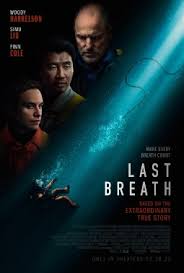
LAST BREATH
UK/US, 2025, 93 minutes, Colour.
Woody Harrelson, Simu Liu, Finn Cole, Cliff Curtis, Mark Bonnar, MyAanna Buring, Bobby Rainsbury.
Directed by Alex Parkinson.
In 2019, director, Alex Parkinson, made a documentary about dangers and risks for engineers involved in repairing pipelines and cable connections in the North Sea, at great depths, outside the Scottish city of Aberdeen.
Now he has turned it into a feature film, going over the same drama, the characters, the situations, the dangers, the rescue. In this way it reaches a wider audience than did the documentary. However, the film critics were for praising the style and the impact of the documentary over that of the feature film.
The film offers the opportunity for Woody Harrelson to have a starring role, the older experienced diver, eccentric personality, interacting with the team, drawing on his experience, and supportive of the younger man. The two other drivers are played by Simi Liu (Shang-Chi and the Legend of the Ten Rings) and Finn Cole. And the captain of the ship is played by Cliff Curtis.
The film opens with the young man and his girlfriend, giving a human setting to the naval action and the diving. The teams are introduced, the audience getting to understand the issues of the ocean floor, the depths, the dangers, the routines, the repairs, the four days needed underwater for gradual adjustment and then being brought to the surface.
However, as expected, there is an accident, the young man being caught, his heart stopping for quite some time, this time the information continually on screen, the management of the rescue, the reactions of the crew on the top, the captain and his decision, the female second in charge and her interventions, the technological expert and his finding ways to communicate.
And, below the surface, the wise experience of the veteran, the rather reticent other member of the crew and his venturing out, the rescue, dangers and entanglements, the tension in bringing the injured man in, and the question of whether he was dead or alive.
While there is the human drama, there is still a strong atmosphere of the documentary.
- The title and application, danger, death?
- The work of the writer-directors, the success of his initial documentary, the decision to make a feature film, his contribution to the writing, his directing? Comparisons between the two films?
- Deep sea diving, the UK, of the Scottish coast, Aberdeen? The Port, the facilities, the ships? The sophistication of the technical equipment?
- The underwater task, international cables in the seabed, laying, repairs? The demands, the dangers, compression, preparation, equipment, physical skills, psychological readiness, the work itself, the depths, coming up, the period of readjustment?
- The introduction to the ship, the captain and crew, the divers,, American, the Woody Harrelson type? Experience, coming to the end, relating to the men, memories, practical wisdom? Dave, his background, his skills, some reserve?
- The introduction to Chris, local, family, his girlfriend, his skills, young, opportunities?
- The three men, discussions, bunking together, preparation for the dire, the personal interactions?
- The Captain, in command, the officer in charge of the dive, the equipment, connections? The assistant, her tough stances, decisions? The other members of the group?
- The men going down, all going well, normal, preparations, going out? The detail of the swimming, the audience is immersed in the deep waters with the swimmers?
- The difficulties, keeping in touch, accidents, Chris, his enthusiasm, the accident, his coping, manoeuvring, loss of consciousness?
- The device of letting the audience know his state of health, last breath, the subsequent times during the rescue and his recovery?
- Dave, going out, his skills, the details of the rescue, the dangers, the waters, and compression, the struggle to get Chris aboard? His personal commitment?, The encouragement, advice?
- The scenes in the ship, the decisions of the Captain, the equipment, off-line, online again, life-and-death tension, the assistant and her decisions about manoeuvres?
- The success of the rescue, coming to surface, the decompression? And the achievement of the crew and the satisfaction of the captain?
Avatar: Fire and Ash
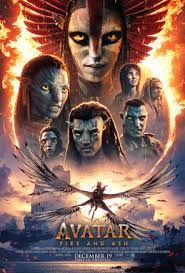
AVATAR: FIRE AND ASH
US, 2025, 197 minutes, Colour.
Sam Worthington, Zoe Saldana, Sigourney Weaver, Stephen Lang, Oona Chaplin, Kate Winslet, Cliff Curtis, Joel David Moore, CCH Pounder, Edie Falco, Brendan Cowell, Jemaine Clement, Giovanni Ribisi, David Thewless, Britain Dalton, Jack Champion.
Directed by James Cameron.
The third Avatar fantasy and science-fiction adventure from James Cameron. It is, in fact, 16 years since the first Avatar film was released with great success. Then a 13 year wait for Avatar: The Way of Water. Only three years wait this time. And, Cameron has noted that although sequels are in preparation, his making them will depend on how this film is received. There is no doubt of its popularity and success at the box office – but, along with critical comment and popular reactions, will this be enough?
In the meantime, here we are again in Pandora, out in the galaxies, beautiful floating islands, homes in the forests, mountains, cliffs, crags and oceans, huge creatures swooping in the air, exhilarating transport for humans, marvellous giant beasts of the sea with consciousness, communication – and the background of a creation mythology. Audiences who relished all this in the first films will appreciate it once again, especially since this is how this film begins, the fantasy, rather than focus on the Sky People, the humans who had journeyed here with their vast laboratories, scientific equipment, boats and weapons.
Many of the responses to Fire and Ash have stated that, in many ways, most ways?, is a replay of the previous films, the establishing of the families and tribes, the dangers from the humans, the relentless human expansion, clashes between the tribes, the buildup to the final battles. And, this is quite true. But, there are many audiences who are willing to surrender themselves to this kind of repeat experience.
Once again Sam Worthington and Zoe Saldana play the parents, the leaders of the Navi tribe, their children, especially Loach, still suffering the loss of his brother and feeling responsible for his death, his bonding with his brothers and sisters, and with the children from the local tribes. But there is a change in the family, the presence of the human, Spyder, teenager, needing a mask to breethe, but welcomed into the family except for the severity of the virulent hostility from the mother, loathing humans. In fact, Spyder is the son of the former soldier, Quaritch, who, like Jake, has been transformed.
The presence of Spyder, his welcome in the family, his father searching and wanting him back, provides much of the drama at the centre of this film, leading to the issue of whether Spyder be sacrificed for the safety of the tribes (echoes of the biblical story of Abraham and the sacrifice of Isaac).
But, this time there is another warrior tribe, led by one of the most savage female leaders, absolutely relentless. And she teaming up with Quaritch to wreak vengeance.
And the expected battles: the confrontation between Jake Sully and Quaritch. And, of course, at great length, intensity and spectacle, the Navi’s long and spectacular battle with the humans.
There is one complaint, true of the other films. Much of the dialogue is quite commonplace, often trite, and, with Spyder, the kind of quick American slang that would appear in the bubble a cartoon panel.
So, for the fans, more of the same but with some variations as a new characters like Spyder and barre. It runs for 3 ¼ hours but, with continuous action, it keeps up its pace. And the question raised: can there be still more created stories out there in Pandora?
- The third in the series? The popularity of the films? Box office records? The work of imagination and James Cameron?
- Recreation of the world of Pandora, the visuals of space, the beauty of the floating islands, the colonies for the various tribes, homes, cliffs and rocks, the sea, rivers? The contrast with the scientific base, the scientific equipment, elaborate, the controls? The space vehicles? The ships? The creatures, flying, the giant creatures in the sea? The range of special effects, especially for the confrontations, the battles, the rescues, the attacks, the deaths? In the background of the musical score?
- Presuppositions from the earlier films, the range of characters, Jake Sully, his human background, becoming part of the tribe, the romance, his wife, the children in the family life? His being hero, his wife and her prejudice against the humans? Quaritch, human, transformed, his son, his warrior behaviour, his death, revived? The general and her command, the Captain Scoresby on his boat, the scientists and their demands, the warriors, the humans and their scientific advances, the havoc on Earth, potential havoc for space? The development of these themes again?
- The previous emphasis on the science and the expedition from Earth? This film taking it for granted, opening with Pandora, its beauty, peace, the islands in space, the homes, the family? The audience invited to enter the world of fantasy rather than science and science fiction?
- The repeat of the situations, humans as Sky People and their attack on the Navi? The life of the Navi, the relationship with the other tribes? The buildup to the confrontation between the tribes, and the clash with the humans?
- Jake Sully, established character, his leadership? The death of his son, the blaming of the younger son? The younger son and his friends from the other tribes? Spyder and his being the son of Quaritch, received by the Navi, wearing a mask, the hostility of the mother?
- The revelation of the warlike tribe, the leader, visualised, fierce, merciless? Teaming with Quaritch? His associate?” Marriage and his love for his son, wanting with him? Spyder’s response? Spyder and the experience without the mask, the daughter, her special powers, her representing the God, his revival?
- The focus on the family relationships, the dangers, the threats, the role of the young son, relationship with his father, clashes, reconciliation, his role in the final battles?
- The mythical aspects, Kiri and origins, the visual manifestations, the flying creatures, the creatures and the sea, communicating with them, their communications, life? These beasts the target of the humans?
- The range of battles, their being visualised, in the air? The humans and their weapons and vehicles? The herding of the sea beasts?
- Focus on the humans, the general and her attitude, commands? The captain of the ship, his mission? Dr Garvan, sympathetic, his helping Jake Sully? The contrast with Selfridge and his wanting to get Spyder and study him?
- The buildup to the confrontations, Varang and her fierceness, her role in the battles, the final defeat?
- The issue with Spyder, Jake and his decisions, his wife, agreeing, changing her mind, seeing Spyder saving Jake’s life, Jake taking him out, echoes of the Abraham story and the sacrifice of Isaac, his inability to kill? Leading to the confrontation with Quaritch and his falling into the abyss?
- Peace among the tribes, Jake as leader, the defeat of the humans – abandon ship? The future, peace in Pandora? The role of the humans?
- And the success of sequels depending on the commercial success of this third in the franchise?
Ka Whawhai Tonu, Struggle without End
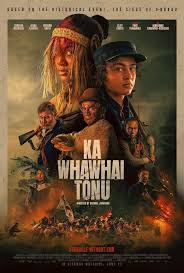
KA WHAWHAI TONU - STRUGGLE WITHOUT END
New Zealand, 2024, 115 minutes, Colour.
Temuera Morrison, Paku Fernandez, Hinerangi Harawira-Nicholas, Jason Flemyng, Ariana Smith, Te Wakaunua Te Kurapa, Cliff Curtis, Jack Barry.
Directed by Mike Jonathan.
The middle of 2024 was a significant time for the release of significant New Zealand films, significant films with Maori themes. Firstly, Lee Tamahori completed his trilogy which began with Once Were Warriors in 1994, and his going back to the 1930s, the tribal warfare, the establishment of colonial towns, conflicts, The Convert. Soon after came the contemporary story The Mountain, directed by Rachel House, symbol of Mount Taranaki and three 11-year-olds wanting to climb it, opening up themes of Maori lore. And now this film with its Maori title, boldly asserting Maori language and presence, and an English subtitle, Struggle Without End.
The action of this film moves thirty years on from the 1830s of The Convert. This is a time of rebellion, a gathering of tribes, a rebellion, the taking of a stand at a fort, the attack of the British colonial soldiers, the onslaught, a subjugation.
Again, as with The Convert, the cinematography of the New Zealand landscapes is beautiful and significant. As is the musical score.
The context of the narrative is the gathering of the tribal leaders, discussions about war, possibilities for peace, the significant leader, Rewi (played by Temuera Morrison 30 years after his significant role in Once Were Warriors) is fierce, traditional beliefs, but acceptance of Christian faith (and a cameo from Cliff Curtis as a priest, Curtis also being a star of Once Were Warriors), wanting the possibilities for peace. However, there are other fierce Warriors who want action, bloodshed.
This is the framework for a central narrative which focuses on a teenage lad, Jack (an effective performance from Paku Fernandez), Maori mother, White soldier father (Jason Flemyng) who is captured, bound and gagged, telling a story of simply wanting to visit his grandmother. Also in the camp is a young woman who is considered to have special powers, contact with the gods, visions. She is Kapu, manipulated by her ambitious mother, set in a kind of shrine, special garb and head coverings, having some mystical experiences and visions, but also young and lonely.
Most of the language of the film is Maori but, just as we might be thinking of Romeo and Juliet, a moment of English-language actually refers to “star-crossed lovers”. So, with the expected sequences, brutal as they are, of the British soldiers’ advance, of the fort defence, of massacre, there is also the story of Jack, at first skilfully helping with making the bullets, but then an escape with some of the younger people from the Fort.
But, there are moral dilemmas for Jack, rejoining his military father, memories of his own service and some of the brutality he had to participate in, at a crossroads in his life, the impact of his British military upbringing, his love for his mother and sadness at her death, and an option for following his Maori heritage.
In many ways, the colonial-Maori clash is as expected, but is enhanced by the personal, young story at its core. And, at the end, there is information about the decline in the Maori population during the 19th century, but also about the changes and developments in place for Maori peoples at the end of the century into the present.
- The title, the Maori language, Maori-assertion, history? For the Maori audience, for the wide New Zealand audience, beyond New Zealand?
- Audience knowledge of colonisation in the 19th century? The British, the towns, the impact on the Maori peoples, tribal warfare, Treaty of Waitangi, the uprisings and rebellions, the massacres, the 19th century history, the beginning of the increase of the Maori population, rights, place in New Zealand society?
- The 1860s, Britain as a colonial power, the soldiers, the forts, weapons, rifles and muskets, uniforms, distinctive? Recruiting among the Maoris? Intermarriages and children? The film’s focus on the uprising, the oncoming British forces, the shooting and deaths? The final colonial victory? The consequences?
- The gathering of the Maori warriors, Rewi and his leadership, status, personality, the Maori markings, his language, yet his wanting peace, the Christian traditions, his relationship with the priest, the singing of hymns? In the tradition of the gods, the regional and tribal gods, mystic communications?
- The other warriors, their fierceness, wanting war, taking of Jack, wanting him to be a sacrifice, the fierceness of the warriors, but their possessing the weapons, readiness to fight?
- The place of Kopu? Her age, set aside by her mother, her mother’s ambitions, as channelling the gods and power? Her adornments, alone? The trances and visions? Yet her not wanting this position, rebelling against her mother? Her mother’s aggressive power? Her mother later with the soldiers?
- Jack, the gradual revealing of his background, his Maori mother and grandmother, his father a soldier, Jack and the army, his being captured, truth and lies, saying he was going to see his grandmother, his being bound and gagged, speaking to Kopu, engaging her sympathy, sharing his loneliness? With the warriors, those wanting him to be sacrificed, those for keeping the peace?
- The younger members of the Maori group, boys and girls, their status? The baby? And the role of the older women?
- Under siege, the making of the bullets, Jack and his skills, working? His attempts at escape? Being returned?
- The advance of the British, the role of Jack’s father, seeing him in the flashbacks, in command, ruthless? The advance, shooting, the many deaths? The remnant?
- Kopu, interactions with Jack, his offering to help her escape, with the young children, the escape, through the bush, hiding, the pursuit of the soldiers? The young boy wounded, their carrying him? The vision of the town where Jack came from? The song? The findings, all the dead? Another town, the different letter in spelling?
- Jack, leaving the group, going back, his father finding him, his salute, his role with the Army, memories of his mother in the flashbacks, his conscience, his father commanding him, especially the people in the hunt, his setting fire, his father getting him to shoot the victim? His father’s love for him, his sternness? Jack, making decisions, the escape?
- Jack with the horses, rejoining the young ones, the death of the boy? The arrival of Jack’s father, the confrontation? The arrival of the warrior? their fight, the sword, the cudgel, the deadly fight? The death of Jack’s father?
- The consequences, Jack and his future, his options, with Kopu and the children?
- The consequent information about the putting down of the Maori peoples, gradually increasing in number, during the 20th century, to the present day?
