Displaying items by tag: Emmanuelle Devos
Bolero/ 2024
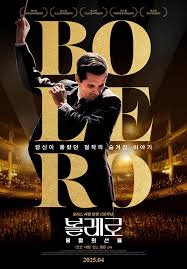
BOLERO
France/Belgium, 2024, 120 minutes, Colour.
Raphael Personnaz, Doria Tillier, Jeanne Balibar, Emmanuelle Devos, Vincent Perez.
Directed by Anne Fontaine.
As soon as the first notes, the first few bars, are heard, so many listeners will instantly identify the beginning of Bolero. It was composed in 1928 for a 17 minute ballet, almost 100 years now of popularity. And many will be able to identify the composer as Ravel Though they may not remember that his first name was Maurice.
Here is a fine cinema experience to learn something about Maurice Ravel, a portrait of him as a person but also a portrait of an intense composer.
Well worth seeing is the opening collage, the notes of Bolero, then an extraordinary range of scenes, some wonderful variations on the music, visualised, especially in dance, from orchestral to jazz and beyond.
The film opens in 1903, the young Ravel, son of a Basque mother, encouraged to go to a recital to win a prize. He does not. And, with something of a quietly introverted morose personality, he has a mixture of pride and doom as he works as composer and orchestra conductor.
The screenplay then moves to the 1920s, Ravel conducting, actually well appreciated in France and beyond, the collage of his travelling to the United States and touring, successful concerts. He is supported by his mother as well as by his manager, Marguerite, a very sympathetic Emmanuelle Devos. In society, he is tantalised by evocative ballet entrepreneur, Ida Rubenstein, played by actress and dancer Jeanne Balibar, and emotionally devoted to Misia, Doria Tillier, several times married sister of his close friend, Cipa, Vincent Perez. A strong cast. The film has been directed by Anne Fontaine (Coco Before Chanel, the wonderful World War II film, Les Innocentes, and, in Australia, Adoration).
The sequence where Ravel hears some of the notes for Bolero, sitting at the piano, trying them out, some variations, the development, the rhythms, the tune, the pounding base, presents a credible visualising of a composer at work. And, the music will recur, Ida Rubenstein with a supporting female and male ensemble will, at first to Ravel’s dismay, then his finally accepting it and the immediate, but unexpected, acclaim.
This portrait indicates that Ravel did experience some wonderful creativity in his music, composition, performance. But, a complex character, reserved, sometimes shy in manner, supported by the women in his life, a mixture of intensity and detachment, not always easy to get on with.
The film initially recreates the atmosphere, costumes and decor, music and society prior to World War I. There are some World War I episodes where Ravel has actually volunteered for service and works in sanitation, the war experience having some consequences. But, in fact, Ravel was something of a music celebrity, the 20s being very much his significant time, but, building on that celebrity during the 1930s.
This is a French cinema tribute to a French composer – and the celebration of his master composition, Bolero.
- Audience awareness and admiration for Bolero? Knowledge of Maurice Ravel? A life portrait? Portrait of a composer?
- The Paris settings, 1903, the 1920s, style, costumes and decor, the changing with the decades, the episode of the war, uniforms, action, hospitals? The 1920s? The world of music? Orchestras? Ravel and his travel, the sequences are concerts in the United States?
- The visit with our debt to the factory, walking through, the machines, the sound of the rhythms, the beat – and leading into Bolero?
- The opening credits, the introduction to the music, the collage of the variety of interpretations, arrangements, performances? The universal appeal of Bolero?
- 1903, Ravel and his background, his Basque mother, her influence and confidence, his going to the recital, performance, the other pianists, the panel sitting immobile, his not winning the prize? Nor later attempts?
- The transition to 1923, his status, composer, performances, piano, orchestra? The sequences showing him composing, his explanations of his inspiration, methods, inspirations?
- His relationship with his mother, concern about her, her death? His relationship with Marguerite, agent, support, interpretation? His dependence on her? Her character, her presence, performances, support, in crises moments?
- The presence of Ida , the Rubenstein ballet background, her place in society, the relationship with Ravel, tantalising, moody, the request for the music for a ballet, her demands, his avoiding her, the discussions? The pressure on him?
- This is to the bordello, the women, society, with the prostitute, the discussions?
- Ravel and his personal idiosyncrasies, the example of the shoes, his demands, secure with his chosen shoes? The help of his housekeeper?
- The relationship with Misia, his friendship with Cipa. His discussions with his friend about Misia, her marriages, married for money, place in society, his infatuation with her? Over the years, the meetings, social, public, dancing, music?
- The impact of the American tours? International reputation?
- Ida and the pressure for the ballet, his lack of inspiration? The sequence of the piano, the rhythms, the factory and the machines, incessant beat, then the notes of the tune, experimenting, playing them, the gradual cumulative effect? The credibility of the sequences for showing inspiration and the creation of the music?
- Ravel and his like and dislike of the music, its recurring in his imagination? Ida and her response? The choreography of the ballet? The intensity, Ida at her sensuality, the central character, movement and performance? The other dancers, male and female, the cumulative effect of the ballet?
- The performance, Ravel not wanting to be there, talking with Misia, his return, the response, the beginning of the applause, the cumulative effect, standing ovation, his response, bow of acknowledgement?
- The later years, Ravel growing old, the accident, physical repercussions, his death in 1937? His life and achievement?
- The final note that every 15 minutes Bolero is being played somewhere around the world?
Silence, Un/ A Silence
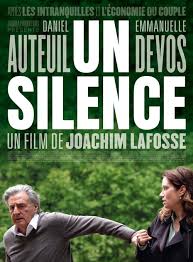
UN SILENCE/ A SILENCE
Belgium/France/Luxembourg, 2023, 99 minutes, Colour.
Daniel Auteuil, Emmanuelle Devos, Mathieu Galoux, Jeanne Cherhal.
Directed by Joachim Lafosse.
By the time we watch the final credits of A Silence, we realise that there are many silences that we have been made aware of.
This is a serious film with serious themes. There is an immediate intimation as the camera focuses at great length (and this will recur throughout the film) in close-up of the face of the key character, Astrid (fine performance from veteran actress Emmanuelle Devos), travelling in a car to a police station. There are some suggestions as to what is going to develop, suspense and questioning on the part of the audience.
Astrid’s husband, François (also a fine performance from veteran actor Daniel Auteuil) is a celebrated lawyer, prosecuting a sexual predator who has victimised two young girls. François is passionate about his cause, giving interviews, an eager press often camped out at his house. And the house is quite a mansion, comfortable, large swimming pool. The couple has a daughter who is married with a child. Their 17 year old adopted son, Raphael, is at school, living at home.
The film is based on actual events and actual characters. In Belgium, 1995, a serial predator, Marc Dutroux, is revealed as acting his victims and imprisoning them, abusing them. A Silence is based on the lawyer who defended him and Astrid on his wife.
There is great complexity in the development of events, a situation of abuse in the past, attempted therapy and the questions of how therapy is long-lasting or not and one of the particular silences, that of those who are aware of the abuse and did not speak up at the time.
Another aspect, is that of the silence of someone who has been abused, unable and unwilling to reveal the truth at the time, silence for decades, then, in the current atmosphere of revelations and prosecutions, speaking out and searching for justice.
And, while the theme is of sexual abuse, there is also the 21st-century reality of on-line pornography, accessibility to the young on their computers, international markets on the black web and networks of photos/video of abused children.
Which means that this is a film of significant contemporary issues, the reality of the abusers and their lives and concealment, issue of those made aware of the issues but who do not understand them, or did not appreciate their severity in the past, and the consequences as time has gone on.
The treatment is sombre, the photography often dark, the great use of extreme face close-ups to focus audience attention on each of the characters.
For audiences who belong to churches and religious denominations, who have experienced the revelations of church leaders and abuse, cover-ups and/or ignorance and lack of awareness, this film has no ecclesiastical connections which means that the audience can look at these situations much more objectively and assess the gravity, and appreciate the pain of survivors.
- Based on actual characters and events? The case in Belgium, the prosecutor against the serial killer, Marc Dutroux, the investigation, child pornography on the Internet, trial and sentence, and the wife sentenced for negligence?
- The fictionalising of the case, the parallels, the lawyer, his family, his prosecution, the expose an investigation, the establishing of the family, the past sexual abuse, addiction, therapy, not effective? The family, the daughter and her marriage, the son at school and his problems, the abused uncle?
- The city setting, offices, police precincts, the mansion, the interiors, the grounds, the swimming pool? School? The streets? The paparazzi? The final courts? The musical score?
- The style of the film, comparatively low key, intense and interior, the focus on Astrid, the many close-ups, the face, profiles, in the car, in the car mirror? Audiences identifying with her, sympathy, but learning more about the past, her relationship with her husband, her brother, the abuse, keeping silent, hoping her husband had benefited by therapy? Her love for her daughter, the tension because of the case and the daughter urging the uncle to prosecute? Her love for her son, his problems, expulsion from school, supporting him? Audience sympathy for her character, her experiences with the secret, the prospect of prosecution, relationship with her daughter and grandchild, urged to reveal the truth to her son, her telling him, the tensions with her husband, looking at his computer, the police, the search of the house, moving with her son to the hotel, his leaving?
- The screenplay, indicating the basic elements and the police interview with Astrid, then the audiences further discovery, emotional complexities, moral issues?
- François, his reputation, the prosecution of the sexual predator, sympathy for the abused daughters, contact with the parents? Press interviews, television, his taking a righteous stand against the abuser? At home, relationship with his family? The gradual revelation of his personal life, going to his computer, the audience just hearing sounds rather than visuals of the pornography? Relationship with his son, watching the tennis, tensions? The paparazzi and his forbidding photos, their waiting outside his home? The arrival of the police, the fact that they had been tracking the international pornographer, six months investigation François, the sequence where they were operating surveillance of his home? His realisation that he would be exposed, going out to the media, explaining that he was withdrawing from the case, politicising it, the media questions, his staying at home?
- Raphael, his age, relationship with his father, his mother doting on him? Money for spending? His friends, missing from school for two weeks, the interview, the expulsion? The truth about his father? His father’s computer? His own computer? His growing anger, going to the exam, the sympathy of the teacher, presumption of father’s innocence? The search of the house, his computer? Going to the hotel, with his mother, leaving?
- Raphael and his going to his sister, growing anger, drinking, confronting his father, the talking, the knife, the visuals of his father having been stabbed, the police arriving, rescuing François, taking Raphael?
- The interrogations, Astrid and her giving information, but withholding the story of the past? Looking at her husband’s computer? François and his denials, looking at the websites for his case? The revelation about the peddler of child images, over 7000 hits, his addiction? The interrogation of Raphael, his story about looking at the computer, even when he was eight, looking at his father’s computer, the contacts on his own? His attack on his father?
- The court sequence, the crowds, the court judgement, referral and the leniency, the condemnation of François, and the effect on Astrid?
