Displaying items by tag: Peter Malone's Movie Reviews
Emilia Perez

EMILIA PEREZ
France, 2024, 132 minutes, Colour.
Karla Sofia Gascon, Zoe Saldana, Selena Gomez, Adriana Paz, Edgar Ramirez, Mark Ivanir.
Directed by Jacques Audiard.
Even if you have heard about Emilia Perez and heard about its drama and its music, its impact is still surprising, very surprising.
This is the work of French director, Jacques Audiard, who has directed some strong and tough films like A Prophet, Rust and Bone, even a Western, The Sisters Brothers, but they don’t quite prepare us for Emilia Perez.
Even without the music, the singing and the dancing, there is a strong narrative. On the one hand, at the centre, is a young lawyer, Rita (Zoe Saldana, Golden Globe, Best Supporting Actress), getting murderers off charges, rather disgusted at and her profession. But, she is abducted, is confronted by a cartel chief who has a special commission for her, his disappearance, getting his wife and children to safety in Switzerland.
Even when we know the plot, the reality of the special commission is still something of a surprise. The issue is trans-gender, the cartel leader and his forming into Emilia Perez. Both roles are played by Karla Sofia Gascon, herself transgender, an imposing performance.
As mentioned, there is a wide range of songs, inserted to dramatise particular characters, different styles of music, dramatic lyrics, sometimes song and dance routines. Rita sings about her life and her attitudes towards her life, the cartel chief sings, Emilia sings, as does the chief’s wife, Jessi (Selena Gomez) and, one of the doctors Rita consults in Tel Aviv about the surgery,
Face out. Four years later. Rita is working as a lawyer in London, invited to a dinner, sitting next to an imposing rather glamorous woman – who looks deep into her, and Rita recognises Emilia Perez.
Which means that the second part of the film, while in Mexico, is a story about Emilia trying to bond with her children, posing as an aunt, suspicious of the behaviour of Jessi who links up with a past lover, but, more importantly, the opportunity for a cartel chief to do some kind of good, some reparation, disturbed by the relatives of those who have disappeared, starting a foundation to dig up graves, identify bones, restore some kind of peace to bereaved families. And a complication in a relationship with one of the wives who actually does not grieve the death of her brutal husband.
It has to come to a head, of course, and it does so in a rather Mexican cartel violence fashion.
Punning on the director’s name, some have called the film ‘audacious’. In many ways it is. In many ways unpredictable. And, so often when we are wondering where it is all going, the characters burst into self-identifying songs.
- The impact of the film? The drama? The music and songs? The interconnection? Real, surreal? The wards and nominations?
- The work of the director, the French origins of his story, the Mexican settings, French language, Spanish, English? The range of the cast?
- The impact of the songs, dramatising each of the characters singing, the lyrics, the musical rhythms and style, the musical numbers, choreography, within the context of the narrative, the hospital, clubs…?
- The initial focus on Rita, as a lawyer, her background, Spanish-speaking, defending the murderer, alleging his wife suicide, the performance in the court, the verdict, his reaction, her reaction, her song?
- The phone call, the rendezvous, her being abducted, in the presence of Manitas, threatening, his song, the surprise of the request? Her intervention? Transgender issues? In the context of his leaving the cartel and his brutality? His wife, the children?
- Rita, the consultation in Bangkok, the interview with the doctor in Tel Aviv, his song? Rights and wrongs of the procedure, its taking place, post surgery, masked, success of the operation? Rita and the money, her life, in London?
- The character of Jessi, the children, Rita organising them to live in Switzerland?
- The meal, sitting next to the woman, looking at her, recognising Manitas, Emilia? Look, manner, filling, clothes, talk, with Simon? A new commission for Rita, to recover her children?
- The return to Mexico, getting Jessi and the children from Switzerland, Emilia posing as their aunt, her mothering them, demonstrative, Rita urging caution? The reaction of the children, Mexico City, going to school, life at home?
- Jessi, personality, young bride, the later revelation is by Emilia about money tales and Jessi’s sister, marrying her, the children? Happiness and unhappiness? Enjoying the life in Switzerland? Making contact again with Gustavo? The relationship, the outings? The sensuality of her song?
- Emilia and her change of attitude, yet her capacity for ruthlessness, the approach by relatives of her victims, the setting of the foundation, Rita doing the business, the interviews, the money available, the digging up of the groups, identifying the bones?
- The visit of Epifania? Her dead husband, the knife, the interview with Emilia, the truth about her husband, glad that he was dead, the bond with Emilia, the later meetings, the affair, the emotional impact on Emilia, as former male, as female, as trans?
- Jessi, wanting to go with the children, with Gustavo, the disappearance? Emilia, her pursuit, ruthlessness? The confrontations with Jessi, tying up Emilia, getting loose, the fight, her revealing the truth, Jessi’s dismay?
- Chase, the dangers, Rita coming with the money, Emilia as hostage, the guns, the shooting, the car, the explosion?
- The ending with Epifania, cult of Emilia, procession and hymns, statue, the women, mourning Emilia, with Rita, her experience, the spirit of Emilia, her continuing the work and caring for the children?
Wolf Man
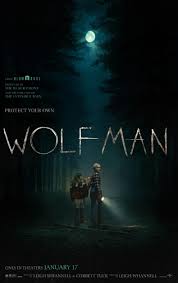
WOLF MAN
US, 2025, 103 minutes, Colour.
Christopher Abbott, Julia Garner, Sam Jaeger, Matilda Firth, Benedict Hardie, Zac Chandler.
Directed by Leigh Whannell.
A few years ago, Australian writer-director, Leigh Whannell, who has had a successful career with horror films, the Saw franchise, of the Insidious franchise, directed the remake of The Invisible Man, which was very successful with both critics and box office. He has now followed up with Wolf Man. But, it is not so much in the tradition of the previous Wolf Man horror films but rather a new development, a 21st-century perspective with reference to Native American traditions.
There is quite a contrast between the impact of The Invisible Man and Wolf Man, the visibility and invisibility. A filmmaker can work more subtle variations on horror and terror when the terrorising character is invisible, able to appear or disappear, those terrified not knowing where the invisible man is, present or absent, suddenly menacing. With the Wolf Man, everything is visible. This is very much the case here.
The setting is Oregon, forested mountains and valleys, a recluse taking his young son out hunting, trying to prepare him for the sense of menace and the tradition of a strange creature, somehow or other infected, wolflike manifestations, and, according to the Native American traditions named here, “the face of the Wolf”.
The action, in fact, takes place 30 years later. The young boy, Blake (Christopher Abbott) is npw a writer in New York, married with a young daughter, Ginger (McK enna Roberts) full-time parent, his nervy wife Charlotte (Julia Garner) a journalist. When news comes about the will of his dead father, he suggests they all go to Oregon which will bond them as a family.
As we guess, big mistake!
Most of the film takes place overnight, the family arriving with a huge van for removals lost in the forest, encountering a friend from the past, but suddenly confronted by the mysterious presence. The truck crashes, Blake is scratched and bleeding, Charlotte and Ginger terrified.
So, we see the gradual transformation of Blake into a monstrous version of himself, his daughter terrified, Charlotte able to assert some kind of authority to help.
This is a film of horror with the transformation, gradual and ugly, into the Wolf Man. It is also a film of terror for Charlotte and Ginger. And for audiences who appreciate and respond to this kind of horror and who have an enjoyment of menace and terror, this is what Wolf Man sets out to offer.
- The popularity of Wolf Man stories? Classic films? 21st-century interpretation?
- The beauty of the Oracle mountains and forests, the father and son, their home, the equipment and communication, hunting, the rifles? The stern father, the boy and his attention, fears, going to ship the deer, his father’s reaction, and up on the lookout, his father’s explanations? At home, the effect of the father on the boy? The personality of the Father, war, communications? Then the story of his disappearance?
- 30 years later, New York City, Blake, writer, looking out his daughter, Charlotte, at work, her moods, difficulties at home, phone calls? Blake and his daughter, protecting her, her reading his mind, the meals?
- The news of his father’s will, the suggestion to go to Oregon, the fan, travelling through the forest, the desd end gate, Derek on the lookout, the fears, his friendliness, back story, guiding them to the house? The apparition of the road, swerving, the crash, Derek falling out, being taken away by the creature? The creature, the struggle, Blake being scratched, mother and daughter on the roof of the van, walking through the woods, finding the house, getting the lights going, the threats, locking the door?
- Blake and his transformation, the arm, the blood, Charlotte ending the wound, his later tearing it off, chewing on his arm, the impact on Charlotte, the impact on Ginger? Her age, dependence on her father, not so close to her mother, her mother having to protect her, her being bewildered by the transformation of her father?
- Blake and the further degeneration, his face, the touch of the Wolf, facial hair, the blood, his trying to protect them, Charlotte and her getting the engine going, trying to escape in the car, Blake leading of the creature?
- The revelation that the creature was Blake’s father, the confrontation between the two, the fight, the destruction of the creature? Blake and his death?
- A grim ending, the action taking place overnight, the pessimism of this variation of the Wolf Man story?
Magic Beach

MAGIC BEACH
Australia, 2024, 76 minutes, Colour.
Directed by Robert Connolly
An Australian film for a younger audience, especially for those who have read Alison Lester’s childrens book. And, there is the appeal to those who read the book as children or who had Magic Beach read to them as they were growing up. And, of course, the appeal to the parents who read the book to their children.
During the opening credits, there is the use of illustrations from Alison Lester’s book, to excite the audience imagination. And they are contrasted with real life children, families, of the reading of the book.
While Robert Connolly is the director (and is familiar with films with a family appeal, having directed Paper Planes and Blueback) but there has been an invitation to a group of animators to take a particular story and write, design, animate according to their particular talent and style, interest and inspiration.
And, acknowledging the animators: Susan Kim Dantga, Pierce Davison, Jake Duczynski, Emma Kelly, Anthony Lucas, Simon Rippingale, Kathy Sarpi, Susie Shapones, Marieka Walsh, Eddie White, Lee Whitmore.
So, while there are scenes with the children, some walking along the beach, some going into the water, some sitting in boats with binoculars, children and adults communicating with sign language, the final group of children and everyone on the beach, the stories within the story are very varied, the young boy on the beach suddenly riding a white horse, racing with horses underwater, the young girl, with a mermaid story, more a pictorial fantasy. – and a dog story. There are some adventures, pirates and smugglers along the coast, a group of children sitting in a boat with binoculars out to sea, a range of stories with different kinds of appeal, some more realistic than others and, if the audience is not liking this particular story then there is another one soon to come.
For older audience not familiar with the book and its illustrations, the experience might be less engaging. But, for those familiar with the book, the young children’s audience, there are stories to excite, to delight, and to open up the imagination.
Babygirl

BABYGIRL
US, 2024, 114 minutes, Colour.
Nicole Kidman, Harris Dickinson, Antonio Banderas, Sophie Wilde, Esther McGregor.
Directed by Halina Reijn.
Very much a women’s film, in terms of focus, issues, relationships with men. It was written and directed by Dutch actress, Halina Reijn, who also directed the American film, Bodies, Bodies, Bodies. And, bodies play a significant role in this film. And its star, Nicole Kidman, won the Best Actress award the 2024 Venice Film Festival.
The film is better reviewed from the female perspective, with some empathy, understanding as well as critique. And, of course, it offers a challenge to the male reviewer.
It opens quite graphically, the focus on business executive, self-made business leader, Romy, Nicole Kidman, her sexual relationship with her husband, Jacob, a theatre director, Antonio Banderas. Vigorous but not fulfilling, and Romys need for turning to pornography for some kind of gratification or fulfilment. At work she is most competent. But, some in insecurities.
The catalyst for surfacing the uncertainties and possibilities for change/or not, is a young man, Samuel, Harris Dickinson, seen on the sidewalk controlling an aggressive dog. And he turns out to be one of the aspiring interns at the company, very forward, claiming Romy as a mentor despite her objections.
It would be interesting to hear some psychologists interpretation of each of their characters and the interactions and sexual behaviour. With the lay reviewer, they don’t seem quite credible, especially Samuel’s character and the motivations for his behaviour, where he came from, what his intentions are, what he gets out of the relationship.
In fact, the film parallels those dramas with the dominatrix and the subservient male client. Samuel becomes the dominator, not in the expected violent way but paralleling the behaviour of the female dominatrix. And the audience continually asking about Romy’s behaviour, self-consciousness, memories of her past and inadequacy, issues of power, issues of gratification and fulfilment.
There are some family scenes, Romy and Jacob having two daughters, but the focus is on that sexual interaction domination and submission between Romy and Samuel.
- The title, the tone? Identity, sexuality, relationships, power?
- The New York setting, the world of business and enterprise, management, interns, interactions? Home life? The world of affairs, hotels? The musical score, pounding at times?
- The impact of the opening, Romy and Jacob and their relationship, sexuality, her going to the computer for pornography, her later taunts of Jacob, contrast with her experiences with Samuel? The focus of the film on personality, sexuality, sense of inferiority, ambition and achievement, exercise of power? Domination – by the male but echoing the dominatrix? Intimacy, secrecy, fulfilment?
- Romy’s story, her background, sense of inferiority, studies, skills, achievement, the company, relationship with the staff? With Esme? With the interns? Seeing her in business meetings, her reports, communication video…?
- Jacob, the marriage, their children, home life, intimacy? His work in the theatre, the rehearsals, Romy’s visit? The performance, the achievement, the celebration, Romy leaving?
- The introduction of Samuel, the incident with the dog on the street, his control, coming to the office with the interns, his approach to her, her asking about the dog? His choosing her as mentor, but not being on the program, her resistance, the first meeting, the seven minutes, the interview, the discussions? The credibility of Samuel’s character, his background, much unexplained, his approach to Romy, sexual, dominating?
- The development of the relationship between the two his demands, his analysis of her sense of inferiority, his commands, her reactions, leaving, returning, the kisses, the propriety, the danger of public knowledge, losing her position in reputation? The party, watching him dancing, his tie, taking it?
- The sequences of their being together, his commands, her humiliation, resistance, acquiescence, the milk in the saucer, on all fours…? The sexual impact for her? The significance for Samuel?
- His turning up at her house, her reactions, the children’s party, with Esme? His relationship with Esme, different? Her role in the company, ambitions, taking Romy’s role as her model, at the house, with Samuel, her later confrontation with Romy, saying she knew everything?
- The interactions with Jacob, the tensions, the taunt, later apology, his suspicions, his outbursts, his demands, ousting her, her meeting with Samuel, his discovering them, the fight, some resolution?
- The influence her daughters, Isabel, age, friends, relationships, sexuality? Her behaviour with her parents, the socials, the party? Concerned about her mother?
- The ousting of Samuel, his going to Japan? The discussion with the boss, the standing up to him, ousting him? The reconciliation with Jacob and the family?
- The credibility of Romy’s personal and sexual journey?
Kurt Vonnegut: Unstuck in Time
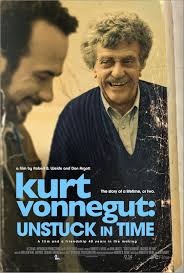
KURT VONNEGUT: UNSTUCK IN TIME
US, 2021, 127 minutes, Colour.
Directed by Robert B.Wiede, Don Argott.
And so it goes...
In his heyday, Kurt Vonnegut was considered one of the most influential writers in the United States. In succeeding decades, he was less popular but, eventually, made a comeback at the end of the 1990s. He was born in 1922. He died in 2007.
Writer-director Robert B.Wiede, made contact with Vopnnegut in the 1980. Contact and friendship continued over the succeeding decades, enabling Wiede to film Vonnegut in a great number of interviews, during travels, giving speeches… As well as Vonnegut ifilming in his private life. With such an amount of material available, as well as footage from television, this film is able to offer a portrait of Vonnegut in his own words.
While the film does trace the chronology of Vonnegut’s life and career, it does not do so in linear fashion, rather introducing Vonnegut, highlighting aspects of his personality and talent and inserting the chronology of his life and writing. Fortunately, a great deal of home movie footage was found, the family, with Vonnegut as a child, growing up, the depression, loss of their house, renting, the sadness of his mother’s death by overdose, the decline of his father. There is a focus on his brother Bernard, an expert in physics, and the sadness of the death of his sister.
In the interviews, often quite frank, with his daughters and his son as well as his adopted sons after the death of their mother, his sister. Initially, this led to a big happy family, but his marriage with his very supportive and encouraging wife, broke down. He left, married his second wife, achieved a great deal of fame, a public American celebrity…
The film also incorporates many interviews with literary experts, including novelist John Irving who was a student of his in Iowa, to get background to appreciate Vonnegut’s writing and its reception. A great deal of attention, as expected, is given to Slaughterhouse 5, the many drafts, corrections, changes of inspiration, and the drawing on, get his memories of World War II, taken as a prisoner of war, the bombing of Dresden and its consequences. When he was not writing, Von negut also sketched, many of his paintings and drawings, reminders of the style of Picasso. Attention is also given to his Breakfast of Champions and, in his later years, his writing of essays for various magazines, and his social and political Man Without a Country (2005).
The film is very personal documentary for Robert B.Wiede, in process for several decades, taken up, let go, an archive of material, and Vonnegut himself sending tapes of speeches and of material. In the meantime, Wiede was successful in screenwriting and documentaries, especially, winning awards for his work with Larry David in Curb Your Enthusiasm.
With Wiede on screen so often, this makes the documentary very personal. Many have responded well to his presence. Others have criticised it, noting that he appears, in their opinion, far too often, diverting attention to himself and his own life and career. And this seems particular case in his insertion of his wife’s illness in the 2010s.
Irrespective, say, of the Wiede personal material, this is a very good introduction to the life and work of Kurt Vonnegut, as shown by the author himself.
River Wild
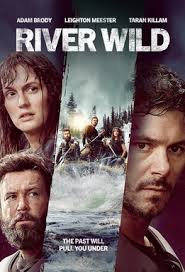
RIVER WILD
US, 2023, 91 minutes, Colour.
Leighton Meester, Taran Killam, Adam Brody, Olivia Swann.
Directed by Ben Ketai.
River Wild is a popular action pastime adventure. It is a credit to the 1994 at the River Wild with Meryl Streep and Kevin Bacon, keeping the basic plot outline of the journey on a river and the menacing by a criminal. However, the rest of the characters are different, as are their interactions.
While the initial focus is on Joe, Leighton Meester, she joins her brother and a group of young women eager to go on the river. She is not expecting an associate from childhood, Trevor, Adam Brody, who has been in prison on drug charges, has a sense of menace, is revealed as psychopathic as the film goes on, an injury to one of the women, an attempt to get help and the psychopath shooting the Ranger, developing drama, including a hiker trying to help the group, building up to a final confrontation and plenty of scenes on the river and, especially, on the rapids.
In fact, Leighton Meesterand Adam Brody and her husband and wife in real life – an opportunity for them to be in a heightened dramatic situation on screen.
- The title, the basic screenplay from 1994? Variations on characters and events?
- The mountain scenery, the river, rapids? The musical score?
- The initial focus on Joey, her personal worries, joining the group, her relationship with her brother, meeting the young women, her antipathy towards Trevor? The initial interactions, on the river, the personalities of Grey his guide, the young women and their background? Camping, the incident with the young woman, her injuries, the allegations that Trevor attacked her?
- The crisis, to help the young woman, the decision to go during the night, to seek the Ranger, the dangers in the right, people falling out of the boat, continuing on?
- The episode with the Ranger, Trevor and his reaction, the Ranger putting the gun, the fight, his death, Trevor wanting Grey’s support, memories of going to prison for him in their drug days?
- The girl, her injuries, dying, the decision to bury her, Trevor taking control, tying people up, his plane to escape to Canada, seeing the hiker on the bridge, Joye attracting his attention? The continuing of the riot, the plans, the night, the hiker returning, Trevor shooting him, another burial?
- The confrontation with Grey, the viciousness of the fight? The knife, the two women free, the visitor running away, getting help? Joey, the pursuit, jumping from the cliff, returning to help grey, his injuries, boats, falling out, generally reaching out, the fight with Trevor?
- Joe, surviving, her medical knowledge, bandaging herself, the helicopter, the rescue?
Advantageous
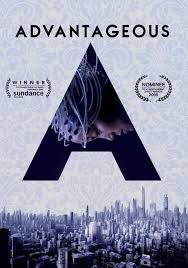
ADVANTAGEOUS
US, 2015, 93 minutes, Colour.
Jacqueline Kim, James Urbaniak, Freya Adams, Ken Jeong, Jennifer Ehle, Samantha Kim.
Directed by Jennifer Phang.
Advantageous is a rather quiet, futuristic film with elements of science-fiction. It originated as a short film by writer-director, Jennifer Phang, and this feature film won awards at the Sundance Festival.
The film was cowritten with the leading actor, Jacqueline Kim, actor, singer.
The setting is a futuristic city, not grim, the sun shining, vast high-rise buildings, some drones in explosive action over the city, but generally a city that most audiences would recognise, sufficient similarities with the present.
The focus of the film is on Jacqueline Kim’s character, Gwen, an expert in promoting procedures for enhancing beauty. She has a strong reputation but she is growing older and the powers that be are looking for a younger face to promote. She is interviewed, very slightly by Jennifer Ehle cautiously by James Urbaniak with whom she has a relationship. She is persuaded to undergo a facial transformation, a more European face chosen, her going through the process, emerging as the younger face for promotion.
However, the important aspect of her life is her commitment to her daughter, an intelligent youngster, the future before her. Gwen decides to go through the procedure, get the money to facilitate her daughter’s further education.
As said, the film is rather quiet even when exploring futuristic themes, competitive business and exploitation, family betrayals. The ultimate message is a hope for the future generation.’
- Science fiction? Science future? American society, individuals, hopes and ambitions, moral choices, the future and hopes?
- The visuals of the city of the future, similar to contemporary images, vistas of high-rise, drones and attacks? The contrast with familiar and ordinary sequences at home, officers, school? The musical score?
- The title, the tone, advantages, especially for the next generation?
- Gwen’s story and Jules’ story? Gwen and her personality, age, her care for Jules, the later revelation about the relationship with Han, his paternity Gwen not revealing it? Her bringing up Jules, concern, prospect for school entries, prejudices, racism? Her work, the promotion of beauty, advertising, campaigning, the interview with the company, her relationship with Dave Fisher, the smooth interview with Isa Cryer? The prospect of her changing her image, contracts, payments, absence from home, the benefit for Jules?
- The background of business in the future, the technology available, means of communication, voice, screens? Interviews? Smooth talk, more sinister aspects behind the scenes? Gwen and her signing the contract, going away? The transformation? The choice of the new image, not Asian?
- Jules, age, bright and intelligent, her comments, her friends at school, the visuals of the girls, the games, conversations? Her relationship with her mother, strong relationship, her concern for her mother? Her mother going away? Her going to the camp, communication, her mother’s return, accepting the new image, continuing family life?
- Lily, the contacts with Gwen, not for a long time, Gwen deciding to visit, the confrontation with Han, his relationship with Lilly, the boys, the revelation of the truth, Lilly’s reaction, the reaction of Han?
- A quiet, more contemporary to the times look at the future, society, technological developments, the quest for beauty and non-ageing, the future for children?
Black Dog/ China
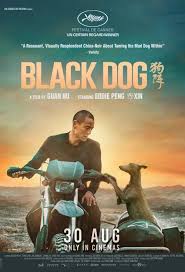
BLACK DOG
China, 2024, 116 minutes, Colour.
Eddie Peng.
Directed by Guan Hu.
Sometimes moviegoers say that they would like to see something different, a film from somewhere else, different sensibilities,, entry into a world they are unfamiliar with. Black Dog is an excellent candidate this kind of choice.
We are caught up with a very striking opening, the camera panning unfamiliar vistas of north-western China, vast barren plains and black hills, near the Gobi desert. Suddenly, a large pack of wild dogs run rampage across the screen, down the hills, onto the highway where a minibus of passengers overturns with the impact of the dog rush. The driver impatiently gets the passengers out onto the road, calls the police, and the rescue interrupted by a man frantic, accusing the passengers of stealing a large sum of money from his bag. Then a tall morose man walks away, the frantic man accosting him. But, this is not where this film is going!
In fact, the tall man, Lang will be the central character rarely speaking, just out of jail, with a complex past. And, we get to know him well, wary of him at first, becoming more and more sympathetic, and he is played by Eddie Peng, Taipei-born, Canada-educated, one of the most popular contemporary stars of Chinese films.
And, there is a black dog, greyhound -looking, suspected of having rabies, a target of the town’s authorities. In fact, with the Beijing Olympics in the offing, this is 2008, this provincial town is eager to get rid of the dogs, many of them pets abandoned by citizens moving out, Lang beng seconded onto the squad.
We first see Lang hostile and his black dog marking out their territories, Lang trying to capture him, but, eventually, their bonding, especially after lLang is bitten and rabies suspected. So, a film of human and canine friendship.
But, there is a great deal more to Lang’s story, re-meeting his father, now a keeper at the failing zoo, then a sick old man who had supported him in the past, a revelation about Lang’s buying and sentence, a local strongman hostile to Lang because of the accidental death of his nephew, Lang revealed as a former motorcycle champion in the circus, his encounter with friends in the town and with a young woman as a new travelling circles circus arrives.
The narrative is never predictable. There is always an interesting turn in the plot, in the revelation of characters, in Lang’s confrontation with his opponents, but more and more of his kindly disposition emerging.
For dog-lovers from any nation, there are moments of sadness, but, ultimately, a sequence to cheer every dog-lovers heart.
This is a China unfamiliar to most of us, in look, the bleak terrain, the provincial town partly collapsing, goods trains continually passing through, attempts at rehabilitation and an opportunity to visit a quite different place and encounter very different characters.
- A different view of 21st-century China? Geography and landscapes, towns. the developments, in decline, rebuilding, dog plagues, in the context of the preparation for the 2008 Beijing Olympics?
- The impact of the photography, colour, style, saturated at times, the landscapes and the overviews, close-ups and characters, the contrast between the vastness and intimacy?
- The impact of the opening, the vice spaces, the hills, the desert, the sudden packs of dogs? The overturn of the bus, the passengers, the man complaining about being robbed, the authorities, Lang accused, walking away?
- Lang becoming the unexpected centre of the film, the explanations of his background, his skill with bikes, cars, mechanics, writing? The violence, the local gangster chief and the death of his nephew? The prison experience? Returning, the state of his father, at the zoo with the animals, declining health? The welcome home? Reactions against him? His character, silent, self-contained?
- The issue of the dogs, the number of wild dogs, roaming the plains and mountains, the authorities, the bounties? The black dog, lurking, the difficulty with rabies, Lang trying to catch it, being bitten, the consequences? His joining the group, the pursuit of the dogs, destruction? His care of the dogs, his change of heart? With the black dog, keeping, protecting?
- The travelling circus, the encounter, the young woman and her presence, the other members of the troupe, setting it up, performance? His friendship with the young woman, the conversations, her leaving?
- His skill at reading, the impact of the riding sequences, his age, fitness, skills, the difficult terrain?
- The issue of health, the rabies, his recovery?
- The gangster, his gang, focus, resentments, anger with Lang? Working with the snakes? His being bitten, Lang saving him? The consequences?
- His father, illness, hospital, wanting the equipment turned off? Lang, his hesitation, eventually doing it?
- The death of the dog, finding all the other dog, giving birth, the spirit of the black dog continuing?
- The effect of the audience sharing Lang’s experience, unexpected sympathy? In the context of the decline of the town, the motif of the goods trains passing through the town, the demolition of buildings, possible recovery? And the impression for China and outside China for the Beijing Olympics?
Paddington in Peru

PADDINGTON IN PERU
UK, 2024, 106 minutes, Colour.
Hugh Bonneville, Emily Mortimer, Samuel Joslin, Madaleine Harris, Julie Walters, Olivia Coleman, Jim Broadbent, Hayley Atwell, Voices of: Ben Whishaw, Imelda Staunton. Cameos by Hugh Grant, Joel Fry, Robbie Gee, Sanjeev Baskhar, Ben Miller, Jessica Hynes.
Directed by Dougal Wilson.
Who cannot like Paddington! His stories are always bearable!
We have enjoyed the first two films very much. There was an element of surprise about them, the introduction to Paddington himself, the wonderful voice provided by Ben Whishaw, the members of the Brown family and their ability to welcome Paddington. And, there were various adventures and, who can forget, the villainous Hugh Grant?
It does mean that here we accept Paddington straightaway, the glimpse of his early years in Peru reaching out to pick a beautiful orange, falling into the River – and landing in London. Now, a letter from his Aunt Lucy (voiced by Imelda Staunton) encouraging him to come for a visit (and that humour is awkward episode getting his passport photographs).
But there is a bit of background about Mr Brown, somewhat British stick-in-the Mode, challenged at work about risks. In the brainwave! Why don’t they all go with Paddington to Peru, including the kindly Mrs Bird (Julie Walters). Hugh Bonneville is once again Mr Brown but, this time, Emily Mortimer is Mrs Brown.
Once they will arrive in Peru, now met by Reverend Mother at the local home for retired bears! Suddenly, and exuberantly, we have Sister Act meets The Sound of Music. But, bad news, aunt Lucy has disappeared and Paddington is determined to find her. And, Olivia Coleman, in recent years showing a variety of talent (Wonka, Little Wicked Letters), is here as the exuberant Reverend Mother.
With the action adventure that follows, more than a touch of Indiana Jones here, the action is geared more to the young audience, the touch of caricature with the boat captain (Antonio Banderas), farcical and slapstick situations high dangers and minutes, especially as Paddington and the family get lost in the Andes jungle, double dealings and some sinister flashbacks…
But, there are some secrets to be revealed, and a variation on the search for El Dorado and that fabled gold. This, everybody benefits from the adventure, and Mr Brown becomes extraordinarily daring. And Paddington has to make a decision, finding his tribe there in Peru, and whether he will go back home with the Browns.
Adult audiences, especially, please don’t rush for the exit when the credits begin to appear because there is a very enjoyable special guest interlude during the credits. And, as always, possibilities for more.
- The popularity of Paddington, the films? And in himself, from Peru, landing in London, the Brown family, part of the family, his adventures, memories of Aunt Lucy in Peru, the possibility of his returning to visit Peru and Aunt Lucy? The effectiveness of Ben Wishaw’s voice?
- Expectations from the previous film and their popularity and acclaim? The intentions of the filmmakers here, a film for younger audiences, style, treatment, humour, adventures, the touch of the absurd for enjoyment? The impact for older audiences, the adult characters, the adventure, the mayhem? And the postscript with Hugh Grant?
- The scenes of Paddington’s origins, little bear, the oranges, on the branch, falling, to England, with the family? The memories of Aunt Lucy? The correspondence with her? His receiving the letter from her, inviting him to Peru, his eagerness?
- The Brown family, the children growing older, University entrance, computer games and inventions, not wanting to play Scrabble with the mother, Mr Brown, the firm, Risk-taking, the American executive, her demands, the challenge to him? His very proper reticent British way of style of life?
- The suggestion to go to Peru, the reaction of the family, Mr Brown and the decision to take a risk? Mrs Bird and her presence, decision to go? The farewell in the street with all the British film and television celebrities’ cameos? The flight, landing, Peru?
- The visuals of Peru, the mountains, the river, waterfalls, locations in Peru and Colombia? The settlement? The boat
- the convent, Reverend Mother, her cheery attitude, the staging of the musical, Sister Act meets The Sound of Music? The family settling in? The disappearance of Aunt Lucy, the nuns? The retired bears and their lifestyle, bingo…? Reverend Mother and her explanations, her eagerness for them to go searching, but her remaining at home?
- The expedition, Paddington and his eagerness, the family, hiring the boat, the captain and his daughter, his manner and mannerisms? On the voyage, the comedy, the dangers, the rapids?
- The background of El Dorado, the captain and his ancestors and their appearing behind him, his relationship with his daughter, the search for gold, Paddington and his arm band, the translation and interpretation? The captain disappearing and his search?
- The family on the boat, the dangers, capsizing, stranded? Through the jungle? Mr Brown and his being more daring? Paddington’s memories of the Inca image, his arrival at the tower, the rock? The family arriving?
- The Machu Picchu kind of location, the confrontation with the captain, pursuing more Paddington, the fights, the bolder, the dangers…? The reappearance of the daughter, her helping the family?
- Mrs Bird, back at the convent, curious, suspicious, finding the radio room, the confrontation, the truth about Reverend Mother? The plane, flying, the crash landing, the confrontation, Reverend Mother from the El Dorado-seeking family, the flashbacks to their disasters? The confrontation with the captain? Her being overcome?
- Finding Aunt Lucy, going beyond the barrier, finding El Dorado, the gold being the oranges, the scenes of collecting, squeezing, Paddington and his predilection for marmalade?
- Paddington finding his tribe, his being welcomed, his speech, the family ready for him to stay, his decision to return with them, finding his tribe but going home with his family?
- Happy ending – and the epilogue with Phoenix Buchanan and Hugh Grant’s style? Future prospects?
Sweet Dreams/ 2024
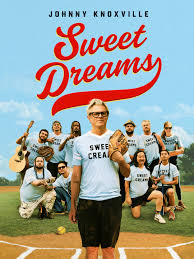
SWEET DREAMS
US, 2024, 95 minutes, Colour.
Johnny Knoxville, Bobby Lee, Jay Mohr, Beth Grant, Brian Van Holt.
Directed by Lije Sarki.
There seem to be too intentions in the making of this film. One is a film about rehab. The other is a softball competition film. But, probably the is that this is very much a rehab film using the softball competition as a focus for the energies and striving for rehabilitation.
Sweet Dreams is the name of an institution, for men only, the men managing for themselves, cooking and cleaning, attending meetings, acknowledging their drug and alcohol addictions, their sense of inferiority, their hopes for some kind of change in their lives.
In many ways, this is presented conventionally, the introduction to a range of men, multiracial, but very American in their presence, talk, style, ambitions. The centre is run as a charity, is experiencing financial difficulties. The focus is on softball, training, play, competitiveness, taunts from the rival team… But, of course, some ultimate success.
The surprise of the film, in fact, is the presence of Johnny Knoxville, famous for his jackass movies. This performance is quite different – quite moving at times, especially in the scenes of his explaining himself, his drinking, driving, danger to his young daughter’s life. He is divorced, not allowed to see his daughter.
A lot of the sequences are played for laughs even though there is some tough realism the men and their sense of self-worth, their interactions, issues of hygiene, nicknames and poking fun…
This is very much a film for male audience. There are very few women in the cast at all, the central characters mother and daughter, especially at the end, present with the sense of achievement at the victory that softball. It is a film that men with problems could see which might motivate them to seek some kind of rehabilitation – or for women close to the men to see to encourage them to seek some kind of help.
- Title, the centre, the hopefulness, the management and intentions, the men, their dreams, addictions, self-worth, rehabilitation?
- The main action at the centre, the interiors, the rooms, gatherings, the kitchen, the meetings? This field
- the focus on Morris, his background, talents, sport, the car, his mother, the danger to his daughter, his ex-wife forbidding him to see her? Coming to the centre? Sharing of the room, the smelly inhabitant, the bottom bunk, the urinating? The kitchen, cooking, washing up? His relationship with the other men, some leadership, it is self-deprecation? The phone calls from his daughter? At the meetings, his frank expression of his failures? If the talent with the softball, the team, coaching, defeat, victories? Reunited with his mother and daughter?
- The manager, a charity, his work, relationship with the men, financial difficulties, the group helping with the finances, the issue of the option of the centre?
- The other men, the range, African-Americans, Asian-Americans, their stories, personalities, sharing, the taunting of Crews? At the softball, the hopes, the taunts of the of the team, the role of Morris, observing, encouraging, and the final victory?
- Morris, at the meetings, listening to the stories, the executive for 20 years and his failure, rehabilitation? Some of the others at the Centre for years? The issue of sponsors, Maurice and his discussions, support?
- Comparative absence of women in the cast, the woman with her addiction, the young women and the softball match?
- A serious minded comedy, encouraging men into rehabilitation, for women to support men going to rehabilitation?
