Displaying items by tag: Harris Dickinson
Urchin
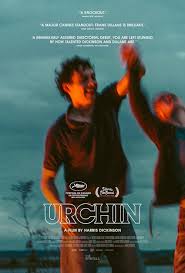
URCHIN
UK, 2025, 100 minutes, Colour.
Frank Dillane, Harris Dickinson, Okezie Morro.
Directed by Harris Dickinson.
What might we expect from a film with the title, Urchin? The Oxford dictionary suggests a meaning with which we are familiar: a young child who is poorly or raggedly dressed.
But, this is not the case at all. This is an adult story, the film written and directed by up-and-coming acting star, Harris Dickinson (Triangle of Sadness, Scraper, Babygirl). His definition of urchin belies the familiar description in the dictionary since the central character, Mike (a persuasive performance by Frank Dillane of a character that we might not be immediately sympathetic with as we watch him on the screen, let alone encountering him in day by day life) is now in his 20s.
Here are some different descriptions of urchin Googling from the Urban Dictionary: A street person or person of the street. These people usually dwell in cars that aren't theirs, warehouses, squatting holes, gutters, garbage cans, boxes, parks, opium dens, public bathrooms (bus/train station, airport), bushes, soup kitchens, etc. A person who's an asshole and doesn't seem to get that you don't want to talk to them. Has a tendency of being very annoying. Also dresses very trashy and can be depressive. Annoying low life that people hate and often beat up.
And, this is what Harris Dickinson shows us, the day by day life of Mike, scrounging, past drug habits, encountering a kindly man who wants to get him something to drink, walks along the street offering to help further, then Mike suddenly attacking him, bashing him, stealing his watch and pawning it.
Actually, Mike is not very worldly -wise and fails to remember that everything he did was captured by surveillance cameras. Police, prison, getting out, an attempt to do better, an interview at a restaurant for work as a chef, partly succeeding, supported by the owner, and then failing, impatient, an attack on a customer.
Then a new job, joining a troupe of litter collectors, conversations, success, failures, discussions with those from government and social organisations who want to help – immediate help but what of the future?
While most of the film is social realism, there are some moments of fantasy, Mike falling through tunnels, rugged cliffs, symbolic of… His isolation, hopelessness, interpretation for the audience in the light of what we see of Mike, the adult urchin.
This is a sombre look at those who are marginalised, who marginalise themselves, surviving, though not necessarily surviving. Stories and images of modern urban society at the fringe.
- The title, children, adult urchins? On the fringes of society, disliked, not accepted, pugnacious?
- The urban setting, the UK, the streets, sleeping rough, shops and stores, police precincts, parole officers, restaurants and kitchens, licit collecting parks? The musical score?
- The work of Harris Dickinson, writing the screenplay, directing the film, his role in the film? Perceptiveness?
- The story of Mike, the sketching of his background, in his 20s, drug use and habit, sleepless, carrying his bag, hungry, begging, people passing by, the cafe, being moved on, the encounter with Simon, something to drink, the offer of food, walking with him, turning in bashing, robbing him, pawning the wants, the arguments with the pawnbroker? Audience response emotionally to his bashing Simon?
- The police, surveillance, prison, getting out, the possibilities for restorative justice, the session, his leaving? Government and social organisations, care for the parolees, future care or not?
- The job, the interview with the owner of the restaurant, the article, always ducking out, the clash with him, the girl and her friendship, the owner, sympathy, giving him the job? The work, upset, the fight with the worker, the criticism of the customer, arguing with him, wanting the meal replaced? Fired?
- Wandering, the job at the parks, with a group character collecting the listener, the characters, discussions, sharing opinions and hopes, the drugs?
- The future for Mike? The patterns of the past, people reaching out, his bad reactions, always on the fringe?
- The significance of the symbolic sequences, falling through the tunnel into the light, at the end of the tunnel, the cliffs and the crags? Symbols of his life in the future?
- The friendship with Nathan, trying to contact him, tracking him down, the accommodation, the clash, the money?
- The end, the encounter, asking for help, the whole, his being pushed out, falling to…?
Babygirl

BABYGIRL
US, 2024, 114 minutes, Colour.
Nicole Kidman, Harris Dickinson, Antonio Banderas, Sophie Wilde, Esther McGregor.
Directed by Halina Reijn.
Very much a women’s film, in terms of focus, issues, relationships with men. It was written and directed by Dutch actress, Halina Reijn, who also directed the American film, Bodies, Bodies, Bodies. And, bodies play a significant role in this film. And its star, Nicole Kidman, won the Best Actress award the 2024 Venice Film Festival.
The film is better reviewed from the female perspective, with some empathy, understanding as well as critique. And, of course, it offers a challenge to the male reviewer.
It opens quite graphically, the focus on business executive, self-made business leader, Romy, Nicole Kidman, her sexual relationship with her husband, Jacob, a theatre director, Antonio Banderas. Vigorous but not fulfilling, and Romys need for turning to pornography for some kind of gratification or fulfilment. At work she is most competent. But, some in insecurities.
The catalyst for surfacing the uncertainties and possibilities for change/or not, is a young man, Samuel, Harris Dickinson, seen on the sidewalk controlling an aggressive dog. And he turns out to be one of the aspiring interns at the company, very forward, claiming Romy as a mentor despite her objections.
It would be interesting to hear some psychologists interpretation of each of their characters and the interactions and sexual behaviour. With the lay reviewer, they don’t seem quite credible, especially Samuel’s character and the motivations for his behaviour, where he came from, what his intentions are, what he gets out of the relationship.
In fact, the film parallels those dramas with the dominatrix and the subservient male client. Samuel becomes the dominator, not in the expected violent way but paralleling the behaviour of the female dominatrix. And the audience continually asking about Romy’s behaviour, self-consciousness, memories of her past and inadequacy, issues of power, issues of gratification and fulfilment.
There are some family scenes, Romy and Jacob having two daughters, but the focus is on that sexual interaction domination and submission between Romy and Samuel.
- The title, the tone? Identity, sexuality, relationships, power?
- The New York setting, the world of business and enterprise, management, interns, interactions? Home life? The world of affairs, hotels? The musical score, pounding at times?
- The impact of the opening, Romy and Jacob and their relationship, sexuality, her going to the computer for pornography, her later taunts of Jacob, contrast with her experiences with Samuel? The focus of the film on personality, sexuality, sense of inferiority, ambition and achievement, exercise of power? Domination – by the male but echoing the dominatrix? Intimacy, secrecy, fulfilment?
- Romy’s story, her background, sense of inferiority, studies, skills, achievement, the company, relationship with the staff? With Esme? With the interns? Seeing her in business meetings, her reports, communication video…?
- Jacob, the marriage, their children, home life, intimacy? His work in the theatre, the rehearsals, Romy’s visit? The performance, the achievement, the celebration, Romy leaving?
- The introduction of Samuel, the incident with the dog on the street, his control, coming to the office with the interns, his approach to her, her asking about the dog? His choosing her as mentor, but not being on the program, her resistance, the first meeting, the seven minutes, the interview, the discussions? The credibility of Samuel’s character, his background, much unexplained, his approach to Romy, sexual, dominating?
- The development of the relationship between the two his demands, his analysis of her sense of inferiority, his commands, her reactions, leaving, returning, the kisses, the propriety, the danger of public knowledge, losing her position in reputation? The party, watching him dancing, his tie, taking it?
- The sequences of their being together, his commands, her humiliation, resistance, acquiescence, the milk in the saucer, on all fours…? The sexual impact for her? The significance for Samuel?
- His turning up at her house, her reactions, the children’s party, with Esme? His relationship with Esme, different? Her role in the company, ambitions, taking Romy’s role as her model, at the house, with Samuel, her later confrontation with Romy, saying she knew everything?
- The interactions with Jacob, the tensions, the taunt, later apology, his suspicions, his outbursts, his demands, ousting her, her meeting with Samuel, his discovering them, the fight, some resolution?
- The influence her daughters, Isabel, age, friends, relationships, sexuality? Her behaviour with her parents, the socials, the party? Concerned about her mother?
- The ousting of Samuel, his going to Japan? The discussion with the boss, the standing up to him, ousting him? The reconciliation with Jacob and the family?
- The credibility of Romy’s personal and sexual journey?
Iron Claw, The
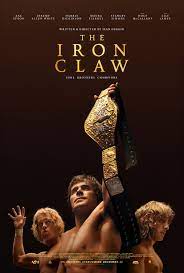
THE IRON CLAW
US, 2023, 132 minutes, Colour.
Holt McCallany, Maura Tierney, Zac Efron, Harris Dickinson, Jeremy Allen White, Stanley Simons, Lily James, Michael J.Harney, Kevin Anton.
Directed by Sean Durkin.
A strong, tough title. And a reference to a wrestling technique, the strengthening of a hand, the shape of a claw, and descending, claw-like, on the head of an opponent. The signature of the wrestling family, the Von Erichs, but also a metaphor for the control of a father over his sons.
While this is a wrestling film with many wrestling sequences (someone remarking that they were not “fake” but “pre-arranged”, vividly bringing to life the moves, the tactics, the brutality, the theatricality, and the often wild enthusiasm of the cheering crowds.
This will appeal to wrestling fans. But, for non-wrestling fans, this is also a strong family drama. It is based on an actual family, the father a one-time champion but never receiving the final accolades, his surviving four sons and his domination of them, not only to follow his career path, but to be acknowledged, recognised as champions. (For audiences caught up in the family story, there is a lot of background information on the Internet.)
There is a black-and-white prologue, the success of Fritz Von Erich, a convincing performance by Holt McCallany, and his encouraging his little boys. Then a transition to 1979, memories of the death of a very young son, the four remaining brothers, strongly bonding, huge sense of family, devotion and loyalty to their tough mother, Maura Tierney, but relying on a sense of family support. Wrestling championship is expected of each of them.
The oldest of the four is Kevin, played by Zac Efron (a long way from High School Musical days). We see him train, devote himself to rigorous regimes, and success in the ring, and he is enjoying this way of life, almost a vocation. The next son, Kerry (Jeremy Allen White from The Bear) is away from home, training in football. After him comes David, Harris Dickinson, who is emerging with championship potential, is smarter than Kevin, more articulate, and favoured by his father to go on to greater things. The contrast is in Michael, Stanley Symons, who lacks the physical build of the others and is much more interested in music, playing in a band. But, he too will be caught up in the aura of wrestling.
This is not just a story of fame and fortune. The family is said to be “cursed” and, the drama focuses on the effect of the wrestling on each of the sons, pressures, health issues, suicidal episodes, injury and coma. And, always in the foreground, the relentless father, the demands on his sons, and in certain ways, he is the one who is cursed but does not recognise it.
At the end, as with films based on true stories, there is further information about the family and some photos. As a counterbalance to the wrestling, the training, the hard physicality, there is a rather ingenuous love story, Kevin encountering a fan, played by Lily James, who takes all the initiatives to break through his wrestling preoccupations that they might make a happy couple, happy family (and the end information tells us that they have been married for almost 40 years, happy children and grandchildren living with them).
So, for some audiences, the wrestling. For other audiences, the family story and the impact of a dominating and ambitious father.
- The title, the hand, formation, iron, on the head of the opponent, blood? Symbol of the hold of the father over his sons?
- True story, the popularity of wrestling in the US, professional wrestling, techniques, training, physical progress, moves, theatricality, not fake but prearranged, the commentaries, the media and television, the fans?
- The 1970s, wrestling, the political background, scenes of Jimmy Carter, into the Reagan era?
- The prologue, black-and-white, the father, his career, success, not winning the belt, encouraging his little boys?
- The transition to 1979, the death of the young boy, his memories? The other sons, expectations? The father, his coaching, arranging bouts, contacts? Expectations of his sons, favouring one then the other? Fritz, his age, his relationship with Dottie, the long marriage, memories of their courtship, the bond between them, life at home, his personality? Dottie and her personality, restraint, keeping the house together? Meal sequences?
- The focus of the film on Kevin, Zac Efron is physical presence, build, training, running, gymnasium, pushing himself? His ambitions? Loving wrestling, love for the family and the bonding? His performances? Success? His father’s ambition for him to win the award? His not winning it? Age? His bonding with David, David emerging as favoured by his father? Kevin’s reactions?
- David, younger, taller, his physique, his determination, taking the microphone and speaking for Kevin? Training, success? The plans for Japan? His bringing up blood, the conversations with Kevin? The news of his death? The funeral? The response of the family?
- Kerry, next in line, the football training, personality, his return, training, determination, the bouts, his successes, show bouts, exhilaration, the driving, the injury, the amputation, recuperation, trying the boots, practising with Kevin, failures and falls, depression, suicide?
- Talk of the family curse, the deaths of the three boys, the curse effect on their father?
- Michael, younger, his place in the family, different build, music, the band, their all escaping through the windows after their mothers forbidding them to go? Success with the band? His being brought in for wrestling, training, the bouts, the injury, coma, slow recovery, the meal table, mental limitations? Taking the pills, writing the note, wanting to go to a better place, his death?
- The contrast with the romantic subplot, Pam as a fan, forward, talking to Kevin, bring him out of himself, his enjoying her company, her work as a vet, welcomed by the family, the wedding, her being pregnant?
- The portrait of wrestlers, their personalities, names, press conferences, boasting, self-promotion?
- The role of the media, promoters, Bill Mercer, working with Fritz, promotions, commentary, friendship?
- The deaths in the family, the boasting of the champions on media, Kevin and his determination, to win, the years, the fight, his anger, the iron claw, being disqualified?
- The final information, Kevin and Pam, almost 40 years married, the large family?
- The contribution of the family to American professional wrestling?
Scrapper
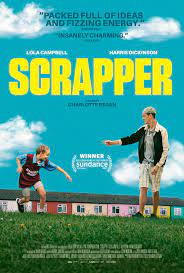
SCRAPPER
UK, 2023, 84 minutes, Colour.
Lola Campbell, Harris Dickinson, Alin Uzun.
Directed by Charlotte Regan.
Here is a pleasing slice of life in East London. It is a small film, running under 90 minutes, but very engaging in its way, especially with its central character, 12-year-old Georgie,
And what might we understand with the word “scrapper”? Here is the Wikipedia definition, unfortunately couched in exclusive language, especially since our scrapper is a young girl: A person who disposes of scraps. A person who fights doggedly, who exhibits indomitable will. Quotations: ‘He's a real scrapper, even against impossible odds, he always keeps fighting’.
That’s a fairly good description of Georgie except that she doesn’t dispose of scraps, she actually keeps a tidy and organised house – but, she and her best friend, her neighbour, Ali, steal bikes in the local neighbourhood, a young woman fencing them for 5 pounds each, scraps and resale.
Georgie is played by Lola Campbell, quite an extraordinary and powerful screen presence, exhibiting self-confidence, determination, face set against the world. She is alone, her mother recently dying and this affecting her deeply. But, life goes on, cleaning the house, outings with Ali, his sleepovers, and the bikes…
Then, one day, this man turns up, looking a bit raggedy, bleached blonde hair, quite tall – and announces to Georgie that he is Jason, her father. Needless to say, he doesn’t get a welcoming reception. But, in he moves, tensions in the house – though Ali seems to like him and is friendly. (And, actually and sadly, Georgie falls out with Ali.)
So, while this is a story of a lively young girl coping with life, it is also the story of a young father, absent from his daughter’s life, returning and the two, after animosity, getting to know each other and, possibly, a future. (And Jason is not exactly anti-bikes stealing and he and Georgie are pursued by the police.)
So, this film has a very local feel, the council housing, streets and shops, the railway station… And, it relies on its impact, and charm, with small and homely sequences. But there is a great pathos towards the end, her mother’s phone call to Jason when she knew she was dying and concerned about her daughter. Yes, Ali does come back.
A likeable film for audiences young and old.
- The title, the focus on Georgie, 12 years old, her story?
- The East London setting, homes and housing settlements, the streets, playing fields, bikes, railway stations…? Authentic feel? The musical score?
- Lola Campbell as Georgie, a lively performance? Credible? Her background, her mother bringing her up, her mother’s death, visualising memories? Her absent father? Living alone, stealing the bikes, doing the deals, her companionship with Ali? Their time together, talking together bonding, play, stealing, doing deals with the woman and the bikes? At home, cooking, cleaning, and orderly house? The locked door, the room, the bikes, memories of her mother? Her prospects?
- Ali, his family, neighbours, sharing friendship, staying over, meals, talking, stealing the bikes, Georgie and her tactics? Ali and his mother, friendly?
- Jason, his arrival, appearance, Georgie suspicious, announcing he was her father, her reaction, sullen, Ali being more friendly?
- Jason, coming into the house, Georgie and her reactions, hostile, upset at his intruding into her mother’s room, Georgie and the quarrel with Ali? Stealing the bikes, Jason giving her advice, the police pursuit, hiding? The beginnings of bonding?
- At the station, playing the game of pretend, the passengers on the other platform? Gradually getting to know each other, acceptance? Yet Georgie going through Jason’s things, his phone? His reaction?
- Going out together, the metal search, the bracelet with her name?
- Jason, his decision to leave, leaving the phone with the note, her mother’s voice asking him to come? Her reaction?
- Georgia going to find Jason, at the station, is playing with the men, the embrace, the return, Ali turning up? Their future?
