Displaying items by tag: Peter Malone's Movie Reviews
Companion

COMPANION
US, 2025, 97 minutes, Colour.
Sophie Thatcher, Jack Quaid, Lucas Gage, Megan Suri, Harvey Guillen, Rupert Friend, Mark Mancaka.
Directed by Drew Hancock.
At the end of watching Companion, this reviewer was very happy to have had no knowledge at all of what the film was about or what it was like. And, checking on the number of reviews as well as strong opinions from bloggers, most were pleased that they went in to see Companion cold and found it an engrossing and unexpected experience.
Which, possibly, is where a review of Companion should end. But, it is probably fair to say that in the first few minutes, we are introduced to a very interesting character, Iris, played by Sophie Thatcher (Heretic, Yellowjacket) in a supermarket romantic comic episode involving the collapsing of the oranges shelf, then a startling remark by Iris, the introduction of the tall handsome, Josh, Jack Quaid. Then, off we go…
Sophie Thatcher is very effective in keeping pace with the various facets of her character.
One all the best aspects of Companion is that we do not know where the film is leading. And, there are quite a number of surprises in the screenplay, some misleading, some turns, some twists as the plot unrolls, unravels. And, we are not really sure until the final credits.
There are some good roles from the supporting cast, especially Lucas Gage and Harvey Guillen, sometimes comic, sometimes serious, and nasty Russian businessmen played by Rupert Friend in heavy moustachioed disguise.
In fact, there is quite a lot to think about as we watch Companion.
And, compliments to writer-director, Drew Hancock, who keeps control of his screenplay as well as of the responses of the audience.
- The title, the focus on Iris, her relationship with Josh, the revelation that she was a robot, her construction, the instructions for her behaviour, companion, sexual partner? The ironies of the complications and the confrontations?
- The American setting, the opening in the supermarket, the apartment, out in the open road, the scenery, the forests? The holiday house and the interiors? The chases through the forest? The musical score?
- The romantic comedy tone of the opening, Iris, shopping, doll -like, Josh, the encounter with the fallen oranges, iris voice-over, the attraction, and the intimation that she would kill Josh?
- The situation, driving to the house, Sergey and his Russian background, the owner, luxury? The presence of Kat and her surly attitudes? Patrick and Eli and the relationship? Sociable, the pool, her assent, her clothes, the drinking, the dancing? The morning after? Josh urging Iris to go out to the pool, meeting Sergey? His approach, her warning him off, her having the knife, killing him? And the audience gradually realising that this was the setup?
- The revelation of the project, Josh and Kat, the company, the robots, the specifications, the plan to rob Sergey, the murder, using Eli? And the revelation that Patrick was also a robot?
- Audience response to Iris, her personality, her robot personality, her love for Josh, unable to lie, the background of the company, the interviews, Sid and Teddy and the later interventions?
- Josh, the revelation, his personality, greed, his inferiority, motivations, Kat and her personality and motivations? The emotional complications, Eli and Patrick and their contribution?
- Iris, the situation, her being able to be turned on and off, yet the innate shrewdness of the programming, the confrontations, the drama in the house, her escape, the pursuit through the forests, the hiding, eluding the pursuers?
- The pursuit, Josh in the forest, and Patrick, being able to turn Patrick on and off, Josh and the reprogramming of Patrick? Patrick as a vengeful robot, Eli and his being shot, the final relationship with Patrick?
- The complications and the pursuit, iris using her wits, the return to the house, the contact with the company, bringing the replacement, Teddy and the pursuit?
- The transition from science-fiction to the slasher mode, the role of Patrick, his different personality, manipulated, vengeful? And the final confrontation with Josh and his defeat?
- Audiences enjoying the thriller, slasher aspects? The interest in the science fiction themes, robotics, programming, and the focus on self-indulgent men, their inadequacies, needing programmed robots for their satisfaction and gratification? And the defeat by female ingenuity, and by the programming?
Queer
QUEER
US, 2024, 137 minutes, Colour.
Daniel Craig, Drew Starkey, Jason Schwartzman, Lesley Manville.
Directed by Luca Guadagnino.
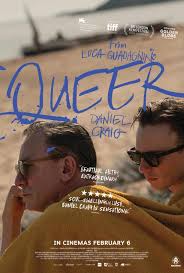
There will be many reasons why audiences would be interested in seeing Queer. It has a star, award-nominated performance by Daniel Craig, post-James Bond. The film is directed by Luca Guadagnino, Italian director, who became internationally famous with Call Me by Your Name and 2024’s tennis drama, Challengers. And the central character is the alter ego of American novelist, William S Burroughs.
There is also the meaning of the title, which is the title of a short novel written by Burroughs during his time in the early 1950s in Mexico but not published until the 1980s, his exploration of the meaning of “queer” and his observations as a writer as well as his own personal involvements.
Audiences will appreciate and understand the film better if they have some previous knowledge of Burroughs himself. This film presupposes that audiences are aware of him, of his personality, of his career. A look at the Wikipedia entry on Burroughs offers more information than we can absorb, an interesting reminder that Burroughs had a long life, wrote many stories and articles novels, a number of novels, was friendly with Alan Ginsberg and Jack Kerouac from early years, influential in the literature of the Beat Generation, also interested in visual art and making appearances in the number of films including Drugstore Cowboy, as well as David Cronenberg making a film of his controversial novel, The Naked Lunch.
With this background, we can understand Burroughs and his time in Mexico, seeing his typewriter with a page in it but not seeing him doing very much writing, his drinking in bars, incessantly smoking, the conversations with gay friends, then creating an encounter with a young American, Eugene Allerton, Gene, played by Drew Starkey. Allerton, like Burroughs, is a complex character, seeking, searching, testing relationships.
While the first part of the film is the exploration of the queer theme, the second part moves on to something quite different, something noted in the Wikipedia about Burroughs, his interest in magic, as well as in a South American plant which he thinks has the power to increase human telepathy. So Burroughs and Gene travel to the jungle, advised that there is a British doctor who has explored and experimented. She is played by Lesley Manville, almost unrecognisable, who leads them, tantalises them, in their experimentations with this plant.
Suddenly there is an epilogue, two years later, Burroughs himself cleaned up, on his way back to the United States – but, many who are familiar with Burroughs’ life will remember that there was an episode with his wife, drinks, drugs, playing a game with a gun, to shoot an apple placed on her head, her death. And this is re-enacted at the end of the film with Gene and the apple.
Burroughs’ writing was stylised, exploratory – and Guadagnino’s film strives to illustrate this.
- Audience knowledge of William S. Burroughs, his writing, novels, articles and essays, visual art, his appearance in media, film, television? His life and style, literary influence on US writing the 20th century? His name, Lee?
- The title, the novel from the 1950s, not published in the 1980s? Seen in connection with his other writings? Seen as an explorer from his memoir in Mexico in the 1950s? His exploration of queer? But also the interest in magic, drugs, telepathy?
- The structure of the film, the chapters, the epilogue? Glimpses of Burroughs and his life in the 1950s? Daniel Craig’s performance? The musical score, the songs, the lyrics?
- The Mexican setting, the town, drab, the 1950s, bars, hotels? The streets, the atmosphere?
- The initial response to Lee, from those who know about him, from those who know him at only from this film? Age, personality, the writer, the typewriter, the drinking, drugs, his gay friends and conversations, discussions about what it was to be queer?
- Eugene Allerton, seeing him with the woman, the games, Lee and his eyes on him? Gaining attention, the attraction, the episodes, Gene and his personality, studies background, presence in Mexico, hopes and ambitions, tantalising Lee, eventually getting together, at the hotel, the sexual encounter, the consequences? His on and off connections with Lee?
- The transition to the second part of the film, Lee and his interest in drugs, his research, telepathy, inquiries, information about the plants, about the doctor in the jungle, his decision to go, Gene going with him?
- The scenes in the jungle, remote, difficult, finding the hut, Dr Cotter, her background, appearance, her partner, friendly, tantalising, the discussion about the drugs, looking at the root itself, the decision for the experiment, the effect on Lee and Gene, the trance experiences, her solicitations, , the satisfaction? The farewell from the jungle?
- The sudden epilogue, two years later, Lee and his seeming to be in control, the discussions with his friend, his friend and his personality, the stories, always being robbed by his partners?
- The reminiscence of the story about the William Tell episode, the gun, the vessel on the head, the shooting, the reality of the shooting of Burroughs’ wife, here dramatised with Gene?
- William Burroughs at this stage of his life in the 50s, many decades to come, the court and the episode with the death of his wife, his relationships, his influence on the Beat generation and literature? His creative style, finally recognised?
Bonhoeffer/ 2024
BONHOEFFER
Ireland/Belgium, 2024, 132 minutes, Colour.
Jonas Dasslow, August Diehl, David Jonsson, Moritz Bleibtreu Vincent Franklin, Clarke Peters.
Directed by Todd Komarnicki.
Dietrich Bonhoeffer is considered one of the great Christian figures of the 20th century, the first half of the 20th century, his stances in spoken and written word, in action, against Nazi fascism leading to his death. The title of his most famous book, The Cost of Discipleship with its distinction between cheap grace and costly grace, has been powerfully influential on the nature and living Christian discipleship.
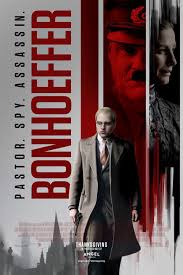
The subtitle on the advertising and promotion is not in the film itself. But, there are three tantalising words: pastor, spy, assassin to evoke curiosity.
Bonhoeffer is sponsored by Angel Studios, the American Christian production company, responsible recently for Sound of Freedom, Cabrini. Filmed in Ireland and Belgium, the principal members of its cast are German, Jonas Dasslow effective as Bonhoeffer with quite some resemblance in features. Veteran Moritz Bleibtreu is Bonhoeffer’s father. August Diehl is a minister who defies the Nazis and goes to prison. David Jonsson and Clarke Peters appear in the US sequences.
This is a portrait of Bonhoeffer, not a full biography, but a highlighting of key issues in his life. In fact, there are quite a number of other films about Bonhoeffer, some biographies and in 2025, another cinema portrait, Holy Traitor.
There is a complex structure for the screenplay, some initial sequences of the family in 1914, the experience of World War I, an introduction to the lively young boy, Dietrich, the strong influence of his supportive parents and siblings. But, then there is a transition to 1945, Bonhoeffer imprisoned, memories of his past, his impending execution. Which means then that the flashbacks are always seen in the light of his ultimate fate and faith.
Commentators have pointed out that there are many aspects of Bonhoeffer’s life that are not included, years of serious academic study in Germany, an engagement with a young friend and her visiting him in prison, the writing of his books. And, some changes in factual aspects, especially the location of his death.
However, the flashbacks build up a portrait of an earnest young pastor, studying in New York, bored with the formal studies, a black friend, Frank, opening his sensibility towards jazz, introducing him to the spirituals, discussions with the black Baptist leaders who challenge him to his understanding of lived faith, authentic religion, and an experience of violent racism at a hotel in Washington DC.
On his return to Germany, his family filling him in on what is happening, the rise of Hitler, targeting the Jews, Bonhoeffer is at first in disbelief, then taking strong stances, listening to a firebrand Protestant pastor lauding Hitler and Nazism, challenging his friends, preaching and the military walking out despite applause from the congregation.
Over the years, Bonhoeffer writes, takes stances, teaches in a seminary which is closed down and the students enlisted to fight, visits to England and is appeal to British clergy, his being invited to participate in a plot to assassinate Hitler, his going to the Swiss border for an exchange of Jewish prisoners.
Bonhoeffer was arrested along with his brother-in-law, jailed for a year and a half, the film showing the almost liberation of the prison, Bonhoeffer, before his death, solemnly celebrating the Eucharist and Communion ritual, symbolic of his readiness to die.
There have been quite a number of films about Dietrich Bonhoeffer but here is an opportunity to see him, admire him, reflect on his moral choices, reflect on his faith, costly grace and the final cost of his discipleship.
- Status of Dietrich Bonhoeffer as a 20th-century champion against fascism? A Christian champion? This film is a portrait, tribute?
- Audience knowledge of Bonhoeffer, his life, ministry, anti-Nazi, the Confessing Church in Germany, his stances against the Nazis, the plot to assassinate Hitler, his arrest, execution? His writings, the Cost of Discipleship?
- Jonas Dasslow and his resemblance to Bonhoeffer? The opening, the family, the period of World War I, the play between the brothers, the chasings, Dietrich and his being venturesome, his brother going to the war, his death, in the coffin? The grief, the parents? Dietrich playing the piano, upset?
- The structure of the film, the continued linear narrative, the leap ahead to the arrest and imprisonment, his memories in prison, the flashbacks? The overall effect of this portrait and the various pieces?
- The incidents included in the screenplay? Aspects not included, his extensive studies and academic achievements while young, the friendship with Maria and the engagement, the prison visits? Not focusing on his writings or the publication of his books? The change of venue for his execution? The record and his naked execution? Yet what is included giving a portrait?
- Dietrich as the German in the United States, the lecture scenes, his being bored, Frank and his getting Bonhoeffer involved in the Baptist Church, the choir, the enthusiastic congregation? And the jazz, a mystery to Bonhoeffer, playing the piano, getting into the rhythms? His return and playing the spirituals, Swing Low, Sweet Chariot to the Germans?
- The effect of America on him, changing perspective of religion, churchgoing, congregations, participation, the nature of faith? The discussions with the Rev Powell, his presence, perspectives, in the church, the choir? That the meal table, testing Bonhoeffer’s beliefs and faith? Suggesting the trip to Washington?
- His return to Germany, the 1930s, the rise of Hitler, the importance of the discussion sequences, Dietrich and his disbelief about Hitler’s dominance, the opinions of his father, his brother-in-law, the rest of the family? The support of his mother? His shock, the targeting of the Jews, his experience of racism in the US – and the incident of his getting a room in the Washington hotel, the violence at reception, against Frank and them both?
- The discussions with Martin Niemoller, his caution, listening to the aggressive Nazi clerical preacher, his fanaticism? The impact on Bonhoeffer, writing, preaching, discussions, the sympathetic bishop, his sermon, the Nazis present, his strong words about faith, the Gospel, Hitler usurping God’s role? The walkout of the military? The applause of the congregation?
- His observation of the rounding up of the Jews, intervention, the elimination of the old Testament, making Jesus Aryan?
- His visit to England, the discussion with Bishop Bell, his speaking to the assembled clergy, their hesitations? The episode with Churchill and his wife supporting? The later visits to England and support, his ministry there? Not supporting him, fear of an invasion?
- Martin Nieoller, his apology, his sermon, the family meeting, his son, wife, the arrest, and years in the camp?
- The seminary, the young men, earnest, the football game, Bonhoeffer and his lectures, his decision to go to Berlin, his brother-in-law, subversive, Resistance, the plan to assassinate Hitler, Bonhoeffer giving his consent, the image of the bus driver dangerous and about to kill the children, destroying the bus driver? His pacifism? Lies, the visit to the authorities, his allegiance, not believed, his getting the money from Sweden and England, the choice of the seven men, taking them to Switzerland, the disbelief, at the border, the bribe, their freedom? This money laundering used against him in the court?
- The seminarian, coming to Berlin, the news of the destruction of the seminary? The visuals of the assassination attempt on Hitler, the assassin, the explosives, Hitler getting into the car, disposing of the bombs?
- The bond with his brother-in-law, the arrest? In prison, in the cell, the disgraced doctor and his imprisonment, scepticism? Bonhoeffer, his writing in the Bible, his memories, the nightmares in the night? The bombs falling, escape from the cells, the man running away and being shot, the others rounded up, the Bible dropping in the mud, the sympathetic soldier and his forcing Bonhoeffer, retrieving the Bible? The transfer?
- The court findings, the gallows, the soldiers in prisons lined up, Bonhoeffer and the communion sequence, the bread, the communion, including the soldier?
- Bonhoeffer at peace, on the gallows, the hanging?
- Bonhoeffer and his achievement, his stances, the significance of action? And the condemnation of the German churches for not standing up and speaking out against Hitler?
Oh, Canada
OH CANADA
US, 2024, 91 minutes, Colour.
Richard Gere, Jacob Elordi, Uma Thurman, Victoria Hill, Michael Imperioli, Caroline Dhavarnas, Penelope Mitchell.
Directed by Paul Schrader.
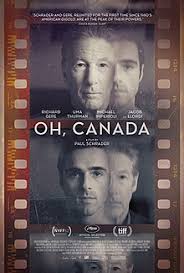
A Paul Schrader film, written and directed by him, based on the novel, Forgone, by American novelist, Russell Banks, with whom Schrader had collaborated in the film version of Banks’ novel, Affliction, 1998. Schrader notes that he had three bouts of Covid and hospitalisation, saying that he became more conscious of mortality, was interested in Forgone and collaborated with Banks who preferred the title Oh Canada – and then Banks himself dying while the film was in production. Prior to Oh Canada, Schrader was focusing on older men reviewing their lives, First Reform, Card Counter, Master Gardener.
Watching Oh Canada is both an interesting and intriguing experience.
The film opens with an ominous comment that a son has not seen his father for 30 years. Then the setting up of cameras by a documentary filmmaking trio in the house of a famous documentary filmmaker, Leonard Fyfe, now in his 80s, dying of cancer, an opportunity for him to tell his story for the television audience. The crew have been Leo’s former students, as has been his wife, Emma, living with him for 30 years and concerned for his health and the strain of doing the interview. The other character during the filming is Leo’s full-time nurse.
It is usually pointed out that Paul Schrader came from a strict Calvinist background and has been concerned with religious themes in many of his films. This is not just a documentary about the life and career of Leo, but his opportunity to face the truth and lies of his life, seduction and exploitation, but also skills as a filmmaker and lecturer.
And Leo is played impressively by Richard Gere in his mid-70s, old, almost bald, stubbled chin, experiencing the pain of cancer, determined to go through with the interview, despite the effort and strain, by to tell the truth, uncovering lies, and all the time dedicating this to his wife who, he says, has never known him fully.
The intriguing part of the experience is the range of flashbacks, not always in chronological order, moments of memories by Leo, puzzle pieces for the audience to put together. And, some of them are in bright colour, others in black and white, often stark. So the memories are invested with moods, colourful and severe. Most of them go back to 1968, Leo aged 26, his hometown and family, the calling in the priest for a family discussion about his future, his marriage, a son, pregnant wife, prospects, the Vietnam war, the draft, and his decision to avoid the draft – Oh Canada.
The young Leo is played by Jacob Elordi, making an effective contrast with Richard Gere, though Schrader also using the device of having the older, but healthier, Gere take Elordi’s place in many of the sequences of the past. His wife, Emma, is played by Uma Thurman (and, indicating confusion of memories, she also plays the wife of his artist friend in 1968.)
There is discussion about photography and filmmaking in black and white flashbacks to the 1990s and his academic career and his eager students.
With the filmmaking, Leo has the opportunity for some kind of assessment of his life, acknowledging the good and the bad, the hurt to others, deceit and lies, an opportunity for truth in the deathbed confession.
- The title, the national anthem of Canada, the perspective of Canada in 1968, draftees avoiding Vietnam? Life in Canada?
- The settings, Montréal and the house, interiors, the filming? Massachusetts towns, in the 60s? Richmond Virginia? Vermont? The Canadian border? The atmospheric score?
- The work of Paul Schrader, his later interest in older men and coping with life? The adaptation of Russell Banks novel? as writ Schrader er and director?
- The situation, Leonard Fyfe, the opening comment by his son not meeting his father for 30 years? The documentary filmmakers, setting up, Leo and his health, cancer, weak, agreeing to the film? His having taught Emma, Malcolm, Victoria 30 years earlier? His agreeing to do the interview, his impatience? A deathbed confession?
- The structure of the film, the interview in 2023, the many flashbacks to 1968, the flashbacks to the classes in the 90s? The range of flashback memories? The style of the film, muted colour for the interview, bright colour for some of the flashbacks, the many black and white flashbacks?
- Richard Gere, his career, in his mid-70s, portraying a dying man, but also the flashbacks the 1990s and teaching, and the insertion of the older Leo instead of the younger Leo in flashbacks? Jacob Elordi as the younger Leo?
- Leo reviewing his life, facts, lies, confessions, confusions? The effect on him, wanting to keep going, wanting Emma to be present, for her to know the man she married, his tiredness, the nurse, going to the toilet? Coming back, his insistence? Finally stopping, his attitude towards the filmmakers? In his room, with Emma and the nurse, Sloane putting the camera in the room, the filmmakers watching his dying scene?
- Leo, his family, his home town? His wandering, the relationship with Amy, her pregnancy, loving her not, the encounter with Amanda, sexual relationship? Meeting Alicia, the marriage, her son, her pregnancy, Leo and his writing, the prospect for teaching, going to Vermont, the pressure from his father-in-law and his brother, to work for the firm? The break, his going away, not seeing his son for 30 years, the loss of contact with Alicia?
- The various pieces of his story, 1968, the draft, his lining up, costume, questions about being gay, his answers, awaiting his documents? Going to Vermont, hiring the car, the scene in the shop, the clothes, stealing the money and the clothes? Visiting Stanley, the conversations, Stanley and draft dodgers, his art, relationships, Gloria (and being played by Uma Thurman), the sexual encounter, his leaving?
- The visit to his hometown, the diner, memories of his family? the family discussion, all in the priest, his declaration going to Cuba – is not getting there, the story of his crossing America like Jack Kerouac, the calling of the priest for advice?
- Going to the border, the signpost, his choice, standing in the field, the sign, his crossing the border to his future?
- The documentary makers, past students, the scenes of their eagerly listening to him, his invention of the camera and looking at the interviewer on camera, his comments on Susan Sontag and photography, the meetings, the tutorials? His relationship with Emma and Victoria?
- Marrying Emma, the 30 years, her devotion to him, her concern in his illness, during the interview?
- Leo and his career, the film about testing weapons, the glimpses of his further films, about exploitation of the Arctic, about the sex offending Bishop? His reputation? His being introduced, bringing Emma on stage?
- The encounter with his son, the son driving to the screening, talking to his father, Leo turning his back and disowning him? The son and his conversation with Emma? The news about what happened to Alicia?
- The final death scene, Emma and the nurse, breathing his last, having made his confession?
Just One Look
JUST ONE LOOK
Poland, 2025, 6x45 minutes, Colour.
Maria Debska, Piotr Stramowski, Marka Malikowska, Andrzej Zielinski, Cezary Lujasewicz, Miroslaw Zbrojewicz, Monika, Krzywowska.
Directed by Marek Lechki, Monika Filipowicz.
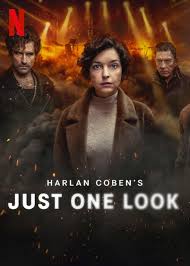
Just One Look is one of the many adaptations of Harlan Coben’s novels for series treatment for Netflix. Coben himself has been executive producer, the adaptation is moving from the United States to various European countries, to France and Spain, more to the UK and to Poland. This is one of the Polish stories.
The focus is on Greta, married with a child, happy, with her jewellery business. One day she receives an unexpected photo, a faced crossed out, her husband in the photo, the photo of a band. The disadvantages that she was present at a concert where a fire started, people crushed, Greta surviving but with some loss of memory.
The puzzle of the film starts with Greta’s husband suddenly disappearing, the audience knowing that he was abducted by a hitman and concealed. Greta pursues the case, approached by a prosecutor whose daughter was in the photo and his search to find out what happened, and the father of her boyfriend who supplies guards to protect her.
There are mysteries concerning the identities of the people in the photo, revelations about her husband, the involvement of his sister, the lawyer who was defending the starter of the fire.
Greta is a strong character, determined, working with the police, and the final revelation of the truth – which audiences would not have been anticipating.
Which makes for an interesting and entertaining Harlan Coben mystery.
- The title? The crucial photo? The song and its performances? Mystery?
- The popularity of the novels by Harlan Coben? The television adaptations, transferring from the US to Poland?
- The moving between the present and the past? Gradual revelations of the past, complications and twists?
- The past, Greta in the past, her boyfriend, the breakup, the influence of his father? The concert, Jimmy and the performance of the song? The members of the group? The fire, deaths, Greta and her injuries, loss of memory?
- Greta’s story, in the past, the encounter with Jacek in France, her pregnancy, birth, love? The scenes of the holidays on the coast, the family scenes? memory loss? The continued presence of her boyfriend’s father, the gift of the roses each year, his sending his guards for protection? The prosecutor, his story, his visit, the quest to find out what happened to his daughter? The holiday photos, the photo inserted, the group, the scratched out image? Jacek and his leaving, disappearance, the phone calls, Greta strong, the search, his phone call, her worry, searching the information on his call discovery of Sandra, lawyer, his sister? Her defending the starter of the fire? Financial issues? Threats, the hit man? Her friendship with Camilo, her advice, her husband and his ailments, identifying the hitman, the chase, the crash, the shootings and injuries? The visits from Jimmy, his accusations that she was remembering, his death? The rescuer Jacek in the house, hospital, his death, her grief, the confrontation with Sandra, the truth? And the final realisation that she took the photo?
- Jacek, happy family, 15 years, the arrival of the photo, his leaving, phone calls, the car park, his abduction, the moves to the different houses, torture? The phone call? The rescue, the truth, his death?
- The prosecutor, summoned to the prison, a hitman and his confession, hanging himself? Fellow prisoner, becoming a hitman, wanting the money, the abductions, the threats, the encounter with Kamilla’s neighbour, the sequences with her, his killing her? The chase, the shooting, his death?
- Kamilla, long friendship, caring for the children, picking them up, at home? Her husband and his ailments? Sexuality, watching the woman from the window? Discussions with the police, giving them information, her husband’s injuries, in the hospital?
- Jimmy, the singer, the dispute about the lyrics, the clash, the fire? The group, Jacek, the prosecutor’s daughter, the presence of Sandra, Adrian and his disappearance? The visits to his mother? The revelation of the truth, identity, the financial implications? Sandra, the confrontation, her planning, the money?
- Satisfactory mystery, twists?
Sultana's Dream
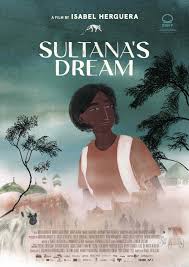
SULTANA'S DREAM
Spain, 2023, 80 minutes, Colour.
Voices of: Miren Arrieta, Arunima Bhattacharya, Mary Beard, Paul B.Preciado.
Directed by Isabelle Herguera.
An unexpected film, with a touch of the exotic.
This is a Spanish animation film, hand-painted backgrounds with digital figures moving in front, sometimes bright colours, sometimes a focus on design, always intriguing.
The central character is a Spanish filmmaker, Ines, who is on a quest. She has memories of interactions with men during her girlhood, is critical of men. She discovers a story, Sultana’s Dream n, written in India, in Bengal, in 1905, by Begum Rokaya, Rokaya Hossein. She was an educated woman, encouraged by her husband, exploring themes of the role of women, inventing a fictitious country, Ladyland, where women prevailed, where men were subject, locked up, crowded, the women excelling in their work and inventions. Ines is intrigued and finds a friend in India who accompanies her on her quest.
There are also scenes in Spain, Ines and a visit with her oceanographer mother, her Bollywood filmmaker father, even visiting him in Rome on one of his sets and exploring his treatment of themes of men and women. There are also discussions with the actual scholar Paul B. Preciado and British classicist, Mary Beard.
Comment has been made that the film is dramatically unfocused. In fact, the various sequences are put together somewhat in a piecemeal fashion. Which means that audiences have to be attentive to the drama and its continuity.
There is fascination in the animation, fascination for the theme of the presence and superiority of women, raising issues for reflection.
Flow
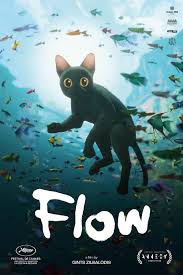
FLOW
Latvia, 2024, 85 minutes, Colour.
Directed by Gints Zilbalodis.
The audience is invited to go with the flow, the flow of the narrative, flow of tidal water, suddenly rising up, channelled through ruins of old buildings, moving towards an unknown destination.
Flow won the Academy Award for Best Animation Film, 2024. It also won many other awards around the world, a first for a film from Latvia.
The film took over five years to make, using hand painting and CGI to create extraordinary backgrounds as well as a range of creatures. There is no dialogue so the film is accessible to all audiences, young and old. Not only are the backgrounds beautifully treated, forests and foliage, abandoned ruins, scenes of both beauty and danger, so much of the action is in motion, on the water, the flow, audience admiration for such creativity and dynamism of action.
But there are also the animals. The invitation is to identify with a cat, roaming through fields where there are many statues of cats, but then a group of attacking, dogs. The cat is able to escape onto a passing sailboat, finding a languid capybara as well as a lemur who holds onto a roped cache of precious objects. They are joined by a friendly Labrador, confronted by a large stork-like bird, then joined by the group of dogs. Many adventures as the group continues floating on the flow, a surprising encounter with a whale, the conflict between a group of birds, a group of lemurs unhelpful, the dangers of a steep cliff, the whale beached, shifts in the terrain and the boat caught in a branch. Audiences who come to know the animals and shared their journey will appreciate a tense scene, the cat taking initiative, helped by most of the others, to a rescue.
With no dialogue at all, audiences are invited to surrender to the images, the beauty, the music, the action. Some audiences might find themselves providing words and phrases for their interpretation of what they see, a journey, a life’s journey, survival journey, an exodus, an Odyssey, an ark… And, with the animals, naming some of the characteristics of friendliness, of ingenuity, of possessiveness, of confrontation, of help, of nobility…
Which means then that this is an animation film of beauty, of challenge, of imagination – and a welcome openness to different interpretations.
Hurricane Season/ Temporada de huracane snarlings
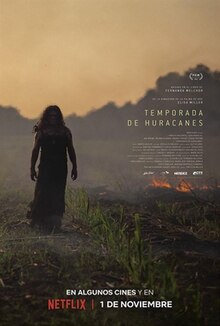
HURRICANE SEASON/ Temporada de huracane snarlings
Mexico, 2023, 99 minutes, Colour.
Edgar Trevino, Andres Cordaz, Kat Rigoni, Guss Morales, Paloma Alvamar, Ernesto Melendez.
Directed by Elisa Miller.
This is a very moody visit to a small Mexican town. It is a close adaptation of a celebrated Mexican novel.
The opening, a group of young boys discovers a dead body floating in the water. The structure of the film is in chapters, each focusing on a particular character, the connection with the murdered person. There is an ongoing time thrust with the narrative but also some of the chapters going back in time exploring and developing the characters and bringing them together for the ultimate climax.
The central character is Luismo aged 20, frequent of a centre, particularly for gay men, managed by the deadcharacter, La Bruja, known as The Witch, a dominating, large figure, dressed in black, encouraging customers, arranging liaisons and atmosphere of local decadence.. Another character, Yes enia, is jealous of her cousin, Luismo, difficulties at home, following him to The Witch’s centre and running away shocked.
Other characters include Luismo’s stepfather, Munra, limping with a crutch, available as a driver. And there is Norma, very young, pregnant from sexual abuse from her father, friendly with Luismo, a deadly experience with the birth of the child, her going to hospital, the discovery about her age.
The other principal character is another 20-year-old, Brando, his father abandoning his mother for another woman, living at home with his mother, surly in his behaviour, fascinated by The Witch, befriending Luismo, some sexual encounters with him, and a plan to steal The Witch’s alleged money and gold coins and escape from the time.
Luismo eventually wants a change, conscious of what happened to Norma, beholden to The Witch, but falling out because he allegedly stole her money (which Brando had). Failing to find any secret money and coins, Brando confronts The Witch and brutally attacks, demanding that Luismo wield the final blow.
No major conclusion… Just the arrest of Brando, then Luismo and Munra.
A mood piece, tempestuous, set in the hurricane season, characters who find they have no way out.
Ink-Black Heart, The
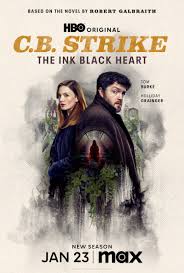
THE INK BLACK HEART
UK, 2024, 4X 60 minutes, Colour.
Tom Burke, Holliday Grainger, Ruth Sheen, Jack Greenlessirren, Stephen Hagan, Kevin Bishop, Mirren Mack,.
Directed by Susan Tully.
The Ink Black Heart is based on a novel by Robert K. Galbraith, a.k.a. J.A.Rowling. It features her detective, Cormorant Strike, played in all episodes by Tom Burke, and his assistant, then partner, Robin Ellicott, played in all episodes by Holliday Grainger. This is the sixth in the series.
The book has around 900 pages which means a difficult task in adapting it for a television series with four hour-long episodes. However, the series does keep all the key elements of the novel, but some of the background to Cormorant and his relationship with Robert, indicated sometimes by a very brief phone call, allowing the audience to develop aspects in their imagination.
The Ink Black Heart is an animated program for television, and plans for a film version. The key issues concern creativity behind the idea, various claims, murder of one of the originators, a range of suspicions. In the novel, there were pages and pages of transcripts of online conversations, especially from a sinister character called Enemy and another anonymous player in the online games. In the series, these conversations are presented verbally.
One of the creators approaches Robin but the company is too busy – and then she is killed. Robin feels to blame, becomes more involved, studies The Ink Black Heart, becomes more involved in the online chats, experiences the threats of And on me, follows quite a number of leads an interesting potential suspects, enrolling in an art class to gain more knowledge of the suspects. There is also a sympathetic police officer to whom she is attracted.
In the background, there is her birthday celebration and Strikes moved to kiss her and her shocked reaction which puts a great stress on the relationship. There are the other employees of the agency, and presided over by veteran Ruth Sheen.
For audiences who have read the novel, they will be able to fill in a lot of the background – especially the identity of the ultimate killer, the variety of subterfuge is and ability to disguise the sinister presence. Audiences who have not read the novel will have to pay constant attention, especially because of the range of characters and potential suspects.
As with the other episodes in the series, fans of JK Galbraith will not be disappointed.
- The title, intriguing, the sketches, the origins of the program, the episodes, the animation, the characters? And the flow onto the computer games?
- The London settings, Strike and’s office, the sabotage and destruction? Strike and Robin as partners? The other detectors and their tasks, surveillance, the characters? Presided over by Pat? Her opening the bomb package, saving the day?
- Strike and Robin, the work of surveillance, the long hours, Robin and her various disguises, especially going to the art class and her identity, her investigations, her disguise to interview the writer of the book, at the fair? Strike, his disguises, especially the character at the fair?
- ED lead will, her visit, anxieties, the film too busy, the news her death, Robin going to her agents, the uncle, issues of rights, authorship, the rivals, her relationship with Josh, the attack in the cemetery, his being in hospital?
- The establishing of various suspects, the boyfriend and his wanting to further develop the partnership, the film? The uncle and the discussions about the film? The role of Josh?
- The range of women suspects, relationships, the writer of the book, the nervy woman and her mother?
- The range of men, at the arts Centre, the eccentric manager, the model, his attraction to Robin? Wally and his involvement?
- The political background, the extreme right, using the cartoon, online, targeting Edie?
- This is to the up court family, the wife and her involvement as agent and adviser, the father and his medical background, sinister behaviour, moods and relationships? Flavia, her age, put down by her mother? Ghosts, the music, computers, in the background, his final emergence?
- Visit to Oxford, the professor, his participation and identity, his death?
- The young sister, Robin and the interviews, her contribution to the mystery?
- The attack on, and, his injuries? The ups and downs of his relationship with Robin? Pat and her interventions?
- Strike and, the background of his relationship with Charlotte, her coming to the office, wanting the help, the divorce issue, scandals, the brutality of the husband towards his daughters, the confrontation, power over him?
- The combination, the visit to the Upcotts, the revelation of the truth about Gus, about Anomie, motivations?
Bob Trevino LIkes It
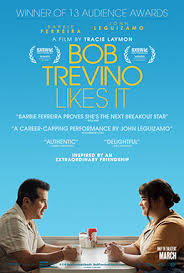
BOB TREVINO LIKES IT
US, 2024, 102 minutes, Colour.
Barbie Ferreira, John Leguizamo, French Stewart, Lauren ‘Lolo’ Spencer, Rachel Bay Jones.
Directed by Tracie Laymon.
Here is a drama with touches of comedy that many young adults might identify with, find entertaining as well as challenging. But, here is also a drama with touches of comedy that older audiences might identify with, memories, disappointments, hopes. And, while the audience will be smiling quite often, by the end, there will also be tears.
But, who is Bob Trevino? In fact, during the film, there will be two. The first is a rather embittered widower, living in aged care, continually trying to strike up relationships and ensure companionship and comfort for his future. Mention of the second Bob Trevino later. The first one has a daughter, Lily, an impressive performance by Barbie Ferreira, something of an awkward , young woman looking after a chair confined client, great difficulty in relating to her father, his emotional verbal attacks on her, making demands of her, her exasperation with him. Of course, quite some basis for identifying with her.
But, she relies on social media, living with her phone, texting, reaching out for somebody to respond, some connections, some followers. More basis for identifying with her. One night, feeling frustrated, she searches for anybody else with the name, Bob Trevino. She finds one. And he replies. Hence the title and the clicking of “Like” when we receive a pleasing text.
The screenplay has introduced us to him before the contact with . He is Lily a builder, married, a sad story about the death of their child at 21 months. He is a loner, preferring to stay at home, not many friends. And his wife spends her time with her hobby, creating photo book mementos, even entering national competitions and winning.
So, this is the beginning of a beautiful friendship. The two first meet when there is a toilet crisis for the chair confined woman, and Lily asks Bob to come to fix it. And so the beginnings of conversations, revelations about the past, mutual support, Lily clearly finding her new friend, Bob Trevino, as a surrogate father figure. And, he is played was quite some tenderness and sensitivity by John Leguizamo.
Events do not quite turn out as we might have anticipated. There is a further falling out with her father who hands Lily a cost list of all the expenses he has incurred in bringing her up. Then he asks her for money to help him with the new search for a companion. Confident after meeting her friend, she stands up to her father.
Then further events certainly do not quite turn out as we might have anticipated, leading to some anxiety, some sorrow, and some very moving scenes with Bob’s wife.
One of the phrases to describe this kind of film is that it is a “slow-burner”. It begins rather quietly, and, when the audience surrenders to it, it touches the emotions, offers us many insights into human nature, something of a small film for all seasons.
(In fact, it is based on the experiences of the writer-director’s own search for her father.)
- The title? Internet and texting, likes and loves?
- The plot based on the writer-director’s experience? Heartfelt?
- Popularity of the film, nominations and many awards? Humanitarian?
- 21st-century Internet story, the focus on phones and computers, in new connections, dependencies, texting, instant responses, eager awaiting of responses, likes, postings being ignored? Communication of photos? The ability to take photos instantly and post them?
- Billy’s story? Her age, experience, appearance, happy, sad, friendly? Filling in the background story, the parents, her mother, addictions, disappearance? The father, self-focused, bringing up Lily, later presenting her with a list of costs, is like, in care, the connections with the women, photos on his phone, the dates, photos cutting out Lily from them, his angers with his daughter, the clashes, the conversations, the meals, his frugal attitude toward Spain, coupons? Breaking off communication with her? Her continued texting?
- Lily and her work, with Daphne, in the chair, care for her, conversations, Daphne confronting her, urging her to go to the rage room, smash, primal scream? Lily unable to?
- Lily texting, finding another Bob Trevino, the audience getting to know Bob, Mexican background, marriage to Jeannie, the story of the death of their child up to 21 months, the photos, Jeannie continually working scrapbooks, in competitions and winning? The sharing the winners scrapbook and photos of the children with Bob? His work, building houses, Harlan as his partner, Cavalier attitudes? The later visit of the inspector, an hour and a half late, while driving away, Hardin and his anxiety about safety, of having kept the books, the clash, I am dismissing him, Bob acting on it?
- Bob, his personality, all his age, the death of the child, relationship with his wife? The going to Las Vegas to the partition? Her urging him out, his staying home to watch a movie? The encounter with Lily, responding to her posts, the effect on him, the effect on her? The plausibility of the communication?
- Daphne, the toilet incident, her finding, his arrival, fixing the toilet, the discussions, going to the two shop, the continued communication?
- The suggestion for the cup of coffee, they’re talking, the story of her father taking her dog, going to the vet, the photos with the dog? Lily and her happiness, the conversations, revealing herself, the effect on Bob, revealing himself, the photos?
- Billi’s father contacting her, presenting her with the list of costs, his wanting money from her, his self-centredness, wanting dates and a companion? Lily and her stand, leaving him, going to the rage room, with Daphne and the smashing and the scream?
- The audience seeing Bob, in the car, a heart attack, hospital, coma, the visit from Jeannie, the kiss?
- Lily, her anxiety, waking in the night, the continued contacts, going to the house and try to get in, the police arriving?
- The discovery of Bob’s death, with Daphne, Daphne is challenged to her about leaving on the dot, Daphne wanting to go with her to the funeral? The arrival, Jeannie present, Lily and her grief, Bob in the coffin? Jeannie, serious, asking Lily and Daphne to follow her, her change of demeanour, presenting her with the scrapbook, the text messages, the photos, Lily and her joy, Bob’s final message to her? (And audience tears?)
- A pleasing portrait of Bob? Her pleasing portrait of Lily, her advantages and disadvantages, age, opening up, taking a stance with her father, her future?
