Displaying items by tag: Peter Malone's Movie Reviews
Dangerous Animals
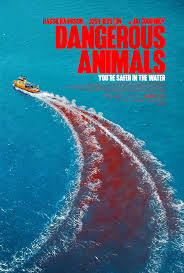
DANGEROUS ANIMALS
Australia, 2025, 98 minutes, Colour.
Jai Courtenay, Hassie Harrison, Josh Heuston, Rob Carlton.
Directed by Sean Byrnes.
2025 sees the 50th anniversary of the release of Jaws. And, so many Jaws-themed action films over the decades. And, here is another. And, while some of the dialogue does praise the importance of sharks in the whole life cycle of the oceans, it still offers plenty of frightening scenes of menacing and attacking sharks.
In the 1970s and 1980s, small budget Australian action shows which were intended to frighten and shock-tantalise audiences were considered as exploitation films, but the general name was Ozploitation. Dangerous Animals certainly fits into this category. There is a sense of menace all the way through. There is a psychopath central character, misogynist, targeting female tourists and abducting them, imprisoning them, filming them, finally his atrociously sadistic relish. (This last sentence has been written to indicate whether audiences really want to see this film on not.)
While, there are horror elements, and some gory moments, highlighted by pounding and reverberating chords, this one is not like the current range of slasher films. The story has some credibly incredible action sequences and horror, threats, dangers, grim deaths.
What makes the film better than most is the consistency of the tone, centred on Tucker, a fearsome and frightening performance from Jai Courtenay (and for film buffs of Australian films, looking and sounding like veteran Chris Haywood). He has his boat, he fishes, has some seedy friends, is so absorbed in his own world that he has a grossly distorted sense of reality and morality.
American actor, Hassie Harrison (in many episodes of television’s Yellowstone), is a tough-minded as well as physically strong surfer, Zephyr, who is caught by Tucker, but is continually defiant, physically defiant. The other central character is Moses, Josh Huuston (many episodes of televisions Heartbreak High), who, in reversal of traditional roles of men saving women, has to be saved by Zephyr.
There are many spectafular scenes of the Queensland coast as well as of the Gold Coast sea-front.
Of course, looking again at the title, while the sharks might be considered dangerous, the portrait of Tucker reminds us that humans are dangerous animals.
- The title and expectations? Sharks as dangerous? Humans as dangerous animals?
- The locations in Queensland, the Queensland coast, the ocean, the boats, on land, the Gold Coast, wharves and sheds? The musical score?
- 50 years since Jaws? The many shark films over the decades? Sharks as dangerous, menace, attacking the humans?
- The tourists to Queensland, Americans, British, the couple going to the boat, the encounter with Tucker, his reassurances, being lowered to observe the sharks, coming to the surface, friendly, Tucker killing him? Imprisoning Heather?
- Tucker, his character, tough, seemingly genial, the shock of his killing the man, imprisoning Heather, taunting her, tying her up, food and drink, his plan, her suspended over the water, the sharks, filming, her fears, death? And his cupboard full of videos? Serial killer? Talking to himself, his commentary on his behaviour?
- Zephyr, the tourist, her back story at home, surfing, her van, breaking down, the encounter with Moses, getting the lift, some attraction, together, the meal, the night together, her going off, Moses and the breakfast, following her?
- The encounter with Tucker, her tough stances, his overpowering her, abducting her, in the cabin with Heather? The situation, the mutual support, Tucker and his visits, food and drink, taunts?
- Zephyr and using her wits, breaking free, witnessing the death of Heather, the filming? Playing cat and mouse with Tucker?
- Dave, friendship with Tucker, the encounter with Moses, coming aboard, friendly, Tucker killing him?
- Moses, connecting with the police, his character, determination, the effect of Zephyr and the night? Tracking him down, the connections, Dave?
- The buildup to the confrontation between Tucker, Moses and Zephyr? Moses taken, torture? Zephyr and her escaping? The nearby pleasure cruiser, not hearing the appeals?
- Moses, his attempts to help, in the water, injuries, taunted by Tucker? Zephyr, using her wits, the escapes, recaptured, building up to the confrontation? And the ever-present sharks?
- The heroine saving the hero? Tucker and his comeuppance, his death, surprise?
- And a variation on shark menace films?
Wolfgang
WOLFGANG
Spain, 2025, 110 minutes, Colour.
Miki Esparbe, Jordi Catalan, Angels Gonyalons, Anna Castillo, Berto Romero.
Directed by Javier Ruiz Caldera.
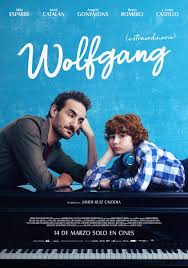
Here is a drama well worth seeing. Clearly, in a Spanish film with a title like Wolfgang, there will be more than a strong musical connection. And there is.
The setting is Barcelona, a 10-year-old boy, named Wolfgang by his pianist mother, suffers the death of his mother who has arranged that Wolfgang will be cared for by Carles, his actor father who has been absent from his life so far. Familiar enough material, the boy wary of this new father present in his life when he never knew he had one, a reliance on his mother’s mother, a loving grandmother.
In itself, this theme of relationships and tensions has the potential for being interesting and emotional. And it is. However, the difference with this story is that Wolfgang is intelligent, IQ of 152, an ambitious genius, pianist, and, at 10, wanting to be the best in the world., Possibilities for heightened drama. But, there is more. Wolfgang is autistic, Asperges.
The performance by young actor, Jordi Catalan, holds our attention throughout the film. Being on the spectrum, he is focused, literal, highly talented, but, at this stage of his life, absolutely intolerant and disdainful of anyone and anything that does not measure up to his expectations. Which means that there is a lot of drama in the father-reluctant-son relationship, the relationship taking a lot of time, the challenge to the father because of his absence and focus on his career, his having to face himself and the consequences of his absence from his son.
Because Wolfgang is highly self-sufficient and has an ambition to train as a pianist in an Institute in Paris, he is able to organise himself to the train to get there. But, in his disdain of those who are “below 100”, he underestimates that adults will see him as a minor in need of some kind of care.
The scene where he does his audition at the music school, his skill in playing, his memories of his mother, makes for high drama. So, while we do focus on Wolfgang, finding him very trying at times, the demand on our understanding and compassion for his condition, the film also is a good study of the absent father, discovering responsibilities, reflecting on his life and career, the challenge as to how much of himself he will keep to his son and sacrifice himself for his son.
There is just a quick wink at the end of the film which seems far too cute and this reviewer was momentarily taken aback. Not quite the final moment expected. But, during the credits, the filmmakers have the last laugh, presenting us with a comic scene which brings us back to the reality of what we have experienced in watching the character and development of Wolfgang and his father.
- The title, Mozart, music, precocious youngster? This theme throughout the film with Wolfgang and his talent with the piano? His ambitions?
- Wolfgang, aged 10, The strategies, high IQ, the issue of autism, dramatised?
- Barcelona, aspects of the city, homes, apartments, schools, outings, funeral, the visit to Paris, the sites of Paris?
- The musical score, the piano pieces, aspects of jazz and performance?
- The film as a study of a 10-year-old boy with Asperges, IQ 152, his contempt for those “Below 100”? The absent father? The devotion of his mother, music, care, but her depression, suicide? The role of his grandmother? The impact of his mother’s death?
- Wolfgang, his personality, self-assured, aspects of arrogance, demands and expectations, his not lying, aspects of truth, expectations, waiting at the red light when no traffic, knowledge rather than imagination? His talent with the piano, his mother’s training in Paris, his ambitions to go to the school?
- The grandmother, care for Wolfgang, but her not disturbing his emotions, not following through on the boy coping with his mother’s death?
- The father, absent, the reasons, his meeting his wife, the times in Paris, her pregnancy, return to Spain, his acting, staying in France? The arrangement for Wolfgang and his not seeing him? The mother arranging with the father to come back and care for his son? The reaction of the father, his work as an actor, his friendship with his agent, possibilities for interviews, auditions, his role as the cook in the soap opera? His friendship with people at the studio, the relationship with the actress?
- Wolfgang, no idea of a father, his reaction to his father, disdain, the details of behaviour, at school and his boredom, expectations of his father, waking in the morning, taking him to school, picking him up, his father being late, not accepting apologies? The outings with his father? Going to the beach, Wolfgang uncomfortable, the children dumping him in the water? Hostility, returning to his grandmother, the grandmother and her criticisms of the father?
- His plan to go to Paris, sending the application, the response, his own initiative, the money, to buy the ticket, his father and the audition? Going to the station, the authorities, Wolfgang as a minor, and needing protection, calling his father?
- The challenge to the father, his decision to take Wolfgang to Paris, travelling together, Wolfgang and his response to the city, the group playing in the street, Wolfgang and his fascination, the jazz, the invitation to join, his picking up the rhythms and style quickly, the effect on him?
- The role of flashbacks about the mother, Wolfgang’s memories and devotion? The audition, nervous, playing, the images of his mother, stopping, unable to go on, leaving, sense of failure?
- The return to Barcelona, the intervention of the grandmother, her wanting custody, condemnation of the father? His challenge to the grandmother to speak the truth about the mother’s death?
- The aftermath for Wolfgang, his future, where he should live, the role of his grandmother, appreciating the sacrifice of his father, the change of heart, the reconciliation?
- Wolfgang’s final wink, too cute for what has gone before? Counterbalanced by the comedy of the father, the other actor getting the main role, the father acting as a corpse? A wry ending instead of the sentimental?
Marco: The Invented Truth
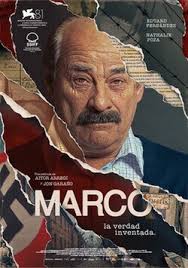
MARCO, THE INVENTED TRUTH
Spain, 2024, 104 minutes, Colour.
Eduard Fernandez, Natalie Poza, Chani Martin, Fermi Reixach.
Directed by Aitor Arregi, Jon Garano.
This is the story of the life and career of Spaniard, Enrik Marco (1921-2022). His story is well-known in Spain but not so well-known outside. For those who have never heard of Enrik Marco, this film is quite a startling experience.
The focus of his story is on many of the Spanish veterans who opposed Franco during the Spanish Civil War were later deported to Germany, because of an agreement between Hitler and Franco (some actual footage inserted here in the film). Most of them found their way to the camps at Matthausen and Flossenburg (where Dietrich Bonhoeffer was executed). The information at the beginning of the film indicates that Spain and other countries were not willing to rehabilitate these deportees after the war. Eventually, an association to support the deportees on their return and their life in Spain was established. At the end of the 1990s, Enrik Marco, who stated that he had been imprisoned in Flossenburg, became the chair of the deportees’ organisation.
The film moves around in different times. There are some footage clips of prisoners in the concentration camps. There is a sequence where Marco and his wife go to Flossenburg to obtain an official document stating that he had been interned there. There are some technical difficulties with the record. Then there are sequences of him in his role with the organisation, his friends on the committee, giving talks to high school students, alerting them to the camps, the treatment, their questions, is vivid way of telling the stories.
So far, so interesting. And, on screen he is something of a mesmerising character as he was in real life. He is played by veteran Spanish actor, Eduard Fernandez (also seen in the central role of El 47). Short, stocky, tinting his hair and eyebrows as he grew older, gazing at himself in the mirror, quite an intriguing character, not hesitant in the limelight, supported by his wife at home, a loving daughter who gives birth to his grandson.
Then, questions arising, a historian wanting to make contact with him, some questions about the authenticity of his story… Marco is firmly resistant, avoiding meetings with the historian, more and more urgently defending himself, especially to his close associates on the committee for the rehabilitation of the deportees.
Enough of a review. The recommendation can be that if this story sounds interesting, it certainly is on screen, the character of Marco, the raising of the issues of the authenticity of his story, the consequences for the Association, for the Spanish government, especially at a celebration he had organised for the 60th anniversary of the opening up of the camp at Matthausen.
Marco lived to 101, the film showing his life after the crisis which occurred in 2005, his relationship with his wife and daughter, with the Association, with books being written about him and films made.
An intriguing story of 20th century Spain.
- Audience knowledge of the actual story? Its place in Spanish history? Worldwide audiences not knowing the story?
- The context, the Spanish Civil War, the role of Franco, the alliance with Hitler, the transferring of the veterans to the concentration camps in Germany? Matthausen, Flossenburg? The footage of prisoners in the concentration camps? The end of the war, the return of the deportees to Spain and then non-acceptance? The founding of the organisation to support them?
- The time shifts within this drama? Going back to the Civil War, back to the concentration camps? 1940s, the presence of Marco, his connections, the stories of the concentration camps, his becoming involved? 1999, the visit to Flossenburg with his wife, the interviews with the authorities, trying to get documentation, his name not in the register, later seeing him forge the entry?
- The 1990s and the 2000s, Marco, his involvement with the Association, his leadership, his giving the classes to the students, their response, their questions? His reputation within the Association? His friendships with the members of the board? Moving towards his re-election?
- The journalist, contacting Marco, questioning the story, Marco and his avoiding phone calls, ignoring the journalist, the one meeting and walking out, the effecting his moods, relationship with his wife and her support, his pregnant daughter and giving birth, his agitation at meetings to avoid the journalist?
- The first part of the film and the portrait of Marco, age, appearance, background, patriotism, his story, seeing him with the young people and absorbing the stories about the concentration camps? His identifying, the historian discovering that he had fabricated his story? His personality, self-focused, in the public eye?
- The beginnings of the exposure, his work for the 2005 60 year celebration, the contacts with the government, wanting the president to be present, canvassing opinion, his pressures? The decision that the president would go? The preparations? The issue of the central speech? The committee, the discussion, Marco willing, saying that the actual veteran would not communicate well? The reaction of Pere, his presence on the committee, the fact that he was a veteran, friendship with Marco, suspicions of Marco, and the final disillusionment?
- The unfolding of the false identity, the dismay, the reaction of his wife, the hostile reaction of his daughter? The members of the committee, past friendships, the challenge, his denials, excuses, manipulation, the scene where he admitted all the truth, the disillusionment of Pere? The holding of the anniversary celebration, the speech by the veteran, his going to the venue, his being excluded, the effect?
- The aftermath of the exposure, Marco living another 15 years, his wife’s support then her death, the daughter and her condemnation, the various interviews, the film made about him with the German title, the books written, his going to interviews, public events, his denunciations?
- Marco and the disgrace, his way of coping, and his living on to die at age 101?
El 47
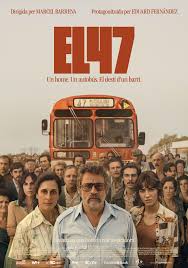
EL 47
Spain, 2024, 110 minutes, Colour.
Eduard Fernandez, Clara Segura, Zoe Bonafonte.
Directed by Marcel Barrena.
An intriguing title, suggesting some kind of hero with that name and number. In fact, the film is definitely about the Spanish hero but the title actually refers to the number of the bus that he drives in the latter part of the film, the bus highly significant
The film is set in two different periods, the later 1950s, 1958, but mainly in 1978. We are in the Franco era, 1978 just after Franco dies, after 40 years of his rule
In 1958, citizens from southern Spain had to move from their villages. They transferred to the outskirts of Barcelona, villages in the high and steep hills. They are impoverished, do not speak Catalan, trying to build up some kind of community, especially houses, but are continually thwarted by a rule that if they house roof is not finished by morning everything is torn down by the rather gloating police. The citizens are finally enterprising, led by a strong character, Manolo played with strength and conviction by Eduard Fernandez (who also appeared at the same time so effectively as Enrik Marco in Marco, The Invented Truth).
Manolo is not a religious man, highly critical of a nun who has devoted herself to education and working for the poor. But, the social convictions combine with his fight for justice and she leaves the convent to marry him, work with him, raise his two children
With a range of characters and the interactions in the village, this is strong drama taking us back to very difficult times.
While things have improved considerably in the village after 20 years, some stability in homes, education, the population is still comparatively impoverished many, having to work in the centre of the city that no public transport, their having to walk down and, especially difficult, walk up the steep hill side to get home, Manolo is still a dominant character, somewhat mellowed over the years, and his wife, still devoted to him and to her work, especially teaching the poor.
There is a great deal of drama amongst the various characters in the town, especially on social issues and the facilities and lack of facilities poverty, personality clashes. But, Manolo himself actually has been driving the bus on his particular route in Barcelona for several years, many scenes on the bus, at the bus depot. Again a range of personalities.
But the issue of the steep hillside is still significant. Manolo decides to approach the authorities initially in awe of the bureaucracy, the buildings and the offices, patiently going to hearing after hearing, making his case for a bus to go up to the village. No success, fobbed off. The climax of the film: clearly Manolo is going to drive that bus up the hillside, some of the path narrow, slippery soil, but, the final achievement, surrounded by the villagers.
A film about Spain and social justice but also a strong drama, the central character, interactions, the kind of film that makes us feel we have visited this village and know the people.
- The title? The bus? Its significance, the Barcelona outskirts village, height, the need for transport, the climax with the bus?
- A significant film for Spanish history, for audiences outside Spain? Social history? Catalan history?
- The action in 1958, the migrants, settling, building, pressed? 20 years passing, continued difficulties, the migrants settling, progress, but still on the outskirts? (The film opening in the Franco era, 1978 just after his death?)
- The explanation of the situation, people from the south, social situations, poverty, moving north, the difficulties of the language, trying to build, the hills outside Barcelona, the issue of building houses, completing the roof, the legislation that if the roof was not completed, the house would be demolished? The police, the fascist atmosphere? The enterprise of the group, one house at a time, working together, building up the community?
- Manolo, age, children, the leader, the ideas for the building, working with the men, his attitude towards the nun, her work in education, the criticisms? Defying the police, building the houses?
- The nun, her work, commitment, education, confrontations with Manolo, his admiration for her, his religious statements and attitudes, but their bonding, marriage, her being stepmother?
- 1978, the community more settled, older, Manolo and his wife, her being a leader in education for the poor? His status?
- The other members 20 years on, the characters, interactions, the younger generation, work possibilities, going into the city, the reality of being on the mountainside, having to walk down, having to walk back, prospects for work? Exhaustion afterwards?
- Manolo, his driving the bus, the title of the film? At the depot, friends? The workers? Driving his bus, his assistant, the various passengers, the regulars and their friendship with him, the young lawyer? The routines?
- But the issue of having public transport to the village? The young passenger and his advice? Manolo, the discussions with the other members in the village, with his wife? His hesitation, lack of confidence? Determination? His going to the various offices, submissive at first, becoming more forceful, kept waiting, going again, eventual discussions, his making the plea? Bureaucracy, the personalities, putting him off, others encouraging? His making his case? The social repercussions for a bus route to the village?
- The growing frustration, the people in the village, the passengers, the possibility for strike, the people of the depot, the bosses, threats of sacking?
- The buildup to the final decision, his passengers on the bus, driving to the edge of the village, the difficulty of the path, the soil, the narrow gate, his perseverance, the various reactions of the passengers, eventually getting to the top of the hill? The reaction of the village?
- The bus and the achievement? In its time? Consequent decades? The significance in the post-Franco era of the move from the fascist era to democracy, the politics of the various provinces of Spain, the portrait of individuals, young and old, a film from Spain in the 2020s?
Some People
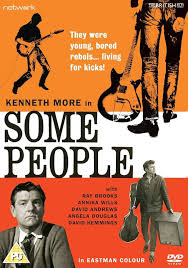
SOME PEOPLE
UK, 1962, 93 minutes, Colour.
Kenneth More, Ray Brooks, Annika Wills, David Andrews, Angela Douglas, David Hemmings, Harry H.Corbett, Cyril Luckham.
Directed by Clive Donner.
Some People is very much a film of its era, rather difficult to watch in later decades. However, it highlights some of the social changes in the UK in the early 1960s, the emergence of Teddy Boys, leading into the era of the Rockers.
The film was well received at the time, highlighting the social issues, especially amongst teenagers and young adults, as well as the possibilities for some kind of help or rehabilitation. It is the era of the Duke of Edinburgh awards for help with young people.
Quite a lot of the film shows four friends, Teddy boy types, riding their motorbikes, going through red lights, in the courts, told off by the magistrates, resentful, causing mischief. The leader is played by Ray Brooks, his later career was very much in television series, with David Andrews as the very surly and imposing type, Andrews acting for a while but then moving into film and television direction. Not so much in the limelight here, but the third member of the group is played by David Hemmings, Blow up soon to come and his much stronger career as actor and director.
The star of the film is Kenneth More, veteran, very popular in the 1950s with comedies like Genevieve and Doctor in the House as well as war films like Reach for the Sky.
He encounters the group as they move into a church, having been moved along by various authorities, and one of them talented pianist, playing. They encounter Kenneth More as the leader of the choir, much more tolerant of the youngsters, especially with his daughter and becomes involved with them, offering them opportunity for the church to be a place after choir practice for their music, developing a group, the talent in playing, the local girls talented with singing – and a number of songs with music by the very popular composer of British films of the time, Ron Grainer. Again, the songs are very much of the period of the early 1960s.
There is some background of the work in industry and aviation which Kenneth More is involved in – and some possibilities for the youngsters to get some jobs.
So, a journey back to the 1960s, the move away from polite and controlled stories in film (and in real life), the film not knowing what the rest of the 60s and changes would be like.
Unholy Trinity, The
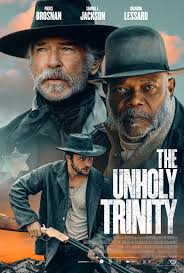
THE UNHOLY TRINITY
US, 2024, 93 minutes, Colour.
Pierce Brosnan, Samuel L.Jackson, Brandon Lessard, Gianni Capaldi, Q'orianka Kilcher, David Arquette, Veronica Ferres, Ethan Peck, Katrina Bowden, Tim Daly, Beau Knapp.
Directed by Richard Gray.
A risky religious-overtoned title. However, the Trinity here is a town in Montana, 1880. (And, when we come to think of it, Americans have a penchant for naming towns and cities Corpus Christi, Sacramento, Los Angeles, Santa Barbara… But, even though some of the action takes place in a church in Trinity, the issues are not religious!
However, the film opens with a hanging, a preacher (David Arquette). Watching the execution are the criminal’s son, (Brandon Lessard) who is urged by his father to get revenge on his enemy. Also watching the execution, and then a broad grin at the death, is Samuel L. Jackson, calling himself St Christopher.
In fact, this is quite watchable Western. The scenery is impressive, the plot, certainly not unfamiliar, carries us along with the character developments and the twists. And, it is a surprise to find Pierce Brosnan as the local sheriff, serious, good at his job, an accurate shooter.
When the young man arrives at Trinity, he seeks out the sheriff, finds him in a church, numbers he is making a mistake, and gradually has to learn about his father, a gold robbery at the time of the Civil War, much of the story explained by his then partner, although a slave, St Christopher. One of the difficulties of seeing Samuel L.Jackson as a villain is that we have liked him in so many films that we have to make an effort to accept his villainous behaviour, and it is, and to accept his exuberant overacting and smiling!
So, where is the gold? Possibly buried under one of the buildings in the town?
We are shown the usual life in the frontier town, the gunslingers and their anger, the saloon and its manager and the gamblers, the girls upstairs and prostitution, clashes with the Native Americans, killings, vengeance posses…
And, there are some human elements, the Sheriff’s sympathetic wife, Veronica Ferrie, standing in for the sheriff when needed, but also acting as a midwife to one of the pregnant town girls, and also looking after the young daughter of another of the prostitutes.
This film could have been made at any time over the past decades but here we are with a 2020s Western – and, it has been written by Lee Zachariah, Australian screenwriter, and directed by Richard Gray, Australian director. They both have certainly absorbed the traditions and conventions of the Western.
- The title, the touch of seeming-blasphemy? So many American cities with Christian titles, Corpus Christi, Sacramento, Los Angeles…? The American town in Montana? The Australian writer and the Australian director?
- 1880, the Western setting, the mountain scenery, the town itself, the saloon, the upstairs rooms, the church, the streets…? Audience expectations of this kind of town? The musical score?
- The opening, the prison, executions, the preacher and his sermon, Isaac Broadway, Henry witnessing, the father talking to his son, urging revenge? St Christopher, watching the execution and smiling? Revenge quest for the son, to track down the corrupt sheriff?
- Henry, his age, the influence of his father, his travels in the coach, arriving in Trinity? Vengeance, seeking out the sheriff, in the church, with the gun, Gabriel Dove, the news of the sheriff dead, the confrontation with Henry, disarming him, taking him to the saloon, organising the meal?
- The town, the story of Isaac Broadway, St Christopher intervening and helping Henry? Henry indebted to him? The revelation about the story, Isaac and St Christopher, the gold, the betrayal, St Christopher as a slave, Isaac hiding the gold, burying it in the town? The new sheriff, Saul Butler, the gold, the many buildings in the town, the confrontation with the Native Americans, the sheriff killing Running Club’s parents, her killing him? On the run? Gabriel Dave and his support of Running Club? The members of the town wanting vengeance on her?
- Gabriel Dove, from Ireland, sheriff, deputies, the unrest in the town especially towards Running Club, posses chasing her?
- The saloon, Sam behind the bar, the prostitutes upstairs, the pregnant woman, Julia and the customers, flirtatious, with Henry, taking her to the room, the jealous man, the gun, the confrontation with Henry, the shooting of Julia, the shooting of the attacker, his falling out the window?
- The men in the town wanting vengeance?
- Sarah, her relationship with Gabriel, looking after the little girl, daughter of Julia, the pregnant woman and her giving birth?
- St Christopher, Samuel L.Jackson and the back story, his smile, vengeance, charm, brutality, witnessing Isaac’s execution, helping Henry, wanting to find the gold, going to the house, his menacing Sarah, age of the church, digging for the gold, the confrontation and his death?
- The killings in the town, the sheriff away with Running Club, Sarah taking charge, the aftermath, St Christopher telling the posse where Running Clubs was, the pursuit, the shootout, the father and his son, the death of his son, grief inventions, the shootouts, the skill of the sheriff? Running Clubs and her shooting?
- The aftermath, Running Club safe, Sarah and the sheriff looking after the little girl, the future?
Do I Sound Gay?
DO I SOUND GAY?

US, 2014, 77 minutes, Colour.
Directed by David Thorpe.
This is a personal project by writer and director, American David Thorpe. He is a gay man, looking back on his childhood and the responses of his family, of his friends, the story of his coming out and the impact on friends and relations, his life and work, but a preoccupation with how he sounds, whether he sounds gay or not and what that could mean.
This is a significant film for gay men, especially gay adolescents and young men, the issues of coming out, the issues of experience bullying, ridicule for being effeminate in speech and manner… These issues are taken up by a variety of personalities throughout the film.
David Thorpe has discussions with his mother, his brother, his grandmother. He can’t remember how he spoke, asking people if they notice differences after his coming out, whether the style was effeminate. He goes for speech therapy and listens to explanations of vowel sounds and emphasis on some consonants, he goes to a Hollywood trainer to discuss these matters (with side issues of gay producers, gay actors and casting).
He also has discussions with his friends, Sam and Alberto, their own experiences, in the workplace, mannerisms and style, image. Quite a number of characters throughout the film, most especially the man with a high-pitched voice who is often mistaken for female. He tells his story, and there are interviews with his partner of 22 years.
There are also interrogations of quite a range of people in the street, some background stories of teenagers being bullied at school with some images, some film clips of effeminate characters from movies of the 1930s, to Liberace, to various television gay personalities like Paul Lynde, to cartoon images, even to the image of Scar in The Lion King – and how these images influence audiences. Especially with some implications of the gay character as villain. There is some serious reflection by actor, George Takei
The film was released in the 2010s, looking back to growing up, especially coming out in the 1980s. While there is some dating in the presentation, the issues, of course, continue to be significant.
King of the Apocalypse
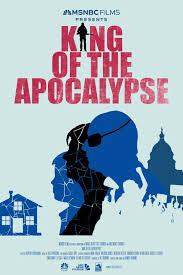
KING OF THE APOCALYPSE
US, 2025, 84 minutes, Colour.
Directed by Daniel Vernon.
Stewart Rhodes, founder and leader of the patriotic militia, the Oath Keepers in 2009, was one of the leading figures at the January 6th 2021 uprising. In 2022 he was found guilty and sentenced to prison. In 2025 he, along with so many of the other participants in the uprising, were pardoned by President Trump.
This is his story. It is also the story of his son, Dakota Adams, and of Rhodes’ wife, Tasha Adams. The film has been directed by Daniel Vernon, director of a wide range of documentaries for 20 years. But, it is very much the documentary by Dakota Adams.
He is initially seen at a microphone, making a pod cast, beginning the narrative about his father, his background, lack of education, the encounter with Tasha, their marriage, his gaining a law degree, practising in Las Vegas. The couple seem very happy. They have six children. Then, during Dakota’s narration, there is a long interview, interspersed throughout the film, with Tasha herself and her perspective on her life, relationship with her husband, her children, and then working for him, especially when his perspective became more religious, more apocalyptic and the family moved to the wilds of Montana. She worked for her husband, found herself trapped organising his business and connections, more and more alienated. And, then there are some interviews from one of the daughters and her perspective, even more highly alienated, on her father and his beliefs and activities.
One of the visual advantages of the film is that so much of the material is illustrated by home movies, by some animation, by clips from feature films, B-budget of the past, which are obviously now in the public domain but serve as dramatic counterparts to this story of Stewart Rhodes.
Rhodes and his wife were brought up as Mormons, Stewart being baptised in several churches. His perspective became more and more apocalyptic, anticipating the end of the world (with some clips from early Jesus silent films), becoming more and more possessed by his ideas, his son referring to him as increasingly paranoid, and his becoming highly authoritarian in the house, and always promoting his view of loyalty to the Constitution.
In 2009 he established the Oath Keepers, a rapidly increasing group of right-wing patriots, especially with members of the Armed Forces returning from service in Iraq and Afghanistan. Many sequences of the Oath Keepers, military style, interviews with Whip Simmons, who worked for Rhodes, is interviewed along with his mother, the significant sequence voicing Trump in ideas and, especially, with his enormous range of guns at home, argument for the Second Amendment and not giving up arms, and was indicted.
This film is an opportunity to look behind the scenes of those involved in January 6. An opportunity to see and hear them.
In the aftermath, Tasha was able to divorce her husband and support her son. Dakota, highly influenced when young by his father and his expectations, moving away from this-patriotism and is seen finally at a meeting, standing for politics and collaboration with people rather than the authoritarian mode.
This documentary can be seen in connection with the continually emerging documentaries about Donald Trump and the Trump era.
To Make a Killing/ Vicious!
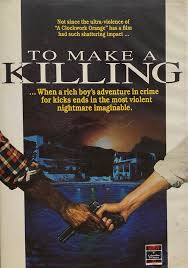
TO MAKE A KILLING
Australia, 1988, 88 minutes, Colour.
Tamblyn Lord, Craig Pearce, Tiffiny Dowe, Kelly Dingwall, Joanna Lockwood, Gerard Maguire, Louise Cullen, John Clayton, Ralph Cotterell.
Directed by Karl Zwicky.
Probably best to say by way of introduction to a review, that this is one of the worst Australian feature films. It was retitled Vicious! For international release. Indeed, the characters and the perspective that the film are particularly vicious.
There may have been some interesting speculations at the core of the plot which, surprisingly in retrospect, has a credit for Original Idea by P.J.Hogan – who directed one of the best of Australian films, Muriel’s Wedding. Hogan wrote the screenplay with the director, Karl Zwicky, who had a long career principally in television.
Strong criticism could be made of the plot and its awkward development – and its factual credibility and its psychological credibility or not. A lot of the dialogue is very stilted as is the staging, photography, editing. It is someone reminiscent of television series of the period. And, perhaps the actors are doing their best with the dialogue, but the performances are often awkward and, one might uncharitably say, terrible.
This is the story of a bored wealthy university student who, for kicks, joins up with a team of absolute hooligans with consequences of robbing houses, gross sexual violence, some crass language which is surprising in retrospect from 1988, and, eventually home invasion, violence and killings.
The film is one of the Ozploitation films produced by David Hannay in the 1980s, somewhat looked down on in their time – but no rehabilitation for them decades later.
It went straight to video even in the 1980s.
(A redeeming thought – Craig Pearce who plays the psychotic lead went on to be the co-writer of five films directed by Baz Luhrmann)
Vita a Vida/ Cheers to Life
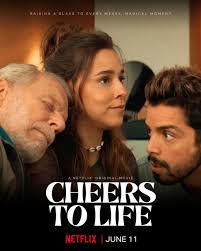
VITA A VIDA/ CHEERS TO LIFE
Brazil, 2024, 103 minutes, Colour.
Thati Lopes, Roderio Simas, Regina Braga, Jonas Bloch, Diego Martins.
Directed by Cris D'Amato.
The title is the equivalent of “To Life” and the Hebrew “L’ Chaim”. While this is a Brazilian production, there has been a collaboration with Israel, the early part of the film set in Brazil itself, in black-and-white in the 1970s, in colour in 2023. But, a great deal of the film was made in Israel itself. Which means that for the Israeli audience, there is a connection with the diaspora in Brazil and a lighthearted romance with some family problems. Which also means for the Brazilian audience a trip to Israel, literally going on tour, the sights of Tel Aviv, Joffa, of the Mediterranean, of a trip to Jerusalem, the overview of the city, the Wailing Wall, a trip down towards
Eilat, out in the Negev, a trip to the Dead Sea and a cable car to Masada. An enjoyable opportunity to see quite something of Israel.
This film could be described as a romantic comedy. The focus is on Jessica, her mother dead, not knowing anything of her family. But she has a necklace memory with a photo. She works, somewhat messily, in an art shop. She does not get on well with her boss.
She encounters Gabriel, in a tangle with his photographer wife. As they get to know each other, it emerges that they are related, some family background, sisters remaining in Brazil but in the 1970s, another sister eloping with an adventurous type and relocating in Israel, cutting off all connections with Brazil.
Discovering that she and Gabriel are cousins, Jessica “borrows” some jewellery to pay for airfares for them to go to Israel to search out her mysterious grandmother.
On the one hand, we can all enjoy the tourism in Israel. On the other, there are the grandparents, she walking out on her husband who used to be adventurous but now wants lentil soup every second Wednesday. In fact, he owns the tourism company. (And there is a very camp enthusiastic guide, a gay couple, a married couple and three Catholic nuns in their habits, all enjoying the sights and the activities.)
There are various crises, finding the right moment to reveal identities but, of course, it happens at the wrong moment with a few dire consequences, disbelief from the grandfather, and moments of joy from the grandmother who did not know she had a granddaughter.
There are many celebrations, a Bat Mitzvah, plenty of Haga Navila – and, during the final credits, a bus in the desert with the drapes flying, homage to Priscilla!
Slight but enjoyable in its way, romantic and slapstick, but especially for Brazilians and Israelis.
