Displaying items by tag: Eduard Fernandez
Marco: The Invented Truth
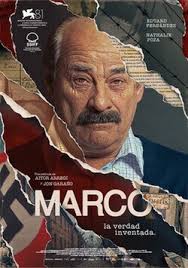
MARCO, THE INVENTED TRUTH
Spain, 2024, 104 minutes, Colour.
Eduard Fernandez, Natalie Poza, Chani Martin, Fermi Reixach.
Directed by Aitor Arregi, Jon Garano.
This is the story of the life and career of Spaniard, Enrik Marco (1921-2022). His story is well-known in Spain but not so well-known outside. For those who have never heard of Enrik Marco, this film is quite a startling experience.
The focus of his story is on many of the Spanish veterans who opposed Franco during the Spanish Civil War were later deported to Germany, because of an agreement between Hitler and Franco (some actual footage inserted here in the film). Most of them found their way to the camps at Matthausen and Flossenburg (where Dietrich Bonhoeffer was executed). The information at the beginning of the film indicates that Spain and other countries were not willing to rehabilitate these deportees after the war. Eventually, an association to support the deportees on their return and their life in Spain was established. At the end of the 1990s, Enrik Marco, who stated that he had been imprisoned in Flossenburg, became the chair of the deportees’ organisation.
The film moves around in different times. There are some footage clips of prisoners in the concentration camps. There is a sequence where Marco and his wife go to Flossenburg to obtain an official document stating that he had been interned there. There are some technical difficulties with the record. Then there are sequences of him in his role with the organisation, his friends on the committee, giving talks to high school students, alerting them to the camps, the treatment, their questions, is vivid way of telling the stories.
So far, so interesting. And, on screen he is something of a mesmerising character as he was in real life. He is played by veteran Spanish actor, Eduard Fernandez (also seen in the central role of El 47). Short, stocky, tinting his hair and eyebrows as he grew older, gazing at himself in the mirror, quite an intriguing character, not hesitant in the limelight, supported by his wife at home, a loving daughter who gives birth to his grandson.
Then, questions arising, a historian wanting to make contact with him, some questions about the authenticity of his story… Marco is firmly resistant, avoiding meetings with the historian, more and more urgently defending himself, especially to his close associates on the committee for the rehabilitation of the deportees.
Enough of a review. The recommendation can be that if this story sounds interesting, it certainly is on screen, the character of Marco, the raising of the issues of the authenticity of his story, the consequences for the Association, for the Spanish government, especially at a celebration he had organised for the 60th anniversary of the opening up of the camp at Matthausen.
Marco lived to 101, the film showing his life after the crisis which occurred in 2005, his relationship with his wife and daughter, with the Association, with books being written about him and films made.
An intriguing story of 20th century Spain.
- Audience knowledge of the actual story? Its place in Spanish history? Worldwide audiences not knowing the story?
- The context, the Spanish Civil War, the role of Franco, the alliance with Hitler, the transferring of the veterans to the concentration camps in Germany? Matthausen, Flossenburg? The footage of prisoners in the concentration camps? The end of the war, the return of the deportees to Spain and then non-acceptance? The founding of the organisation to support them?
- The time shifts within this drama? Going back to the Civil War, back to the concentration camps? 1940s, the presence of Marco, his connections, the stories of the concentration camps, his becoming involved? 1999, the visit to Flossenburg with his wife, the interviews with the authorities, trying to get documentation, his name not in the register, later seeing him forge the entry?
- The 1990s and the 2000s, Marco, his involvement with the Association, his leadership, his giving the classes to the students, their response, their questions? His reputation within the Association? His friendships with the members of the board? Moving towards his re-election?
- The journalist, contacting Marco, questioning the story, Marco and his avoiding phone calls, ignoring the journalist, the one meeting and walking out, the effecting his moods, relationship with his wife and her support, his pregnant daughter and giving birth, his agitation at meetings to avoid the journalist?
- The first part of the film and the portrait of Marco, age, appearance, background, patriotism, his story, seeing him with the young people and absorbing the stories about the concentration camps? His identifying, the historian discovering that he had fabricated his story? His personality, self-focused, in the public eye?
- The beginnings of the exposure, his work for the 2005 60 year celebration, the contacts with the government, wanting the president to be present, canvassing opinion, his pressures? The decision that the president would go? The preparations? The issue of the central speech? The committee, the discussion, Marco willing, saying that the actual veteran would not communicate well? The reaction of Pere, his presence on the committee, the fact that he was a veteran, friendship with Marco, suspicions of Marco, and the final disillusionment?
- The unfolding of the false identity, the dismay, the reaction of his wife, the hostile reaction of his daughter? The members of the committee, past friendships, the challenge, his denials, excuses, manipulation, the scene where he admitted all the truth, the disillusionment of Pere? The holding of the anniversary celebration, the speech by the veteran, his going to the venue, his being excluded, the effect?
- The aftermath of the exposure, Marco living another 15 years, his wife’s support then her death, the daughter and her condemnation, the various interviews, the film made about him with the German title, the books written, his going to interviews, public events, his denunciations?
- Marco and the disgrace, his way of coping, and his living on to die at age 101?
El 47
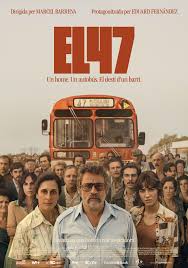
EL 47
Spain, 2024, 110 minutes, Colour.
Eduard Fernandez, Clara Segura, Zoe Bonafonte.
Directed by Marcel Barrena.
An intriguing title, suggesting some kind of hero with that name and number. In fact, the film is definitely about the Spanish hero but the title actually refers to the number of the bus that he drives in the latter part of the film, the bus highly significant
The film is set in two different periods, the later 1950s, 1958, but mainly in 1978. We are in the Franco era, 1978 just after Franco dies, after 40 years of his rule
In 1958, citizens from southern Spain had to move from their villages. They transferred to the outskirts of Barcelona, villages in the high and steep hills. They are impoverished, do not speak Catalan, trying to build up some kind of community, especially houses, but are continually thwarted by a rule that if they house roof is not finished by morning everything is torn down by the rather gloating police. The citizens are finally enterprising, led by a strong character, Manolo played with strength and conviction by Eduard Fernandez (who also appeared at the same time so effectively as Enrik Marco in Marco, The Invented Truth).
Manolo is not a religious man, highly critical of a nun who has devoted herself to education and working for the poor. But, the social convictions combine with his fight for justice and she leaves the convent to marry him, work with him, raise his two children
With a range of characters and the interactions in the village, this is strong drama taking us back to very difficult times.
While things have improved considerably in the village after 20 years, some stability in homes, education, the population is still comparatively impoverished many, having to work in the centre of the city that no public transport, their having to walk down and, especially difficult, walk up the steep hill side to get home, Manolo is still a dominant character, somewhat mellowed over the years, and his wife, still devoted to him and to her work, especially teaching the poor.
There is a great deal of drama amongst the various characters in the town, especially on social issues and the facilities and lack of facilities poverty, personality clashes. But, Manolo himself actually has been driving the bus on his particular route in Barcelona for several years, many scenes on the bus, at the bus depot. Again a range of personalities.
But the issue of the steep hillside is still significant. Manolo decides to approach the authorities initially in awe of the bureaucracy, the buildings and the offices, patiently going to hearing after hearing, making his case for a bus to go up to the village. No success, fobbed off. The climax of the film: clearly Manolo is going to drive that bus up the hillside, some of the path narrow, slippery soil, but, the final achievement, surrounded by the villagers.
A film about Spain and social justice but also a strong drama, the central character, interactions, the kind of film that makes us feel we have visited this village and know the people.
- The title? The bus? Its significance, the Barcelona outskirts village, height, the need for transport, the climax with the bus?
- A significant film for Spanish history, for audiences outside Spain? Social history? Catalan history?
- The action in 1958, the migrants, settling, building, pressed? 20 years passing, continued difficulties, the migrants settling, progress, but still on the outskirts? (The film opening in the Franco era, 1978 just after his death?)
- The explanation of the situation, people from the south, social situations, poverty, moving north, the difficulties of the language, trying to build, the hills outside Barcelona, the issue of building houses, completing the roof, the legislation that if the roof was not completed, the house would be demolished? The police, the fascist atmosphere? The enterprise of the group, one house at a time, working together, building up the community?
- Manolo, age, children, the leader, the ideas for the building, working with the men, his attitude towards the nun, her work in education, the criticisms? Defying the police, building the houses?
- The nun, her work, commitment, education, confrontations with Manolo, his admiration for her, his religious statements and attitudes, but their bonding, marriage, her being stepmother?
- 1978, the community more settled, older, Manolo and his wife, her being a leader in education for the poor? His status?
- The other members 20 years on, the characters, interactions, the younger generation, work possibilities, going into the city, the reality of being on the mountainside, having to walk down, having to walk back, prospects for work? Exhaustion afterwards?
- Manolo, his driving the bus, the title of the film? At the depot, friends? The workers? Driving his bus, his assistant, the various passengers, the regulars and their friendship with him, the young lawyer? The routines?
- But the issue of having public transport to the village? The young passenger and his advice? Manolo, the discussions with the other members in the village, with his wife? His hesitation, lack of confidence? Determination? His going to the various offices, submissive at first, becoming more forceful, kept waiting, going again, eventual discussions, his making the plea? Bureaucracy, the personalities, putting him off, others encouraging? His making his case? The social repercussions for a bus route to the village?
- The growing frustration, the people in the village, the passengers, the possibility for strike, the people of the depot, the bosses, threats of sacking?
- The buildup to the final decision, his passengers on the bus, driving to the edge of the village, the difficulty of the path, the soil, the narrow gate, his perseverance, the various reactions of the passengers, eventually getting to the top of the hill? The reaction of the village?
- The bus and the achievement? In its time? Consequent decades? The significance in the post-Franco era of the move from the fascist era to democracy, the politics of the various provinces of Spain, the portrait of individuals, young and old, a film from Spain in the 2020s?
Thief's Daughter, A/ la hija di un ladron

A THIEF’S DAUGHTER/ LA HIJA DI UN LADRON
Spain, 2019, 100 minutes, Colour.
Greta Fernandez, Eduard Fernandez, Alex Monner, Tomas Martin.
Directed by Belen Funes.
A Spanish slice of life, a modest film, but screened successfully at many festivals, winning awards.
The setting is Barcelona, the focus on Sara, young, wearing a hearing aid, with a young child, the father absent working in France but not wanting to follow up on his relationship with her. She lives in accommodation provided by official social services, friendly with others in similar situation. She applies for various jobs, is seen in various cleaning jobs, working in kitchens, hard-working with the possibility of permanent employment in a kitchen.
There are several family complications, the return of the father of her son, his friendliness, support but not a relationship. There is the younger brother, disabled, at school, needing care, her wanting to get official custody and going to court for this. The complication is that of her father, his absence, getting out of jail, his return, his erratic attitudes towards his children, some happy moments, some harsh moments, a celebration of the young boy’s first communion and a party afterwards. But, the father is harsh, makes promises to Sarah which he will not fulfil, threatening her, and the case, ultimately going to the court, Sarah trying to make a presentation, answer the questions from the lawyers, but the audience left in uncertainty as to the verdict.
The film stops, relies on the impact on the audience up to this point, their sympathy for Sarah and her application to have custody of her brother – but, the camera looking at her, the situation open.
- A Spanish slice of life, ordinary people, lives of hardships?
- The Barcelona setting, the city, the suburbs, social housing and apartments, school, church celebrations, cleaning jobs, kitchen work, the courts…? The musical score?
- Sarah’s story, her age, background, relationship with her father, his time in jail, absence, getting out? Her relationship with Dani, his being away working in France, his return, kind but not loving, no relationship? Her devotion to their son, continued care? Her disability with her hearing, her hearing aid? The prospects?
- The work scenes, the women working, the jobs, cleaning, kitchen work, Sarah and her eagerness, carrying the fruit cases, the possibility of a full-time job, accepted? Accommodation, Dani and his promises, her father and promises and his not fulfilling them?
- Martin, his age, her brother, the absent father, his being in care, his disability, his moods, relationship with Sarah, his father’s return, the first communion, the party and celebration? Sarah wanting custody of him? Defying her father?
- The scenes between father and daughter, the past tensions, his reaching out, yet his selfishness, lying to his daughter and his promises, with Martin? The confrontation at the kitchen, Sarah walking away, her decision to contender custody?
- Her going to court, the lawyer, the preparation of the questions, her nervousness, the judge, her father not appearing, the questions, her hesitant answers, not knowing what to say?
- The final image, the film not giving a final solution, over the audience, looking at Sarah, knowing her, the situation, the audience opinion as to what the judgement should be?
