Displaying items by tag: Peter Malone's Movie Reviews
Out to Kill
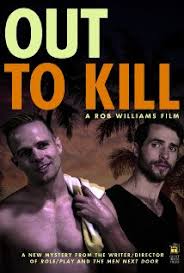
OUT TO KILL
US, 2014, 83 minutes, Colour.
Scott Sell, Tom Goss, Rob Moretti, Mark Strano.
Directed by Rob Williams.
A murder mystery with a twist. The main reason for seeing this murder mystery is that it is very much in the tradition of Patricia Highsmith’s Tom Ripley (and several film versions like The Talented Mr Ripley with Mark Damon, very effective television series with Andrew Scott).
The setting is a block of apartments in Tampa, gay residents. The film is designed for a gay audience, the range of characters, the camp atmosphere and dialogue, relationships…
But, the investigation by the private detective provides comparatively few credible murderers and one begins to suspect…
Shell

SHELL
US, 2024, 100 minutes, Colour.
Elisabeth Moss, Kate Hudson, Kaya Gerber, Brandon Keener, Estee Haim, Dustin Milligan, Arian Moayed,.Peter McNichol.
Directed by Max Minghella.
Somehow or other, the title for a horror genre has emerged, “Body Horror”. Recently, with Festival awards and Oscar nominations, “Body Horror” gained quite some respectability with the film, Substance, and startling performances from Demi Moore and Margaret Qualley.
And the dramatic question arises, in the context of actresses and ageing and possibilities for performance, are there any limits as to what can be done to prevent any loss of beauty, to counterbalance the onset of age? In Substance, this question was treated with great seriousness (not without some satiric moments), issues of ambition and identity.
Shell was released at much the same time but was overshadowed by Substance. And perhaps it is a difference between the two films, one Shadow, one Substance.
This time the focus is again on an ageing actress, Sam Lake, played by the always reliable Elisabeth Moss. She has had success on the television series, Hannah Had a Heart. And we are introduced to a somewhat satiric tone when we realise that the theme of the series was that the heart literally talked! So, throughout this film there is some sending up of media, television…
However, the opening is rather more sombre, again an ageing actress, this plot time played by Elizabeth Berkely (with memories of her career and Showgirls). Something has happened to her skin. She is scraping at it. Then mysterious presence in the room. And she is brutally killed.
The film has been directed by Max Minghella, an actor, and son of the Oscar-winning British director, Anthony Minghella. He and the screenwriter have opted for melodrama rather than drama, some tongue in cheek attitudes towards the subject and characters, and, at times rather horribly for the audience and gleefully for the filmmakers, indulging in some gore and splatter and the creation of horrific monsters.
And, behind it all is Kate Hudson, playing Zoe, the executive in chief of the Shell Company, not only beauty products but also opportunities for beauty sessions, surgery and medications. (The screenplay explains that while she looks like Kate Hudson in her 40s, Zoe is actually 68, an advertisement for her company treatments!). And Zoe takes a shine to Sam Lake, offering her all kinds of opportunities, and, in a rather minor way, it is a variation on Faust and the Devil, Zoe being ultimately quite diabolical and Sam selling her soul for a starring role in front of the cameras.
There are odd characters, especially the sinister Cornelius who does the brutal bidding of Zoe. On the other hand, Sam has a great support in her friend, Lydia, both of them eventually trapped and threatened by Cornelius. And, there is a subplot with Chloe, a young actress whom Sam had babysat, who auditions for the role that Sam had hoped for initially, who is a great disciple of Zoe – but…, literally horror of horrors.
So, while there is some substance in the themes, the option has been to move into dark and horror shadows.
- The title, the company, the beauty industry?
- Body horror, skin, the human shell? The pot boiling aspects of the scenario? Serious themes, fast treatment? Creature-monster, gore and splatter?
- Life in American cities, the 21st-century, affluence, beauty, the media, industry?
- The opening, the actress, Elizabeth Berkeley and her career, the growths, cutting them, the sinister figure, her death?
- Sam Lake and her story, ageing, family background, growing up, ambitions, her career, the television series, Hannah had a Heart, the talking heart, comments by fans? Her career on hold, call to the studio, waiting, the encounter with Chloe and her glamour, having babysat her? The interview? Chloe getting the part?
- The discussions with Chloe, the Shell Company, the reputation of Zoe Shannon? Treatments and possibilities, Chloe encouraging Sam?
- Sam and her hesitations, her motivation for going, the invitation to the party, meeting with Zoe, the meal, her flesh being served, the reaction?
- Kate Hudson Zoe, glamour, make up, allegedly 68 but looking younger? Her empire, her entourage, Cornelius and his sinister presence? Her befriending Sam, the bonding, the effect on her? Sam, the discussions with the doctor, his assurance, going through the treatments, success?
- Months passing, the new lease of life, going to the studio, getting the part, Zoe has her patron?
- The beginning of the changes, Sam and her friend Lydia, protecting her, upset, the continued manifestations, the final growths, her desperation, trying to cut them off, at the studio, rehearsals, performance, her vomiting the black blood?
- Been taken back, the confrontation with Zoe, Lydia helping, imprisonment? Cornelius and his presence, the car?
- Taking refuge with the doctor, the process, the removal of all the scars, his being killed?
- The mystery of Chloe, Sam confronting Zoe, the search? The revelation of Zoe as the monster, giant, the attacks, Sam attacked, the gore, and the final splatter?
- The comments that the film could have been more serious, like the body horror in The Substance? The option for the farcical treatment and the gory conclusion?
Regretting You

REGRETTING YOU
US, 2025, 116 minutes, Colour.
Allison Williams, Mckenna Grace, Dave Franco, Mason Thames, Scott Eastwood, Willa Fitzgerald, Clancy Brown, Sam Morelos, Ethan Costanilla.
Directed by Josh Boone.
Based on a novel by Colleen Hoover might be enough recommendation for audiences to see this film. Her novels have been highly popular, especially in the United States. There is an appeal to younger generations as well as to older readers.
There was a film version of It Ends With You. Now there is Regretting You. And early in 2026 there will be Reminders of Him. And Colleen Hoover fans will be glad to hear that there will be another film towards the end of 2026, Verity.
The initial appeal of Regretting You is with the younger audience, two couples, early 20s, their lives before them. Two are quiet. Two are eager extroverts. And then the revelation that one of them, Morgan, played by Allison Williams, is pregnant. And the father to be is Chris, played by Scott Eastwood (reminding audiences of his father, Clint). The other two in the group are the very outgoing Jenny (Willa Fitzgerald) and the quiet Jonah (Dave Franco). But, this is just a prologue.
The main action of the film in fact takes place 17 years later. Morgan is the devoted mother of her daughter, Clara (Mckenna Grace) and most of the action concerns this relationship. Morgan has been married to Chris all these years and he is still rather happy-go-lucky. Jenny has also grown up and is pregnant – and the revelation that Jonah who had disappeared 17 years ago has now returned and is teaching at the local school.
Will this simply be a pleasant family story? Or what will be the implications of the title, the regrets.
Needless to say, there will be some complications. Especially in the relationships of the older generation. But, the centre of the film soon becomes Clara, enthusiastic teenager, devoted to her father, often having emotional clashes with her mother, feeling her over-protective. She is very friendly with Miller (Mason Thames), both the same age, school experiences, bonding, ups and downs in their relationship. Then there is a car accident which turns everybody’s lives upside down – with a great number of regrets.
Depending on your life’s experience, there will be sympathies for some characters, irritation with the behaviour and attitudes of others. And, when things become rather dire, can there possibly be a hope of a happy ending? But who wants to leave the cinema feeling emotionally down? So, the ending is not without hope!
- The popularity of Colleen Hewitt’s novels? Adaptations?
- The Middle America setting, the small town of Dillon, 30,000+? A story of ordinary Americans?
- The setting, the youngsters together, School memories, the outings, Chris and Jenny, outgoing, the games, together? The contrast with Morgan and Jonah, more introverted? And the news that will Morgan was pregnant, Chris the father?
- 17 years later, Morgan married to Chris, their life together, domestic scenes, Clara, her age, admiration for her father, her relationship with her mother, her mother protective, mortgage retirement, not fulfilling ambitions, devoted to family?
- Jenny, Morgan’s sister, younger, Morgan helping bring her up? Her relationship with Jonah? His absence, return, teaching at the school? Jenny pregnant? The gatherings?
- The focus on Clara, independence, her father, her mother and the arguments? Her friendship with Lexi? The encounters with Miller? Discussions, his girlfriend? Their encounters, the attraction? Miller, moving the signposts for pizza delivery? Clara giving him a lift, meeting his grandfather, his grandfather’s comments? Smoking, lungs, illness?
- Clara and her devotion to Jenny, the birthday party, the making of the cakes? Clara and her texting Jenny? About Miller? About her mother? The sudden stopping?
- The accident, the deaths, the revelation of the affair? The impact on Morgan? The impact on Jonah? Not telling Clara? The funerals? Clara leaving, going with Miller, smoking, her mother tracking her on the phone, the confrontation? The further difficulties? Clara and her confiding in Lexi?
- Miller at the diner, his friendship with Ethan, the showing of the films, the dates, Ethan awkward but skilful with the camera, Lexi and the relationship with Ethan?
- The baby, Jonah and his devotion, suspecting that the baby was Chris’s? His reaction, separation, yet dependence on Morgan? The cave and the baby? Clara and the baby?
- Clara, with Miller, the discussions about sex, her inviting him over, the window, the condom, his care, her reluctance? Morgan finding her, the reactions?
- Morgan and Jonah, mutual support, the love from the past, decorations, the kiss, Clara finding them? Reaction?
- The drama, Clara and her puzzle about Jenny and the stopping of the texts, the car, her discovering the truth?
- The awkward birthday party, Morgan inviting Miller, Lexi present, tensions, Miller leaving?
- The happy ending, everybody together, Miller’s grandfather and the inheritance, the background of studies, Jonah teaching them, scholarship to school, Clara getting in, not telling Miller, his eventually getting in – and his showing of the film, happy times?
Napoli - New York

NAPOLI - NEW YORK
Italy, 2024, 124 minutes, Colour.
Pierfrancesco Favini, Dea Lanzaro, Antonio Guerra, Anna Ammirati, Anna Lucia Piero, Omar Benson Miller, Tomas Arana, Antonio Cata
Directed by Gabriele Salvatores.
The setting is 1949, the city of Naples, the poorer neighbourhoods, the still-lasting impact of the war and the German occupation, the freedom of the city, the American presence…
The film has three sections as indicated by the title. The first is Napoli. The second, indicated by the – is the voyage from Naples to New York. The third is New York city itself. And a story of Italian migrants after the war, the poor in steerage – and two young stowaways.
The film has been written and directed by Gabriele Salvatores, Oscar winner in 1991 for his film, Mediterraneo. The credits indicate that the screenplay is based on an earlier working script by Federico Fellini and. It has the flavour of Fellini’s earlier films, more straightforward than his later, highly imaginative work.
After an explosion in the city, little girl, Celestina (a persuasive performance by the very young, Dea Lanzaro) is lived orphaned with the death of her aunt. In the meantime, we are introduced to Carmine (Antonio Where are also very good and convincing), a shrewd orphan, some touches of English, always on the alert for some deals, especially with the Americans – and one extraordinary deal, the cook on a visiting American ship trying to sell a Jaguar cub with Carmine’s help. Which leads to something of a tangle, the two children on the boat as it sets sail – with the Captain, alcoholic, serious about discovering any stowaways but failing, charging his purser, Garrofalo to do with them once they are discovered. The purser is played by popular Italian actor, Pierfrancesco Favini.
In New York, Celestina wants to find her sister who had migrated earlier, Carmine helping, but their being separated. There is the sadness of the little girl wandering the city, finding that her sister is in jail for murder, standing by the quayside and then dropping into the water. On the other hand, Carmine shows some initiative, getting in touch with Garrofalo and his wife, using his influence with the Italian community, especially the local Italian press.
Italian migrants have a long history in the United States and the heritage of their being looked down on continues after World War II. But, there is a vitality within the community, rejoicing when Celestina is saved, bonding together with a feminist group to support Celestina’s sister in her trial, the portrait of the purser and his wife, childless, and the possibility of adopting the two – with a rather tongue-in-cheek ending, a card game, possible cheating, manipulating the outcome of a possible adoption.
An enjoyable glimpse of Naples in New York in the 1940s – but not without its undertones of sadness.
- The title and expectations, the first part in Naples, 1949, the second part of the voyage across the Atlantic, the third part in New York City?
- A film of the Italian memory, the experience of World War II, in Naples, occupation, the impact of the Nazis, the Americans, the welcome of the Americans, the effect on the people of Naples in the recovery after years? And bombs exploding, children orphaned, poverty and hunger, gangs and crime?
- The recreation of Naples in the late 1940s, the poorer areas, slum neighbourhoods, the buildings, the ruins, the streets, the church?
- The musical score, and the range of popular songs throughout the film, especially American, even West Side Story’s Somewhere?
- The situation, the bomb exploding, Celestina, her age, injuries to her aunt, the death in hospital, wandering on her own? How mine, his age, selling cigarettes, living on the street, the various cons and encounters? His speaking some English? The situation with George, going to the boat, the baby Jaguar, taking it, selling it, back to the boat, George taking the money?
- The return to the boat, Carmine wanting to confront George, Celestina, and the later, the boat going, climbing? Their hiding?
- The Captain, his drinking, checking for stowaways, his demands, relying on Garoffalo, the purser, the scenes of checking, below deck, the refugees, the sick man, his wife, hiding the children?
- The children hidden, and mine and is initiatives, searching, hiding, there eventually being caught, the reaction of Garoffalo, the captain not wanting to know? Carmine, the situation with the bucket of water, running away, but the two eventually helping, the kitchen, with George, jobs on the boat?
- Carmine, his plea for medication for the sick man, the man’s death, their bond with his wife, hanging herself? The effect?
- The challenge to George, Carmine and his testimony, George free?
- Ellis Island, the children getting lost, getting out, helped by George, the crate and landing, wandering the streets? Celestina, age, initiative, difficulties in language, having her sister’s address, wanting to be with her sister? Carmine using his initiative, questions, the phone book, the address, the information about the sister and her fate? The two being separated? The desperate search for each other?
- The information about the sister, Garoffalo, with Carmine, going to the prison, the interview with the sister, her murdering the man, her story? The possibility for the death penalty?
- Celestina, lonely, at the waterfront, the children playing, her disappearance, the rescue, revival?
- Garoffalo, his influence, the contact with the editor of the paper? The editor, wanting the news, exploitation and influence?
- Reviving Celestina, Garoffalo and his wife, no children, her tending to the children, enjoying it, the possibility of adoption? Celestina willing? Carmine, his wanting to think, his memories of his absent father, lack of family, wanting his own family when he grew up?
- The court case, the meetings of the feminists, outside the court, the protests and displays? The editor and his staff, urging them to exploit every situation? In the court, the story, Celestina and her simple story and its effect? The judgement, the sentence? The sisters reunited?
- The issue of the adoption, the possibilities for the two, that they would be brother and sister and Carmine could not marry Celestina in the future? The proposal for the card game, the whole community involved, spectacle, the two lining up, the observers, and audiences knowing that Carmine could conceal cards and frustrated opponents? Playing with Garoffalo, the cards, Celestina and the concealed cards – and the film ending? Leave it to the audience to wonder what happened – and what the audience would like to happen?
Carry on Cruising
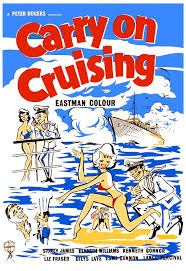
CARRY ON CRUISING
UK, 1962, 89 minutes, Colour.
Sid James, Kenneth Williams, Kenneth Connor, Liz Fraser, Dilys Laye, Esma Cannon, Lance Percival, Jimmy Thompson, Ronnie Stevens, Vincent Ball, Ed Devereaux, Anton Rodgers.
Directed by Gerald Thomas.
Beginning in the later 1950s and continuing into the 1980s, the Carry on franchise was very popular, some films quite hilarious, some rather pedestrian, and the rest somewhere in the middle. This one is rather mild, pleasantly in the middle, so to speak.
A number of the regulars are present but many absent including Joan Sims, Hattie Jacques, Charles Hawtrey, Jim Dale.
But, Sid James is present as the captain, in a wayalways the same, but always reliable and his performance fitting his character whether the captain of this cruise or Marc Anthony in Carry on, Cleo. And the two Kenneths are also present, Kenneth Connor as the ship’s captain, wanting romance, and showing his skill at doing impersonations. And Kenneth Williams does his usual with a wink and a nod and his familiar screwing up of his face.
There is some comedy with Esma Cannon, Australian actress long time in England and in several of the Carry on films. Two other Australians who worked in their early careers in the UK but then returned home to long Australian careers are Vincent Ball as the athletics instructor and Ed Devereaux as one of the officers.
This time the leading ladies are Liz Fraser and Dilys Laye – more straightforward in their romance and humour rather than innuendo.
A lot of slapstick as usual, a lot of puns and play on words, some of them very obvious but enjoyable nonetheless.
A carry on slightly entertainment.
Terrifier

TERRIFIER
US, 2016, 85 minutes, Colour.
Jenna Kanell, Samantha Scaffidii, David Howard Thornton, Catherine Corcoran, Matt McAllister, Pooya Mohseni.
Directed by Damien Leone.
The Terridier horror (somebody suggested they should be Gorror films) films have built up something of a reputation, the first appearing in 2016, a small budget modestly timed thriller, then, in 2022, Terrifier 2 with a running time over two hours. Then there was Terrifier 3 in 2024, also running over two hours, and a Terrifier 4 is in preparation. And, in 2024, David Howard Thornton who plays the title role in this franchise directed A Special Terrify a Christmas.
The films have been written and directed by Damien Leone, an editor and special effects producer and designer.
The original Terrifier, small-budget, a number of grisly killings and close-ups of gore, splatter and the brutality, sometimes staying on screen just some moments too long, other times cutting away, that gave the film something of a reputation and turned it into a cult movie leading to the sequels, with Terrifier 2 getting favourable reviews.
As regards Terrifier itself, the IMDbs succinct summary is clear: A maniac named Art the Clown terrorizes two friends on Halloween and everyone who gets in his way.
The audience sees Art the Clown getting dressed with his make up, going out on the prowl, accosting two young women at Halloween, going into the diner and doing mime processes with his face, some sinister, some happy, one girl alarmed, the other not. And he is ousted by the owner. Then, the abducting of one girl, then the other, the murder of the owner of the diner and his associate. The abducted girl seems to be the star of the show but is killed half way through, having phoned her sister to come to the rescue, then the pursuit of the sister, and several more killings.
Then, the police confrontation, shootings, taken to the morgue, the doctor of the morgue becoming victim because Art the Clown seems unable to die.
The screenplay does, in fact, work on very conventional lines in terms of plot development, introduction of characters, dispatch of characters – and the acting not particularly startling except for the strange Catwoman with the baby doll, some mania, played by Iranian born actor and transgender activist, Pooya Mohsen, who has the most humane of the scenes.
Clearly, a film that only horror enthusiasts would want to follow (and, initially, the comments on the IMDb were highly critical).
Die My Love
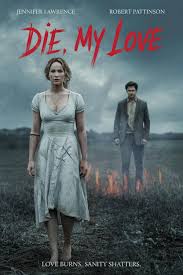
DIE MY LOVE
US, 2025, 119 minutes, Colour.
Jennifer Lawrence, Robert Pattinson, Sissy Spacek, Nick Nolte, LaKeith Stanfield, Kasmere Trice Stanfield.
Directed by Lynne Ramsay.
As the audience watches Grace in this disturbing drama, and thinking about the title, it would seem better as “Destruct, My Love” or, more accurately, “Self-destruct, My Love”.
This film offers a portrait of a woman breaking down, initially seeming in control of her life, arriving with her husband at their new home, her relationship with her husband, passionate, emotional. She is played by Jennifer Lawrence in a performance which becomes more and more intense as the film progresses. Her husband, Jackson, is played by Robert Pattinson, in love with Grace, their both rejoicing in her pregnancy, the birth of their child.
Then the film fills in some background about Jackson’s family, his father, ageing, touches of dementia, a cameo with Nick Nolte. His mother, Pam, offers a welcome performance by Sissy Spacek, ageing, living her memories, but disturbed, sleepwalking, but understanding and encouraging of Grace, caring, offering to mind the baby.
But, soon, erratic behaviour on Grace’s part, yet always devoted to the baby, carrying it, feeding it, constant care. We begin to see her mentally falling apart, isolated in the house away from neighbours, lonely with Jackson away for his work, craving his physical presence, but subject to mood swings, dreams and fantasies (especially for a neighbour who zooms past on his motorcycle and is later seen with his wife at a garage, the audience wondering whether he is real or exists in her imagination).
And Jackson brings home a dog who barks and barks and barks and whines – intolerable for the audience and intolerable for Grace. But, all the time the closeness between mother and child, even clutching the baby.
There are some flashbacks to Grace and Jackson courting, the wedding ceremony and even early indications of Grace’s erratic behaviour during the dance, leaving the wedding, strange behaviour back at the hotel…
Jennifer Lawrence has given some very strong performances over the years and is fully committed to portraying Grace, as a person, as a woman, as wife and mother, as lonely, experiencing post-partum depression, relationship with her husband becoming edgier, deteriorating. Jennifer Lawrence’s performance exposes Grace’s disturbed psyche, and at the end of it Grace is naked, laid bare, fulfilling the title, leaving the audience emotionally alarmed. A film for a female audience, a probing of the depression after birth. A film for a male audience understanding and empathy. And always disturbing.
- The title and expectations? Something of a “Destruct, My Love, Self-destruct, My Love”?
- The rural setting, the house and interiors, parents’ house, the countryside, flat open spaces, the roads? The town? The musical score?
- The impact for the film for a female audience? Pregnancy, post-partum depression? The impact for the film for a male audience, understanding, empathy?
- The introduction to Grace and Jackson, their age, the relationship, the house, looking it over, their passion for each other, manifestations? The pregnancy?
- The flashbacks to their meeting, the proposal, the wedding, Grace at the wedding itself, the ceremony, the dance, her frenzy, going out, signs of what was to come? The wedding night, the hotel and her behaviour? The flashbacks in the light of the development of her pregnancy and after birth?
- The background of the family, Harry, his age, memory, his death? Pam, the relationship with Harry, as Jackson’s mother, the gatherings, the other relations and their comments? Pam, concerned about Grace, her own sleepwalking, waking, dreams? Understanding Grace, visiting, the discussions, care of the baby? Audience response to Pam?
- The focus on Jackson, in the forefront, in the background, in himself, in the light of his relationship to his mother and father, his work, away from home? Love for Grace, concerned? The birth, love for the baby? The issue of the baby’s name? His absences, returning home, Grace and her more erratic behaviour, trying to understand, his patience, impatience?
- Grace, the complexity of her character, her mental health, when she married, the manifestations at the marriage and wedding night? Settling into the house? The birth and its effect? Her love of the baby, forever with it, carrying, tending, feeding it? Her plans for writing, the writer’s block, the visit to the party, the sympathetic comments, her reactions? Her wanting to be by herself? In the fields, crawling along the ground, her sexuality and masturbation? The distancing from Jackson? His exasperation? Her moods, behaviour, the hitting of the horse and the consequences? His bringing the dog, its continued barking, whining, on her nerves, eventually the confrontation, shootings, Jackson burying it? Driving, open the door of the car to get out?
- The cumulative effect for the audience of this portrait of Grace and her experiences?
- Her help from Pam? Having the rifle?
- The neighbour, Karl, and his motorbike, passing, seeing him with his wife, the approach, the sexual encounter, reality or fantasy?
- The final deterioration, naked, her past attitude towards her body, going into the forest, Jackson following, the flames (and the flames and forest fire at the beginning of the film)?
- The impact of seeing a person mentally and physically deteriorating – understanding, sympathy?
Malaga/ Fire over Africa
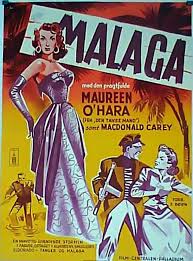
MALAGA/FIRE OVER AFRICA
US/UK, 1954, 85 minutes, Colour.
Maureen O'Hara, Macdonald Carey, Binnie Barnes, Harry Lane, Leonard Sachs, James O'Hara, Guy Middleton, Ferdy Mayne.
Directed by Richard Sale.
The first half of the 1950s saw many films like Malaga, technicolour adventures, touch of the exotic, often filmed on location as this one. The very popular matinee entertainments at studios like universal, star vehicles for such actors as Rock Hudson, Tony Curtis, Piper Laurie…
Maureen O’Hara had made a strong impression in the 1930s with The Hunchback of Notre Dame, with Charles Lawton, moved to Hollywood, substantial roles, technicolour dramas in 20th Century Fox, and a lot of adventures like Sinbad the sailor. However, many of her best films were with John Wayne, including The Quiet Man. (Danny boy in this film is played by her younger brother, James O’Hara, as James Lived in.)
MacDonald Carey, on the other hand, was in a lot of the pictures over almost 50 years but was most successful for 30 years on Days of Our Lives, 3027 episodes.
The film does stretch imagination with Maureen O’Hara, 33 at the time of filming, playing in the OSS agent undercover in Malaga, tough, something of a blend between Rita Hayworth and Jane Russell!
While the film plots are familiar, it is interesting to see the situation in the 1950s with North Africa, Morocco and Tangiers, smuggling, drugs, rival gangs, violence, money deals… Much the same as the 21st-century except that it 21st century has more exotic communications as well as more sophisticated weapons.
A colourful curiosity item.
Sands of the Desert
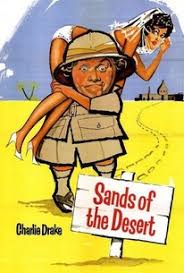
SANDS OF THE DESERT
UK, 1960, 92 minutes, Colour.
Charlie Drake, Peter Arne, Sarah Branch, Raymond Huntley, Rebecca Dignam, Peter Illing, Marne Maitland, Martin Benson, Eric Pohlmann, Judith Furse.
Directed by John Paddy Carstairs.
There is no major reason to see this film. Perhaps a special study of British comedy of the 1950s and 1960s means that it would have some kind of research value.
While the film was written and directed by John Paddy Carstairs, filming from the 1930s, many comedies including a number by Norman Wisdom, and Tommy the Toreador with Tommy Steele, it is certainly not one of his best. And, it is a star vehicle for the diminutive Charlie Drake, popular on television and the star of a few films.
Perhaps it was very popular at the time that he is very hard to take and, since it is at the centre of the film, the film is rather hard to take. He has one of those exotic scenarios, dithering employee of a travel firm sent to an exotic location where there has been sabotaged in order to set up a summer camp.
Number of British character actors appear in the supporting cast, most surprisingly the very serious always Raymond Huntley who must have been wondering what he was doing in this film. There is more than a touch of glamour with Sarah Branch. There are various agents, double agents, intrigue, possible dangers for Charlie Drake that is managing to escape them all with various pratfalls and plot complications which strain for laughs.
But, a good word for the young girl played by Rebecca Dignam, a mute, but very expressive and a relief to have someone sensible in the film.
Train Dreams
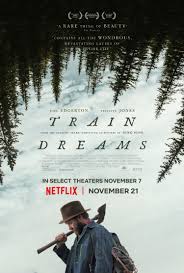
TRAIN DREAMS
US, 2025, 102 minutes, Colour.
Joel Edgerton, Felicity Jones, William H.Macy, Clifton Collins Jr, Alfred Hsing, Paul Schneider, Nathanial Arcand, John Diehl. Narrated by Will Patton.
Directed by Clint Bentley.
Here is an impressive piece of Americana. It is based on an award-winning novella of the same name by Dennis Johnson, 2011. It has been written and directed by Clint Bentley, with his collaborator, Greg Kweder, who were Oscar-nominated for the screenplay for the recent Sing Sing.
This is a film about a very ordinary American, Robert Granier, birth to death, from the 1880s to the 1960s, an extraordinary span of change. In most ways, Robert Granier could be considered to have lived what might be called “an unremarkable life”. As a boy, not knowing who his parents were, sent to live in a small town, accepted, growing up there, ordinary jobs around the town, the years passing, nothing particularly much happening.
By the time he is 30, he is working as a logger, chopping the trees, sawing them, out on locations, the railways, laying tracks, building bridges, but just one of the group of similar men, most rather introspective, the silent types, dedicated to their work.
Robert Granier is played by Australian Joel Edgerton, a fine performance, and because of his not being conversational, the film has a frequent voice-over, by actor Will Patton, who is able to articulate what the quiet Robert cannot: his ordinary life and work, encounters with his fellow workers, surprise at the prejudice against the Chinese and shock when the workers throw one of the Chinese over a bridge, later feeling guilt about this occasion, and, on a return home, encountering Gladys, Felicity Jones, at church, she initiating the friendship which leads to marriage, the building of a house, the birth of their daughter, joy for them both, but a surprising joy for Robert.
The film moves at a measured pace, offering the audience a lot of time for reflection, opportunities for a ruminative response, even offering moments that could lead to meditation on life and its meaning. And, there are the dreams, Robert’s happy dreams, after a destructive fire unhappy dreams and hauntings.
Out in the forests, there are some interesting characters, especially William H Macy as Arn, an explosives expert, friendly, chatty, a sad death but an influence on Robert.
There is some hope for Robert later in his life, an encounter with a nurse from World War I, Kerry Condon, who is billeted at one of those towers built to observe and prepare for wildfires. And, finally, after living in his house without any amenities for so many decades, he ventures into the city, the 1960s, space exploration – and the offer of a ride in a small plane, to see the world from a bird’s point of view, but an exhilarating experience which brings back, visually on the screen for the audience, his images and memories, the people who were influential in his life, reminding him and us of his unremarkable but humanely ordinary life.
- Popularity and awards of the original novella? The adaptation close to the spirit of the novella?
- A piece of Americana, in the 19th century into the 20th, into the 1960s? From birth to death? A life lived, well-lived? The transition from the 1880s to the 1960s, the title and the symbolism of the railroads, branching out, travelling communication and, at the same time, the destruction of forests, the laying of tracks, building bridges? The train dreams of the development of the United States?
- The photography, the forests, the railroads? The trees, the loggers work? The house and building it, the interiors? The various camps? The visits to the town? The photography of the fire? Going to the lookout? The later visits in the 20th century? The atmospheric and meditative score?
- The use of the narration, the tone of the voice-over, the voice-over important because of the silence of Robert?
- The range of dreams, Robert’s imagination, subconscious surfacing, happy memories, nightmare memories, imaginative fantasies about his wife and daughter?
- Robert’s story, from the 1880s to the 1960s? His background, scenes as a boy, no knowledge of his parents, living in the town, growing up? A silent boy, introverted? Growing up, work, moving to logging, the logging community, the experience of prejudice against the Chinese, the man thrown over the bridge, the effect on Robert and his consciousness, conscience? Going to church, Gladys and her approach, their keeping company, her saying it was a marriage and they need a ceremony to ratify it, life together, the birth of the baby, the joy of the baby, the details of life at home? His coming home in the happy reunions?
- The details of Robert’s life, seemingly unremarkable but ordinary, his quiet, reflections? The friendships amongst the loggers? The preacher and his story, the pursuer arriving and shooting him? African-American? Arn, his age, explosives expert, the failure, success, his friendship with Robert, the conversations, the tree hitting him, affecting his mind, his death, the burial and the words?
- Returning home, the train rides, the fire, its intensity, the burning of the house? Robert returning, loss, grief?
- Robert, at home, gradual rebuilding, life alone, the years passing? The encounter with Billy, getting old, his loss of memory, thinking Arn was still alive? And Robert getting older?
- His work, the carriage and horses, carrying the goods? His quiet life, the encounter with a large bear? The dogs becoming part of his life?
- Clare, giving her the lift, her job, nurse during the war, the death of her husband? Friendship, conversation, shared wisdom? Her work, the tower, and the view from the tower?
- The years passing, Robert’s simple life, none of the amenities and technical developments of the 20th century? The decision to go to Spokane, the 1960s, space exploration, the man calling out to take him into the air, the realm of the birds? His going on the flight, the experience, some transcendence in his life?
- In the flight, the opportunity for the images of his life to recur, the range of people in his life, the sadness and happiness in his unremarkable life? And his death?
