Displaying items by tag: Peter Malone's Movie Reviews
Moment, The
THE MOMENT
UK/US, 2026, 115 minutes, Colour.
Charli XCX, Alexander Skarsgaard, Kater Berland, Rachel Sinnott, Isaac Powell, Jamie Demetriou, Rish Shah, Ben Castle-Gibb, Michael Workeye, Rosanna Arquette,
Directed by Aidan Zamiri.
 The film has been described as a “Mockumentary”. This puts it in the vein of This Is Spinal Tap. While there is quite an amount of satire on the popular music industry with parody sequences, the portrait of the artist, in herself, with those in attendance, planning, interactions and betrayals, mean that there are serious themes underlying the whole venture.
And, it is a project of Charlie XCX, ideas and treatment, which raises a question of how much it is a vanity project or not.
And, the success of the film and its popularity will depend on the reputation of the singer, over so many years, her albums, success, the BRAT Summer, her personality in herself, her personality on stage and screen. Her fans will accept her. Those who do not know her as a singer (some knowing her for her song compositions for Emerald Fennell’s version of Wuthering Heights) may not find her as a particularly striking personality.
And, for those not caught up in life behind the scenes, some of the material may be quite uninteresting, some using the word “boring”,. And some of it might seem quite pretentious, self-indulgent.
The thing is that this is the story of Charlie XCX and her Essex origins, her success, her team, various managers, especially Tim, her falling out with Celeste, the importance of the business connections and promotions with characters played by Rosanna Arquette and the various British entrepreneurs linking up with promotion companies like Amazon, and a significant presence of the director of the concert film, played eccentrically by Alexandder Skarsgaard, enjoying the opportunity and, while Charlie herself is hoisted high, trying to direct her, in another scene, explaining how she might recite introductory lines, doing a much better impersonation of a diva than the singer herself!
And, the style of the film is very much television and streaming promotion, words, dates, neon signs et cetera flashing throughout the film all over the screen. Some of the editing is fast paced – but the more dramatic sequences rather slow. Ultimately, there is the staging of the concert in London’s Dome.
There are also the personal dilemmas of the singer herself and a particularly striking sequence where she goes to a skin specialist who begins to criticise her, her skin, her tensions, her inner self, then refusing to work with the singer. Upset, she leaves and encounters a rival star who enthuses about the specialist, then is forced to buy a whole lot of goods from the Centre, using her special BRAT credit card – leading to complete financial crisis and bankruptcy for the backers sponsoring the singer.
If this sounds interesting, audiences should have a look. If it does not sound interesting – it will not be interesting to watch.
Cold Storage
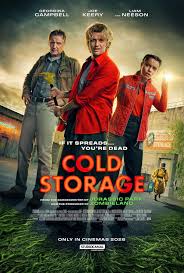
COLD STORAGE
US, 2026, 99 minutes, Colour.
Joe Keery, Georgina Campbell, Liam Neeson, Lesley Manville, Sosie Bacon, Gavin Spokes, Vanessa Redgrave, Ellora Torchia, Rob Collins, Richard Brake.
Directed by Jonny Campbell.
This film opens, surprisingly, in Western Australia. An indigenous man, Rob Collins, is placing a desperate phone call to a scientist in Rome. In his outback town, all the inhabitants have climbed desperately on to their roofs and their bodies have exploded. An explanation is suggested that when Skylab crashed into the ocean, bits of debris landed in the Australian desert. And, one of the pieces of debris was a container with a scientific experiment to be tested in outer space – and, now, it is beginning to wreak havoc in Western Australia.
This is very serious. And, in its way, it is. Liam Neeson and the scientist arrive in Australia with an associate, the mysterious fungus has escaped, destructive. Liam Neeson’s task is to collect the remnants, transport them to the US, bury them deep down below ground and there they will be contained forever. But, as science fiction and fantasy, not likely!
For those who enjoy a very serious science-fiction, mysterious and expanding, death-gripping fungi with the living dead, they will have to adjust their expectations. Liam Neeson, with so many action shows behind him, has moved into comedy with the reworking of The Naked Gun. Cold Storage is more in that vein, oddball characters, dangerous situations, farcical turn of events, some dialogue accordingly.
And, part of the surprise is to look at some of the supporting cast. Serious British actress, Lesley Manville, is in deadpan mode as Neeson’s assistant. And, suddenly, there is Vanessa Redgrave, a widow who is checking out the storage room containing her husband’s memories, getting caught up in the gunfire and all the strange action – because the US authorities thought the fungi threat was long closed, signed off the deep storage area for commercial purposes, not much really going on there and supervised by a former prisoner on nightshift.
The fungus is loose.
So, no spoilers except to say that the night guard, played by Stranger Things’ Joe Keery, a chatterbox klutz hero, is matched with a rather intrepid Georgina Campbell as a security guard – and they are caught up in all kinds of dangers, threats, escaping fungi on the loose, exploding bodies and a final solution to the crisis. Or is it?
- Science-fiction? Space exploration, consequences? But, signs-fiction parody? Satire? The blend of the serious and the comic?
- The title, the background with Skylab, experiments, the breakup, the desert town, Western Australia, the experiment, the fungus, the escape, the destruction, physical and human? The scientist – and her destruction? The officials, the capture of the sample, Kansas and the deep storage? Time passing, the visuals dying, authorities not taking notice? The sale of the plant, the storage centre?
- The plausibility of the central themes, Skylab, the experiments, the debris and the dangers? Containing the experiment, its getting loose?
- The opening, the indigenous man, the phone call, Western Australia, the scientist in Rome, his desperation, her arrival, with Robert and Trini?
- 18 years later, the storage plant, in the desert? Teacake and his job, from prison, his personality, chatterbox, klutz? Griffin and his dominance? Naomi, her job, supervision, reaction to Griffin, her husband and daughter, security, reaction to Teacake and his chatter?
- The signals, the decision to search, Teacake and his job, the reason for his nickname, Naomi and her daring, the picture, breaking the wall, going down, the discovery of the signals, the bridge?
- The transition to the information base, and, the phone call, discussions with Robert, the scepticism of the supervising officer and his dismissal of the theories from the past? Robert, waking, assessing the situation, going to visit Trini, the continued contacts with Abigail, the plan, the travel, the plane, with Trini and her son and the domestic conversation, the car, arriving at the plant?
- Play on zombie themes, the discussions, the humans exploding, the exploded courses? The clues and infection?
- The information, the discussions with Naomi, irritation with Teacake, their decisions, hiking, her husband’s arrival, the contamination, his threats? Griffin coming back, the team, stealing the television sets, and the infected deer? The gradual infection, the husband exploding? Griffin and the gun, the confrontations with Teacake?
- The plan, Robert, the bomb, setting the to do to install it, his disabling all the vehicles, Trini and her arrival, the confrontation with Griffin?
- Teacake rising to the situation, Naomi sensible, the timing, coming up the steps, the vehicles, the timing of the explosion, in the car, driving to safety?
- And, the horror at the end with the infected deer?
Louis Theroux: Inside the Manosphere
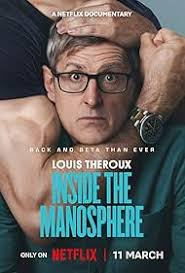
LOUIS THEROUX: INSIDE THE MANOSPHERE
US, 2026, 91 minutes, Colour.
Louis Theroux.
Directed by Adrian Choa.
Cinema-journalist, Louis Theroux, has been making interview documentaries for many years. He is a likeable screen presence, becoming involved in conversations, questions, sometimes taking a moral tone, but negotiating conversations with controversial characters.
This is especially the case here, an exploration, focused in 90 minutes only, on the manosphe, the realm of such influences as Andrew Tate and his brother, seen briefly in television interviews here, but influencing the male social media entrepreneurs, especially Justin Waller in this film.
The documentary offers an opportunity to listen to several of the influences, principally American, some British, who espouse theories about men, the fact that they are to be the leaders, warriors, protectors, knowing women better than themselves, controlling them, using them emotionally and sexually, stating that the 21st-century world has turned against men so that they have to assert their roles. And a phrase that is used is toxic masculinity.
It is interesting to see how Theroux approaches key men for the film, gets them onside, appreciates that they are getting publicity on social media and that often their interviews are being simultaneously screened on social media.
The English influencer is Harrison Sullivan, and the expected opinions, strategies, success, self-promotion, fans and disciples. He also reveals that he is principally interested in money, as he sells programs on social media for people to invest, train, make money – and his boasting of how much he has made. His attitude towards women is very dominating, even callous – although there are sequences with his mother who disagrees with him (but accuses Theroux himself of exploiting the situation is for financial gain).
There are also extensive discussions with Justin Waller, Miami-based, returning to his native Louisiana. He is married, believes in single monogamy that is only for his wife. His wife is interviewed, espousing the theory that their lives are in separate channels (she in the more subservient). Weller is quite boastful, has sumptuous offices in Miami, boasts of his connections with Donald Trump.
Also in Miami is Myron Gains, again with programs, particularly sexist and women that he has on his program, criticising them, dismissing them, especially on the issues of physical beauty and size… Again, connections with the MAGA movement.
In New York, there is Sneako, again with the Maga connections, extreme comments on women, the dominance of men, but moving into conspiracy theories in the world ruled by Satanists.
Particularly disconcerting are some of the sequences where fans come up to the influencers on the street, discuss principles of toxic masculinity, are rather adoring in their attitudes towards the influencers, and again, groups of young men, adolescent boys, approaching their as their idols.
At times, Theroux does insert some moral questions which the influencers sweetly comment on and avoid.
As with this kind of documentary, the interviews are left for themselves to make an impact on the audiences and audiences to decide for themselves.
Three on a Ticket
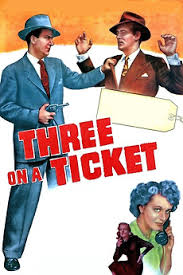
THREE ON A TICKET
US, 1947, 65 minutes, Black-and-white.
Hugh Beaumont, Cheryl Walker, Paul Brayr, Ralph Dunn, Louise Currie, Gavin Gordon, Douglas Fowley.
Directed by Sam Newfield.
The fourth in the series of five brief Michael Shayne detective films from the mid-40s. (In the early 40s there had been the series with Lloyd Nolan as Michael Shayne.)
By this stage, Shayne’s easy-going character had been established, his casual attitude towards his secretary and his secretary’s devotion to him, his intervening in cases, his being knocked out (twice in this film), the continual act that antagonism of police chief, Pete Rafferty, his friendship with the reporter, Tim.
The film opens with a man coming into his office and collapsing dead, shot, Shayne finding a ticket for storage at a railway station. Then comes a blonde wanting him to help her with her ex-husband and their divorce. Later, Shayne is abducted and threatened for the ticket. Then there is a government agent from Washington because the ticket leads to a container with a scientific development and possible espionage. And, at one stage, his secretary is also kidnapped.
Fast moving, Shayne not shot, gradually accumulating information, the rivalry with Rafferty, even Tim losing some faith in him, some unmasking of criminals, the shooting, the rescue of the secretary and a happy ending.
Fairly standard material but entertaining in its short running time and plenty of complicated plot.
Aquarians, The
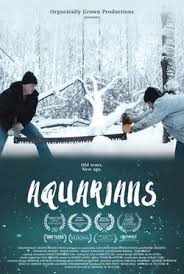
THE AQUARIANS
US, 2017, 103 minutes, Colour.
Chandler Massey, Shane Coffey, Tracey Fairaway, Richard Riehle, Melissa Nearman, Rebecca Stone Thornberry, James De Vita.
Directed by Michael M.McGuire.
A drama from middle America, winning an award as the best film of its year from the state of Wisconsin.
At the centre of the film is young seminarian, now a Deacon, sent on pastoral ministry to a parish. It is his home parish, his mother involved in the parish, the parish priest is ill, interviews the Deacon, commissions him to various functions, is seen in hospital, questioning the Deacon’s behaviour and decisions.
There are scenes of Church practice, the church building, iconography, his presence with the congregation, administration of the sacraments, especially at mass. A parishioner is critical, comes to him in confession, wants to open up about his homosexuality, is dissatisfied with the Deacon’s response.
The Deacon’s brother has long since left church practice and is critical of his brother. They have long discussions about the nature of priesthood, the Deacon’s motivations, questioning his decisions, putting him in situations with drugtaking, with girlfriends, the film raising issues about seminary formation in the US, criticisms, the need for discernment of vocation, a commitment to ministry.
The ending of the film has the seminarian deciding to go back to the seminary, discuss with the Bishop, get on the bus – but he gets off the bus, returns to his brother, leaving it to the audience to imagine the future to the audience.
- The title, astrology, water?
- Wisconsin, the locations, the town, homes, the church, hospital? The landscapes, winter, lakes and ice? The musical score? Religious themes?
- The background of the Catholic Church,, affirmation, critique?
- Church practice, the church building, iconography, the star, Daniel’s mother, the parish priest, his presence with the congregation, the Deacon, administration of the sacraments?
- Daniel story, his family, the group brothers, Chris dying, the other two left, Daniel taking the blame, making his brother take the lift which crashed? His going to the cemetery, motivation, completing the course, ordained Deacon, how sure of his vocation? Supplying the parish, discussions with his mother, with the parish priest, affirmation challenge, meeting up with Jake, the distance between them? His past work, the sacraments, Eucharist, confession? Moving toward ordination?
- The parish priest, his long service, his attitudes, personality, sick, giving commissions to Daniel, urging him on?
- His mother, her hopes, the discussions? Her place in the church?
- Jake, younger, the past, his talent, taking the blame for his brother’s death, his life alone, drugs, sexual relations, loss of faith, critique of the church, his ideas? And the parties? The issue?
- The encounter with the teacher, his memories, borrowing the sore, cutting the wood, taking it to the fishing hot? And the end?
- The suspicious parishioner, his wife, coming to the church, his looking on Daniel, his words, asking to go to confession, the confession, his homosexuality, Daniel’s response, how sympathetic, how helpful? The effect on the man afterwards?
- The girls, in themselves, Chris’s girlfriend, the years passing, her lesbian partner, socialising, the discussions, at the party, with Daniel, provocative, Daniel’s response?
- Danny and Jake, the discussions, religion, priesthood? Daniel exhorting Jake?
- The party, drugs, testing Daniel, his taking the drugs, drinking, high, the sexual provocation, issues for his vocational choice?
- The ice, fishing, the brothers fighting on the ice, going through the ice, Jake technically dead for some time, saving Daniel? The effect on each of the consequences?
- The aftermath, Daniel leaving Jake, going to the bus station, going back to the seminary, discussions with the Bishop? Getting the bus, returning to Jake? No ordination? Or decision for ordination?
Dolce Villa, La
LA DOLCE VILLA
US/Italy, 2025, 100 minutes, Colour.
Scott Foley, Violante Placido, Maia Reficco, Giuseppe Futia, Simione Luglio, Tomaso Basili, Daniel Panzironi.
Directed by Mark Waters.
Most people probably like nice films. However, especially amongst bloggers, there is a demographic who have an allergy to nice films – except that they watch them, say they start to watch them and then stop, and feel compelled to carve up the film on the IMDb et cetera.
This is definitely one of those films. You can tell by the title. There is very little Dolce Vita of the Fellini-kind in this film.
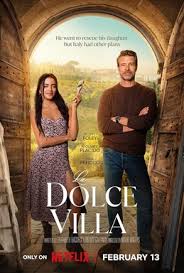
Young woman loves living in Italy, can buy Villa for one euro, Father disapproves. He comes to Italy, observing, gets caught up, interactions with the Mayor, collaborating with his daughter, becoming an Italian, an American abroad.
The film was directed by Mark Waters, who has directed a lot of nice films, especially at the beginning of his career, the director of Mean Girls.
- The title? Memories of la Dolce Vita? The pleasant variation?
- The setting, the town, the streets, offices, restaurants, the old houses, the beautiful countryside? The musical score? And the finale with Volare…?
- The story of Eric Field? Widower and memories of his wife? Work as a chef, transferring to business, his connections, skilled advice? His relationship with Olivia? Broken? The contact, his coming to Italy, and happy memories of Italy? His concern about his daughter?
- Olivia’s story, age 25, wanting to be independent, memories of her mother, in Italy, the scheme for the houses, paying one euro, the deposit, the renovation of the house, a recognition by the government?
- Her father interfering, continually talking, the encounter with Francesca, the mayor, her management, the scheme, Matteo her assistant and wanting the grappa, the advice from Bernardo, the personal relationship? The visit to the various houses? The choice, the legal situation?
- The scenes of the renovation of the house, exhilaration, design, equipment, the plan for the kitchen, the cooking school? Nino, his skills, personality, friendship? His discussions with Olivia, her skill in design, suggestion of the apprenticeship, her going to Rome, not telling her father?
- Eric, financial help, becoming more involved, the days passing and his staying? The effect on him, communication with Olivia, with Francesca, the visit to the mansion and the picnic, the romance? The effect on each?
- The town, the people working in the offices, the three elderly ladies sitting in the square, hostility to Eric, a gradual mellowing? And their becoming involved with the cooking school?
- Giovanni, Chef, training in Rome, returning home, the special meal for Francesca, Eric working with him, admiring his abilities? The relationship with Olivia?
- Bernardo, his efficiency, infatuation with Francesca, his being upset with her romance, checking out the descendants and their claim to the house? Eric and Olivia accepting this, the deal for repayment?
- Francesca, everybody searching the archives, finding the documents, the difference between and e and the i, reclaiming the house, and the young couple finding a dilapidated house – but deciding to renovate it?
- A film that is consistently nice, described as cute and charming, or serious audiences thinking it superficial? But its achieving what it set out to do, a nice entertainment and romance?
Like Father
LIKE FATHER
US, 2018, 96 minutes, Colour.
Kristin Bell, Kelsey Grammer, Seth Rogen, Jon Foster.
Directed by Laura Miller Rogen.
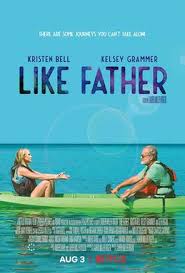
The continuation would be, like father… like daughter rather than son! And this time the father is Frazier, Kelsey Grammer, and daughter is Veronica Mars, Kristin Bell. And, in the supporting cast, Seth Rogen whose wife, Laura Miller, is the director.
This is a comedy with serious intent. It is about workaholics, the daughter almost symbiotically attached to her phone, even during her wedding ceremony. Then she discovers her estranged father at the wedding, their drinking together, discussing together, decision to go on a Caribbean cruise together – where they meet some couples.
There are all kinds of misunderstandings, a continued dependence on the phone, clashes between father and daughter, the discovery that he was a workaholic but is now bankrupt, her suspicions about him.
But, many workaholic audiences will be able to follow the details of the interaction with some empathy – and discover that some kind of understanding and reconciliation is possible.
- Usually, like father, like son? Now like father, like daughter?
- The television popularity of the stars, Veronica Mars? Frazier?
- The touch of romantic comedy, the passengers thinking Rachel and Harry were married, rather a living reconciliation between father and daughter?
- Rachel, her world, business, ambitions, the cheesemakers and the interview, her boss? Always on the phone, the deals? The engagement, to Owen, the buildup to the ceremony, bass officiating, everyone at the altar, Rachel and her phone, putting it in the bouquet, its falling out? Her hesitation, confronting Owen, leaving? Upset, the honeymoon cruise booked? Her drinking?
- Harry, his presence at the wedding, Rachel seeing him, the clash, his absence from her life, the marriage, her birth, the early years, his being busy, absent, not returning? Disappearance? Her resentment? They drinking together?
- On the ship, waking up, her planning to leave, the air ticket? Being persuaded to take part in the ship entertainment? Yet her continually being on the phone?
- The friends of the table, the gay couple, their plans for adoption, friendly? The newly married divorcees, African-American, cheerful? The elderly couple and their golden anniversary, cheerful? At the table together, the conversations, at the entertainments, the games, the eventual karaoke?
- Harry, genial, gradually revealing his story, Gabe as his friend, working together, the house, Gabe and his illness, his death? The ashes? Wanting to reconcile with Rachel?
- Rachel, some happiness with Harry, the compere and the games, listening to the story, her changes of moods, realising the pressures on her life, the continued phone calls? Rehearsing the karaoke, the elaborate performance, crowned?
- Jamaica, the tour, the scenery, happiness?
- Her finally accepting the truth, Gabe’s ashes? The gay couple calling their adopted child Gabe?
- Back at New York, her going to the office, going home, taking time off? Harry and his return to California, the couple helping him move? Rachel turning up, and happy reconciliation?
Hoppers

HOPPERS
US, 2026, 104 minutes, Colour.
Voices of: Piper Curda, Bobby Moynihan, Jon Hamm, Kathy Najimy, Dave Franco, Eduardo Franco, Isiah Whitlock Jr, Meryl Streep.
Directed by Daniel Chong.
Hoppers is a Pixar entertainment. Audience expectations are usually high with the announcement from Pixar, memories of such films as Toy Story, Brave, Inside Out… And Hoppers open to strong box office, audience enjoyment and critical praise.
As with many Pixar films, there are serious themes. The tone is set with the introduction of Mabel at school, upset at student pranks leaving a turtle on its back, her stealing all the animals to free them but caught, sent home, her mother leaving her with her kindly grandmother who sits with her on a rock by a lake, contemplating, smiling, gradually hearing the myriad sounds of animals, birds, insects. So, we begin with a conservation frame of mind.
Then, Mabel is 18, supposed to be studying at college, but stridently campaigning for animals and, especially, against the Mayor, Jerry, who is planning to destroy the animal habitat that she loves and build a Beltway. So, we are invited to have an anti-business-development frame of mind.
But, Hoppers is much more complex than this confrontation. The nice Dr Sam at college is developing all kinds of technology – and, Mabel is able to transfer her mind and voice to a mechanical recreation of a Beaver. (Well, we are in an age of AI development!).
We spend a lot of time with this mechanical Mabel with the animals, especially beaver King George, a leader, and gradually meeting a whole range of animals, who have been banished, driven away by Jerry’s sound waves in the trees, but with Mabel, eliminating the repellent sound, they are able to come back. We are on side.
And, of course, we are against Jerry, absolutely smug, blowing up the habitat, clashing with Mabel. But, the animals fight back against Jerry. Even a large shark leaps out of the water onto his car to get rid of him!
The voice talent in the film is quite extensive. Piper Curda voices Mabel, Bobby Moynihan King George. But, in the supporting voices, we have Jon Hamm as Jerry, Kathy Najimi as Dr Sam, Dave Franco as the Insect King and, of all voices, Meryl Streep as the Insect Queen.
And, will it be a happy ending! Of course, but not before having to sort out Mabel’s deception of the animals, reconciliation, the hounding of Jerry and his conversion, and the message, important for audiences but, especially, younger audiences with social concern, progress is made not by confrontation but by dialogue and collaboration. Progress can win – but nature must also win.
- The tradition of Pixar entertainment? Comic themes, serious themes?
- The title, expectations, animals in nature, beavers, technological experiments?
- The style of animation, the characters, delineation, backgrounds? Special effects? Editing and pace? The musical score, the final song?
- The introduction to Mabel, at school, sympathy for the turtle, the reaction of the children, against her, her stealing the animals, caught, her mother, sending her to her grandmother, the kindly grandmother, sitting on the rock, the silence and contemplating, hearing all the animal sounds?
- The initial issue of nature, attention to nature, preservation?
- Mabel grown-up, campaigner, Jerry, Mayor, the building of the Beltway, destroying the animal habitat? Mabel and protests, strident, eager, going door to door, no help, the kindly old man, but his finally giving her the grocery list?
- Dr Sam, her role at college, Mabel’s studies, suffering from campaigning? The discussions with Dr Sam? Her experiments?
- Mabel, her intervening, using the experiments, her brain, creating the Beaver, her chatter, encountering George, king, the bonding, their working together, the saving of the animals, the countering of the Beltway?
- The range of animals, their personalities, the voice talent, Insect Queen, Titus, the members of the council? And Diane, the shark?
- The strategies, Jerry, the confrontations, his having the sounds in the trees to scatter the animals? Mabel taking them down, Reconstruction? The attempts against Jerry, the shark? Jerry and his personality, determination, his workers? The initial blowing up of the barrier? The later attack, the fire, the destruction, moving towards the city?
- The animal politics, the death of the Insect Queen, the butterfly, Titus, his taking over?
- Mabel, the truth, the disillusionment, working with Dr Sam, the experiments with Jerry, confrontation, the animals, communication, the face? The blend of the serious and the comic episodes?
- The buildup confrontations, Titus, Jerry and his change of heart, Dr Sam and her work, the strategies, using the technology, communication with the animals?
- The final resolution, the fire, extinguishing, Jerry and his change of heart, moving the Beltway, the restoration of the habitat? And Mabel and her final communication with George, the phone and facial recognition and voice?
- The blend of the serious concern for nature, progress and the need for dialogue rather than confrontation?
Othello/ 2026
OTHELLO
UK, 2026, 165 minutes, Colour.
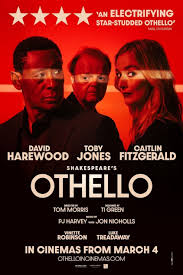
David Harewood, Toby Jones, Caitlin FitzGerald, Vinette Robinson, Luke Treadway, Tom Byrne, Peter Guinness, Rose Riley.
Directed by Tom Morris, Tim Van Someran.
In theatre history, Othello stands with Shakespeare’s King Lear, Hamlet, Macbeth, as the four great tragedies. There have been many film versions including Orson Welles, Laurence Olivier, Anthony Hopkins, Laurence Fishburne, David Oyewolo… and very interesting portrayals of Iago, Michael McLemore, Bob Hoskins, Frank Finlay, and, especially, Kenneth Branagh.
For centuries, this play has been acclaimed as Othello’s downfall, the downfall of a great man, victim of a character flaw, in Othello’s case, susceptibility, especially to jealousy.
Looking at this filmed theatre piece, emphasis on dialogue and performance rather than setting and staging, it looks and sounds now far more like the Tragedy of Desdemona, the woman, victim of domestic violence, victim of Othello’s jealousy and rage, wounded pride, Desdemona is misunderstood, undervalued. But this is also the tragedy of Emilia, again a forthright character, being deceived and used by her malicious husband, Iago.
This version emphasises the unsubtle character Othello. David Harewood has a strong presence, deep baritone, poise as a general but this gradually disintegrating as he is deceived by Iago. He is the straightforward, successful soldier taking Iago for granted, then his exuberantly joyful acceptance of love from Desdemona.
This Iago of Toby Jones (unlike the interiorly devious Kenneth Branagh in the 1995 version) is military, ambitious, thwarted, racist, going step by step on his destructive path, not really interiorising his ploys, but taking advantage of a situation as it comes, not so much a well-thought-out plan, but capably exploiting each opportunity as it arises.
Desdemona is a strong-minded woman, her own woman, forthright, loving, in no way suspicious, equal to Othello, taken aback by his jealousy, loving but defiant to the end. This is a very strong performance by Caitlin FitzGerald (though her sometimes noticeable American accent is a distraction). Desdemona is an ideal contemporary woman but still one who is a victim of-taken-for-granted masculine superiority which becomes, in tragic fact, misogynistic murder.
And, in the latter part of the play, Emilia, a fine strong performance from Vinette Robinson, becomes a vigorously fearless facer of facts, who speaks out in Desdemona’s defence, shaming Othello, defying Iago. But she is also a victim of fatally masculine violence. Toby Jones’ interpretation of Iago is inherently misogynistic towards both Desdemona and Emilia, as well as denigrating Bianca (who is also used by the otherwise charming Cassio).
Using some perspectives from the psychology of Carl Jung, this interpretation of Othello and Iago is that they are military men in war and in the alleged peace times, direct, living in the present, using their own logic and seriously deficient in awareness of possibilities in life and relationships – or becoming trapped in the deadly conspiracies – jealousy for Othello, ambition, position and status for Iago.
In the 21st century, the title can be Desdemona.
Floating Dutchman, The
THE FLOATING DUTCHMAN
UK, 1954, 76 minutes, Black-and-white.
Dermot Walsh, Sidney Tafler, Mary Germaine, Guy Verney.
Directed by Vernon Sewell.
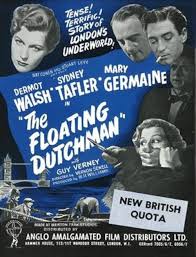
Not essential viewing but a small, entertaining thriller, a supporting feature from the British industry in the mid-1950s. The Floating Dutchman this time is a courier whose body is found in the Thames. Police investigate, second an undercover officer to infiltrate the gang and find the murderer.
Dermot Walsh is fairly stolid as the hero. Sidney Tafler, in many of this kind of film and later television series, is much better, a touch more showy as the owner of a club, organising the diamond trade. There is a touch of romance with a woman who works in the club. There are various underlings with sinister backgrounds. And there is an old diamond jeweller in London, a fence for all the diamonds, ultimately trying to protect himself.
Familiar material but a glance back at British filmmaking in the mid-20th century.
