Displaying items by tag: Peter Malone's Movie Reviews
Runs in the Family
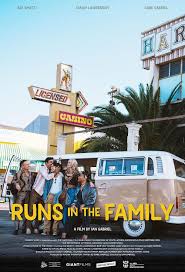
RUNS IN THE FAMILY
South Africa, 2023, 107 minutes, Colour.
Ace Bhatti, Gabe Gabriel, Cleo Wesley, Lauren Loubser, Diaan Lawrenson, Rob van Vuuren.
Directed by Ian Gabriel.
As the title suggests, this is a film about family. But, it is very much a different kind of family. The setting is South Africa.
The focus is on River, in his early 20s, at birth the girl, discerning a male identification, beginning the transition, needing money for final surgery. His father is of Indian background, tailor, but with a conman past. River’s mother, Monica, has been absent for most of his life, a white South African and former flight attendant.
River, now identifying as male, bonds with a close friend, Drag Queen, Ollie. They do a pod cast as they travel around in their car with many followers. And, there is a world competition, South African addition of Drag Queen performances coming up. River and Ollie hope to win, the proceedings for the surgery.
But there is a dramatic situation, River’s father contacted by Monica, in an institution and wanting to be freed, the only legal person open to do so, River. He is unwilling to go but changes his mind.
The film then becomes a road film, bonding between father and son, shared interests, generational differences, having to cross the border illegally, getting help from a friendly passerby, getting Monica out of the institution, back under the fence and back to the city.
Monica has to get used to the trans-situation, seemingly very friendly. And memories of the past, especially with their friend Stan involved in an insurance scam.
But, there is a difficulty, Ollie having an injury preventing performance at the drag show, the decision for the father to take his place, the rehearsals, dress fittings, make up, and the actual performance which is a great success – but their not winning.
It might seem that the film would end there but there is another 20 minutes or more, quite some complications in the plotting, harsh revelations about Monica, some truths for Stan, some truths for River, especially about Monica and her using him, but the final truth coming out and happy ending.
That is played by Gabe Gabriel, writing the screenplay, drawing on his own life, and the film directed by his father, Ian Gabriel.
Many audiences will watch the film because of the Drag Scene – and it is in the tradition of quite a number of films, most notably, To Wong Foo, With Thanks for Everything, Priscilla Queen of the Desert, La Cage aus Folles, The Birdcage, Victor/Victoria, Flawless, Connie and Carla, Kinky Boots, Torch Trilogy.
- A South African story, universal story, father-son, transgender, drag shows?
- The settings, the towns, shops, bars, the drag scene in clubs, the South African countryside, the institution, bars and motels, the final show?
- The musical score, the range of songs, especially as background for the drag performances?
- The credibility of the situation, the writer-actor and his own trans story, writing the screenplay, his father directing?
- Title, the family situation, river, growing up as a girl, indication of male identity, transitions, saving money for surgery? His relationship with his father, Indian background, conman friends, Stan, bringing up his son, supporting him? The absent mother, Monica, 20 years absent, not wanting to be a mother, her phone call, wanting to be rescued from the institution, River being blood relation the only one to sign her out, his unwillingness, change of heart?
- River and travelling with Ollie, the pod cast, the visuals, the feedback, the clientele?
- The Drag Scene, River and his friendship with Ollie, the camp style, the club, the dancing, the chatter, the other members? The prospect of the competition, the big prize money, to contribute to the surgery? The planning, choreography? Ollie and the injury? The solution with Varun having to step in, being willing, the rehearsals, the older man and stumbling, the dress fittings, the make up, the performance, the zest? But not winning?
- River and his unwillingness to help his mother, bitterness towards her, her absence? Change of heart, the drive, the conversation, the music, the different generations? Overnight, the shared room, booking the second room for Monica, going to the bar, the father dancing, their being ousted? The later return, Monica and her flirting, River and her affirming him, accepted?
- Getting the lift, Shaunice and her reaction to River, her own problems, listening to the story, giving them a lift, intervening, helping?
- The border, the mistake, trekking, under the wire, at the institution, the receptionist reluctant, trying persuasion? Eventually the fake document, River signing, Monica mistaking Shaunice for River, accepting the reality? Under the fence and back to town? The conversations, the rehearsals?
- At home, Monica going to the bar? The competition day, the celebrities arrival, the drag show, the range of performances, applause, River and his father, the strong performance and acclaim, not winning?
- River, applauding, his resignation? River and his money, gone, the bank account cleared? Monica and her disappearance? His father, confronting Stan, the denials, seeing the hearing, his return, confronting Stan and Monica?
- The revelation, the documents, Stan and his wanting a family, the past escapades and the cons with the father and Monica, the insurance money?
- The aftermath, River and Ollie and their love for each other, River and his father, the renovated store, Stan giving it to them and taking some money and disappearing? Monica left stranded?
- The blend of the serious theme, comedy, a road film, the drag scene?
Twisters
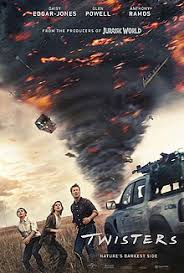
TWISTERS
US, 2024, 117 minutes, Colour.
Daisy Edgar-Jones, Glen Powell, Anthony Ramos, Brandon Perea, Maura Tierney, Harry Haddon-Paton, Sasha Lane, Darrell McCormack, David: Corenswet.
Directed by Isaac Lee Chung.
By a happy twist of fate, Twisters is an entertaining crowd-pleaser. Anyone who buys a ticket, keen to see tornadoes in action as well as the human efforts to chase and combat them, will find a multitude of twisters here. The special effects of the tornadoes themselves, the visuals of their destructive force, the ruins and aftermath, are quite spectacular. And the editing keeps the action running at a very brisk pace, often edge-of-the-seat adrenaline pumping.
1996, the original Twister was a holiday entertainment, much the expected theme, two experts, despite divorce proceedings, working together to chase the tornadoes. The director of that film, Jan de Bont, had not heard that there was to be this kind of sequel, making a comment that a sequel could only succeed if the tornadoes were bigger. The filmmakers this time have absolutely taken notice of that observation, not only are they bigger, there are many more of them.
But, the screenplay here places quite a lot of emphasis on the science – whether the audience understands the details of it or not. In fact, the film opens with a young enthusiast, Kate, Daisy Edgar-Jones, leading a team that hopes to release chemicals into the eye of the twister to dissipate its force. There are some scientific explanations. But, the experiment is a tragic failure, the deaths of several of the participants.
Then we go five years later. One of Kate’s former colleagues, Javi (Anthony Ramos) enlists her help with his experiments, placing tracking machines around the tornado in order to get a three-dimensional reading. Again, scientific explanations. By contrast, there is Tyler (a grinning Glen Powell more gung ho at first and he was in Top Gun Maverick), a so-called tornado wrangler, with his own team of scientists (who, In All clothes, do not look like it), and filming his exploits, taking tornado tourists out to witness the phenomena, and a British journalist joining. in
Obviously, there is going to be rivalry. And there is. However, there are some jaw-dropping sequences of the tornadoes and their force, extraordinary destruction and ruin with the challenge to Kate and Tyler and Javi as to whether they pursue their research or go to help people in distress. (And in the background there are themes of corporate exploitation of those whose homes of livelihoods have been destroyed.)
In fact, Kate retires from the chasing and goes home, her mother urging her to do more research, Tyler tracking her down and collaborating – after they go to rodeo, also a tornado victim. Already magazine articles are being headed “whirlwind romance”! At first it is a battle of the sexes, but very strong on equality between men and women, and then scientific collaboration. Actually, there are some sequences during the final credits when audiences are stampeding for the exits, which actually show further plot developments.
Twisters sets out to be an action-disaster holiday entertainment. It succeeds well.
- The reality of tornadoes, twisters in the United States, the Southern States? The weather phenomena? The impact on towns and populations, on the countryside?
- The 1996 film and its popularity? Continued films on twisters? This sequel, many more tornadoes, much more devastation, much more scientific speculation, tornado wrangling, tornado tourism, experiments to understand tornadoes, physics and chemistry?
- The film in the disaster movie tradition? Action, adventure, characters, crises?
- The opening, Kate and her team, the scientific background, their personalities and interactions, the dangers of the tornado, the attempt to release the chemicals, winds, vehicles overturned, characters blown away? Kate and her relationship with Jeb, the driver, saving her under the bridge, his being blown away?
- Five years later, Kate New York, her work, observation of storms? Javi and his visit, his story, the Army, experiments, technology to observe twisters, three dimensions? His sympathy, his participation in the early experiment and surviving? Asking Kate to come for a week?
- Kate, meeting Javi’s team, professional, academic backgrounds, Scott and his hostility to her, his criticisms of her? The connection with developers and the later consequences? The chasing of the tornadoes, Kate and her expertise, the encounter with Tyler, rivalries, her missing out and Javi’s response?
- Tyler, tornado wrangler, big grin, cowboy, his team, vehicles, theyir not looking scientific, their passengers for tourism, the risks of the dares, the British journalist, observation, anxious (bounced around, later sick, his seatbelt)? The audience later realising that they were scientific and skilled despite appearances?
- The tornado sequences, the dangers, the twisting, the air, the wind, blasting vehicles, the placing of the machines for the three-dimensional picture?
- Kate, her background in the state, Tyler underestimating her, the later going to the rodeo? The awareness of the towns in danger, the decisions to go to help, the visuals of the twister attacking the towns, the people, the aftermath? The businessman and his exploiting the survivors, allegedly with financial help? Kate and a sense of disillusionment with Javi and his team?
- The destruction of the rodeo, the audience enjoying it, Tyler and his saying he used to ride the bulls, the wind, trying to rescue people, the movie theatre, survival, Tyler holding onto his associate? Kate going out, the experiment with the chemicals? Their rescuing her?
- Kate, distance from her mother, going home, settling in, her equipment, the model village, her looking at her notes? Tyler tracking her down, interest, explanations? Her mother inviting Tyler to stay? Their working together, working out the chemicals, rain precipitation, lessening the impact of the twister?
- The final opportunity, the tornadoes, going out, the battering, explosions, the dangers?
- The final success, the release of the chemicals, lessening the impact of the twister?
- Kate to get back to New York, Tyler the airport and his truck and its ability to dig into the ground and stay, the credits sequences and the photos, the clips, the development of the plot, working together, success, romance…?
Something in the Water
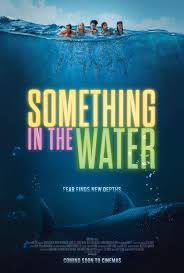
SOMETHING IN THE WATER
US/UK/France, 2024, 86 minutes, Colour.
Hiftu Quasem, Natalie Mitson, Nicole Rieko[Setsuko, Lauren Lyle, Ellouise Shakespeare-Hart.
Directed by Hailey Easton Street.
Yes, the sharks menacing story once again. However, this is a small film, a small cast, some personal drama, and menace in the open sea, including sharks. It is very low-key in comparison to most of the shark films.
The first 20 minutes introduced to central characters, Meg and Kayla who intends to propose to Meg. They are accosted on their way home, homophobic slurs, and Meg is bashed as Kayla insults the group.
A year later, their friend, Lizzie, invites her friends, including Meg and Kayla to come to a Caribbean island to celebrate her wedding. Meg and Kayla have not met since the bashing and Meg is very reserved, fairly hostile.
There is a celebration of a meal in preparation for the wedding and the group goes out in a boat to an island, three of the women leaving Meg and Kayla on the beach to reconcile their differences. When they all team up again, one of the women in the water suffers and attack, a gashing wound to her leg, significant bleeding. They decide to return to the mainland in their small boat which they have previously criticised as inadequate. And it has only one lifejacket.
The rest of the film, it is diminishing numbers of the friends, the wounded girl dies and they let her go out to sea. Lizzie, the future bride, reveals that she cannot swim so she is given the lifejacket. Kayla then decides to swim for help. Another of the women is taken by the shark. A boat passes but does not notice the two women clinging to the lifejacket.
Meg sleeps during the night and Lizzie then disappears sacrificing herself for Meg. Meg finds a rock outcrop, is circled by a shark, the tide rises, Kayla arrives just in time to rescue Meg.
This is very much a women’s film, writer-director, cast, women’s issues and interests.
Year of Fury, The/ L'Ano de la Furia
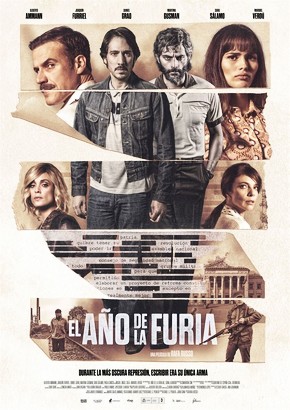
THE YEAR OF FURY/ L’ANO DE LA FURIA
Spain/Uruguay, 2020, 99 minutes, Colour.
Alberto Ammann, Joaquin Furriel, Daniel Grao, Martina Gusman, Sara Salamo, Paula Cancio, Maribel Verdu.
Directed by Rafa Russo.
The 1960s to the 1980s were decades, especially in Latin America, of social upheaval, political unrest, military coups, dictatorships. Audiences are more familiar with those in Chile with the death of President Allende in 1973 and the subsequent rule of General Pinochet, as well as the history of Argentina, the rule of the Generals and the Falklands war.
This film is about Uruguay, a smaller country, not so well-known. And it takes place in 1972, an atmosphere of military rule, then a move towards a coup d’état and a dictatorship. It has been written and directed by Rafa Russo (The Movieteller).
The film shows the steely intent of the authorities, high righteous ideology, with some religious background, and, with one of the central characters, a man who tortures, trained in the School of America techniques, playing music while he tortures, but his own character tortured, militarily ambitious, agreeing with the ideology, distant from his wife, and then taking up with a prostitute who, in fact, has been chosen by the authorities for him. The key aspect of the drama is his relationship with her, the authorities deciding his relationship is too much and shooting her – but her survival, her pregnancy, his shielding her, exposure, her death – and the fate of the new born baby.
The rebels are also shown, initially in the torture chamber and the news of the deaths. And the focus of the film is on two writers of television satire, one of them with a harsh past, a celebrated novelist, but arrested, bound and executioners firing around him but not at him to intimidate him. The other writer is very earnest, introduced into the group of rebels, but also very friendly with and caring for the pregnant prostitute.
There are no winners in this situation, some rebels fleeing to Argentina, others arrested, pursued and killed, and the central writer forced to stand up for his conscience.
Audience knowledge of Uruguay and politics, the 1970s, dictatorships?
South American of the period, Chile and President Allende, the 1973 uprisings and dictatorships? The experiences in Argentina? As background for this story?
The visuals of Uruguay, the city, the views, homes, the streets, the television studios, the meetings of rebels, the military, the prisons, the torture chambers, hotels and rendezvous? The musical score?
Elaboration of the political situation, the role of the military, the role of the political leaders, the move towards pressure and repression, arrests, torture, rebels and their being spied on, atmosphere of fear?
The focus on Diego and Leonardo, their writing satire, the performances, the studio response, the studio chiefs, the political implications? The success? Under suspicion? The pressure on the studio heads, rewriting the satires? The reaction of the actors, Leonardo and his anger? Diego and his disillusionment?
Diego, the focal character, the situation through his eyes, a good man, his friendships, with Jenny and Emilia, his friendship with Susana, in all her troubles, supporting her? The friendship with Leonardo, his background, author, stopped in the street for autograph, his moving on, memories of his arrest, the threats, blindfolded and the shots, the warning and his subsequent life, drinking, women, the past relationship with Emilia? The writing, anonymous, having to change the screenplay? Diego, anger, the falling out between them? The later reuniting, Leonardo and his explanations?
Emilia, the family, the relationships with the men? Jenny, the relationship with Sergio, in the house, his being tortured, the news of his death, hiding his things, the search of the house? Emilia and Leonardo? Jenny and her involving Diego, the meeting with the groups, the information about Rojas, the consequences?
The atmosphere of the torture, Rojas and his putting on the music, Sergio and the torture, the later news of the deaths of the prisoners?Trained by the Americans in Panama, School of the Americas, torture skills, yet playing the music? The tense relationship with his wife? The meeting with Susana, seeing her at home, preparation to go on the streets, the blonde wig, with Rojas, the military picking her?
The relationship with Rojas and Susana, her being pregnant, his visits, his violence, yet his tenderness towards her, the secret police their watching him, the threats, shooting Susana, her recovery, his getting the apartment for her? Her secrecy, but her telling Diego, his telling the contacts, the following Rojas, the secret police following them, and shooting the pursuers dead?
The birth of the baby, Diego helping, Rojas taking the baby and giving it to his wife?
The buildup to a coup, the subsequent history Uruguay, refugees fleeing to Argentina, Leonardo and his future, Diego and his place in society?
A grim reminder of political situations 50 years later?
In A Violent Nature
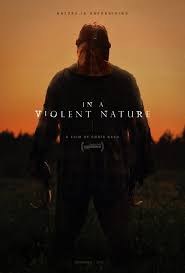
IN A VIOLENT NATURE
Canada, 2024, 94 minutes, Colour.
RY Barrett, Andrea Pavlovic, Cameron Love, Reece Presley, Liam Leone, Lauren-Marie Taylor.
Directed by Chris Nash.
This is a Shudder production. Shudder is a subscription on demand network for horror, thriller and supernatural movies. It is for a niche market of viewers (some referring to the genre community) who enjoy these genres – and, especially, as a move towards more extreme content and style, an emphasis on slasher movies, horror and gore.
Which is the background for In a Violent Nature. On the one hand, the core of the narrative is almost archetypal, kind of narrative made very popular by the Friday the 13th franchise. A group of people are in the woods, a serious masked killer stalks them, eliminating them one by one – in grim and gruesome style.
This is what happens here. At the campfire there is a story told about a massacre which took place 60 years earlier in the forests, the death of Johnny and his burial, and a necklace from his mother hanging from the iron shafts at the mine. If the necklace is removed, he will rise from the dead. The group of 30-somethings are sitting around a campfire, discussing the story, one taking the necklace, Johnny rising from the dead, a sombre corpse figure, the campers killed in gruesome manner, extreme close-ups of bashings, shootings, decapitations… Which is what the enthusers for slasher films want.
And, there is a survivor, traumatised, getting a lift to the hospital, the audience knowing that there can be sequels.
As said, these films are made for a niche audience. The general public would not want to see this kind of film, would find the visuals too confronting, the narrative upsetting, and many of the details, relished by the writer-director, Chris Nash, a special effects expert. General audiences would want to shut their eyes and turn away.
To that extent, In a is to Nature is what Shudder audiences expect.
But, they great deal of the running time is spent in static gaze at the mine, at the woods, long sequences simply following Johnny with the woods. He eventually finds a mask to wear. This gives the audience plenty of time to ponder who he is, why he is what he is, the fate of the victims. These long sequences are something of a puzzle as to why the director has decided to include so many of them. And, after the last grim killing, and the escape of the woman, almost 10 minutes are devoted to the two women driving the truck, the driver talking and chatting about a relative who survived the attack in the woods, the victim quiet and traumatised. And then the film ends.
On checking with bloggers on the Internet movie database, there is quite divided opinion. Some comments admire the style of the director and his different, slow approach, while many of the regular viewers declare that it is all too slow, too boring…
In a Violent Nature received some theatrical release enabling non-Shudder viewers an opportunity to watch one of their productions.
Fly Me to the Moon
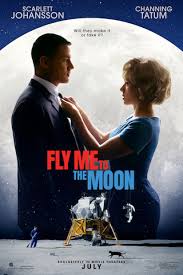
FLY ME TO THE MOON
US, 2024, 132 minutes, Colour.
Scarlett Johansson, Channing Tatum, Woody Harrelson, Ray Romano, Jim Rash, Anna Garcia, Victor Garber, Donald Elise Watkins, Noah Robbins..
Directed by Greg Berlanti.
On the one hand, this is an old-style romantic comedy, memories of the 1930s and what was called screwball comedy. On the other hand, the setting is 1969, NASA, preparations for the moon landing, its achievement. And they come together entertainingly here.
For those of those who remember 1969, it is a welcome reminder of the atmosphere of the time, the heightened excitement as July neared, the actual landing, “one small step…”, The sense of achievement, something of a balance to the turmoil of the Vietnam war. Audiences for whom this is something of remote history, it is an opportunity to learn something of the atmosphere of the times.
In the 21st-century, we live in an age of conspiracy theories, many of them outlandish. However, even back then , there were conspiracy theories that the moon landing did not happen, that everything was manufactured on the studio lot – and the film later re-creating this speculation, Capricorn One.
The screenplay here amusingly incorporates the conspiracy theory of the fabrication of the moon landing along with the real thing.
Scarlet Johansson is definitely the star of this romantic comedy, Kelly Jones, one of her most forceful performances, something of a con artist, skilful in promotion and advertising (which we see in the opening sequences and are somewhat taken aback), then recruited by a mysterious secret agent who claims he has a line directly to President Nixon, and played with smilingly smug complacency by Woody Harrelson. Her mission is to make the moon landing and its preparations much better known to the American public.
What follows is an extraordinary look at American brashness, self-confidence, promotion of any product by any means possible – and here, on radio, television, imprint, rallies, breakfast cereals, omega watches, soft drinks are all incorporated into the promotion as well as, more seriously, some extraordinary lobbying of senators who are inclined to cut off funds for NASA.
Kelly is able to rise to every occasion, walking over most opposition, changing her accent at a moments notice, flirtatious one minute and religiously devout the next!
The other part of the romance is Channing Tatum, rather more serious, a touch sombre, a former Korean pilot, the launcher chief for the Moon project, very conscientious about his work – though the screenplay is a bit satirical about him and his style. When, by chance, at a diner, he sees Kelly, he is infatuated – but soon disillusioned when he discovers her mission, how she operates, the manipulation of truth and lies. But, he does get caught up in the melodrama, often unwillingly.
While the film is very strong in its presentation of the NASA work, the visuals of the plant, the control room…, It entertains the audience with the whole setting up of the fake landing, the studio, moon rocks and dust, space vehicles and gear, all rehearsals about space walking… And extraordinarily prissy director.
A wandering NASA black cat is key to the events – especially for the fake landing.
So, on the one hand, romance and comedy. On the other, memories of when America was greater than it is now…
- The title, the song? Romantic comedy? Screwball comedy? Preparations, achievement of the moon landing, 1969?
- A piece of Americana, the advertising and promotion world, science and technology work and space, politics, agents, cover?
- Cape Canaveral, 1969, the reconstruction, the tallest single story building, interiors, the plant, the layout, the control room at the desks, the comparison with the ordinary, motels, diners, the wharf, and the set for the reconstruction for the moon landing?
- The musical score, echoes of the 1960s, the range of popular songs of the period?
- The introduction to Kelly, the pitch about the cars, pregnant, challenging the executives, naming their cars, revealed not to be pregnant, to research the information? Their reaction on discovering the truth? Ruby as her assistant?
- The buildup of Kelly’s character, her revelations about her past with her mother, then the mother and the shooting, telling her daughter to run, change of names, experience with scams, moving into various industries, finding a home in advertising? Her personality, forcefulness? Her being recruited by Moe, his hold over her, explanations?
- The introduction to Cole Davis, the Korean War background, his work with NASA, launch control, his responsibilities in the failed attempt on the deaths of the astronauts, preying on him, the garden at the monument? Best pilot, heart condition, rejected for space? Project with Henry Smalls, working with him? The introduction, the escaped gas, using the broom, everyone observing, the explosion? His deadpan style? He is visit to the diner, looking at Kelly, her pages on fire and dousing them, his declaration about her?
- Kelly and the job, promotion of the Moon journey, for American consciousness? The world of advertising and promotion, American push and know how? Her charts, the drinks, the watches, cereals…? The television contacts, her barging through the plant, taking Walter’s entry card, the challenge by Cole?
- Moe, his ambitions, secret agent, ear of the president, persuading Cole to do the television interview? His hold over Kelly? The plan for the alternate moon landing? Kelly and the previous contact with Lance, his cruising manner, tantrums, perfectionism, ambitions, job, secrecy, expectations?
- The months of 1969, the work in preparation for the liftoff, Cole and his responsibilities, relationships with people, decisions? Henry Smalls, personality, collaboration, smoking, talking with Kelly, the need for verisimilitude for the fake moon landing, the tactics, getting Henry to show everything, promising the four work to the book?
- The relationship between Cole and Kelly, his wariness, her brashness, sharing experiences? Ruby and the young technician, his awkwardness? The dances? The two young men and their enthusiasm, the staff in the 20s, the order in their 30s?
- Solving problems, the Congress votes, the senators, the techniques that Kelly used to persuade them, the vain senator and photo opportunities, visit to Louisiana and the religious people, quoting the Scriptures? Kelly and her ability to adapt, lies and impersonations?
- Kelly apprehensive about flying, the flight, the success of the mission, the relationship?
- Kelly persuading Cole to do the television interview, his being unwilling, her preparing the questions, the interview, the intrusion by the interviewer, his angry reaction?
- Moe the issue of the cameras, disabling the shuttle, getting the sound feed, but showing the fake landing? The preparations, the set, the camera, sand desert rocks? The actors and their impersonations?: His reaction to the actors? The rehearsals, the comic touches and failures?
- Kelly, disillusioned, the confrontation with Moe, her decision to leave, the airport, his talking with her, her change of heart, the return, the explanation to Cole, the issue of fixing the camera on the shuttle, the two young men, her driving, smashing the window, the television set, the police escort, the last-minute change? Tensions?
- Walter Cronkite, the millions watching on television, the crowds at Cape Canaveral? The liftoff, the flight?
- The landing, the real, the fake performance, the sound, the “one small step…”? Checking what was real, the blurry nature, Moe wondering whether this was fake? The ultimate success? Moe and his change of heart, pride?
- The success of the mission? Kelly and the revelation of the truth about herself? Ruby and the young technician? The future?
Sunflower/ Australia

SUNFLOWER
Australia, 2023, 84 minutes, Colour.
Liam Mollica, Luke J.Morgan, Olivia Fildes, Daniel Halmarick, Elias Anton, Diana Ferreira, Sol Galofaro, Mia Barrett.
Directed by Gabriel Carrubba.
Sunflower opens with a young man standing in the vast field of sunflowers, bright blue sky. Then follows a schoolyard bashing sequence a group of young man hitting and kicking another. Later there will be flashbacks to these sequences.
Writer-director, Gabriel Carruba, has noted that his film is semi-autobiographical, set in the working-class suburbs of south-east Melbourne where he grew up. His film is billed as “coming-of-age” but the particular emphasis is on the 17-year-old Leo, his Italian family background, mother at home, father a truck driver and very demanding, a younger brother. Leo is grappling with his sexual orientation, resisting, tense.
Audiences have seen this kind of story before, in recent decades in a number of novels, films, and episodes in television series like Heartbreak High. Which makes one ask while watching the film, who is the intended audience? In an interview, Gabriel Carrubba has said that he didn’t have an audience in mind, just wanted to tell the story. He appreciates that teenagers undergoing the same questions, identity-seeking, will identify with Leo. It is a film which parents could watch and find the situation with their sons, something that they can consider, find challenging. But, many high school homophobic-environment boys not want to watch it.
Gabriel Carrubba has said that his use of sunflowers is an image, the flower ugly when it is growing but, in full bloom, bright, full of colour. And the sunflower imagery in painting and in fields of flowers recurs during the film, Leo surveying the sunlit flowers.
Liam Mollica is effective as Leo, though he and the other high schoolers look rather older. Leo tries to be one of the boys, mates with the rowdy Boof (Luke J.Morgan), more than an eye on the girls at school, but having to confront the reality of sexual encounters and relationships. The film focuses on Leo and his attempts to be as ordinary as he can be, and the rumours and gossip around the school, then the scene we have already noted of the bashing, his being ostracised, his concern about his parents, his growing anger and pushing people away.
It is his sympathetic brother who is aware of the situation and suggests some contact with another boy at the school, Tom, whom audiences have realised is also gay. The friendship grows, Leo begins to accept himself, and, the film ends with hope, Leo’s letter to his father and mother and their response.
This is a small film, the director’s visual coming to terms with his own life, the possibility for next steps in his life and in his career.
- The title, the visuals, the fields, the flowers, the art work? The symbol of the flower ugly in development, blooming? The contrast with the gay bashing at the opening of the film?
- Australian film, the Melbourne sitting, the suburbs, homes, schools, streets? Authentic atmosphere? The musical score?
- The work of the director, semi-autobiographical? Intensity of feeling? Universal themes?
- Coming-of-age stories, coming-of-age and gay sexual orientation?
- Leo’s story, his place in the family, his younger brother and friendship and support, his truck driver father, severe in manner, demanding, timetables, supportive mother?
- Leo, 17, the years at school, one of the boys, sport, locker rooms, bravado and talk, sexual, eyeing the girls? Boof and his friendship, coming to the window, into the house? Leo and masturbation, imagination, there are online contact, the visuals, taking off his shirt? His embarrassment? Shutting the computer? The masturbation sequence, sharing with Boof?
- Leo and the encounters with Monique, talking,, together, the kissing, her wanting the sexual encounter, his inability, the aftermath? His embarrassment, his anger?
- The gossip in the school, his reputation, the bashing? The reaction of the boys, his injuries, at home, seclusion? At school? The locker room, everybody walking out?
- Tom, with the boys, yet alone, audience awareness of his personality and orientation? Leo’s brother, arranging the meeting, the agreement, skateboarding, going out together, the lake, sharing, comfortable with each other? The growing relationship? The discussions?
- Monique and her reaction, supportive? His embarrassment?
- The other boys, with the girls, the drinking episode, Leo lying out in the field, lying with Boof, his father rebuking him? Will and his embarrassment? About Leo?
- Leo, isolation, being solitary, the decision to write the letter, giving it to his brother?
- The return, the parents reading the letter, sadness, embracing him on his return?
- The prospects for his future?
Quiet Place: Day One, A
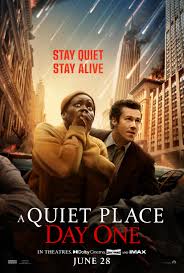
A QUIET PLACE: DAY ONE
US, 2024, 100 minutes, Colour.
Lupita Nyong'o, Joseph Quinn, Alex Wolff, Djimon Hounsou.
Directed by Michael Sarnoski.
There is a dire meaning in the title, A Quiet Place. Monstrous creatures had invaded earth, lacking the power of site but hypersensitive to sound. The original film and its sequel had menaced humans desperate to be silent, avoiding any kind of sound to alert the roaming predators.
Which means that audiences for this contribution to the franchise, a prequel, go into the film knowing what the key issue is. Silence.
The film starts routinely enough, a hyperactive poet, Samira (Lupita Nyong’o), ill, in care, going to group meetings and being defiant, invited to go in to New York City to see a marionette show (a quite vivid interlude, in fact). She bargains with her nurse that they have to have a pizza in Harlem. This doesn’t quite happen.
When the creatures come, they wreak enormous devastation on the city, sometimes graphically filmed. The populace, taken unawares, easily become victims, and the mayhem in the city, crashed and crushed vehicles, buildings and ruins, are caught in an atmosphere of terror.
The filmmakers have decided to focus on the central character, her survival, her trying to get to her apartment, avoiding all sounds. Suddenly, emerging from the water is a well-dressed, suit and tie, Englishman, Eric (Joseph Quinn). He is more than shell-shocked, begins to follow for security, her urging him to get to a wharf because it emerges that the creatures cannot endure water. We do see barges on the New York Rivers full of refugees.
This part of the film has its moments of excitement, Eric venturing out to a pharmacy to get medication for the poet, increased menaces from the creatures – which, is probably why most of the audiences have paid for their tickets to see it.
The ending is not quite what we might have expected, moments of pathos and sadness, moments of rescue, moments of hope for survival despite everything.
If this film is popular, will there be Day Two?
- The popularity of the first two films? prequel and explanations, origins, the audience presupposing details, especially about creatures, about silence in danger, from the original films?
- The New York settings, the opening in the care home, the trip into the city, the marionette theatre, the audience, going to get pizza, and the attack? The vistas of the city, the destruction of the city, streets, cars, buildings? The musical score?
- The visuals of the creatures, audiences appreciating them from the previous films? Monstrous, the detail, the attacks, stalking people? Noise and sounds and the attacks?
- Sam as the focus, her physical health, in care, with Reuben, the groups, that she was a writer, her aggressive poem, persuaded to go into the city, wanting pizza in Harlem? Reuben, nurse, friendship, with Sam?
- The marionette theatre, the skill of the puppeteer, the puppets, the balloon, flying? Audience response?
- The sudden attack, the destruction, the creatures? The silence? Sam and Reuben, his death?
- The importance of the cat, always with Sam, the trip, the theatre, throughout all the dangers, away, coming back? Companionship? A kind of guardian angel figure? Audience response to the cat – and more than nine lives?
- Sam, the experience, bewilderment, determination, seeing so many people taken, in the streets, the helicopters flying overhead, the message for evacuation, to take to the water? Her wanting to go to her apartment?
- Eric, emerging from the water, suit and tie, surviving, stunned, the encounters with Sam, silence, communication, her writing notes, his following her, the dangers, going to Harlem, her apartment, her book, sleep? Her urging him to go away? His personality, quiet, rising to occasions? Seeing the people on the boats in the middle of the river, being saved?
- The refuge in the Church, peace, sanctuary and reflection?
- The continued trek, Eric and his going to the pharmacy, getting the medical patches for Sam? Dangers, his being threatened, the cat?
- Sam and her weakness, the daylight, going towards the boat, seeing the kindly man from the marionette theatre on the boat?
- Sam, urging Eric to go, with the cat, her staying behind in weakening, Eric and the water, evading the creatures, onto the boat, reading Sam’s letter and the voice-over?
Mr Blake at Your Service/ Completement Crame
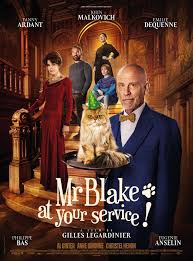
MR BLAKE, AT YOUR SERVICE/ COMPLETEMENT CRAME
France, 2023, 99 minutes, Colour.
John Malkovich, Fanny Ardant, Emilie Dequenne, Philippe Bas, Eugenie Anselin.
Directed by Gilles Gardinier.
This is a surprisingly nice French film. The French title is somewhat obscure. The English title much more indicative. And in some areas, there was a new English-language title, Well Done!
And the question, of course, who is Mr Blake?
In fact, we find at the opening of the film, that he is one of Britain’s leading business entrepreneurs, about to be given a significant honour at a crowded banquet, but not turning up, not feeling up to the occasion, really wanting to retire and disappear. And, he has been grieving for his deceased wife. So far, so intriguing.
But, for many filmgoers over the decades, the actor playing Mr Blake will be something of a surprise. At the end of the 90s, there was an interesting fantasy film exploring identity, actors and their characters, Being John Malkovich (and the actor himself contributing to the issues by appearing in the film). Mr Blake is played by John Malkovich.
Looking back over the career of John Malkovich, light comic touch is not a quality that immediately comes to mind. He can be extremely enigmatic. (A recent example would be his character in the television series, Ripley, with Andrew Scott.), He has a distinctive voice. It can sound menacing. And he has often been a sinister villain.
And, while he still looks the same here, and sounds the same, he is challenged to be a very nice person – and, surprisingly, he succeeds very well.
The story is somewhat tongue in cheek. Mr Blake decides to retreat from the world, return to the French château where he first met his wife, hoping to settle there quietly. The château, visually magnificent interiors and lavish grounds, is managed by a widow, played by Fanny Ardant (who has also played some serious, sometimes sinister, roles in her past but who is really charming here). Mr Blake thinks that rooms are available and would like to stay. This turns out to be a great misapprehension!
The housekeeper, a Odile, very strong minded and determined, has placed an ad for a Butler and makes the assumption… Mr Blake is given a pokey room, given the time of trial to see whether he is suitable as a Butler – and his big advantage is that he is English and therefore the possibility of being a proper Butler personified.
So, the enjoyment of the film is seeing Mr Blake becoming the Butler and how he handles the expected routines. After a rifle being pulled on him, he befriends Magnier, one of the workers on the estate (who actually is very shy but is attracted to Odile). And, there is the maid who comes in regularly and is now pregnant, the father of the baby vanished. Mr Blake has to be something of a Fairy Godfather, so to speak, listening to all the characters, providing opportunities for them to develop and flourish, trying his best to help the owner of the château who is trying to manage the finances, being forced to sell the château.
And, at one stage, who should turn up but his close friend from England and his wife, enjoying ribbing Mr Blake about his new status and his serving drinks…
It is amazing how John Malkovich embodies Mr Blake, being kind, helping, some comic moments (the wig and lipstick so that Magnier might polish his table manners and learn how to speak to Odile), the robbing of a hoity-toity so-called friend of the owner of the ring, the complicated way to help the owner and her resistance.
And, nice romantic touches, the visit to the Cemetery, the sad truth about the owner’s marriage.
For audiences, probably older rather than younger, who would like a very pleasing film night out, Mr Blake is definitely at your service.
- The title, French and English? The focus on Mr Blake?
- The settings, London, the banquet, flat? Transition to France, the countryside, the château, interiors, the grounds? The musical score?
- John Malkovich is casting as Mr Blake? Against type? His success?
- The introduction to Mr Blake, the banquet, the crowd, announcements, the award? The phone call, his not wanting to go? Richard and his reaction?
- Mr Blake, leaving London, going to France, arrival of the château, his expectations of a room, memories of his first meeting his wife, meeting Odile, the reaction, her ad for a butler, his shock, the pokey room? On trial? His agreeing to the situation? The perfect English butler?
- Nathalie, her situation, the death of her husband, financial, the plan to rent rooms, renovations and expenses, the pressure to sell the château? Her personality, her response to Mr Blake, as butler, busy with her expenses, talking to the mannequin of her husband, the later revelation of the truth about his mistress, the is to in the grounds but no words? Her manner, towards Magnier, compassion towards Manon and the pregnancy, allowing her the room and the château? Working with the Odile, housekeeper, maid? Not wanting Mr Blake to interfere, underestimating him?
- Mr Blake adjusting to the situation, the dress, the routines of the butler, service, trays? A Odile and her demands? The mobile phone, Magnier and his rifle, they’re talking, friendship? His attraction to a Odile, the loner, awkward? Helping with the video of the gate? Other jobs? Mr Blake and the wig and lipstick, the rehearsal for good manners, talking to women, the effect on Magnier, Mr Blake softening Odile, her response? Manon, the pregnancy, the father going off, sleeping out, her mother rejecting her, Mr Blake getting the room, Nathalie and her permission? The household? Mr Blake having to be a kind of Fairy Godfather?
- The obnoxious visitor, the chat, disdain towards the butler, Nathalie selling her ring, the decision for the robbery, masked, frightening the woman, giving it up, the restoration?
- The visit of Richard and his wife, the pretence, enjoying having Mr Blake serving drinks as the butler? The later return, the negotiations for the finance?
- Mr Blake ending the tenure, staying on, the personal relationships, the relationship with Nathalie?
The revelation of who he was? Support – an
Silence, Un/ A Silence
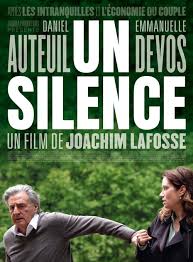
UN SILENCE/ A SILENCE
Belgium/France/Luxembourg, 2023, 99 minutes, Colour.
Daniel Auteuil, Emmanuelle Devos, Mathieu Galoux, Jeanne Cherhal.
Directed by Joachim Lafosse.
By the time we watch the final credits of A Silence, we realise that there are many silences that we have been made aware of.
This is a serious film with serious themes. There is an immediate intimation as the camera focuses at great length (and this will recur throughout the film) in close-up of the face of the key character, Astrid (fine performance from veteran actress Emmanuelle Devos), travelling in a car to a police station. There are some suggestions as to what is going to develop, suspense and questioning on the part of the audience.
Astrid’s husband, François (also a fine performance from veteran actor Daniel Auteuil) is a celebrated lawyer, prosecuting a sexual predator who has victimised two young girls. François is passionate about his cause, giving interviews, an eager press often camped out at his house. And the house is quite a mansion, comfortable, large swimming pool. The couple has a daughter who is married with a child. Their 17 year old adopted son, Raphael, is at school, living at home.
The film is based on actual events and actual characters. In Belgium, 1995, a serial predator, Marc Dutroux, is revealed as acting his victims and imprisoning them, abusing them. A Silence is based on the lawyer who defended him and Astrid on his wife.
There is great complexity in the development of events, a situation of abuse in the past, attempted therapy and the questions of how therapy is long-lasting or not and one of the particular silences, that of those who are aware of the abuse and did not speak up at the time.
Another aspect, is that of the silence of someone who has been abused, unable and unwilling to reveal the truth at the time, silence for decades, then, in the current atmosphere of revelations and prosecutions, speaking out and searching for justice.
And, while the theme is of sexual abuse, there is also the 21st-century reality of on-line pornography, accessibility to the young on their computers, international markets on the black web and networks of photos/video of abused children.
Which means that this is a film of significant contemporary issues, the reality of the abusers and their lives and concealment, issue of those made aware of the issues but who do not understand them, or did not appreciate their severity in the past, and the consequences as time has gone on.
The treatment is sombre, the photography often dark, the great use of extreme face close-ups to focus audience attention on each of the characters.
For audiences who belong to churches and religious denominations, who have experienced the revelations of church leaders and abuse, cover-ups and/or ignorance and lack of awareness, this film has no ecclesiastical connections which means that the audience can look at these situations much more objectively and assess the gravity, and appreciate the pain of survivors.
- Based on actual characters and events? The case in Belgium, the prosecutor against the serial killer, Marc Dutroux, the investigation, child pornography on the Internet, trial and sentence, and the wife sentenced for negligence?
- The fictionalising of the case, the parallels, the lawyer, his family, his prosecution, the expose an investigation, the establishing of the family, the past sexual abuse, addiction, therapy, not effective? The family, the daughter and her marriage, the son at school and his problems, the abused uncle?
- The city setting, offices, police precincts, the mansion, the interiors, the grounds, the swimming pool? School? The streets? The paparazzi? The final courts? The musical score?
- The style of the film, comparatively low key, intense and interior, the focus on Astrid, the many close-ups, the face, profiles, in the car, in the car mirror? Audiences identifying with her, sympathy, but learning more about the past, her relationship with her husband, her brother, the abuse, keeping silent, hoping her husband had benefited by therapy? Her love for her daughter, the tension because of the case and the daughter urging the uncle to prosecute? Her love for her son, his problems, expulsion from school, supporting him? Audience sympathy for her character, her experiences with the secret, the prospect of prosecution, relationship with her daughter and grandchild, urged to reveal the truth to her son, her telling him, the tensions with her husband, looking at his computer, the police, the search of the house, moving with her son to the hotel, his leaving?
- The screenplay, indicating the basic elements and the police interview with Astrid, then the audiences further discovery, emotional complexities, moral issues?
- François, his reputation, the prosecution of the sexual predator, sympathy for the abused daughters, contact with the parents? Press interviews, television, his taking a righteous stand against the abuser? At home, relationship with his family? The gradual revelation of his personal life, going to his computer, the audience just hearing sounds rather than visuals of the pornography? Relationship with his son, watching the tennis, tensions? The paparazzi and his forbidding photos, their waiting outside his home? The arrival of the police, the fact that they had been tracking the international pornographer, six months investigation François, the sequence where they were operating surveillance of his home? His realisation that he would be exposed, going out to the media, explaining that he was withdrawing from the case, politicising it, the media questions, his staying at home?
- Raphael, his age, relationship with his father, his mother doting on him? Money for spending? His friends, missing from school for two weeks, the interview, the expulsion? The truth about his father? His father’s computer? His own computer? His growing anger, going to the exam, the sympathy of the teacher, presumption of father’s innocence? The search of the house, his computer? Going to the hotel, with his mother, leaving?
- Raphael and his going to his sister, growing anger, drinking, confronting his father, the talking, the knife, the visuals of his father having been stabbed, the police arriving, rescuing François, taking Raphael?
- The interrogations, Astrid and her giving information, but withholding the story of the past? Looking at her husband’s computer? François and his denials, looking at the websites for his case? The revelation about the peddler of child images, over 7000 hits, his addiction? The interrogation of Raphael, his story about looking at the computer, even when he was eight, looking at his father’s computer, the contacts on his own? His attack on his father?
- The court sequence, the crowds, the court judgement, referral and the leniency, the condemnation of François, and the effect on Astrid?
