Displaying items by tag: Miles Malleson
Folly to be Wise
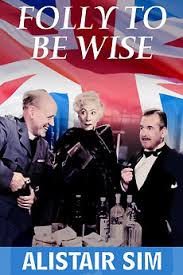
FOLLY TO BE WISE
UK, 1952, 93 minutes, Black-and-white.
Alistair Sim, Elizabeth Allan, Roland Culver, Colin Gordon, Martita Hunt, Janet Brown, Peter Martyn, Miles Malleson, Edward Chapman, Cyril Chamberlain, Michael Ripper, Robin Bailey, George Cole.
Directed by Frank Launder.
Frank Launder and his writing partner, Sydney Gilliat, contributed a great deal to British cinema in the 1940s and 1950s. They worked with Alistair Sim in The Happiest Days of Your Life and then in the Belles of St Trinian’s.
Alistair Sim was something of an institution and British cinema at this time, especially with An Inspector Calls and his two-to-forced as Ebenezer Scrooge in A Christmas Carol.
This is a very British film of the period, based on a play. And, the action is confined to offices, the hall, pubs, homes. The emphasis in.is on dialogue.
Alistair Sim is the chaplain, William Paris, who has a responsibility for organising entertainment on Saturday evenings, something artistic and intellectual instead of the soldiers gathering at the pubs.
The basic idea is to have a Brains Trust evening, a professor who conducts one on the BBC, Colin Gordon, an artist, Roland Culver very persuasive, antagonistic towards his wife, Elizabeth Allan. There is also the local Grande Dame, Martita Hunt, the local labour member, Edward Chapman. There is also the very absent-minded and deaf doctor, Miles Malleson and who does tell a joke which gets everybody laughing.
A range of confusion, Paris trying to MC the whole event, clash between husband and wife, basic question about marriage from Paris’s secretary… And some squabbling on stage as well as at home, discussions about marriage and, 1952, a reconciliation at the end which might strained credibility.
- The title, saying, knowledge, wisdom – and the brains trust?
- British films, the 1950s, small-budget, local stories, comic touches, strong British cast?
- The setting, the military, the chaplain and office, the hall, the local pubs, the parade ground? The musical score?
- Based on a play, emphasis on dialogue, action confined to offices, halls, homes, pubs?
- The military situation, 1952? The recruits, training? The role of the officers, adjourning to the pub, the spirit amongst the men?
- Captain Paris, an Alistair Sim character, his manner, style of speaking, enthusiasm, the touch of the dithery? Harassed? At the recital, the few in the audience, applause? His role as providing entertainment, the discussions with Jessie, the ensembles, the singers, cancelling appointments? The idea of the brains trust?
- Walter and Jessie, his puzzle about her eagerness for education, her earnestness? Their work for Paris? The idea of the brains trust, Jesse and her eagerness? The visit to the Sprouts, the encounter with Angela and Professor Mutch? The proposal, her enthusiasm, the professor agreeing, George and his difficulties?
- The relationship between Angela and the professor, George and his art, arrogance, manner, treatment of Angela, long friendship with the professor, the professor staying with the couple, his BBC success?
- Preparations for the Brains Trust, the request for questions, the soldiers responding, Paris going through them, some projections, Jessie and her question? Later slipping it in? The friendship with Lady Dodd, her manner, agreeing to come? The local politician and his manner? Walter and the curtains and decoration?
- The gathering, George and his drinking, the discussions? The doctor, his arriving late? The crowd in the hall, the slow clap, the beginning, the issue of the master of ceremonies, Paris and his role? The first questions, slight, the contributions, George and his drinking, cantankerous, the professor on edge, Angela, Lady Dodd, the politician and the exclusion of politics? His sensitivities?
- Jessie, the question about marriage, the handling of the situation, Paris wanting to stop, Lady Dodd and her answer, the beginning of the situation between George, Angela and the professor, tensions, Jessie insisting, the audience backing her? Her motivation, want to know about marriage and how it worked? Walter behind-the-scenes? The interval, the continuance, Jessie and her speeches, Walter and his eventual long speech and Jessie’s romantic response?
- The doctor, not hearing, absent-minded, eventually telling the joke and everybody enjoying it?
- The aftermath, driving away, ousting the professor, Paris and the others in pursuit, the confrontation in the house?
- The comeuppance for the professor, Paris and his interventions, Jessie, challenge to Angela, George and his change – and the credibility of the reconciliation?
Barnacle Bill/ All at Sea
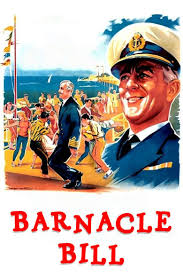
BARNACLE BILL/ALL AT SEA
UK, 1957, 87 minutes, Black-and-white.
Alec Guinness, Irene Brown, Percy Herbert, Maurice Denham, Victor Maddern, Donald Pleasance, Warren Mitchell, Lionel Jeffries, Jackie Collins, Miles Malleson, Allan Cuthbertson, Charles Lloyd Pack, George Rose, Richard Wattis, Eric Pohlmann, Joan Hickson.
Directed by Charles Frend.
Barnacle Bill/All at Sea was Alec Guinness’ last comedy film, immediately after his Oscar win in The Bridge on the River Kwai, 1957. And, it was the last of his Ealing comedies, his moving into more serious films into the 60s and 70s.
The film was written by T.E.B.Clark, author of many of the Ealing studios films, Passport to Pimlico, Lavender Hill Mob, films about individuals and their defying the authorities. It is the same here, Captain Ambrose, played by Guinness, has seafaring ancestors, even from the Stone Age, and/or visualised with Guinness playing each of them, but all suffering from seasickness and disasters. During World War II, in Ambrose tested vessels rather than going to see!
After the war, very seriously, he buys a pier on the coast, the ship Arabella, and turns it into the equivalent of the tourist ship. But, he runs foul of the local Council, leading to scenes of tourists enjoying the comforts of a sea voyage and some sabotage from the Council members.
It is brief, rather low-key, British comedy of the time, social commentary. And, looking at the cast, it is filled with quite a number of well-known British character actors of the period or who were to emerge successfully in coming decades in television series – Warren Mitchell, Donald Pleasance, Joan Hickson… And, yes, that is the Jackie Collins in the cast!
Direction was by Charles Frend, who directed many of the significant British films, especially the 1940s and 50s, including Scott of the Antarctic and The Cruel Sea.
- From Ealing studios in the 1950s? An Alec Guinness vehicle and his Ealing Studios films? The individual against the corporations?
- Ealing Studios comedy, the writer, the directors, British humour, situations, character actors? Musical score?
- The title, given the alternate All at Sea?
- The introduction to Captain Ambrose, a celebrity, the honours, his manner, perfectly straightforward sometimes mischievous humour? The interviews, his reputation, at the pub, the rum cask, going to the bank, his money account, the staff, listening to his story, at the end, the celebrity mood?
- Captain Ambrose’s story? His ancestors, from the Stone Age, Francis Drake, the Later Sea Captain, World War I – and Alec Guinness playing all roles? Seasickness and the way that it was manifested, the comic tragedies?
- Captain Ambrose and his war career, seasick, the audience thinking he was at dea, but his career in demonstrating seasickness in various vessels?
- His decision to buy the Arabella, the pier? Very serious, spending his money? The initial encounter with Mrs Barrington and her accusations? Going to the pier, the staff, seriously setting up the ship and the crew? The first officer and reliance on him? The performance, the Houdini -like character, the Captain tying him up in a bag, unable to get out?
- Captain Ambrose vision for the pier, looking at the slot machines, the police, getting the young expert, his knowing how to win with skill? The machines being allowed? The youngsters, the rock ‘n’ roll atmosphere, taunting Captain Ambrose, coming to the concert, the talent not turning up? Playing the piano, dancing, the ripping up of the seats, providing the dance area, the youngsters enjoying it?
- The plan to turn the Arabella into a cruise ship, holidays, yet at the pier? The work, the volunteers, the transformation? The dining area, the pool, all the luxuries?
- The Mayor, his visits and discussions, the Council meetings, his henchmen, legal advice, Mrs Barrington? Corruption? The decision to improve the seafront, threatening Mrs Barrington’s dressing cabins, upset, the encounter with Captain Ambrose, his taking them, installing, her supporting him, her transformation, drinking the rum?
- The crowds, coming aboard, the atmosphere of the luxury ship? The staff? Captain happily moving amongst his guests? The young lovers always hiding in boats et cetera?
- The Council, their plans, the confrontations, the turncoat, swimming underwater engaging the depths, seen by the drinking Captain? Looking at the radar? Reality, his being Captain, interrogated?
- The Council and the plan, sending out the boat, underwater, the Captain, facing his seasickness, Mrs Barrington’s cure, corset and earplugs? Going out, the confrontation, the four in the cage, trying to escape, Captain Ambrose and the machinery, capturing the Council?
- The legal issues, the cruise ship and the foreign government and the permits? Sawing the connection so as not to pay shore taxes?
- Small British comedies of the 1950s, the humour, still entertaining even if they look dated?
