Displaying items by tag: Rose Byrne
If I Had Legs, I Would Kick You
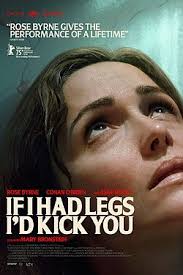
IF I HAD LEGS, I'D KICK YOU
US, 2025, 113 minutes, Colour.
Rose Byrne, Delaney Quinn, Mary Bronstein, Conan O'Brien, Christian Slater, A$AP Rocky, Danielle Macdonald, Ivy Wolk, Mark Stolzenberg, Daniel Zolghadri.
Directed by Mary Bronstein.
This disturbing and challenging drama was released at the same time as Die My Love with Jennifer Lawrence. Die My Love dramatised a mother descending into deep depression after the birth of her baby, a film which the female audience could identify with, a film that made demands on the male audience for appreciation and understanding.
This is true of If I Had Legs – only much more so. It is quite emotionally demanding of its audience, often a hard watch but a film which dramatises so much of the pain that a woman, a mother and wife, sometimes has to suffer. And, once again, there would be enormous empathy for a female audience watching this film. And, once again, a challenge to a male audience for appreciation and understanding, to elicit some empathy.
Rose Byrne has had a long career in Australian and international films for over 30 years. Critics are referring to her performance here as Linda, mother of a young daughter needing medical care, her husband away with contact only by phone, herself a therapist but also undergoing her own therapy and not coping at all well, at times not coping at all, as the performance of a lifetime.
For so much of the drama the words frantic and desperate best describe what is happening for Linda, required to give constant attention and presence to her child, seeing her clients for therapy (and another disturbing subplot with a young mother not coping at all and disappearing) and Linda having sessions with her own therapist (played by television’s, Conan O’Brien), proving to be an antagonistic and uncooperative client.
Then, sudden disaster in the apartment, her daughter (not seen throughout the film until the end, but always a presence, always a voice) finding her room filling with water and the discovery of the roof caving in flooding the apartment, the camera returning to the gaping hole in the roof throughout the film. Added pressures, her husband away, the landlord uncooperative, delays in repairs, mother and daughter having to stay in a hotel, sad memories of an early abortion.
Linda’s behaviour becomes more and more erratic, sometimes keeping composure in working with her clients, but even that beginning to disintegrate. She is also required to join a women’s group to help to cope with their daughter’s illness, but Linda is defiant, rude, bluntly outspoken towards the leader as well as some of the distraught mothers in the group. (The leader of this group is played by the writer-director, Mary Bronstein, her screenplay drawing on some of her own experiences.)
While there are some sympathetic characters, especially a neighbour played by rap singer A$ap Rocky, who becomes entangled in Linda’s moods, we see Linda becoming the victim of so many others’ moodiness, her therapist, her clients, the pedantic woman at the store… little miseries to add to the overall misery of Linda’s experience, her love for her daughter, the continued demands and weariness of constant care.
A review of this film should offer an alert that is not just a movie to go to for some entertainment. Rather, it is significant in offering its audience a harrowing experience, some empathy for a suffering woman who is not always sympathetic.
- The title, tone? Expectations? The work of the writer-director, her experiences?
- An American story and setting, universal characters, themes and issues?
- The American city, homes and apartments, hospitals, conference rooms, therapists’ rooms, shops, and the final open space and the beach and the sea? The musical score?
- Audience response to Linda? Rose Byrne’s performance? Age, marriage, her husband in service, away, her daughter, her age (not seen, heard, seen at the end), her illness, the constant care and presence? How sympathetic a person, mother?
- Linda, the effect of the demands of her daughter’s illness, taking her to school, the demands of the parking attendant and his aggression and her aggressive response, asking others to take her daughter into school? The conversations with the doctor, her presence expected at the discussion sessions with the mothers, her putting off the appointments? Discussions about her daughter’s illness, the treatment, the possibilities of terminating the treatment?
- The water in the apartment, her daughter’s reaction, the flood in the apartment, the crashing down of the roof? Further exasperation? Mother and daughter having to live in a hotel, the neighbours, Linda going to the store, wanting the alcohol, the assistant and his strictness, Jamie and his sympathetic response, trying to talk to her, her walking away, her surly attitudes towards him, his later help, going to the house, falling through the hole in the roof, injuring himself? Linda and her attitudes?
- Linda and her therapist, her tantrums and silence, his reactions, the relationship, sympathy, hostility, losing patience, her memories and telling of an early abortion? Then discovering Linda as a therapist, with Caroline, the baby, depression, the absent husband, ringing during the night, coming to the apartment, dependence, disappointment, her disappearance, Linda and the police, the questioning, Caroline’s husband on the phone and his attitude? Caroline reappearing, Linda’s handling of the situation, failing, Caroline running away towards the sea?
- Linda, her clients, Stephen, dreams and emotions, the young woman waiting?
- The building, the phone calls, the landlord, reasons for delay, no repairs? Staying in the hotel, Jamie and his mother?
- The building up of exasperation, the phone calls to her husband, his response, her cutting him off?
- Linda going to the meeting, surly towards the leader, harsh towards the mother with her story, trying to be blunt and honest? Saying there was no hope, walking out? Going to her daughter, the information about the tube, removing it, the hole healing up?
- Chris, eventually arriving, his uniform, the repairs in the apartment, his exasperation, her response?
- Linda, running away, to the beach, into the successive waves, washed up on the beach?
- Seeing her daughter, her husband’s return, her depression, what future?
Ezra
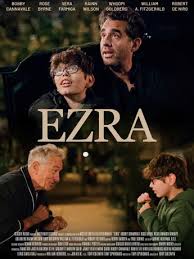
EZRA
US, 2023, 101 minutes, Colour.
Bobby Cannavale, William E.Fitzgerald, Rose Byrne, Robert De Niro, Whoopi Goldberg, Tony Goldwyn, Rainn Wilson, Vera Framiga, Matilda Lawler.
Directed by Tony Goldwyn.
While there have been a number of films dramatising autism and its effect on those on the spectrum (for example the very striking Temple Granted with Claire Danes), this is very audience-friendly look at an autistic boy.
Audiences will be sensitive to the issues, the emergence of awareness of autism in more recent decades, consequences for family life and parenting, for education opportunities whether in the community or specialised schools, the issues of medication for “normalising” the autistic person.
The screenplay for this film was written by Tony Spiridakis, based on his own experience with his son and, as he has noted, his learning how to finally step back from trying to control his son’s life. He has been a long-time friend of the actor-director, Tony Goldwyn, and Goldwyn has directed this film as well as taking a small role.
‘The film also had multiple autistic crew members on set to ensure its authenticity. Other cast members were directly related to a family member who has autism. Throughout the production, the creators screened different versions to the autism community for feedback.’ (Wikipedia entry on the film.) This is the case with Robert De Niro who plays the grandfather here.
Film opens with Ezra aged about 11, having great difficulties at school, fighting, on the verge of being suspended. Young William A.Fitzgerald is very convincing as Ezra. His parents are divorcing. He lives with his mother, Jenna, Rose Byrne, devoted, anxious, supported by her lawyer, Tony Goldwyn. But there are frequent visits from his father, Max, Bobby Cannavale very powerful and emotionally-charged in perhaps his best screen performance. He plays a stand-up comic and writer, taking his son to the performances as his supportive Mojo. However, he wants his son to be “normal”, in ordinary school with ordinary students, and is highly suspicious of any medication for the autistic condition.
Max lives with his father Stan, De Niro, asserted past which need some kind of resolution and apology.
The film dramatises the plight of the young boy, determined, sometimes fixated in autistic mode, devoted to each of his parents.
After an incident, almost an accident with Ezra being injured on the street, Max’s tension becomes even higher, assaulting the doctor in the hospital, arrested, a restraining order, becoming desperate and kidnapping his son, intending to travel to Los Angeles for a spot on the Jimmy Kimmel show, organised by his agent, played by Whoopi Goldberg.
With police intervention, Max takes refuge in the home of an old friend, a sympathetic Vera Farmiga, whose daughter involves Ezra in play, and introducing him to a horse, patting it, befriending it, some moments of freedom and joy.
The climax occurs in the Jimmy Kimmel studio, Jenna arriving with Max’s father, the police and the authorities, clash, Max arrested.
However, there is a more peaceful ending, Max calming down, Jenna and caring for Ezra – and an enjoyable Jimmy Kimmel show postscript.
An audience-friendly film on issues of autism.
- The focus of the with police intervention, film on Ezra, age, autism, symptoms, behaviour, relationship with father, with mother, was grandfather?
- The New Jersey setting, homes, streets, schools, police precincts, jails, comedy clubs? The American countryside, the journey to Michigan, the farm, the horses? The roads, diners along the way? The Jimmy Kimmel studios? The musical score?
- The screenplay, Tony is very darkness and his experience with his own son, the cast with family connections to autism, autistic members of the crew? The testing out of sequences?
- The audience entering the situation, Max and Jenna, marriage, Ezra, is autism, the years passing, is experiences at school, the parent being called in, the violence and his outbursts, expulsion?
- Max, his devotion, taking Ezra to his stand-up comic digs, his Mojo? Ezra and his responses? The bond between father and son? Jenna, the day by day care, the divorce proceedings, a relationship with Bruce, lawyer, his advice? The scenes at home, care for Ezra?
- William A.Fitzgerald and his presence and performance as Ezra? Manner, the symptoms of the spectrum, way of speaking, movie quotes, reactions, violence, not being touched, bananas, phobias? It shrewdness? At home, at school? His dislike of Bruce? Going to the club, the theme of the big Lebowski? Home late? Jenna’s reaction?
- Robert De Niro is the grandfather, Pop-pop, the back story as it unfolded, difficult, cooking for the military, hard on his wife, her abandoning the family, Max thinking it was to blame? Living at home with his father, the memories of the past, his father’s severity, violence? His father as a doorman at the hotels? Max taunting him about his parking sign, his military service, cooking? The difficult relation with Jenna?
- Max, relationship with his agent, Jane, her bookings for him, his performance after the experience of Macs, overhearing Bruce, interpreting literally, rushing out, the dog, taxi, hospital? Maxes hope reaction at the hospital, attacking the doctor, the arrest, the police, release, his doing a deal? The performance of the club and it’s sad ending, is talking about his doing the deal? The decision to abduct Ezra? Is being on probation with the law? Phoning his father?
- It is, the discussion about medication, maxes hostility, saying the doctors were exploiting the drugs, political issues? Jenna finally desperate, calling the police, their upbraiding her because of the delay, the Amber Alert? On television, the roadblocks…?
- Max and his friendship with Nick, Nick in the camp, the Senegalese nun, Ezra tantrums, metallic cutlery, the eating with their fingers…? Nick, support for Max?
- The journey, Ezra and his reactions, returning to his roots, police cordoned, driving through the woods, stranded, Ezra running away, reconciliation, getting the lift, going to see Grace, who welcome, memories of the past, Ezra with Ruby, the other children, her helping him to befriend the horse and its effect on him? Running and playing? The police arriving, grease giving them the car, travelling to Los Angeles?
- Jenna, desperate, trying to contact the grandfather, throwing stones at his house, at his work at the hotel, his finally telling her where they had gone, the drive, the attack on Nick?
- Grandfather see father and son in the diner, relating will, talking with Max, his confession about the past and his sorrow?
- Everybody in Los Angeles, the Jimmy Kimmel studio, the preparation for the gig, the police arriving, the Amber alert, Ezra and not wanting to be touched, the police, cuffing his father, Ezra’s attack, generally desperate?
- The aftermath, Max on probation, working with Jenna, the school, his taking him? Possibilities for Max to accept reality, not wanting to control?
- The credits sequence, Jimmy Kimmel, the return to the studio, the joke about being arrested, performance?
