Displaying items by tag: Da'Vine Joy Randolph
Eternity
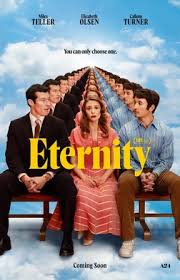
ETERNITY
US, 2025, 114 minutes, Colour.
Miles Teller, Elizabeth Olsen, Callum Turner, Da'Vine Joy Randolph, John Early, Barry Primus, Betty Buckley.
Directed by David Freyne.
Till death do us part. And after that…? Eternity.
While the title can have some profound implications, there is a light touch here, in fact, a variation on a romantic comedy.
For audiences going to see Eternity, there is the question of whether they believe in any life after death. If not, here is a fantasy speculation, amusing in its way. For those who do believe in life after death, is it just something of a continuation of life here on earth? The screenwriters of Eternity, present it as if it is, extremely terrestrial, but an opportunity to reaffirm one’s life choices. Those who have religious beliefs, they are not presented in the screenplay, but believers will give some thought to the religious implications of life after death.
And, perhaps, romcom is an enjoyable way of raising some more profound issues of death and life after.
The story raises a question that many would not have given much thought to. If a person who dies has married, her husband killed in war, then her marrying again and having a happy life of 67 years with family, who will be her husband in eternity. (And, of course, those who know the Gospels, will remember that Jesus said there is no giving and taking in marriage and heaven.)
The film opens with the elderly couple, touch of bickering in the car as they go to celebrate with the family, both in their 80s, at least. And, unexpectedly, the husband dies – and finds himself in eternity junction, a huge railway complex where the dead meet their adviser, and are offered a huge range of possible paradise choices (some serious, some funny parodies… In the advertising posters). And, his wife who is ill, dies, and joins the crowds milling at the junction waiting for the trains for their eternal destinations all very personalised with Larry, Miles Teller, dying and being at his best age, mid-30s. (And, with that question which many ask, what age will we really be at in eternity.) Joan, Elizabeth Olsen, was married briefly to Luke, Callum Turner, and experienced the sadness of his death in the Korean War. It turns out that people can have an option to stay working at the junction rather than going into eternity and Luke has been at a bar, where he does encounter Larry, the 67 years.
Larry and Joan have their carers, played by John Early and Oscar-winner, full of verve and vitality, Da’ Vine Joy Randolph.
And the romcom premise is Joan will have to make an eternal choice between Larry and Luke.
Which means then that the audience is going to have to make a choice with her! Luke has remained at the day he died, young, in love, hopeful. Larry, on the other hand, has 67 years of memories and does not take well to Luke’s claims. What is Joan to do? What do the carers suggest? (And we still keep wondering why she has to choose one and exclude the other for eternity.)
So, some funny sequences, some pathos, some retracing the steps of life, emotional uncertainties, yearnings…
So this romcom has the overtones of a mystery which keeps us puzzling and, as we look at the final credits, wondering which choice we would have made in Joan’s place – and whether she makes the right choice!
- The title? Expectations? Life after death?
- A romantic comedy, fantasy, a terrestrial paradise? Choices for eternity?
- Audience response to the idea of eternity? No belief in life after death? Yet imagining it? Of those who believe, continuing existence? Religious dimension? God, heaven, hell, purgatory?
- The contemporary setting, the family party, Larry and Joan in the car, chatter, the touch of bickering, the 67 year relationship? Larry and the pretzels? Joan and her illness? At the party, the welcome, Larry and the pretzels, choking and dying?
- The visualising of the junction, a vast railway station, railway network, various offices, the amenities, apartments and interiors, the bar, the enquiry desk…?
- The posters indicating such a variety of eternity’s, serious, comic? Hedonistic? Selfless?
- The staff, their decision not to choose eternity, working, the guides? The focus on Ana and Ryan? The personalities, this stunning working? The past bond, the rivalries, marking out their territories, bonding again?
- Larry, at 35, his happiest time? Arrival, the mirror, realising he was dead, the puzzle, the crowds and the variety of the dead? Asking advice? Meeting Anette, her being busy, taking on the tour, finding his apartment, explaining the possibilities, bonding with him, the conversations? His apartment, her being there during the night, his waking, puzzle? And finding that Joan was in hospital, the sequence of her death?
- Larry, wandering, encountering Luke at the bar? The woman propositioning at the bar? Going down the escalator, Joan, her arrival, her age, her best self? Puzzled, the carer, Ryan? On the escalator, Larry rushing down, chasing her?
- The basic romantic comedy and situations, Luke, going to the war, career, his death? Joan, grief, encountering Larry, marrying, the happy times together, 67 years, the children? Till death do us part – and then afterwards, for eternity, the choices?
- The basic proposition for the screenplay, that Joan had to choose one, not both? And her experiences leading her to choose neither? The long friendship with Karen? Larry and his visit to her, her explanation about her life, marriage, lesbian, her best aged 72? Joan going to see her, the discussions, Karen sympathy, going to the Paris paradise?
- A dramatisation of the choice, her time with Luke, his waiting 67 years for her to come, his young appearance (yet the joke about dying his hair and the photos and his cupboard)? There reviewing the sequences are their time together, including his death? Keeping company, the happy times, the audience response as to whether she should choose Luke?
- Larry, intruding, angry at Luke, putting pressure on Joan? His time with her, at the crowded beach, her remembering the 67 years, stages of their life?
- Ryan and Anna, continually there, their interventions, taking sides, advice, contriving situations?
- The pressure on Joan, advice from Karen, her choosing neither, going to travel, on the train with Karen? Getting off?
- Larry and Luke, together, antagonism, Luc going to his room, the note, the fighting, the drinking, becoming buddies?
- Larry, becoming self-sacrificing, concern for Joan, letting her go with Luke?
- The train ride, Luc happy with Joan’s choice, there paradise, the home, the neighbours, the socials, you’re going out and enjoying the socials, Joan, pining at home? The discussions with Luke, her decision to escape, with the prospect of living eternity in the void? Her going to the archives, looking at the scenes of her life, especially with Larry, old age? Luke agreeing, his acting, the man at the ticket office, his advice to Joan, her getting the key, escaping, the tunnel, the light at the end of the tunnel?
- Finding Larry, her being pursued, the receptionist sounding the alarm, Ryan and Anna, making a decision to lie, saving her, her finding Larry? And the happy ending?
- For a romantic comedy fans, for fantasy fans, and the underlying serious issues of a life after death or not, and if there is, what would it be like, continuing life, making new choices, reconsidering choices, a touch of the Purgatory experience to prepare for paradise?
Bride Hard
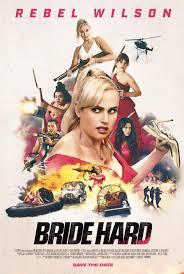
BRIDE HARD
US, 2025, 103 minutes, Colour.
Rebel Wilson, Anna Camp, Stephen Dorff, Justin Hartley, Anna Chlumsky, Da' Vine Joy Randolph, Michael O'Neill, Sam Huntington, Colleen Camp.
Directed by Simon West.
Whether the screenwriters for Bride Hard had comic spoofs like The Naked Gun series in mind when they were plotting, creating eccentric characters, imagining extreme situations, this is how Bride Hard has turned out. It is definitely over-the-top. And, if you are making this kind of entertainment which gets away with all kinds of parody, then, why not?
This is definitely a comedy thriller for the female audience. The bride and her bridesmaids and maid of honour get the opportunity to do all kinds of action stunts that are usually reserved to the male stars. It is definitely a girl-triumph comedy adventure.
The film has been directed by Simon West who made his mark in his early films with action shows like Con Air, The General’s Daughter, the first Lara Croft film. He knows how to direct action.
This is very much is Rebel Wilson’s film, drawing on her screen presence, using her Australian accent, her ability to send up herself and her image. And get away with it. The film opens with some credits flashback sequences to a developing friendship between two girls growing up. Now, 30 years later, one of them is getting married, reaches out to her best friend whom she hasn’t seen for a long time, to be maid of honour. A collection of other girlfriends will be the bridesmaids – including Anna Chlumsky (My Girl and Veep) quite compelling in her intensity as the bridesmaid, rich family background, who likes to control everything and wants to be maid of honour. And, Oscar-winner for The Holdovers, Da’ Vine Randolph is boisterously raucous.
There are some male agents but the one in charge is a woman. There is the intended groom, Sam Huntington, but he takes something of a secondary place, especially after a shot in the leg and can’t be as active as the women.
And, of course, the villain is a man, with Stephen Dorff playing it exactly right, self-confident, arrogant, at first bewildered by the female agent, then confrontations, battle of wits, battle of muscles – and, of course, his defeat.
While the title reminds us of Bruce Willis and Die Hard, the film opens with the emphasis on the bride, a lavish prenuptial dinner, and Rebel Wilson’s Sam needing to take part in a sting and criminal chase. So, while the girls drink and enjoy themselves, Sam is out on Spy Hard ultra-action, outdoing Bruce Willis at any time, and rivalling, at least, Jackie Chan and/or Bruce Lee.
Sam is reluctant to go to the wedding because of the break with her best friend but is ordered by her spy chief, also her psychiatrist supervisor, to get some balance in her life. And, it all goes from there, an extraordinary lavish mansion and grounds, the arrival of the criminals to steal the gold bars in the family vault, and an opportunity for Rebel Wilson to do extraordinary feats of brains and brawn. But, happily, in the last part of the film, all the bridesmaids get the opportunity to go into action.
Obviously very silly, but enjoyably so. Actually, the whole thing is quite absurd – but, as noted, enjoyably so.
Holdovers, The
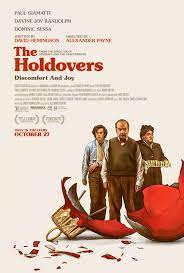
THE HOLDOVERS
US, 2023, 133 minutes, Colour.
Paul Giamatti, Dominic Sessa, Da' Vine Joy Randolph, Carrie Preston.
Directed by Alexander Payne.
In the long ago good old days, students who didn’t go home for the holidays were described as “staying back”. The Staybackers doesn’t sound like a very good title for a movie. The American, Holdovers, sounds better.
The Holdovers has been nominated for many awards, Paul Giamatti winning a Best Actor Golden Globe, and, not surprisingly when we watch the film, Da’Vine Joy Randolph has won more than a dozen Best Supporting Actress awards.
The setting is 1970, one of those elite boys boarding schools, perhaps not too far from the school in Dead Poets Society. But, the boys we are to look at here have no great yen for learning, let alone poetry. And, the teacher we focus on, Paul Hunham, played with fascinating complexity by Paul Giamatti, might have shared the ideals of Robin Williams’ creative teaching, but has almost given up long since.
Perhaps a better comparison with teachers in the film world might be a Goodbye Mr Chips variation.
When we know that some of the students can’t go home for the Christmas break and that the obsequious Headmaster (currying favour with financial donors) asks Mr Hunham to be responsible for the holdovers, two weeks, we are not surprised at some of the turn of events. However, there really are some very surprising turns of events which keep us attentive, even to the ending.
The screenplay was written by David Hemingson who has had long experience writing for television. It is often slick, smart, sarcastic and ironic. But, at its core, there is heart. And direction is by Alexander Payne, a strong reputation with films like Sideways, The Descendants (and his high school drama about an ambitious young student clashing with her teacher, Election).
The thing is that Mr Hunham is a reclusive grump, a love for ancient civilisations and the ability to quote and refer to Roman and Greek characters. The students dislike him intensely. And, it would seem, he doesn’t like himself all that much. The main student, holdover, is Angus, played by Dominic Sessa, 17, surly, expelled from previous schools, abandoned for the holidays by his mother and her new husband. As expected, lots of clash.
The other principal character is the cook, Mary, Da’ Vine Joy Randolph, whose son, an African-American exception student at the school, has just been killed in Vietnam. She is a strong character. She is a shrewd character. And, sometimes, she is a facilitator between teacher and student.
As the film goes on, we are reminded that we are often very secretive about our lives. Gradually, we do learn a lot about Mr Hunham, sadly. And we learn more about Angus, especially in the ever more intense interactions between the two. They are not heroes of the film. They are not villains. There is something of both, especially, to our surprise, as more truth is told – and, altruistically, non-truth is told.
It is good to see Paul Giamatti back on the big screen after so much television (84 episodes of Billions). He is one of the US’s best versatile actors.
- The title? The elite schools, the staff, the students, gatherings, religious dimensions, prayer, the breaks?
- The 1970, the background of the Vietnam war, the changes during the 1960s, rebellion, criticisms, student attitudes towards staff?
- The school, the grounds, the interiors, hall, chapel, corridors, kitchen? Classrooms? Student accommodation? Mr Hunham’s apartment?
- The visit to Boston, the city, cinema, restaurant, mental institution? The musical score?
- Films about unpopular teachers? Goodbye Mr Chips? Audience anticipating some kind of reconciliation by the end?
- Paul Giamatti, as a teacher, his manner, gruff, condescending to the students, demanding, quoting the classics, disliked? The gradual revelation of his story, studies, Harvard, accusations, rivals, his career, saved by the headmaster, at the school, staying for 20 years and more, settling into routine, no relationships, his drinking, embittered?
- The headmaster, helping students to universities, their low grades, financial donations? The teacher excusing himself for winter supervision? Mr Hunham having to take over? Unwilling?
- The prayer, the ethos of the school, the priest? The students going for the break? Mr Hunham and his class, the failed assignments, Angus and his smart comments, the demand for study during the break? The holdovers? The gathering, the Korean boy and his loneliness, the Mormon boy and his being proper, the racist boy and his attitudes, antagonism towards Angus? The sportsman, genial, his father coming to get him? The father taking all the boys except Angus?
- Angus, age, background, expelled from schools, the story of his dead father, his mother, remarrying, antagonism towards his stepfather, promise of the Caribbean holiday, denial, the honeymoon instead? His resentment at staying back?
- The interactions with the holdovers, studies, discipline, work in the snow? Angus, verbal bitterness, insulting Mr Hunham, the accommodation, the study?
- Mary, her son dead in Vietnam, grief, her work in the kitchen, supervising, staying back during the break, her personality, interactions with Mr Hunham, with Angus? Assessing them well? The story of her son, African-American, able to study at the school? Portrait, remembrance at assemblies?
- The meals, Mr Hunham and Angus, Mary joining? The Christmas atmosphere?
- The challenges to Mr Hunham, the issue of truth and lies, the ethos of the school? Mr Hunham finally telling his true story after the encounter with his rival from the past? Angus and his lies about his father?
- The challenge for going to Boston, justifying it as a field trip, the regulations, the two going together, the experience in Boston, Angus and his exhilaration, freedom, going to see Little Big Man, his escaping from the cinema, Mr Hunham following, going to the institution, the truth about his father, the sadness of his father’s mental deterioration, paranoia about his food being poisoned? The effect on Angus?
- Truth telling, enjoyment of the time in Boston, eating together, the buying of the tree? Gifts? Mr Hunham giving the same classic book?
- The final confrontation, the headmaster, the parents coming, the story of Angus’s father and his being upset, the interview with Mr Hunham, his taking on the responsibility for the outing, complete responsibility, his being fired?
- Angus saved, uses of truth and lies, Mr Hunham wanting to give Angus a chance in life, to stay at the school, not to have to go to the military academy?
- The two central characters – heroes, part villains? The humanity of this film?
