Displaying items by tag: Rebel Wilson
Almond and the Seahorse, The
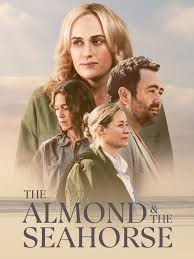
THE ALMOND AND THE SEAHORSE
UK, 2022, 96 minutes, Colour.
Rebel Wilson, Charlotte Gainsbourg, Trine Dyrholm, Cylen Jones, Alice Lowe, Meera Syal.
Directed by Tom Stern, Celyn Jones.
Based on a play, the film has a great deal of dialogue. The meaning of the title – the parts of the brain have their technical names but look like an almond and the seahorse.
The film is about the fragility of the brain, surgery and accidents, partial loss of memory, complete loss of memory, treatment, therapies – and therapies for partners.
The three principal characters are played by an Australian woman, a French woman, a Danish woman…
Rebel Wilson plays an archaeologist whose husband has had brain surgery and has lost partial memory, deteriorating, her seeing the doctor, recording for her husband what has happened, leaving notes, but his being upset, neglectful. He is played by the co-director, Celyn Jones.
The other couple, played by Charlotte Gainsbourg and Trini Dyrholm, have been together for 15 years that the older partner has been in an accident, lost her capacity for playing the cello, lost her immediate memory. She also sees a doctor, goes into an Institute, the doctor warning her partner away, that she has a bad effect.
The two bereft partners encounter one another, begin an affair, but realise they want their partners back.
The film ends five years after the main events, the archaeologist having become pregnant and giving birth to a son. Her husband having lost his memory completely but very genial in company of wife and son. The cellist is now playing again and her partner visits and reconnects with the archaeologist.
An opportunity for an audience to appreciate the effects of injury to the brain and the consequences of loss of memory for the person suffering as well as for partners and family.
- The title, the parts of the brain, technical names, resemblance to almond and seahorse?
- The reality of the brain, fragility, memory, memory impairment, memory loss?
- The city setting, the work of the archaeologist, homes, the Institute and interiors, the seaside, the final concert and gathering? The musical score?
- Sarah’s story, married to Joe, no children, the removal of the brain growth, his loss of memory, memory, his behaviour, Sarah consulting the doctor, making the recording, leaving the notes, Joe neglecting them, mistaking his medication, phone calls, confusion? Sarah becoming more desperate, wanting a child with Joe, unhappy with the doctor? The advice to go to a therapist? Her relationship with Joe’s sister, Cath and her understanding and encouragement?
- Toni and Gwen, 15 years a couple, Gwen playing the cello, the accident, the loss of memory for 15 years, getting up in the morning, Toni looking after her, the constant demands, Gwen and her angers, not playing the cello? Going to the Institute, the discussions with the doctor, Toni bring the cello, the doctor telling her she had a bad effect on Gwen?
- The encounter between Toni and Sarah, discussions, stories, loneliness, the beginning of the affair, the repercussions for both, wanting to go back to their partners? The travel away?
- Joe, some treatment, but losing more of his memory? Gwen and her becoming more calm?
- Five years later, Sarah and the pregnancy, the birth of the son, Joe not recognising, but being very cheerful the gathering, when playing the cello, Toni arriving, meeting Sarah again? The prospects for their futures?
Deb, The
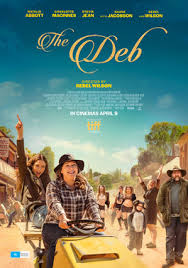
THE DEB
Australia, 2024, 121 minutes, Colour.
Natalie Abbott, Charlotte MacInnes, Tara Morice, Rebel Wilson, Steph Tisdell, Shane Jacobson, Stevie Jean, Coster D’Angelo, Hal Cumpston, Brianna Bishop, Scarlet Crabtree, Susan Prior, Julian McMahon.
Directed by Rebel Wilson.
There is the traditional Debutantes Ball, not so these years but, in this Australian story, important for a country town.
The film began as a stage musical, book and lyrics by Hannah Reilly, music by Meg Washington (who also adapted Paul Kelly’s How to Make Gravy for the screen). On the whole, the music and songs are very cheery, the opening song (and again in the final credits) very frank in its language, to provoke the target audience.
With the opening in an exclusive girls’ school in Sydney, a focus on the teenagers in both city and country town, this is a film with an immediate appeal to teenage girls and young adult women (and their mothers and grandmothers). While there are some men in the cast, younger as well as older, they are very much secondary to the female presence, female assertion, feminism, critique.
Maeve is the school leader, outspoken, demonstrative in behaviour, in trouble with the headmistress who, in fact, is her mother. With some scandals for the school’s reputation, Maeve has to go to the country to her cousins. Maeve is played by Charlotte McInnes, a lively presence once she gets over her being so stuck up.
The cousin in the country, Taylah, a strong performance from Natalie Abbott, lives on the farm, sad at the death of her mother, her father, Rick (the always reliable Shane Jacobson, memories of Kenny) the town’s mayor, with his assistant D (staimitynd-up comedian Steph Tisdell). There is drought, the difficulties of financing, an appeal to the government for aid.
And, still lots of songs and dance, contemporary-style dancing but choreography familiar from the musicals of the past, the youngsters dancing in the streets, bullying – and the condemnation of bullying. Taylah, a large girl, really wants to go to the Deb Ball but is humiliated by the youngsters in the town, except one, Dusty, the charming hero.
So, issues like drought, financial support, and more personal issues of self-consciousness, body image, city snobbery, self-promotion as an influencer, friendships, betrayals, self-assertion.
And Rebel Wilson is also present, an ambitious mother, beauty salon, thwarted, pushing her daughter forward, the daughter being one of the chief bullies. But, Rebel Wilson has also directed the film, happy memories of her being in the Pitch Perfect musical comedies.
With all the songs and dances, preparations for the ball (under the direction of dressmaker, Tara Morice, over 30 years since Strictly Ballroom), social concerns, personal crises, it offers some lively entertainment for those caught in it.
- The title and focus, the country town, the Deb Ball, the debutantes, social event, traditions in Australia?
- An Australian production, the opening, the views of Sydney, the exclusive girls high school, then the move through the countryside, the open spaces, the town, streets, shops, buildings, farms…?
- The film as a musical, initially prepared for the stage, the songs and the lyrics, more forthright perhaps than expected, the music? The insertion into the plot, the situations, the character revelations, conflicts, and the choreography, dancing, the dancers and their style, memories of the old musicals? 21st-century musical?
- The initial focus on Maeve, popular, her followers, the song and dance routine, the defiance and four letter lyrics, the assembly, the clash with the headmistress, feminism, baring of breasts, the reaction of the girls, the revelation that the headmistress was her mother? Clashes, the situation, her having to move away to the country? Her troubles, arrival, sitting waiting for the pickup, her condescending attitudes?
- Taylah, the big girl, self-conscious, mocked by the other girls at school, the bullying? The photo of her mother, dying, missing her mother? Relationship with her father, the farm, the difficulties, the drought, financial needs, at work on the farm?
- Driving, picking up Maeve, the initial reaction, friendly, the cousin, Maeve and her reactions, the farm, the room, her uncle? The meal, the phone? Wanting to be an influencer, the pod cast, her intentions, hearing about the Deb Ball, wanting to exploit it? But, the fickle following, the girls at the school, cancelling her, the Pig title?
- Taylah and Maeve, the conversations, the comparisons? Style? Maeve attacking the bullies? The girls, the boys? The taunting of Taylah, the importance of the ball, her wanting to go, wanting the boy to ask her, his refusal, the humiliation? Her determination?
- The contrast with Dusty, more sympathetic, the attraction for Maeve? His various interventions, his helping against the bullies? Song and dance routines?
- Janette, rebel Wilson to roll, ambitions, her salon, relationship with the daughter, pushing her daughter? The nastiness of the daughter and her friends? At home? Self-promoting and rather fickle in her dealings with others, including Taylah?
- The situation of the town, the drought, Rick and Dimity, the mayor, assistant, Dimity and her wisecracks, support of Taylah? The videos, the appeal to the government, the appeal for finance, on the phone, told 75th in line, sending the videos, the final phone call, no drought relief money, but the support of the Deb Ball?
- Shell, her place in the town, unmarried, with an eye on Rick, his not marrying her in the past? The shop, the dresses, supervising the Ball? Some caricaturist spinster behaviour?
- The preparations for the ball, the dresses, the girls, the partners, song and dance routines, Taylah, the dress?
- The exposure of Maeve, the pod cast, her attempts at apology, clashes with Taylah, sense of betrayal, her deciding to leave?
- The change of heart, return, apology, the financial help, the appeals, online, the change of heart of the girls at school? The preparation for the Ball? Dusty and the relationship?
- Rick and Dimity, the preparations for the ball, his sash, Shell, the humiliation of Taylah, her defiance of Maeve, the cigarette, the fire, the hall burning down, Taylah and her rescuing Shell? But her not wanting to go to the Ball?
- The ball, the speeches, the helicopter, the arrival of the Prime Minister, the show and song and speeches, the rain? Taylah and a change of heart, the dress, Shell helping her, her arrival?
- Musical, the happy ending?
- The target audiences, teenage girls, their mothers and dealing with teenagers, grandmothers and their wisdom? The response of male audiences?
Bride Hard
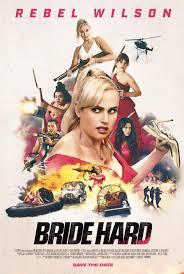
BRIDE HARD
US, 2025, 103 minutes, Colour.
Rebel Wilson, Anna Camp, Stephen Dorff, Justin Hartley, Anna Chlumsky, Da' Vine Joy Randolph, Michael O'Neill, Sam Huntington, Colleen Camp.
Directed by Simon West.
Whether the screenwriters for Bride Hard had comic spoofs like The Naked Gun series in mind when they were plotting, creating eccentric characters, imagining extreme situations, this is how Bride Hard has turned out. It is definitely over-the-top. And, if you are making this kind of entertainment which gets away with all kinds of parody, then, why not?
This is definitely a comedy thriller for the female audience. The bride and her bridesmaids and maid of honour get the opportunity to do all kinds of action stunts that are usually reserved to the male stars. It is definitely a girl-triumph comedy adventure.
The film has been directed by Simon West who made his mark in his early films with action shows like Con Air, The General’s Daughter, the first Lara Croft film. He knows how to direct action.
This is very much is Rebel Wilson’s film, drawing on her screen presence, using her Australian accent, her ability to send up herself and her image. And get away with it. The film opens with some credits flashback sequences to a developing friendship between two girls growing up. Now, 30 years later, one of them is getting married, reaches out to her best friend whom she hasn’t seen for a long time, to be maid of honour. A collection of other girlfriends will be the bridesmaids – including Anna Chlumsky (My Girl and Veep) quite compelling in her intensity as the bridesmaid, rich family background, who likes to control everything and wants to be maid of honour. And, Oscar-winner for The Holdovers, Da’ Vine Randolph is boisterously raucous.
There are some male agents but the one in charge is a woman. There is the intended groom, Sam Huntington, but he takes something of a secondary place, especially after a shot in the leg and can’t be as active as the women.
And, of course, the villain is a man, with Stephen Dorff playing it exactly right, self-confident, arrogant, at first bewildered by the female agent, then confrontations, battle of wits, battle of muscles – and, of course, his defeat.
While the title reminds us of Bruce Willis and Die Hard, the film opens with the emphasis on the bride, a lavish prenuptial dinner, and Rebel Wilson’s Sam needing to take part in a sting and criminal chase. So, while the girls drink and enjoy themselves, Sam is out on Spy Hard ultra-action, outdoing Bruce Willis at any time, and rivalling, at least, Jackie Chan and/or Bruce Lee.
Sam is reluctant to go to the wedding because of the break with her best friend but is ordered by her spy chief, also her psychiatrist supervisor, to get some balance in her life. And, it all goes from there, an extraordinary lavish mansion and grounds, the arrival of the criminals to steal the gold bars in the family vault, and an opportunity for Rebel Wilson to do extraordinary feats of brains and brawn. But, happily, in the last part of the film, all the bridesmaids get the opportunity to go into action.
Obviously very silly, but enjoyably so. Actually, the whole thing is quite absurd – but, as noted, enjoyably so.
