Displaying items by tag: Peter Malone's Movie Reviews
Thunderbolts*
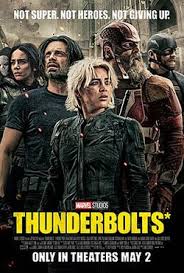
THUNDERBOLTS*
US, 2025, 126 minutes, Colour.
Florence Pugh, Sebastian Stan, Julia Louis-Dreyfus, Lewis Pullman, David Harbour, Wyatt Russell, Hannah John-Kamen. Olga Kurylenko, Geraldine Viswanathan, Wendell Pearce.
Directed by Jake Schreier.
A recent listing declares that there have been 36 Marvel Studios films over almost 20 years. Thunderbolts*is the latest and seems to have appealed at the box office.
The Marvel Studios superhero team has been The Avengers – their working together to save civilisation, a number of back stories and further developments. So, the question: who are the Thunderbolts? This is not an action story showing them working together. Rather, it is their origin story of their moving to work together. In fact, the characters have appeared in a variety of Marvel films, as well as in the S*H*I*E*L*D television series. Several of them have appeared in the Captain America films or in the Antman films.
So, who are they now and what is the mission? (And an indication to audiences who rush out during the credits, there is a longer than usual post-credits sequence indicating the future.)
First to be introduced is Yelena, a strong presence with Florence Pugh. She is an assassin, getting tired of her work, controlled by a political mastermind, Valentina. Julia Louis Dreyfus was Veep, but here she is even more powerful, facing the Senate enquiry, masterminding laboratories for developing weapons and reconditioning human beings. Clearly, Julia Louis Dreyfus is thoroughly enjoying this sinister and commanding role.
Then there is return of Bucky Barnes, Sebastian Stan, familiar from the Captain America films, here seen in a political context, confronting Valentina. Then we are reintroduced to Alexi Shostakov, David Harbour, prominent former Russian agent, now down on his luck driving taxis. There is Ghost (Hannah John-Kamen) who can appear and disappear through walls, from the Antman films. And, again from Captain America, a possible Captain, John Walker, Wyatt Russell, supremely self-assured.
Then there is Bob, a reconditioned human, Lewis Pullman. He is a mysterious presence, lacklustre one minute, energised the next, – and the character from Marvel comics, The Sentry.
The first part of the action shows each of these characters in action, but, with Valentina’s sinister plans, a great deal of conflict and fighting with each other. When they eventually do begin to understand each other, see how they are being controlled by Valentina, and the concern about Bob, they join to become an active force, building up to an action-packed confrontation.
In many ways, this group consists of a rather unprepossessing lot. Anti-heroes? Not many superpowers, rather relying on determination, intelligence, physical force, available weapons. And, by and large, they don’t radiate immediate charm! So, it will be interesting, as well as a challenge, to move into their next film, working together as a unit, assertive, and, with the*in the title, moving towards being new avengers.
The director, Jake Schreier, has, up till now, had a strong career in music videos and television series.
- Marvel Studios, the Thunderbolts comics, this film as the New Avengers introduction rather than a thunderbolts adventure?
- Marvel Studios and superheroes, action adventure, futuristic, the New York setting, destruction of New York, Washington, the variety of centres and experimentation, signs? Special effects? Musical score? Theme song?
- The range of characters, the introduction to each, their interactions, Bob as the common bond, Valentina, politics, impeachment, hearings, her control, experiments, budget, setting the base for New Avengers films?
- The introduction to Yelena, assassinations, controlled by Valentina, top of the building, falling, Parachute? Getting out from assassinations? The encounter with Alexi, the taxis, his squalid situation, his past career, the apartment, costumes? Relationship with you Lena, her dead sister?
- Audience knowledge of Bucky Barnes, Winter Soldier, the past films, in politics, the interview, concern about Valentina? The socials?
- John Walker, here character but yet,, his family, the possibility in the past of his being Capt America? His role in the team?
- Ghost, her presence, personality, contribution, less a member of the team?
- Bob, the comic character, simple, affable, his past, ambitions, the transformation, his becoming the Sentry/Floyd? Participation with the group, the influence of Valentina, is mixed experiences, dangerous, affable? The resolution?
- Valentina, the influence of her assistant, advice, yet prepared to betray her? The political background, the Senate enquiries and interrogations, her influence, control, plans?
- The building up of the new team, not so much with superpowers, the contrast with the Avengers, the final action sequences, CGI, stunt work, battles, the team winning, the role of Bob, the defeat of Valentina?
Heart of the Man
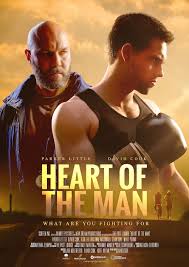
HEART OF THE MAN
Australia, 2024, 85 minutes, Colour.
Parker Little, David Cook, Vito Leo, Roxanne McDonald, Sean Dow, Matt Young, Winnie Mzembe, Tyrel Dulvarie.
Directed by David Cook.
A small-budget film from Queensland, written and directed by actor, David Cook, an effective drama but not widely seen.
There is a Brisbane setting, the focus on the indigenous community in the city, especially focused on the world of boxing, training, gymnasium, the hopeful winning titles, disappointments in the past. There is also a focus on the Arts Theatre.
The focus is on 18-year-old Chris, a very effective performance, believable, by Parker Little. We see him in training for a boxing title, coached by his father, Sam, riding his bike while his son runs, going to the gym. The audience is shown various newspaper clips about Sam having a possibility for a title fight but this is not currently about.
There is a back story about Sam, his marrying a white wife, daughter of the head of boxing, send drinking, and his wife been killed in a car accident. He is full of the rooms, some fun times attending the church self-help group. But he is transferred all is ambitions on to his son who, in fact, is skilled at boxing, but is doing the training only to make his father happy.
However, this is not so much a film about boxing is about coming of age and sexual orientation, the audience being alerted when at the gym, Chris notices one of the trainees, an indigenous man, Jamie. Chris had also assorted a white man, gay, calling him a freak. When a close friend of Chris takes into the Arts Theatre, he discovers the manager is the man that he punched. However, the manager sees into Chris, talking with him, Chris apologising, offering him a job, Chris finding himself at home in the theatre as well as in the gay culture.
On the one hand, this is a story of Chris finding his own identity, supported very much by his indigenous grandmother, and his making choices to stand up to his father, on the other, there is a vengeance theme involving Sam’s father-in-law, Sam’s business manager, and a bounty put out on Sam’s life. The story is happily resolved there is violence and upset in the of the story, eventually moving towards a peaceful ending.
Heart of the Man could be a helpful film parents and gay-oriented children to see and discuss.
- The title, as explained by the father, the truth of the heart, honest identity and acceptance?
- The Brisbane setting, homes, and gyms, bars, the arts Theatre? The musical score?
- The aboriginal community in Brisbane, families, relationships, the boxing world, titles, the contrast with the theatre world? The generations? What-indigenous families?
- The introduction to Chris, his age, running, pushing himself, tired, the encounter with Joey and bumping him, calling them freaks, punching? The screenplay going back in time, Chris at home, with his father, Sam, his father catching him, riding the bike, Chris and his running? The gym the training? The possibility for the title fight? His father wanting it, the indications from the newspapers of the past, Sam’s possibilities, not achieving, the death of his wife, his hopes for his son?
- Chris, the death of his mother, the visits to his grandmother and her support? At the gym, the encounter with Jamie, audiences alerted to issues of sexual identity? The effect on Chris?
- His friendship with Marcus, Marcus and his friend, sexuality, bisexuality, Chris a surprise? The taking him to the theatre? The impact of the performance, the actors and issues of identity, honesty, love? The effect on him? And the encounter with Joey and his friend, the surprise, shame?
- Return to the theatre, the apology to Julie, Joey taking on, the discussion, implications of sexuality, offering him the job, Chris returning, sweeping up, going on stage, the week, Christine, the dancing? Chris and honesty about himself?
- The background, Sam and his marrying his wife, quiet, daughter of the boxing manager? His drinking, the accident, his responsibility for the death of his wife? His father-in-law and the enmity? His ambitions for boxing title, wanting now for his son? His visits to his mother and conversations? Her challenges?
- Bentley, the manager, friendships, arranging the bout, Sam with the gun forcing him, the manager and his henchmen, the pressure on Bentley to destroy Sam? And the hold over his mother? Bentley at the bar, his dilemma, friendship with Sam, going to the house, the gun, confronting him, the memories of the past? The head arriving, (the black and white flashbacks of Sam and the boss and training)? The threats, the blindfold, the henchmen to shoot Sam? The boss of the change, venting his anger and memories of the past, the knife, stabbing same, mentally moving, the upset, the shot, the death of the boss? Bentley and his injuries?
- Chris and Jamie, Jamie upset, Chris and the reconciliation, the truth of his relationship? Define his father, his father coming to the theatre, upset, Chris standing his ground, leaving home, the passing of three months, with Jamie, training at the theatre, singing, the dinner with Marcus and friend?
- His visit to his grandmother, her understanding that he was different, encouraging him for his identity, standing up to his father? His define his father, saying he did not want to box?
- Visiting his father in hospital, trying to speak with him? The final performance, the week, Christine, his coming on stage, his father coming to the theatre and looking at him? The abrupt ending – and the audience supplying what would happen in the future?
Riefenstahl

RIEFENSTAHL
Germany, 2024, 115 minutes, Colour.
Directed by Andres Veiel.
Audiences interested in the German film industry but, especially for those who respond to the name of the 1930s director, Leni Riefenstahl, this documentary, Riefenstahl, is a significant documentary. She became famous in the mid 1930s as a propagandist for the Third Reich, association with Hitler, filming the vast Nuremberg rally of 1934, Triumph of the Will, as well as her filming of the Berlin Olympiad, 1936.
The documentary is filled with excerpts from her films, comments about her technique, camera placement, the vastness of the sets filled with Nazi enthusiasts, troops, her sitting in the editing box and defining the look and tone of her films. Evident is the awareness of racial superiority in the focusing on the Aryan German people, the superior bodies of the athletes at the Olympics (including US African-American Jesse Owens). Riefenstahl provides significant resources for appreciating these films.
However, there is also the issue of her Nazi sympathies, relationship with Goebbels, Hitler, the production of her films, the screenings, the repercussions. Riefenstahl in fact, born 1902, died in 2001, almost 70 years after her films, often embroiled in discussions, arguments about her political affiliations, sympathies, this film drawing on documentaries about her, quite a number of excerpts from television interviews, harsh questions, condemnations, her self-defence.
While there is a lot of documentation from the 1930s and 1940s, including clips from her famous mountain climbing film features, singing her with Goebbels, with Hitler, her being part of the National’s response to national Socialism at the time, there is a great deal of excerpts from previous documentaries as well as television interviews, especially by the 1970s and onwards, her being interrogated about her Nazi sympathies. There is some ambiguity in the attitude of the director, presenting all this material, but seemingly slanting it, according to some viewers, to a condemnation of Riefenstahl.
There are also sections of this documentary on her visits to Africa, her photography, her publications, her anthropological interests – especially in comparison with or contrast to her earlier films and support of Hitler.
Not the last word in judgement on Leni Riefenstahl but certainly a contribution to appreciating her skills in filmmaking and the questions of her perspectives in the 1930s and 1940s.
Hysteria/ Germany
HYSTERIA
Germany, 2025, 104 minutes, Colour.
Devrim Lingnau, Mehdi Meskar, Serkan Kaya, Nicolette Krebitz, Aziz Capkurt, Nazmi Kirik.
Directed by Mehmet Akif Büyükatalay.
Hysteria is a different kind of thriller, the making of a film in the 21st-century by a group interested in migration issues, Muslims coming to Germany. Audiences might be tempted to become a bit hysterical as they watch the aftermath of a scene where a copy of the Quran is burnt, those involved becoming intense about what happened, responsibility, the director and producer, the focus on the young assistant, the actors who were amateurs coming from a local migrant centre, a taxi driver. Ultimately, each of the characters has their version of what happened, blame, and the audience having to decide, if they can, what really happened with each of the characters and who was responsible.
Many audiences will find this film difficult to sit through, the complexity of the characters, difficulties in the elaboration of the Muslim issues and the Quran, the stances of the participants, the ambiguity of all the perspectives.
But, in retrospect, audiences will have looked at and listen to the explanations, true and/or falls by all the participants and realise, with memories of film like Kurosawa’s Rashomon, that there can be many versions of the same story.
Misericorde/ Misericordia
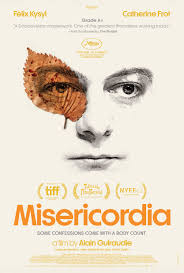
MISERICORDE/ MISERICORDIA
France, 2024, 103 minutes, Colour.
Felix Kiysyl, Catherine Frot, Jean-Baptiste Durand, Sergei Richard, Jacques Develay, David Ayala.
Directed by Alain Guiraudie.
Misericordia has been described as an existential drama. As a useful description whether it be encouraging or off-putting. And, it is a French existential drama, remembering Descartes’s “I think, therefore I am”. As well as, “I feel, therefore I mm”.
Misericordia is the Latin word forMercy, which also includes themes of kindness and forgiveness. In fact, this drama is set in a French village and a Catholic context, the iconography, a eulogy at a funeral questioning the nature of death, transition to a heavenly life of love, and the presence of a priest character throughout the film. At some moments, there is empathy for these religious themes, at other times, a critique of double standards in religious behaviour. And, in the middle of the film, a sequence not referred to in any of the main critiques, a very significant confession-reversal theme, a character standing in for the priest, the priest confessing as a penitent.
The significant point of reference for what happens in this village is the role of the central character, Jeremie, former baker, out of work, driving in the long opening sequence through the French countryside into the village, arriving for the funeral of a boss to whom he was devoted. The widow is very sympathetic. Her son, short-tempered, married with a child, has been alienated from Jeremie, his childhood friend.
Another point of reference. In the late 1960s, there were several films, including Paolo Pasolini’s Teorema, where a stranger enters the life of a family, seductive, changing each character.
There are some early intimations of the homoerotic atmosphere – and this certainly emerges throughout the film, fights between Jeremie and his alienated friend, physical and wrestling, Jeremie visiting another old friend, making an approach. The priest is also present much of the time, in the family home, and, especially, foraging in the important activity for the village, the search for and gathering of special mushrooms.
The screenplay stays with Jeremie throughout the film, initially enigmatic in his return, his decision to stay, trying to probe what is going on in his mind, in his emotions, the loner, the repressed gay man, his sometimes erratic behaviour, his violence, his lies, his rationalisations, the probing of the police and their investigations, continued support of the priest and the revelation of his own emotions.
Throughout the film the audience sees an alarm clock shining at various times during the night. And, sometimes, Jeremie cries out in his dreams, reliving the violence, imagining interrogation by the police in his room. Which means that the film should not be judged as “realistic”. Rather, it is something of a parable about a lonely man, wilful behaviour, acknowledging truth, experiencing some kind of Misericordia.
As has been said, this film is very French in tone. It might be something of a different experience were there to be an overtly emotional version from Italy or, by contrast, a sombre version from the Scandinavian countries. A film designed for thoughtful and reflective audiences.
- The title, mercy, forgiveness? for Jeremie? For the other characters?
- The French settings, the long prologue during the credits, the car journeying through the countryside, the mountains, the village, the streets, homes, the forests, the countryside? The musical score?
- The religious dimensions of the film, the nature of Misericordia, the funeral for the deceased baker, the role of the parish priest, his words, his actions, his sexual orientation and behaviour, the reverse confessional sequence, his confessing to Jeremie, with the concealment? Jeremie, in himself, sexual drive, violence, the killing of the cover-up? The need for Misericordia?
- Jeremie’s story, in the village, baker, his relationship with the dead man, travelling for the funeral, meeting Martine, staying with her, meeting Vincent, memories of the past of their friendship, the alienation? His delay, staying in the village, the visit to Walter, the sexual approach, the visiting again, their discussions? The hostility of Vincent, his wife and family, the final confrontation with Vincent, killing him, burying the body? Jeremie as an actor, the various scenarios, the lies?
- Martine, her relationship with her husband, welcoming Jeremie, Vincent suspicious that he was wanting to have a relationship with his mother? Her character, support, her family, the ambiguities of Jeremie’s behaviour?
- Walter, alone, friendship with Vincent, memories of Jeremie, the visits, and his behaviour, the sexual issues?
- The parish priest, his character, visiting Martine, the funeral, the meals? His insight into Jeremie, Jeremie’s behaviour, his own attractions, the reverse confession, concealing Jeremie’s behaviour, the bargains with him, emotional? Saving Jeremie from the polics, the setup in the bedroom?
- The concern about Vincent’s disappearance, his wife, Martine, the arrival of the police, their interrogations and enquiries? The various hypotheses? The possible solutions? Jeremie and his answer for every issue, weaving, lying, changing details?
- The aftermath of this story, audience insight into Jeremie, as a person, his desires, sexual orientation, inherent violence, his violent behaviour cover-up? His future?
Mission Impossible: The Final Reckoning
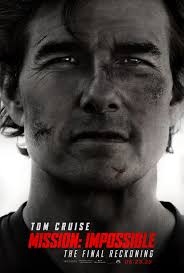
MISSION IMPOSSIBLE: THE FINAL RECKONING
US, 2025, 169 minutes, Colour.
Tom Cruise, Hayley Atwell, Simon Pegg, Ving Rhames, Esai Morales, Pom Klementieff, Henry Czerny, Holt McCallany, Janet McTeer, Nick Offerman, Hannah Waddingham, Trammell Tillman, Angela Bassett, Shea Whigham, Charles Parnell, Mark Gattis, Rolf Saxon, Cary Elwes.
Directed by Christopher McQuarrie.
The grand finale.
The spin-off from the very successful television series, with its pounding score and the messages disappearing after five seconds, the first Mission Impossible, the introduction to Tom Cruise as Ethan Hunt, was released in 1996. Cruise was 33. Now, 2025, the eighth film in the franchise, and here is Cruise in his early 60s, athletic, doing all his stunts, very serious saviour of the world.
There is something of a complex background to this finale, an AI development called The Entity and the danger of its overcoming the human race, and setting off a nuclear holocaust. Luther, Ving Rhames from the past films, is here developing a mechanism to counteract The Entity. But, arch-villain, Gabriel (Esai Morales) wants to conquer the world and has the other piece. The President of the US, Angela Bassett, surrounded by advisers (several British character actors, including Janet McTeer and Mark Gattis) is relying on Ethan Hunt to save the world.
There are various characters who have worked with Ethan in the past, especially Benji, Simon Pegg, and a reunion with Grace, Hayley Atwell. The first part of the film is setting the scene, Hunt building up his team (and some mask removing action scenes). In this film there are quite a number of references to the action in 1996, especially an angry character, Briggs (Shea Whigham) whose father was killed by Hunt (with some flashbacks from the original and Jon Voight). Briggs is working with Kittredge, Henry Czerny, Hunt’s sometime control. But, especially with killer, Pom Klementieff rescued from prison, the team is ready.
The second part of the film has Ethan Hunt underwater most of the time, and some extraordinary stunt work, as he dives into a sunken vessel in the Behring Sea, the difficulties of the depth, compression, breathing, an narrow tube which means that he has to strip down to his boxers! and survive and reach the surface. Ultimate success (but perhaps some realists in the audience wondering about meals, sleep, toilet stops! None of which are shown.)
The last part of the film is action adventure, stunts and CGI, making mission impossible, Mission Impossibler, in fact, Mission Impossiblest. And, with some instant travelling from Europe to Africa, beautiful mountain and valley African locations for the finale, especially with Hunt pursuing Gabriel in light planes, and some ultra-gymnastics as Hunt leaps, dangles, climbs on to Gabriel’s plane, overcomes him, takes the connection to destroy the Entity, tension with the time coming down to the splittest of seconds to save the world.
In the American presidential control room, enormous relief, then a final puzzling scene in Trafalgar Square, Ethan Hunt, each member of his team approaching him, looking knowingly, then turning away… And we wonder actually if he is dead and this is the final tribute to his world saving achievement from his team…
- Popular 30 year franchise? The television series (and the continued use of the musical theme)? The character of Ethan Hunt, saving the world? Tom Cruise, his presence, performance, stunts, hero-saviour?
- The development of the character of Ethan Hunt over the decades, this film using flashbacks to the original film, to past films? Tom Cruise at 30 something then 60 something?
- The locations, Washington and the President, the vast security headquarters? The Arctic, the Behring Sea, underwater photography, the long sequence exploring the submerged vessel, the transition to Africa, the beauty of the scenery, London, Trafalgar Square? The background musical score, sense of excitement, tension, amplified?
- The explanation of the basic situation about The Entity? Control of the human race? The nuclear danger? The role of Gabriel, wanting power? President of the US, her response, her advisers, the reliance on Ethan Hunt? Those dissenting? The short time to DEFCON, the focus on the clock?
- Re-introducing Ethan Hunt, his reputation, his achievements, Kittredge, the explanations of his achievement, dangers, deaths, the presence of Briggs, the flashbacks to his father and Hunt causing his death? Refusing to shake hands? Kittredge and Briggs working together, building up to a confrontation? Then a reconciliation?
- Luther, his presence in the previous films, technical skills, getting older, facing The Entity, the preparation of material for the capture of The Entity? His death? His final message after the achievement and exploding after five seconds? Seen in flashbacks?
- Benji and Grace, their characters, in the previous films? The team, Grace, pickpocketing, her skills and timing, the relationship with Ethan? Benji, technical skills? The recruiting of Paris, going to the prison, as guards, the masks, the shootout, Capt Bledsoe, the guns, the fight? Paris, her character, killer, speaking in French?
- The explanation of the strategy, the team possessing Luther’s capture, Gabriel, the confrontations, arrogant personality, his troops, the escape, his possessing the other part of the capture? The explanation of the timing, the split second timing?
- The background of locating the sunken vessel, the issue of the key, who had the keys? The compass points, the technology, the submarines, Hunt and the various ships, the explanation of the dangers, the cold, compression, revival? The captain of the ship, getting the information, the code? The Admiral supervisor, the collaboration?
- The team, going to St Matthew Island, the discovery of William Donloe, his wife, his presence 30 years earlier, his achievement on the island? The arrival of the Russians, the buildup to the fight, Don and his transmitting the code, his wife and Grace with the compressor for revival?
- The long sequence of Hunt underwater, the dangers, the depths, tunnel and his having to remove his clothes, going to the top, unconscious, the revival, Grace and Donloe’s wife?
- Washington, the dilemmas for the the president, the personalities of her team, the timing, her reliance on Hunt? Different advisers, the decision about bombing the American city, the advisers with the gun, his being shot, the general killed?
- The tension with Hunt, Gabriel’s arrival, confrontation, his men the shooting, Gabriel and the plane, Hunt in pursuit, the beautiful scenery, the range of highflying stunts, possible or impossible? The battle in the sky, overcoming Gabriel, getting the peace for controlling The Entity? Parachuting down?
- The fight, Benji wounded, Donloe and his collaboration, Benji giving the directions for the wires, Grace waiting to cut when the signal came through? Down to the final second? The achievement?
- The president, her decision, not to destroy the town city, the power going off, coming on again, the world saved, her going to inspect the troops, her son?
- The team, the achievement, Benji and his wound, care, Grace and Hunt?
- The final sequence, Trafalgar Square, the world saved – did Hunt survive or was this a symbolic death sequence, his meeting once again the significant people in his team?
- Mission Impoible: the Final Reckoning movie
- Christopher McQuarie
- Tom Cruise
- Hayley Attwell
- Janet McTeer
- Mark Gatiss
- Holt McCallany
- Hannah Waddingham
- Pom Klementieff
- Rolf Saxon
- Shea Wigham
- Henry Czerny
- Esai Morales
- Peter Malone's Movie Reviews
- Angela Bassett
- Charles Parnell
- Simon Pegg
- Ving Rhames
- Travis Tillman
Man About the House, A
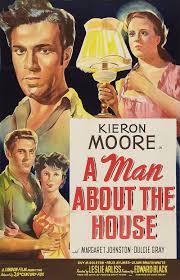
A MAN ABOUT THE HOUSE
UK, 1947, 99 minutes, Black-and-white.
Margaret Johnston, Dulcie Gray, Kieron Moore, Guy Middleton, Felix Aylmer.
Directed by Lesley Arliss.
A rather low-key melodrama based on a popular novel of the time by Francis Brett Young. This was the period in British cinema of Great Expectations, Black Narcissus. But there were also quite a number of colourful melodramas, sometimes based in Italy as was this one.
Two unmarried sisters run a school in London but receive a bequest from an uncle, a substantial income each year as well as a home in Italy, outside Naples. The sisters are played by Margaret Johnston (Australian-born, stage actress, in films from the 40s to 1968) and Dulcie Gray, with a long career in films. Introduced here is the Irish actor Kieron Moore, retiring from films in 1974, notable for his performances from Vronski with Vivien Leigh in the 1948 Anna Karenina. Guy Middleton and Felix Aylmer were regulars in many British films and these decades.
The film opens in a rather prim London, transfers to Italy, the older sister being very reserved and arrogant, the younger sister more enthusiastic. They encounter Salvatore, the manager of the estate. The older sister gradually mellows and falls in love, the younger sister observing but then falling in love with a doctor who visits. Salvatore is the life of the community, but the audience will at some stage begin to be suspicious, this confirmed, as he is poisoning his wife, resentful that his family which owned the estate has been taken over by the English.
A melodramatic and artificially staged fight between Salvatore and the doctor, the older sister recovering and never knowing her husband’s plans.
Certainly not to the taste and style of the 21st-century audience. Rather, more interesting as an example of British filmmaking in the postwar period.
Cassino in Ischia
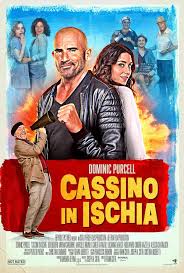
CASSINO IN ISCHIA
US, 2024, 115 minutes, Colour.
Dominic Purcell, Yvonne Scio, Jennifer Mischiati, Carlotta Natolie, Ugo Dighero..
Directed by Frank Ciota.
Response to this colourful visit to Italy, especially the beauties of Ischia, will certainly depend on the mood of the viewer. For those in a relaxed mood, there is a mixture of holiday, romance, some Italian farce situations and characters, but also some more serious themes. Those who prefer serious themes will have to live with the broad Italian comedy and focus on an action actor who is 53, not winning the awards that he used to, long alienated from his brother, running out of options for his career, and visiting Italy to reflect on his life.
There is also an appeal to cinema buffs, memories of Lucchino Visconti, whom the action actor had never heard of, some discussions about his films, some clips from Rocco and his Brothers, the finding of an unfinished manuscript in Visconti’s house, and a hack Italian director seeing it as his opportunity to make a comeback after a dismal response to one of his films at a film festival. He is supported by his wife and his daughter who wants to be an actress (and, after appearing in the film, decides not to be).
Dominic Purcell, born in England but growing up in Australia and appearing first in Australian film and television, then settling in the US and the continuous career of action films and television, is tough-looking, tough-sounding, but goes through a process whereby has to look into himself, his broken marriage, the alienation from his brother, what he is to do after the age of 50. We see some filming of scenes, the scenario being Proust’s Memories of Time Lost, black-and-white photography, nods to Visconti, and the central character carrying his suitcase symbolic of his carrying his memories.
The Italian director, his family and entourage provide all the farcical situations. A local tour guide, glamorous, provides the potential for a romance. And, a Hollywood opportunity for the actor to revive his career, provides an opportunity for self reflection again, and the reconciliation with his brother (whom he promotes to assistant director for the finishing of the new Visconti -like film).
Dialogue is a mixture of the farcical and the serious, giving Dominic Purcell opportunities to be dramatic at times, several times weeping. But, the Italians move from English to Italian at the drop of a cue.
Many will enjoy it. Some will look down on it. But it is something of a mixumgatherum, well expressed by Zeoisme, October 2024, IMDb:
The main problem is that the Euro-Italian acting style doesn't translate into an American English language movie. All the stock Italian tropes were mostly redundant in this hybrid. Mamas, food, mistaken identities, comedy of errors, buffoons, bureaucratic over-reach and frequent weeping just didn't gel with the fairly decent basic story.
Oh...Rosalinda!
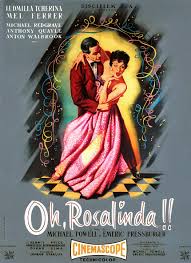
OH… ROSALINDA!
UK, 1955, 101 minutes, Colour.
Anton Walbrook, Michael Redgrave, Ludmila Tcherina, Anthony Quayle, Dennis Price, Mel Ferrer, Anneliese Rothenberger.
Directed by Michael Powell.
Film-buffs will appreciate the films of Michael Powell and Emeric Pressburger, especially admiring their very successful and striking films of the 1940s, will want to see this film, the last of their experiments, their coming to the end of their collaboration in the late 1950s.
The screenplay is an updating of Strauss’s Die Fledermaus, The Bat, set in 1899, a light operetta, romance, deceptions, the touches of farce.
However, this film will be something of an acquired taste. The basic plot and characters from the original have been transferred to 1955, post-war Vienna, divided, rather like Berlin, into various zones, Russian, British, American, French. Audiences who appreciate the Strauss music will enjoy it. Audiences who find this kind of operetta something of a strain, will definitely feel the strain.
But, the adaptation to Vienna 1955, the international implications of the time, friendships and hostilities, the role of the Soviet Union, British propriety, the Americans being American, and the French touches of a more, is persuasive.
The film is very stylised, staged, emphasis on elaborate decor, lavish costumes, more than a touch of the bedroom farce. But, it is the cast which is quite striking. Michael Redgrave, surprisingly, represents the French, a man about town, married to Rosalinda, but always with an eye to other women, eventually being trapped. This is not the Michael Redgrave we are used to, doing his own singing, dancing, surprising high kicks, and into the air with the heel clicking zest. On the other hand, Dennis Price is typically British – enough said. Anthony Quayle is bombastic as the Russian representative. Mel Ferrer is the romantic American.
Entering the proceedings, introducing them, manipulating events, tantalising characters is the host, played by Anton Walbrook, veteran of several Powell-Pressburger films, The 49th Parallel, Colonel Blimp, The Red Shoes. He is obviously enjoying himself here.
Singer-dancer, Ludmila Tcherina is Rosalinda.
A specialised film for film buffs, Strauss lovers, those who enjoy this kind of operetta farce.
Hurry Up Tomorrow
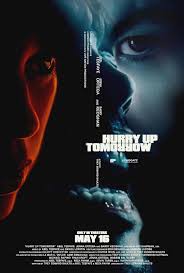
HURRY UP TOMORROW
US, 2025, 105 minutes, Colour.
Abel Tesfaye, Jenna Ortega, Barry Keoghan, Riley Keogh, Ash T, Paul L.Davis.
Directed byTrey Edward Shults,
The many fans of the very successful recording artist, The Weekend, actual name, Abel Tesfaye, have enthused on social media how much they like this film, quite a number giving it 10 out of 10.
For the many audiences who are not familiar with The Weekend, his career, his songs, his singing style, there is a curiosity value, but probably also some bewilderment.
The Weekend plays a variation on his own character, a successful singer on tour, many of his songs throughout the film, many with autobiographical touches. He is something of a sad, even morose, character in his manner and demeanour, manifesting this more and more as the film goes on, more depressed, lugubrious in his reactions, often moody, with violent touches.
A number of commentators have labelled this film as a vanity project, cowritten and produced by the singer himself, aligning the narrative with songs from his most recent album, definitely with a focus on himself. In fact, at the opening, he is gazing into the mirror, gazing at himself, preening, doing weightlifting near a mirror, then dressing for his going on stage, a long corridor processing towards the stage, the dramatic moment, his entry, the absolute acclaim.
But, he is conscious of losing his voice, tantrums, walking off, then a very powerful scene, in fact, with Irish actor, Barry Keoghan, playing his manager, drawing on a repertoire of persuasion to coax and force the singer to go back on stage.
In the meantime, there is what seems an unrelated episode, a young woman, Jenna Ortega (called Anima in the credits, a nod to the psychology of Carl Jung and the feminine aspect of a male?) angrily destroying a house and setting it alight and driving away. Then she is at the concert, rapt in the singer, his seeing her, her coming to him in his dressing room, then to the hotel, the night together, she something of a stalker, explaining her interpretation of his songs, and his mixed reaction.
How can this develop? Realistically? Symbolically? The stalker tying the singer up, overpowering him, the confrontation with the manager, fight, death… And how real is this?, Symbolic? Best explained by those enthusiastic fans who give the film 10 out of 10.
