Displaying items by tag: Peter Malone's Movie Reviews
Primate
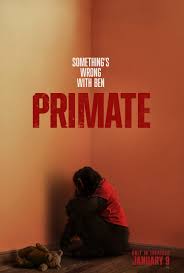
PRIMATE
US, 2025, 89 minutes, Colour.
Johnny Sequoyah, Jess Alexander, Troy Kotsur, Victoria Wyant, Gia Hunter, Benjamin Cheng, Charlie Mann, Tienne Simon, Miguel
Torres Umba.
Directed by Johannes Roberts.
No, not a religious leader! Rather the animal primates, monkeys, the chimpanzee, personalised with the star chimp, Ben, wearing a jacket, in Hawaii, under the special care of an expert. However, in the initial moments, the horror indications. Ben savagely attacks the doctor tending him. And then an explanation of rabies and wariness of the water.
Then some memories of rabies in film, David Cronenberg’s Rabid and, of course, for Stephen King fans, Cujo. So, a variation on the theme with the director having acknowledged his liking for Cujo - something a remake.
Then, back 36 hours, the very conventional way of introducing the main characters, Johnny Sequoyah as Lucy, coming back home from Los Angeles and studies, with a best friend, another girlfriend, arriving at home in Hawaii, flirtatious boys at the airport, family reunions… And, then, we are ready for Ben and his rabies.
Most of the film takes place at the luxurious home of the family, Lucy and her sister, the friends and one of the locals, Nick. And they can luxuriate in their swimming pool.
Initially we see Ben as nice, and there is an actor underneath the chimpanzee costume, an expert at mime, Miguel Torres Umba. And the director, Johannes Roberts (47 Meters Down) certainly makes strong demands on him, friendly, playful, menacing, violent, increasingly vicious.
Which means that we spend a considerable time with the young people trapped in the pool, attempts at getting out, evading Ben, but, continuing attacks, violence and deaths. And, yes, the sex-preoccupied young men from the airport do turn up – but, of course, not for long!
What makes the film somewhat different is the presence of the hearing-impaired Oscar-winning actor, Troy Kotsur (Oscar for 2021s Coda), as Adam, Lucy’s father, an expert on management of chimpanzees, author, away at a book signing while the menace is going on.
The film takes on a great attn. than usual at his return, no sound when the camera is focused on Adam, the audience realising and sharing his non-hearing experience, contrasting with the sounds and the calling out of his daughters. This gives some greater moments of tension than might have been anticipated.
We know that all be well at the end, that is the nature of this kind of horror/terror. But, what is important is audiences identifying with the characters, their struggle, and the way that they can survive.
The film goes for 89 minutes, after the conventional introductory stuff, an hour of effective menace. (And, one is tempted to say, a lot of primate screams.)
- The title and focused, chimpanzee, personalised as Ben?
- The explanation of rabies, and memories of Stephen King’s Cujo?
- The initial indication of violence, then in his cage, the doctor, the attack?
- 36 hours earlier, the conventional introduction of the central characters, Lucy as significant and leader, Kate and her friendship, Hannah exuberant, on the plane, seeing the boys at the airport, floating? Nick picking them up, the journey to the house? The Hawaiian scenery, the roads, cliffs and the sea? The musical score?
- At the house, Adam, hearing-impaired, sign language, communication, love for his daughters, Lucy and Erin, the welcome to the others? His work with Ben? His book, the book launch, absent?
- Settling in, relationships, Lucy and Kate and their bond? The presence of Ben?
- The change of atmosphere, Ben and his aggression, the audience response to Ben, chimpanzee, manner and behaviour? The jacket, personalised?
- The attack, sense of menace, the water, the pool, safety? Erin and her being attacked and injured? Lucy, in charge, getting out for the float, the attempt to get the phone, the contact with the boys? The desperation, no exit?
- Nick, his place with the group, luring Ben, the struggle, intending to throw him over, Nick falling to his death, and climbing back?
- The continued menace, the two girls getting out, in the room, locking the door, the noises, the phones, the television, Ben and his smashing? The attack on Kate in the stairwell, her death?
- Lucy and Hannah, getting out, going upstairs, hiding, the attack on Hannah? The car keys, the wrong car, Ben and the keys, her fears, the attempt to escape, the attack in the car?
- The phone call to the boys, the reaction, driving up, sex preoccupied, in the house, drew upstairs, the bed, the attack, his mouth? Simon, searching downstairs, the audience not seeing his attack directly?
- Adam at the book signing, the clients, the manager, happy occasion, put his phone aside? The call from the vet, the flashback to the doctor and his death, the vet saying that Ben had rabies? His later ringing, his voice resounding and affecting Ben?
- The minister the two girls, the dangers, the injuries to Aaron, Lucy and her ingenuity, almost dead, the whistle, Adam and his control, and attacking Adam, the violence, Ben’s death, everyone saved? The ambulances, safety, the future?
Rental Family
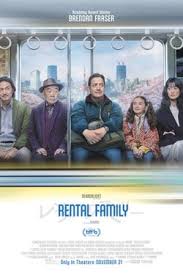
RENTAL FAMILY
Japan/US, 2025, 110 minutes, Colour.
Brendan Fraser.
Directed by Hikari.
Many audiences have been surprised to find that Rental Families are not just a movie invention that actually exist, especially in Japan.
A rental family service (レンタル家族) or professional stand-in service provides clients with actors who portray friends, family members, or coworkers for social events such as weddings, or to provide platonic companionship. The service was first offered in Japan during the early 1990s.
This film is an American-Japanese co-production, filmed in Tokyo, the production taking full advantage of immersing his audience in the various locations of the city and dramatising its lifestyle. The non-Japanese audience can enter into the film via the central character, Philip, living in Japan for 17 years, alienated from family, an actor struggling to find work, but well-known because of the prominent toothpaste and. His played by Brendan Fraser, always a large presence, but standing tall and big over the Japanese cast.
He is suddenly invited to attend a funeral, hired by the boss of the rental family, to present as “said American”. He is offered more jobs but is reluctant – but needy. The screenplay is introduction to serious renting is in a sequence where a young woman needs a proxy husband for an elaborate wedding ceremony to impress her parents before she leaves for Canada with her female partner. This sequence is also a challenge for the audience to wonder what the value of this kind of their careers, emotionally, legally…
But the film focuses on two jobs that Philip access, one from an old client, one for the mother of the schoolgirl. And, they play out very well dramatically and emotionally. The old man is a former actor, on the verge of dementia, she lived by his daughter but arranging for Philip to visit him as an interviewing journalist, so happy reminiscences, some dangerous moments of wandering. And the old man has a yen to visit the scenes of his childhood.
In the meantime, he has to impersonate the absent American father of a young girl during interviews for her acceptance into a specialised school. She has a disdain disdain for absent father but, as we expect (but her demanding mother did not), she bonds very well with Philip and he is emotionally caught up in his father-figure role, taking her outings, becoming a confidante, speaking out very well in the interviews.
So, the film will emerge talked to climaxes. Philip does take the old actor on his trip and it is engaging episode, especially when he finds the all time capsule that very long ago, photos of his first love. But then his daughter accuses a Philip kidnapping. He is arrested. Actually, there is an amusing resolution with members of the rental family impersonating lawyers and detectives.
We have also seen some tough situations, especially philandering men hiring someone to pose as a mistress are some kind of apology for their wife, sometimes with some physical slapping of the rental woman. (It is a rental family decides to stop this aspect of his company.)
But there is great emotion when the little girl sees Philip in a telemovie. He has told her that he has to go back to America. However, who would not want the truth to come out, for Philip to meet the little girl again, providing her with a find father-figure and his being rewarded with a loving daughter-figure. A touch of tears.
In fact, the film is directed sensitively by the Japanese Dir, He car who brings a great feminine sensibility to the story, a satisfying blend of touches of toughness and touches of tenderness.
- Audience expectations? The reality of rental families and their purpose in Japan? The companies, the manager, staff, performances, the effect?
- The Japanese setting, the city of Tokyo, the views? Apartments, offices, outings, funerals, visits to the elderly, travels to the countryside, schools and interviews? The musical score and towing?
- Philip’s story, seven years in Japan, away from his family, unable to go to his father’s funeral, sitting in the airport, actor, various commercials, the elaborate toothpaste commercial and its screenings publicly, people recognising him? His age, experience, his relationship and discussions?
- The call to go to the funeral, the role of the sad American, late, awkward, the body suddenly coming to life, the grief? Disconcerted?
- The manager of the company, his plans and vision, the various situations, the members of his staff and their support, the different scenarios? The money, persuading Philip to perform?
- Test case, the interview with the young woman, his standing in as the husband, her plan to go to Canada, the elaborate ceremony, the parents, and the revelation that the young woman was going to Canada with her female partner?
- The various scenarios, the characters, the man, friendship, conversations, outings? The old man, the actor, his career, his memories, his daughter and her being protective, oncoming dementia, in the guise of the journalist, investigating his life, their discussions, the bonding, the dangerous moments and the old man’s health? His wanting to visit his childhood locations, Philip very wary?
- The mother, her daughter, the absent American father, the interviews for the school, the status of the school? Mia, her age, her resentment towards her absent father, clashes with her mother? The introduction to Philip as her father, standing at a distance, curiosity, talking, the outings, her helping the young boy with the making of the toy when no one came to him, her kindness? The discussions with Philip, the outings, his being a father figure, his meeting her needs? The mother and her distance and objectivity? The phone calls and the contact with her, his talking as if he were a father? Encouraging Mia?
- The board, the discussions, Philip and his interventions, praising Mia, the response of the board? Mia getting into the school, her mother’s delight? Her mother confronting Philip, his having to say that he had to go back to America for years? Her reaction? Her friends and seeing Philip on the television series? Her reaction, confronting her mother?
- The old man, the decision to go on a trip with him, the taxis, the trains, the people encountered, the countryside, climbing, the old house, the old man and his digging up his memories, the photos? Collapse, hospital? Philip and the arrest for kidnap? You at the funeral and placing voters in the old man’s pocket?
- The staff, the young woman, her role as the mistress, the physical is because of her role? Her final rebellion, the condemnation of the husband and his pretense, the fake mistress safeguarding the real one?
- Philip, the situation with the police, the manager posing as a detective, the staff posing as lawyers? Achieving their goals? The wife
- The impact of the scene of the manager going home, cooking, the son, encouraging him – and the revelation that they were a fake family?
- Philip, the effect of the experiences, emotionally, in relationships, and a possible future?
Christy

CHRISTY
US, 2025, 135 minutes, Colour.
Sydney Sweeney, Ben Foster, Katie O'Brien, Merritt Wever, Chad E. Coleman, Colman Pedigo, Ethan Embry, Jess Gabor, Bryan Hibbard.
Directed by David Michod.
Who is Christy? This would certainly have been an unanswerable question in 1989 when this film opens. But, during the 90s and into the2000s, Christy Martin became very well-known as a/the top female boxer in the US. And, this is her story.
The film is also a star vehicle for Sydney Sweeney (very successful in recent years in such films as Anyone But You, Immaculate, The Housemaid). This is her story from 1989 to 2010, something of a rags to riches tale but much more in terms of American sport as well as Christy’s own life.
Christy Salters is the daughter of a West Virginia coalminer, a quietly sympathetic father, a somewhat haughtily dominant mother, a supportive brother. She enters a boxing competition, a bit of a smash and bash through approach and wins. But, there is tension at the family table – especially because Christy has begun a relationship with her friend, Rosie, and her mother mightily disapproves. This theme will run through Christy’s life over the coming 20 years.
But, a boxing scout has seen her, recommends her to meet a coach, Jim Martin, who initially is offhandedly interested until he sees her potential talent, agreeing to coach, gradually taking possession of her career, of her life, proposing that they marry and work as a team, her agreeing despite herself.
Jim Martin is played by the talented Ben Foster, whose extensive career contains a number of screen villains, this one initially restrained but enthusiastic even as he trains her, finds fights for her, relishes her success – but, as with so many such stories, his wife’s abilities shine and he is forced to move more into the background with some devastating results.
But, the 1990s did not have a great number of female boxers. Christy is brought to the attention of entrepreneur Don King who takes her on, has her fight on television pay per view bouts.
As expected, there are many training sequences, fights, Christy becoming more and more confident, aggressive, boastful and challenging at press conferences, female boxers becoming more and more accepted, she becoming a national champion. In 2003, she has to fight Laila Ali, the daughter of Muhammed Ali, a crisis point in her career.
Sydney Sweeney is able to communicate the character, the pugnacious abilities, the talent for professional boxing.
In the final dramatic sequences of the film, 2010, there are huge crises in the relationship between Christy and Jim Martin, a violent atmosphere, her making contact again with her friend Rosie, the relationship issues arising, and no sympathy from her mother who idolises Jim Martin.
Which means that the latter part of the film is unexpectedly highly dramatic, challenging.
And, as with films based on actual characters, there is further information about Christy’s life after these events and some photos of the actual Christy Salters.
- Based on a true story? The world of boxing? Female boxers? The 1990s and the 2000s?
- Re-creation of the period, West Virginia, mining country, towns, homes? The contrast with the world of boxing, the various tournaments, venues, stadiums, theatres, gyms, offices? The transition to Florida, homes, affluence? Hospitals?
- The story of Christy, the opening, her place in the family, her relationship with Rosie, the attitudes towards lesbians, her relationship with Rosie? Her mother’s disapproval? The discussion about seeing a priest to set it right? The quiet father, the supportive brother? The silence of the table, the mother’s dominance?
- Christy seen at the fight, the knockout, her success, the money? Observers, seeing possibilities?
- The screenplay and taking key periods in Christy’s life, 1989 and the beginnings, 1995 success, 2003 crises and challenges, 2010 and the attempt on her life? The audience filling in the times in between?
- Her being scouted, to the gym, the first encounter with Jim, his disregard, forced to observe her, looking down on her, see her skills, his decision? Christy and her age, decisions, leaving home, enjoying her skills? The difficulty of the relationship with Rosie, disapproval of lesbians out of the closet?
- Christy and the details of her training, persistent, her skills, Jim training her, the others observing, helping her, Jeff and his sympathy?
- Jim, his personality, moving in with Christy, coaching her, his techniques, the personal regard, the proposal, her agreeing? Together, at home?
- Getting the fights, her tough attitudes, victories? The effect on her?
- The plan to meet Don King, his reputation, personality, Jim and his being put in his place, Don King and his response, the contracts, control, his associates, the buildup to her fights, pay-per-view, the opponents? The press conferences and her being forthright? Her nervousness, the buildup to the first part, Jim and his support? The opponent, the challenge, her victory? Her reputation?
- Her success, the role of Jim, his being put in the background, difficult times, the tension of the relationship? The buildup to the bout with the daughter of Muhammed Ali?
- The background of the fight with Lisa, Lisa and her personality, Jim getting her to train with Christy? Christy’s initial reactions? The time together, Lisa genuine? The impact for Christy? The buildup to the fight, the fight itself, her defeat? Being told off by Don King?
- Time passing, her success, controlled by Jim, concealing facts, not organising fights? The meetings with Rosie, Rosie and her support? The family, the continually going to the fights, the father’s pride, the support of the brother, the mother and her problems, being charmed by Jim?
- Christy, Jim and his personality, resentments, his brutal treatment at times, punching her, threatening to kill her? Talk with Rosie, her moving home, no support from her mother?
- Her return, the confrontation with Jim, his knife, stabbing her, on the floor, his shooting her, having the shower, her getting herself up, the car taking her to the hospital, the treatment, her recuperation?
- The aftermath of the attempt on her life, wanting to fight again, going to the gym, the support of the people at the gym, especially Jeff and his support throughout, his warning her, helping her?
- The gym, her being part owner, the future? The trial, facing Jim in court, her aggressive declarations? Putting it in the past?
- The family photos, photos with Lisa, information about her career, training, marrying Lisa, her social work for abused women?
Song Sung Blue/ 2025
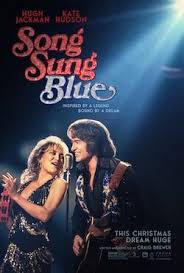
SONG SUNG BLUE
US, 2025, 132 minutes, Colour.
Hugh Jackman, Kate Hudson, Ella Anderson, Hudson Hensley, King Princess, Michael Imperioli, Fisher Stevens, Jim Belushi, Mustafa Shakir, John Beckwith.
Directed by Craig Brewer.
Song, Sung, Blue - everybody knows one.
Who does not enjoy and relish the songs and singing of Neil Diamond? Well, some bikies back in Milwaukee in the early 1990s for a start! But, certainly, not too many others.
This film is a treat for Neil Diamond fans, incorporating substantial renditions of many of his songs - and everyone wanting to hear and join in Sweet Caroline!
But, the songs here are not sung by Neil Diamond himself. Rather, this is the story of Mike and Claire Sardina, a husband and wife entertaining team called Lightning and Thunder, Mike is Lightning, Claire Thunder, from Milwaukee. Mike, a Vietnam veteran with subsequent alcohol problems, but sober for 20 years, sings Neil Diamond songs in clubs, encounters Claire, a Patsy Cline impersonator. They click, marry, bond with the children of their previous marriages, form something of a family, performing locally over many years, celebrities with a devoted following.
And the point is made that Mike is not just an impersonator of Neil Diamond but, with his looking something like the singer himself, he presents himself as an ‘interpreter’ of the songs. And, with Hugh Jackman in the role, talented singer, convincing actor, Mike Sardina comes alive. And, again talented singer, very persuasive actor, Kate Hudson is a most effective Claire.
This is a showbiz story of localized oomph, Mike’s dentist as his agent (even doing a filling with a lightning bolt on the tooth), a Milwaukee entrepreneur organising the venues (Fisher Stevens and Jim Belushi in these roles).
But it is also a suburban story, a busy house that audiences would recognise, financial struggles, dealing with the children, especially Claire’s daughter and a pregnancy, not just a bright lights story.
And, the story becomes very serious when Claire is the victim of a runaway car crashing into her and the house, losing a leg, therapy, new leg, depression, withdrawal, and Mike doing his best to keep the family afloat, jobs at karaoke bar… And some very joyful singing sequences at a Milwaukee Thai restaurant, the manager and his daughters gleefully joining in.
But, as they did in real life, they make a comeback, and another very happy moments when Pearl Jam’s Eddie Vedder joins them in a song. And, their filling a hall when Neil Diamond himself comes to town and his concert is sold out.
This dramatisation is based on a documentary from 2008, with the same title, incorporating quite a number of small details of Mike and Claire’s life.
There is a great deal of feeling, sadness and joy, in Song Sung Blue.
[For audiences who would like more, the original documentary 2008 is readily available Youtube when Googled. https://www.youtube.com/watch?v=YDukMQIz1Sc
And, further, there is a very lengthy interview with the director of the documentary, Greg Kohs, about how he made the film: https://www.reelasdirt.com/song-sung-blue]
- Based on a true story, the documentary of the same name? The characters, their lives, performances? And the interpretation of Neil Diamond?
- The 1990s, Wisconsin, the city, the streets, the town, homes, performance venues, bars, clubs, theatres? The Thai restaurant? Hospitals, AA groups, support groups?
- The musical score? The selection of Neil Diamond’s songs, performance, interpretation? Audience response? The lesser-known songs? The popular songs, especially Sweet Caroline and audience participation?
- The introduction to Mike, the extreme close-up, his speech, the AA meeting, 20 years without drinking, the support group? His life, singing? Previous marriage, daughter? The visits? His creativity, the issue of interpretation rather than impersonation? Hugh Jackman, singing, serious acting? His friends, Mark, the introduction to Tom, his enthusiasm, possible bookings? Mike and his wanting control? His pulling out of the performance and the repercussions for his friends?
- The encounter with Claire, Patsy Cline songs, the conversation, the attraction, his watching her? The meetings, discussions, his name, Lightning, her becoming Thunder? The range of their performances together, the bonding, the audiences, the selection of songs?
- Mike’s daughter, her coming to visit, the contrast with Claire’s daughter, her hostility, forced to be hospitable? The younger brother? Mike, the relationship with the family, the two girls and their friendship, discussions together? The romance, the kissing, the hesitations, good behaviour, the proposal, the ring, the wedding? The family together, the friends and playing, the cantankerous mother? The growing bond is within the family, my becoming a father figure to Rachel and Dana?
- The idea for the Neil Diamond interpretation, the various performances, the bad booking and the bikie’s reaction, the fight? Other successes, Dave Watson, the dentist, his managing Mike, the discussions with Tom, the promotion? Tom and his enthusiasm? The issue of the tooth – with the lightning symbol on it?
- The bond between Lightning and thunder, the exhilaration of the performances? Hopes for the future? Claire, in the garden, the car crashing into her, hospital, the amputation, her depression, at home, hostile, suspicious, depressed, Rachel trying to help her, the appointments for therapy and her neglecting them? Her outbursts against Mike? His sadness? Support for the children?
- The issues of insurance, the money, Rachel and her working, the revelation about her pregnancy, Mike’s response?
- Claire going to hospital, rehabilitation, the discussions with the therapist, the dream of her being successful again and her waking up on the lawn, her previous despising of AA talk, the effect of the therapy, her return? Building up, walking, suggesting that they play again together?
- The continued support of their friends, Sex Machine, little Richard, Tom and the bookings, Mark and his age, retiring, support? The other members of the band?
- The Thai restaurant, the manager and his love Neil Diamond, the karaoke, the songs, the manager singing? The later development, everybody singing, the manager’s daughters, the customers…?
- The Pearl Jam issue, the girls excited, Mike ignorant, the performance, Eddie and his singing the song with them, the response of the audience?
- Mike, his health, the various heart turns, Rachel knowing it, his concealing the attacks, continuing on? The second car out of control?
- The buildup to the finale, Neil Diamond in Milwaukee, the sellout, the theatre manager, inviting them to do the supplementary concert, its being sold out? The excitement for everyone? And the possibility to meet Neil Diamond afterwards?
- The concert, Mike and his heart attack, falling, hitting his head, persevering, the welcome to Claire, his coming up on the lift, and the singing the song, fulfilling his dream, the audience response? Afterwards, going to see Neil Diamond, in the car, his death?
- The funeral, Claire and her tribute, the singing? The grief of the family?
Local celebrities, the fulfilment of their ambitions, the friendships, the tragedies, overcoming them?
Winnie the Pooh: Blood and Honey
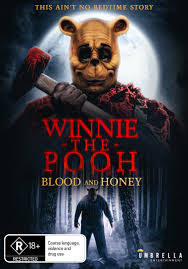
WINNIE THE POOH: BLOOD AND HONEY
UK, 2023, 84 minutes, Colour.
Nikolai Leon, Maria Taylor.
Directed by Rhys Frake-Waterfield.
Out of copyright restrictions… Into…? The quick answer, Exploitation.
Young British writer-director, Rhys Frake-Waterfield, has been producing his own films and Internet programs for some years – with more than a horror inclination. He has a company called Twisted Childhood Universe.
Winnie-the-Pooh – yes, AA Milne’s 1920s character, beloved of children. Now, out of copyright limits (like Mickey Mouse recently) and like Sherlock Holmes, at the mercy/whim/creativity of filmmakers. This freedom appeals to makers of horror movies (think Pride and Prejudice and Zombies). So, a 21st-century new world for Christopher Robin, Winnie-the-Pooh, Piglet, Tigger, Eor – and they are wreaking a massacre and blaming it on Christopher Robin.
Result: $2 million taken at the American box office, a commercial success for devotees of gore – but, bad reviews, denunciations of desecration of classics. And, the recipient of the famous Razzie Awards, winning no fewer than five: Worst Picture, Worst Screenplay Worst Director, Worst Screen Couple, Worst Prequel, Remake, Rip-off, Sequel. (It must have been a relief for mainstream actors not winning these awards.)
In fact, the bloggers were unhappy with the film. Technically, it is not very accomplished and the performances are very average. As is the make up and design for the creatures.
With some animation, there is explanation of Christopher Robin’s friendship, his leaving them, their being upset, becoming hostile to humans, developing into sadistic monsters. When Christopher Robin comes with his girlfriend, they capture him but brutally kill her. Then a party of young women come to the area for time away and, of course, are terrorised, one by one, by the monstrous creatures. In the meantime, Christopher Robin is shackled, and severely beaten on his back.
Ultimately, he becomes free, tries to rescue the remaining girl but, again, the monstrous Winnie the Pooh slashes her.
Christopher Robin is tortured, the screenplay seems particularly misogynistic with the targeting of so many women, their being menaced, tortured, ultra-brutally killed.
Not particularly telling drama.
Undeterred, relishing it all, Rhys Frake-Waterfield hurried to a sequel, Christopher Robin still a victim but fighting back against his erstwhile friends turned special effects gruesome monsters and behaving in a truly monsterly way, no holds barred. Some of the monster/gore fans go simply for the gore, plot necessity is negligible. This means a target audience, not expected to be a breakout event for the ordinary moviegoers or streaming audiences.
Movie genres appeal to target audiences – westerns, musicals, war movies. The filmmakers hope that their particular genre movie could have a wider appeal. But this one is for the extreme gore and carnage aficionados. But there is a belief that there are always limits to be broken or gone beyond. The film is even credited with “creature and gore designer”.
However, with the sequel, if the gory scenes, so explicit, were cut, even trimmed, there is, in fact, a strong enough basic plot to interest an audience, especially concerning a character called Cavendish played, surprisingly, by Simon Callow.
Rhys Frake-Waterfield has quite some ambitions, with Bambi, Peter Pan and Pinocchio in sight. And he has expressed the desire to "ramp it up even more and go even crazier and go even more extreme". His estimation of his hopes-for audiences and their interests and tastes is “greater carnage”.
How wide his audience will be will be seen but those who are put off by screen blood and gory violence will not be there.
Irreplacelable You

IRREPLACEABLE YOU
US, 2018, 96 minutes, Colour.
Gugu Mbatha-Raw, Michiel Huisman, Steve Coogan, Timothy Simons, Jackie Weaver, Kate McKinnon, Christopher Walken, Zack Cherry, Brian Tyree Henry.
Directed by Stephanie LaIng.
This is a romance, a romantic comedy with quite a difference. It is a film about terminal illness, the period before death, dying. But, despite the sombre themes and some of the implications, this film has a lighter, often more positive touch.
It is an American production but the lead, Gugu Mbatha=Raw, is British – and Steve Coogan appears in a rather understated role as the leader of a therapy group.
The audience knows almost from the beginning that the central character, Abbie, dies, with her partner, Sam (Michiel Huisman) visiting her grave.
Abbie and Sam have been sweethearts since they were toddlers at school, a visit to the aquarium scene, a story about a fish biting another and their becoming one, she biting Sam – and their remaining together all through childhood, teens, adulthood. She is a dominating character, controlling. He is rather passive, a boring lecturer, often withdrawn. But, they are a loving couple.
Thinking she is pregnant, the resulting examination indicates that she has terminal cancers. So, the film is very frank in using the word death and dying rather than simply passing or passing away. Audiences can empathise with Abbie, her reactions, her feelings, the treatments, some of the resistance, her participation in therapy group, including her crocheting and her resistance (and the glimpses of the eccentric characters in the group).
But, one of the main focuses is her wanting to prepare a future for Sam, interviewing women, setting up online information, dominating him, including getting him to go to an art gallery opening, setting him up with the artist.
One of the members of the group, Myron (Christopher Walken at his sympathetic best) befriends Abbie, sharing a lot of her life and her ideas, trying to get her to focus on herself and her experience in the present, to stop her trying to control the future.
Which means then there are ups and downs of the relationship, some feelings of alienation, some frankness, truth-speaking, reconciliation and hope.
So some interesting characters amongst the supporting cast including Kate McKinnon in the group and, towards the end of the film, a key scene with Jackie Weaver.
For audiences interested in frank films naming death and dying, the 2025 Goodbye June is well worth seeing.
- A film about dying, life before death, preparation for death? For the ill person? The partner? The others?
- The New York settings, the city, apartments, doctor’s offices, therapy meetings, hospital, the streets, the rivers, atmosphere? The musical score?
- The opening, the aquarium, the story about the fish fighting and becoming one, Abbie and her biting Sam, the stitches, his telling the story, the young children, playing on the beach, the bond? Growing up, partners, life, his academic lectures, the students bored, his dividends, and in charge, dominant, thinking she was pregnant? The decision to marry, preparations for the wedding ceremony, the cake…?
- Benji, his character, friendship with Sam, support, talk, the opposite? Abbie, her mother, the death of her father, her mother concerned?
- The pregnancy test, the interview with the doctor, the discovery of the tumours, the diagnosis, terminal? Issues of treatment? The encounter with Dominic, his friendship, brashness, helping Abbie? The various sessions, her finally giving up on him?
- The therapy sessions, Mitch and his quiet running of the sessions, the importance of the crocheting, the talk at the meetings, the various members, Kate and her touches of meditation and New Age, Bill, Jim, Meryl and their personalities, comments? Abbie’s reactions, keeping her distance, outbursts?
- The character of Myron, his interest in Abbie, their talking, his terminal illness, his attitude towards life, the outings with Abbie? The discussions? His stories about Estelle, the unwanted couch?
- Abbie, controlling, wanting the best for Sam, her decisions to plan his future, the interviews with the women, looking at the website, preparing his profile, discussions with the artist in the restaurant, organising his going to the opening, Myron and the buying of the clothes, Benji and his comments, Abbie watching with the binoculars? Benji leaving, Sam, awkwardness, the bar, the encounter with the artist?
- And, her reactions, upset, distance from Sam, the effect on his classes? Separation, the meetings, Myron and his talk, bringing her to acknowledge her controlling attitudes? Seeking Sam, the reconciliation?
- The preparation for the wedding, her mother, her mother going to support groups, the wedding dress, the cake? Her final visit to the therapy group?
- Abbie growing weaker, the preparations for the wedding, her death?
- Sam, the decision to have the party, the wedding party, the guests, the dress, the cakes, the dance space? His speech, reading out her letter?
- The phrase, Too soon, for jokes about death, the tone of her letter, hopes for the future, too soon?
Song Sung Blue/ 2008

SONG SUNG BLUE
US, 2008, 85 minutes, Colour.
Mike Sardina, Claire Sardina, Eddie Vedder.
Directed by Greg Kohs.
From 1989 to 2006, a singing duo were a sensation in their native Wisconsin, especially locally in Milwaukee. This is thier story. It has been directed by documentary maker, Greg Kohs, who contacted them and had their permission to be close to them over many years, a great deal of filming their lives, in close-up.
There is an opening caption from a Neil Diamond song about a frog wanting to become a Prince.
The central characters are Mike and Claire Sardina, their stage names, Lightning and Thunder. He had been a Marine in Vietnam, and drug and alcohol problems, but was successful in the AA program and off drink for decades. He had a talent for impersonating Neil Diamond and his singing, something of a lookalike. And at a gig, he encounters Claire, doing impersonation of Country and Western singers like Patsy Cline.
This is the story of their 16 years together, both married before, bonding with the children and Mike becoming something of a father figure. There was tragedy in an accident where Claire was struck by an out-of-control car which crashed into her and their house, a great deal of this film showing the repercussions of the accident, her losing her leg, the prosthetic leg, therapy, as well as the psychological repercussions.
Which means that there is a whole lot of home movie material, audiences getting to know Mike and Claire as well as their children. They were popular over the years in Milwaukee, and a special friendship with Eddie Vedder when they supported him in a Pearl Jam concert.
Mike also had heart trouble and this emerges at the end of the film, his finally dying in 2006.
This documentary then became the base screenplay and story for the feature film, Song Sung Blue, with Hugh Jackman and Kate Hudson as the couple, incorporating many of Neal Diamond’s songs.
It is interesting to see a lot of the details on the 2025 film that are taken from the documentary, details of life at home, interactions with the children, such details as Mike wandering around the house singing in his underpants, his dentist-manager inserting a tooth with a lightning bolt sketched on It, financial issues, the birth of the child of Claire’s daughter and its adoption. Hugh Jackman and, especially, Kate Hudson do resemble their counterparts but it is also interesting to see the supporting characters, Dave the dentist manager (very different from Fisher Stevens in the film), manager Tom, who does resemble Jim Belushi in the film.
In watching the 2025 film, audiences realise that it is a polished Hollywood musical drama, the dramatising of characters and events – with the documentary presenting them as they were.
Anaconda/ 2025
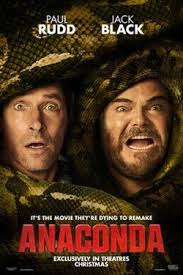
ANACONDA
US, 2025, 99 minutes, Colour.
Jack Black, Paul Rudd, Steve Zahn, Thandiwe Newton, Daniela Melchior, Selton Mello, Ione Skye, John Billingsley, Ice Cube, Jennifer Lopez.
Directed by Thomas Gormican.
Once upon a time, well, in fact, 1996, there was a famous snake-adventure-thriller, set in the Amazon, about a company making a film about an Anaconda. And the stars were Jennifer Lopez, Ice Cube, Jon Voight, Eric Stoltz. It was one of those films which many considered so bad that it is good and enjoyable. And, there were some attempts at sequels and spin-offs.
Almost 30 years later, here is an ambitious rebooting with explicit reference to the original. And, with Jack Black and Paul Rudd as the stars, it has strong comedy intentions. And, audiences have enjoyed it, accepting all the silliness in the ideas and execution, looking for the parallels, and lots of visual and verbal jokes. And, even Ice Cube turns up again – and an unexpected but hoped-for cameo right at the end!
Stole satiric American comedies might remember filmmaking and the comedy, Tropic Thunder.
The presupposition is that two young boys, growing up together, had a love for horror films and made one together, along with another friend who is a photographer. But, life has not turned out quite as expected. Jack Black makes videos for weddings, even to incorporate some touches of horror conventions. He has a nice wife, family, but has not succeeded as he hoped for. Paul Rudd is seen as an actor who has not quite achieved what he hoped for, rehearsing a few lines for an audition, a variety of renderings – and then being fired. Steve Zahn is a local friend, problems with drugs and drink, the photographer, working on the wedding videos but being fired.
The proposition is that the actor says he has the rights to Anaconda and would love to remake it with his friends, raising some money, very limited, joining with a friend from the old days, played by Thandiwe Newton, setting out for the Amazon (with Queensland scenery standing in for the Amazon), and finding a local who has a talent for managing Anacondas (an amusing turn from Selton Mello). But, in the meantime, without the film crew’s knowledge, there are issues between goldminers, smugglers and local police.
Put everything in the mix, stir, complications with the police and the smugglers, many shots of the filming, pratfalls and mess ups, action with the Anaconda, some personal falling out and jealousies…
But, there is much more to come, especially when an actual film company passes them on their way to locations for shots. And, then, an enormous Anaconda who can swallow people whole and regurgitate them (and some close-ups of this!). In the jungle, smugglers and the authorities, and refugees from the film company, fleeing from and then conquering the Anaconda.
So, some desperate situations, rescues and survival, some footage of the film – and a screening at the Buffalo International film Festival where they all come from. Much of this version of Anaconda may not stay in the memory, but it is amusingly silly while we are watching.
Amulet
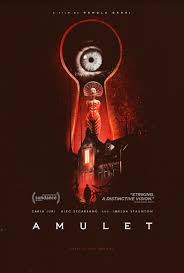
AMULET
UK, 2020, 99 minutes, Colour.
Carla Juri, Alec Secareanu, Imelda Staunton, Anah Ruddin, Angeliki Papoulia.
Directed by Romola Garai.
A drama that moves between continental Europe and the UK – but, after an hour, more explicit demonic aspects appearing, transforming what has been seen and leading to some grotesque crises.
The screenplay has been written and directed by British actress, Romola Garai, with two central female roles that she herself could have played.
The film opens in a beautifully green valley, a country at war, the central character, Tomaz (Romanian actor, Alec Secareanu who acted with Josh O’Connor in God’s Own Country) border guard. The film focuses on him, his work, his seeing a woman trying to cross the border, his saving her, her attempted escape And his attack on her.
Then he is in London, lining up for work, living in a hostel, the hostel going up in smoke and his being rescued by a rather forthright nun, and the interesting casting of Imelda Staunton. She takes him into an old house, in need of repair, where a young woman (Carla Juri) is looking after her invalid mother, locked in an attic.
The film explores the drama of the young woman, her isolation, the first meetings with Tomaz, his hesitations, the meals, the room, the discovery of the sick mother, his working on the house, discovering a dead bat in the toilet, the bat biting him. And, the two gradually coming to some kind of understanding, going out to dancing at a club, a romantic advance, conversations about their lives, the sick mother, and his intentions to study for a doctorate.
But, in the last half hour, there is quite a change in atmosphere, the nun turning out to be some kind of emissary of the devil, saying that she didn’t get the nun disguise quite right, then appearing quite dolled up and confronting Tomaz. Then all kinds of grotesque moments, the demonic mother, the attempt to kill her, his slashing her, the effect on him, and the taunting by the nun.
And be a seeming return to calm, the mother pursued in the flashbacks now working at a store, reunited with her daughter. Then the woman of the house, driving a car, meets her, is reassured by her, buys some food, gets back in the car, puts the food under a blanket which is concealing Tomaz.
The film had some critical acclamation – but, the popular bloggers were not taken by it at all.
Foreign Intrigue
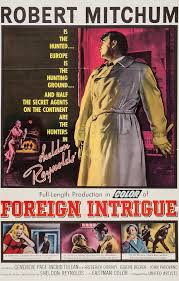
FOREIGN INTRIGUE
US, 1956, 100 minutes, Colour.
Robert Mitchum, Genevieve Page, Ingrid Thulin, Frederic O'Grady, Eugene Deckers.
Directed by Sheldon Reynolds.
A colourful thriller from the mid-1950s, written and directed by Sheldon Reynolds, his career was principally in television series. He has very attractive colour photography with his locations, the Riviera (at much the same time as Hitchcock’s To Catch a Thief), Vienna but mainly in dark locations at night, reminiscent of The Third Man, but very colourful Swedish sequences, the city of Stockholm, the waters and islands.
The film opens with a wealthy man collapsing and dying, many interrogating whether he said anything before he died. There is his trophy wife, detached from her husband, Genevieve Page, introduced here but having made many films France before this. Later, in Ingrid Thulin will appear in the Swedish sequences, also introduced but having made many films in Sweden, the next year to appear in the first of her nine collaborations with Ingmar Bergman).
Robert Mitchum plays the American who handles the rich man’s business affairs.
There is secrecy about the dead man and Mitchum follows clues, a lawyer in Vienna who has a secret document, inquiries by reporters, collaboration with friends, the visit to the dark Vienna sequences and discovery of a Swedish link, a visit to Sweden, a connection with a man blackmailed by the wealthy man, and secrets from his wife and daughter – and some instant romance!
Then the film has international connections, 1938, Hitler and connections around Europe with men who could become governors when the Nazis conquered their countries.
Some murders, Mitchum under suspicion, a stranger following him, collaborating with him, the revelation of international powers, the testing of Mitchum, the unmasking of the trophy wife, and the possibility of a happy ever after.
Visually attractive with its locations, a foreign intrigue in the style of the 1950s.
