Displaying items by tag: Ben Foster
Christy
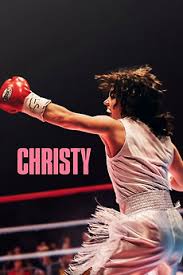
CHRISTY
US, 2025, 135 minutes, Colour.
Sydney Sweeney, Ben Foster, Katie O'Brien, Merritt Wever, Chad E. Coleman, Colman Pedigo, Ethan Embry, Jess Gabor, Bryan Hibbard.
Directed by David Michod.
Who is Christy? This would certainly have been an unanswerable question in 1989 when this film opens. But, during the 90s and into the2000s, Christy Martin became very well-known as a/the top female boxer in the US. And, this is her story.
The film is also a star vehicle for Sydney Sweeney (very successful in recent years in such films as Anyone But You, Immaculate, The Housemaid). This is her story from 1989 to 2010, something of a rags to riches tale but much more in terms of American sport as well as Christy’s own life.
Christy Salters is the daughter of a West Virginia coalminer, a quietly sympathetic father, a somewhat haughtily dominant mother, a supportive brother. She enters a boxing competition, a bit of a smash and bash through approach and wins. But, there is tension at the family table – especially because Christy has begun a relationship with her friend, Rosie, and her mother mightily disapproves. This theme will run through Christy’s life over the coming 20 years.
But, a boxing scout has seen her, recommends her to meet a coach, Jim Martin, who initially is offhandedly interested until he sees her potential talent, agreeing to coach, gradually taking possession of her career, of her life, proposing that they marry and work as a team, her agreeing despite herself.
Jim Martin is played by the talented Ben Foster, whose extensive career contains a number of screen villains, this one initially restrained but enthusiastic even as he trains her, finds fights for her, relishes her success – but, as with so many such stories, his wife’s abilities shine and he is forced to move more into the background with some devastating results.
But, the 1990s did not have a great number of female boxers. Christy is brought to the attention of entrepreneur Don King who takes her on, has her fight on television pay per view bouts.
As expected, there are many training sequences, fights, Christy becoming more and more confident, aggressive, boastful and challenging at press conferences, female boxers becoming more and more accepted, she becoming a national champion. In 2003, she has to fight Laila Ali, the daughter of Muhammed Ali, a crisis point in her career.
Sydney Sweeney is able to communicate the character, the pugnacious abilities, the talent for professional boxing.
In the final dramatic sequences of the film, 2010, there are huge crises in the relationship between Christy and Jim Martin, a violent atmosphere, her making contact again with her friend Rosie, the relationship issues arising, and no sympathy from her mother who idolises Jim Martin.
Which means that the latter part of the film is unexpectedly highly dramatic, challenging.
And, as with films based on actual characters, there is further information about Christy’s life after these events and some photos of the actual Christy Salters.
- Based on a true story? The world of boxing? Female boxers? The 1990s and the 2000s?
- Re-creation of the period, West Virginia, mining country, towns, homes? The contrast with the world of boxing, the various tournaments, venues, stadiums, theatres, gyms, offices? The transition to Florida, homes, affluence? Hospitals?
- The story of Christy, the opening, her place in the family, her relationship with Rosie, the attitudes towards lesbians, her relationship with Rosie? Her mother’s disapproval? The discussion about seeing a priest to set it right? The quiet father, the supportive brother? The silence of the table, the mother’s dominance?
- Christy seen at the fight, the knockout, her success, the money? Observers, seeing possibilities?
- The screenplay and taking key periods in Christy’s life, 1989 and the beginnings, 1995 success, 2003 crises and challenges, 2010 and the attempt on her life? The audience filling in the times in between?
- Her being scouted, to the gym, the first encounter with Jim, his disregard, forced to observe her, looking down on her, see her skills, his decision? Christy and her age, decisions, leaving home, enjoying her skills? The difficulty of the relationship with Rosie, disapproval of lesbians out of the closet?
- Christy and the details of her training, persistent, her skills, Jim training her, the others observing, helping her, Jeff and his sympathy?
- Jim, his personality, moving in with Christy, coaching her, his techniques, the personal regard, the proposal, her agreeing? Together, at home?
- Getting the fights, her tough attitudes, victories? The effect on her?
- The plan to meet Don King, his reputation, personality, Jim and his being put in his place, Don King and his response, the contracts, control, his associates, the buildup to her fights, pay-per-view, the opponents? The press conferences and her being forthright? Her nervousness, the buildup to the first part, Jim and his support? The opponent, the challenge, her victory? Her reputation?
- Her success, the role of Jim, his being put in the background, difficult times, the tension of the relationship? The buildup to the bout with the daughter of Muhammed Ali?
- The background of the fight with Lisa, Lisa and her personality, Jim getting her to train with Christy? Christy’s initial reactions? The time together, Lisa genuine? The impact for Christy? The buildup to the fight, the fight itself, her defeat? Being told off by Don King?
- Time passing, her success, controlled by Jim, concealing facts, not organising fights? The meetings with Rosie, Rosie and her support? The family, the continually going to the fights, the father’s pride, the support of the brother, the mother and her problems, being charmed by Jim?
- Christy, Jim and his personality, resentments, his brutal treatment at times, punching her, threatening to kill her? Talk with Rosie, her moving home, no support from her mother?
- Her return, the confrontation with Jim, his knife, stabbing her, on the floor, his shooting her, having the shower, her getting herself up, the car taking her to the hospital, the treatment, her recuperation?
- The aftermath of the attempt on her life, wanting to fight again, going to the gym, the support of the people at the gym, especially Jeff and his support throughout, his warning her, helping her?
- The gym, her being part owner, the future? The trial, facing Jim in court, her aggressive declarations? Putting it in the past?
- The family photos, photos with Lisa, information about her career, training, marrying Lisa, her social work for abused women?
Streetcar Named Desire, A, National Theatre Live
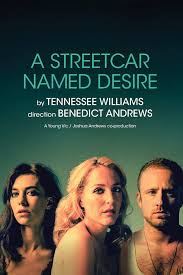
A STREETCAR NAMED. DESIRE-National Theatre Live
UK, 2014, 188 minutes, Colour.
Gillian Anderson, Ben Foster, Vanessa Kirby, Corey Johnson.
Directed by Benedict Andrews.
A Streetcar Named Desire is considered one of the great American plays of the 20th century, with Tennessee Williams named alongside Eugene O’Neill and Arthur Miller. It made an impact in 1947 with its down-to-earth themes, class differences, transition from old ways to modern, mental illness. And the setting is New Orleans, at the end of a line of streetcars, the destination, ironically because of the motivations of the characters, Desire.
Tennessee Williams had very strong career from the 1940s to the 1960s, many of his plays turned into celebrated movies. In fact, the 1951 film version of Streetcar, Oscars for Vivien Leigh, Karl Malden, Kim Hunter, and nomination for a smouldering Marlon Brando, is still considered a classic. Since then, many stage productions, many filmed versions for television.
This performance was for the National Theatre in 2014, and filmed for National Theatre Live. It has been widely seen and a decision made to re-release it for 2025.
As a filmed play, the audience sees the very creative set, the shape of a small house, upstairs as well, the frames for the room, some curtains to be pulled back and forth, theatre in the round, different views as the characters move around within the house as well as outside. And, for the change of scenes, lights dim, some reverberating music, the actors and stagehands all coming onto the scene to rearrange furniture, to clean up mess, the audience caught up in this theatricality.
And one of the main reasons for seeing this version is the presence and performance by Gillian Anderson, American, The X-Files, but spending much of her life and career in the UK, films and television, her performance in The Salt Path released at the same time as Streetcar. She is decaying southern Belle, Blanche Dubois. She offers a powerful performance, highly emotional, and, not just hearing her speak her lines but with close-up, the intensity of her body language, a dramatic focus on her face and emotions. And, it is summed up with her final line of the play, so often quoted, “I have always relied on the kindness of strangers.”.
Ben Foster as Stanley Kowalski offers quite a different interpretation from Marlon Brando. He is an ordinary man of the suburbs, with friends at the local bowling alley, playing poker at home, devoted to his wife, but with macho attitudes, often erupting in anger and instances of sexual aggression. Vanessa Kirby, who is to emerge in successive years with a strong stage and screen reputation, is Stella.
The tone and the costumes for this interpretation are very much 21st-century, and some anomalous moments with the use of a mobile phone and references to long distant calls and talking with the operator. Stella and the other women in the play with their costume design, often brief and minimal, might have been looked down on in 1947. But, Blanche is the complete contrast, very much the look and dresses of that period.
This is a long play, especially the second half with its dramatics of Blanches delusions, her fantasies, and not wanting to be seen in the light, her mental disturbances. But, there are ordinary themes, the gentlemanly Mitch and his attentions to Blanche, Stella and her pregnancy, Stanley and his mates.
And, finally, a great deal of pathos as the doctor and the nurse arrive to take Blanche away, their walking slowly around the house set, the audience having time to reflect on what they have seen, and absorb their experience of sharing the sadness and pathos of Blanche’s decline.
Survivor, The
THE SURVIVOR
US, 2021, 129 minutes, Colour.
Ben Foster, Billy Magnussen, Vicki Krieps, Peter Sarsgaard, Danny DeVito, John Leguizamo, Dar Zuzovsky, Paul Bates.
Directed by Barry Levinson.
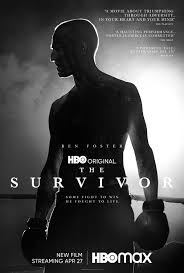
The Survivor is well worth seeing.
This is the story of a Holocaust survivor, Harry Haft. While the film opens in 1963, Haft obviously a survivor and having prospered in some ways in the United States, the main action of the film takes place in 1949. And, within this framework, many flashbacks, filmed in black and white, the concentration camp. Audiences who appreciate the films which go back into the concentration camps, will find this most telling.
The film has been directed by veteran Barry Levinson, Oscar winner for Rain Man, writer of many films and then very successful as a director. And he is working with a complex screenplay effectively written by Sydney born Justine Jule Gilmer, whose early work was for Australian television, McClouds Daughters, Packed to the Rafters. The Survivor is her first film screenplay and he has written another screenplay about Irena Sandler, the Polish Catholic who rescued so many Jews from the ghetto
This is also a sports film. Harry Haft was separated from his girlfriend when she was taken to the camps, he surviving, chosen by an SS commander, played by Billy Magnusson, to find bouts for the entertainment of the Nazis, betting, and this is a great entrepreneurial success. These flashbacks also give the opportunity for audiences to see the harshness of life in the camp, the fights, and the final explanation by the commander about his attitudes towards the war and Nazi philosophy as well as a final confrontation between the two.
In 1949, Haft continues some boxing training and wants to fight against rocky Marciano despite his often lack of success in the ring. Very strong supporting cast for the training includes John Leguizamo as well as Danny DeVito, working for Marciano, but Jewish sympathies and taking time off to prepare Haft so that his defeat would be so devastating.
And there is the human story, Haft determined to find his lost girlfriend, encountering a young woman who works in a company searching out identities. They go out together, her supporting him, often exasperated with him, eventually marrying him.
Which means that this is a very strong film in terms of the Holocaust and Jewish tradition. But it is also a strong film in terms of the American sports world. And, in 1963, there is a very sad ending but one of affirmation for Harry Haft. The film is based on a book written by his son.
- Based on a true story? A book by Harry Haft’s son?
- The title, the concentration camps, Harry’s motive for survival, the United States, the boxing world picture and survival, surviving in the US?
- The time frame, the opening in 1963, the range of flashbacks and their insertion, Poland and the concentration camps in black and white, 1949 and the boxing world in colour, 1963? The musical score, the Jewish melodies, hymns and chants?
- The performance by Ben Foster, such loss of weight for the concentration camp scenes, putting on weight for the later 1940s and the 1960s episodes? The intensity of the performance, audience interest, like and dislike, sympathetic and unsympathetic?
- The framework of the 1960s, audience knowing that there was some kind of happy development?
- Harry, Polish Jew, with Leah, idyllic, her throwing stones, the arrest, her disappearance, Harry and his quest to find her, with the agency in New York, with Miriam, his angers and intensity, memories, yearning?
- Harry in New York, his best friend, the boxing world, the gyms, his fights, friends, trainers? His defeats? The intensity of the boxing sequences? His wanting to fight Rocky Marciano, to get his name mentioned in the press, that Leah might see it (and the irony from the 1960s when she says she did see the write-ups but did not make contact)? The approaches, the discussions, the scepticism, finally getting the bout?
- Harry and his training, the trainers and their personalities, working with him, the techniques, the importance of the dancing movements and his abilities? His visit to Marciano’s camp, the meeting with Charlie Goldman, Polish Jewish background, the warnings, ousting him, but having the camp with him, doing the training, that he should lose better and with more dignity that he might have? The importance of the fight, the result?
- Harry, his moods, falling out with his friend?
- The issue of the journalist, wanting his story, his friend wanting to keep quiet? The journalist and his questioning, Harry and his moods, the flashbacks, the story and the publication? The journalist watching the fights? And his promising to get information on Leah?
- The importance of the flashbacks, the black-and-white photography, Harry and Leah her arrest? In the camp, amongst the many, the cumulative effect of the flashbacks and the narrative of his life in the camp, his friend and saving him? The parades, the hunger, the hard work, Harry and his attack? Schneider seeing him?
- The significant events for Harry, Schneider patronising him, training him, the fights, to entertain the SS, the betting? The first fight, Harry and his reluctance, the appeal of the opponent for him to die with dignity, beaten, shot? The body taken away? The sequences of bodies, wagons, into the holes?
- The consequences for Harry, Schneider and his character, smart and smooth, exploitative, yet some soft touches, the conversations, the training, the various bouts, his success, having to prove himself? The long sequence of the 30 rounds, the exhaustion, Harry and his reputation? The Jewish prisoners watching, the band playing, Harry and his being disliked, making his way through the crowd, for the celebration of Yom Kippur?
- The insertion of the flashbacks of various stages in the story of the 1940s, the buildup to Harry, the possibility for escape, the confrontation with Schneider, his death?
- Miriam, at the office, his insulting the head despite all the work, Miriam talking with him, going out with him, the boxing, his harshness, her being insulted, his pursuing her? Over the years, the marriage, her giving up her job, her character, her life with him?
- The 1960s, the family, the shop, his work, the fruit? The children? His harshness on his son, thinking the son soft, wanting to train him, not telling him the story about his life?
- The Germans, reappearing, the information about Leah? The family on holidays, at the beach? Miriam anxious? Harry, going off, the encounter with Leah, her life, her health, the discussions, his son watching? 20 years of Harry’s wanting to know her whereabouts, and finally meeting to say goodbye? And explaining his story to his son?
- Harry living longer, his wife even longer, his children, and his son writing the story?
