Displaying items by tag: Michaela Coel
Christophers, The
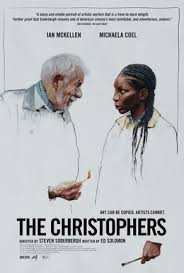
THE CHRISTOPHERS
UK, 2025, 100 minutes, Colour.
Ian McKellen, Michaela Coel, James Corden, Jessica Gunning.
Directed by Steven Soderbergh.
Tantalising title. In fact, The Christophers is a series of unfinished paintings now in storage in the studios of a London artist. But, they will become central to a drama which involves the alienated son and daughter of the artist who want to capitalise on their sale once the father, who is ill, dies.
The setting is North London, ordinary streets, blocks of flats, interiors, studios, art galleries. All rather low-key, visually. And the artist, Justin Sklar, cantankerous, not the ideal devoted painter, no major ideals either but enjoying his reputation, longtime guest on a television show to encourage (or destroy) young talent, and getting income in old age from his celebrity by sitting at home and doing verbal greeting messages for paying clients on his computer.
Justin Sklar is a perfect role for Ian McKellen in his mid-80s. McKellen is a forceful screen presence from his villainous Magneto with the X-Men to his benign Gandalf. McKellen imposes his personality, has expressive clarity of diction, an extraordinary delivery of lines. As they sometimes say, his performance is worth the price of the ticket.
But, he meets something of his match in an artist, Lori, who has built up a career with restoration of paintings. She is played by Michaela Coel who performed as a not dissimilar character in Mother Mary. In fact, she had been at art school with the artist daughter and they meet her to plan a strategy for her to complete the paintings so they will fetch millions when the artist dies. The son and daughter are played by James Corden and Jessica Gunning.
If it were that simple, the film would be over very quickly. But, Lori is a rather complex character, seemingly noble in her confrontations with Justin, sometimes deceptive, sometimes in league with him, meeting his manipulations with her own manipulations.
Which means that this film is very dialogue-focused, a two hander, somewhat claustrophobic in the action in the interiors of the flats. And, some gradual revelations of interactions between the two in the past, especially on the television show. And, while there is sympathy for Lori, and of the characters, she is not without blemish.
The film was directed by American Steven Soderbergh who has had an extraordinary career for almost 40 years and a wide range of films (for instance, Sex, Lies and Videotape, Erin Brockovich, Oceans 11, contagion) as well as his being the director of photography, using the name Peter Andrews, on all of them.
And, for fans of Ian McKellen’s performances (not just Gandalf devotees) a satisfying theatrical/cinematic experience.
- Expectations for a film by Steven Soderberg, directing, photographing, almost 4 decades of films?
- The London setting, the streets, the flat, the interiors, the studio, Lori and her home? Galleries? The musical score?
- The art world, the role of the artist, talent, personality, moral, detachment, ambition? Paintings, the variety of styles, exhibitions, public taste, value, options?
- The introduction with Lori, as artist, her studies, friendship with Sallie, her work as a restorer, revelation about her forgeries? Her personal independence? Employers, contacts? Meeting with Sallie and Barnaby, the situation, their father, his reputation, health, dying? The series of The Christophers, incomplete, hidden away? The proposition for Lori to complete them, to auction them, the millions? The revelation that they had already sold them? The personalities, the relationship with their father?
- Julian Sklar, an Ian Kellan character, manner of speaking, appearance, clothing, behaviour, reclusive, health, his art, his theories about art, personal involvement or not, art quality? His relationship with his children, spurning them? The introduction to Lori, as an assistant, the bells and the wrong door, the interiors, the steps, his paintings, his manner with Lori, the questions, his assumptions?
- The growing relationship between Julian and Lori, employer-employed, other conversations, her not want to be an artist, a fan, her pretence and deceiving Julian? The jobs, his remarks, quips? Her reserve? Her search for the paintings, finding them?
- The issue of the Christophers, her eventually telling Julian the truth, his reactions, change of heart, the issues, the background of his relationship, the mysterious Christopher, his disappearance, the range of portraits, looking at the detail?
- Julian and the decision to burn the paintings, Lori collecting them, going outside, not burning them, bringing them in? The range of discussions, forging, completing, her contract, her comments on Sallie and studies, Sallie’s painting and their mocking it?
- The decision to work together, the choices of the paintings, savaging them, the paint, throwing it, Julian enjoying the experience, Lori’s encouragement? The finished range of paintings?
- Lori, the discussions with Sallie and Barnaby, money issues, their coming to the house, the interaction with their father, pretending about the Christophers, continuing the clash, dissatisfaction with Lori?
- The consequences, Lori going to see Christopher, finding him, the discussions, the paintings as his, his presence at the exhibition?
- The exhibition, the paintings, the public, the commentary?
- Julian, the nurse coming to visit, in contact with Lori, giving her the bag, the message from Julian?
- The theatrical aspects of the film, dialogue, staging, characters, interactions, themes?
Mother Mary
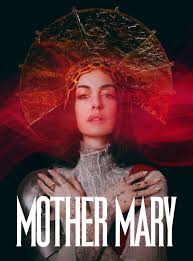
MOTHER MARY
US, 2026, 111 minutes, Colour.
Anne Hathaway, Michaela Cooel, Hunter Schaefer, FKA twigs, Jessica Brown Findlay.
Directed by David Lowery.
What would most audiences, seeing the title, Mother Mary, b is e expecting? The Christian overtones of the title are visualised in Mary, the popular singer and her concerts, her dresses, headdress with rays, reminders of Mary, Mother of Jesus. And, throughout the film, there are verbal references, in conversation, and in the songs, to the Spirit, Pentecost, faith, belief…
This is a weird experience, to say the least. And, some audiences have felt it too much, too confusing, the verbal, visual weirdness.
In fact, this is a psychodrama, a two hander encounter between two strong actresses in two strong performances, Anne Hathaway as the popular singing star, Mother Mary, and British Michaela Coel (also confronting Ian McKellen in The Christophers) as Sam Anselm, longtime dressmaker, now alienated from Mary.
Mary is desperate, an accident in performance (deliberate or not?), Emotionally disturbed, offering to apologise to Sam, requesting her best address for Mary’s London comeback, reinstating her as a star.
There is a lot of psychological to-ing and fro-ing, some serious game-playing, Sam generally in control, hurt by Mary in the past, alienation for twenty five years, once an avid fan, now Mary eliminated from her life, but intrigued, affronted, by Mary’s arrival and request for the dress.
Mention is made of metaphors and there are many of these, visualised, in word and in rituals, interactions of psyches, interactions of imaginations, floating, swirling red material, ingested, excised… A dark ritual, a circle drawn, echoes of magic and exorcism.
Fans of popular stars may relish this strange exploration of a singer and her relationships. Writer-director, David Lowery, noted that he was drawing on the impact of Taylor Swift. Anne Hathaway referred to Beyonce as an influence on her performance. And, significantly in Anne Hathaway’s recent film, The Devil Wears Prada 2, there is a powerful sequence between Meryl Streep’s Miranda priestly and Lady Gaga about a performance at a fashion show. Some of the songs for Mother Mary were written by Charli the XCX who was also the subject of a film about a singer and her career, the moment.
With the popularity of such stars, this film offers a great deal of appeal, an invitation to go behind the scenes, go behind the faces, go behind the facades, wondering what they will find -perhaps weirdness and truth.
- The application of the title, the Virgin Mary, Catholicism, spirituality, statues of Mary, images, garments, head raise…?
- The world of international stars, singers, concerts, application Taylor Swift, Lady Gaga, beyond say? Songs by Charli XCX, the presence of FKA twigs?
- The range of songs, the lyrics, the musical score, performance, elaborate costumes, choreography?
- The film as a dramatic two hander, Mary and Sam, memory and hurt? The presence of the supporting cast, friends, the assistant, the dancers?
- The film as a psychodrama, the human psyche, sanity, emotions? Physical, health? The use of the imagination? Metaphors and symbols? The words describing them? Actions? Visual symbols?
- The realism and the images, the red material, floating, absorbed, cut out, extracted, final floating? Panic and liberation?
- The final ritual, the touch of the supernatural, application of exorcisms?
- The relationship between Mary and Sam, 25 years, the bonds of the past, celebration, the dressmaking, Mary and her success, Sam and enthusing? The break, the separation, the hurt, the image of the broken tooth and extraction? Mary returning after so long?
- Mary, as a character, celebrity, enjoying her celebrity, singing, dancing, composing songs? 25 years? Falling out with Sam? The reason for her visit?
- Sam, in herself, her work, the office, the big barn, its layout, the mannequins, materials? As a fan of Mary, addresses and success, the tooth, the break,?
- Mary’s arrival, the encounter with Hilda, the final meeting with Sam? Their talking, Sam and her hurt, distance, psychologising Mary, taunting her, the questions, her wisdom, the use of symbols, rituals, the issue of apology?
- The request of the dress, the aftermath of the accident, intentional or not, the fans, the dress, the idea of the train, all the images from her concerts and life? The to-ing and fro-ing of the argument? The psychological implications of the dress? Moving towards reconciliation, friendship, the ritual, the making of the dress – or no reconciliation?
- The impact of the ritual, the two women, the circle, the incision, the blood, the drawing out of the material, healing?
- The finale, Mary and her performance, the dress, removing it? Hilda describing the event to Sam?
- And, the final threefold apology?
