Displaying items by tag: john cusack
Shanghai
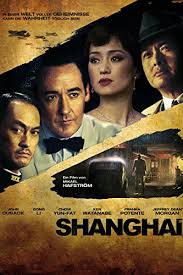
SHANGHAI
China/US/Thailand, 2010, 105 minutes, Colour.
John Cusack, Gong Li, Chow Yun-Fat, David Morse, Ken Watanabe, Franka Potente, Jeffrey Dean Morgan, Hugh Bonneville, Benedict Wong, Christopher Buchholz.
Directed by Mikael Halfstrom.
Shanghai was not so well reviewed on its release – however, it does have something of a more favourable following now (as instanced by comments on the IMDb).
Production was prepared for filming in Shanghai but permission withdrawn after complaints about presentation of sexual matters in Ang Lee’s Lust: Caution. The production was moved to Thailand – and the sets to recreate Shanghai in 1941 are quite elaborate, blocks of city streets of the time, buildings, facades, lights, as well as elaborate interiors, especially in a casino with the gambling, the stage entertainment, the crowds. And, the film is filled with extras, quite a number of strong crowd sequences, Japanese troops killing people in the streets and subsequent panic, panic at a railway station, and crowds at the end trying to get away on ships leaving Shanghai.
And the audience needs to pay attention to the complexities of the plot. The focus is on the journalist coming from Nazi Berlin, some considering him favourable to the Nazis, but is now collaborating with the Americans present and finding himself in complex situations with the Chinese resistance to the Japanese. He is played, rather sternly, by John Cusack.
The film has a strong supporting cast, led by celebrated Chinese actress (especially in the 1990s in ang Yimou films), Gong Li. She is married to Anthony, a power in the crime community of Shanghai, and played also by veteran Chinese actor, Chow Yun-Fat (famous at the time for his appearance in John Woo films). There is also the military chief played by Ken Watanabe.
The plot involves John Cusack searching for the killer of his journalist friend, played by Jeffrey Dean Morgan, leading him to the crime chief as well as the military chief. But the important thing is the role of the wife and her involvement with the resistance, and especially at the end, trying to get a young woman who has been mistress both to the military chief and the American journalist who has been killed out of Shanghai.
The film has been directed by Swedish director, Mikael Halfstrom.
- The title and focused, 1941, Shanghai’s place in China at the time, International Centre, the war with Japan, the year of Pearl Harbor?
- The production values, the elaborate sets for Shanghai, streets and buildings, interiors, casinos, offices, apartments? The large cast, the many crowd scenes, war, action, railway stations, wharfs? The musical score, songs and performance? International atmosphere?
- International intrigue, the background of Germany during the 30s, the outbreak of the war? The situation of Japan and its attack on China, the 30s? Japan preparing for the world war? The effect on Chinese citizens? The resistance? International presence, the dividing of the city into zones, the British, American, French, the Germans?
- The focus on Paul Soames, the American, undercover, agent, journalist, his work in Berlin, reputation, coming to Shanghai, his friendship with Connor? Meeting him, Sumi, his work, information, his death? wanting to find out the truth?
- The opening with Tanaka, the arrest, the interrogation, the threats? Going back two months?
- Paul, his friendship with Richard Astor, commissions, the American presence, international intrigue?
- Paul and his work as a journalist, the British editor, hostility, suspicions of his political stances?
- His getting the background information, travelling through Shanghai, observing, the people, the politics, the Japanese presence, the resistance, the shootings in the street…?
- The encounter with Anna, the attraction, questions, her relationship with her husband, his criminal background, power, at the casino? The revelations about Anna, the resistance, at the casino, passing on messages, but her relationship with her husband? The secrecy? The continued encounters with Paul, his following her and her knowing it? The issue of his friend and his death, the girl who is his mistress, the revelation of her relationship with Tanaka, her role as an agent? Her drug addiction, her being shielded and hidden? The plan to get her out of Shanghai?
- Social life in Shanghai, the German Embassy, the Consul, his wife, relationship with Paul, from the past?
- Tanaka, his presence, suspicions, authority, the relationship with Anthony, with Anna? The arrest of Paul, the brutality, the interrogation? Watching the execution of the Chinese agent?
- The complexities of getting the mistress out of Shanghai, the intrigue, all watching, Anna and her friends with the girl, the railway station, Japanese suspicions, the creating of the diversion, the shooting, the crowd and confusion? Tanaka, with the young girl, his love for her, the final injection?
- The final complications, Anthony and his giving infomration to Tanaka, the confrontation at the house, the bodyguard, the driver, the shootings, Anthony taking a stance, his death, can occur wounded, Paul and Anna escaping? Going to the wharf, the passport, Paul saying and it was his wife, there seem Tanaka, or having spent his life, their being allowed on the ship? Indications of returning later?
- Espionage, journalism, war atmosphere, in an exotic location?
Grand Piano
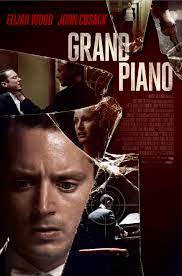
GRAND PIANO
US/Spain/UK, 2013, 95 minutes, Colour.
Elijah Wood, John Cusack, Kerry Biche, Alex Winter, Tamsin Egerton, Allen Leech, Don McManus, Dee Wallace, Jack Taylor.
Directed by Eugenio Mira.
Grand Piano is a Spanish-American co-production, featuring a predominantly American cast, filmed in Barcelona, the director Eugenio Mirror, a composer of scores for several films. And, this is important, because a great deal of the running time is devoted to the audience watching and listening to a classic music concert with a guest pianist.
However, the film is also a thriller, cleverly written by Damian Shah sell, his second screenplay, in his late 20s, about to write the Oscar-winning Whiplash, moving to RRA and, First Man and his extravaganza, Babylon.
The film features Elijah Wood in a very sympathetic role, a classical pianist, men toured by a famous composer, freezing while playing a difficult piece and absent from concerts for five years. This is his comeback in Chicago, the piano of his mental or being transported to Chicago for the performance. The pianist’s nervous, harassed with an interview during his limousine ride to the concert hall, but gaining confidence, supported by his actress wife, Keery Biche, and the entrepreneurial conductor, Don McManus.
The film begins with the performance but soon the thriller aspects emerge, a red arrow seen on the score, further instructions in red inserted into the score, then contact by earphone with a sinister presence, threatening the death of his wife, urging the performance to be accurate.
The audience needs to of paid attention to a lot of the detail about the composer, his money and its disappearance, his employing a locksmith, the transporting of the piano to Chicago, some visualising during the concert of the mechanisms working within the piano, and, ultimately, the realisation that the accurate performance of the concert will mean the pianist hitting the note which will open up the piano and reveal the hidden money.
John Cusack’s voice is recognisable throughout the film is that of the man threatening, and he finally appears. Alex Winter is the Usher of the concert hall in league with Cusack.
For those who enjoy music, there is a great deal to enjoy, Elijah Wood convincing as the pianist with agile fingers. For those who are intrigued by the thriller aspects, an urge for them to pay attention to every detail.
1. The title and expectations? The visuals of the credits? The piano itself, being transported to Chicago, its value, its reputation, the dead composer? It is being reassembled in Chicago, the plan for Tom Selznick to perform after five years?
2. The audience having to be attentive to the piano, the story of the composer, his money, his disappearance, the mechanic and his fixing the piano, the hiding of the money, hitting the right note to release it? The piano during the performance, the visuals of the mechanism within the piano? Tom and the performance, hitting the wrong note, the consequences for his persecutor? The persecutor crashing onto the piano, Tom going back to play, hitting the correct note – and the film fade to black?
3. The importance of the musical score, the extensive performance of concert pieces during the film? The director and his career in composing for Cinema?
4. Tom Selznick, Elijah Wood, his character, piano skills, bond with his wife, his mentor, his skill at playing the pieces, the performance, his freezing, absence for five years? The death of the composer? His wife arranging the recital? The flight to Chicago, apprehensive? Arriving, the chauffeur, having to change his clothes, phone calls with his wife? The extent of publicity interview during the drive, the insistence of the interviewer, focusing on his nerves, reputation? The arrival of the theatre? Audience interest in him as a character, Elijah Wood persuasive?
5. The plan for the concert, the piano arriving, it being returned after the performance? The usher and his welcoming Tom, the folder with the score, the insertion of Cinquettes, Tom finding it, screwing it up, throwing it away, the janitor putting it in the fire, the usher observing? Norman, conductor, welcoming, the orchestra?
6. Tom and his wife, her cinema career, singer, the publicity, hosting the event, Chicago society, the full house, Ashley and Wayne, their interactions, relegated to their seats, not in the box with Emma?
7. The audience applauding Tom, his getting ready to play, with conductor, the orchestra, his agility with his fingers and people’s comment on this agility?
8. The performance, Tom suddenly finding the red arrow, turning the page, the list of instructions, the mysterious voice, speaking, the earpiece, the phone, the threats to Amber, the insistence on the accuracy of the performance, every note, the threat of death? The audience realising or not realising the significance of playing every note correctly – and the money?
9. Phoning Wayne, with Ashley, the disturbance in the theatre, Wayne leaving, the usher, the interactions, his death?
10. The relation of the usher being in contact with the persecutor, the plans, alterations, the firing of the shot and the audience not hearing? The red dot, and being seen on Emma? Tom, the dilemmas, leaving the stage, returning, continuing the performance, disturbance? Completing the first half of the concert?
11. The intermission, Emma and Tom, his being reassured? The persecutor insisting on playing Cinquettes? The lost copy, Tom and his computer, listening to the score, his annotating the page of the theatre layout?
12. The persecutor, the desperation, insistence, the clashes with the usher, his death?
13. The change in the performance, Tom and the difficulty of the piece, agile fingers, then playing the wrong final note? The audience not knowing, applause? Tom and is insisting that Emma singing from the box, Motherless child?
14. Tom, leaving, the dead bodies, the confrontation with the persecutor, the revelation of his role with the piano, behind-the-scenes, going to the top of the mechanism, the fight, Tom hanging, being pulled up, the persecutor falling, breaking the piano?
15. Tom, the fall, saying his leg was broken, Emma safe, his going back to the piano, playing the right note – and the mechanism to reveal the money starting? Fade to black?
