Displaying items by tag: David Morse
Shanghai
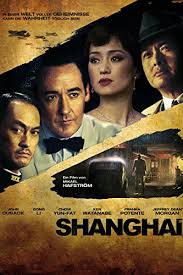
SHANGHAI
China/US/Thailand, 2010, 105 minutes, Colour.
John Cusack, Gong Li, Chow Yun-Fat, David Morse, Ken Watanabe, Franka Potente, Jeffrey Dean Morgan, Hugh Bonneville, Benedict Wong, Christopher Buchholz.
Directed by Mikael Halfstrom.
Shanghai was not so well reviewed on its release – however, it does have something of a more favourable following now (as instanced by comments on the IMDb).
Production was prepared for filming in Shanghai but permission withdrawn after complaints about presentation of sexual matters in Ang Lee’s Lust: Caution. The production was moved to Thailand – and the sets to recreate Shanghai in 1941 are quite elaborate, blocks of city streets of the time, buildings, facades, lights, as well as elaborate interiors, especially in a casino with the gambling, the stage entertainment, the crowds. And, the film is filled with extras, quite a number of strong crowd sequences, Japanese troops killing people in the streets and subsequent panic, panic at a railway station, and crowds at the end trying to get away on ships leaving Shanghai.
And the audience needs to pay attention to the complexities of the plot. The focus is on the journalist coming from Nazi Berlin, some considering him favourable to the Nazis, but is now collaborating with the Americans present and finding himself in complex situations with the Chinese resistance to the Japanese. He is played, rather sternly, by John Cusack.
The film has a strong supporting cast, led by celebrated Chinese actress (especially in the 1990s in ang Yimou films), Gong Li. She is married to Anthony, a power in the crime community of Shanghai, and played also by veteran Chinese actor, Chow Yun-Fat (famous at the time for his appearance in John Woo films). There is also the military chief played by Ken Watanabe.
The plot involves John Cusack searching for the killer of his journalist friend, played by Jeffrey Dean Morgan, leading him to the crime chief as well as the military chief. But the important thing is the role of the wife and her involvement with the resistance, and especially at the end, trying to get a young woman who has been mistress both to the military chief and the American journalist who has been killed out of Shanghai.
The film has been directed by Swedish director, Mikael Halfstrom.
- The title and focused, 1941, Shanghai’s place in China at the time, International Centre, the war with Japan, the year of Pearl Harbor?
- The production values, the elaborate sets for Shanghai, streets and buildings, interiors, casinos, offices, apartments? The large cast, the many crowd scenes, war, action, railway stations, wharfs? The musical score, songs and performance? International atmosphere?
- International intrigue, the background of Germany during the 30s, the outbreak of the war? The situation of Japan and its attack on China, the 30s? Japan preparing for the world war? The effect on Chinese citizens? The resistance? International presence, the dividing of the city into zones, the British, American, French, the Germans?
- The focus on Paul Soames, the American, undercover, agent, journalist, his work in Berlin, reputation, coming to Shanghai, his friendship with Connor? Meeting him, Sumi, his work, information, his death? wanting to find out the truth?
- The opening with Tanaka, the arrest, the interrogation, the threats? Going back two months?
- Paul, his friendship with Richard Astor, commissions, the American presence, international intrigue?
- Paul and his work as a journalist, the British editor, hostility, suspicions of his political stances?
- His getting the background information, travelling through Shanghai, observing, the people, the politics, the Japanese presence, the resistance, the shootings in the street…?
- The encounter with Anna, the attraction, questions, her relationship with her husband, his criminal background, power, at the casino? The revelations about Anna, the resistance, at the casino, passing on messages, but her relationship with her husband? The secrecy? The continued encounters with Paul, his following her and her knowing it? The issue of his friend and his death, the girl who is his mistress, the revelation of her relationship with Tanaka, her role as an agent? Her drug addiction, her being shielded and hidden? The plan to get her out of Shanghai?
- Social life in Shanghai, the German Embassy, the Consul, his wife, relationship with Paul, from the past?
- Tanaka, his presence, suspicions, authority, the relationship with Anthony, with Anna? The arrest of Paul, the brutality, the interrogation? Watching the execution of the Chinese agent?
- The complexities of getting the mistress out of Shanghai, the intrigue, all watching, Anna and her friends with the girl, the railway station, Japanese suspicions, the creating of the diversion, the shooting, the crowd and confusion? Tanaka, with the young girl, his love for her, the final injection?
- The final complications, Anthony and his giving infomration to Tanaka, the confrontation at the house, the bodyguard, the driver, the shootings, Anthony taking a stance, his death, can occur wounded, Paul and Anna escaping? Going to the wharf, the passport, Paul saying and it was his wife, there seem Tanaka, or having spent his life, their being allowed on the ship? Indications of returning later?
- Espionage, journalism, war atmosphere, in an exotic location?
Cabrini
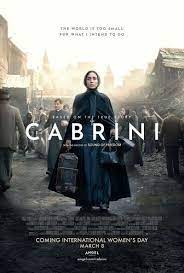
CABRINI
US, 2024, 145 minutes, Colour.
Cristiana Dell'Anna, David Morse, John Lithgow, Giancarlo Giannini, Jeremy Bobb, Romana Maggiora Vergano, Patch Darragh.
Directed by Alejandro Monteverde.
Cabrini – Frances Xavier Cabrini, born in Lombardy in 1850, on mission to New York, 1889, 28 years of enterprising activity, died 1917, beatified 1938, canonised 1946, the first American citizen to be canonised.
Frances Xavier Cabrini established a religious congregation, the Missionary Sisters of the Sacred Heart, whose motto is taken from St Paul: “I can do all things in him who strengthens me.”. 40 minutes into this portrait of Mother Cabrini, we hear her say these words. And, by this stage of the film, we know that this is true. But, there are almost 2 more hours or – an extraordinary extension of “all things”.
The tone is set in the prologue, a young boy, Paolo, close-up on his face, dragging a wheelbarrow, his mother dying of typhus, the New York streets, his calling out for help, in Italian, everybody ignoring him, a policeman accosting him, giving an address where the sick woman could be taken, but she dies. Paolo will later appear in this story.
Then the transition to Italy, a young woman in a religious habit, close-up of her face, the camera dwelling for a long time on her face, inviting us to respond. Throughout the film, the camera will focus on Mother Cabrini’s face, mostly intense, often sad, rarely smiling, but absolutely determined in her goals, and in her confidence on God’s Providence. And she often states that if you begin the mission, the means will come.
Frances Cabrini had a dream of establishing orphanages in China, a compassion for needs in Asia. She has been refused by Vatican officials, eventually visiting Rome, demanding a meeting with Pope Leo XIII, (Giancarlo Giannini) his acceeding to her wish, cup of tea together, his being impressed by her zeal, and the suggestion of a mission in New York. She and her sisters travel, steerage, her looking out on the Atlantic, her fear of water, flashbacks to her almost drowning, being rescued, recovery, but permanent damage to her lungs. Which means that she sees any time not devoted to her mission as, simply, loss.
Mother Cabrini is played by Italian actress, Cristiana Dell’Anna, always intense, an intense interiority, no histrionics. This is a determined woman of faith, the language of faith (though no scenes of prayer and community – and one might have expected some emphasis on her Sacred Heart devotion, though some glimpses of statues and paintings.)
Filmgoers who remember Martin Scorsese’s Gangs of New York, will resonate at the reconstruction of Five Points, built on sewers, squalor, many Italian migrants, not yet speaking English, and despised by so many of the locals, called dagos, guinea pigs, seen as less than human, insulted in the streets, denounced by the local authorities, wooden shacks, but youngsters taking refuge in the underground tunnels and channels, put to menial jobs, often in physical danger. Mother Cabrini goes instantly into action, rescuing children, encountering a young prostitute and clashes with her vicious pimp, continually finding accommodation, looking for buildings, looking for support.
There are many scenes of her confrontations with the Archbishop of New York, Archbishop Corrigan (David Morse), Irish background, reluctant to help Mother Cabrini, urging her to return to Italy, but her continually confronting him. Then there are the local powers, the mayor, John Lithgow portraying him as supremely arrogant, politicians and police under his control, the local police who despise the Italians, ride roughshod over a crowd gathered at an Italian festival in a park.
Mother Cabrini is of strong Italian stock, strong Italian attitudes (and grew up in strong anti-clerical times), ready to confront anyone, Archbishop, Mayor… When she enlists the help of an opera singer, moved by Pagliacci, he refuses because of his antagonism towards the church. When she organises a children’s choir to serenade him at his mansion, he relents, joining in the fundraising. Despite opposition and setbacks, her forte was in persuading people to support her. And her mission forte was the continued outreach, confident in her outreach.
In the 19th century, while women did not have a place in church governance, there were many strong women who ran hospitals, schools, exercising this kind of church leadership. This is to the fore in this screenplay, Mother Cabrini and being a pioneer in feminism, the film’s dialogue uses convincing feminist language to highlight the power of women: the Mayor suggesting she should have been a man, Mother Cabrini replying that men cannot do what women can do.
The screenplay indicates what was to come, orphanages, but, especially after a deadly subway explosion, the need for hospital, the beginning of Cabrini hospitals in many parts of the world. Despite political sanctioned arson, she keeps going. Final close-up of her, intense, determined, her interior confidence in divine Providence, and the information given about what she referred to as her “Empire of Hope”, 67 institutions, her congregation and its outreach throughout the world.
A cinema biography in the long traditional style of such stories, moving, challenging audience compassion.
- Audience knowledge of Frances Cabrini? Italians? Americans? Worldwide? Her being a significant American figure? Her work in New York, the US, worldwide? The first American citizen to be canonised?
- The impact of this characterisation of mother Cabrini, as a person, intense, determined, a sense of mission, ambitions for China, thwarted by the Vatican, the Pope’s suggestion to go to New York, the squalid situations in New York, her pushing forward, conflict with the Archbishop, with the civil authorities, with the Mayor? Her vision, concerned for the poor and children, her entrepreneurial skills, her trust in Providence?
- The opening, Paolo, the wheelbarrow, calling out in Italian, his dying mother, people ignoring him, the gentry? Looking down on Italians, Italian language? The policeman and the destination? Is mother’s death? The intense close-up of his face? His later appearance, with Enzo, in the canals, the support from Mother Cabrini, the situation with Victoria, the pimp, the gun, his father’s suicide gun, Mother Cabrini and the burning of the gun?
- The status of Italians in the US, in New York, the initial information, the numbers, 1890 to 1910, not speaking English, hopes, menial jobs, looked down on as inferiors, day goes, guinea pigs…?
- The focus on Frances Cabrini, the initial focus on her face, intense close-up? The background of her life, the flashbacks to the drowning sequence, the paper boat with leaves symbolic of the mission, her rescue, the damage to her lungs, health prognosis, her not wanting to waste time, wasting time as a loss? With her sisters, the establishing of the group, their work, the orphanage in Lombardy? Her ambitions to go to China for orphanages?
- The letter from the Vatican, her trip, the Cardinals and denial, hostility? A woman? And none? Demanding to see the Pope, his seeing her, cup of tea, chat, the proposal for New York? Her accepting this, the voyage to the US, steerage, the arrival, the priest not there to meet them, walking, the night, the squalor of Five Points, the swamps, the sewers? Seeing the little girls, touching Mother Cabrini? Finding some shelter with the prostitute, barring the door against the pimp? Is banging on the door, his threats?
- The film’s perspective on the character of Mother Cabrini? Italian background, tradition of shrewdness, capacities for success? But the actress and a non-histrionic performance? Often silent, rarely smiling, absolutely determined, long extreme close-ups of her?
- Her intensity and the speed of her work, finding accommodation, poor, cramped, her health and awake at night, pursuing the boys down the sewer hole, the little girls, gathering the children? Finding means to provide shelter, food, clothes? Local support? American hostility?
- The visit to the Archbishop, his Irish background, not pleased to see the nuns in New York, urging them to return? The letter from the Pope? The Archbishop strictures, and their not appealing to Americans for financial support? The later meetings with the Archbishop, her going to Rome, the further letter from the Pope? The Archbishop meet here at the wharf? His support yet his continued strictures? This portrait of an Archbishop, his reference to the people under his care, his selective care, for the wealthy and middle class? Racial issues?
- The encounters with Victoria, the young prostitute, her story of her life, the pimp, and giving the nun shelter, his violence against her, his coming to see the nuns and threatening them? The encounter with Paolo, the shooting? The confrontation of Victoria, her getting a knife, killing him? Victoria and her continued work with mother Cabrini, assisting with the work, finding a new life?
- The role of the police, attacks, the authorities, checking on health situations, evictions? Paying fines?
- Her focus on orphanages and children? The explosion underground, the many killed and wounded, and so and polo finding him, Enzo’s death? Mother Cabrini and her friendship with Dr Murphy, the first encounter, his volunteering, his advice, his advice to her for her health? Discussion about providing a hospital?
- Providence, the belief in beginning the mission and the means will follow? The search for buildings, the Archbishop and the Jesuit land, the lack of water, the digging of wells, Victoria and her eventually getting water? The building for the hospital, the raising of funds? The Archbishop and his forbidding sources for charity? The choice of the building, the poster for Pagliacci, her going to the opera, the interview with the singer, his anti-church attitudes? The children’s choir, serenading him, change of heart, his singing at the Italian Festival? The joy of the festival in the park?
- The role of the police, dispersing of the crowd, the money collected and the authorities saying that that was exactly the amount for the fine?
- Mother Cabrini going to Rome, her approach to the senator, to the Senate, her being rebuffed, rebuked is a woman, going to the senate house, defying the members, her speech, appeal, challenge to the presiding senator? Her return to America, her contacts?
- The local board, decisions, finance, the beginning of the renovation of the building? The hard work, her supervision, the workers? The fire, arson, the destruction?
- Her visit to the Mayor, his arrogant manner, his previous discussions with his officials, anti-Italian, receiving Mother Cabrini, their discussions, the verbal interchanges, his backing down, his saying that she should have been a man – and her reply that men cannot do what women do?
- The further information about her work, hospitals, throughout the US, the map and showing her work beyond America? Her death, living to 67 despite the ill-health prognoses? Beatification 1938, canonisation 1946, patron of immigrants?
