Displaying items by tag: Doria Tillier
Bolero/ 2024
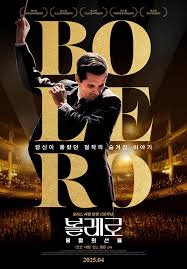
BOLERO
France/Belgium, 2024, 120 minutes, Colour.
Raphael Personnaz, Doria Tillier, Jeanne Balibar, Emmanuelle Devos, Vincent Perez.
Directed by Anne Fontaine.
As soon as the first notes, the first few bars, are heard, so many listeners will instantly identify the beginning of Bolero. It was composed in 1928 for a 17 minute ballet, almost 100 years now of popularity. And many will be able to identify the composer as Ravel Though they may not remember that his first name was Maurice.
Here is a fine cinema experience to learn something about Maurice Ravel, a portrait of him as a person but also a portrait of an intense composer.
Well worth seeing is the opening collage, the notes of Bolero, then an extraordinary range of scenes, some wonderful variations on the music, visualised, especially in dance, from orchestral to jazz and beyond.
The film opens in 1903, the young Ravel, son of a Basque mother, encouraged to go to a recital to win a prize. He does not. And, with something of a quietly introverted morose personality, he has a mixture of pride and doom as he works as composer and orchestra conductor.
The screenplay then moves to the 1920s, Ravel conducting, actually well appreciated in France and beyond, the collage of his travelling to the United States and touring, successful concerts. He is supported by his mother as well as by his manager, Marguerite, a very sympathetic Emmanuelle Devos. In society, he is tantalised by evocative ballet entrepreneur, Ida Rubenstein, played by actress and dancer Jeanne Balibar, and emotionally devoted to Misia, Doria Tillier, several times married sister of his close friend, Cipa, Vincent Perez. A strong cast. The film has been directed by Anne Fontaine (Coco Before Chanel, the wonderful World War II film, Les Innocentes, and, in Australia, Adoration).
The sequence where Ravel hears some of the notes for Bolero, sitting at the piano, trying them out, some variations, the development, the rhythms, the tune, the pounding base, presents a credible visualising of a composer at work. And, the music will recur, Ida Rubenstein with a supporting female and male ensemble will, at first to Ravel’s dismay, then his finally accepting it and the immediate, but unexpected, acclaim.
This portrait indicates that Ravel did experience some wonderful creativity in his music, composition, performance. But, a complex character, reserved, sometimes shy in manner, supported by the women in his life, a mixture of intensity and detachment, not always easy to get on with.
The film initially recreates the atmosphere, costumes and decor, music and society prior to World War I. There are some World War I episodes where Ravel has actually volunteered for service and works in sanitation, the war experience having some consequences. But, in fact, Ravel was something of a music celebrity, the 20s being very much his significant time, but, building on that celebrity during the 1930s.
This is a French cinema tribute to a French composer – and the celebration of his master composition, Bolero.
- Audience awareness and admiration for Bolero? Knowledge of Maurice Ravel? A life portrait? Portrait of a composer?
- The Paris settings, 1903, the 1920s, style, costumes and decor, the changing with the decades, the episode of the war, uniforms, action, hospitals? The 1920s? The world of music? Orchestras? Ravel and his travel, the sequences are concerts in the United States?
- The visit with our debt to the factory, walking through, the machines, the sound of the rhythms, the beat – and leading into Bolero?
- The opening credits, the introduction to the music, the collage of the variety of interpretations, arrangements, performances? The universal appeal of Bolero?
- 1903, Ravel and his background, his Basque mother, her influence and confidence, his going to the recital, performance, the other pianists, the panel sitting immobile, his not winning the prize? Nor later attempts?
- The transition to 1923, his status, composer, performances, piano, orchestra? The sequences showing him composing, his explanations of his inspiration, methods, inspirations?
- His relationship with his mother, concern about her, her death? His relationship with Marguerite, agent, support, interpretation? His dependence on her? Her character, her presence, performances, support, in crises moments?
- The presence of Ida , the Rubenstein ballet background, her place in society, the relationship with Ravel, tantalising, moody, the request for the music for a ballet, her demands, his avoiding her, the discussions? The pressure on him?
- This is to the bordello, the women, society, with the prostitute, the discussions?
- Ravel and his personal idiosyncrasies, the example of the shoes, his demands, secure with his chosen shoes? The help of his housekeeper?
- The relationship with Misia, his friendship with Cipa. His discussions with his friend about Misia, her marriages, married for money, place in society, his infatuation with her? Over the years, the meetings, social, public, dancing, music?
- The impact of the American tours? International reputation?
- Ida and the pressure for the ballet, his lack of inspiration? The sequence of the piano, the rhythms, the factory and the machines, incessant beat, then the notes of the tune, experimenting, playing them, the gradual cumulative effect? The credibility of the sequences for showing inspiration and the creation of the music?
- Ravel and his like and dislike of the music, its recurring in his imagination? Ida and her response? The choreography of the ballet? The intensity, Ida at her sensuality, the central character, movement and performance? The other dancers, male and female, the cumulative effect of the ballet?
- The performance, Ravel not wanting to be there, talking with Misia, his return, the response, the beginning of the applause, the cumulative effect, standing ovation, his response, bow of acknowledgement?
- The later years, Ravel growing old, the accident, physical repercussions, his death in 1937? His life and achievement?
- The final note that every 15 minutes Bolero is being played somewhere around the world?
