Displaying items by tag: Jeanne Balibar
Once Upon My Mother

ONCE UPON MY MOTHER/ MA MERE, DIEU ET SYLVIE VARTAN
France, 2025, 104 minutes, Colour.
Lila Bekhti, Jonathan Cohen, Josephine Japy, Lionel Dray, Jeanne Balibar, Sylvie Vartan, Naim Najy, Anne Le Ny.
Directed by Ken Scott.
An unexpected cinema experience, highly emotional.
It opens with a middle-aged man, Roland Perez, sitting at his computer, typing, the voice-over explaining that he was born in 1963. And, then he continues to tell his story. The English title evokes something of a fairytale, once upon… However, the French title is more direct, Roland’s focus very much on his mother, the fact that she is very religious in her beliefs and practice, God, and, more familiar to French audiences, the reference to the singer-actress, Sylvie Vartan (who, herself, actually appears in the latter part of the film, turning 80 when the film was made).
The Paris family, originally from Morocco, settled in France, is a tight knit family, five children and their mother, Esther, pregnant. Independent-minded, having everything under control, even travelling by bus to the hospital, and crying out loud, to the hospital where she gives birth.
To her shock, again voiced out very loud, then to the dismay of audience expectations, the baby, Roland, is born with a club foot. Hence the emotions. The first part of the film focuses on Esther, a really high-powered performance by Leila Bekhti, vigorously young, ageing and looking and sounding like a variation on Bette Midler (this is a compliment), and her absolute refusal to accept that her son will not walk faith that he will walk unaided.
She opens up the telephone book, searches out every possible specialist, loudly rejects their realistic assessments about Roland, draws on her Sephardic Jewish piety, praying out loud at unexpected moments, a shrine in the house, initially demanding a miracle and gradually accepting that a miracle might take some time. In the meantime, the children support the younger brother and, especially, complimentary word to the actors portraying Roland through his ages, especially Naim Najy who has the task of showing us the little boy who cannot stand, cannot walk, sliding around the floor of the house.
For those in the know, and audiences who do, not know but appreciate where they are being led, Roland will eventually stand and walk. On the one hand, there are the authorities demanding that he go to school and except his disability. On the other hand, Esther discovers the wife of a healer and commits herself and Roland to a lengthy treatment.
There is a later scene of vindication when Mayor Jacques Chirac of Paris actually presents a medal of honour to Esther, in the presence of family and neighbours, recommended by the woman who had demanded that the boy go to school.
The latter part of the film moves rather more speedily, Roland forced to go to a dance class, collapsing, Esther, loudly angry, confronting the ballet teacher. At home, difficulties in reading, but Roland forced to watch so much television, discovering the singer Sylvie Vartan and relishing her songs (and all the children, dad at work, the neighbours all joining in).
This review would not have minded a longer film, greater filling out of Roland’s later life, some acting on television, then studying law, the encounter with Litze, his future wife, an opportunity to interview Sylvie Vartan herself, the scenario rather quickly passing over his marriage, the birth of children, his work in the law, challenges, and the significant encounter, hence the title, with an ageing Sylvie Vartan, his idol, and becoming her legal adviser.
But, pervading the whole film is Esther’s presence and her absolute commitment to her son. It is not only love but, we appreciate even before Roland does, that it is very high-powered smother love, an all-consuming passion of the mother for her son, and, we appreciate before Roland himself does, that she has committed herself to controlling his life and, that as he grows older, she doesn’t really let go, even some controlling beyond the grave.
Which means, then, that this is a conflicted emotional cinema experience, sharing the life of Roland as he looks back, wondering about Esther and the exceeding stubbornness and determination that her son will walk, and then the joy that he does. But, the long-term repercussions of the control and the son, who is indebted to his mother, having to break free from that control.
So, an unexpected and unusual true story, worth experiencing.
- The original title, the focus on rolling’s mother and her importance, the religious dimension, God and miracles, and the role of singer simply light and for the young boy and his family and for his later career? And the English title with the application of the beginning of a fairytale…?
- The opening and expectations, Roland, his age, typing, the voice-over, born in 1963, a story initially of the 1960s and 70s – and then the later decades?
- Paris, the 1960s, the city, homes, hospitals, shops and markets, the atmosphere? The musical score? The continued range of popular songs, French and English-language corresponding to each of the decades? And the songs of Sylvie Bertin?
- The establishing of the family scene, the parents, strong-minded mother, Esther, at home, in control? The children and their various ages? The quiet father, at work? Her pregnancy, the neighbours, independent, getting the bus to the hospital, crying aloud in the bus, the experience of the birth, the child taken, the revelation of the club foot?
- Esther and her immediate response, crying out, denial, determination? Roland and his early years, he attempts to straighten out his clubfoot, the huge range of doctors and specialists, their realistic/pessimistic diagnosis? Esther, growing louder, more demanding, absolutely stubborn? Prayer, the Sephardic tradition, the order in the house, her pausing for praying? The father and the issue of Roland having a brace, taking him to a doctor? Esther not wanting to have a brace? The boy, unable to stand, on the floor, sliding around the house? His confinement, watching so much television, the appeal of Sylvie Vartan, the whole family with the records, the neighbours, everybody singing? And the brother teaching Roland how to Read with the stories of Sylvie Vartan?
- The years passing, Esther becoming more strident? The visit to the doctor, finding he had died, the encounter with his wife, the wife then reaching out, the fact that her husband was a healer, who using his methods, strict, confined, Roland loosening the bobds and moving around, the cheating, the widow almost giving up, persevering, his eventually moving his foot, the scene of his gradual standing up, then the scenes of his Walken, slowly, more quickly, backward…?
- The issue of his schooling, the Inspector, her visits, her demands, Esther and her fears defiance, the new treatment, being allowed the time, the Inspector and the police arriving? His standing, being said to ballet school, the pirouette the fall, the reaction of the ballet teacher, to remove his tights, see his foot, Esther her arriving, denouncing the ballet teacher? (If the scenes of him doing television commercials, some moving moments?)
- Go to school, on his own, and sport, his mother always warning him to not speak to strangers? The scene of his later telling her not to say this when he was an adult?
- The second part of the film, moving quickly, sketching the episodes in comparison with the first part of the film?
- His decision to do law, at the University, his mother intervening and chatting with the professor, using his personal name, well distracted, seeing Litze, the attraction, inviting the group home, Esther seeing her, deciding she was the best wife for Roland, the friendship between the two, their chatting?
- Knowledge of Sylvie Vartan, the record shop, his work, and the arrangement of the interviews, his nervousness, is able to talk to her about her ideas, the further interviews, as a boy seeing her with Johnny Halliday at the television station?
- The overview of Lionel’s adult years, courtship of Litze, the wedding, the preparations, the dance, the discovery that she was pregnant? Esther and her tantrum, on the floor, and the mean you with the shrimp, the reaction of the rabbis, in trying to reassure her?
- The overview of his marriage, the children, their growing up, alienation from Harold? His wife, the doctor, the cancer, her decisions, her death?
- Roland and his work, success of the law, his mother as receptionist, trying to city, but keeping confidential information to herself, especially about one client, the new offices, his not providing an office for her, her reaction and not wanting to be known that she was fired? His going away from his mother, trying to get free of her control? And so the disappointment for Esther later in life, the absence of her son?
- The birthday party, Sylvie Vartan as his client, the speeches, his mother with the story about his childhood, his taking the letter that his mother had slipped to Sylvie? But, having told people,, knowledge?
- Roland deciding to write his story, is memories, his disability, his mother, her determination, to possessive, the difficulties of breaking free, his career, his wife and family? And sharing this story to his book and this film?
Bolero/ 2024
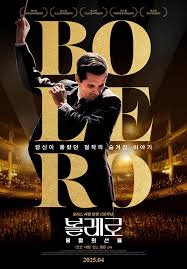
BOLERO
France/Belgium, 2024, 120 minutes, Colour.
Raphael Personnaz, Doria Tillier, Jeanne Balibar, Emmanuelle Devos, Vincent Perez.
Directed by Anne Fontaine.
As soon as the first notes, the first few bars, are heard, so many listeners will instantly identify the beginning of Bolero. It was composed in 1928 for a 17 minute ballet, almost 100 years now of popularity. And many will be able to identify the composer as Ravel Though they may not remember that his first name was Maurice.
Here is a fine cinema experience to learn something about Maurice Ravel, a portrait of him as a person but also a portrait of an intense composer.
Well worth seeing is the opening collage, the notes of Bolero, then an extraordinary range of scenes, some wonderful variations on the music, visualised, especially in dance, from orchestral to jazz and beyond.
The film opens in 1903, the young Ravel, son of a Basque mother, encouraged to go to a recital to win a prize. He does not. And, with something of a quietly introverted morose personality, he has a mixture of pride and doom as he works as composer and orchestra conductor.
The screenplay then moves to the 1920s, Ravel conducting, actually well appreciated in France and beyond, the collage of his travelling to the United States and touring, successful concerts. He is supported by his mother as well as by his manager, Marguerite, a very sympathetic Emmanuelle Devos. In society, he is tantalised by evocative ballet entrepreneur, Ida Rubenstein, played by actress and dancer Jeanne Balibar, and emotionally devoted to Misia, Doria Tillier, several times married sister of his close friend, Cipa, Vincent Perez. A strong cast. The film has been directed by Anne Fontaine (Coco Before Chanel, the wonderful World War II film, Les Innocentes, and, in Australia, Adoration).
The sequence where Ravel hears some of the notes for Bolero, sitting at the piano, trying them out, some variations, the development, the rhythms, the tune, the pounding base, presents a credible visualising of a composer at work. And, the music will recur, Ida Rubenstein with a supporting female and male ensemble will, at first to Ravel’s dismay, then his finally accepting it and the immediate, but unexpected, acclaim.
This portrait indicates that Ravel did experience some wonderful creativity in his music, composition, performance. But, a complex character, reserved, sometimes shy in manner, supported by the women in his life, a mixture of intensity and detachment, not always easy to get on with.
The film initially recreates the atmosphere, costumes and decor, music and society prior to World War I. There are some World War I episodes where Ravel has actually volunteered for service and works in sanitation, the war experience having some consequences. But, in fact, Ravel was something of a music celebrity, the 20s being very much his significant time, but, building on that celebrity during the 1930s.
This is a French cinema tribute to a French composer – and the celebration of his master composition, Bolero.
- Audience awareness and admiration for Bolero? Knowledge of Maurice Ravel? A life portrait? Portrait of a composer?
- The Paris settings, 1903, the 1920s, style, costumes and decor, the changing with the decades, the episode of the war, uniforms, action, hospitals? The 1920s? The world of music? Orchestras? Ravel and his travel, the sequences are concerts in the United States?
- The visit with our debt to the factory, walking through, the machines, the sound of the rhythms, the beat – and leading into Bolero?
- The opening credits, the introduction to the music, the collage of the variety of interpretations, arrangements, performances? The universal appeal of Bolero?
- 1903, Ravel and his background, his Basque mother, her influence and confidence, his going to the recital, performance, the other pianists, the panel sitting immobile, his not winning the prize? Nor later attempts?
- The transition to 1923, his status, composer, performances, piano, orchestra? The sequences showing him composing, his explanations of his inspiration, methods, inspirations?
- His relationship with his mother, concern about her, her death? His relationship with Marguerite, agent, support, interpretation? His dependence on her? Her character, her presence, performances, support, in crises moments?
- The presence of Ida , the Rubenstein ballet background, her place in society, the relationship with Ravel, tantalising, moody, the request for the music for a ballet, her demands, his avoiding her, the discussions? The pressure on him?
- This is to the bordello, the women, society, with the prostitute, the discussions?
- Ravel and his personal idiosyncrasies, the example of the shoes, his demands, secure with his chosen shoes? The help of his housekeeper?
- The relationship with Misia, his friendship with Cipa. His discussions with his friend about Misia, her marriages, married for money, place in society, his infatuation with her? Over the years, the meetings, social, public, dancing, music?
- The impact of the American tours? International reputation?
- Ida and the pressure for the ballet, his lack of inspiration? The sequence of the piano, the rhythms, the factory and the machines, incessant beat, then the notes of the tune, experimenting, playing them, the gradual cumulative effect? The credibility of the sequences for showing inspiration and the creation of the music?
- Ravel and his like and dislike of the music, its recurring in his imagination? Ida and her response? The choreography of the ballet? The intensity, Ida at her sensuality, the central character, movement and performance? The other dancers, male and female, the cumulative effect of the ballet?
- The performance, Ravel not wanting to be there, talking with Misia, his return, the response, the beginning of the applause, the cumulative effect, standing ovation, his response, bow of acknowledgement?
- The later years, Ravel growing old, the accident, physical repercussions, his death in 1937? His life and achievement?
- The final note that every 15 minutes Bolero is being played somewhere around the world?
