Displaying items by tag: Stefano Accorsi
Primavera
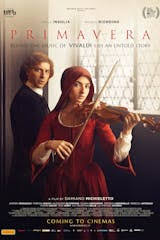
PRIMAVERA
Italy, 2025, 110 minutes, Colour.
Tecla Insolia, Michele Riondino, Fabrizio Sacchi, Andrea Pennacchi, Valentina Belle, Stefano Accorsi, Hildegard De Stefano.
Directed by Damiano Michieletto.
Over the years there have been a number of films which could be recommended especially for “music lovers”. They are stories of significant composers and musicians and one remembers the films about Mozart, Beethoven, Brahms and Schumann, Paganini… This time the musician and composer is Antonio Vivaldi. Hence the title of the film, Primavera, from his famous Four Seasons (and, a touch of the spoiler, Primavera is played only during the final credits while audiences may have been waiting to hear it throughout the film!).
The setting is Venice, quite lavishly reproduced, the city, the churches, the canals, all that we might expect from Venice. And, rather lavish period sets and decor, an era of wigs and elaborate costumes for both men and women. This is a film which is often striking to the eye.
While Vivaldi, Michele Riondino, ordained a priest but with some delicate health issues and dispensed from public ministry, he is recognised as a composer, he spends a great deal of his time at the Venetian orphanage, a haven for baby girls whose mothers were unmarried, growing up rather cloistered, but well educated, especially in music, instruments, singing. And at the centre of these young women is Cecilia (a traditional name associated with music because of the story of St Cecilia), and, in many ways, she is the centre of the film, a vivid performance by Tecla Insolia. Vivaldi is in charge of music, rehearses the young women, the orphanage providing recitals in their church, but the singers and musicians high up above the altar, hidden from the audience. The conductor-composer is a centre of attention.
Which means that there is double drama. Vivaldi, having opportunity for his composing, his work with the students, not having a great salary, but the audience having the opportunity to hear a great number of his works, performances for the gentry, for the visiting King of Denmark, a lot of pomp and circumstance, but always the music.
The main drama is that of Lucia, expected to marry, her intended coming back from the war, a medalled hero, but viciously violent towards her when she contrives to escape from the arranged marriage. She is a talented violin player, promoted and encouraged by Vivaldi, but certainly a victim of the secondary place of women in Venetian society, forced to take stances, make decisions, but no prospect of success in the public eye.
So, for audiences not familiar with Vivaldi, an opportunity to make his acquaintance, listen to some of his music, enjoy Primavera during the final credits – but, also, a dramatic reminder of the status in society, the dominant male, the subservient female trapped, assertive but victimised.
- Audience knowledge of Vivaldi, his life, his music, his compositions?
- Early 18th century Venice, the views, the buildings, churches, the canals, costumes and decor? Re-creation of the period?
- The role of the music, the accompanying score and its style, early 18th century baroque, Vivaldi’s compositions, choir, operatic, sonatas? And, during the final credits, Primavera?
- The Orphanage, the young women, leading to the orphanage as babies, unmarried mothers, the information in the books, the torn cards, mother is possibly returning to claim their daughters? Social status of unmarried mothers?
- The opening, the cat giving birth, the prioress coming, taking the kittens, drowning them? Symbolic for the young women?
- The young women, the focus on Cecilia, age, longing for her mother, preoccupied, the secret writing of letters to her, her talent for sitting? Relationship with the other young women? With the prioress? With the governor?
- The other women, Laura, their dress, their not being seen, in the church above and the group, prospects for their lives, suitors coming, dowries, leaving and giving up their music?
- The education of the young women, music, reading, culture, in 18th-century Italy? The instruments, performance, the orchestra, the city, the performances, the rivalries amongst the churches for visitors? Issues of finance for the orphanages? Benefactors?
- Don Giulio, with the choir, his attitude, his being dismissed? The discussions for a successor, Vivaldi in the past, his growing reputation, hiring him again?
- Vivaldi, age, priest, his health, not celebrating Mass in public, his music, performances, growing reputation? Payment? His interaction with the young women, sitting, listening, his own work, impressed by Cecilia, her playing the violin, her talent, wanting her as first violinist?
- The routines of life in the orphanage, the young women together, the meals, the domination of the prioress, the governor, said at meals?
- The episode of the young woman, the dowry, the suitor, the wedding down, the celebration?
- The mother coming with the card, Cecilia assuming it was her mother, coming, embracing her? And the dismay with the young woman who was the daughter?
- Cecilia, the research in the library, the information about her? And longing for her mother?
- The greengrocer, the girls looking at him, his dying Cecilia? The later revelation of her pregnancy, his being the father?
- The success of Cecilia, her performance, practice, the instruments?
- The war, coming to an end, the return of Sabfermo and claiming Cecilia as his bride? His manner, the achievement, metal, the music, the Gov?
- Vivaldi, wanting Cecilia to stay, his former requests for new instruments, being ignored, now using them against him? The discovery that Cecilia was pregnant, suggesting that people would think about it responsible?
- So family, his arrival, claiming Cecilia, the discovery that she was pregnant, his response, breaking her wrist and fingers, cruelty?
- The effect on Cecilia, the buildup to the concert, Laura retaining her role, Cecilia asking to watch, her leaving, the prioress helping her escape, her leaving the orphanage, crossing the bridge, to freedom?
- The further information about Vivaldi, his compositions, performances, success, the later discovery of his manuscripts?
Children's Train, The/ Il treno dei bambini
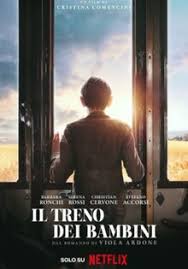
THE CHILDREN’S TRAIN/ IL TRENO DEI BAMBINI
Italy, 2024, 104 minutes, Colour.
Barbara Ronchi, Serena Rossi, Stefano Accorsi, Christian Cervone, Ivan Zerbinati.
Directed by Cristina Comencini.
An Italian film, well worth seeing.
Even eight decades after the end of World War II, war stories continue to be made and appreciated. This film might be called an immediate-post-war film. The setting is Italy and the train travels from Naples in the South to Modena in the North.
But there is an arresting prologue to the film, the 1990s, a celebrated violinist, played by veteran Italian actor Stefano Accorsi, arriving to give a violin recital, a man with some prestige and talent. As he is about to go on stage, he receives a phone call telling him of the death of his mother. And the screenplay goes back to the immediate end of the war, the departure of the Germans, the arrival of the liberating forces and life in Naples in the aftermath of war destruction.
The first part of the film focuses on a young boy, Amerigo, Christian Cervone always convincing, living with his impoverished and illiterate mother, Serena Rossi, the story that her husband had gone to the United States for opportunities. We see the poverty, buildings and ruins, the children running free or involved in apprenticeships. In the background one of those smart men, fashionably dressed, who have benefited by the black market.
It is in this context that members of the Communist Party had devised a program for the children of the poor families. They are to go by train to Modena and be cared for by sympathetic families in the North, given some opportunity for family life, work, for learning skills, making friends. However, there is some popular antipathy towards the Communist Party, some fearmongering by older women, telling the mothers of the children that they will be shipped off to Siberia, that they will be eaten, that they will be put in ovens… Which does instil some fear in the children themselves. However, they board the train, nervously travelling but then welcomed in Modena.
Amerigo is young, nervous, away from home, without a family to take him, allotted to a former partisan, Barbara Ronchi, whose partner was killed during the war. She has no experience of being a mother. Much of the effectiveness of this drama is her response to Amerigo and his response to her, forming a great bond, but his also benefiting, sometimes happily, sometimes being picked on as a Southerner, by the wider welcoming family, especially by the father who introduces Amerigo to the violin.
Then the drama of the return home, the benefit of life in the North, the hardships back again in the south, his mother sending him to be an apprentice, pawning his violin, cutting off his connections with the North.
In the latter part of the film, there is the pathos of the older Amerigo, after his violin recital, coming back to Naples, revisiting the neighbourhood, his house, the memories, affection he found in the North, and the regrets on his return home.
Recommended.
- The title, tone? The children, the train, the destination, hope? Naples, World War II, occupation, liberation? An Italian story?
- The visuals in Naples, homes, the streets, the markets, the war ruins? The contrast with Modena, less war damage, the homes, the farms, the town, celebrations? The musical score?
- Introduction to Amerigo the violinist, celebrity, arriving, his status? His manner, the phone call, the death of his mother, to play or not to play, his decision, the performance? The flashbacks? After the death of his mother, the return to Naples, the house, discovering the violin, his mother buying it back? The memories, the grief, the happiness, learning the violin and playing it?
- Post-war Naples, the effect of the occupation, poverty, hunger, the families, the absent men, migrations to America, Antonietta, with Amerigo, the work, lack of food, eking out an existence? The state of the many children, the lack of a future, the scenes at the market, the furs and the customers, the device of the rats and their fur, painting, the storm and the expose, Antonietta, illiterate, a hard life, for her son? Her relationship with the wheeler dealer, his family, the news later of his arrest?
- The Communist scheme, the trains of happiness, the proposal, the mothers listening, the reaction of the children, Modena as the destination? Opportunities, education, and the return?
- The mothers, the range of mothers, in favour of the scheme, their hopes? The opposition in the town, the women, the demonstration at the station, the ranting, the children being taken to Siberia, the poverty, eaten by the inhabitants, the ovens, the children hearing the stories and their fear? The compassionate official and her assistant, confronting the opponents? Helping the children onto the train? Amerigo, reluctant, his mother chasing the train?
- The train ride, the drama, the children and their fears, sleeping? The plans to escape?
- The arrival in Modena, the distribution of the children, the hosting families? Amerigo alone, Derna and her role as a partisan, the loss of her partner, living alone, taking on Amerigo? His friend from Naples, the young girl and her happiness?
- Alice, Derna not used to having children, weariness, suspicions, the baking scene and Amerigo remembering the threat of children in the others? His room, more comforts? The meeting with the family, the kindly parents, the sympathetic father, the sons, the older sympathetic, the younger one jealous of Amerigo, their dealings, the fight at the fair, but then the growing friendship? Amerigo bullied at school, the Southerner? The happy scenes, meals, work and training? The young girl, Rosanna, afraid, not wanting to be there, the episode of finding the helmeted skeleton along the railway tracks?
- The father, the violin, Amerigo and his curiosity, touching the violin, his natural capacity, the father encouraging him, the practice?
- The time passing, Amerigo and the feeling of affection, Derna and her story, her partisan companion, his death, the effect of having the boy with her?
- The fields, their greening, time to go home?
- The return home, Amerigo and his sadness, the encounter with his mother, her harshness, sending him to work, as an apprentice, harsh? His reaction? Running away, going to the centre, discovering the letters and parcels from Modena and his mother not letting him have them? The pawning of the violin? His running away?
- The happy return, the older Amerigo and his visit, his memories? The role of his mother, writing to Derna, sacrificing her son?
Fortunata

FORTUNATA
Italy, 2017, 103 minutes, Colour.
Jasmine Trinca, Stefano Accorsi, Alessandro Borghi, Eduardo Pesce, Nicole Centanni, Hanna Schygulla.
Directed by Sergio Castellitto.
Fortunata is the dramatising of the life of a very emotional woman, a hard background, harsh memories of the death of her father and responsibilities, marriage to a violent man, divorce proceedings, bonding with her daughter but their being tensions, the experience of work with the therapist…
The film has been written by Margarita Mazantini who collaborated with her actor-director husband, Sergio Castillitto. They worked on several films together.
The film was nominated for many awards and actress, Jasmine Trinka, winning several for Best Actress. Her character is highly emotional and the performance dramatises the emotions, sometimes there are extremes. In support is StefanoAccorsi as a sympathetic therapist, Alessandro Borghi as a friend who is bipolar, Eduardo Pesce as her brutal husband, and German actress, memories of her work with Fassbender, Hanna chuygulla as a former actress with dementia.
The treatment is highly emotional, dramatic and melodramatic, but the central performance is certainly commanding and audiences can be swept up into the domestic drama, the behaviour of the brutal husband, menacing and violent, the possible escape with the therapist, at the core relationship of mother and daughter.
- Title, the irony of Fortunata and her name? The background, Her father, a failed marriage relationship with her daughter, therapist, ambitions, her emotions, careful Chicano? Custody issues?
- The Italian city, apartments, addresses, therapy offices, the aqueduct, countryside, the visits to Genoa? The musical score?
- Fortunata’s story, her age, the sequences with her husband, violent brutality, verbal violence and menace, physical violence? The divorce? Her relationship with Barbara, Barbara’s moods, school, dropping the bag, the exasperated mother? Barbara possessive? Fortunata and hair-dressers, the plans, with Chicano, with her friends? The work and preparations? Going to the therapist, observing Barbara? The bond with Patrizio, the outing with him, the travel, his story, the dancing, the sexual experience, the consequences of the relationship? Her husband, the accusations, Chicano and the death of his mother, meeting with the judge, the husband and the filming of his wife and her behaviour? Her losing her daughter?
- Barbara, her age, relationship with her mother, aggressive, yet dependent, going to the therapist, bonding with him, her drawings, the discussions, his drawing her out of herself? The suspicions of her mother with the therapist? Angry at her mother going away, going to the roof, hurting herself? Her father’s reaction? Going off with him? Finally alienation from her father, bonding again with her mother?
- Chicano, bipolar, drugs, looking after his mother, gentlemen, the past as an actress, quoting Antigone, his devotion to Fortunata, working with her, the encounter with the Patrizio, his plann for the withdrawal from drugs? The birthday party for his mother, blowing out the candles, her behaviour, her dementia? The walk with her, the memories,his exasperation at her not recognising him, the bridge, accusing him, his memories of the story of Fortunata letting her her father drown, the death of his mother – and the later finding of her body?
- Patrizio, therapist, the background in Africa, his reputation, his charm, with Fortunata, with Barbara, friendship, smiling, encouraging, the questions, drawing her out of herself, her bonding with hearing? The attraction to Fortunata, the outing with her, taking her to his town, night, the dancing, the room, sex, the return, the crisis on the return, Fortunata and his reaction to her, his trying to help? The final talk between them and her reaction?
- The culmination, the dramatising of her father’s death, her denial, visualising the water, a verbal description, her father in the water, going out to sea? The issue of blame, a highly emotional reaction to Chicano, wanting to see him, hysterics, her final catharsis with the memories of her father, joining again with Barbara at having a future?
Dea di Fortuna/ Goddess of Fortune
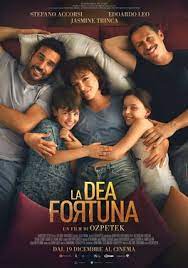
GODDESS OF FORTUNE/ DEA DI FORTUNA
Italy, 2019, 119 minutes, Colour.
Stefano Accorsi, Eduardo Leo, Jasmine Trinca, Sara Ciocca, Eduardo Brandi, Barbara Alberti, Dora Romano.
Directed by Ferzan Ozpetek.
Ferzan Ozpetek, originally from Turkey, living in Italy, has been making striking human drama since the end of the 1990s. Here he is with his themes, 20 years later.
Ozpetek is a gay man, a gay director, sexual orientation being significant in most of his films. Here is a variation, and established relationship, over many years, over many years, ups and downs, ambitions frustrated, infidelities. The couple is played by veteran actors, Stefano Accorsi and Eduardo Leo.
The title is taken from a statue of the goddess of Fortune in a monument in the town of Palestrina where the woman at the centre of the film works and which has an influence on her children.
At the core of the film is the relationship, from the past, with a woman who has rebelled against her harshly strict mother, left home, has entered into relationships, has a daughter, forward and outspoken, and the younger son, rather more prim, father uncertain. She is played by veteran actress, Jasmine Trinka.
On the one hand, the issue is of the woman and her being ill, diagnosis and prognosis, hospitalisation. On the other hand, there is the issue of who will care for her children while she is in hospital, her wanting to entrust them to the men. This raises the issue of gay couple, parenting, responsibilities, capacities, society’s attitudes. However, they are surrounded by an eccentric group of friends who are very supportive.
With the serious illness, a decision is made that the children should go back to stay with her grandmother, the men travelling to take her, encountering the harshness of the old woman, but also meeting her companion/servant. They leave the children.
The story becomes more serious when the woman dies, the men coming for the funeral, discovering that the old woman is treating her granddaughter as harshly as she did her daughter, a dilemma for them because they are in personal conflict, the discovery of an affair, one of the men frustrated in his ambitions in academia, forced to do translations, the other a labourer, discovering that his partner had been cheating and wanting to leave.
The drama comes to a head, the men fortunately being helped by the sympathetic companion, taking the children – and facing the prospect of a middle-aged gay couple taking on the role of parenting.
- Family drama, mother and children, gay couple and fathering?
- The settings, the Italian city, homes, building worksites, the streets, markets, hospitals, the boat journey, the country mansion and interiors? The musical score?
- The opening, the atmosphere, the party, straight, gay, transgender? Setting the tone?
- The story of Arturo and Alessandro, their age, 15 years together, memories of their first meeting, friendship with Anna Maria, homosexuality, partners, settling, home and companionship? Arturo and his story, his later recounting what he gave up, University professorship, his writing, work on translations, keeping house? The contrast with Alessandro, the plumber, practical, out on the job? The ordinariness of the relationship, the loss of passion, the revelation Arturo and his affair with the artist, his physical collapse, calling Alessandro, the truth, taking him home, a two row and his plan to leave?
- Into this setting, Anna Maria, the story of her past, her harsh mother, escaping, men and partners, her two children, her health, coming to her friends for help, in hospital, the doctors, tests, the brain, the need for surgery? The visits of the two men to the hospital?
- The children, entrusted to the two men, their range of friends, characters, the couple, the old lady…? And trusting the children to their care for an hour? Alessandro taking the boy to the house for the plumbing job, saying that he was apprentice? Martina, interactions between the two, friends, fights, Alessandro and his formal manner, polite, Martina more forthright? With the men, the meals, telling stories, sleeping arrangements? The men responding to the demands of care? The children and their concern about their mother?
- The background of the difficulties, the two men and their clashes, fighting, arguments? Future arrangements? Alessandro and his disappointment about the affair?
- Anna Maria, writing the document about the men to look after the children? Her leaving hospital, dressing up, urging them to take the children to her mother?
- The voyage, the mother, wealthy, harsh, taking the children, her reliance on Leah?
- Anna Maria, her death, the grief, the voyage back to the country mansion, the grandmother and her looking after the children, her reaction to the men, harsh denunciations of them, condemnation of her daughter? To keep the children, demanding that the men leave?
- The importance of Leah, her devotion to the grandmother, the years? Yet the criticism? Helping the men, getting the children to escape, going back to Rome?
- The effect on the men, the death of Anna Maria, the memories, possibilities for forgiveness, love continuing, the bonding, and the children keeping them together?
