Displaying items by tag: Eduardo Leo
Follemente/ Somebody to Love
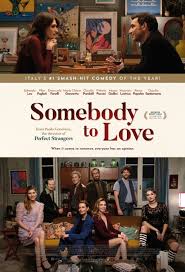
FOLLEMENTE/ MADLY/ SOMEBODY TO LOVE
Italy, 2025, 96 minutes, Colour.
Eduardo Leo, Pilar Fogliati.
Directed by Paolo Genovese.
Italian writer-director, Paolo Genovese, had critical and commercial success with his 2016 film, Perfect Strangers. With Follemente, almost a decade later, he had a great commercial success in Italy.
The basic premise of the film reminded audiences and reviewers of Pixar’s Inside Out films. There is a central human character while, dramatised behind the scenes, are the various aspects of character, personified, giving their views, influencing, guarding and ID the behaviour of their central character.
That was animation. This is live action. And, there are two central characters, man and a woman, both middle-aged. He is divorced with a daughter. She has had many relationships. They meet, go to her apartment, and the intimate drama of their interaction.
Meanwhile, there are four women and four men, representing the various facets of the consciousness of the couple. Which means then that there are many sequences of interactions amongst the four women, younger middle-aged and one younger, and among the four men, rather older, though one younger.
If audiences are able to accept this set up, there is a drama, comedy, mixups, interactions and clear and muddled motivations, and how these discussions going to play with the minds and the behaviour of the two central characters.
This scenario was very popular at the box office, less so with some bloggers and critics, some finding the sequences tedious, others not finding them so funny, some irritation with the various aspects of consciousness.
The response to the film will very strongly depend on the experience of the member of the audience in terms of relationships, but more especially of intimacy, sexual encounters, attitudes of sexuality, casual, more committed, the psychological and emotional consequences, the physicality of sexual encounters. And, audiences of different ages and experience will identify/ not identify with the situation, the central couple, the conflicting ideas and emotions influencing their as dramatised.
As with this kind of scenario, some of the women in the group, some of the men in their group, will be more interesting and identifiable with than others. But, there is always some kind of provocation in their arguments, interactions and the audience seeing how the couple put their influences, emotions, conflicting perspectives into action.
And, taking it further, there is a finale with all the women and men meeting each other, arguments, attractions, challenges.
Enjoyment of this cinematic experiment with dramatising the human psyche, and the various emotions presented inside out, will be very subjective according to what each member of the audience brings of their own experiences to watching the film.
(The American title for release was Madly, translating the Italian title. However, in the middle of the film there is an elaborate performance by a band of the song, English lyrics, Somebody to Love.)
Io Cé/ Just Believe
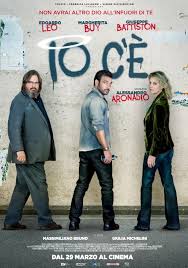
IO C’E/ JUST BELIEVE
Italy, 2018, 100 minutes, Colour.
Eduardo Leo, Margherita Buy, Giuseppe Battiston, Giuulia Nicolini, Franco Pinelli.
Directed by Alessandro Aronadio.
A very Italian comedy/drama. Audiences from outside Italy may be observing rather than identifying.
The theme is religion, organised religion. There are some sequences here that seem to be very supportive of traditional, organised religion, especially in the wise advice given to the central character by a sympathetic priest (counterbalanced by some satiric portraits of very aggressive traditionalist nuns). And the references to the history of Christianity, Islam, Buddhism, Hinduism.
But, the film is also satiric and critical of organised religion, its hold over people, some of the more eccentric expressions of faith and belief, exploitations by charlatans, legal loopholes and profits.
At the centre is a middle-aged man, Massimo, Eduardo Leo, who has travelled, not really settled down, has the bright idea to set up a religion, make a profit and avoid taxes. He employs the help and advice of his sister, Adriana, Margherita Buy. He has connections with quite a number of eccentric characters, especially a large author of a book which is never to be read, but who is trying to build up a following. In fact, working with Massimo, he achieves many of his life’s ambitions.
Massimo makes many tentative steps toward setting up his religion, finding accommodation, attracting a whole lot of street people, encouraging them, actually helping them, their responding well, calling his religion Ionosmo, and translated in the subtitles as Selfism. On the one hand there is positive value in the lives of those whom Massimo is advising to think of themselves as God, being true to themselves, that kind of inner freedom and for their actions. On the other hand, there are overtones of cult and exploitation.
There is a complication when one of the member dies and leaves property to Massimo and the church. And there are scenes of discussions and the final acceptance by the Italian government of his church with its legal and financial rights.
But, the development of the screenplay has Massimo beginning to be overwhelmed, doubting, giving speeches to his followers to say that his initial motives were fraudulent, that he does not believe what he says – which only confirms them in their faith and devotion to him.
And the Italian title? Massimo uses it to indicate the way that he can be described as his own God.
Definitely a curiosity item, Italian culture and society, religious issues.
Dea di Fortuna/ Goddess of Fortune
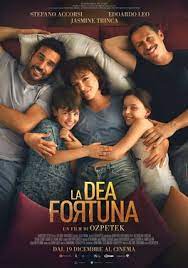
GODDESS OF FORTUNE/ DEA DI FORTUNA
Italy, 2019, 119 minutes, Colour.
Stefano Accorsi, Eduardo Leo, Jasmine Trinca, Sara Ciocca, Eduardo Brandi, Barbara Alberti, Dora Romano.
Directed by Ferzan Ozpetek.
Ferzan Ozpetek, originally from Turkey, living in Italy, has been making striking human drama since the end of the 1990s. Here he is with his themes, 20 years later.
Ozpetek is a gay man, a gay director, sexual orientation being significant in most of his films. Here is a variation, and established relationship, over many years, over many years, ups and downs, ambitions frustrated, infidelities. The couple is played by veteran actors, Stefano Accorsi and Eduardo Leo.
The title is taken from a statue of the goddess of Fortune in a monument in the town of Palestrina where the woman at the centre of the film works and which has an influence on her children.
At the core of the film is the relationship, from the past, with a woman who has rebelled against her harshly strict mother, left home, has entered into relationships, has a daughter, forward and outspoken, and the younger son, rather more prim, father uncertain. She is played by veteran actress, Jasmine Trinka.
On the one hand, the issue is of the woman and her being ill, diagnosis and prognosis, hospitalisation. On the other hand, there is the issue of who will care for her children while she is in hospital, her wanting to entrust them to the men. This raises the issue of gay couple, parenting, responsibilities, capacities, society’s attitudes. However, they are surrounded by an eccentric group of friends who are very supportive.
With the serious illness, a decision is made that the children should go back to stay with her grandmother, the men travelling to take her, encountering the harshness of the old woman, but also meeting her companion/servant. They leave the children.
The story becomes more serious when the woman dies, the men coming for the funeral, discovering that the old woman is treating her granddaughter as harshly as she did her daughter, a dilemma for them because they are in personal conflict, the discovery of an affair, one of the men frustrated in his ambitions in academia, forced to do translations, the other a labourer, discovering that his partner had been cheating and wanting to leave.
The drama comes to a head, the men fortunately being helped by the sympathetic companion, taking the children – and facing the prospect of a middle-aged gay couple taking on the role of parenting.
- Family drama, mother and children, gay couple and fathering?
- The settings, the Italian city, homes, building worksites, the streets, markets, hospitals, the boat journey, the country mansion and interiors? The musical score?
- The opening, the atmosphere, the party, straight, gay, transgender? Setting the tone?
- The story of Arturo and Alessandro, their age, 15 years together, memories of their first meeting, friendship with Anna Maria, homosexuality, partners, settling, home and companionship? Arturo and his story, his later recounting what he gave up, University professorship, his writing, work on translations, keeping house? The contrast with Alessandro, the plumber, practical, out on the job? The ordinariness of the relationship, the loss of passion, the revelation Arturo and his affair with the artist, his physical collapse, calling Alessandro, the truth, taking him home, a two row and his plan to leave?
- Into this setting, Anna Maria, the story of her past, her harsh mother, escaping, men and partners, her two children, her health, coming to her friends for help, in hospital, the doctors, tests, the brain, the need for surgery? The visits of the two men to the hospital?
- The children, entrusted to the two men, their range of friends, characters, the couple, the old lady…? And trusting the children to their care for an hour? Alessandro taking the boy to the house for the plumbing job, saying that he was apprentice? Martina, interactions between the two, friends, fights, Alessandro and his formal manner, polite, Martina more forthright? With the men, the meals, telling stories, sleeping arrangements? The men responding to the demands of care? The children and their concern about their mother?
- The background of the difficulties, the two men and their clashes, fighting, arguments? Future arrangements? Alessandro and his disappointment about the affair?
- Anna Maria, writing the document about the men to look after the children? Her leaving hospital, dressing up, urging them to take the children to her mother?
- The voyage, the mother, wealthy, harsh, taking the children, her reliance on Leah?
- Anna Maria, her death, the grief, the voyage back to the country mansion, the grandmother and her looking after the children, her reaction to the men, harsh denunciations of them, condemnation of her daughter? To keep the children, demanding that the men leave?
- The importance of Leah, her devotion to the grandmother, the years? Yet the criticism? Helping the men, getting the children to escape, going back to Rome?
- The effect on the men, the death of Anna Maria, the memories, possibilities for forgiveness, love continuing, the bonding, and the children keeping them together?
