Displaying items by tag: Peter Malone's Movie Reviews
Instigators, The
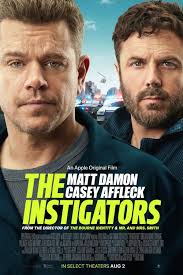
THE INSTIGATORS
US, 2024, 101 minutes, Colour.
Matt Damon, Casey Affleck, Hong Chau, Jack Harlow, Michael Stuhlbarg, Alfred Molina, Ron Perlman, Toby Jones, Ronnie Cho, Ving Rhames, Paul Walter Hauser.
Directed by Doug Liman.
This is a robbery story with a very strong cast, intended as an enjoyable pastime. Audiences might like to ponder who the actual instigators are in this story and what they were instigating in reality!
The setup is a buddy film, but two unlikely characters forced to work together, involved in a high-stakes robbery. We are introduced to the two, Matt Damon, always a solid presence, in therapy with his psychiatrist, Hong Chau, wanting an exact amount of money to be able to reunite with his son. By contrast, there is the alcoholic ex-conman played by Casey Affleck.
The situation is an election in Boston, Ron Perlman as the Mayor, corrupt, aiming for re-election against his ethnic rival, played by Ronnie Cho. The mayor is surrounded by his yes-men, especially his lawyer, played by Toby Jones.
In the meantime, there is a range of criminals played by Michael Stuhlbarg and Alfred Molina. They have the plan for the buddies, with the young nephew, to rob the vans carrying the money before it is delivered to the mayor.
They might be instigators but, of course, everything goes wrong. The money has already been transferred, they go into the Mayor’s office, still his keepsake with the number of his safe, a shootout, and escape in the van, chases through the city…
Ving Rhames appears as a corrupt police investigator.
When they are taken, there is a siege situation and the therapist is invited into mediate – enabling her to get out with some of the money to pay off Damon’s debt in view of a happy ending, and Casey Affleck escaping to Canada. The reason that they do escape and there is a happy ending is that the new Mayor, coming into possession of the money, anonymous money from the previous corrupt Mayor, is not declared and they can keep it as long as the two are not arrested and brought to court. So, off to Canada and happy ending.
The director is Doug Lyman (Bourne Identity, Jumper, Edge of Tomorrow), skilled at some action shows – but this is more relaxed for streaming audience.
- Title? Robberies? Who were the instigators?
- The Boston setting, the neighbourhoods, public spaces, the streets, car chases and pursuits, the mayor’s office, meeting places planning the robberies? The election – the rooms, corridors, social areas, the strong room with the safe? The musical score?
- The situation, introduction to Rory, therapy with the doctor, her questions, his responses, his crisis? The situation with his son? The need for money?
- The setting up of the robbery, the mind behind the robbery, his moods, dealing with his men, with Scalvo, young and inexperienced, the connections with Richie at the bakery? The plan, the testing of Rory and Cobby, details of the plan? The corrupt Mayor, as target, corruption and money?
- Rory and Cobby, personalities, interactions, slow, the as matter-of-fact, the precise amount needed, the bargain with the boss?
- The setup, the vans, the election night, the television news, the alternate candidate, Rory praising him, the presumption the corrupt Mayor would win? The scenes of the Mayor, his staff, tough tactics, reliance on his attorney, Alan Flynn?
- The comedy of the robbery gone wrong, the timing, the amount of money, the earlier van taking the money, guns and shooting, confrontations, the little money in the safe, Rory and the bag, the shooting, the deaths, Scalvo dead? Cobby wounded?
- Going to the doctor, the pressure on her, the discussion about her being a hostage, going with them, treating the wound, the consequences? Her later being chosen as the mediator for the hostages, her bargain with Rory and getting the money out under her uniform, helping Rory with his debt – but continually asking how he was feeling, especially during the negotiations? And copy finally returning to her?
- The mayor, his cronies, the defeat, Cobby with the money, the various positions, having the code number to the mayor’s safe, his not being able to remember, the various combinations?
- The boss, fleeing, contact with Richie, Richie and the interviews, sending the henchmen, tracking down Rory and Cobby, their escaping him? Frank, in the pay of the mayor, the dealings with Richie, his continued pursuit of Rory and Cobby? The finale and their doing the deal with him? And the final credits seen of the boss dead in the snow?
- The vans, the pursuits, the desperation of the chase, guns, Cobby wounded again, his complaints?
- The confrontation with the mayor, his desperation, the arrest, in jail?
- The return to the scene of the crime, Alan Flynn present, to do a bargain deal, opening the safe, all the money? The dilemma, the doctor as mediator? The device for escape, throwing the safes out the window, the scattering of money everywhere, the crowd racing for the money?
- Rory, finally, deciding to give himself up? The new mayor – and the information about the contracts, the new potential corruption? The two men let out, Rory going to see his son, reconciliation?
I Saw the TV Glow
I SAW THE TV GLOW
US, 2024, 100 minutes, Colour.
Justice Smith, Brigette Lundy-Paine, Ian Foreman, Helena Howard, Lindsey Jordan, Danielle Deadwyler, Fred Durst.
Directed by Jane Schoenbrun.
Certainly a provocative title. And, alluring for those who love television and are caught up in its worlds. It has been billed as a horror film but that sets up expectations which may not be fulfilled and distracts an audience from trying to discern what kind of film it actually is.
The first comment is that it has divided opinions, right down the middle, many declaring it is one of the most boring films they have ever seen, finding it incomprehensible, many, on the other hand, praising its originality, its insight into youth and absorption into fantasy with consequences on real life.
Another approach would be that young audiences who are on its wavelength, identify with the characters, not only their response to the glow of television and television series, but in their personal issues, especially of family and parental experiences, loneliness and isolation, identity, gender and sexual identity. Older audiences may find themselves in a state of observing with interest, rather than identifying with the characters and the action.
The film was the work of writer-director, Jane Schoenbrun, who has given the number of interviews about their perspective on the film and its creation, its relationship to the director’s own life, awareness and decisions about gender identity and transitions.
The story opens in 1996, two high schoolers, Maddy (Brigitte Lundy-Paine), morose but strong minded, who lives with an abusive father, Owen (Justice Smith who tells the story and is the focal character) who lives with his parents, a stern father, she two years older than he. What brings them together is an interest in a television series, The Pink Opaque (with reference to the series, Buffy, the Vampire Slayer). Two loners meet and discuss their experiences and lives, Maddy attracted to girls, Owen unsure, attracted to the television series. The possibility arises that they could run away from home, Maddy doing so, Owen staying.
There are two time lapses during the action which jolt the audience, Maddy’s return after eight years, absorbed in the series, partly living the fantasy, the audience seeing some of the fantasy characters. Owen, on the other hand, has a humdrum life, works in the theatre which now closes down and he has to move to a fun fair.
Then a gap of 20 years, Owen, the same but visibly older, adapting his life, trapped in the memories, and a literal scream of desperation.
Which means then that the director offers a story and treatment and then it is over to us make of it what we will, what we can.
- The title, television and its impact, American audiences, younger audiences, teenage audiences, the 1990s setting, Buffy the Vampire Slayer and its influence? The repercussions as protagonists grew older? The Pink Opaque?
- The time settings, the mid-1990s, advancing two years, the gap of eight years, then 20 years and the sudden jolt for audience attention? The later years?
- The perspective of the writer-director, her comments about her own life experience, gender and transgender, growing awareness, consequences?
- The story of Owen, quiet, character, physical and psychological conditions? His age, at school, observing Maddy, her reading the book about The Pink Opaque, the discussions, friendship, his wanting to see the episodes, his curfew at home, going to her house, the excuse of the sleepovers, later visiting the mother of his former friend for her support? The effect of watching the episodes, their coming to life, the various characters, the girls, the villains each week, Mr Melancholy and appearances, Owen absorbed?
- Maddy’s story, family, abusive stepfather, wanting to leave, her age, befriending Owen, her disappearance? The sexual orientation, conscious, choices, to leave family in town?
- Maddy giving Owen the VHS cassettes, his watching them, absorbed, the characters, the stories, the mythology? Effect on him?
- Owen, relationship with his mother, African-American family, severe father, dismissing The Pink Opaque as for girls, remaining in the town, getting the jobs, quiet, his appearance, hair, slender, looking at himself in the mirror, the issue of relationships, girls, identity, male/female?
- Maddy’s return after eight years, her story about her jobs, her life, and living within the episodes of the show, the characters, their behaviour? Revealing this to Owen? His reactions, watching the show, smashing his head in the television set, his father saving him?
- Owen, staying at home, reticent, working in the movie theatre? The closure of the theatre, going to work in the Fun Park?
- The passing of time, Owen getting older, grey hair, stooped, nondescriptive existence? 2026, the outburst at the fair, the desperate screaming, no response from people, his returning home, cutting his chest, the television set glowing within? His return and apology? Whatever his future?
- The effect on the audience in the style of storytelling, events, long conversations, realism, fantasy, intermingling of both, personal identity, gender and sexual identity, isolation?
Blink Twice

BLINK TWICE
US, 2024, 102 minutes, Colour.
Naomi Ackie, Channing Tatum, Alia Shawkat, Christian Slater, Simon Rex, Adriana Arjona, Haley Joel Osment, Liz Caribel, Levon Hawke, Geena Davis, Kyle MacLachlan.
Directed by Zoe Kravitz.
We, the audience, are invited, whether we like it or not, to take a trip to a Fantasy Island, a horror Fantasy Island.
This is a first film cowritten and directed by actress, Zoe Kravitz. She has invested a great deal of imagination and ingenuity to creating it. It is very much a film of the #MeToo consciousness of the last 20 years or so. And, it brings to mind the criminal behaviour of predator, Jeffrey Epstein, and judgements on him and his behaviour.
But, it doesn’t quite start that way. We are introduced to function cocktail waitress, Frida (Naomi Mackie) rapt in photos on her phone, idolising the guest of honour, Slater King (Channing Tatum in what eventually becomes a demanding role). The function is in honour of Slater King, his regrets for his behaviour in his business career, now a champion of philanthropy.
With his charm, Frida and her roommate, Jess, find themselves, as the audience does, on a plane to Slater’s island. For the next half hour, the guests, half a dozen young women, with some men friends on the island, have what they call a good time, no, “great time”, eating, drinking, gourmet food and alcohol, lazing by the pool, for days on end, losing a sense of time… (Audiences who would envy such a great time,
they will enjoy this hedonistic holiday; those for whom there is more in life than idling it away, it seems a very long time before anything really happens.)
Obviously, there is a danger of spoilers when the action gets going. Perhaps best to say that a key issue is the role of memory. Is it important to go back into the past to remember, to help with explanations of events in life? Or is it better to let the memories go and to move into the future? And so, with this shift in the drama, some of the guests remembering, disturbed by memories, decide to go into action to save themselves and others…
Which means then that the great time turns into something of a messy time and mayhem.
Blink Twice has quite a strong supporting cast including Alia Shawket and Adria Arjona as two of the young women, Christian Slater and Haley Joel Osment as two of the guests, Kyle MacLachlan as a psychiatrist, Geena Davis as something of the housekeeper of the island.
As might be expected, there is a challenging ending – and the audience having to go away to reflect on the #MeToo implications of what they have just seen.
- A film from the Me-Too# era? Women and men? Misogyny and exploitation? The island and audience memories of Jeffrey Epstein and his crimes?
- The film as reality and fantasy? Fantasy Island?
- The title, the reference to gaze, to photography?
- The introduction to Frida, the phone, the photos, swiping through, the photos of Slater King, the infatuation? Her friendship with Jess, roommates, shared experiences? The cocktail waitresses? At the annual event, memories of the previous year, the advice of their supervisor, to smile and mingle? Audience identification with the two young women? Younger audiences and identification? Older audiences observing?
- The story of Slater King, played by Channing Tatum, his reputation, his companies, change of heart, his repeated apologies, the celebration, the host, the guests, the speeches, food and drink, the dancing?
- Slater, the attraction to Frida, with her, her response, awkwardness, charm, the dancing, with Jess, the invitation to the island? Their leaving everything, the flight to the island?
- The island, a fantasy Island, the plane, the beauty of the island, the isolation, the main buildings, the grounds, the terrain, giving up the phones? Slater as host, his continued attention to Frida?
- The range of characters on the island, the young women, seeming friends, but not having met before, the response to Slater, their hopes? The men, Vic, older, his camera? Tom, short, baby-faced, indulgent? Cody, vain, pride in his cooking and announcements? Lucas, younger, thinner, hanger-on?
- The first 40 minutes, sensual, the accommodation, the clothes, everything available, the food and meals, the lighting, the drink, the drugs, the pool? “A good time”, “a great time”, hedonism, self-indulgence, the effect on the guests, Slater as host?
- The change in tone, the issue of Jess, her participation in the great time, but wanting her phone, wanting out, her cigarette lighter with her name, the disappearance, nobody remembering?
- The theme of memory, Slater and Frida and the discussions about memory, not going back into the past, erasing memories, living in the present to the future? The discussions with the therapist, at the party, his visit to the island, collusion with Slater?
- The mysterious local inhabitants, the old woman, Frida encountering her, not understanding her, the snake, the venom, the drinks? The local workmen? Those who served at the dinner?
- Frida, uncomfortable, memories of Jess, the friendship with Sarah, Sarah and her memories of being on television, Survivor, their working together, understanding the drinks, the issue of memory, the role of Slater, the other men? Frida and her searching Slater’s room, the photos? Under suspicion?
- The role of the other girls, caught up in the hedonism? The contrast with Frida and Sara, then manoeuvres, building to the set up, the mood to violence, the knives?
- The role of Stacy, older, housekeeper, her ditzy manner, dropping things, the issue of the armchair and its place, sometimes sinister presence, with the young women, her death?
- The uprising, the confrontation of the men, the stabbing of Cody, Tom in the pool, the attack on Vic, Lucas and his death?
- The role of the therapist, the danger, working with Slater?
- The unmasking of Slater, exploitation, his charm, his real character?
- The irony of the ending, the annual show, Frida in charge, control, Slater and his subservient presence? The future?
- A contemporary drama/horror/parable about men and women in the 21st-century?
Charmian Clift: Life Burns High
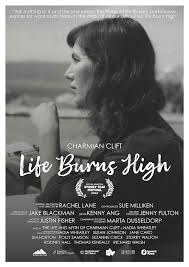
CHARMIAN CLIFT: LIFE BURNS HIGH
Australia, 2024, 80 minutes, Colour.
Voices: Marta Düsseldorp.
Directed by Rachel Lane.
Charmian Clift has a significant place in Australian literature. She published many books, a number in collaboration with her husband, George Johnston. She also wrote a significant column in Australian newspapers during the 1960s, stimulating ideas and discussions.
This documentary outlines the details of her life, her background, early career, marriage to George Johnston, family, their life in the UK, their life in the Greek islands, the return to Australia.
Underlying the narrative are many quotes from Charmian Clift’s writings, visually highlighted, as well as passages from her articles. These are voiced by veteran Australian actress, Marta Düsseldorp. And the film is able to use a great deal of footage from her movies, television interviews and programs, excerpts from the television series both 1965 and 2001 from the novel, My Brother Jack.
There are many commentators, their contributions to advantage in the film. A narrative is supplied by official biographer, Nadia Wheatley. There is significant commentary from poet Rodney Hall who spent time with his wife and family with Clift and Johnston. There is also commentary from novelist, Thomas Kenneally. There is vigorous comments from writer, Jane Caro. There is also material from the director of My Brother Jack and journalist Richard Walsh.
The film highlights the family growing up in Kiama the 1920s and 30s, military background of the family, Charmian and her education, her use of the military, writing for the military papers, catching the eye of a publisher from the Melbourne Argus, the success of her writing, the encounter with celebrated war correspondent, George Johnston, the affair, his separation from his wife, the couple marrying, moving to the UK, his successful career there, her pregnancies and looking after children, his office affair.
The two collaborated in their writing, then made the significant move to Greece, life in the island, support from a local businessman, increasing number of visitors, and artistic colony, the significant visit of Leonard Cohen and its influence on his relationship and future, many publications, the children growing up speaking and thinking in Greek, but many clashes, and Charmian having affairs.
With Johnston’s success, especially with My Brother Jack, the family returned to Australia. It was here that Charmian had great success and influence in Australia with her columns, in the women’s section of the papers, sponsored by Grace Bros, but increasingly read, discussed.
But, there were health difficulties, George, antibiotics, smoking, lung difficulties, collaboration with Charmian, but also fighting. Ultimately, George wrote Clean Straw for Nothing which, with its fictitious character based on his wife, is condemnatory of her, indicating that she was responsible for his health collapse. And, then, a depressed Charmian commits suicide.
The film is a portrait of Charmian, a lesser a portrait of George Johnston, but a visit to the Greek islands and their influence on the family, and the social change in unrest in Australia in the mid-1960s.
Holy Spider
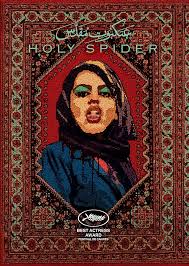
HOLY SPIDER
Denmark, 2022, 118 minutes, Colour.
Zar Amir Ebrahimi, Mehdi Bajestani.
Directed by Ali Abbasi.
A striking and alarming film. It is based on actual events, set in the second most populous city in Iran, Mashhad, in the country’s north-east, 2000-2001, the murder of prostitutes in the city.
While the story is Iranian, it is more graphic in presentation of the events, the sexual scenes and some nudity, then would be allowed in the Iranian industry in the country censorship regulations. In fact, the film was financed by Denmark and was its nominee for Academy Award considerations in 2022.
The film begins as something of a murder mystery, a mysterious killer, picking up the prostitutes, taking them to an apartment, murdering them and disposing of their bodies. However, the screenplay soon reveals who the killer is. He is a devout Muslim, dedicated to the memory of the Imam who is venerated in Mashhad. And his motivation is religious, that the women are corrupt, that the streets and the city should be rid of them, this is a holy quest.
The killer is a family man, working on building sites, even observing the finding of one of the bodies. Once his identity is revealed, the film shows him at home with his young wife, their outings together, the young boy whom he encourages, and he is devoted to the little girl. He has meals with his in-laws. However, he finds occasion to ride his bike through the city, encountering the prostitutes, their request for money and his offering it, and then the details, once again, of his taking them to the apartment, the vicious killings, the responses, their fears, and his disposing of the bodies.
The main character of the film, however, is a journalist who comes from Teheran, a victim of harassment by her male colleagues, under suspicion when she books into a hotel, making contact with the local press, with the local police, even harassed by the local police chief, but allowed to go to the sites where the bodies have been found. She is a determined woman and decides, especially after an encounter with an ailing prostitute who is found murdered, to set herself up for entrapment.
In fact, she is picked up, confronts the murderer, his attempts to kill her, her summoning backup.
With the religious motivation of the killings, the killer has some protection from the authorities, even from the police who want to clean up the streets. The accused is arrogant in court, his wife is dismayed, he is found guilty but with his political and religious support he is supposed to be whisked away by a car and protected instead of being hanged.
The finale moves quickly, the journalists present for the execution, imposing 100 lashes but this being farcical avoided, his going to the gallows expecting the escape car – which does not arrive and he is hanged.
There is a kind of epilogue where the young son, now proud of his father, his being interviewed for television, giving detailed explanations of how his father lured the women, treated them, using his young sister to represent one of the dead bodies, to roll her up in the carpet… An eerie ending to challenge Iranian morality, religious motivations, quests of violence.
- Based on a true story? Crime, murder, prostitutes, the mission of ritual cleansing?
- The writer-director, Iranian, not filming in Iran, censorship in Iran, the franker presentation of issues, women, sexual scenes and nudity? A film from Denmark?
- The title, the killer, the response of the media, the nickname, deadly, tentacles? But in the name of religion?
- The situation, the sacred city, the Imam, his tomb, devotions and pilgrimage? The police and their attitudes, the ridding of the streets of prostitutes? The authorities? Legal attitudes? Religious attitudes? The judge and interviews?
- The press, journalists, freedom of the press, the stories, police collaboration, political collaboration, hindrances? The journalists and their working? Going into action, entrapment?
- The scenes of the prostitutes, the mother farewelling her child, on the streets, the bike ride, the apartment, at home, the response of the man, issue of money, the bathroom, the killings, the wrapping of the bodies, disposing of them in the fields? The repetition of the murders? The victims? Sex work, drug addictions, family support?
- The revelation about Saeed, seeing him at work, fellow workers, the discoveries of the bodies, his observing? At home, his wife, his son and his demands on him, the little girl? The young wife? Life at home, his domination, his in-laws and the meal? The discussions? His prayer and religious motivations?
- Seeing him in action, observing, on the bike, picking of the women, the money, taking them home, the young woman, her mother controlling her being on the street, the opium her mother, her murder, situations for Saeed, his wife returning, the stains on the floor, the carpet rolled? Disposal of the body?
- Journalist, a woman journalist in Iran, coming from Teheran, her story about male editors and harassment? Her reputation? Settling in, suspicions of the hotel accepting her? Her visit to the editor, the discussions? The visit to the police, the discussions, being allowed on the site for the discovery of the body, observation, her physical reaction? The later approach by the policeman and her rejection?
- Her going on the streets, seeing the women, observing, the young woman at the cafe, helping her, the discovery of her body? The discussions with the editor, her being prepared to be picked up and confront, her accepting the ride, going to the apartment, Saeed and his reaction, the struggle, wounding? The backup, contact with the editor, the police, say it rest?
- Saeed, in prison, the interrogations, disbelief in his wife, the reaction of his children, their being taunted at school? His allies in power, the plan to get him off, his presence in prison, in the courtroom? His speeches, self-defence? The journalist, her testimony, observing?
- The plan, to his pleading guilty, his religious motivation, the plan for his escape?
- The journalist and the editor, being at the execution, her demand that he have 100 lashes, the pretence? His going to the gallows, self-righteous, shocked, no rescue, his response, his being hanged?
- The eerie ending, the young boy being interviewed, praising his father, the re-enactment of what happened, his little sister as the victim and the carpet…?
Hinckley, I Shot the President

HINCKLEY. I SHOT THE PRESIDENT
Australia, 2024, 90 minutes, Colour.
Directed by Neil McGregor.
John Hinckley Jr attempted to assassinate President Ronald Reagan in March 1981. The president survived as did three of his staff who were also wounded. Hinckley was arrested, tried, found not guilty by reason of insanity.
Audiences who remember the time the impact of the assassination attempt, break in surviving, Secretary James Brady and his being wounded, his later career in promoting gun legislation reform. But, many will not remember much about Hinckley himself except his alleged motivation, to make an impression on actress Jodie Foster.
Audiences for whom this episode in American history is very much in the past, will find this documentary a journey back into the US of the 1970s and 1980s.
The film has been directed by Neil McGregor, sometime producer for Screen Queensland, documentary maker. The great value of the film is that it is the personal narrative of Hinckley himself, age 67, spending 35 years in the St Elizabeth Institute in Washington DC, assessed as rehabilitated, finally released in the early 2020s. Hinckley speaks to camera, an almost 90 minute interview with him, a detailed explanation of himself, his life, his motivation, the shooting, the aftermath.
At 67, Hinckley is a rather burly figure, articulate, but his commentary delivered in almost deadpan style, slow, with time to think, on his part and on our part.
For many Americans, Hinckley did the unforgivable, attempting to assassinate the President. Comments are inserted declaring he should remain in jail for the rest of his life. On the other hand, there is the issue of time served for crime, issues of release, parole, release without conditions, which is what after many decades Hinckley received. And, then, there is the issue of mental illness, psychiatric treatment, therapy, rehabilitation. And Hinckley himself makes comment on all these issues.
The director includes a great deal of contemporary footage, America during the 1950s when Hinckley was growing up, New York and Hollywood in the 1970s, footage of the assassination attempt and the aftermath. Hinckley was born in 1955, grew up in Dallas, something of a loner in his early years, a great love for music and music career ambitions. Some comments are made about his psychological condition including aspects of schizophrenia, narcissism, depression.
He is remembered for his obsession with Jodie Foster. But in his explanations about seeing Taxi Driver, he also became fixated on Robert De Niro’s character, identifying with Travis Bickle, the loner, and his wanting to rescue and save the young prostitute played by Jodie Foster. Which led for some years with his preoccupation, writing letters, phone calls (which he recorded and some are played here), some stalking at Yale University. And the decision that he would impress the actress if he were to do something significant, choosing the President, the film showing the atmosphere of the 1980 campaign between Jimmy Carter and Ronald Reagan, Hinckley initially following Carter but on his defeat, targeting Reagan.
There is very critical comments about the jury’s decision about Hinckley’s not being guilty, but being confined to an institution criticism of the insanity plea and move for its abolition.
We see the older Hinckley at home, driving, going to a music store and conversing with a veteran music concert, reminiscing about a fellow patient at St Elizabeth’s and his tribute to her role in helping him over 20 years. And, we see him singing, composing songs, ambitions to perform in a concert – and a somewhat ironical finale seeing him with his guitar going on stage in an empty theatre. He says that music saved him and is one of his ways of offering something to the public by way of reparation for his crime.
With his even-tempered narration, with his explanations of what was wrong with him, quite extensive explanation is an acknowledgement of the reality of his mental illness, his poor judgements, his obsessions, this documentary offers a cogent argument about the value of rehabilitation.
(And, just before the film is released in August 2024, there is a brief insert glimpse of the assassination attempt on Donald Trump in Butler, Pennsylvania – reminding us that with the death of that shooter, no first-hand explanation in the way that we have heard John Hinckley reflecting on himself and his life.)
Dial M for Middlesburgh
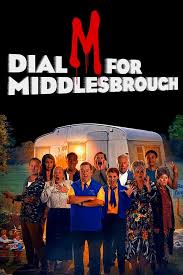
DIAL M FOR MIDDLESBOROUGH
UK, 2019, 88 minutes, Colour.
Johnny Vargas, Sian Gibson, Anette Crosby, Phil Davis, Sally Lindsay, John McMillan, Joanna Page, Jason Donovan, Georgie Glen, Sheila Reid.
Directed by Ed Bye.
This is the third in a series of three lightweight comedy murder mysteries, the first, Murder on the Blackpool Express, the second, Death on the Time. They can be described as very broad both in their comedy and in the murders and detecting.
As with the other films, the focus is on bus driver, Terry, comedian Johnny Vargas, and his co-worker, fiance, Gemma, Sian Gibson. By the time of the third film, audiences have accepted them and become used to their style, she very forward, he somewhat dithering but always trying to solve the murders.
This film goes slightly upmarket with the inclusion of Anette Crosby, Phil Davis and Jason Donovan in the cast.
While the murders in the previous films were on trains and on ferries, this time they are at a caravan park isolated by floodwaters, Terry and Jim is than breaking down and their being stranded. The cast is limited to those at the caravan park, a bird watcher who is about to make a discovery of a rare sighting and nesting, and the Prof in charge of the research. There is a couple where she does all the talking incessantly, he silent until he asked the murderer to kill off his wife first and give him 10 seconds of peace before his own death! There is an elderly lady, permanent resident, fortuneteller, played by Annette Crosbie. And, because Gemma came to the caravan park for holidays in the park, there is an admirer, Jason Donovan. There is the issue of selling the caravan park, differences of opinion between the owner, Phil Davis, and his wife, Sally Lindsay, and their put upon cook, Joanna Page.
It must be said that several of the murders are particularly gruesome, especially the opening killing of the birdwatching woman. There is a complication of an African-American mysteriously present – and revealed to be a hitman for an American gang.
So, the murders, the mixed motivations, Terry and Jim is banned die up in flames, sunlight, graffiti threats about deaths on the caravans… And, an ultimate revelation of the murderer and the motivations.
A bit better than Death on the Tyne.
Come to Daddy
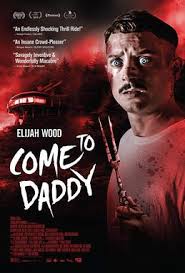
COME TO DADDY
Canada, Ireland, New Zealand, 2019, 95 minutes, Colour.
Elijah Wood, Stephen Mc Hattie, Garfield Wilson, Madeline Sami, Martin Donovan, Michael Smiley, Simon Chin, Ona Grauer.
Directed by Ant Simpson.
What starts out as a reunion between father and long lost son, turns into a melodrama with some touches of violent horror.
While the story has an American setting, was filmed near Vancouver, has Irish finance, it was written and directed by a New Zealander, Ant Simpson, who specialised in some horror films.
This reviewer had started to review Come to Daddy but was interrupted by the coronavirus. On resuming the review sometime later, it seemed best to start again. Realising that there had been quite a twist in the middle of the film, watching the first part again was a surprise. Not so much a surprise in what was presented but the discovery of the clever ambiguity in the set up, the son visiting his father, the father’s long absence from the family, his way of dealing with his son, finding out about his life, his relationship with his mother, a test about the son’s claiming that he was a friend of Elton John, an eeriness about the relationship. It was surprising to listen to the dialogue in the light of the twist – very clever..
The success of the film rests on the shoulders of Elijah Wood as the son, alienated from his father, to receive a letter from him and making a long journey to meet him. It is quite easy to identify with Elijah Wood in most films, seeing from his point of view, feeling from his point of view. And, Stephen McHattie is intense as the father, enigmatic in his relating to his son, quite grotesque at times.
The film shifts tone with the twist, quite unexpected. There are some interesting cameos by Garfield Wilson as a seriously odd police officer who judges characters by the colour of their eyes. There is a sympathetic funeral director.
But there are also some criminals who threaten, Martin Donovan as an ambiguous presence, Michael Smiley as something of a deranged and violent Irishman. It is up to a Elijah Wood, timid in himself, fearful of the violence, to come out of himself, take tough stands, try to redeem the situation.
And, at the end, a quiet moment which gives new meaning to Come to Daddy.
- The gentle title? Belying what was to follow? The letter from Norval’s father? The wrong father? The actual father?
- The American settings, filmed in Canada? International production? New Zealand background of the director?
- Elijah Wood as Norval? Age, appearance, haircut? Arriving on the bus? Across the sand and forest? The lavish house? His background, the disappearance of his father, care for his mother, response to the letter, travelling to his father? Expectations? His explanation of his drinking problem, thoughts of suicide? Small, quiet, gentle?
- The initial encounter with his father, his appearance, suspicions, responding to the situation? The camera, destroying it? The discussions about friendships with Elton John? Lies? The meal? The wine? The father seeming suspicious? Norval and his being wary? The discussions, moments of conflict, his father coming with the axe, collapsing and dying?
- Reflection on Norval’s encounter with his alleged father in retrospect – and all the ironies as Gordon parried all the enquiries, protecting himself?
- The death, Norval’s reaction, the police, strange behaviour, believing Norval, not having “raisin eyes”? Gladys, the coroner, businesslike, friendly, supportive? Returning with the body, carrying him to the house? Her card? Norval drinking, calling her in the night, her response? Hanging up? Her advice about talking to the dead, telling them what they could not hear in real life?
- Norval with the body, the strange sounds from the basement, his drinking? Finding the opening, going down, discovering his real father after looking in the photo album?
- Brian, the torture, his writing the letter? Norval and his reaction to his father? The truth about what it happened, the kidnapping of the Thai woman, the money keeping Norval and his mother in luxury in Beverly Hills? Norval’s reaction?
- The associates, dandy, the toilet, the confrontation, the fight and its brutality, Norval and the wrapping, the incessant beating, Dandy and his being smothered?
- Jethro, Brian’s warning, sinister and Irish? Bryan urging Norval to kill Jethro? The fight, Jethro leaving, threatening to return?
- Brian, the excrement needle, using it to pick the lock, failing, listening the chain, Norval taking Brian into the house, out into the sand and rocks? Jethro’s return, Norval hiding in the boot of the car?
- Jethro, the motel, Precious, Norval trying to get into the motel, through the room with the swingers, confronting Jethro, Jethro stabbing him, through his cheeks? Precious, her initial hostile reaction, helping Norval?
- Jethro in the car, the crash, Norval following him, Jethro saying his mother was a prostitute, Norval stabbing his wound, his death?
- Norval’s return, Bryan losing consciousness, Norval and his questions – and the final reaching out of hand on hand?
- The mixture of comedy, mystery, thriller, horror?
Midas Man
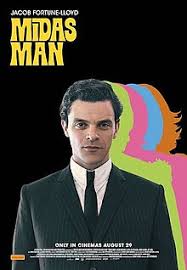
MIDAS MAN
UK, 2024, 112 minutes, Colour.
Jacob Fortune-Lloyd, Eddie Marsan, Emily Watson, Bill Milner, Jonah Lees, Ed Speleers, Eddie Izzard, Milo Parker.
Directed by Joe Stephenson.
The release of Midas Man coincides with the 60th anniversary of the Beatles taking America by storm. Five years earlier, the four young physicians from Liverpool were playing in local clubs, going over to Hamburg, prospect of spending their lives playing in local venues. But, this is not what happened. And the reason? Entrepreneur Brian Epstein.
In the many stories and histories of the Beatles, Brian Epstein is a presence, sometimes upfront, more frequently behind the scenes. But here is a film that brings him centre-screen. It is his personal story. But, it is the story of a man with great energy, an eye for talent, and a commitment to the promotion of this talent.
He is played by Jacob Fortune-Lloyd (and Fortune making a connection with the Midas touch).
Epstein belonged to a prominent Liverpool family, Jewish, very successful in retail business, pressure from his father, Eddie Marsan, support from his mother, Emily Watson. He has an ear for contemporary music. He has an eye for talent, claiming that the store could deliver any record from any place in the world within five days. And he receives a request, a record the local lads, going to see them in one of the Liverpool clubs.
As regards the Beatles and their songs, their singing is included but not their songs, just references to them. But, there is a focus on them as personalities, the supporting cast of young actors who resemble him quite tellingly so that there is no puzzle as to who is who, a special commendation for Jonah Lees as John Lennon, his singing, his leadership, humour, his quips.
Initially the Beatles were rather wary, cocky 20-year-olds (with John Lennon only 20 more years of life, with Sir Paul McCartney still with us) considering Brian Epstein particularly posh, a different league from their own experience. However, they agree to a meeting, an audition, Epstein working hard, their being turned down by every record company but given a hearing by George Martin (who does appear later in the film but was their supportive producer).
The film also touches on Brian Epstein’s managing Gerry and the Pacemakers and some sequences with another protégé, Cilla Black. Since the film is about Epstein more than the Beatles, it shows his efforts, the contact with Ed Sullivan and persuading him to feature the Beatles, leading to their number one on the charts as well as their American success.
But, Epstein is a complex character, workaholic and driven, touches of gambling, relying on drink and an increasing number of pills to keep him going. And, there is the issue of his sexual orientation, the status of British law on homosexuals at that the period, episodes of cruising, police pursuit, blackmail, relationships and betrayal. And the response of his parents, the death of his father, his father’s reticence in praising him, his reliance on his mother.
Brian Epstein died of an accidental overdose of drugs when he was only 32. A successful life, but a successful life cut very short.
- Memories of the Beatles? 60 years later? And memories of Brian Epstein?
- The popularity of the Beatles in the 1960s, origins in Liverpool, playing in Hamburg, Liverpool clubs, their age, musical talent, cheekiness, the discovery by Brian Epstein, the consequences, auditions, promotions, records, worldwide…?
- The Liverpool settings, the Epstein family, the home, the shop, record sales, the synagogue? The clubs and music, the fans? London, the recording offices, interviews? The growing success, the trips to America? The fans? The Ed Sullivan show? Epstein’s private life, the cruising at night, the police, the law, reputations?
- The title, Brian Epstein and his success, his talent for recognising musical trends, his shop, records from anywhere in five days? His work ethic, the pressure from his father, comparisons with his mother, support from his mother? The scene of discussion in the synagogue and his ambitions to do greater things? His father’s distance, criticisms, private pride, the issue of his son’s sexuality, use of blackmail, reputation?
- Jacob Fortune-Lloyd’s presence and performance, making Brian Epstein credible? Breaking the fourth wall, talking to the audience, confiding in the audience, explanations? His age, entrepreneurial skills, Alastair as his assistant, the request for Beatles records, going to the club, the impact, recognising their talent? Meeting them afterwards, local lads, way of speaking, John Lennon and his quips, seeing Epstein as posh? His invitation to meet them? Their coming to the office, Alastair and his reaction, the opening up of possibilities?
- Epstein and his approaching the various record companies, the audition tape, the rejection by all the companies, the aristocratic club and their laughing at the idea of their success? The approach to George Martin, Epstein influencing him, George Martin producing their records – and their indebtedness to Martin, and the glimpse of him in the film for the first worldwide satellite performance?
- The portrayal of the Beatles themselves, the actors and their sufficient similarity to each Beatle? Paul and his music, George the background, Pete Best and the drumming, the criticisms, Epstein and the interview with him and his being fired? Ringo Starr, coming into the group, his comic style? John Lennon and his humour, remarks, getting into trouble, the more popular than Jesus statement, at the Royal Command Performance the poor clapping and the rich jangling their jewellery?
- Epstein, his manner, his education, his accent? His sexual orientation and the times? On the streets, the encounters, the police and the chasing? The man robbing him of his watch? The letters and asking for money? His being set up with Tex, the meeting, infatuation, the relationship, in America, Tex taking the money?
- Epstein going to the US, the contacts in America, their friendship, setting him up, the interview with Ed Sullivan, money issues, persuasion, the results, number one on the charts, the visit to America, success? Emblematic of the Beatles in the mid-60s? The intimations of the later changes, not wanting to travel, the satellite program, the break up?
- Indications of success with other groups, Gerry and the Pacemakers, especially with Cilla Black, her talent, discussions with her, especially at the party?
- Epstein is workaholic, at all hours, intense, discussions with his parents, support of his mother? His father’s death, his mother saying that his father appreciated him? The drinking, intimations of gambling, the pills?
- Report of the overdose, death at 32? The success of the Beatles with their talent but depending on his entrepreneurial skills?
Take My Hand
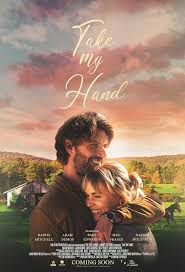
TAKE MY HAND
Australia, 2024, 102 minutes, Colour.
Radha Mitchell, Adam Demos, Bart Edwards, Meg Fraser, Xavier Molyneux, Natalie Bassingthwaughr, Darren Gilshenan, Robyn Gibbes, Steve Bastoni, Angie Milliken.
Directed by John Raftopolous.
There is always an emotional appeal with stories, especially about illnesses, that are based on actual characters in real life. And this is the case here. As with many such films, there are photos of them during the final credits. The film has been co-written by director, John Raftopolous and executive produced by his wife, whose story, at Claire Jensz. There is a tenderness about the title.
The film opens vigorously, horses racing through the countryside, the beauty of the New South Wales countryside, the Northern Rivers, the coastal beaches, the cliffs. And riding the horses, Laura (Meg Fraser), finishing her studies at school, applications to British universities, some tensions with her strict school teacher father, support from her mother (and early glimpses of her mother’s hand shaking and indication of multiple sclerosis). As with her riding, Laura is independent-minded and determined.
But, she encounters Michael (Xavier Molyneux), delivering fruit, working with his Greek father. And, as we expect, mutual attraction, his learning to ride a horse, her strong-mindedness in the relationship, the dilemma about her education and leaving home. Michael is supportive of her choice to leave for the UK.
Then a sudden, unexpected transition of 20 years. This time, Laura, now played by Radha Mitchell, is a very successful businesswoman, married to Jason, also successful in business, and the mother of three young boys, family life at home, football practice, and, at work, the possibilities for her promotion.
One day, at the football, she faints. Hospital, diagnosis, MS, the concern that it is hereditary, strength of the disease, the debilitating factors, the need for care… And this is complicated by her company’s decisions about her future, about her relationship with her husband.
Ultimately, Laura and the boys go back to Australia to live with her parents, an encounter with Michael (Adam Demos), her increasing dependence because of the MS, decisions, love, future.
Most audiences will find this film touching, expectedly emotional (though some reviewers and audiences, seemingly becoming wary of expressions of emotion and sentiment, have considered the film too sweet). But the film is, in fact, the couple telling their story.
- The title, the tone, love, help? Based on a true story, the final photos of the credits of the actual characters? The emotion of the film – and critique that it was too sweet?
- The Northern Rivers locations, the beauty of the countryside, the forests, the coast, the water and the tides, the cliffs? The home, the riding sequences of the horses, the town, ordinary life? The musical score?
- The contrast with the London sequences, business, the vistas of London, offices, the country home? Hospitals, surgeries?
- The story of Laura, her family, her father as local teacher, strict? Her mother, home, intimations of MS? Her sister? Her love of riding the many riding sequences? Age, determination, self-willed, the episode of cheating in class, her father’s reprimand? The application to the Universities? The encounter with Michael, delivering the fruit, the initial attraction, playing off each other, the various meetings, the outings, sharing, teaching him to ride, and shovelling the manure? The future, the bond with Michael, the university entry, discussions with him, his willingness that she should go?
- The passing of 20 years, Laura, successful in business, the meetings, her plans, qualifications, promotions? Married, the three boys, the comfortable lifestyle? The relationship with Jason? His success in business, making money? International travels? Relationship with the boys, is his forgetting to pick them up for football? Indications of tension? Laura ready for the promotion, prepared, hopes? The bond with the boys?
- The background her mother with MS, her fainting, the hospital, the tests, the truth about her condition, severity, control? And not getting the promotion and her angry walking out? The husband’s response? The boys? The need for medication, discussions about MS being hereditary? Her not telling her father?
- Her managing, Rachel coming to England, sharing with her, the support?
- The tensions with Jason, increasing, fighting, the final evening, the clash, his walking out, the tension with driving, the crash?
- The decision to return to Australia, the boys and their love for their father, staying with the grandparents, Peter and his looking up to his wife, her MS?
- The encounter with Michael, friendly, story of his divorce, meeting Bella? Rekindling the friendship, his knowing about her from social media, her MS? The invitation to stay with him? Discussions with her father, with her mother? Discussions with the boys? Rachel and her support?
- The transition, Michael and his love for Laura, her love for him, the discussions with Bella and Bella’s encouragement? The football, the boys playing with Michael? Laura’s continued MS, need for 24-hour care, but a future with Michael?
