Displaying items by tag: Peter Malone's Movie Reviews
Mindcage
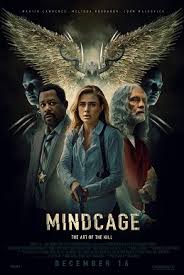
MINDCAGE
US, 2022, 96 minutes, Colour.
Martin Lawrence, Melissa Roxburgh, John Malkovich, Rob Knepper, Aiden Turner.
Directed by Mauro Borelli.
For audiences who enjoy detective stories, especially in the pursuit of serial killers, Mindcage is an unexpected surprise.
The plot is quite complex. Six years earlier, a number of sex workers have been murdered, an artist using plaster, making them statues, adorning them lavishly, presenting them as angels. Jake, Martin Lawrence, was one of the detectives finding The Artist, but witnessing his partner pouring gasoline over himself and setting himself alight. He is still traumatised.
The film opens with a priest going into a church and discovering a victim, the plaster, the adornment, an angel. Once again Jake is involved in the investigation, working with his superior, Rob Knepper, but a difficult relationship with his partner, Mary. Mary is played with great strength, the main character in the film, by Melissa Roxburgh, a detective with a psychology background, and gradual revelation of a difficult upbringing, an abusive father, her marrying a former priest, her commitment to her work.
The key to the effectiveness of the serial killer is the presence and performance by John Malkovich, one of his most sinister. He is a controller, proud of his artwork and killings, some flashbacks to his childhood explaining why his victims were sex workers, the whole background of his artwork. Mary visits him in prison, his promise of collaboration, his knowing all about her, his background of illness, his seizures.
There are various suspects throughout the film, but a final revelation, twists, psychologically possible, or not, the final confrontation and Mary proving herself finally superior to The Artist.
- A different serial killer drama? Investigation?
- The American city, streets, police precincts, churches, prisons and cells, art studios, sinister homes and basements…? Atmosphere? The musical score?
- The intricacy of the plot, the murders, The Artist, the pursuit, arrested, Jake and the death of his partner, setting himself alight, in prison, his cell, drawing, John Malkovich and his performance, presence, appearance, way of speaking, the doctor supervising him, the death sentence?
- Jake, as a detective, his manner, with the authorities, with Mary, the tensions, the new murders, Mary as partner, the brutal relationship, discussions? Her volunteering to interview The Artist? Jake not going in, listening outside? His reactions, his story, memories, the investigation, the discussions with Mary?
- Mary, her back story, her abusive father and burning his hand, his dying, Mary not going to see him, her marriage and relationship to her husband, former priest, the planned trip to Rome at the Vatican, devoted to her work? Psychology background? With Jake, her manner? With Lt Owings, his trust in her, backup? Going to the prison, the encounter with The Artist, the to and fro, her manner, the conditions, his wanting stay of execution, wanting his paints and artwork back? Her granting these? The paintings, the mythology, Samael and Lucifer, the art of Hieronymus Bosch?
- The new killings, the opening in the church, the priest, the victim adorned as a lavish angel? The further killings, the women as sculptured, embalmed, decorated, angels? The moments of discovering, the shock for those finding the dead women? The backgrounds, sex workers? The kidnapping of the governor? Her being chained in the basement? The issue of the stay of execution?
- Mary, the further discussions with The Artist, his knowing all about her life, her father in hospital and dying, the abuse in the past, her marrying the former priest, her dreams and anxieties? Issue of belief and disbelief?
- The buildup, the discovery of the bodies, the chemicals used? The wings and the discovery of the bottle? The missing point of the compass? The later discovering the whole compass?
- The vagrant and Mary, at the car, home invasion, suspect, death?
- The Artist, the supervision of the psychiatrist, his phone calls, with Mary, promises, his seizures? And the flashbacks to his story, his art, his mother and sex work, her spurning his art, injuring him, the brain damage, two years in the wheelchair, looking out at the children, his sketching, discovering the art and the mythologies?
- His giving the address, the discovery of the Lieutenant Governor? His sculpting Mary, her understanding, opening the sculpture, finding the address? Jake, his appearance, The Artist inhabiting him? The confrontation with Mary, her shooting him? The revelation about The Artist and his powers to inhabit other people? Inhabiting Jake, killing and designing the angels through him?
- Mary, with the Lieutenant, with her husband, the aftermath, the plan to go to Rome? Her father’s funeral and going to see him?
- The doctor appearing at the cemetery, possessed by The Artist, the turning of the tables, his sucking the end of the pen, Mary putting the poison on it, his death?
- The ultimate impact of the various twists, art, madness, murder, detection?
Trifole/ Truffles
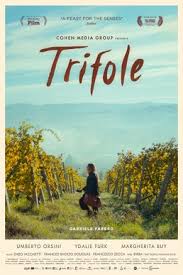
TRIFOLE/ TRUFFLES
Italy, 2025, 100 minutes, Colour.
Ydalie Turk, Umberto Orsini, Margherita Buy.
Directed by Gabriele Fabbro.
For those for whom Italy is the old country, and for those who have spent some time living in Italy, Trifole will provide a great deal of nostalgia, especially for living in or visits to the Italian countryside. The location for this film is Piedmont, the forests and vineyards, the city of Alba.
And, response to the film may be in proportion to the response to truffles, experience of them or not, not quite knowing what they are and how prized they can be, especially by chefs, rare truffles, expensive truffles… But, audiences do learn quite a bit about where they are to be found, the search for them, digging in roots of trees, a surprise fungus (and odour).
But, this is the story of Dalia, a young woman who has moved away from Italy to London to study and write, a sense of failure, returning to look after her grandfather who lives alone, his memory beginning to fail him, always on the search for a prized truffle. Dalia is played by Ydalie Turk, South African background, who co-wrote the screenplay with the director, Gabriele Fabbro. Veteran Umberto Orsini is Igor. He turned 90 the year the film was completed.
Dalia finds it difficult with her grandfather who does not remember her, phone calls from her mother, a nurse, concerned about her father and his future. And, he has not been paying the rent so there is the threat of eviction.
It should be said that the third billing for the film is actually Birba. And, Birba is one of the nicest dogs to appear on screen, very important for the plot, charming even those in the audience who are not dog lovers.
The first part of the film is Dalia getting to know her grandfather, her concern and her going out with Birba to forage and to find the desired truffle. A mixture of success and failure.
The second part of the film has Dalia going to the city of Alba, finding it in the middle of a pageant, one of those Italian occasions where everyone dresses up in lavish costumes, re-creating history, musicians, dancing, and this time the competitive festival of the truffles.
With Igor and his failing memory, his age, and Dalia and her sense of failure, hoping for some betterment of her life, there is a melancholy tone in the storytelling.
[This reviewer, feeling rather invert about truffles, decided to do some research and found the following – especially the nutritional and health supporting value of truffles:
Truffles are expensive because they are so hard to cultivate, and in the wild, they are difficult to find. Truffles are delicate and only grow in very specific conditions, they take years to yield edible fruit and all the effort, expense and time it takes to bring them to harvest makes them an expensive food to produce.
What is the nutritional breakdown of truffles?
Truffles are low calories, low fat, low salt and have no cholesterol. They provide an enormous amount of dietary fiber, protein, potassium, vitamin A, vitamin D, vitamin C, vitamin B-6, calcium, iron, and magnesium.]
- The status of truffles, rare, health benefits, expensive? An Italian tradition?
- A visit to northern Italy, the city of Alba, the Italian countryside, forests, vineyards, old houses in the countryside, ruins? The musical score?
- The opening, the audience arriving with Dalia, her walking from the station, the town of the countryside, the vineyards, the house, her calling for her grandfather? Her back story, relationship with her mother, her mother a nurse, her going to London, studying, wanting to be a writer, her speaking English, limited Italian? Leaving London, going to find her grandfather?
- Igor, Umberto Orsini and his performance, turning 90 the year of its completion? Widower, living alone, simple, his love for truffles, his searching? His love for his dog, Birba and her continued presence throughout the film, audience response to Birba, likeable and attractive? Igor and his memory diminishing, not remembering Dalia? The phone calls with his daughter?
- Dalia, to care for her grandfather, settling in, awkwardness, acceptance, meals, conversations? And the problem of his not paying the rent, the threat of taking over his house? His wanting to stay, his resentment of the vineyards and the destruction of the forests, with the truffles?
- Igor, lost in the forest, Dalia bringing him home? Her decision to search for truffles, to find a record-breaking white truffle, going out with Birba, the difficulties, the forest, Birba and the various searches, ultimately finding the prize truffle?
- The night, the ruins, the frescoes, hearing the gun shots? The Hunter, the pheasant, giving Birba poisoned meat, stealing the bag and the truffle?
- The aftermath, the effect on Dalia, wandering the forest, at the river, wanting help but the man thinking she was the forest which? The background of the mythology and Igor and lightning, storms, his book and sketches for truffles, land layouts, Dalia studying this?
- The town, the feast for the celebration of the truffles, the crowds, the pageantry and costumes, processions, the truffles on display, the judgements, prices? Dalia, bewildered, becoming part of the procession, dressed as one of the princesses, the jealous rival, her fainting, carrying the prized truffle, the pursuit, lost in the corridor?
- Her return home, her mother present, packing, going to tell her grandfather what had happened, bringing him a small truffle, his delight, shredding it for the meal?
- Moving out, the machinery coming in to demolish the house? Having to move away, the future? A melancholy story and a melancholy ending?
Maytime in Mayfair
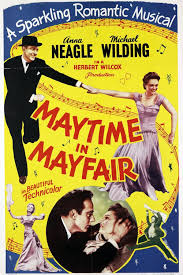
MAYTIME IN MAYFAIR
UK, 1949, 94 minutes, Colour.
Anna Neagle, Michael Wilding, Peter Graves, Nicholas Phipps, Thora Hird, Tom Walls, Mona Washbourne.
Directed by Herbert Wilcox.
Maytime in Mayfair was one of the most popular films in Britain in 1949. The British industry was strong in the postwar years, delving into British history, popular comedies from Ealing studios, and this kind of musical comedy set amongst affluent Londoners who might have felt at home at Downton Abbey.
It is the fourth in the very popular series of films with Anna Neagle, directed by her husband, Herbert Wilcox, and starring Michael Wilding. It was preceded by Spring in Park Lane, romance but also introducing a lot of fantasy, singing and dancing. This one is in colour, bright technicolour, set in a fashion store with aristocratic customers, business difficulties and rivalries, and the store being inherited by a handsome playboy who has no idea about business and, initially, putting his foot in it with all the clientele. He is played by Michael Wilding, a variation of his character in Spring in Park Lane.
And, as usual, Anna Neagle is an intelligent manager, proud of the shop and her designs. In the slight plot, there is rivalry from the proprietor of the store opposite, even to stealing some of her ideas from the rather foppish cousin of the owner when drunk, played by Nicholas Phipps. Phipps had appeared in the other films but was noted as the screenwriter for each of the Neagle-Wilding films as well as such successful series as Doctor In the House and its sequels.
Not a great deal happens but that is not important. Rather, there are dream sequences, fantasy sequences, Neagle and Wilding reminding audiences of Ginger Rogers and Fred Astaire (though Michael Wilding is rather tall and not as lithe a dancer as Fred Astaire). And, in the fashion sequence, it is interesting to see that all the models are middle aged, not undermining the presence of Anna Neagle who was in her mid-40s.
For audiences for whom this era is long gone, it seems something of a relic and, for more egalitarian cinemagoers, as the New York Times noted, "nauseously Technicolored flimflam".
Breaker Morant: The Retrial
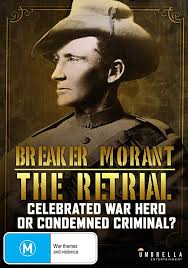
BREAKER MORANT: THE RETRIAL
Australia, 2013, 90 minutes, Colour.
Benedict Wall, Hannah Barlow, Traverse le Goff.
Directed by Nick Bleszynski, Gregory Miller.
Harry Breaker Morant has been a significant presence in Australian history from the late 19th century. His activity in the Boer war and his subsequent execution have been under constant scrutiny. Bruce Beresford’s very successful film, starring Edward Woodward as Breaker Morant brought him to the attention of a wider public.
While there have been descendants of the victims of the killings during the Boer war who have continued their resentment against the British and Morant, there are Australians who have been convinced that a trial was manipulated and that Morant and his friends were scapegoats.
The present film was presented on television in two parts, later combined for streaming. It covers a wide range of Morant’s history and of life in Australia in the late 19th century as well as detail on the Boer war. It highlights the campaign, even to Parliament, by military lawyer, James Unkles. Throughout the film there are comments and testimonies from a range of people like Geoffrey Robertson, Tim Fischer, Lawrence Street.
The film has re-enactments of Morant’s arrival in Australia, his work with horses and his nickname, his brief marriage to Daisy Bates, his friendship with Banjo Patterson, also writing verse and publishing it, supported by Patterson when a journalist during the Boer war and returning to Australia. The re-enactments are enjoyable and interesting, but in the background is also the identity of Morant, who actually was his father, the motivations for coming to Australia, his change of name, a variety of documentation and enquiries.
There is also detailed explanation of the background of the Boer war, the Afrikaaners, the role of the British, the British thinking it would be a short war, the several years, the rounding up of the Boers, the first concentration camps, and visuals of starvation and death and other atrocities.
Then there is the focus on Morant himself, the Australian patriotism and suddenly going to South Africa, the various friendships, especially a close friendship with an officer who could introduce him back to British society, his return, establishing his identity, then upset at the murder of his close friend, anger, and the application of the British orders about shooting and executions.
There are also dramatic re-creations of these incidents.
There is the court case, the experts looking back and discussing the role of Lord Kitchener, responsibilities, regulations, interpretation, and Morant and his colleagues targeted, victims.
And, of course, the men going out to be executed and Morant exhortation to shoot straight, you bastards.
The case was brought to handle Parliament but the then Attorney General, Nicola Roxon, as against it. Morant has not been vindicated legally but very much so in the minds of many Australians (but the continual resentment, incorporated into the film by testaments of the descendants of the Boers who were killed).
Rosenthal
ROSENTHAL
Germany, 2025, 93 minutes, Colour.
Florian Lukas, Silke Bodenbender, Hans0Jochen Wagner, Teresa Rizos, Maya Unger, Anatole Taubman.
Directed by Oliver Haffner.
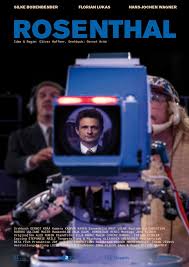
Hans Rosenthal was a significant entertainer on German, West German, television in the 1970s. He hosted more than 75 episodes of Dalli Dalli, a boisterous entertainment, quizzes, guests, competitions, an eager and faithful audience.
The focus of the film is on his 75th episode, a celebratory episode. However, it coincides with the 40th anniversary of Kristallnacht. And despite his exuberant TV personality, Hans Rosenthal has grim memories of his earlier life, the 1930s, the disappearance of his little brother from a dormitory, his being tested for military service and failing, hard labour, his escape, being sheltered by a kind woman during the war, her shop burnt and attacked during Kristallnacht.
The film shows his dilemma about his Jewish loyalty and the difficulty that he was not known as Jewish, the invitation for him to participate in the 40th anniversary memorial.
Florian Lukas brings Rosenthal to life, the cheerful host, the more serious husband and father, his devoted and supportive wife, scenes with his family, his relationship with his faithful assistant, the various members of the staff the program, the discussions with the executives of the television network.
The film was made as a tribute to Hans Rosenthal on the centenary of his birthday.
- A film for German audiences, audiences remembering the Holocaust?
- A true story, character, the popularity of the television program, Rosenthal as a host, personality, his aims, to entertain? But not revealing his Jewish background?
- The introduction, the re-creation of the television programs, the host, the judges, the various participants, the audience response, popularity?
- The story of Hans Rosenthal, in the 1970s, his happy marriage to his wife, the domestic scenes at home, the pressures on him, her support, his children and their lives, grandchildren? The pressure of the work, his enjoyment, writing and creating, humour and quips? Quiet at home? The television network, their expectations, audiences not knowing his Jewish background?
- The focus of the crisis, the 40th anniversary of Kristallnacht, the 75th episode of his show, the clash? The meetings with the producer, singing, his office, the lunch, and the autograph, contract for the anniversary show? His visit to the Jewish centre, Elias as his friend, arranging the Memorial, the chancellor going to Cologne, the speech, the guests? The clash of the events?
- The pressure on Rosenthal, the encounters with Rebecca and the young group, their stances, Jewishness, memory of Kristallnacht’s, as a journalist, her grandmother’s birthday, Rosenthal arriving, the cheerfulness, her later confronting him for the interview?
- Dr Hummel, the head of programming, the discussions, the decision to have serious 40th anniversary programs surrounding the entertainment program?
- The various personalities of the show, Monica and her assistance, advice? The young man representing Dr Hummel and Rosenthal’s treatment of him, at the end, the young man making the decision about the changes? The judges, the various members of the crew, the young guests?
- Rosenthal and pressures, his wife organising the holiday, at the beach, the grandson, the various members of the family, the son’s girlfriend asking questions, his avoiding them? Playing the game with the family?
- Rebecca ‘s telling him that the title of his television entertainment program came from Polish, the phrase used by the Germans rounding up the Jews and urging them on, Dalli Dalli, hurry up?
- The buildup to the day, the comic suit, his listening to the chancellor’s speech on television, the impact, his moods, the young man and the changes, his coming out to the group, his apology, the show going on?
- The impact of the flashbacks, Hans with his young brother and the disappearance from the dormitory, the medical tests, the work, his escape, the woman, her giving him shelter, surviving the war, the officer coming in and hands hiding under the bed? Kristallnacht and the attack on the shop, burning, broken glass? His memories and the impact?
- The aftermath, his writing the book, with his grandson – and his explanation that he write his two lives?
Exit 8/ 8-ban deguchi
EXIT 8/ 8-ban deguchi
Japan, 2025, 95 minutes, Colour.
Kazunari Ninomiya, Yamato Kochi, Naru Asanuma.
Directed by Genki Kawamura.
A small drama, a quite demanding film for the audience, identifying with the central character, a young man who is trapped in a Japanese railway station, mounting the steps on the platform, going to the exit corridors but finding himself in a labyrinth, the corridors turning in on each other, the repetition, and his desire to get out of the station. As expected, this aspect of the film makes it quite claustrophobic, especially with the audience sharing the experience of the trapped man.
There is a prologue to his searching for the exit. On a crowded subway train, he hears a man abusively yelling, even screaming at a young woman whose baby is crying, condemning her for being there, the baby’s loud sobs, his personal discomfort. The central character observes this, receives a phone call from his girlfriend, pregnant, at the hospital, and his determination to reach her.
But it is a continuous and repetitious experience for the man, and for the audience, the same corridors, the same posters, the doors, and a mysterious tall man continually appearing and walking past in the corridor. He is told that he has to note the anomalies that occur during his labyrinthine walk, finding inconsistencies, and being relegated back to the start of his trek.
There are further developments when a young woman appears, then disappears, when he is confronted by the walking man, when a little boy appears evocative of the man’s care, imagination with the little boy at the beach, the identification of the little boy.
How can one escape with the recurring anomalies? Make it work for an escape? Or return to the original situation, the crying baby, the mother, the screaming man – and moral decisions to be made?
- The title and focus, the railway station, the corridors, labyrinth, posters, doors, continually recurring? The quest to escape, naming the anomalies, returning to the starting point?
- The visuals, the train, the passengers, crowded train, the screaming man, the mother with the baby, the Lost Man and the focus on him?
- The dramatic impact of the man screaming and the baby, angry, intrusive, insensitive, brutal? And the repetition at the end?
- The action, the railway station, the stairs, climbing them, the corridors, the trapped? The audience identifying with The Lost Man? The appearance of The Walking Man, coming closer, his face, head, walking past, the confrontations and staring at The Lost Man?
- The effect of the repetition, on The Lost Man, checking of the posters, noting the anomalies, the continued challenge, his attempts to do something different?
- The Boy, age, response, The Lost Man responding to the morning, the appearance of The Woman, into the man’s imagination, playing with the boy, saving the boy? And the fact that he had the phone call, separated from his girlfriend, hospital, pregnant, his intention to hurry to the hospital?
- The effect of the repetition, starting again, his frustration, audience frustration?
- The Walking Man and his abandoning the boy, escape?
- The danger for the boy? And The Lost Man returning to the situation, the train, the man screaming at the mother and baby? The frightened mother? The Lost Man, intending to do something about it, to go to the hospital…?
Calle Malaga
CALLE MALAGA
Morocco, 2025, 115 minutes, Colour.
Carmen Maura, Marta Etura, Ahmed Boulane, Maria Alfonsa Rosso.
Directed by Maryam Touzani.
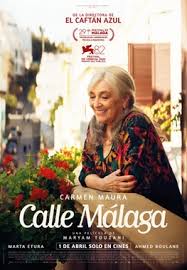
There have been many films about ageing. And, these films offering the opportunity for ageing actresses to bring the challenges alive. Which is the case here, a Moroccan film, directed by Maryam Touzani (her film, Blue Caftan, highly recommended). And the actors is a Spanish, Carmen Maura, well-known over several decades, especially featuring in so many films by the celebrated director, Pedro Almodovar.
In many ways, this film is a celebration of life, of ageing, in the light of a life well-lived. And, Carmen Maura is a vivacious and exhilarating screen presence. No retiring. Of Spanish background, she is Maria Angeles, born in Morocco, growing up there, married, her husband dying, having her own apartment, valuing the apartment and her possessions, friendly with all her neighbours, well known at the market, happy in ageing. There is a great deal of lively atmosphere on Calle Malaga.
She has a daughter who has left Morocco, made a career for herself, married, but now separated, a cantankerous relationship. She arrives, her mother delighted, then communication, a seemingly fatal blow, her mother’s apartment is registered in her name and, in need of money, she has decided to sell the apartment.
Older audiences will immediately share the shock. Audiences at the age of the daughter, experiencing financial difficulties, may well empathise with the daughter.
But, there is great optimism for the rest of the film, rear Angeles escaping from the care home, returning to her apartment, buying back her furniture little by little, and a brainwave given the football enthusiasm of the locals, turning her apartment into a venue for them to watch the matches, an entry fee, her entertaining and the fans enjoying food and drink, and boisterously enthusiastic company.
Can it last? What will the daughter make of all of this? What of the future for Maria Angeles – especially as she gets to know the older man who bought all her furniture and sees a possibility of a future life with him?
Entertaining – reminders of the reality of ageing, and the continued need for respect and love for the older generation.
- Morocco, The landscapes, the city, the streets, the markets, homes…? Authentic feel? The musical score, atmospheric?
- The work of the director, a sense of humanity? The presence of Carmen Maura, her career, Spanish, age?
- The situation, of Maria Angeles, her age, born in Morocco, the Spanish background, the death of her husband and memories, her daughter growing up, moving away, wanting contact with her daughter? Her home, furnishings, decorations, personal? And neighbours and their cheeriness? The markets, knowing everyone, choosing the goods, at home, cooking? Enjoying her old age?
- Her visits to Sister Josefa, the convent, notes, Sister not speaking, listening, Maria Angeles confiding, expressing her problems, finding solutions? The frank talking, sexual experience, Sister listening? Their friendship since children? The suddenness of her death, laid out, Maria Angeles’ grief?
- Her daughter, arriving, separation from her husband, family, her mother welcoming her, meeting the friends? The blunt truth, the apartment in her name, deciding to sell it? Her mother’s response, not talking to her, the tension in the house? Sales, the furniture, its being taken? Maria Angeles upset? Going to the aged care home, the interview, the reassurances, her sitting at the meals, her room, her decision to leave?
- Audience response to her leaving, the escape, going back to the apartment, moving in, the confrontation with the buyer, the money, the plan to buy back all her furniture, the various scenes, the various stages, his response, gradually more personal, and delivering some of the furniture? The record player, her attachment to it, his tracking it down, their travelling to the other city, bargaining, his technique, going for the walk, returning, driving back with the player?
- The phone calls to her daughter, tense? The people in the market, the young man, the football enthusiasm, the cafe and the patrons, her idea, commissioning him to get fans to the house, the neighbour, advertising on social media, the food, the various fans coming, the enthusiasm, her forbidding fights, prospering? And buying back the furniture?
- The buyer, his personality, his buying and selling, alone, age, gradually mellowing, even coming to the football matches, the attachment to Maria Angeles, affection, the sexual response, the relationship?
- The daughter’s return, scenes with the seller and potential customers, signing the sale, reaction to her mother? The interactions, the daughter’s frustration, Maria Angeles and her age, wanting to live in her own home?
- The buildup to a climax, the film leaving it to the audience to observe, reactions to the daughter, sympathy with Maria Angeles? The future?
Life Could Be a Dream
LIFE COULD BE A DREAM
Australia, 2026, 82 minutes, Colour.
Maeve Dermody, Alexander England, Sonny McGee.
Directed by Jasmin Tarasin.
Life often is a dream. However, it can also be a nightmare.
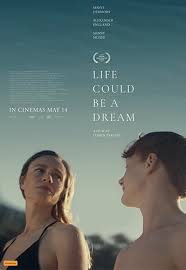
And this is the subject of this brief Australian drama. It is strongly emphasised as the film opens, information about domestic violence. And, after we have experienced the nightmare, before the final credits, the theme is again explicitly noted and help suggested. This is indeed a message film.
The central character is Sarah. She has been married to Jake for many years, and they have a son, Otis, in his mid teens.
The film opens in the present, Sarah anxious and upset, Otis supportive, Jake absent, her birthday coming, his casual phone calls, establishing attention to the home.
There is some narrative in the present, especially with Sarah deciding to leave with Otis, her being a real estate agent going into a house that she is preparing for sale, her state of anxiety, getting energy from a great deal of swimming, hiding from Jake. Otis is supportively is mother, understanding, helping with the cooking, but finding the situation sometimes oppressive, befriending a young girl in the local store.
But, there are important flashbacks, the initial encounter between Sarah and Jake, falling in love, pregnancy, marriage, the role of Sarah’s mother, Jake and his charm. Then Jake becomes vindictive, trying to track down Sarah and Otis, spinning a story to the young girl at the local store to get information.
As different from other domestic violence stories, there is not a great deal of explicit violence. Rather, the emphasis is on the emotional and psychological violence, the continuous uncertainties, the sense of menace.
Maeve Dermody plays Sarah. Sonny McGee is a convincing Otis, a teenager, supportive, sometimes bewildered. And Alexander England is the threatening Jake.
A film to experience and discuss rather than an entertainment.
- The title? Life possibilities, hope? But dreams as nightmares?
- The Australian setting, homes, the mansion, interiors, the grounds, the swimming pool, the sea and the beach? The musical score?
- The initial information about domestic violence, repeated at the end? Audience response, the initial alert, reactions throughout the film? Empathy with Sarah, with her son? Antipathy towards Jake?
- The story in the present, Sarah, her decision to leave, talking with Jake on the phone, his being away, the delay in return, the birthday celebration? Her relationship with Otis, his age, his response to his father?
- The emphasis on water, swimming, the pool, Sarah relying on swimming? With Otis? The cliffs with Jake? The beach with Otis?
- The scenes at home, Sarah, anxiety, moods, dreams and memories, the continued swimming? Her work, selling homes, the decision to go to the home with Otis?
- Settling into the home, preparing for the sale, the rooms, meals? The encounter with the gardener?
- Sarah, the significance of the flashbacks, the cumulative effect of her relationship with Jake, the initial encounter, falling in love, her mother and wanting to meet Jake, happy with each other, his personality, treatment of Sara, the pregnancy, Otis noting the time of the wedding at his birth?
- Otis, supportive of his mother, cooking, helping her, the swimming play, but wanting his friends?
- Going to the store, the young girl, discussion about school, the various meetings, Otis going out with her, swimming pool, their hands on the bottom of the pool, their legs out, like Otis with his mother?
- Jake, his return, the phone calls, anger, the visuals on the phone, tormenting Sara? His coming to the town, visiting the girl in the shop, his story about being in uncle, her suspicions of him?
- The future, for Sara, getting help, a new life, Otis, relationship with his father, with his mother?
- And the final information again about domestic violence?
Hokum
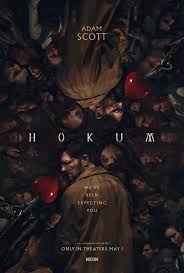
HOKUM
Ireland, 2026, 107 minutes, Colour.
Adam Scott, Peter Coonan, David Wilmot, Austin Amelio, Ezra Carlisle, Mallory Adams, Michael Patric, Will O'Connell, Brendan Conroy, Florence Ordesh.
Directed by Damian McCarthy.
The title, Hokum, seems to indicate something of a light, jokey touch. However, this is Irish Hokum, and very serious. And, filmed in Ireland, at an out of the way a hotel, reminiscent of all those haunted and eerie hotels from horror films.
The central character is an American writer, Ohm, the visuals of his current writing, a story of a conquistador and his son lost in the desert, seeking gold, is visualised as the film opens. And, it is visualised at the end. Apparently, he is a very successful and popular writer, recognised in Ireland, movie versions of his novels.
Ohm is a morose character, effectively played by Adam Scott. He is a sad man, memories of the death of his mother in a shooting accident, his father turning on him after the accident. But, he sees a photo of the hotel where they had their honeymoon and decides to visit Ireland.
Ohm is also a brusque character, initially able to offend anyone, especially the staff at the hotel. There is the owner telling fierce ghost stories to children and Ohm tells him off. He can’t find his room and is cranky with the staff. But, he eventually settles in – and fulfils his mission, bringing the urns with his parents’ ashes to scatter at the tree in the photo.
In the woods he discovers an old man, living alone, suspected by the locals for killing his wife. He will be an important character in the plot development. So will a number of the staff, Fiona, initially offended by Ohm, crucial in Ohm’s attempts at self-destruction. And then she disappears. There is the manager, there is the handyman, there is the rather old bellboy, an aspiring writer, whom Ohm also offends.
Most of the film is involved in Ohm searching the hotel since Fiona has disappeared, ghostly manifestations of his mother, and a whole mythology of witches in the area, the closing up of the honeymoon suite, and his venturing in, all kinds of weird discoveries. And, the involvement of the earlier characters, help, betrayal, lies, and Ohm trapped in the honeymoon suite, in the dumbwaiter, a sinister stone corridor – deaths and vengeful witches.
For those who enjoy this kind of mysterious horror, probably worth putting on the list to see.
- An Irish horror story, legends, witches and ghosts, curses, vengeance?
- The atmosphere of the opening, the conquistador and the boy, the desert, the quest for gold, the conquistador to kill his son? The revelation that these were stories by Ohm? The popularity, film versions? And the resumption of the story at the end, the father unable to kill his son?
- Ohm, at home, typewriter, the ghostly presence of his mother, the later explanation of the accident, with the gun, his age, the gun going off, in his mother’s face, her death, his father’s reaction, harsh to his son, drinking and death? And his having the ashes of both at home? Finding the photo, the Irish hotel for their honeymoon?
- His decision to travel, arriving, the remote hotel, echoes of sinister movie hotels, the dead goat on the car, Fergal with the bow and arrow, at reception, his harsh remarks, Fiona’s response? Cob, telling the sinister stories to the boys, owner of the hotel? Mal, the manager, his son-in-law?
- The edginess of Ohm, not finding the right room, settling in?
- The personalities of the hotel, Fiona, initial suspicions, friendly? Mal and the management? Fergal and the ghosts? Alby, would-be writer, bellboy, asking, his reaction, burning his hand, Alby later revealing that he had spiked his drink in the room?
- Ohm, going into the woods, the photo, finding the tree, Spreading his mother’s ashes, tossing his father’s? The encounter with Jerry, the conversation? Jerry’s story, personality, friendly?
- Ohm returning, going to his room, his hanging himself? Fiona pulling him down? Waking in the hospital, weeks later, his return to the hotel, finding it closed for the season, packing, wanting to leave? Discovering that Fiona was missing, his determination to find her?
- The police, suspicions of Jerry, arresting him, his leaping from the van, his injuries, return to the hotel? Mal, helping him, but turning violent against him?
- Ohm, his car, the issue of the key, getting into the honeymoon suite, his appearance, the furniture, the clock and striking, the dead boy, going up and down? Locked in? The discovery of Fiona’s body?
- Fiona, the record, the revelation of what had happened, her pregnancy, Mal, his violence, the flashbacks sequences? His cover-up, hiding Fiona’s body?
- The tension with Ohm in the room, moving Fiona’s body, exploring the long corridors, no exit? The time, the light, the eerie presence?
- The stories of the witch, the weird appearances, the ghost of his mother, protecting him?
- Mal, Jerry and his insistence, going to the room, the bow and arrow, Jerry’s death? Mal and his stories, his going back to the hotel, saying that he drove Ohm to the airport…?
- The buildup to the final confrontation, Mal and his pursuit of Ohm, the bow and arrow, in the corridor, the presence of the witch, Ohm and the chalk, protected, Mal being dragged away?
- The aftermath, Alby and his confession, Ohm more mellow, to read Alby’s manuscript?
- The ending, Ohm’s future, the dramatisation of the end of his novel?
Outrun, The

THE OUTRUN
UK/Germany, 2024, 117 minutes, Colour.
Saoirse Ronan, Paapa Essiedu, Freya Evans, Seamus Dillane, Stephen Dillane, Saskia Reeves.
Directed by Nora Fingscheldt.
The Outrun is based on a memoir by Amy Liptrot. It is set mainly in the Orkney Islands, the cinematography immersing the audience in the beauty and wildness of the Islands, the fields and the sheep, the houses, the small town settlements, the majestic cliffs, the North Sea.
This is a story of Rona, and a fine performance by the versatile Saoirse Ronan. She is a young woman who has grown up on the island, exploring the rocks, interest in biology, moving to London to get her degree. However, in London, she is wild, drinking, her relationship with her friend who becomes exasperated with her, her becoming a victim of sexual violence and, finally, asking for help.
The screenplay is not linear which requires the audience to pay attention, moving from the childhood past, working with her father, her mother becoming more desperate and escaping to religion, her father’s drinking and mental breakdown to the life in London and then to her recuperation, AA meetings and her participation, some success, another failure and attempt at freeing herself from alcohol, out in one of the more remote islands of the Orkneys, getting some moral and human support, reconciling with her father, upset and trying to be supportive of her father.
There have been many films about alcoholism, Alcoholics Anonymous, mental illness, desperation. This film is different with its focus on a woman, in her 30s, a character that many younger audiences could identify with – and then challenged by.
- The title, reference to the cliffs and the sea? Symbolic of Rona and her life, control?
- The Orkney settings, the landscapes, the cliffs and seascapes, the open countryside, the sheep in the fields, the village, houses, interiors, caravans…? The contrast with London, crowded, streets, accommodation, pubs and clubs? The AA meetings? The musical score, Rona continually listening to music, techno, contemporary, the past?
- The screenplay, the focus on Rona, in the present, her wild life, her relationships, the violence, and for help, the AA meeting, her struggles, her fall, trying again? The screenplay moving around in time, piecemeal, Rona as a child on the beach, exploring, relationship with her mother and father, her ambitions, study, biology, the wild life in London, its effect on her, returning home, clashes with her mother, working with her father, his moods and collapses?
- The cumulative effect of the screenplay on the portrait of Rona, as a little girl, with her parents, their clashes, her father’s mental illness, her mother’s religion and friends, Rona not agreeing with the religion, grace at meals, Jesus talk, singing…?
- Rona, possibilities with her studies, her father’s drinking, mental situation, her being influenced by this? Her life in London, the drinking, her relationship with Daynin, his not being able to sustain it, the later meetings, the affection, his new relationship? Her getting the lift, the attack and the abuse and violence?
- The AA meetings, the welcome, the prayer, the communication, the jokes and happy spirit, the time passing, her achievement?
- Her return home, working with her father? Her talents, the job, listening to the sounds of birds, registering their presence or absence? Putting her finger in the alcohol, tasting, the collapse?
- The decision to go to the island, the friendly people, the house, the pub, the shop, the owner and his talking, memories of his own alcoholism?
- The Festival, the exuberance, the myths about the Orkney Islands, the animated sequence and mythology?
- Rona’s relationship with her mother, her mother coming to visit, their talking, frankly, swimming together, the reconciliation?
- Her father, ringing, his desperation, continued talking, his mania, Rona trying to respond?
- Her achievement, her contemplation, sitting in the lotus position, coming to terms with herself, nature, some kind of peace – her explaining to her mother about seaweed, ambitions to explore the themes and write her doctorate? Her future?
