Displaying items by tag: Nick Bleszynski
Breaker Morant: The Retrial
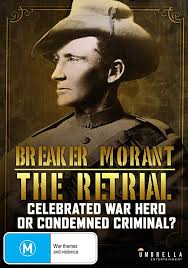
BREAKER MORANT: THE RETRIAL
Australia, 2013, 90 minutes, Colour.
Benedict Wall, Hannah Barlow, Traverse le Goff.
Directed by Nick Bleszynski, Gregory Miller.
Harry Breaker Morant has been a significant presence in Australian history from the late 19th century. His activity in the Boer war and his subsequent execution have been under constant scrutiny. Bruce Beresford’s very successful film, starring Edward Woodward as Breaker Morant brought him to the attention of a wider public.
While there have been descendants of the victims of the killings during the Boer war who have continued their resentment against the British and Morant, there are Australians who have been convinced that a trial was manipulated and that Morant and his friends were scapegoats.
The present film was presented on television in two parts, later combined for streaming. It covers a wide range of Morant’s history and of life in Australia in the late 19th century as well as detail on the Boer war. It highlights the campaign, even to Parliament, by military lawyer, James Unkles. Throughout the film there are comments and testimonies from a range of people like Geoffrey Robertson, Tim Fischer, Lawrence Street.
The film has re-enactments of Morant’s arrival in Australia, his work with horses and his nickname, his brief marriage to Daisy Bates, his friendship with Banjo Patterson, also writing verse and publishing it, supported by Patterson when a journalist during the Boer war and returning to Australia. The re-enactments are enjoyable and interesting, but in the background is also the identity of Morant, who actually was his father, the motivations for coming to Australia, his change of name, a variety of documentation and enquiries.
There is also detailed explanation of the background of the Boer war, the Afrikaaners, the role of the British, the British thinking it would be a short war, the several years, the rounding up of the Boers, the first concentration camps, and visuals of starvation and death and other atrocities.
Then there is the focus on Morant himself, the Australian patriotism and suddenly going to South Africa, the various friendships, especially a close friendship with an officer who could introduce him back to British society, his return, establishing his identity, then upset at the murder of his close friend, anger, and the application of the British orders about shooting and executions.
There are also dramatic re-creations of these incidents.
There is the court case, the experts looking back and discussing the role of Lord Kitchener, responsibilities, regulations, interpretation, and Morant and his colleagues targeted, victims.
And, of course, the men going out to be executed and Morant exhortation to shoot straight, you bastards.
The case was brought to handle Parliament but the then Attorney General, Nicola Roxon, as against it. Morant has not been vindicated legally but very much so in the minds of many Australians (but the continual resentment, incorporated into the film by testaments of the descendants of the Boers who were killed).
