Displaying items by tag: Peter Malone's Movie Reviews
Welcome Back to My Channel
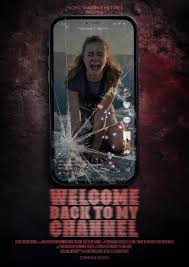
WELCOME BACK TO MY CHANNEL
Australia, 2025, 93 minutes, Colour.
Meg Fraser, Bryn Chapman Parish, Keenan Walker, Peter Chapman, George Tilley.
Directed by Jorrden Daley.
The title sounds very genial. And the channel? The central characters, Suki (Meg Fraser) and American Leo (Bryn Chapman Parish) have been together for five years, working together as influencers with their own channel. With some introductory sequences before the main narrative begins, Suki and Leo talking to camera, very lovey-dovey, smiling, confident, plenty of chatter, confident that their audience is happily watching, the film is making a strong appeal to audiences, say, 35 and under, the followers of bright and breezy, even glamorous, influencers on social media.
Which asks the question as to how audiences, over 35, who may be for the not an audience for influencers’ channels and chatter are going to be engaged. audience after an easy entertainment, they may continue. But, for the older, and even older than that, audience, they may find it hard going, not caught up in the romance and bush adventure of the couple and Leo’s cycling friend, Cassian (Keenan Walker).
If the older audience has heard that this is, in fact, an Australian horror film, set in the bush, they may continue to watch, hoping and waiting – but, the horror does not really go into action for about 50 minutes. In the meantime, we go out into the bush, camping, bike riding, Suki really taking charge but keeping a strong eye on her online followers.
There are some momentary scares, some anticipation of what might follow – and, eventually, it does.
The last 40 minutes of the film are quite effective as Australian horror in the bush, mysterious characters appearing, action and assaults, interspersed with some of Suki’s memories of home, unhappy memories, which make the encounter with a cannibal family living out in the mountains, even more personal for her. The mysterious family, survival, violence, has absolutely and Leo attacked, their trying to survive, escaping, pursued and confronted, and, Suki finally finding some refuge with the Park Ranger but…
This is very small budget film written and directed by first-time director, Jordenn Daley, whose next film plans have been submitted to Screen Australia…
Prime Minister
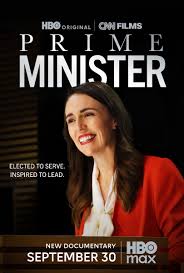
PRIME MINISTER
US/New Zealand, 2025, 101 minutes, Colour.
Jacinda Ardern.
Lindsay Utz, Michelle Walshe.
An engaging portrait of former Prime Minister of New Zealand, Jacinda are Dern. And, it proved very popular, winning audience awards at Sundance and Sydney Film Festival.
This is a portrait in quite some close-up, in fact, many close-ups of Jacinda are Dern, many opportunities to observe and study her face, expressions, her experiences.
The film is built up by a great deal of archival material but also of home material, much of it photographed by Jacinda are Dern’s partner, the father of her daughter, Neve, eventually her husband. The final credits indicate quite a wide range of credits for visual sources.
The film was made during 2024, the year after Jacinda are Dern as Prime Minister and leader of the Labor Party in New Zealand. She then moved to the United States, lecturing at Harvard, and various clips from her time in Harvard and a lecture to a graduation class, stating her principles.
The film does go back to her origins, the ordinary town in which she grew up, glimpses of her parents, photos and visual clips, and her early interest in politics. She became a member of Parliament at the age of 28, serving in the role of shadow ministries in the labour opposition. In 2017, declining popularity of the Labor Party, and she was elected leader, a strong campaign, improving Labor Party voting, dependent on Independent, Winston Peters (forthright on limiting immigration policy), who opted to go into alliance with Labour.
The film gives Jacinda are Dern a great deal of opportunity to state her intentions, plans, social justice issues, climate issues… And, the film traces her political career over five years.
The film also indicates Jacinda are Dern’s popularity, the use of the word kindness in her acceptance speech, her continued use of words like sympathy and empathy. She also is the uses the word “re-humanise” so necessary with the dehumanising aspects of the world in the 21st-century.
The film also shows her at international meetings in the early years of her prime ministership, very strong in presenting the New Zealand perspective, especially at the United Nations.
So highlights significant occasions during her leadership and how she handles them, especially the terrorist attack, by an Australian, on the mosque in Christchurch, her immediate sympathy, joining the bereaved Muslims, sensitive to dress and language. Shows the moved towards legislating strict gun laws. Then there was the volcano eruption in which a number of tourists were killed and injured.
But, the most significant, as elsewhere in the world, missed 2020 and Covid, her attitude towards locked down, to saving lives, 2020 being more successful in New Zealand than in other countries around the world, but new outbreaks in 2021 into 2022 and, with the example of the United States at the end of the Trump era and his protests and conspiracies followed, reaching to New Zealand, protests, anti-vaccine, sovereign freedoms, demonstrations in front of the Parliament, a camp, fire, police action, and the decisions that the Prime Minister had to make.
There followed a decline in her popularity, the pressures that she felt and her final decision.
But, throughout the film, there is a revelation of her pregnancy, giving birth while Prime Minister, so many scenes with the baby, the issue of breastfeeding and her work, criticisms of those who revealed rather misogynistic attitudes, the baby at work, Parliament, and her growing up over the years, and a very pleasing portrait of family life, and Jacinda are Dern is relationship with her partner and his support, and the eventual wedding. In one sequence and insult is hurled, “some girl in a skirt is on a power trip”.
This is a very sympathetic portrait of Jacinda are Dern and received very well by most audiences – but, those who did not like her, disagreed with her politics, some savage comments against the film and its promotion of the Prime Minister. A key to her attitudes is in her interest in Anna Shackleton, leadership to go to the South Pole, trapped in ice, spending two years rescuing the boat and his men, not losing one. She quotes this often and the film includes film footage from the expedition.
As with this kind of documentary, the question for the filmmakers it is how explicit the point of view should be or, rather, presenting the material, letting the subjects speak for herself, and leaving it to the audience to look at her, listen to her, and make up their minds for themselves.
Twinless
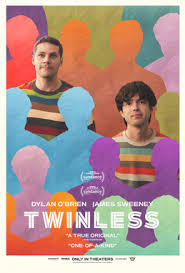
TWINLESS
US, 2025, 100 minutes, Colour.
Dylan O'Brien, James Sweeney, Aisling Franciosi, Lauren Graham.
Directed by James Sweeney.
We don’t often use the word Twinless in everyday conversation. Here it is used, in the context of twins, identical twins, when one has died and the other survives, trying to deal with life with the twin, life without the twin.
The film opens with the sounds of a car accident. Then a funeral follows, Ronan (Dylan O’Brien) serious-faced, good at the expressions of sympathy for the death of his brother, Rocky, and, in the aftermath, clearing his brother’s room, angry with his mother (Lauren Graham).
Dylan’s performance as Roman is highly effective, not the sharpest tool in the shed as he acknowledges, trying to manage life, full of angers, especially occasion when his brother came out as gay, left home, went to Japan, severed connections with his family. But, at a counselling group for the twin list, he encounters Dennis, claiming to have a deceased twin, Dean, and the two strike up something of an unusual friendship, Ronan, awkward, relying on Dennis as they go for supermarket shopping, then an increased in shared interests, a bonding friendship, Roman relying on Dennis and the audience realising that Dennis is a gay man, attracted to Roman.
Then, after quite some time, the credits come up and there is a flashback which alters very much our perspectives on Dennis and Roman. In fact, Dennis had been in a brief relationship with Rocky we begin to understand his attachment to Roman. (There are some flashbacks with Dylan O’Brien playing at Rocky, creating a quite strikingly different character from Ronan.)
This is a film not only about identity but also about loneliness and friendship. Audiences immediately appreciate Ronan and the connection with Dennis, sharing details of his life, confidences. But, we now know Dennis and his motivations, the complexities of his lying about twin brother, the consequences of the lie even as the bond grows between the two men. Then, there is a complication with the extroverted Marcy (A sling French eos who was so striking in the Australian film, Nightingale), receptionist at Dennis’s workplace, delighted to meet Ronan and he her.
There is humour throughout the film. There is a great deal of sadness. There is great deal of anger on Ronan’s part, and further antagonism with his mother. And, then there will be the truth, Marcy and her intervention, Ronan’s response to Dennis.
There is great deal of sensitivity in this film, something of a credit to James Sweeney, in his early 30s, writing the screenplay, directing the film, playing the part of Dennis.
- The word twinless? Life with a twin, without it twin? And the therapy groups for twins who have lost the other twin?
- A story of loneliness, of friendship, of deception?
- The opening, the sound of the car accident, the moving to the funeral, Roman and his mother, grief, the range of friends coming and embracing, Romans awkwardness? The aftermath, clearing the room, his rage against his mother? Memories of rocky, their time together, the anecdotes, the shared bunks, the accidents…? Rocky leaving, severing connections, Japan? Gay, relationships?
- Roman, the encounter with Dennis, talking, Roman not so sharp, ordinary, the supermarket, the increasing friendship, sharing?
- The title after the so long, and the flashbacks, Dennis and his encounter with Rocky, the relationship, Dennis and his dependence, upset with Rocky seeing someone else, driving, on the street, the confrontation, the accident and Rocky’s death?
- The new perspective on the friendship, Dennis and his stalking, in love with Roman, Roman not realising this, Dennis and sharing the experiences with Roman, ice hockey and trips, conversations? Dennis and his memories of rocky, the impact of the sexual encounter? Love for Roman, yet giving him space?
- Dennis at work, the conversations with Marcy, at reception? Her party, in Dennis bringing Roman? Watching, wanting them to be together? Marcy, her extrovert personality, the bond with Roman? The increasing love, sexual encounters, together?
- Roman and Dennis together, the group passing, the fake it in salt, Roman and his violent response? Punching? The issue of violence, going to the gym, his brother’s identity, exercising with Dennis?
- The Christmas with his mother, the awkwardness, the arguments, Dennis and Marcy awkward, the exchange of gifts?
- Marcy, breezy, yet noting times and dates, the issue of Genesis claiming to have a brother, a twin, his death? Marcy eventually confronting Dennis?
- The therapy sessions, Dennis following Roman, his story about his twin, the airport phone calls and crash? The other members of the therapy group, their stories about their twin?
- Dennis, finding the time to tell the truth, drinking, Roman’s reaction, punching?
- The later meeting, apologies, coping with the reality, the shared sandwich – to take away? Leaving the audience to speculate about the future?
Tommy the Toreador
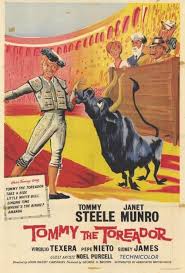
TOMMY THE TOREADOR
UK, 1959, 90 minutes, Colour.
Tommy Steele, Janet Munro, Sidney James, Bernard Cribbins, Noel Purcell, Ferdy Maine, Kenneth Williams, Eric Sykes, Francis De Wolff, Warren Mitchell.
Directed by John Paddy Carstairs.
A piece of light, very light, entertainment from the UK in the spirit of the late 1950s. It was a star vehicle for Tommy Steele, emerging in the UK as a rock ‘n’ roll star, to rival Elvis Presley. However, he moved into light music entertainment, more a rival to Cliff Richard. This is his second film. In the later 1960s he was have success in The Happiest Millionaire, unions Rainbow, Where’s Charlie and, particularly, Half a Sixpence.
This is a colourful story of a sailor stranded in Spain, all kinds of problems, mistaken identity, accidentally saving a bullfighter, commandeered into being a toreador. There are all kinds of Mac nations about fighters and bulls, the main bullfighter arrested and imprisoned, his agent, Ferdy Maine, trying to get him out. And, rather unbelievable with Spanish accented English, Sid James and Bernard Cribbins as to entrepreneurs missing the bullfighter in jail, build up Tommy to take his place. And this is enhanced by Tommy’s accidental saving mother bullfighter, the son of the proprietor of the hotel where he and the senior, Janet Munro, who is got to know Peter being and are unable to pay! And there is a policeman on his trail.
It is in this film that Tommy Steele sings the very popular song, The Little White bull, joining with children in the performance.
In fact, the film was also very much a musical, quite a number of numbers, and, this film coming just before the Carry on series, it is a surprise to see Sid James and Bernard Cribbins combining with Tommy Steele in a song and dance routine! Definitely a sequence for Sid James fans. And, the singer has a manager, played by Eric Sykes who is said to have fame and popularity on television. And, in the role of a waiter, bewildered at the hotel, there is Warren Mitchell before his television and film career took off.
Then, all the atmosphere of the bullfight, the arena, the crowds, and Tommy going into all kinds of action, thinking he was with the kindly bull that he encountered, at the fiercest substitute confronting him, heroism, and running away, the various reactions of the crowd – and, of course, a happy ending and wedding bells.
Sovereign
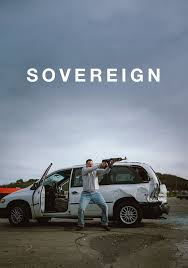
SOVEREIGN
US, 2025, 100 minutes, Colour.
Nick Offerman, Jacob Tremblay, Dennis Quaid, Megan Mullaly.
Directed by Christian Schwegel.
A sovereign is a ruling monarch. But, in more recent times, the word sovereign is associated with citizens, and especially with citizens who have no truck with monarchs or with government. They presume on their dignity as human beings and their human autonomy, seeing impositions from authority and the law as something to take a stand against, to fight against.
For Australian audiences, this has been very much an American phenomenon, traces in Australia. However, with events in Victoria in 2025, the stance of a sovereign citizen and his proclamations, some extreme religious convictions, the shooting of two police officers, and his disappearing into mountain country, but its headlines that ensured that everybody became aware of the claims of sovereign citizens.
This topical film opens with Dennis Quaid as a policeman sitting in a car, hearing of the deaths by shooting of two police officers. The scenario then goes into a long parallel story, eventually meeting up again with the officer sitting in his car.
The portrait of the sovereign citizen, Jeff Kane, is effectively portrayed by character actor, Nick Offerman. He is an educated man, knowledge of the law, interpretation of the law from the vantage point of the philosophy of the sovereign citizen, travelling around the American states, holding meetings, often in dingy locations, giving lectures, ordinary citizens with grudges against authority sitting in and feeling supported by him.
And, for this drama, the significant issue is that of his son, Joe, in his mid-to-late 20s, his mother dead, his living at home, home-schooled by his father, absorbing his father’s philosophy of life, and at this stage, invited by his father to travel with him, listening, helping him with the set up for the lectures, hero-worshipping his father and absorbing his philosophy and action. He is played by the Canadian actor, Jacob Tremblay, who made such an impact 10 years earlier in Room and has been seen in such films as Wonder, Toxic Avenger, Life of Chuck.
There are several incidents throughout the film to dramatise the stances taken by sovereign citizens, especially as regards the police, producing documents, roadside searches… But, in the case of the father and son, banks and the foreclosure taking their house. And Jerry Kane has all kinds of vocabulary, legal arguments, a different range of ideas and words to confront the authorities. And, a religious man, very much Christian fundamentalist, he has the higher power justification for his stances.
While this is a convincing portrait of an articulate sovereign citizen, it is also an alarming portrait of the son, the influence, the absorption of the philosophy, and, an enormous shock at the violent consequences of this kind of indoctrination.
Which brings us back to the police officer sitting in the car, his back story, his son, the impact of the violence – the screenplay finally leaving aside the sovereign citizens and concentrating on ordinary citizens in order to jolt audience emotions as well as the challenge to understand this seemingly lawless way of life that uses so much religious and individualistic stances to justify it.
Well-made, well-acted, completed before the US 2024 election – and, becoming even more relevant in 2025 with the MAGA Movement which is not explicitly referred to.
- The focus of the title? Sovereign citizens? The increasing stances in the United States, around the world, the role of the individual, the law, government, individuality? The film showing dire violent consequences of the confrontation between sovereign citizens and law and government?
- The middle American setting, homes and foreclosures, on the roads, the halls for the rallies, casinos, Walmart shops, the contrast between the world of the citizens, many poor and in need, and the world of the police enforcement? The musical score?
- The opening, Joe in his car, the news of deaths? The film offering the background, the return to Joe, veteran police, relationship with his wife, his son Adam and his wife, the birth of the child, supporting his son, Adam and the other police, punching the Kanes, the shooting and deaths? Joe returning to the scene with his wife, grief?
- The portrait of Jerry and Joe Kane, father and son, the dead mother, finances, the bank and the house and foreclosure? Jerry taking this to heart? Confrontations with bank authorities? The influence on Joe, homeschooled, his age, his interest in taking the exam for school, his father forbidding it?
- Jerry, his beliefs, the explanations, the role of the law, the role of government, individual rights, various scenes explaining his rights, to drive, documentation…? The scenes of the various rallies, the range of people attending, his speeches, the enthusiasm, the encounter with Leslie, her presence, going to the casino?
- Joe, a company’s father, hearing his father speeches, helping with the setup, absorbing the attitudes?
- On the Road, his father’s determination, explanations of his stances, the confrontation with the police, the roadside set up, the interrogation, Jerry and his rights? Joe, his reaction to the police, getting the gun, shooting the police? The fleeing?
- The consequences of the shooting, going to the shop, getting guns, clothes, the escape?
- The final confrontation with the police, sovereign stances, the shootout, deaths?
- The growing assertion of sovereign citizens around the world, motivations, philosophy, religion, self-righteous, growing ruthlessness? (And the influence from the United States, the various groups, Donald Trump and the MAGA movement?)
Travellers, The
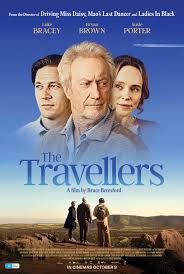
THE TRAVELLERS
Australia, 2025, 97 minutes, Colour.
Luke Bracey, Bryan Brown, Susie Porter, Nicholas Hammond, Celia Massingham.
Directed by Bruce Beresford.
Bruce Beresford has been directing films for over 50 years, achieving success in Australia, for instance Breaker Morant, and overseas, Tender Mercies and Oscar-winner, Driving Miss Daisy. His previous Australian film was Ladies in Black.
This time he has focused on two significant themes, firstly, the Australian who goes overseas and the significance of returning; secondly, ageing parents and the issue of care.
This film was made in Western Australia, set mainly in a country town, with glimpses of Perth and some glimpses of Sydney Harbour for a touch of glamour.
Luke Bracey plays Stephen, a talented set designer, especially for operas, and based in Europe. His mother is dying and so he returns home, always challenged by his married sister, Nikki, played by Susie Porter, but confronting his father who has always had mixed feelings about his son and his artistic talent. And, of course, one good reason for seeing the film is the performance by Bryan Brown as Fred, always recognisable, always Australian, always the touch of the sardonic.
Stephen is returning to the town where he grew up and from which he escaped. He had not always been accepted and there are various Aussie taunts about his artistic career. However, he has had several relationships in the past and they surface again. While two of his schoolfriends, well not exactly friends, local yobbos, even turn out to be far more enterprising than we might have imagined, developing their vineyards and winemaking.
But, most audiences will identify in several ways with the issue of the death of the mother, the ageing father, his past as a travelling salesman, his growing carelessness about looking after himself, the mess of his house, and the amusing scene where he showers wearing his clothes saving time by washing body and clothes at the same time! And, of course, the issue of going into care.
This theme is a perennial, certainly not new in films. Many might remember Nonie Hazlehurst in the 2020 June Again, issues of age, care and dementia.
As with so many of Bruce Beresford’s films, they reach out to the wide audience, are on the wavelength of that wide audience, themes of interest, themes they can identify with, and with an underlying Australian optimism.
- A Bruce Beresford film, based on his own experiences, made in his 80s? An older directors film and looking back?
- The Australian tone of the film, the West Australian country town, the characters, the pub, opinions and industry, and the contrast with Sydney and its vistas, luxury homes, Opera? An sequences in Berlin, theatre and Opera? The importance of music, la Traviata?
- Stephen, growing up in the country town, relationship with his sister and her family, his dying mother, the return to the town, the encounters with his father, the scenes with his mother in hospital, her death? His father’s house, untidy, eccentric, memory lapses, the newspapers, the baked beans in their 10 boiled, the shower with his clothes to do two jobs at once…?
- Fred, a Bryan Brown character, voice, intonations, age, devotion to his wife, travelling salesman in the past, Stephens visit to connect with the woman, the indications of a relationship? Wanting to stay in his house, the attentions of his daughter and family, the grandchildren? Jokes? His reactions to Stephen, strained relationship in the past, Stephen and his artistic background?
- Nicky, her character, in the family, her relationship with her father, her own family, travelling distance? The discussions after the funeral? Aged care issues? The going up to the top of the mountain, the view, the the conversation about the future?
- The characters in the town, Stephen is going to school, the differences, his manner, the two brothers and their taunts, if the later change of heart, their work in the Vineyards, proposal to Stephen to join in business?
- Stephen, the past relationship, going to Perth, the night with the friend? Back home, the selling of the house, the estate agent, the past relationship, the present relationship? Possibilities for the future?
- The pressure from Berlin, the design of the Opera, the sketches, his work, his father’s taunts? Going back to Berlin, the opera, success? The offer for future work in Germany?
- Christopher, the encounter with Stephen, Christopher and his background, friends, theatre, opera, the visit to Sydney, the luxury house? The possibility of an opera in Sydney?
- Fred, moving out of the house, acceptance, going to live near Nikki and the family, hopes for the future?
- Stephen, the possibility for working in Australia? His future?
Roofman
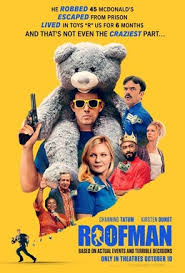
ROOFMAN
US, 2025, 100 minutes, Colour.
Channing Tatum, Kirsten Dunst, Ben Mendelssohn, Peter Dinklage, Juno Temple, Emory Cohen, LaKeith Stanfield, Melonie Diaz, Lily Collias, Tony Revelori, Jimmy O.Yang, Uzo Aduba.
Directed by Derek Cianfrance.
Roofman was the nickname given to man who burglarised a number of franchises, especially McDonalds, 45 times, by digging through the roof and stealing whatever cash was available. And, the film is based on a true story – with some photos of Jeffrey Manchester, the Roofman, and information that he is still in jail.
This is a kind of night out entertainment although it does provoke some thought and some conscience-checking because Jeffrey Manchester is not your ordinary criminal, robbery, yes, but a genial and kind disposition, liking people and wanting to be liked. So, with a variation in the song from The Sound of Music, “what do we do with a problem like Jeffrey?”.
And the main aspect of the problem is that Roofman is played in a pleasantly likeable fashion by Channing Tatum.
When we first meet Jeffrey, he has been discharged from military service, successful action, with the gift for accurate observation, praised by his fellow military friend, Steve (LaKeith Stanfield). Jeffrey is married with a young daughter and younger twin boys, but separated from his wife. What is he to do to support them! Well, we see him dig through the roof of McDonald’s, confront the staff, putting them in the freezer though giving his coat to the manager who forgot to wear his and is cold. 44 McDonald’s robberies later, Jeffrey is arrested at his daughter’s birthday party and off to 45 years in jail. That does seem a bit harsh because while he took the money, he was always considerate to the staffs.
Prison. He is compliant and helpful. But, out he goes, a skilful escape, hitchhikes, and, for a large part of the film, after digging through the roof of the local Toys R Us store, conveniently settling in to a hiding place and establishing a routine, roaming by night, eating M&Ms, disastrous for his teeth, pawning DVDs to pay for treatment, observing all that was going on in the store. Then he ventures out, attracted by one of the staff, Lee, played sympathetically by Kirsten Dunst.
So, a charming life outside the store, off to church with Lee, the sympathetic pastor played by Ben Mendelssohn, relationship with Lee, trying to relate to her daughter’s, including a harum-scarum road trip to buy a car to win over the older daughter.
The tantalising thing is that we are wondering what will happen to Jeffrey, now using a false name during the day, the police still searching for him, possibility of a relationship with Lee and the daughters, a plan to pay his friend Steve for a false passport and flee the country, more robberies to pay for the passport, $50,000, and some violence and arson on Jeffrey’s part.
So, an entertainment, sometimes serious, frequently humorous, touch of romance, a thief’s method in derring-do - and often checking ourselves about our approval and disapproval of Roofman, and wondering why we like him.
- The title, based on a true story, the final photos in the credits, the final information about Jerry Winchester?
- The comic tone, sentiment, story of a thief, fraudster, but kindly, conscience issues?
- The portrait of Jerry Winchester, Channing Tatum’s presence and performance, genial even while criminal? The opening, the McDonald’s, through the roof, confrontation with the staff, into the freezer, the manager cold, Jerry giving his coat? Taking the money? His motivations, his military career, success, capacity for observation? End of service, friendship with Steve? His wife, his young daughter, the twin boys, the separation, contact with them? The need for money? Another 44 McDonald’s robbed?
- His daughter’s birthday party, the candles and wishes? His arrest?
- In court, the McDonald’s staff, 45 years, in prison, friendly, work, useful, accepting his fate? The possibility for escape, the truck, the board concealing him under the truck, the escape, in the bush, the driver relieving himself, Jerry’s escape, getting rid of clothes, hitchhiking, coming to Charlotte? Trying to contact his wife and daughter, the refusal?
- Seeing the Toys R Us, in through the roof, his finding the secure place to hide, settling in, the bed, the M&Ms, the effect on his teeth and the dentistry and the pawning of the DVDs to pay for it? Roaming the store, the toys, washing, the comfort of the night and settling in? Observing the manager, his strictness, observing Leigh and the other workers, sympathy for Leigh, single mother, asking for some time off, the manager refusing? His altering the security system? Security cameras not working? His own screens and his surveillance of the manager and the workers? His prospects? The police still after him?
- Coming out of the security, his new name, the encounter with Leigh, the returned toys and his donation, in the church, pastor Ron and his wife, singing? The further encounters with Leigh, the relationship, her invitation, at home? Her two daughters? His friendship with Dee, Lindsey hostile, their suspicions, harshness, close of only with Dee, the car and driving, the reckless ride, the reaction of the salesman, bonding with Lindsey? A future with them all?
- At the church, the pastor’s wife, the organisation of the meal with the single women, the flirting and his charm?
- Steve’s return, the issue of the passport, Steve’s girlfriend and her reactions, needing the money for the passport, the robbery, digging into the wrong shop, breaking down the wall, the alarms? Getting away? The dental records, starting the fire, the destruction of the premises?
- The episode of the shower, seeing the naked man, the police, the presumption that it was a homeless person?
- Jerry, the decision to go, the plan, the plane ticket, in the store, the episode with the manager, the money, the spray from the cash, his concern, phoning for the ambulance, arranging for Leigh to be absent, her arriving, recognising him, his escape?
- Driving to the airport, the phone call, his decision to return, Leigh giving him up, the arrest? What might have been?
- In prison again, the information of two further escapes, still in prison at the making of the film? The visiting? Her comments? And the photos during the credits?
High Ground/ 2025
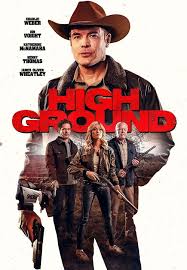
HIGH GROUND
US, 2025, 91 minutes, Colour.
Charlie Webber, Jon Voight, Katherine McNamara, Henry Thomas, James Oliver Wheatley, Dustin Ingram, Skyler Shaye, Charlotte Weston.
Directed by James Bamford.
High Ground is a county in Colorado. This contemporary action drama plays something like a modern Western combined with gangster action.
The film focuses on a former criminal, Nathaniel, played intensely by Henry Thomas, who has found religion in his illness and has broken from the criminals and is prepared to testify against them. The chief gangster, played by James Oliver Wheatley, intensely, sometimes hyper-intensely malevolent, gathers his thugs to kill the witness. Initially they fail, so Marcus rounds up even more thugs to track down Nathaniel.
He flees to Colorado, is involved in an encounter with the police for speeding and is taken to jail. Always reading and quoting his Bible. And, Marcus and his gang make their way to High Ground, no scruples in killing and one who gets in their way – and they do.
In the meantime, the new sheriff, Jake (Charlie Webber) son of the old sheriff for 35 years, Ezra, played by Jon Voight (who appeared in director, James Bamford’s strange time travel tale, The Man with No Past). He is letting go of the authority, has a huge ranch, comes into town to chat with Rosie at the local. And, there is the eventual romantic interest, Cassie (Katherine McNamara) who proves, early in the piece, that she is an accurate shot.
So, ugly and sinister villains, no scruple in torturing and questioning and then killing the local sheriff whose wife is expecting. No sentiment here. And, a number of people in the town are killed as well as in the local bar.
Jake takes Nathaniel to the ranch for a final siege, Jake, Ezra, Cassie and Nathaniel against a whole range of attackers, shrewdness on the part of the sheriff, and accurate shooting…
Audiences who can sit back and relax at this kind of old-time, B-budget, straight to video kind of action will enjoy it. Bloggers on the IMDb who did not like it felt no restraint in their condemnations!
- Combination of Western-style, Colorado settings, sheriff’s, prisoners, and gangster vengeance movies?
- The setting, Colorado, the county, the ranch, the town, the jail, police office, the bar, the surrounding countryside? The musical score?
- Nathaniel, his character, with the criminals, repenting, the Bible, his illness, shooting his attackers, prepared to witness against the boss, driving away, the speeding, the police, in the jail, the Bible, the reaction of Jake, Sharon, Billy? Researching his identity? Information about Marcus and the criminals?
- Jake, his character, war service, return, the effect of the war, friendship with Cassie, the shooting and accuracy sequence, his relationship with his father, Ezra and 35 years sheriff, the oldies still thinking of him as sheriff?
- Life in the town, Rosie and Dan at the bar, the locals, meals and drinks? Cassie and her work? The attraction to Jake?
- Marcus, his character, the range of henchmen, relentless, to kill Nathaniel, coming to the town, the encounter with Billy, questioning, torture, his saying he was about to be a father, Marcus still killing him? Coming into the town, for the meal, the interrogation, his men outside, filling up the vehicles, shooting the proprietor?
- The reaction of those in the bar, Rosie, Dan, interrogation, going out, Marcus returning, the confrontation, the shooting? Bashing Rosie?
- Jake, out in the countryside, finding Billy? Difficulty in communications? Sharon, her role, information? Hiding, Marcus killing her?
- Jake and Nathaniel, suspicions, the religious dimension, Jake taking him to the ranch? Ezra, in town, the confrontation with Marcus?
- Cassie, her determination, everybody going to the ranch?
- The siege of the ranch, tactics, accurate shooting, Ezra wounded, Cassie saving Jake, Nathaniel and the shooting, the confrontation with Marcus, his death?
- And the happy ending, Cassie and Jake, Rosie and Ezra…?
Golden Ivory
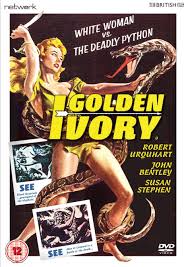
GOLDEN IVORY
UK, 1954, 80 minutes, Colour.
Robert Urquhart, John Bentley, Susan Stephan, Alan Tarlton, Howard Wood, Tom Lithgow, Maureen Connell.
Directed by George P.Breakston.
There are a number of British action adventures filmed in Africa, especially in Tanganyika, in the Kenya area, Where No Vultures Fly and its sequel West of Zanzibar. 1955 saw the film about the uprising on the Mau Mau, Simba.
The presupposition that this area of East Africa was British East Africa, part of the British Empire. But, the 1950s saw the immediate prelude to the movement for independence in African nations. The presumption in this screenplay is that Britain is still a colonial power – but some indications of collaboration, working together, some movements towards equality. But not yet.
The setting is 1890, some settlers moving inland from the coast, with two experienced guides, white guides, and some African servants. There is some drama between the two brothers, a touch of the Cain and Abel story, their adventures, hunting, and the prospect of ivory as well as discoveries of gold (but is turning out to be pool’s gold). There is an older man who has been involved in fights and killings. There is the parent generation and some of the younger generation – and, of course, some romance.
In this way, the film resembles the American Western – even to a rolling score reminiscent of such films as The Big Country.
Africans are the Massai and there are confrontations between the tribes, the leaders, discussions, the role of the witch doctor, the role of the chief – and possibilities for some kind of peaceful settlement.
With Robert Urquhart as a sympathetic lead, the audience is drawn into some of the action as well as some of the issues.
Inexplicably, the overseas title was The White Huntress, not really relevant (and there is little ivory in the film as well!).
Naked Wanderer, The
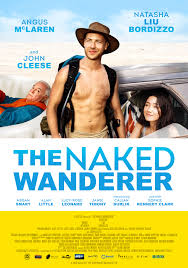
THE NAKED WANDERER
Australia, 2019, 101 minutes, Colour.
Angus McLaren, Natasha Liu Bordizzo, John Cleese, Sophie Kennedy Clark, Callan Durlik, Meagan Smart, Alan Little, Jamie Timony.
Directed by Alan Lindsay.
Very much an demanding Australian romantic comedy, broadly popular entertainment (and looked down on by many Western Australian bloggers who felt this was beneath them). And, for overseas distribution the alternate title was Crazy for Love.
The setting is Western Australia and, in fact, the central character’s walking from Albany 2000 km up the coast, plenty of scenery and different locations along the way.
And the plot! Our hero, Jake (Angus McLaren) is infatuated with the daughter of his boss on a building site. She breaks off, thinking that he is boring. He wants to do something to win her back – and his best friend (played by the writer of the screenplay, Callan Durlik, who proves to be a fickle friend) who has television connections, especially with millionaire tycoon, King, played at his most rambunctious and angry-eruptive by John Cleese. The millionaire wants promotion, linked with charity donations, and puts up $200,000 for our hero to do the walk. But, there is one prescription, that he walk naked (except that there is a front and back kind of loincloth).
Nothing particularly startling, the scenery, Jack getting into stride with the walk, a range of odd characters that he meets, especially an aboriginal, Eli (Alan Little in his only screen role), the joke that when the thought is that Eli is quoting aboriginal law, he is offering a quote from Fight Club! There is a masseur along the way, our hero starving with his friend not bringing food, a carload of tourists and, the move into romantic comedy, his infatuation with Valerie (Natasha Liu Bordizzo), getting in and out of contact with the publicity-seeking King, a visit from King’s assistant who is in love with him, his former girlfriend trying to make up because of his celebrity…
And, at a final TV show, King is rather fobbed off and Valerie, who has misinterpreted an encounter with the former girlfriend, is reconciled to a happy ending.
