Displaying items by tag: Peter Malone's Movie Reviews
Santa Camp

SANTA CAMP
US, 2022, 92 minutes, Colour.
Directed by Nick Sweeney.
Yes, this is a documentary about an annual camp in New Hampshire, organised by veteran Santa, Dan Greenleaf, for a group of men who act as professional Santas at Christmas time and together together, an enjoyable time, but also an opportunity for sharing about how to be effective in their role as Santa Claus. Some discussions, tutorials, role-plays, questions about how children behave meeting Santa.
We are introduced to many of the men, retirees from their work, a bit more portly than they used to be, and many of them with their own long flowing white beards. They explain themselves in an engaging way.
If this film, and HBO Max documentary, were just about the cheerful getting together, it would be enjoyable enough. However, there are more serious tones and themes within the film.
One of the enjoyable themes is that of the rise of Mrs Claus, some of the older women speaking to camera about the traditional role of Mrs Claus, her equality with her husband, working together with him – and there are a number of women coming to the summer camp as Mrs Claus.
But there are very serious themes as well.
The film makers go to Arkansas, to an affluent white suburb where there is an African-American family living. The father has decided that he wants to be a Santa role model for his child, even to having images of a black Santa. And, hearing about the camp in New Hampshire, decides to go. This raises the issue of the traditional image of Santa, especially from the US in the 19th century, but mention of images offered of St Nicholas, olive complexion and, from Turkey. However, there is a general expectation that Santa, especially in all the illustrations, cards, decorations, Coca-Cola advertisements, is white. The Santa from Arkansas gets a chance to raise the race issues, highlighting an extraordinary bigoted letter against him, signed Santa, then burning it after reading it to the group.
In fact, the Santa group is very understanding, quoting one of their fellows, Dick Marshall, who died in 2021 but is seen in clips, making a statement: God does not create junk. And this is repeated throughout the film, especially when other issues are raised, one of the Santas being a young man, cared for by his mother, medically, mentally and physically impaired. He is enthusiastic about participating in the camp.
And, then there is the issue of the trans-Santa, interviewed, explaining identity, transformation, role as a Santa. (The director of this film, Nick Sweeney, made several documentaries previously on transgender issues.)
There is quite a deal of discussion about the image of Santa, the response of children, tradition, but a changing world of cultures and what that means. However, the film shows many prejudiced people, especially Christians who assert bigoted presuppositions as to who can be Santa – with the reminder of Dick Marshall is saying, God does not make junk.
So, entertaining in itself and raising a great deal of contemporary issues.
Silent Night/ 2023

SILENT NIGHT
US, 2023, 104 minutes, Colour.
Joel Kinnaman, Catalina Sandino Moreno, Scott Mescudi, Harold Torres.
Directed by John Woo.
Movie buffs will have great memories of Hong Kong director, John Woo. He was prolific in the 1970s, came to greater attention with his crime thrillers, violent action and stylish filmmaking in the 1980s, making his mark in the US in the 1990s, especially with Face/Off, moving then to a range of films but many focusing on Chinese history.
Now he is back in the USA (though filming in Mexico with a Hispanic team), very much as we used to appreciate him but this time with a great difference. His title is Silent Night, and the Christmas Carol does play in the early part of the film as well as, ironically, and more forcibly in the violent climax. However, he puts the emphasis on Silent. This is very much a silent film. We hear only four words throughout the film (and, unfortunately/realistically, the perennial four letters) – but there are all the sound effects and some muted musical score. This is something of a tour de force, audiences gradually realising that they are not going to hear word spoken, but, as in the old silent days, communication by facial expression and, strongly, by body language.
John Woo turned seventy six while he was filming Silent Night. But he does not seem to have lost any of his verve, especially in staging chases, shootouts, martial arts training, violent fights and spectacular climaxes. All here.
The action focuses very much on Brian, played by Joel Kinnaman. We see him running at first, desperate, looking at a red balloon, hurrying down streets, encountering two cars and a shootout, finally cornered, a tattooed criminal confronting him, shooting him in the throat. But, he survives, unable to speak.
While this must have been a great challenge to Kinnaman and his acting skills, he is completely convincing, recuperating, tensions with his loving wife and her leaving him, the introduction of flashbacks to his playing with his young son and the tragic revelation of what happened.
But, this is a revenge drama, Brian going into vigilante action, audiences sympathetic to the calling to justice of the criminals but also wondering about the destructive effect on the psyche and moral behaviour of a man out for vengeance. On his calendar, he marks Christmas Eve 2022 as the day of vengeance, the anniversary of the death of his son. And, for months, we see him training, using video programs, martial arts, weapons, buying and fortifying a car.
Apart from the criminals, the other main character is a local detective, played by Scott Mescudi (in no way of relying on his musical identity, Kid Scudi).
As mentioned, John Woo has not lost his pace, and this is particularly so in the violent and ultimately fiery climax, high body count, choreographed fights, and Brian turning into something like a human Robocop (and then this reviewer suddenly remembering that in the remake of Robocop, Robocop was indeed played by Joel Kinnaman).
Obviously, a film for the fans rather than for audiences who shun the sight of blood (in close-up early in the film during the throat surgery)!
- Title, the Christmas him, played at the beginning, during the climax? Christmas Eve, Brian and his being unable to speak, silent vengeance?
- The career of John Woo, his heyday in Hong Kong in the 1970s and 1980s, the US in the 1990s, mixture of films, making this film at age 76? His themes, his style, pace, action?
- The introduction, Brian and his desperate running, the balloon, the pursuing cars, the lanes, crashes, the rival gangs and shooting? His being trapped, shot in the neck?
- The hospital sequences, reviving him, his wife’s presence and support, the visit of the detective? His being unable to speak? The scenes of rehabilitation, getting strength back, going home, morose, his son’s room, unable to speak, with his wife, her going to work, texting? Her giving up, packing, leaving? His later watching her and her painting?
- His memories, the insertions in flashbacks, playing with his son, his wife taking photos, the drive-by, the violence, the shooting, his son’s death, Brian in desperate pursuit?
- John Woo and his decision to have a silent film, communication by face and by body language, keeping the sound effects, more subdued music, Silent Night, some texting, only a few words heard? The equivalent of a silent film and its drama, communication, audience response?
- Brian going to the police, the office, the range of photos, criminals, most wanted, his taking photos of them all, leaving, putting them on the wall of his workshop? His decision for vengeance, the film as vigilante vengeance? The effect on the criminals? The effect on the vigilantes himself?
- Buying the car, driving, speed, turns and twists? His bodybuilding, studying the video, the dummy, weapons, building himself up over the months? The calendar, the aim for Christmas Eve, the anniversary of his son’s death? To kill everyone?
- Taking photos, surveillance, his killer and the girlfriend, luxury, the drugs? The drug deals, the money people? The range of thugs?
- His abduction of the money man, tying him up, freeing him, the fight, wounds, defeating him, finding him and leaving him at the detective’s door? Map and indications? The effect on the detective, his mission, following through?
- The climax, Brian becoming the human equivalent of Robocop? In the car, the shootings, in the middle of the gangs, his strengths, his limitations, worms? Infiltration into the building, setting the bomb and the fire, the shootouts?
- The detective arriving, following through, intervening, confronting Brian, shooting the girl? His being wounded?
- Brian, the threat of the girl, her malice, her death, going into the adorned room, seeing his adversary, the fight, wounded, killing the murderer, lying on the floor, with the detective?
- The final sequences, moving from the violence, to the happy memories of former days, the son, his potential for growing up? Regrets, achieving his mission, death?
Remember Me, the Mahalia Jackson Story
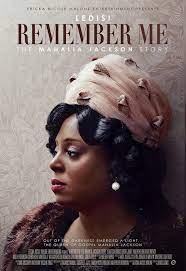
REMEMBER ME, THE MAHALIA JACKSON STORY
US, 2022, 82 minutes, Colour.
Ledisi, Keith David, Corbin Bleu, Janet Hubert, Vanessa Williams, Columbus Short, Andy Lauer, Keith D. Robinson.
Directed by Denise Dowse.
This is a brief biographical film, focusing on Gospel singer, Mahalia Jackson, her background, her talent, her career.
She is played by singer, Ledisi Young, who played Mahalia in the portrait of Martin Luther King, Selma.
Within the short running time, there is a background sketch of growing up in the south, the vivacious Mahalia, her mother with ambitions but thwarted, collapsing and dying, their father unable to look after the children and entrusting them to their very severe Aunt Duke. But, in New Orleans, Mahalia is delighted with the music and the local dancing.
10 years later, her mother’s sister takes her to Chicago, rather wide-eyed, singing Gospel, quickly meeting an entrepreneur, played by Keith David, who persuades her to sign a contract.
It is a very enjoyable club sequence in Chicago where the impressionable Mahalia goes to a club to meet friends and is delighted with Duke Ellington, Cab Calloway and Louis Armstrong.
One of the main advantages of the film is that the action pauses, so to speak, and there are many songs sung by Ledisi with her powerful voice. This comes to the fore, as it did in her life, with her meeting Martin Luther King (here played by Columbus Short), friendly with him, joining his Civil Rights causes, singing powerfully at the March on Washington (also seen in the film, Ruston, with DaVine Randolph as Mahalia Jackson).
There is some background on her personal life, mention of the first marriage, some more focus on her second marriage and her sense of betrayal.
The framework of the action is her visit to Hamburg where she is interviewed. While her company got rid of her because her albums weren’t selling, she had a successful career in performance, the film ending with her death.
- Audience knowledge of Mahalia Jackson? Singer, gospel, her career, international reputation? Singing at the March on Washington?
- The performance of Ledisi, embodying Mahalia Jackson (and playing her in Selma), personality, life story, the interview and reflections, the singing and performances?
- The early 20th century, the South, African Americans and their status, the home, Mahalia and her brother, her aunt, mother and father, the focus on the mother, watching the younger generation dancing with enthusiasm, her personal frustrations and loss of dreams, the speeches, collapse, death? The funeral? The children’s grief? The father unable to support them, giving them to their aunt Duke, her sternness? The parade in New Orleans, the dancing, the music, the young Mahalia joining in, the art watching?
- 10 years passing, the visit of the aunt, the dream of Chicago, Aunt Duke and her stern comments about white treatment of Blacks, Mahalia going, the arrival in Chicago, the aunt singing, the exuberance, Mahalia singing, the record company, the interview, immediately signing the contract?
- Her going to the club, the re-creation of the period, music, the compere, Duke Ellington and the band, Cab Calloway and his style of singing and audience response, Louis Armstrong? Her relishing this? But her religious background, identity, wanting to seeing only gospel?
- The outline of her career, success, records? Concerts? The record company dropping her, the need for her to promote albums?
- The sketchy outline of her personal life, the mention of a first marriage, her admirer, at the club, making contact, the proposal, the wedding, his roving eye, her suspicions, spurning him, ousting him? His later being in the concert audience?
- Civil rights issues, the encounters with Martin Luther King, friendship, her collaboration, singing, the March on Washington and her performance, later Martin Luther King phoning her, feeling alone, her singing and supporting him? The impact of his death on her?
- In Germany, the interview, the question is, the possibility for her to reminisce?
- Her status, achievement, Gospel songs, wide audiences, personal life, Civil Rights?
Saltburn

SALTBURN
UK, 2023, 127 minutes, Colour.
Barry Keoghan, Jacob Elordie, Archie Madekwe, Rosamund Pike, Richard E.Grant, Carey Mulligan, Alison Oliver, Paul Rhys.
Directed by Emerald Fennell.
While Saltburn is the name of a sumptuous English country estate, its sound echoes something like a chafing irritant. Not entirely irrelevant to the themes.
Writer-director, Emerald Fennell, won a writing Oscar for her initial feature, Promising Young Woman. This was quite disturbing experience – and Emerald Fennell’s audience is now offered even more disturbing experiences.
This is the story of Oliver Cook, played with sometimes deceptive intensity by Barry Keoghan (Irish, having made an impact with Killing of a Sacred Deer, Banshees of Innisfail). He narrates, quietly taking us into his confidence, pondering his emotions and motives. He is from Preston, average family, though he has some stories about his parents and failures, scholarship to Oxford, looked down on by elite students, but in a kindly gesture, befriending the aristocratic Felix Catton (Jacob Elordie who was a very tall Elvis in Priscilla). He is spurned by Felix’s financially dependent cousin, Kylie (Archie Madekwe Gran Turismo).
In fact, Saltburn has a a very strong cast, especially at home with Rosamund Pike at her superior best as the mother and a dithering Richard E.Grant as the father. Alison Oliver is the precocious daughter and Paul Rhys the most supercilious Butler ever on screen! And there is an arresting cameo, Pamela the unwanted but tolerated guest at Saltburn, from the promising Young woman herself, Carey Mulligan.
Felix invites Oliver to Saltburn for the summer – a benign gesture, but very precarious as Oliver makes his tentative way in relating to the family.
So many commentators have made the link between Oliver to Tom Ripley, remembering Anthony Minghella’s classic The Talented Mr Ripley. And, with the country estate, there are references to Brideshead revisited. And, it is probably fair to say that this is Evelyn Waugh 21st-century style, something of Brideshead Re-revisited, where society has made a descent into the vapid without any trace of the transcendent.
However, a useful comparison might be Pier Paolo Pasolini’s highly controversial 1968 drama, Teorema, an initially sweet Terence Stamp invited to live with the family, his manipulation of each of the characters for their destruction. (And, at this time, there were two British variations on this theme, Michael York in Something for Everyone and Peter McHenery in Joe Orton’s Entertaining Mr Sloane.)
A popular saying, sometimes cliche, is that all is fair in love and war. Oliver confides to us his feelings and his love, and his sometimes provocative sexual behaviour, but, as his stay for the summer goes on, it would seem that for him all is fair in the undermining war he has set out on.
So, certainly a provocative film, certainly an uncomfortable film to watch, sometimes funny, always serious, a satiric attack on traditional British aristocracy, more than a touch of the mordant.
Barry Keoghan certainly gives a strong and memorable performance, and, in retrospect, especially with the final unmasking and literal exposure, a very subtle performance. This will probably be talked about for a long time – and it will certainly be very interesting to see the next steps in his career.
- The title, the estate, the echoes of the sound with salt and burning, as relevant to all of this behaviour and the families experience?
- The title, the lettering, the gates, the mansion, sumptuous interiors, the exteriors, the grounds? The musical score?
- Echoes of Brideshead Revisited, Evelyn Waugh for the 2020s? But a complacent aristocracy, self-focused, in decline, nothing transcendent?
- Echoes of Patricia Highsmith, Tom Ripley, the opportunist, insinuating himself, relating to the characters, destroying them? Sociopathic? The films of the 60s like Teorema?
- The focus on Oliver Cook, Barry Keoghan’s performance, confiding to the audience, hopes, loves, emotional puzzles? His commentary on his behaviour? His age, his story of his parents, negative images, and the comic melodrama of Felix discovering the truth, the ordinary parents and their hopes? His scholarship, the importance of being at Oxford? The chatty friend, his belly tolerating this, abandoning him for Felix’s invitation? Revelation of his opportunism?
- The incident with the bike, helping Felix, Felix’s gratitude, invite him into the circle? (And the final revelation that he can had contrived the flat tyre and created the situation for insinuating himself?) The other friends, conversation, drinking, the situation with paying for the drinks (and the later revelation that he did have enough money but capitalised on Felix’s generosity)? However, Farleigh seeing right through him?
- The invitation to the summer, the journey, arriving early, Duncan as the butler, fastidious, snobbish, his observing Oliver throughout the visit? The impression of the home? Felix and the introduction to his parents, his sister, and finally being present, depending on the family for his finances, his back story about his mother, America?
- The summer holidays, relaxing, the swimming, discussions, socials, parties? Oliver and his birthday party on the lavish presentation?
- Oliver insinuating himself, the mother, social snob, but vapid ideas, the treatment of Pamela, her behaviour at the table, her back story, the hence to get rid of her, and the story of her suicide? The father, seemingly dithering, preoccupied with his interests? But their both accepting Oliver?
- Venetia, eating disorders, her age, her self-assertion, smoking, sexuality, the encounter with Oliver and its being observed, Farleigh and his angry reaction, Venetia and her continued flirting, the eating, a dependence on Oliver?
- The visit to his parents, Felix insisting, the revelation of the truth, their being very ordinary, his lies, the consequences for Oliver?
- The ambiguity of the birthday party, in the context of his lies, the birthday cake? Costumes, masks, being unmasked? And the satisfaction of the parents in hosting the party and its success?
- The image of the labyrinth, the meeting with Felix, the challenge – and Felix’s death, the blood, and eventually seen in the final flashbacks? The encounter with Venetia, the bath, the blood, her death?
- The funerals, whether Oliver should stay or not, the initial welcome, the father suggesting that he should go, Oliver refusing? Ousted?
- Sometime later, the seemingly chance encounter with the mother, the cakes, the discussion, her invitation? The story of her husband, his death?
- The mother, her illness, Oliver contriving it, removing the connections, her death?
- His success in ingratiating himself with everyone, the consequences, dependence, his inheritance?
- The dramatic impact of his stripping, after seeing him lying on the grave of Felix, the sexual overtones, and then his dancing, completely unmasked and exposed, throughout the house which was now his?
Rustin
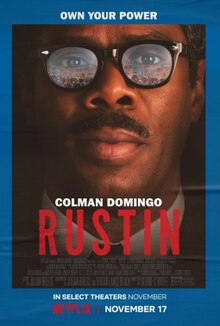
RUSTIN
US, 2023, 106 minutes, Colour.
Colman Domingo, Ami Ameen, Glynn Turman, Chris Rock, Gus Halper, Johnny Ramey, CCH Pounder, Michael Potts, Audra McDonald, Jeffrey Wright, Da’Vine Joy Randolph.
Directed by George C.Wolfe.
Rustin, Bayard Rustin, seems not to be a familiar name from American politics and history of the 20th century. And, if this is the case for the US, for audiences beyond America, he is unknown.
Which is a pity. And this combination of drama and portrait is a strong step towards his rehabilitation in the public mind.
Bayard Rustin was born in the American South, Quaker background, cared for by a grandmother, discovering early in his life his homosexual orientation, an African-American. He became very much involved with Civil Rights movements, as early as the 1930s, even participating in 1941 in a March on Washington for these rights, working with activist A. Philip Randolph. He also travelled to India, strongly influenced by Gandhi and non-violence approaches, was interested in Communist movements, developing these themes during the 1950s, eventually linking up with Martin Luther King, a friendship, a break in friendship, but eventually a reconciliation.
All in the above is dramatised in some flashbacks, generally brief.
In fact, the action of this film is in the organisation of the 1963 March on Washington, and the revelation of Rustin’s role. Watching this film will make many realise that when the March is referred to, the visuals will be of the crowds, 250,000, gathered together in central Washington, and the famous speech by Martin Luther King, “free at last…”. Most of us have never given a second thought to the organisation of how the 250,000 came to Washington, the necessary amenities, the role of the police. We are conscious of the racist attitudes of the time not thinking of these attitudes in connection with the hard work of organisation.
Bayard Rustin, played expertly by Colman Domingo, under the direction of author, theatre director, film director, George C.Wolfe, was an enthusiastic and exuberant man. And he had an extraordinary attention to detail. We see his recruiting of a team of young enthusiasts, female, male, black, white, communicating with them, giving them tasks, supervising and checking. He goes to meetings, is supported by A.Philip Randolph (Glynn Turman), clashes for a time with the director of the NAACP, Roy Wilkins (surprisingly played by Chris Rock, grey-haired), discussions with Martin Luther King (Ami Ameen), challenged by Congressman Adam Clayton Powell (Jeffrey Wright). There are slurs on his communist background, racial slurs – and the exposure of a sex case to which Rustin pleaded guilty in the 1950s, especially Strom Thurman speaking under the privilege of Congress.)
And this is complicated, dramatically, by Rustin’s relationship with a married Minister from the South,
us (John Raymey), and a final challenge and decision when Elias inherits his father-in-law’s church and demands are made on him by his wife.
But, the culmination of the film is, of course, the March itself, the gradual arrival of the busloads of people, the role of the police and guards, the enthusiasm, the order, and a glimpse of Martin Luther King’s speech and the invitation by the Oval Office for the 10 key organisers to meet with the president – Rustin not included, but his being seen donning an apron and helping with the cleanup.
Rustin died in 1987 and received a tribute from Ronald Reagan. He was posthumously awarded the Medal of Freedom by Pres Obama. (And, can be noted, that this film was made by the film company set up by Barack and Michelle Obama.)
- The title? Audience knowledge of Bayard Rustin? In the US? Beyond? History of the Civil Rights in Movement? The March on Washington?
- The film as a portrait of Rustin? A picture of his organisational work, the March, Civil Rights? A personal portrait and narrative?
- Audience response to issues of Civil Rights in the US, the background of slavery, the background of the Civil War, Lincoln and legislation, abolition, racism, racism in the south, 20th century legislation being ignored, segregation? The background to this story?
- Rustin in the 1950s and 1960s, the background of his upbringing, Quaker, grandmother, homosexuality, friendship with A Philip Randolph, the 1941 March, the 1942 episode of sitting in the front of the bus, ordered to the back, refusing, ousted, brutalised, the comment about the passenger telling her child not to touch the digger, and his saying that the child will grow up thinking that Blacks should sit at the back? The 1953 arrest in Pasadena, pleading guilty to a charge, the record?
- Colman Domingo’s performance, vitality, exuberance, his principles, in himself, Civil Rights, causes, the friendship with Martin Luther King, the early scenes of the meetings, falling out with King, later meetings, reconciliation, the slurs about their relationship, congressmen Strong Thurman and public utterances?
- The opening of the film, the introduction to a range of Civil Rights characters, A.Philip Randolph, Roy Wilkins and the NAACP, Meddler Evers (and his later assassination), discussions?
- The role of Martin Luther King, his church, his capacity for speaking, family and relationship with Coretta (and Rustin’s visit and her singing)?
- The idea for the March on Washington? Rustin’s enthusiasm? Wilkins opposition? The Kennedy stances? Police forces? Hostility? African-American enthusiasm?
- The film detailing of the process, organising, logistics, planning, detail? Rustin and his capacity for detail, for enthusing others, the young recruits and their dedication, allotting their jobs, quizzing them, their success? His relationship with Tom, personal, Tom and his history, gay, leaving his family, relationship with Rustin, attitude towards Elias? The personalities of the other workers, young women, young men, seen in the office?
- Rustin and the encounters with the police, his background in India, Gundy, nonviolence? Wanting the police not to be carrying arms? The agreement of the New York police? Collecting the weapons? Washington and the range of police, special forces?
- The various meetings, the discussions with Ella Baker and her motivating Rustin, Dr Helen henchman and her presence, expertise, critique about women’s representation, supportive of Rustin? The tensions in the meetings, the issues, the presence of Martin Luther King?
- The impact of Rustin’s organisation and the means available in the 1960s – and comparisons with the present in terms of mobile phones, computers, social media, instant information at hand…?
- Personal aspects of Rustin’s behaviour, the encounter with the liars and his wife, the attraction, the affair, Elias working for the March, the personal episode with Rustin, love, the effect on Rustin? The issue becoming public, Elias inheriting the church, the phone call from his wife, the final meeting, Elias and his choice?
- Rustin with the group, the media, Thurman and his denunciations, the presence of Adam Clayton Powell and his raising issues, Randolph stopping the meeting? The television revelations about Pasadena, Rustin fleeing, Martin Luther King publicly supporting him, his return?
- The day of the March, the gradual arrival of the people, the logistics, the buses, people coming from everywhere, the facilities, the crowds filling the space? Martin Luther King’s speech, the highlighting of the section, “Free at last”?
- The response of Pres Kennedy, his being seen on television promising legislation, the inviting of the top 10 (Rustin not included)? His donning the apron, helping with the cleanup?
- The achievement of the March, subsequent legislation, Martin Luther King and Selma, his assassination?
- Ronald Reagan honouring Rustin after his death? Barack Obama awarding in the Medal of Freedom?
Hunger Games, The: Ballad of Songbirds and Snakes
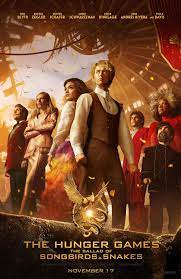
THE HUNGER GAMES: THE BALLAD OF SONGBIRDS AND SNAKES
US, 2023, 157 minutes, Colour.
Tom Blyth, Rachel Zegler, Viola Davis, Peter Dinklage, Jason Schwartzman, Fionulla Flanagan, Hunter Schaefer, Burn Gorman, Josh Andres Rivera.
Directed by Francis Lawrence.
Suzanne Collins reached out to the Young Adult audience with her Hunger Games novels, avidly and widely read. And, addicted ago, the Young Adult audience reached out to the film versions. So much so, that there were four Hunger Games films, showcases for Jennifer Lawrence (who, in fact, it already won an Oscar for The Silver Lining is Playbook) and her subsequent career. There was also Josh Hutcherson and wide adult cast including Donald Sutherland, Elizabeth banks, Stanley Tucci…
So the question arises, how did it take so long to bring this prequel story to the screen. But, here it is.
Ideally, the reviews to be read should be those of the target audience, appreciative Young Adults. They can tell us which characters are credible, which characters they could identify with, what of this presentation of the Games themselves, the power hungry authoritarian leaders, the young leads – and Coriolanus Snow and his early years, leading to the character we saw in the previous films, older and authoritarian.
But, this is a review by an Old Adult! Who admits to enjoying the film, making the comparisons with the earlier films, but very much interested in the character, young development and crises, of Coriolanus Snow. (And the satisfaction, at the very end, of hearing a brief comment with the voice of Donald Sutherland as the older Snow.)
The success of this film very much depends on the performance by British Tom Blyth of the young Coriolanus – and he acquits himself very well. At first, he is a product of this totalitarian regime, loyal, student, ready to be a mental, especially to the annual tributes from the Districts who have been chosen to participate in the gladiatorial, bloodthirsty, to the death, Hunger Games. Coriolanus is given a family background, and devoted grandmother (a good cameo by funeral of Flanagan) and sympathetic cousin (Hunter Schaefer).
As regards the hierarchy this time, there is by older Davis, more than sinister in appearance and voice, Dr Gall, the controller and manager of the Hunger Games. There is also the Dean, menacing in his way, but ultimately more sympathetic, played by Peter Dingle age. And, for the games themselves, there is the slick compere, enthusiasm-rouser, callous, Flee finger, played by Jason Schwartzman.
So, the first part of the film is the setting up of characters, the mentors in their uniforms, loyal to the state, the group of tributes manacled and harassed, but one of them, Lucy Gray, wearing a beautiful dress from her mother, singing, attracting the attention of Coriolanus as well as of the Games audiences, listening to her and making donations.
The second part of the film shows the Games themselves, once more cruel and bloodthirsty, but the audience not present as in the earlier films, rather a television audience, continually egged on. Grim tactics, motivations, Coriolanus intrigued by Lucy Gray, even breaking the rules to help her. And a challenge to Dr Gall to admit that Lucy Gray is the winner.
The third part of the film takes place in District 12, Coriolanus and his friends are Jane is relegated to being peacekeepers. And this will be the test for Coriolanus and his future, his relationship with Lucy Gray, his loyalties and ambitions, the testing of his friendships.
But, we know how he did turn out and his role in the future, this film enables us to understand the steps on his road to that position.
- The popularity of the novels? The film versions? This prequel, a decade after the previous films?
- The target audience, Young Adult? Older audiences?
- Audience knowledge of the previous stories, of The Hunger Games, of the rebellion and wars, of the Districts, of the tributes, the gladiatorial combat in the arena, treated as slaves, the training, the mentors, the public, television and the media, violence? The tyranny of the authorities? The bids for independence?
- The re-creation of the period, the city and its buildings, the streets and cars, the Square with the fountain and the high statue? The buildings and facades? The interiors? The gladiatorial arena, the tunnels underneath? The formal assemblies? Dr Gore and her laboratory and species? Television and the compere? The contrast with ordinary homes?
- The focus on Coriolanus, the audience knowing that he was going to become the authority of the future? He and Tigress when they were young, taking refuge? Growing up, his status, appearance, getting ready for the assembly, his cousin with the special shirt, is hoping for the prize, his grandmother and her pride, memories of the past, his dead father? His manner, self-assured?
- The assembly, Dr Gall, her appearance, her look, sounding sinister, in charge of the Games, her ambitions, control? Addressing the crowd? The dean, his appearance and dress, taunting Coriolanus? The issue of the prize? The new test? The assembly of the Mentors, their hopes? Rivalries? Coriolanus and his friendship with Sejanus, the family wealth?, Competitiveness?
- The arrival of the tributes, seeing them on the screens, the range, age, mail female, racial, desperate, assured? Their being attributed to the mentors? Coriolanus, seeing Lucy Gray, her associate?
- The first part of the film, setting the characters, setting the situation, the influence of Dr Gall, the command by the Dean? Lucy Gray, her mother’s dress, standing out, her singing? Coriolanus and his getting permission to meet her, their interactions? His travelling in the band, emptied out, his being rescued? His discussions with Dr Gall, plans?
- The issue of cheating, Coriolanus presenting his plan, being claimed by his rifle, Dr Gall the snakes, the manuscript with the snakes, taunting her to put her hand in, her being poisoned? Coriolanus and is later use of sent and the snakes and their response?
- Lucy Gray, her singing and the impact, the introduction by the compere, his appearance, style, magician, commentary, cheerful and callous, Lucy Gray and her singing and the donations?
- Coriolanus, getting permission to go in, with Sejanus to be rescued, the pursuit by the tributes, Coriolanus smashing the head of the pursuer? His comment, feeling of power?
- The episode of the games, gladiatorial, self-preservation, attack, Coriolanus giving Lucy Gray the powder, her spiking the bottle of water, smashing the others, one of the competence dying? The escapee, his being crucified, his axe death, being cut down? Lucy Gray is friend, his covering the bodies of the dead? Coriolanus and his advice for the escape, the two leaving, hiding, a companion suspicious, the rabies, the device of sending in water, pressing the button, the rabies victim frightened of water, his collapse and death? Lucy Gray being pursued in the tunnels? The forks? The powder? Her escape, the pursuit, the death of the others, a continuing to sing, the popularity, the appeal to Dr Gall, that she was the winner?
- Coriolanus, the attraction to Lucy Gray, his injuries and Dr Gall stitching, the handkerchief, with Lucy Grace sent, giving it to the snakes, they’re not attacking her? Dr Gall with the evidence?
- Coriolanus, the banishment, to be a peacemaker, stripped of everything? His grandmother and cousin? Going with Sejanus? Permission to go to District 12, the club, Lucy Gray and her singing, her antagonism towards the young man and the conflict when she became tribute, Sejanus and his wanting to help the rebels, seeing the hanging, the mayor’s daughter and her imprisonment, Sejanus contacting her? Coriolanus, suspicions, discussion with St Janice, recording him and sending the message to Dr Gall? Seeing the rebels, the guns, the shootout and deaths? Getting rid of the guns? Sejanus, his arrest, the other rebels, the hanging?
- The lyrical aspects, meeting Lucy Gray, going to the woods, to the Lake, the group on the swim? The possibility of their escaping to the north? The Commandant, his control of the District, pleased with Coriolanus, deciding to send him for further training?
- The attempt at escape, the heart, the discovery of the guns, Lucy Gray disappearing, Coriolanus and his desperation, the boat, the guns in the water, his return?
- His going back to the capital, the conversation with Dean, the Dean killing himself? With Dr Gall, her grooming him then to take charge?
- The final words with the voice of Donald Sutherland as Coriolanus snow from the future?
Marvels, The

THE MARVELS
US, 2023, 105 minutes, Colour.
Brie Larson, Teyonah Parris, Iman Vellani, Samuel L.Jackson, Zawe Ashton, Gary Lewis, Park Seo-joon, Zenobia Shroff, Mohan Kapur, Saagar Shaikah.
Directed by Nia DaCosta.
The 33rd superhero entry in the Marvel Studios catalogue, with quite a lot going for it to be a commercial success. However, there were news headings, “Marvels land with a thud”. Practically no one has very much good to say about The Marvels.
Which is something of a pity. Brie Larson had success with Captain Marvel in 2019, appeared in one of the Avengers films, could be counted on for a successful sequel. In the meantime, there was the television series, six episodes, Ms Marvel, which starred Iman Vellani as Kamala Khan the teenager who wanted superhero powers and got them. Zenobia Shroff and Mohan Kapur appeared as her parents. All three are part of The Marvels. In addition, there is Monica Rambeau from Wandavision. The director is an African American woman, age 34, Nia DaCosta (Candy man). And, in fact, there is quite a range of ethnic and cultural backgrounds in the cast. And, as often happens in Hollywood blockbusters, the villain is British!
With three women as the central characters, super heroes, and a female villain, this is something of a breakthrough in the Marvel Universe consciousness. Samuel L Jackson, in his 13th Marvel film, returns as Nick Fury. And this time the Marvel superheroes are operating in space, on different planets, able to travel through space in swift flight. Plenty of special effects.
Perhaps without the hype and the Marvel expectations, The Marvels might have passed as a slight and easy entertainment. The story opens with the villain, Zawe Ashton, excavating a mysterious band, to be placed on her arm, giving her powers. She searches for the other one. But, we the audience, know that Kamala Khan, 16-year-old, living with her parents and brother in New Jer aresey, has the other one. In the meantime, there are space operatives trying to maintain order in the universe, including Carol Danvers, who is Captain Marvel, and her alienated niece, Monica Rambeau.
In the comparatively brief running time, there are all kinds of fights, confrontations, family bondings, but, maybe, not quite enough zest to keep the audience excited. With the women’s sensibility of three female writers, a female director, three female superheroes, female villain, there is a clear target audience. While watching The Marvels, one might wonder what macho audiences are making of it, and its impact on the expectations of male fanboys.
And, perhaps, this will be a turning point for Marvel Studios and their next superhero adventures.
- The background of the Marvel Studios and Marvel Comics?
- The success of the film, Captain Marvel, the popularity of the television series, Marvel? Television is One division? This scenario drawing characters from these sources?
- The female perspective? Three writers, the director, the cast and the central characters as superheroes? Target audience, female identification? The response of male fanboys?
- The situation in the universe, the destroyed planet, the sun, wanting restoration? Captain Marvel and her involvement, control? The qualities, flying, escape?
- Monica Rambaugh, audience knowledge of, her role in maintenance, her superhero powers, alienate it from her aunt? Her character, the work, becoming more involved in the crisis, responding to situations? Willing to give? Reconciliation with her aunt?
- The family in New Jersey, the characters from the television series, the parents, Indian background, their concern? Kamala and her brother? Her room, superheroes, the fact that she had the band for her arm? Superhuman powers, becoming involved in the action, with Captain Marvel, with Monica?
- The head of the planet, the excavation sequence at the opening, looking for the band, finding one, putting it on? The second not present? Her quest? Her rule, domination, underlings, cruelty?
- The action adventure, the variety of the episodes, the special effects, the planet, the universe, the son, Earth? The involvement of the three women?
- Kamala, her powers, her age, her enthusiasm, collaboration, the fights, confrontations?
- Kamala and her parents, her brother, the support?
- Monica going to action, closing the gaps, the son reappearing, her reappearing?
- The villain, Captain Marvel, Kamala, defeat?
- The possibility for more stories, especially with Kamala?
Slow Hustle, The
THE SLOW HUSTLE
US, 2021, 88 minutes, Colour.
Directed by Sonja.Sohn.
This is an HBO documentary, made primarily for an American audience. It concerns police forces and police corruption and cover-ups.
The film has been directed by actress Sonja Sohn who appeared in a key role in the celebrated television series, The Wire, set in Baltimore. She is familiar with the city and the policing and crime issues. And this film is about the Baltimore police force.
For those unfamiliar with the story, it is fair to warn that there is no clear ending to the narrative. Rather, the situation of the death of a policeman is set, and initial sympathy for him, his reputation, scenes with his wife and family giving testimony, tributes to his work, interviews with his partner.
However, there is confusion about the death, in the middle of an investigation, off a street, his own gun, murder or suicide?
Then, reports about his being corrupt, planting evidence in the past, his being subpoenaed to appear in court and give testimony the next day. And he is shown as a very genial personality, family man.
The film has a great number of witnesses, members of the police force, local journalists investigating police corruption, a board of enquiry set up to investigate the issue and drawing the conclusion of suicide.
With all the testimony, the television audience becomes interested, involved, puzzled. And there is criticism of the board of enquiry not taking sufficient notice of particular issues and questions.
What follows is something of an expose of a large American city, the role of the police force, the potential for corruption, actual corruption. There are continued attempts to vindicate the deceased policeman.
Interesting in terms of the United States in the 2010 is, the role of police, corruption, investigation.
Night Guardian, The/ Iran
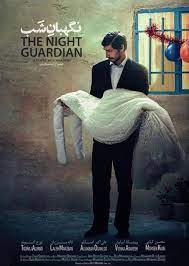
THE NIGHT GUARDIAN
Iran, 2023, 118 minutes, Colour.
Touraj Alvant, Laleh Marzhan, Mohsen Kiayee, Kiumars Poorahmad.
Directed by Reza Mirkarimi.
A moving film about a good man. The director, Reza Mirkarimi, has been making quality humane films for more than 20 years, focusing on ordinary people, often struggling people, but who have an innate goodness motivating them in all that they do. He has won many awards, including Catholic awards.
We are introduced to Rasool, a 25-year-old from the country, in the city looking for a job, something of a simple soul. Suddenly, a man in a car picks him up, taking him to a seemingly abandoned building, offering him the job of nightwatchman. The task seems simple. He has some basic accommodation. And he is delighted, even borrowing the boss’s phone to ring his family with the good news.
Rasool doesn’t know or even dream, but we do, that he is being exploited. The situation is a scam, partly built apartments, payments laid down and shady dealings with the finances. We realise that Rasool does have some shrewd moments but is prepared to believe that everyone is motivated by good will. In fact, while the boss does set up Rasool to take blame for the scam, even prison, he is not entirely heartless and does want to do Rasool some good and provide for him.
But, more importantly, there is an old man at the site who has been working there for a long time, has a lot of advice for Rasool, encourages him to look at the young lady who delivers food to the site. And, as always, Rasool follows advice, attracted to the young lady, visiting the home, discovering the old man is her father and is keen to find a husband for his daughter. And this is complicated because the old man, also a good man, is moving into dementia.
In fact, this aspect of the film offers us a very nice, in the best sense, love story and remains, complicated by Rasool’s sometimes reticence, his courtesy, his deference, and the discovery that his potential wife has a severe hearing problem.
There are some lovely scenes where Rasool’s family come from the countryside, are entertained in the city, two families meeting, talking, eating together, with great hopes.
As indicated, simple and good souls live in a very complex world, and can easily become victims. But, it is a pleasure to watch Rasool, the good man, his ups and downs, his surviving, some moments of resentment, but always wanting to think the best of people.
The film may not win the Oscar but it is well worth viewing.
- The work of the director for more than 20 years, a strong humanity?
- The traditions of Iranians cinema, strong on human values, local focus, yet universal appeal, values and themes? Many awards? Catholic and ecumenical awards?
- The setting, the city of Teheran, the streets, the buildings, accommodation, the different areas, the local monuments, the background of the mountains? The musical score?
- The portrait of Rasool, his age, coming from the country, his military service, skills and lack of skills, a good man, rather naive? The beginning, looking for work, not succeeding, being picked up by the boss, targeted by the boss, offered the job of nightwatchman, his accepting, gratitude? The partly built complex, open spaces, rooms? Rasool settling in?
- The background of the building, the boss, his wife, the meetings, the plans, the investments, the money, the scam? The range of people investing and the later reactions? The workers, on the job, then leaving, the previous watchman being sacked, his later return, stealing, the conversation with Rasool?
- Rasool, occupying himself, conscientious, disturbances in the night, intruders? The visit of the boss, his liking Rasool – the later betrayal, the boss making Rasool sign the documents, incriminating himself, getting the boss of, Rasool and the imprisonment, the effect, leaving, disillusioned with the boss, yet the boss getting him comfortable accommodation?
- The old man, working on the site for so long, his skills? The discussions with Rasool? The delivery of the food, Rasool observing, following the young woman, searching? The old man in the setup, the revelation that this was his daughter, Rasool and the house, the welcome, the hospitality, the later visit of Rasool’s family and their welcome?
- The young woman, her deafness, her work, the arranged marriage, the relationship with Rasool, bonding with him, support?
- The old man, friendly, erratic, the discovery that he was the girl’s father, the arrangement of the marriage, his mental health, deterioration and behaviour, dementia?
- Rasool, the strange adventures of his life, the job, the family, responsibilities, his being transformed when dressed up to represent the boss, the happy celebration of the marriage, life together with his wife, settling, the apartment, the hopes for the future?
- The story of a simple good man – and his friendships, but his being exploited?
Joe/ 2013
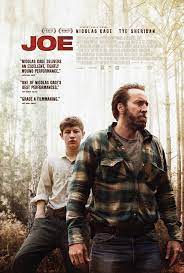
JOE
US, 2013, 117 minutes, Colour.
Nicolas Cage, Tye Sheridan, Gary Poulter, Ronnie Jean Blevins, Adrienne Mishler, Sue Rock.
Directed by David Gordon Green.
Nicolas Cage has made well over 100 films, sometimes many in the one-year, all kinds of films. He made a name for himself (omitting his surname Coppola because of the associations) during the 1980s, winning an Oscar in 1995 for Leaving Las Vegas.
Joe stands well as one of his better films. It was directed by David Gordon Green who began his career with small budget dramas, moving at this time into comedies like Pineapple Express, in later years making a Halloween trilogy and a sequel to The Exorcist.
The setting is the back blocks of Texas, Joe having served time in prison for assault, making his way with a troop poisoning trees that need to be got rid of, living alone, frequenting the brothel, some women friends, and a pet dog. Into his life comes Gary, an early performance by Tye Sheridan who was to have a significant subsequent career. He is 15, is brutalised by his father, asking for a job, bonds with Joe, Joe compassionate for Gary and his troubles, becoming a father figure. It is not easy, the brutality of Gary’s father, a long-time thug enemy shooting at Joe, the search for his dog, allowing Gary to buy his truck from him…
The film builds up to a dramatic and violent conclusion, confrontations, and Joe trying to do his best for Gary.
Before the film was released, Gary Poulter, a local vagrant who was employed by the director to act as Gary’s father – with some critics highly praising the performance as an embodiment of alcoholic brutality – was found dead, drowned in a shallow pool.
Direction, writing and performances make this film better than might have been anticipated.
- Acclaim for the film? Awards?
- The career of Nicolas Cage, this film standing out, performance, themes, issues?
- The Texas settings, the back blocks, the town, streets and shops, homes, the brothel, the bridge, the woods and the trees? The musical score?
- The title, the focus on Joe? The introduction, his job, poisoning the trees, his team and collaboration, living alone, the visits to the brothel, the women as his friends, in trouble, his temper, clashes with Willy Russell, Russell shooting him, his treatment of his wound, getting out the bullet, the black tape for bandage? The revelation of his 29 months in prison, his anger?
- Gary, Tye Sheridan in an early role, his award, 15, the opening and the scene with his father, speaking directly to his father, his father hitting him, father walking away, the brawl? Home life, financial support, his mother, Dorothy, her not talking (and intimations of her being sexually abused)? His needing a job? Approaching Joe, making a good impression with his answers, conscientious, the work, the payment? Bringing his father, his father and the other men, drinking their water, not working well, their being fired? Gary and the brutal treatment by his father? Gary encountering Willy Russell, asking for the lift, the taunt about Dorothy, his bashing Willy Russell?
- Gary, approaching Joe, admiring him, getting the job back, getting money, wanting to buy Joe’s truck? Joe agreeable? Testing out the driving with Joe? Joe and his response to Gary, an innate goodness, a father figure, Gary’s response?
- The confrontations with Wade, Wade at home, brutal, demanding money, bashing his son? Wade and the vagrant, following him, talking friendly, bashing him, taking his money and drink? The confrontation at home and Gary desperate?
- Joe and his dog, the dog with the brothel, the confrontation, bringing his own dog, the dog fight and Joe’s dog winning, going off, asking Gary to help him find the dog, their driving around, finding him?
- The new truck, Gary and Joe going to the dealers, giving Gary the keys to the truck, his father taking it? Catching up with his father, in the truck, Joe threatening him, being ousted?
- Joe, driving his truck, the confrontation with the police, arrested, his friend advising him to keep his nose clean? The policeman pursuing Joe, Joe confronting him?
- The buildup to the climax, Willy Russell and his friend, bargaining with Wade, the money for Dorothy, Joe arriving, the confrontation, the guns, the accomplice shooting Joe, shooting Willy by accident? Joe wounded, shooting the accomplice, shooting Willy? Stumbling towards Wade, the confrontation, Joe and his collapse, Wade throwing himself over the bridge?
- The arrival of Gary and the police, Gary embracing Joe, father figure? Joe dying? Gary looking over the bridge and seeing his father’s body?
- Later, Gary with Joe’s dog, driving the truck, continuing the work?
