Displaying items by tag: Peter Malone's Movie Reviews
Marmalade
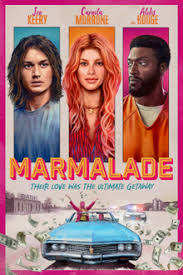
MARMALADE
US, 2024, 99 minutes, Colour.
Joe Keery, Camila Morrone, Aldis Hodge, Wayne Duvall.
Directed by Keir O'Donnell.
Writer-director, Keir O’Donnell, grew up in Australia, had success in the United States as an actor and comedian, and has brought some of this ironic talent to this screenplay.
The film focuses on Joe Keary (Stranger Things), a rather dimwitted young man, in prison after being arrested for robbery, sharing his cell with Otis (Aldis Hodge) and planning an escape with him. And there are flashbacks to his story, love for his sick mother, a chance encounter with a flamboyant young woman, Marmalade, entranced by her, bringing her home. Camila Morrone a is a very striking Marmalade.
The first half of the film consists of the discussions in the cell and the flashbacks. And, then there is quite an unexpected twist. Spoiler alert!
It turns out that the cellmate is an FBI chief who has been trying to track Marmalade for two years after several robberies. He has a support squad, the hostile local policeman in whose jurisdiction the robbery took place. And, there is a collaboration of one of the guards who is part of the team, forever quoting Shakespeare.
The second half of the film has Baron continuing his story for his cellmate, the plans for the robbery, titles up on screen to indicate stakeouts, surveillance, masks (and their stealing them, tri-faced masks which are rather disconcerting to look at), the actual robbery, and Baron and the getaway – but, wallowing in the money, the police arriving and Baron’s arrest, planning to meet Marmalade the next day after his escape.
There is the police pursuit, various leads, Baron buying pharmaceuticals for his mother after a phone call from prison, the police getting more and more frustrated, Baron leaving a message which partly reveals his motivation. And, the final twist, looking at photos from the robberies in the past, and the discovery of who Marmalade actually was!
Initially interesting but not outstanding – but, after the twists, quite a ride!
- The title and expectations, the character, and name, behaviour?
- The prison setting, details of cells, corridors? On the road, the robberies and setting them up? Homes? The musical score?
- The first half of the film, the setup for Baron, his story, the flashbacks, Marmalade, her story, the plans? The need for escape? Otis as cellmate, listening, supportive?
- Otis, his character, the cell, his manner, listening, the money, the plan? And a twist midway through?
- Baron, his age, long hair, sad story, considered as slow-witted, the glimpses of his childhood, Otis hurrying him on, his sick mother and support, the paper delivery, his being sacked because of his long hair? The encounter with Marmalade, the impact, swept off his feet, travelling with her, at home, with his mother, her plans, the idea of the robbery?
- The script twist half way through, Otis and the FBI, the guard at the cell quoting Shakespeare, the other members of the investigation squad, for two years, chasing Marmalade, her bank robberies? The local policeman and his opposition?
- The further story, Baron infatuated with Marmalade, the sexual encounter, Marmalade and her personality, age, dress, manner, stories, laughter, erratic? The details of the plan, the headings on screen, stakeouts, casing banks, safe houses, strategies…? And the actual robbery, Baron as the getaway driver? At home, the money, the arrival of the police, the arrest? Marmalade and her getaway, the plan for 3.30 the next afternoon?
- Otis, the arrangement of Baron’s escape, the laundry basket, the keys of the car, going to his rendezvous?
- Otis and his squad, the pursuit, Baron visiting his mother’s grave, and to the ice cream parlour, their chasing the car, Baron disappeared, the local driving the car? Going to the ticket office, the message?
- Baron, cutting his hair, the phone call from prison, the police tapping it, the pharmaceuticals?
- The background stories, Baron’s mother, Marmalade and the foster homes? The police going to the pharmaceutical boss, his anger, the truth about him, his arrest?
- The final twist, the truth about Marmalade, the truth about Baron, the money, the pharmaceuticals, going to visit his mother?
- The first half interesting but unexceptional, the difference coming in the second half with all the twists and the revelation about Marmalade, the photos, Baron and his spinning the whole tale?
Marinette
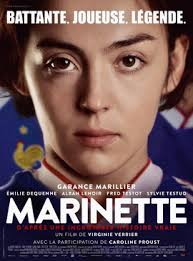
MARINETTE
France, 2023, 93 minutes, Colour.
Garance Marillier, Emilie Dequenne, Alban Lenoir, Fred Testot, Sylvie Testud.
Directed by Virginie Verrier.
A football story. From France, opening in 1987, continuing its story throughout the 1990s and into the 21st century. It is based on the life and career of French football player, Marinette Pichon.
The film appeared at the same time as the Swedish film, Tigers/Tigra, also a football story, focusing on the career of Matt Bengtsson.
While the opening of the film focuses on Marinette as a little girl, her skill with the ball, her relationship with her family, with the school children, it emerges that she is a skilled player and that she has determined that this will be her life. However, the film focuses on the difficulties with female football players and their clubs, the lack of professional recognition (even to the time of the release of this film), the bad comparisons with male football players, organisation, salaries… To that extent, the film is an expose of French treatment of female players.
However, Marinette is scouted by American clubs and moves to the US, achieving great success, some failures, especially concerning Olympic Games possibilities, but persevering with her play as well as with her campaigns. And, there are rivalries in the French team, whereas she is welcomed in the United States.
Marinette has been at the forefront of gay rights, gay marriage, and the film dramatises these aspects of her life – and highlights them at the end of the film.
- A football story? European football? Female players, the situation, organisation, pay?
- A French story, France and its devotion to football, men’s teams, women’s teams, contrasting organisation, payment, professionalism?
- This story based on an actual character and her life and career? As a little girl, fascination with football, going onto the field, the coach, encouraging her, her play, reactions? Support from her mother and sister? Aiming to be professional?
- Growing up, the years passing, her commitment to football, training, skills?
- Her working with the French team, the management, the other players, amateur status, training sequences, playing sequences, spirit of the team, clashes, the coaches and support? French play, success, but women’s sport as minor?
- Scouted by the Americans, her transfer to the US, language limits, the welcome, the professionalism, the training, the matches, the ups and downs, missing the Olympics, her perseverance, her skills? With management, with coaches?
- Marinette and her personal life, the attractions, the relationships, gay rights issues, same-sex marriage, her life, public support and campaigning?
- Marinette and her family, the continued support of her mother?
- Finishing her career, record set, achievement? And into the future and her social campaigns?
Ellizabeth Taylor: the Lost Tapes

ELIZABETH TAYLOR, THE LOST TAPES
US, 2024, 100 minutes, Colour.
Directed by Nanette Burstein.
It is something of an understatement to say that Elizabeth Taylor was a significant world figure in her day. She spanned the decades, born in 1932, moving to the US at the breakout of World War II, beginning her film career in 1943 with Lassie, come home, consolidating it, Riding in the British races, National Velvet, a very strong career into the 1970s. He died in 2011.
The lost tapes of the title refer to interviews with Richard Meryman, 40 hours which took place in 1964, then placed in an attic and only discovered by the interviewer’s wife in 2019 and made available. Documentary director, Nanette Burstein, has organised a great variety of segments from the tapes to make Elizabeth Taylor’s narrative about her life and career up to this period, material and 1966, culminating in her appearance in Who’s Afraid of Virginia Woolf and her winning her second Oscar for that performance.
While the voice-over is significant, the director has been able to obtain a great range of visual footage of the actress, of her life in public, aspects of her life in private, interviews, social photos, and, clips from a great number of her films. This is always something which makes a favourable audience want even more.
There is great emphasis on how beautiful Elizabeth Taylor was as a little girl, as a teenager, as a young adult, but voicing dislike of her schooling at MGM studio – moving into adult roles, even as Robert Taylor is wife in The Conspirators, when she was 18. And, there is a lot of footage and her own observations about her first marriage to hotel heir, Nicky Hilton, the initial happiness, his character, her moving towards a divorce. Then, for the curious, there is her marriage to Michael Wilding, the British actor some decades her senior, some years of happiness, dependence on him, continuing her career but dissatisfied with the roles that MGM was giving her. And she had two sons. The tapes offer observations about Michael Wilding, the strains on their marriage, and her divorce when she was still in her mid-20s.
For those interested in her comments about her further marriages, needless to say, there is quite a great deal, especially about Mike Todd, enjoying his so-called lack of education, oddball style and humour, his achievements, and happiness with Elizabeth Taylor, the birth of their daughter, the tragedy of his accidental death in a plane crash.
For audiences wondering about Eddie Fisher (and not favourable to him), her comments about him as a friend of Mike Todd, Debbie Reynolds being her bridesmaid, the talking with Eddie Fisher, Mike Todd’s friend,, his infatuation with her, the rapidity of marrying Elizabeth Taylor only hours after the divorce from Debbie Reynolds – Elizabeth Taylor indicating the Debbie Reynolds that made to something of a show of her shock. Finally, Elizabeth Taylor says she was not in love with Fisher but he was a good friend, especially talking about Mike Todd.
There is Elizabeth Taylor’s illness, highlighting some of her roles, especially the support of George Stevens in both A Place in the Sun and Giant, many sequences, background, James Dean, and her friendship with gay actors, Rock Hudson, Montgomery Clift, a lifelong bond with Roddy McDowell who makes commentary throughout this film. There are scenes from Suddenly, Last Summer as well as her complete dislike of Butterfield 8 – and the scene of her accepting her Oscar for this performance.
Cleopatra. Richard Burton.
In fact, there is quite a lot of background about the making of Cleopatra, initially with Ruben Mamoulian and, then Joseph Mankewiecz, scenes with Rex Harrison, then the arrival of Richard Burton, her illness, delays with production, starting again with so many consequences in recasting, many scenes from the film itself, especially her entry into Rome with the cast of thousands.
Of course, audiences will be wanting to see the relationship with Richard Burton, here Elizabeth Taylor’s commentary on meeting him as a badly hangover drink, the bonding between them, the breakup of his marriage, many scenes of them together, in other films, socially, with their children bonding with Burton, and her saying that the marriage would last for 50 years.
And, then being hounded by the paparazzi, condemned, even with a glimpse of John XXIII in the Vatican, but some of the winning over public opinion.
Those interested in Richard Burton, he appears in many sequences, interviews, and helps audiences to understand his personality and his decisions about alcohol, about marriage, his career.
The filmmakers have added further material, some of Elizabeth Taylor’s performances in the 1970s, her drug and alcohol addiction and rehab, but, especially her emergence at the time of AIDS, support of Rock Hudson, her speeches, speeches to Congress, her work and foundations.
Which does provide something of a triumph for the actress so often in the limelight, who makes some wry comments about her being a star celebrity commodity, contrasting with her desire to be an actress. The range of her marriages, the six years with the Senator included, the marriage with the bodybuilder not included. But, she moves from a world of glamour and publicity to a reputation of social concern.
Studs
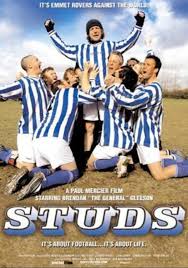
STUDS
Ireland, 2006, 90 minutes, Colour.
Brendan Gleeson, David Wilmot, Liam Carney, Domnhall Gleeson.
Directed by Paul Mercier.
This is a very Irish film – and audiences will need a fine-tuned ear to take in all the Irish accents and language.
It is a comedy-drama. The focus is on a local football team, middle-aged men who train and play together, rather a bickering group as they play. There are various football scenes – and of their bad showing.
At the centre of the film is a bluff and burly man, Brendan Gleeson in a typical role, responding to an advertisement from the team to become their coach. They do accept and what follows is a lot of training, some shrewd tactics, some success, moving towards the top of the ladder.
The film shows in some detail several of the central characters (one of whom is played by Brendan Gleeson’s son, Domnhall Gleeson).
The coach is not who he seems but he does have success with the team, their finally forcing him to drink in celebration and, as we expected, his falling off the wagon. And, questions as to where he will go and as to where the team will go.
- Irish comedy? Irish drama? Football? Middle-aged men?
- The Irish town, the soccer field, the dressing room, the roads, houses, atmosphere, industry? The musical score?
- The title, the men and their age, image of themselves, their work, playing football, enjoying it, wanting to win, down on their luck, the Thursday night practices, with the car headlights, the particular characters, interactions?
- The football sequences, the play, the defeats, the practice, improving, victories? The hard practice sequences?
- The men, Bubbles and his voice-over, leadership, the other members of the team, their work, personalities, clashes, comic touches, serious touches, the discussions in the dressing room? The character of the Prophet, quoting the Scriptures, watching, coming in, his skills, Bubbles finding his hut, the death, his playing and success?
- Walter, Brendan Gleeson character, his arrival, the ad in the paper, the player putting it in, the qualifications? The identity of Walter, the background, playing, reputation, tough? His argument, their accepting him? His attitude towards the men, the demands, the tough practices, the matches, the pep talks, the strategy of losing one match to win the next in the cup? The gradual improvement, the successful matches, the buildup to the final, the losing? His reaction?
- The background for the development in the town, the field becoming private property, the clashes?
- The range of men, the film not offering any family background? Just seeing them with their interactions amongst themselves, erratic behaviour?
- Bubbles, the true identity of Walter, keeping it secret, the team forcing him to drink, his alcoholism, taking home, the wife angry at him, the glimpse of the sun? Keeping the secret?
- Walter, on the road, the final talk with Bubbles, the alcoholic, taking an identity, his achievement, walking on?
Tigrar/ Tiger

TIGRAR/ TIGER
Sweden, 2020, 116 minutes, Colour.
Erik Enge, Alfred Enoch, Mauritzio Lombardi, Frida Gustavsson.
Directed by Ronnie Sandahl.
A sports film, based on an actual character and his experiences.
Matt Bengtsson is a young Swedish football player, age 16 going on 17. He is acclaimed locally, is chosen to play for Inter Milano.
He is a young man, rather morose in temperament, devoted to his mother, his father absent.
While there are football sequences and many training sequences, the film actually offers a criticism of players’ spirit within top teams, their not accepting newcomers, taunting and touches of bullying, the repercussions for the player, support from officials. Erik Enge is quite persuasive as the young footballer. British actor, Alfred Enoch (all the Harry Potter films), plays his supportive friend. There is also a relationship with a model, leading to the challenge of what the player really wants, complete dedication to his sport or a full of life.
This is a film particularly for European audiences who follow the major football teams and competitions, interested in an expose of life behind the matches. Once the player has made a decision, he acts on the diary that he has been keeping and becomes a writer, publishing his expose.
At much the same time, a similar film was released from France, Marinette, about the difficulties for women football players, their not being treated professionally, and the central character being brought to the United States and being successful there.
- A film based on actual characters and events? But dramatised?
- A Swedish production, Swedish story, the initial Swedish settings, home life, football, celebrations, transition to Italy, Inter Milano, the team, accommodation, training, matches, spirit? And the experience and crises for Matt?
- The story of Matt Bengtsson: his ambition from childhood to be an international football player, encouragement by his parents, his skills, 16 turning 17, slight build, his happiness in being chosen, writing his journal, farewell to his mother, travelling to Italy, the reception, the manager and the interview, the silence, the affirmation, supervised by Luca?
- The promise of the room, his having to share, sitting at a table, the player walking off, the snide remarks, the bets that he would leave, no team spirit amongst the men? The practices, his steady discipline of exercise and training? The language issues? Travelling in the bus, his being ignored? On the field, the games, the injuries?
- On the bus, sitting next to Ryan, Ryan as friendly, talking, listening to the music, giving advice, becoming a confidant? The buying of the car, Matt unable to drive, underage, the choice of the car, Ryan driving? An experience of friendliness?
- Matt and his achievement, the year, playing, criticisms, a chance to play in the main match, the lower teams? Waiting on the bench, warming up, playing, the clashes?
- Going to the club, the encounter with the model, talking, going out, friendly, the sexual relationship? The strictness of the club, curfew, his going out, in the car, caught, the warning? The encounter at the club, his explanation about his ambitions? Her not being able to understand his commitment? The breakup?
- The background of his father, not coming to the celebration, his mother’s attitude, the message from his father, the phone call, the half sister, emotion?
- The depression, writing in the diary, the cumulative effect of the team, Ryan and his being sold off? The dismissal of the player and his depression, climbing onto the building, urging him down? The interviews with the manager, his affirmation, wanting him to commit? Matt and his refusal?
- The depression, walking on the road, hit by the truck, in hospital, the lesser injuries, his mother coming, the story of epilepsy? Her being prepared to go along with it, changing her mind? His determination?
- Ultimate plea, his decision not to continue? His driving in his car?
- The information, the aftermath, his diary, his writing the book, the expose of life behind the facade of the matches and victories, management, hostilities, lack of team spirit, exploitation?
Fuchsia Libre
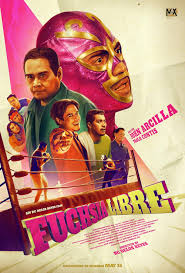
FUCHSIA LIBRE
Philippines, 2024, 112 minutes, Colour.
John Arcilla, Paolo Contis, Khalil Ramos.
Directed by RC Delos Reyes.
Best to check Filipino audiences and reviewers to gauge how this film communicates!
The screenwriters must have had lots of ideas for plot lines – and decided to include them all. Which means then that the film goes in all kinds of directions, gathering themes from a range of Filipino movies. Then the title eventually emerges.
The film opens nicely with father-son relationship, the little boy, his policeman father enthusiastically supporting him at boxing training, his moves. However, very unsubtly, we see the little boy attracted to another little boy and suspect instantly where this could lead. So, there is the exploration of the gay theme in Filipino society, the macho father and his disappointment in his son, the son coming out to his father and being rejected, and teaming up, running a gym, with a group of very, very camp friends.
One of the difficulties of this theme is that the writing and the performances would indicate that it is the work of straight writers and actors doing an impersonation of gay and camp, rather than coming across authentically. There are camp jokes. But, perhaps surprisingly or not, there is not an indication of any kind of intimate gay relationships or behaviour, just the camp and some cross-dressing.
So, we focus on the central character, seen as a boy, rejected by his father who bashes up a young man friend, witnessed by the police chief, and losing his possibilities for promotion, and as the film moves forward 10 years, working in car repairs.
The son is effective in his gym, training, enjoying his friends’ company, but then a twist in the plot as a landlord threatens to take over the building and the need money to buy the property.
The film then becomes a martial arts story, but especially in underground and illegal multi-martial arts fighting. Our hero then is persuaded to go into the fights to get the money to pay for the building, but wearing a mask, calling himself Fuchsia Libre, very camp in his behaviour and setting expectations, losing at first, but then winning.
The film then becomes a police undercover investigation, the hero’s father going undercover, becoming adviser to the psychotic young boss of the fights, criminal activities, drug deals, called The Patron. His outbursts and fanaticism and glee sadistic humour and, embarrassed, killing those he disapproves off, have to be seen to be believed. The father, not knowing that Fuchsia Libre is his son, decides to promote him as a fighter in order to further infiltrate the criminal gang, ultimately to get copies of financial dealings from his computer.
Which builds up of course to quite a climax, an opponent in a fight pulling off the mask, the father seeing his son, trying to warn him off fighting, the final desperate fight, the father supporting his son, the Patron going berserk, and an emotional fight and shootout.
And, as expected, father-son mutual reconciliation, forgiveness, love, and the father’s acceptance of his son as he is.
(The Filipino critics were not kind to Fuchsia Libre, too many themes are not always convincing.)
Robin's Wish
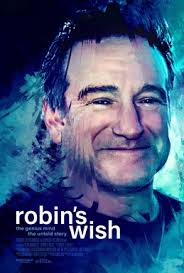
ROBIN’S WISH
US, 2020, 77 minutes, Colour.
Directed by Tylor Norwood.
In 2018, four years after the death of actor and comic, Robin Williams, a tribute documentary was produced with an indicative title: Robin Williams: Come Inside My Mind. It was an attempt to explore how Robin Williams ticked, his intelligence, his wit, his capacity to entertain. But it also raises the issues of addictions and the consequences.
This documentary, Robin’s Wish, was released two years later. The basic insight of the film is the revelation that Robin Williams was suffering from a neurological disease, Lewy Body Dementia, but little is known about it. And, throughout the film, there are a number of medical experts who explain the condition, how it affects the brain, the psychological consequences, the influences of behaviour, seemingly erratic.
While the film does fill in a lot of the biography of Williams, is a boy, his growing up, his talent for acting, his comic talent, improvisation, his film opportunities, his life in Marine County, testimony from close friends over decades, several of his neighbours, the title highlights his wish to entertain. However, with many interviews with his wife, Susan Schneiders, the descriptions of his last years, the effect of the disease on him and day-to-day life, as well as director, Shawn Levy with extent of comment about Williams on the set of the final Night at the Museum film provide insights into what was happening in Robin Williams brain, in his mind..
Robin Williams was well liked, is admired for his screen performances, both serious and comic, never short of a word, stunning people with his capacity for improvisation. The world was saddened at the news of his death. This documentary goes some way to helping audiences understand what goes on in of life someone in the public eye, well-known from the media, but struggling with physical and psychological issues which can lead to death.
Strange Way of Life
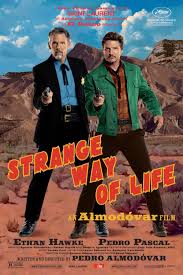
STRANGE WAY OF LIFE
Spain, 2023, 31 minutes, Colour.
Ethan Hawke, Pedro Pascal, Mona Rios, George Steane.
Directed by Pedro Almodovar.
Fans of Pedro Almodovar and audiences around the world would not have been expecting a Western from him. But, here it is, beautifully filmed in Spanish locations reminiscent of the spaghetti westerns, the recreation of the town, the sheriff and his duty, the pursuit of the killer and three guns confrontation. It was written in English, the second English language short film from Almodovar, the first being The Human Voice with Tilda Swinton. He then went on to make the full-length feature in English, The Room Next Door, with Julianne Moore and Tilda Swinton.
Almodovar’s own view of his film: A queer Western, in the sense that there are two men and they love each other. It's about masculinity in a deep sense because the Western is a male genre. What I can tell you about the film is that it has a lot of the elements of the Western. It has the gunslinger, it has the ranch, it has the sheriff, but what it has that most Westerns don't have is the kind of dialogue that I don't think a Western film has ever captured between two men.
Film opens with a mood setting: The title is inspired by the Portuguese poem song by Amália Rodrigues called "Estranha forma de vida" (Strange Way of Life), released in 1959 and sung by Brazilian singer Caetano Veloso and lip-synced by actor Manu Ríos at the beginning of this short film.
The film boasts two strong leads with Ethan Hawke and Pedro Pascal, Pedro Pascal riding into town to confront the sheriff and to save his son who has been accused of the murder of the sheriff’s sister-in-law, a woman with a bad reputation. Ethan Hawke is the sheriff.
The film has, as Almodovar indicated, quite a number of themes.
There is the variation on the western themes, the past gunfighters becoming respectable, working on the land or becoming law enforcers. In fact, the two have not met for 25 years, giving up their gunfighter past, Silver opting for the land, Jake for the law.
Then there is the issue of sexuality and sexual relationships, the flashback to the two young men in years gone by, with a number of señoritas, but then finding the attraction strong between the two of them. And Jake, breaking off the relationship. The impact of the two meeting again, Jake wary, Silver earnest, and their spending the night together and its consequences.
However, Jake is taking the law seriously, Silver leaving to go to his sons Homestead and warn him away, and Jake in pursuit.
There is the theme of the father trying to protect his son while angry and disgusted with him, giving him the chance to escape to Mexico and never come back. This involves wounding Jake but then attending him for his recovery.
In the final theme, Jake angry but convalescing, Silver reminiscing on the final words to give meaning to the film, that they could have spent a life together, especially with caring for each other.
Running Against the Wind
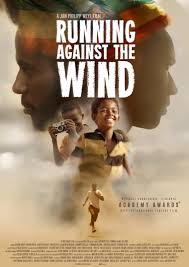
RUNNING AGAINST THE WIND
Ethiopian/Germany, 2019, 116 minutes, Colour.
Ashenafi Nigusu, Mikias Wolde, Joseph Reta Belay, Samrawit Desalegn.
Directed by Jan Philipp Weyl.
The setting is Ethiopian, the vast countryside, the desert countryside, and life in Addis Ababa, especially in the slum neighbourhoods, as well as in the world of sport, training, running, and preparation for the Olympics.
The film has been written and directed by German, Jan Philipp Weyl, who also appears later in the film as the photographer, Paul.
The audience is introduced to this Ethiopian atmosphere by focusing on two little boys, their play together, friendship, competitiveness. A visitor, a white man, comes to visit the town, bringing his camera with him, taking photos of all the people, life in the town, letting one of the boys take photos relishing photography, and kindling him a lifelong ambition. When the boy’s father dies, he goes to live with the family of his friend – but, with a visit from the man with the camera, he steals the camera and runs away to the capital.
There is a transition to life in Addis Ababa – with vast vistas of the modern city as well as the squalor of the slums. Now grown-up, we still has his camera but cleanses broken, the treasure in the ageing photo of himself and his friend. He is now married, a baby girl – and with flashbacks of his memories of befriending the boys in the streets and meeting the girl now his wife.
The film is quite vivid in its presentation of the gangs, criminal activity, stealing cars, and the dangers of the ruthless leaders, leading to his wife taking the baby way and going to live with her mother.
The other part of the story is more hopeful, the boy becoming a run, chosen to go to the city, his training, his success with the coaches, winning a medal, feted by the press. But, all the while, he wants to find his friend, continuing the search, assaulted by a drunken criminal, close friend of Solomon, eventually tracking him down, a reunion.
While the athlete has all kinds of possibilities, even for the Olympics, his friend seems to have few prospects, by the boss of the criminal gang. But, the athlete helps him with his rubbish collection, persuades the sports coach to take him on as roustabout – but, his ability with the camera emerging, possibilities of exhibiting, going to galleries, meeting a photographer, Paul, who encourages him.
There is an ultimate confrontation with the criminals, but, hopeful for the two, the photography and, with the runner, a decision whether he wants to be few the professional world or return home.
- A film from Ethiopia, the director, European background, feel for Ethiopian, the writing, his appearance as Paul in the film?
- The visuals of the country, the countryside, its vastness, the village? The views of Addis Ababa? Vast and modern? The contrast with the outskirts, the slums, the property? The musical score?
- The introduction to the two boys, playing together, friendship, competitiveness, the visit of the cameraman, the delight of the people with the photos, the impact on Solomon, his father’s death, going to live with Andy, the visit of the man with the camera, stealing it, running away to the city?
- Solomon in the city, the homeless children, the gangs, stealing, surviving, camaraderie? The young girl? The transition to his growing up, married, the daughter, the home? Yet his being forced by the gang leader to be a slave, obeying orders, stealing? The episode of stealing the mirror, of stealing the van, the reckless driving, the crash, overturned, burning the van? Symbol of the way of life?
- Andi, his skill in running, chosen to go to the city, the training, the coaches, the other men, the prospect of the Olympics, the running, his being a pacer? His achievement, the victory, awkwardness at the press conference? His desire to find Solomon, searching, questioning, being bashed by Solomon’s friend, the hospital? His finding Solomon, the reunion?
- Solomon, the gangs, the viciousness of the leader, slavery? Solomon’s wife leaving with the baby? Yet his devotion to the baby, carrying his daughter on the rubbish rounds? Andi then helping him with the rubbish? Speaking to the coach, getting the job at the club, his work, looked down on by the player the runners?
- The photography, the camera, photographing the team, getting a reputation, his photos, going to galleries, Andy and the photo shoot for the condom and, the poster, Solomon not wanting this kind of photography, going to the Gallery, amazed at the photos, the encounter with Paul, collaboration with Paul, and the dangers?
- Solomon, building his house, the hopes, the leader of the gang, the confrontation, the destruction of the house?
- Solomon, reunited with his wife, the possibilities of a future with photography? Andi, Limited, running, but the question of the commitment to the Olympics?
- The finale, the car, driving away from Addis Ababa, into the future?
Find Me Falling
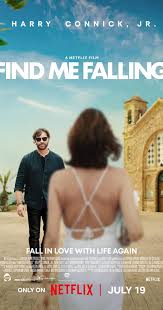
FIND ME FALLING
US, 2024, 93 minutes, Colour.
Harry Connick Jr, Agni Scott, Ali Fumilo Whitney, Tony Demetriou, Leah Maleni, Clarence Smith.
Directed by Stelana Kliris.
The title comes from a song which the central character composes during the film and which recurs throughout, especially with the final credits. It is a sad ballad, setting a tone of both happiness and sadness for this variation on a romantic comedy.
And, the setting is Cyprus. Audiences who would like to see something of the landscapes and seascapes of Cyprus, life in a small town, will enjoy the film.
And the star is Harry Connick Jr, acting this role in his mid-60s after a strong career as a singer and presence in several films. He plays what might be considered a variation on his own self. He plays John, a famous singer musician in the United States, well-known for a song, The Girl on the Beach – which everybody seems to know and quote. However, he has retired to Cyprus which he had visited in the past.
He is able to buy a house on the cliff top then discovering that this is where people come to commit suicide. He tries to build a fence. He tries to persuade people not to fall. And becomes involved with the local police officer who introduces into life on the island. He gets his groceries from a severe woman who sends her niece to deliver them – the niece being the singer in the local club. And her mother is the local doctor.
We might begin to guess as to how this film will develop, John and his relationship to people in the past, who the girl on the beach actually was, his attitudes towards the young singer.
Quite a lot of singing, much of it in Greek, repetitions of The Girl on the Beach, and the composition of Find Me Falling.
An easy-going romantic comedy, especially for older audiences identifying with the older characters, but also giving audiences something to think about.
- The title, its tone, the composition of the song, John and his memories of Sia, giving the song to Melina, her singing it, the melody, the ballad, the lyrics? The final credits?
- The Cyprus settings, the island and the sea, the cliffs and the beaches, the town of the streets, homes, the bar, John’s cottage on the cliff?
- The musical score, John and his career, his songs, The Girl on the Beach and its repetition, Find Me Falling?
- The opening, the house, John and his retirement, the man on the cliff, John talking with him, the man falling to his death? Manoli and the police? The popularity of the cliff for people to kill themselves by falling? The issue of the fence, the police interventions, John buying the wire and wood, making the fence, increasing it, his finally taking it down, sign for people to talk about their issues?
- John, his story, musician, the fact of Harry Connick playing the character, Harry Connick in his mid-60s making the film? The past in Cyprus, the girl on the beach and his memories, his return? Trying to be anonymous, everybody recognising him, the responses?
- The gradual elaboration of the past, his presence on Cyprus, the encounter with Sia, possibilities for a career, his leaving, success in America, life in New York, his fans?
- Sia, audiences realising she was the girl on the beach, her life, studying to be a doctor, her status on the island?
- Melina, young, brash, singing at the club, the popularity, the music, Greek, ballads? Her work in the shop, with her aunt, delivering the meals and groceries to John? Cooking? John, going to the shops, meeting the aunt, advice about the groceries? The setup at his house, quiet retirement? The advice to go to the beach for the tanning, the family coming, his sunburn?
- The encounter with Sia, the memories, her response, spending the night? Her sister’s reaction? Accepting the invitation to dinner, Melina doing the cooking, her dress, her arrival, her being upset, the revelation of the mother-daughter relationship?
- John, with Siar, the truth about her pregnancy, her going to America, seeing him with all the girls, his way of life, her not wanting that for her daughter, not telling him, her studies, becoming a doctor?
- John, the drinking, at the bar, Melina singing, the crowd’s reaction, John’s outburst, the revelation of the truth? The consequences for the two women?
- Melina, her bond with her grandmother, the discussions with her, the situation, memories of the past and looking after Melina while her mother studied? The issue of the coffee cup and reading the situation – and the touch of mockery?
- John, his composing, his contacts with Jimmy, his agent, the possibility of a comeback, the success of Find Me Falling, the bookings, Madison Square Garden?
- John, facing the future, his choices, success, family? Giving Melina the song, her going to America, the recording?
- John, staying on the island, with Sia, happiness and a future?
