Displaying items by tag: Guy Pearce
Killing Faith
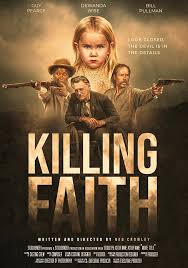
KILLING FAITH
US, 2025, 108 minutes, Colour.
Guy Pearce, De Wanda Wise, Bill Pullman, Raoul Trujillo, Jamie Neumann, Jack Alcott, Joanna Cassidy, Emily Katherine Ford.
Directed by Ned Crowley.
An intriguing and sometimes puzzling Western Germany. It is 1849, frontier territory, beginning with the macabre episode of a prisoner, a deck of cards, shot by his captor, touches of God language. And all of these elements will continue.
The main focus is on the former slave, Sarah, De Wanda Wise, bringing up her young daughter, Emily Katherine Ford, daughter of a white sheriffwho raped her. The daughter has powers of destruction, is feared everywhere, and has to keep her hands bound. Sarah decides that she should travel to a distant town to seek the help of an alleged healer. With this she enlists the help of a local doctor, distraught at the death of his daughter, taking ether to sleep, reliable but prone to moods.
The journey is certainly a weird journey through a West, hopes in faith and healing (with the ironic title of the experience killing faith).
American reviewer, Clint Worthington, in Roger Ebert.com provides an excellent overview of the experiences:
Crowley also passes our heroes through some of the most fascinating nightmare imagery a Western has presented in some time. Bender’s ether dreams include his dead daughter lying in a bed in the middle of the desert; characters vomit thick, black, gooey substances; dismembered bodies are arranged in sick tableaus where extremities aren’t where they’re supposed to be. Teepees on fire, murdered characters with their severed hearts placed in their hands. There’s a feeling of the dangers of taming a frontier that ought not be interfered with, as if Western expansion (the film does take place the same year as the Gold Rush, after all) awakens something ungodly and beyond the white man’s ken.
And, there are some strange characters along the way, the small group of the doctor, Sarah and her daughter and the assistant from the small town, an ingenuous young man, Edward. We encounter a family led by the matriarch, Joanna Cassidy, and a guitar player with bandages around his head. By contrast, there is the erudite Native American with a British accent, explained, calling himself William Shakespeare, Raoul Trujillo.
And, the final destination is the hope for faith remedy, the smooth talking minister, played by Bill Pullman, Delving into the supernatural but also very worldly power playing with his associates.
Which means then that this is an intriguing Western but also with strange ingredients for a Western nightmare.
- The title and expectations? The finale and faith doomed?
- 1849, echoes of the coming goldrush, the American West, the frontiers, the small towns, slaves, victims of rape, survival, journeys, strange characters, doctors, families, Native American settlements, a Western town?
- The focus on Sarah, her situation, slavery, rape, her daughter, caring for her, the daughter and her age, personality, her powers, destructive, her hands bound, the locals in fear?
- The decision to go to the healer, the dangers of the journey, the warnings, the threats? Going to the doctor, his character, his work, the death of his daughter, ether, reliable and unreliable, hesitant, his agreement, leadership in the journey? Edward, his age and character, simple, earnest, that behind, turning up, his participation in the journey?
- The hazards of the journey, the nightmare aspects, the doctor and his personal nightmares? His skills? Guns? Leadership and guide? Sarah and her trust? Concerned about her daughter?
- The encounter with the family, bizarre, the matriarch, her threats, the boy with the guitar, head bound? The violent turn?
- The contrast with William Shakespeare, Native American, his accent, well educated, quotes? Companion on the journey?
- The dangers, Whitey and her associates, the introduction to them, the initial crimes and brutality? Her personality? The confrontations, pursuits, threats, Edward’s death? The motivations, tracking the journey?
- The final arrival in the town, Ross, his religious status, leadership, people in the town, his influence? Religious performance? The reality behind the facade, his motivations, wanting the little girl, her powers? Whitey and her gang at his behest?
- The final confrontation, brutal, the supernatural elements, the little girl, Sarah and her being the victim of brutality, the doctor and his participation? Pessimism and the fulfilling of the title and the death of faith?
Shrouds, The
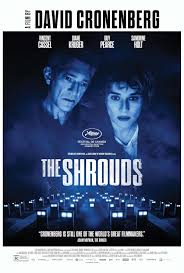
THE SHROUDS
Canada, 2024, 120 minutes, Colour.
Vincent Cassel, Diane Kruger, Guy Pearce, Sandrine Holt.
Directed by David Cronenberg.
For 50 years, Canadian writer-director, David Cronenberg has been a highly significant and influential figure in world cinema. In fact, 50 years ago, his first feature film was called Shivers and released with the alternate title, The Parasite Murders. Eerie, a different kind of horror film, a parable about contemporary society, Shivers announced Cronenberg’s interest, his style, his sometimes disgust at the human condition. And, for 50 years a continuing stream of highly arresting films on the topic of the human body.
With the emphasis on horror aspects, commentators began to use the phrase “body horror” and this is always used as short out to indicate Cronenberg’s attention in his films. Definitely the case here as Cronenberg was turning 80, still experimenting in his style, but heavily influenced by the death of his wife of over 40 years.
Celebrated French actor, Vincent Cassel, plays Karsh, a man with technical know-how and funds to support it. His wife contracted cancer, went through all kinds of treatments, died and was buried. Karsh then developed a business, Grave-Tech, a cemetery at the side of an elaborate restaurant, but, a particular focus, Karsh able to keep close contact with his dead wife, a complex shroud in which she is buried but which enables images of her body, decaying, to be seen by a screen on her tombstone. (If that sounds intriguing, there is certainly a great deal more…)
Diane Kruger plays several roles in this film, Becca, the deceased wife in flashbacks, Terry, the lookalike younger sister who is friendly with Karsh as she works as a vet. And, there is an android (who is able to keep changing shape and she cares for and advises Karsh), Huny, who is voiced by Diane Kruger as well.
The other member of the cast is Maury, played by Guy Pearce, morose, dishevilled (almost the opposite of his Oscar-nominated role in The Brutalist). He is also a tech genius and has collaborated with Karsh setting up the cemetery, the technology, in creating Huny.
Part of the drama is the desecration of the cemetery, the mentally disturbed Maury suggesting all kinds of conspiracies, even international and political plots behind the sabotage. There is also a mysterious Hungarian woman, Sandrine Holt, trying to persuade Karsh to establish a similar cemetery in Hungary!
In many ways, The Shrouds becomes even murkier in its plot, focusing on the doctor who treated Karsh’s wife, his disappearance, his possible reappearance in the cemetery. And the visuals become murkier, intense close-ups of the wife’s decaying body, growths on her skeleton, Cronenberg’s constant fascination with the human body, health, sickness, decay, corruption.
Cronenberg always has intriguing and complex plots. This one sometimes goes sidetracking but, ultimately, the focus is on Karsh himself, his grief, the effects of coping with grief, his obsessions.
No question whether Cronenberg fans will want to see this film. But, for audiences who do not know Cronenberg horror, not his fans, a reminder that he has become the master of “body horror”.
- The title? Death? Burial? Emotional response to death?
- The work of David Cronenberg, for 50 years, his reputation, the focus on the human body, on death, decay and corruption? “Body horror”?
- A personal film, almost 50 years career, the illness and death of his wife?
- The Canadian setting, the city, apartments, the restaurant, the cemetery and the graves, offices and hotels? Atmosphere? The musical score and tone?
- The story of Karsh, the screen presence of Vincent Cassel? His career? His age, the experience of his wife’s illness and death, the four years passing, Grave-Tech? The collaboration of Maury? The company, the technical development of the shroud, material, shapes, the scene of Karsh wearing it, his wife buried in it, the technology in her grave, the camera mechanism in the shroud, transmitted to the screen on the tombstone? The vacant place for Karsh to join his wife? Audience response to this technology and behaviour?
- The flashbacks to Becca, love for Karsh, her illness, the treatment by the doctor, the relationship with him? The flashbacks is real, or is dreams, hallucinations? The relationship between the two, intimate, sexuality, nudity, tensions between them?
- Terry, like Becca, divorce from Maury, her work, vet, grooming the dogs, conversations with Karsh, clashes, attraction, the sexual encounter, consequences? Her comments about Maury?
- The Hungarian connection, the woman, her husband, the idea of the cemetery, the meals and their discussions, the plans, her wealth? Private planes? The sexual encounter? Her influence, Karsh and his decisions, finally flying with her? The future?
- Maury, dishevelled, mental distress, technical skills, married to a divorced from Terry, his collaboration with the cemetery, the technology? Asked disturbed by the destruction at the cemetery, the puzzle? Maury and the introduction of wild conspiracies, plots, Russians, particular characters, the doctor who treated Becca, his disappearance, his seeming to occupy the grave next to Becca? The impact on Karsh, on Maury?
- Suspicions, action, Karsh and the effect? And his final decision to leave this and go to Hungary?
Inside/ Australia 2024
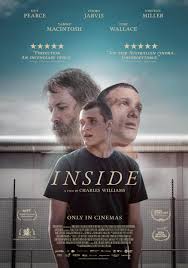
INSIDE
Australia, 2024, 102 minutes, Colour.
Guy Pearce, Cosmo Jarvis, Vincent Miller, Toby Wallace.
Directed by Chris Wallace.
On the one hand, the title, Inside, suggests prison. On the other hand, it could also suggest going into the interior of a person, their personality, motivations and behaviour. Both are relevant here.
There is an arresting prologue to the film, a wedding ceremony which we see taking place in the prison, a pregnant mother, a criminal father – and the focus then on the child, now a late teenager, and his being condemned by his criminal father and inheriting his guilt.
The young man is Mel (Vincent Miller convincing in his first film role), transferred to a prison, assigned to share a cell with a lifer, sentenced for vicious crimes of rape and child murder. He is Mark Shepard, a powerful performance by British actor, Cosmo Jarvis. But we soon learn that there is a reason for this sharing. Mark has got religion, holding his own services in the prison chapel, more than a touch of charismatic faith, testimony are to the fellow prisoners, speaking in tongues, finding that Mel has his own keyboard, enjoys playing it and so invited to play during the happenings in the Chapel.
So, already a different kind of prison film. There are guards, there are glimpses of the criminals but not in the traditional way of prison films. There is a greater freedom of movement, many sessions to prepare those for whom parole is coming up, getting them to write a letter of apology to their victims as a justice healing exercise, a different atmosphere.
And, yet, not entirely, a new character, Warren, played by Guy Pearce a veteran facing parole but seemingly unwilling to face it, granted a day’s leave to visit his son, played by Toby Wallace, not going well, Warren an enigma. But, he is a gambler, and, to pay his debt there is a bounty on Mark Shepard, and Warren choosing and grooming Mel to be the killer, and so find his place in the prison.
Which means then that the film operates as a psychological thriller, the interactions between the three men, the religious mania of Mark, the manipulation by Warren, Mel and memories of his killing a student in the past, the pressures on him – a dramatic resolution of Mark’s fate.
An interestingly different Australian prison film.
- The title, the prison meaning, the inner psychological meaning?
- The action in the prison, find entry, allotment of cells, the cells, the meeting rooms, offices, workplaces, the Chapel? Resemblances to prison films? Differences in terms of guards, cells, supervision? The musical score?
- The story of Mel, the prologue with the wedding in prison, the pregnant mother, the prisoner father, his legacy to his son, the passing on of the criminal mentality? The flashbacks to Mel, as a boy, the clashes, his killing his opponent? Sentenced to prison?
- Mel, as a character, his past behaviour, family heritage, age and immaturity, susceptibilities? Discussions with the authorities? His being sent to share with Mark? His keyboard? This leading to his presence in Mark’s evangelical gatherings? Mel and his learning through sharing with Mark? The encounter with Warren, Warren as a father-figure, genial, the touch of the sinister, the issue of the bounty on Mark, the imposition on Mel, to prove himself, his acceptance, in the challenge, unwell, the pressure on him?
- The focus on the authorities, sympathetic, relationship with the prisoners, especially the discussions and meetings concerning parole readiness, the issue of writing letters to the victims? Mark in for life? Warren and the possibility of parole
- Mark, his background, rapist, killing the children, life? His personality, his cell, possessions, the religious experience, explanations, gatherings, Pentecostal-like, his utterances, exhortations, talking in tongues, the men coming, scepticism, critical, yet larger numbers coming to the meetings? His use of Mel, the music?
- Warren, his age, crime, possibility for parole? Father figure, yet sinister, the gambling, his debt, his connection with the controlling prisoner, looks and glances, bounty, Warren and his decision to groom Mel, their interactions? The sinister grooming? Warren the issue of the bounty, going out for the day to see his son, the character of his son, relationship with his father, the emotional impact of the visit? Warren, the return, going to the Chapel, urging Mel?
- The background of the routines of life in prison, seeming ordinariness?
- Mark, the final gathering, Warren and his preparing the shiv, Mel hiding it under the bed and not using it?
- In the meeting, the dowsing of Mark, setting him alight, the conflagration and his death? The impact on Mel?
- Mark, the discovery of the shiv, Mark and its use?
- Warren, the consequences? And his future?
Brutalist, The
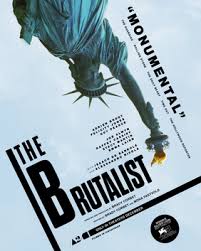
THE BRUTALIST
US, 2024, 215 minutes, Colour.
Adrien Brody, Felicity Jones, Guy Pearce, Joe Alwyn, Raffey Cassidy, Stacy Martin, Isaach de Bakole, Alessandro Nivola, Michael Epp, Emma Laird, Jonathan Hyde, Peter Polycarpou.
Directed by Brady Corbet.
The Brutalist is a vast film in scope and length. Beginning with an Overture, it becomes cinematic orchestral and in its two acts and epilogue cinematic operatic.
The screenplay is by former child actor, Brady Corbett, who directed Childhood of a Leader, Fox Looks, working with his partner, Mona. The scope of the storytelling is quite complex. It is multi-themed, beginning with Nazi persecution of the Jews, business close-up in the oppressive dark, concentration camp consequences. It then moves to re-settlement in the US and good use of the Statue of Liberty, Ellis Island, speeches and translations, then out into the vastness of America, a brother. In New York, then a train to Philadelphia.
Throughout the film there is a documentary evidence, radio news commentaries, about the significance of Pennsylvania in the history of the US.
The central character, Laszlo, is an architectural genius, and in prewar Germany, found unacceptable to national socialism, interned, along with his wife and niece. For most of the film, there is voice-over of letters from his wife, still in Europe.
This is the post-war USA, American business, migrants making good, shrewd businessman with no family backgrounds highly successful.
This is the story of Laszlo’s rise, not without its many pitfalls and falls. At first working with his cousin, Alessandra Mueller, participating in the commission from the son of a millionaire, Harry Van Buren is in (Joe all one) elevate his father, Harrison Van Buren’s personal library. Progress is made, Laszlo’s skill in design, his fine eye for detail, his modern furniture style, making a great impact until suddenly, Harrison bursts angrily onto the scene and dismisses everyone. Harrison is played by guy Pearce most convincingly.
But the central performances that of Adrien Brody (who won an Oscar for the pianist in 2002). He is sympathetic, sometimes upsetting, many outbursts, a growing sense of his own worth, his reaction to being challenged.
The film echoes the American confidence of the 1950s, progress and peace, buildings and achievement, the plans for building Harrison Van Buren’s community Centre in honour of his mother. There is the exhilaration of the design, very modern, the meeting of city officials, the inevitable as with material supply, budget overruns, interference from bureaucratic advisers, outbursts. And accidents, possibilities for being sued, compensation, he is in delay.
Unexpected is a sequence when Laszlo and Harrison go to Carrara to choose marble from the quarries there amazing visuals of the cliffs and quarries. But there is a key episode in Carrara that has something of a devastating effect on Laszlo and will offer a challenge to Harrison.
And, finally his wife, Felicity Jones, arise from Europe, wheelchair written, with the taciturn niece. And further complications with the Van Buren family, and with the niece and her fiance deciding to go to live in Jerusalem.
The film begins with an overture good end with an epilogue – and The Brutalist does, are vindication of Laszlo’s career and achievement, exhibition at Venice be a gnarly, and a tribute to Laszlo by his niece.
Often grim, sometimes overwhelming, moments of joy, and a perspective on American history in the post-World War II years.
- Title and tone? Contemporary art and architecture? Personalities in themselves and their communication?
- The scope of the film, orchestral and operatic, overture, acts and epilogue? The sound, the music, chords, heavy, light background? The visuals, the use of this division and its style? Editing and pace? The vastness of the impact?
- The structure, the effect of the overture, setting the tone, from the concentration camps, the crowds, the darkness, the suffering, the release, the focus on Laszlo, the communication with Erzsbert? The freedom, the voyage, the Statue of Liberty and the various angles? Freedom and future?
- The first part, from 1957 to the early 1950s? Migrants arriving, Ellis Island, the speeches and translations? Into the city – the glimpse of the women, the brothels, Laszlo and his friend? This impact after the years in the camps?
- To Philadelphia, the train, the meeting with Attila, the welcome, change of name, his store and furniture, marriage to Audrey, Catholic? Their work and reputation, Laszlo criticising the furniture? But his working, his modern designs, Harry Van Buren and, the visit, the commission, the library, the background story, the father and his devotion to his mother, her illness? The surprise?
- Gradual information about Laszlo, his studies in Germany, his skills, designs, Jewish background, Nazis and concentration camp? His skill in design, creative, demanding? The vision for the library, the visuals, the space, the cupboards opening, the shelves, the issue of the ceiling, its crashing? Harrison Van Buren arriving, the viciousness of his outburst, the dismissal? Laszlo and his reaction, the false accusation by Audrey, being ousted?
- Laszlo, shovelling coal, the previous encounter with Gordon and his son, Laszlo going to the queue for the bread, their working together? Laszlo and his personality, accepting his fate? The continued communication with Erzsbert?
- The arrival of Harrison Van Buren, his apology, researching Laszlo’s background, their discussions, the repayment, the possibilities for the future? The further conversations, Harry and his vision, as a tribute to his mother, the details of his background story, single mother, rejection by her parents, their later coming for money, his interviewing, withdrawing the $25,000, giving them 500? His mother’s death? His folio of photos of Laszlo’s work in Germany? The discussion about Laszlo’s past? The discussions about building the centre, the gathering of people and Mayor to present the project?
- The focus of the film on the building of the project, the long years, the plans, the materials, Laszlo and his explanations of the structure, shapes, worship, the role of the Cross, the sunlight? The happy progress, Gordon and his work? The encounter with Leslie, they working together, ups and downs?
- The financial difficulties, the time, Leslie and the consultant, Laszlo and his impatience, insulting, Harry and his mediating? The visit to Carrara, the marbles, Laszlo’s friend, the choice of the material, the celebration of the night, the drinking, the strange encounter, Harrison and his behaviour, talk, Laszlo his vulnerability, audience reaction to what they saw, what they thought they were seeing? The aftermath?
- The train derailment, the lawsuits, the financial difficulties, Laszlo offering his payment of the building to continue?
- Erzsbert, with their niece, the opening of the film and the interrogation of the niece, her growing up, mute, Erzsbert and her being confined to the wheelchair? Pain, the issue of drugs, Laszlo and his use of drugs for his broken nose and pain, dependence on Gordon?
- Erzsbert, in herself, the meals with Harrison and his family, journalist training, Harrison getting the job, some financial independence? The tentative relationship with Laszlo, the gradual change in Laszlo, the communication and love? Her pain, the drugs, her collapse, hospital?
- The niece, quiet, Harry Van Buren, his complaint, the incident with the niece, swimming, out into the woods, his return, behaviour? The effect on the niece? Her later fiance, the meal and discussion, going to Jerusalem?
- Erzsbert, her going into the meal, her denunciation of Harrison and the rape? Harry and his defence? Margaret and her care for Erzsbert? Harrison and his retreat into the building, the search throughout the building and tunnels, his death?
- The epilogue, Venice and its beauty, the biennial, the catalogue, the visuals of Laszlo’s architectural achievements, in the wheelchair, his age, the emotion of his niece’s speech, his response? His achievement?
- Part of American history, post-World War II, the migrants, the Jews, prejudice and racism, finance, exploitation, achievements? The focus on Pennsylvania and its achievement and history? The final impact for the audience and being immersed in this world and experiencing the characters, likes, dislikes, difficulties, challenges?
