Displaying items by tag: Diane Kruger
Amrum
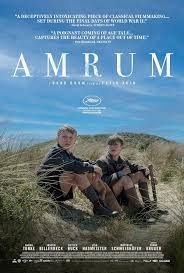
AMRUM
Germany, 2025, 93 minutes, Colour.
Jasper Billerbeck, Laura Tonke, Lisa Hagmeister, Kian Koppke, Lars Jessen Detlev Buck, Matthias Schweighofer, Diane Kruger, Hark Bohm
Directed by Fateh Akin.
Amrum is an island off the north coast of Germany. It is the setting for this 1945s story, the last weeks of World War II, the inhabitants of the island not sympathetic to Hitler, but a strong authoritarian presence on the island.
The story is that of veteran German actor-writer-director, Hark Bohm. He was preparing to direct the film but became ill, relying on his protégé, distinguished German director, Fateh Akin, from Hamburg and of Turkish lineage. In fact, Hark died a few weeks after the release of the film.
His memoir is dramatised in the central character, Nanning, a compelling performance by the young actor, Jasper Billerbeck, in his first film. He is 12. With his brother and sister, his pregnant mother, they have left his father, a Nazi writer on genetic issues, in Hamburg and returned to an ancestral home on Amarum. Nanning Is a member of the Nazi youth, proudly wearing his uniform. His mother is committed to the Nazi vision for Germany.
Nanning has a local friend, Herman, and they share many interests, go to school together, to help in the fields, hunting rabbits, Nanning having to learn how to degut a rabbit, his pregnant mother in need of meat but with a great desire for white bread and butter with honey. And Nanning makes finding this his quest, scrounging some wheat from a doctor who has it for health purposes, getting some local honey from the beekeepers, being refused butter by a farmer who has been denounced by Nanning’s mother as disloyal. And, he goes to the mainland to the office of the Nazi commander for some sugar.
Then there are the back stories to his mother and father, their denouncing Nanning’s uncle and his engagement to a Jewish fiance who is arrested and sent to a concentration camp. There are stories of the older generation, including his parents, going to New York, liking life there but having to return because of the depression.
And, there is a group of refugees from Poland and eastern Germany coming to settle in the town, confronting Nanning but, a fine sequence when Nanning actually saves the life of the boy who had been tormenting him.
The film offers yet another different perspective on Germany in the war, a focus on ordinary people, their struggles, a humane story challenging as to where are sympathies lie, characters who alienate us with their views, and the story of a young boy who will grow into adult hood in postwar Germany.
- The work of the director, German stories, the past, his Turkish/German/Hamburg background?
- World War II films, this film as different, contribution to understanding?
- The situation, the last weeks of the war, the news of Hitler’s death, the approach of the Russians to Berlin? Nazi support, the hostility to the Nazis on the island? Refugees from Poland and East Germany and settling?
- The island, off the German coast, the long tradition, inhabitants identifying with the island, those whose families went back to the Island? The town, streets and shops? Across the water and the tide the quicksand to the mainland town, the Nazi headquarters? The countryside, the sand dunes, agriculture, bombs, chickens, bees…? The musical score?
- The film as a memoir, Hark Bohm and his origins, film career? Writing, intending to direct, ill, Fateh Akin as his protégé, directing, but death soon after the release?
- Nanning as the centre of the film, aged 12, belonging to the Nazi youth, his uniform, his pride in his father, his father and his books and library, genetics issues? His mother, three children, returning to the island, her husband in Hamburg, pregnant, loyal to the Nazis, the devotion to Hitler? Owning the house with her sister, her sister’s presence?
- Nanning, his friendship with Herman and sharing the activities, going to school, the situation with the refugees, his being caught in the middle between the Islanders and the refugees, angry, upset, not going to school? His helping with the farm work, Tessa, the possibility for butter, the comments about the Russians nearing Berlin, at the meal, saying the war was ending, his mother upset, upset with Tessa, reporting her to the authorities, the visit by the Nazi officer and threatening her, not allowing Nanning to work for her?
- The various characters on the island, send gangster, telling his story, the group going to the United States, including Nanning’s mother and father, the uncle wanting to go, in love with Ruth, Nanning’s parents reporting her to the Nazis and her being interned in a concentration camp, the photo, her death? His uncle and the repercussions of what his parents had done?
- His mother, interactions with her sister, the aunt and her care for the children, the bicycle?
- The aunt and the need for meat, rabbits, with Herman, trapping, having to hit the rabbits to kill them, taking them to the fisherman, Nanning having to learn how to degut the rabbit? His achievement? Later returning, Sam Gangster, the flatfish and his helping?
- The mother, wanting to eat white bread, butter and honey? Goal, quest for Nanning? Going to the baker, the issue of wheat, going to the doctor, wheat as medicinal, his receiving a small amount, taking it to the baker? Later with the bees, the making of the honey, his getting some money? The issue for butter, Tessa refusing him? His wanting sugar, going to the Nazi headquarters, the loyalty of the chief, making Nanning recite the Hitler youth code, initial refusal, reciting it, the gift of the sugar? His later return, the officer shooting himself at his desk?
- With the bike, going across the causeway, sand and rocks, the return, the rising tide, losing the bike, his cap? His aunt’s reaction, explaining the quicksand? His later return, the previous hostility from the boy and the girl, the refugees? Emerging from the water, their threatening him again, his running back into the water, the boy following, caught in the quicksand, unable to swim, Nanning at the boat, cutting the rope, the upset girl, throwing the rope, the boy holding it, the dragging him to the shore?
- The birth of the baby, the moodiness of his mother, the photo of Hitler, the burning it?
- Preparing the wheat and honey, his mother’s mood, leaving it in the kitchen, discovering that his young brother had eaten it all, his anger, punching his brother?
- The aftermath of the end of the war, his mother going to the shop, the coupons not valid, the shopkeeper and his refusal for credit, the stealing the sausage, his pursuit and demanding it, the humiliation?
- The decision to sell the house, the celebrations of the downfall of the Nazis, his friendship with Herman, the farewell? The father and his being interned by the English?
- The final image, the older man, on the shore, looking out to sea?
Shrouds, The

THE SHROUDS
Canada, 2024, 120 minutes, Colour.
Vincent Cassel, Diane Kruger, Guy Pearce, Sandrine Holt.
Directed by David Cronenberg.
For 50 years, Canadian writer-director, David Cronenberg has been a highly significant and influential figure in world cinema. In fact, 50 years ago, his first feature film was called Shivers and released with the alternate title, The Parasite Murders. Eerie, a different kind of horror film, a parable about contemporary society, Shivers announced Cronenberg’s interest, his style, his sometimes disgust at the human condition. And, for 50 years a continuing stream of highly arresting films on the topic of the human body.
With the emphasis on horror aspects, commentators began to use the phrase “body horror” and this is always used as short out to indicate Cronenberg’s attention in his films. Definitely the case here as Cronenberg was turning 80, still experimenting in his style, but heavily influenced by the death of his wife of over 40 years.
Celebrated French actor, Vincent Cassel, plays Karsh, a man with technical know-how and funds to support it. His wife contracted cancer, went through all kinds of treatments, died and was buried. Karsh then developed a business, Grave-Tech, a cemetery at the side of an elaborate restaurant, but, a particular focus, Karsh able to keep close contact with his dead wife, a complex shroud in which she is buried but which enables images of her body, decaying, to be seen by a screen on her tombstone. (If that sounds intriguing, there is certainly a great deal more…)
Diane Kruger plays several roles in this film, Becca, the deceased wife in flashbacks, Terry, the lookalike younger sister who is friendly with Karsh as she works as a vet. And, there is an android (who is able to keep changing shape and she cares for and advises Karsh), Huny, who is voiced by Diane Kruger as well.
The other member of the cast is Maury, played by Guy Pearce, morose, dishevilled (almost the opposite of his Oscar-nominated role in The Brutalist). He is also a tech genius and has collaborated with Karsh setting up the cemetery, the technology, in creating Huny.
Part of the drama is the desecration of the cemetery, the mentally disturbed Maury suggesting all kinds of conspiracies, even international and political plots behind the sabotage. There is also a mysterious Hungarian woman, Sandrine Holt, trying to persuade Karsh to establish a similar cemetery in Hungary!
In many ways, The Shrouds becomes even murkier in its plot, focusing on the doctor who treated Karsh’s wife, his disappearance, his possible reappearance in the cemetery. And the visuals become murkier, intense close-ups of the wife’s decaying body, growths on her skeleton, Cronenberg’s constant fascination with the human body, health, sickness, decay, corruption.
Cronenberg always has intriguing and complex plots. This one sometimes goes sidetracking but, ultimately, the focus is on Karsh himself, his grief, the effects of coping with grief, his obsessions.
No question whether Cronenberg fans will want to see this film. But, for audiences who do not know Cronenberg horror, not his fans, a reminder that he has become the master of “body horror”.
- The title? Death? Burial? Emotional response to death?
- The work of David Cronenberg, for 50 years, his reputation, the focus on the human body, on death, decay and corruption? “Body horror”?
- A personal film, almost 50 years career, the illness and death of his wife?
- The Canadian setting, the city, apartments, the restaurant, the cemetery and the graves, offices and hotels? Atmosphere? The musical score and tone?
- The story of Karsh, the screen presence of Vincent Cassel? His career? His age, the experience of his wife’s illness and death, the four years passing, Grave-Tech? The collaboration of Maury? The company, the technical development of the shroud, material, shapes, the scene of Karsh wearing it, his wife buried in it, the technology in her grave, the camera mechanism in the shroud, transmitted to the screen on the tombstone? The vacant place for Karsh to join his wife? Audience response to this technology and behaviour?
- The flashbacks to Becca, love for Karsh, her illness, the treatment by the doctor, the relationship with him? The flashbacks is real, or is dreams, hallucinations? The relationship between the two, intimate, sexuality, nudity, tensions between them?
- Terry, like Becca, divorce from Maury, her work, vet, grooming the dogs, conversations with Karsh, clashes, attraction, the sexual encounter, consequences? Her comments about Maury?
- The Hungarian connection, the woman, her husband, the idea of the cemetery, the meals and their discussions, the plans, her wealth? Private planes? The sexual encounter? Her influence, Karsh and his decisions, finally flying with her? The future?
- Maury, dishevelled, mental distress, technical skills, married to a divorced from Terry, his collaboration with the cemetery, the technology? Asked disturbed by the destruction at the cemetery, the puzzle? Maury and the introduction of wild conspiracies, plots, Russians, particular characters, the doctor who treated Becca, his disappearance, his seeming to occupy the grave next to Becca? The impact on Karsh, on Maury?
- Suspicions, action, Karsh and the effect? And his final decision to leave this and go to Hungary?
