Displaying items by tag: Valentina Belle
Vita Accanto, La/ The Life/ Apart
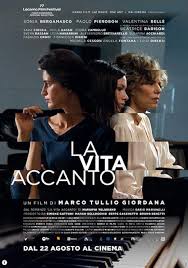
LA VITA ACCANTO/ THE LIFE APART
Italy, 2024, 100 minutes, Colour.
Valentina Belle, Sonia Bergamasco, Paolo Pierobon, Sara Ciocca, Beatrice Barison.
Directed by Marco Tullio Giordano.
A rather sombre Italian drama that focuses on depression but does hold out some hope.
The setting is the city of Vincenza in Italy’s north, attractively photographed throughout the film. But, much of the action takes place in a mansion, the home of a doctor, celebrated in the city, and his wife who suffers from depression. Also in the house is the doctor’s twin sister, an accomplished concert pianist.
While the film does focus on the mother, most of the action concerns her daughter, a very difficult birth, and a large birthmark on one cheek which singles her out, her mother blaming herself, furthering the depression, unable to care for her daughter properly even though she loves her. There is a nanny in the house to take care of the daughter. However, it is the aunt, the pianist, who takes a great interest in the young girl.
We see the girl, Rebecca, at crucial stages of her life. She is sheltered at home but wants to go to school, her hair sometimes covering her birthmark, but actually relishing school, and making friend with another young girl who comes from an entirely different background, poor, absent father, struggling mother. Rebecca realises that she can have a life outside the mansion.
Then Rebecca discovers that she has a talent for the piano, fostered by her aunt who, along with the nurse, act as surrogate mothers for the young girl.
Rebecca is able to cope as she grows older, interactions with the students at school, the staff, her skills at the piano, the constant care of her aunt, overcoming the pathos of her mother’s suffering and death, sometimes imagining her.
Ultimately, Rebecca is on the road to success, encountering her friend from school days again, liberating, and, an unexpected transformation.
A film for a serious-minded audience.
- The significance of the title for Maria, for Rebecca?
- The setting, the 1980s and 1990s, the city of Vincenza, historical, beauty, modern?
- The importance of the score, music, Erminia and her concerts, performances, Rebecca, discovering her skills, performance? Maria and music and its effect on her?
- Italian drama, operatic?
- The focus on Maria, her age, relationship with her husband, her background, the Palazzo, pregnancy, the difficult birth, Rebecca and the severe birthmark? Maria’s reaction, unable to be mother to the daughter, love, yet alienation, erratic behaviour, with her husband, with Erminia, years passing, increasing depression, contemplating suicide, eventually killing herself? Her sometimes reappearing in Rebecca’s imagination?
- Osvaldo, older than Maria, doctor, work in the city, reputation, society? Erminia as his twin sister, unmarried, musical talent, practice, performance, travels? Her bond with Rebecca, surrogate mother, encouraging her music?
- Rebecca, seen at various stages of her life, the difficult birth, the significant birthmark, her mother keeping her apart, her being looked after by Laura as nanny, her response to Erminia, to her father? A little girl at home, the prospect of going to school, the various opinions, her mother’s not wanting it, Rebecca wanting it?
- The experiences school, the birthmark, covering it, the reaction of the students, the staff, Rebecca coping? The friendship with Lucilla, Lucilla and a family background, the absent father, the desperate mother? And the bond continuing? Lucilla coming to Rebecca’s home, welcomed?
- Rebecca growing older, the continued friendship with Lucilla, then her disappearance?
- Rebecca as adult, the actress portraying her as an accomplished pianist? The impact of the music? Relationship with her father? The continued influence of her aunt? Social, the acceptance of her birthmark? The encounter with Lucilla, the bonding again with her, Lucilla and her music, contemporary, breaking out of the boundaries of the gilded life in the Palazzo?
- The magic realism sequence with the disappearance of the birthmark? The intention behind this sequence, the reason for the transformation, the consequences?
Lubo
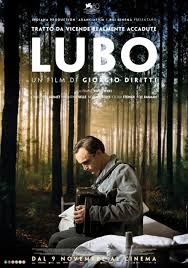
LUBO
Italy/Switzerland, 2023, 175 minutes, Colour.
Franz Ragowski, Valentina Belle, Joel Basman, Noemi Besedes, Cecilia Steiner, Philippe Graber, Filippo Giulini, Christophe Sermet
Directed by Giorgio Diritti.
This is an ambitious film, running to almost 3 hours. It is a film in three acts, so to speak, the first act in 1939, German-speaking Switzerland, the second act in Italian-speaking Switzerland and Ital wrecked at the mother at the mother y, 1951, and the final act taking place in the same areas in the early 1960s.
The film opens arrestingly with a comic performance by a travelling Gypsy (Yenisch) family in the town square and a happily entertained village audience. The main actor, along with his wife and three children, is Lubo Moser, played by popular German actor, Franz Ragowski. But, it is 1939, the Swiss wondering about Hitler’s ambitions, their neutrality, their safety, calling up all men as reserves, suddenly taking Lubo, and, according to Swiss legislation, taking his children into a state system, education, adoption, for many decades, a Gypsy Stolen Generation.
With the themes of 1939, the role of Switzerland, the Nazis, military, stolen generation, a great number of themes have been introduced to the narrative. And, there are many more themes, including murder, theft, trade exploitation, impersonation, seduction, and Lubo’s continued search for his children. And, there are even more themes in the final part of the film, especially in terms of family relationships, crime and justice, reconciliation.
Which means then there is a great deal to entertain as well as to challenge. With the sprawling nature of the story, it sometimes moves too quickly from one theme to another, at other times delaying, not always satisfying in execution even though the themes continue to be of great interest.
There is always the challenge of the character of Lubo himself, his entanglement with an Austrian Jew, his finding a new life Italian Switzerland, establishing himself, the different means to search for his children. And, it would seem that he finds some peace with a young woman who has a son, who works as a hotel maid. Given the complexities of Lubo’s life, his background as a Gypsy, his trying to re-create himself, and moral judgements about his behaviour, there is always the challenge of audience sympathy with him or not.
But difficulties are always round the corner and this idyllic experience with the young woman and her pregnancy cannot last.
The film ends with information about the exposure of the system for taking the Gypsy children, some with dreadful adoption situations, cruelty, deaths, immigration, and finally, legislation repealing the system. From Wikipedia: Das Hilfswerk für die Kinder der Landstrasse (literally: "the aid organization for the children of the country road"), more commonly known as Kinder der Landstrasse, was a project implemented by the Swiss foundation Pro Juventute from 1926 to 1973. The project aimed to assimilate the itinerant Yenish people in Switzerland by forcibly removing their children from their parents and placing them in orphanages or foster homes. Approximately 590 children were affected by this program.
- The title and tone? Lubo is a character, the stages of his life, tragedies, search for children, justice?
- A film in three acts, 1939, Switzerland, fears of war? 1951, is impersonation, search for his children, relationship? 1961, emerging from prison?
- A film with many themes, Gypsies (Yenisch), stolen generation of children, education and adoption, persecution of the Jews, murder, theft, impersonation, trading, seduction, manipulation, responsibility and justice?
- Lubo in 1939, to play in the village square, the captured bear, Lubo and his wife, the children, the applause, money collection, on their way? Held up by the military, the demands on Lubo, the taking of his children, hearing of the death of his wife in the struggle? Life in the military, in the snow on watch, the camp, the authorities, the approach by the Austrian, Lubo and his motivation, the jewels of the money, carrying the bag’s, the Austrian weary, Lubo killing him, taking the smuggled goods, his escape? Setting himself up, a new identity? Audience response to the fact that he has brutally killed the Austrian?
- 1951, Lubo and taking the name of the Austrian, wealthy, in society, the suspicious wife, her husband, the jewels, her infatuation, the affair? Lubo and his search for his children? The Pro Juventute organisation, their aims, purity of race, taking the Gypsy children, re-education, adoption, hardships and farms, stories of suicide, migration? The official, her charm, her attitudes, the infatuation with Lubo, the relationship? Lubo and his abandoning them? His falling in love with the maid, her work, her son, her being pregnant? His love for her being genuine? Life together? The police investigator, Lubo and his moving, hiding, his being arrested?
- 10 years later, the release from jail, his writing letters to the young woman, her son burning them? Her giving birth, Hugo? Lubo on leave, going to visit, discovering the young woman had died, the story of her son, his being helped by the charity organisation, working in the shop, the later revelations of sexual abuse, Lubo confronting the owner of the shop? The young man grown up, hostile to Lubo? Lubo seeing his fiancee, her more sympathetic approach? Is wanting to see Hugo, the older brother and his protection? Lubo and his going to see the police officer, giving his documentation about the disappeared children, the abuses? The police officer, going to the authorities, the hesitant reaction?
- The final information, the abuse of the stolen generation, the consequences? The repeal of the law?
- The film many themes, moving from one to the other, sometimes horrid, sometimes delayed? But the overall impact?
