Displaying items by tag: Peter Malone's Movie Reviews
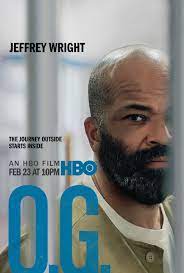
O.G.
O.G.
US, 2018, 113 minutes, Colour.
Jeffrey Wright, Theothus Carter, William Fichtner, Boyd Holbrook, Mare Winningham, David Patrick Kelly, Yul Vazquez.
Directed by Madeleine Sackler.
O.G. stands for Original Gangsta.
This is a very serious film about prison life. It was filmed on an actual prison and many of the cast are prisoners rather than actors, including The authors Carter who plays Beecher.
However, the focus of attention is Louis, played effectively by Jeffrey Wright. He committed a crime, a murder during a robbery when he was young and has spent 24 years in prison, good conduct, and now promoted for parole. These are the final weeks of his prison sentence and he is trying to keep his record clean.
There are groups in the prison, drug dealing, partisans, the young newcomer, Beecher, tempted to join the gang but taken on by Louis to persuade him not to. Louis gets him job in the car machine department where he works.
There are the expected scenes of prison life, interactions, cells, the yard… There are also scenes with the guards, especially Louis and a sympathetic guard played by William Fichtner.
The film was directed by documentary maker, Madeleine Sackler. She belongs to the Sackler family very much involved in the promotion of OxyContin and the various trials against the family. There are some adverse blog comments about the money for the making of this film from her family and other derogatory remarks about them. (See the documentary, The Crime of the Century, directed by Alex Gibney and All the Beauty and Bloodshed, directed by Laura Poitras.)
Be that as it may, this is a strong documentary portraying American prison life.
- An American prison film? Fiction? Documentary aspects?
- The prison location, cells, offices, dining, the yard, mechanic shop…? The musical score?
- Jeffrey Wright as Louis? 24 years in prison? The effect? The exploration of his character, survival in prison, lessening of his sentence, possibility for parole? His concern about his final weeks? His life in prison, the routines, the discussions with the guards, his work as a mechanic, his friends in the shop? Beecher and his arrival, the gangs in the prison, Louis fighting Beecher, wanting to save him, his explanations? The activities of the gang, drug importation? The authorities and severe interrogation of Louis? Calling him in, strict search? Humiliation? His discussions with Beecher, getting the job? The confrontation in the shop, shouting about the gun, the guards coming in, the falling of the attempt?
- Louis, the recollections about the crime, the robbery, his shooting? The attempt restorative justice, his agreeing, the facilitators in the prison and the meetings? The sister of the victim, his apologies, her not being able to agree to his release?
- The guards, their work, Danvers, friendship, interrogating and threatening Louis, the final farewell? The referral authorities, severe attitudes and interrogations?
- Beecher, crime, in prison, to be with the gang in the prison, the effect of Louis and his intervention?
- Louis, the final weeks, the dreams of freedom, waking again, the final, the clothes, his box, walking free?
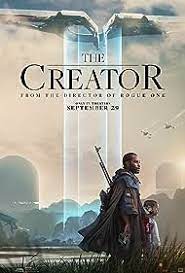
Creator, The
THE CREATOR
US, 2023, 133 minutes, Colour.
John David Washington, Madeleine Yuna Vouyles, Gemma Chan, Alison Janney, Ken Watanabe, Sturgeon Sampson, Amar Chadha Patel, Ralph Ineson.
Directed by Gareth Edwards.
The Creator is a vast, visually impressive drama of the future, the development of AI, sophisticated robotics, robots with personality and parallel human functions, harmony with the humans – or hostility. It is the creative work of writer-director, Gareth Edwards (Monsters,). In many ways it is visionary.
Overall, the audience is overwhelmed by being immersed in this future, 2067-2070, extraordinary locations, the vastness of Los Angeles destroyed by hostile AI forces, millions destroyed, Americans determined to wipe out AI. However, robotics is flourishing in what is called New Asia, humans living in harmony with the AI. Much of the filming was done in Thailand, in the rice fields, wonderful visual overviews, the crags emerging from the coastal waters, supplementary filming in Korea, Cambodia, and for spectacular mountain sequences, Nepal. There is a vastness about these landscapes.
But with the screenplay, there is a challenge to the audiences, the need for serious attention to determine who is who, who is on whose side, who are the enemies, who are the destructive forces, the American military? The AI weaponry? Some may find this challenge too much.
But, in this future, the robots can be distinguished with a literal hole in the head. The robots otherwise look human, act in a very human way. But, at the core of the film is the mysterious Creator with a mystique from Nepal. However, American intelligence indicates that the AI enemies have a mysterious weapon capable of complete destruction.
Also at the centre, is a human story, a focus on Joshua, John David Washington, undercover American agent in New Asia, married to a local wife, she pregnant. And then an American invasion, Joshua’s cover blown, his wife disappearing, his returning to LA and working for the government. Five years later he is approached to return to new Asia to find the mysterious weapon and to kill the mastermind creating AI.
In fact, the weapon is a mysterious child (mother Madeleine Yuna Voyles), hole in the head, very human (delighting in television cartoons), but with complete powers of control. All the rest of the screenplay is somewhat overwhelming in the confrontation between American forces, led by quite a fierce colonel, played by Alison Janney, backed by sinister authorities in Washington, but it is also very personal, Joshua and Alphie, as he calls her, escaping together, pursued, taken aboard an immense, really vast, airborne machine of surveillance, pursuit, heroics, sacrifice.
Enthusiasts for dramas about the human future, about the role of AI, will enjoy it is sometimes overwhelming drama. Audiences who prefer to focus on the present might find it too much.
- The title? A world of AI? The Nepalese word and title?
- Audience interest in AI, robotics, the past, the future? Human collaboration? Human hostility?
- 2067, 2070? The US, AI and human dependence, the devastation in Los Angeles? The promotion of AI in New Asia? The US wanting to destroy AI? Surviving in New Asia?
- The visuals of the future world, the wreckage of Los Angeles, the villages of New Asia (filming in Thailand, the rice fields, the coasts and crags, Cambodia, Korea, the mountains of Nepal)?
- The technology, the robotics, human form, human functions, expressions of emotions, relationships? Weapons? The child as a weapon? And the huge airborne surveillance?
- The screenplay, elaborating the situation, challenged to audiences as to who is who, who is on whose side, who are the humans, who are the robots? The nature of the confrontations and battles?
- Joshua, the American government, undercover, his relationship with Maya, her pregnancy? Hopes? The invasion, blowing his cover, Maya and the confrontation, her disappearance?
- Joshua in LA, the authorities, coming to him, drawing on his undercover experience in New Asia, his being sent in to find the AI weapon?
- Joshua, his personality, regrets about his wife, her disappearance, the pregnancy, five years passing? The discovery of the weapon, the Creation? His searching for her, finding her, bonding, her name, the shared experiences, the risks? The protection? In New Asia, the American invasion, Col Howell and her hostility? The other Americans?
- The people of new Asia, the robots in harmony with the humans, working the fields, protection? Support of Joshua? The religious backgrounds?
- Colonel Howell, her personality, determination, her subordinates? Her tactics? Relationship with the authorities in Washington?
- Joshua, calling the child Alphie, the attack, the pursuit, in the vehicles, the fights, the weaponry? The national surveillance overhead?
- The Americans, the wounded, the appeal to Joshua? The implants, the recordings, Howell and her listening to the mind of the dead man, limited? The changes of appearances – and, in the AI world, the robots and their possibility of changing faces? Mayar’s face?
- The buildup to the climax, aboard the floating surveillance, the chases, vastness, Joshua and his ingenuity, relying on Alfie and her powers, turning power on and off?
- The finale, the explosions, the talk about heaven, for good persons, Joshua and his self-sacrifice?
- Howelll, destruction, the floating surveillance?
- The American attitudes, the Washington authority and commands, defeated? The people of New Asia continuing on in harmony?
- The vision of the director, the future, technology, humanity?
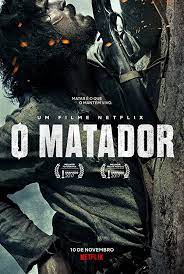
O Matador/ The Killer
O MATADOR/ THE KILLER
Brazil, 2017, 99 minutes, Colour.
Diogo Morgado, Will Roberts, Etienne Chicot, Maria de Medeiros.
Directed by Marcelo Galvao.
This is a brutal and grim Western – but a Brazilian Western, a Brazilian version of spaghetti Western with whatever culinary title would be appropriate.
The film is very distinctive in its north Brazil desert settings, the small towns, the outlying houses, and the contrasting mansions of the wealthy. The story opens in 1910 but the main action taking place in the 1930s and 1940s – various glimpses of bikes, cars, planes, but still very much looking like a 19th century landscape and situation.
The film opens with a man travelling with two children, today in by suspicious looking types, telling them here’s good at telling stories. And he does, meaning that the film relies on the narrative voice-over to help audiences know what is going on (and, it is often quite complex and difficult to follow), the action and characters just dramatising what has been said.
The film focuses on abandoned baby, cared for by a gunslinger Seven Years (a bizarre necklace of seven years from his victims). The boy grows up in isolation. When Seven Years leaves and doesn’t return, the boy ventures into the world, experiencing violence instantly, puzzled by pressures stones but eager to have them, discovering sex with prostitutes. He also confronts the local landowner, a ruthless Frenchman, with an aristocratic wife and a dilettante his son. The killer has no hesitation in shooting people and is soon employed by the Frenchman to kill off all rivals and those who refuse to sell that land to him.
Then, there is something of a D talk, a focus on a landowner whose wife and child are brutally killed (the treatment of women in the film is harsh and misogynistic) and seeks revenge, confronting the dapper lead rest bespectacled, continually washing his hands, administrator of the law. And he is brutal to his wife and cousin. Eventually, confrontations, shootings, and the landowning Frenchman asserting himself.
The latter part of the film, the killer discovers that he has a young son, awkward in dealing with him, the son wanting to accompany his father, growing dangers, the father putting his son on a train to the furthest destination, a shootout and his being wounded.
And, with a twist, it emerges that the narrator of the story is that son.
Of casting interest, the killer is played by Portuguese actor, Diogo Morgado, who was quite effective as Jesus Christ in The Bible television series and in the edited film version, Son of God. The Frenchman’s wife is played by Maria de Medeiros, prominent in many films over the decades, including Pulp Fiction.
For audiences interested in the variety of westerns, especially those outside the United States, but may bewilder to women violent for ordinary audiences.
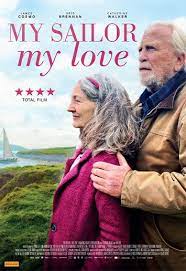
My Sailor, My Love
MY SAILOR, MY LOVE
Ireland/Finland, 2022, 103 minutes, Colour.
James Cosmo, Brid Brennan, Catherine Walker.
Directed by Klaus Haro.
Here is a drama that can be recommended for the older target audience, audiences who have many memories that they can draw on, happiness, regrets, unhappiness, hopes.
It is a co-production between Ireland and Finland, but with Irish characters and an Irish setting, the beauty of the County Mayo Coast and Islands, mostly overcast and cloudy, perhaps symbolic of the lives that the people lead.
At the centre of the film is an old sea captain, Howard, played by veteran character actor over the years, James Cosmo. He has retired but has many memories of his days at sea, sad memories of the death of his wife, abrupt and sometimes resentful of the care from his daughter, Grace (Catherine Walker). He does have two other sons but they turn up only for his birthday. He is gruff, self-contained, but, in some surprising moments, we see him telling fanciful adventure stories to the delight of some little girls of the family at the local pub.
So far, some identification with Howard, but wariness about him and his gruffness. His exasperated daughter arranges for a local woman, Annie (Brid Brennan) to come twice a week for housekeeping – and she is almost immediately ousted by Howard. We like Annie, her daughters working at the pub, the little grandchildren, and are pained when she is treated so badly. But, fortunately, Howard comes to his senses, get some flowers, comes to apologise to Annie who lets him know how hurt she is.
But, she does come back, Howard mellows (perhaps a bit too dramatically quickly for the film) but, it is a joy to see him come alive, share so much with Annie, she hearing his story and the death of his wife, he hearing her unhappy marriage and her husband’s death. We are very happy to see them both so joyful, sharing so much, he come alive again.
Parallel to this story is Grace’s own story, a marriage which is breaking, her going to therapy and not finding it helpful, her work at the hospital and her being fired, her paying attention to her father, employing Annie, and, perhaps to be expected but regrettably so, her bad reaction to finding the bond between Annie and her father, denouncing her father as a self-centred man in the past, suggesting that he is exploiting Annie.
All of us who have had sadness in the past in our lives will be caught in the emotional crossfire, empathising with one, emphasising with another, trying to understand what is going on.
We get to like Howard very much, even as we acknowledge his being away from his family at sea, even more so as the years passed, the teenage Grace looking after her mother, welcoming her father home, a sense of obligation to care for him in his age and health situation. And we get to like Annie, her joy in her experience of getting to know and love Howard.
So, here is a film that can be recommended to an older audience, no off-putting violence, sex, language, the film having a PG rating because of mature themes.
- An Irish story? Finland collaboration?
- A film for older audiences, identification with the characters, their situations, crises, regrets, loves, hopes?
- County Mayo, the coast, the Bay, the Ireland? Overcast, clouds? Atmosphere? The musical score?
- The focus on Howard, James Cosmo’s presence, his life as a sea captain, away from home, relationship with his wife, distance, reluctance to come home, the death of his wife, Grace, looking after her mother, waiting for her father, his having to retire, health, living alone, grumpy, crossword puzzles, Grace trying to care for him?
- Grace, her story, as a child, home from school, looking after her mother, her mother is drowning? A yearning for her father? His absences? Her marriage, the tensions, her mental state, illness, the support group, the other members, the therapy, the leader, Grace and her dissatisfaction, walking out? The tension with her husband, his further job, to go to Munich, the selling of the house, the visit of the estate agent, Grace and her resentment? Her work at the hospital, kindly with the patients? And needing time to care for her father? Her being fired? Getting the further job, with the other nurses? Her husband leaving, the empty house?
- Grace employing Annie, Annie and her age, her later telling her story, her aggressive husband and his death, her daughters, marriages, the grandchildren, Julie? Work at the hotel? Annie, agreeing to work for Howard, getting the bus, going to the house, preparing the meal, his treatment of her, to never darken his door again? Her being hurt?
- Howard, change of heart, the flowers, going to apologise to Annie, her reluctance? Howard and the grandchildren, telling the stories of the gorilla? The delighted response?
- Annie, her return, cooking the meal, Howard setting the place for her, eating together, his change of heart, inviting her to return? The return, cleaning the house, discovering the weaving machine and repairing it, his inviting her to stay, talking with her daughters, her coming, rearranging house, the photos of her family? Going for drives? The bond between them?
- Howard, the reason for his retirement, concealing it, his turn, the need for a checkup, his covering it over as blood pressure?
- Grace, arriving, the discovery, upset, the confrontation with the father, confrontation with grace, telling Annie that her father was completely self-centred? The contrast with his behaviour with Annie, the family, joyful in celebration, Grace upset?
- Annie leaving, Grace coming in wanting to stay, having now home, her father’s reaction?
- His collapse, hospital, the truth about his illness? Grace planning for him to be at home? Annie and the visit to the hospital? After keeping away? Grace at the hospital?
- Howard, the recuperation, and his visit, the proposal, the happiness?
- Howard’s death, and he with him, Grace’s reaction?
- Grace, coming to terms with her own life, deprivations, her attitude towards her father, love, need? The reconciliation with Annie?
Day and a Half, A
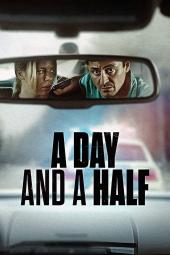
A DAY AND A HALF
Sweden, 2023, 94 minutes, Colour.
Alexej Manvelov, Alma Posti, Fares Fares.
Directed by Fares Fares.
This is a very interesting film on domestic violence, coming from Sweden, cowritten and directed by the Swedish actor, Fares Fares (born in Lebanon on but coming to Sweden with his family in his early years, a strong performance in Cairo Conspiracy). Fares also stars as the mediating policeman.
The day and a half of the title refers to a disturbed husband coming into a hospital to confront his wife, accusing her of infidelity, of taking his child from him. He creates a scene in the hospital, the police are called, he takes his wife hostage. This is a very strong beginning, the mad look of the husband, more revelations about his past and domestic violence, his infidelity with a Thai woman, his wife leaving him and sending their daughter to her parents.
The mediator is called in and he drives the couple, the husband pointing a gun always at his wife, first to her parents’ home to get the child, a violent confrontation with the racist father and condemning mother, then an attempt to get a plane to Albania from where the husband comes, then the possibility of a ferry to Poland.
Stories are revealed during the long journey, day and night, morning. The mediator, always in contact with the police, prefers to be a listener, suggestions, more gentle, telling his own story and his own failings – which does lead to a moving moment where the harassed husband offers his phone for the mediator to phone his young alienated son for his 13th birthday.
In many ways, the film is quite calm in its presentation of harsh and violent domestic troubles, the role of the mediator as a listener enabling the violent man possibly to become calm. And he is able to mediate some possibilities for forgiveness and reconciliation.
- The title, the timespan, the initial confrontation and abduction, the journey, the final resolution?
- The Swedish settings, the hospital, the police, on the road, the various landmarks, the different countrysides, near the airport, near the ferry? The musical score?
- The credibility of the plot, domestic violence, tensions in marriage, mental illness, infidelities, children?
- Lukas, the police, the mediator, his style of intervention, no weapons, friendly, not confrontative, engaging in conversation, enabling expression of feelings, making judgements to avoid violence, driving the car, contact with the other police, speaking frankly? Listening to the story, care for the wife? Eventually telling his own story, his limitations, infidelity, his son’s 13th birthday, the phone call? His psychological skills in dealing with Artan? Care for Louise? Taking the couple to Louise’s parents, getting the child, the interaction, the father’s racism, the violence? Eventually following the possibilities, the plane, government officials, the ferry? The issue of Artan and not being able to travel? Artan getting him to get the coffee, his standing and observing the finale? Looking at Artan, looking at Louise? A sympathetic character, with limitations, skills, and the tears after the phone call to his son?
- Artan and his story, Albanian migration, in Sweden, his marriage to Louise, the birth of the child and his devotion, his not understanding or appreciating Louise, her physical health, mental health, dominating, his infidelity with the Thai woman? His arrival of the hospital, his state of mind, emotions, demanding, the gun, the receptionist and her businesslike manner and his terrorising her, pushing her to the floor? The others in the waiting room? His not being able to wait, with his number?
- Louise, her story, work in the hospital, the pregnancy, after the birth, love for her daughter, her husband’s treatment, the fact that he had charges of violence against him, his infidelity, her taking the children to her parents?
- The gun, the situation, trying to escape from the hospital, the hostage situation, the phone calls, the police, Lukas arriving, his reaction to Lukas, keeping the gun always on his wife? The desperation, wanting a plane, his demands, Lukas seeming to agree with them, the phone calls, the continual contact with the police, Zzrtan hearing this? The car, the cloth at the back, the bystanders, the media, speculation?
- The long journey, the hours passing, Lucas driving, Louise at the back, always with the gun, Artan and his desperation, his eyes? The gradual unfolding of the story, Louise and her experience, point of view? Artan and his defence of himself?
- At her parents’ place, getting the child, tending it, the discussions with the father, his attitude towards Artan, Louise’s mother, even more severe, denouncing her daughter? The fight?
- The possibility of a flight? Permission granted? The possibility of the ferry to Poland? Moving towards the sea?
- The contingent of police following, the national group? The cyclist giving the food through the window?
- The discomfort of the trip, the cup for your own, hunger, tension?
- The arrival of the ferry, Artan giving Lukas the phone to phone his son, listening to the phone call, Lucas and his tears? Artan, the move taught surrender, emptying the gun, throwing it out the window? Telling Lucas to get the coffee?
- The final talking between Lucas and Artan, his getting out, the police swooping on him, taking him away?
- A dramatisation of contemporary domestic violence?
Offering, The
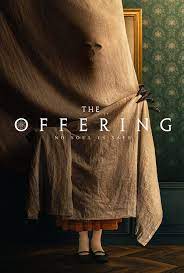
THE OFFERING
UK/US, 2022, 93 minutes, Colour.
Nick Blood, Emily Wiseman, Paul Kaye, Allan Corduner, Daniel Bens Zenou.
Directed by Oliver Park.
A small British horror film with a British cast, especially with veterans Paul Kaye (many episodes of Vera) and Allan Corduner (Sullivan in Mike Leigh's Topsy-Turvy).
However, the film was shot in Bulgaria and has a Brooklyn, New York setting. It also has a Jewish Orthodox setting which makes it seem more exotic than the regular horror films.
It opens very directly with an elderly Jewish gentleman subject to rituals, trying to be with his wife, a demonic appearance. The main part of the story concerns the son of an older, and the blood, returning to Brooklyn and his father with his British wife, Emily Wiseman, not Jewish. The father, played by Alan Corduner, conducts autopsies – and there are sinister happenings with the examination of the old dead man’s corpse. There is also the sardonic assistant, played by Paul Kaye.
There are various nightmares, especially on the part of the wife, and appearance of the dead man’s wife confronting the British woman, mysterious appearances, ritual explanations and ceremonies, circles… As well is a financial difficult background though ultimately, not much is made of that.
And, contrary to anticipation, the ending of the film is very grim.
- A British horror film, the New York Brooklyn setting, filmed in Bulgaria, the British cast?
- The title, the opening sequence, the old man, the eerie room, his rituals, the death of his wife, daughter, wanting them back, the Circle, the signs, the appearance of the creature? His death, taken to the morgue?
- The Brooklyn settings, New York, the bridge, the river, the streets, the house, the Orthodox setting, rituals, prayer, gatherings? The morgue, autopsies, atmosphere? Musical score?
- The Orthodox setting, Jewish history, religion, rituals, leaders? Mythologies?
- The narrative, Arthur and Claire, returning from England, he returning home, American, she British, giving up her job, pregnant? Not Jewish? The background of financial dealings, the house, losing jobs? Saul welcoming them into the house?
- Saul, his leadership, autopsies, widower, at prayer, his rituals? Attitude towards his son? Welcoming – but others memories of the past and the severity of his father? Leaving home? Saul and his kindly attitudes towards Claire and her pregnancy?
- Arthur, the autopsy, the dead man, his story, disfigurements, atmosphere and its effect on Arthur?
- Heimish, his character, working with the autopsy, antagonism towards Arthur, his remarks, criticisms? Sardonic? His getting the message from Arthur’s financial adviser, denouncing Arthur, showing the message to Saul? Arthur, his reaction, Claire and her surprise, her being accused of complicity? Confrontation with her husband?
- The body, the odd happenings, his being infected? His father, with the body, and the sudden death of his father? Heimish, his help, calling in Chaim, his knowledge, information, and his death?
- The atmosphere, evil possession, demonic presence, the appearance of the girl, Claire seen her at the wake, behind the curtain, disappearing? Are appearing to Arthur? Claire, her nightmares?
- Arthur, more and more involved, Heimish and his help? The threats to Claire, the appearance of the old man’s wife, apparition, seeming real, ghostly, the threats to Claire under the table, Arthur trying to rescue, the repetition of the action?
- The final confrontation and build up? The evil presence, the threats – and the pessimistic ending?
Ego, the Michael Gudinski Story
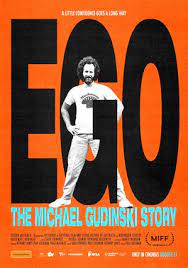
EGO, THE MICHAEL GUDINSKI STORY
Australia, 2023, 111 minutes, Colour.
Directed by Paul Goldman.
This is a documentary about entrepreneur, Michael Gudinski, his presence in the music industry in Australia from the 1970s to his death in 2021. It has been directed by Paul Goldman (Suburban Mayhem, Footy Legends) who worked with Gudinski with many music videos. The documentary was in process, possibly for a several part television series, when Gudinski suddenly died in 2021 at the age of 68.
Clearly, this is a film for audiences who know the music industry and/or want to know more about its vitality for over half a century. But, this is also a film for those who may not have a major interest in the music industry. It is a very interesting portrait of an Australian, an enthusiastic personality, significant in his entrepreneurial field, successes, failures, achievement. It is also an interesting film for audiences considering Australian culture over this period, what Australia was like in the 1970s, the influences in the 1980s, an intervention by Rupert Murdoch in the 1990s, the shift from record production and sales to social media and availability of product – the very interesting coda of Gudinski’s activity even during Covid lockdowns.
Paul Goldman and the editor keep the documentary moving. Fortunately, there is a great deal of footage available from the past and many witnesses from that period – and the director using the device of showing the interviewee in the present alongside photos and footage from the past. And, many of them, including Gudinski himself, have changed a great deal (to say the least)! So, there is a wide range of talking heads during the film, production associates and business partners, and, of course, members of the various groups, Ross Symons and Skyhooks from the 70s, Tim and Neil Finn from Split Enz, longtime friendship with Jimmy Barnes, Paul Kelly, then the strong bond with Kylie Minogue, and in more recent times, rather surprisingly, a cheery personal friendship with Ed Sheeran. There are significant interviews with John Farnham, Sting, Bruce Springsteen, Dave Grohl and different band groups. Significant is his contribution to promoting indigenous music, Archie Roach and Yothu Yindi.
So, what Australia looked and sounded like in the 1970s, brash, new styles of music, production, groups, bands, tours, behind-the-scenes. Then, great success in the 1980s, moving worldwide, the US, less so in the UK, awards. And, as mentioned, in the 1990s, the encounter with Rupert Murdoch and the role of News Corp taking over Mushroom Records which Gudinski had founded and fostered with its talent for 20 years. The early part of the 21st century was rather lean in terms of success but, never put down, the 2010s saw all kinds of changes in Australian society and communication. Symbolic is his filling the MCG for an international concert at the time of the 2019 fires. And we can admire Gudinski’s enterprise in 2020 organising a media concert with so much talent to encourage people during lockdown.
Behind-the-scenes there is the continued support and love of his wife, Sue, their long marriage, good interviews with his daughter, Kate, and his son Matt who joined him successfully in his enterprises.
Seemingly extrovert off the page, exuberant, jovial, meeting people everywhere – but a variety of comments indicating some more thunderous moments, moods, business battles.
This is a significant documentary on Australian culture.
Biosphere
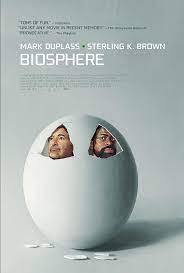
BIOSPHERE
US, 2023, 106 minutes, Colour.
Sterling K.Brown, Mark Duplass.
Directed by Mel Eslyn.
After watching Biosphere, audiences will have all kinds of conversations, all kinds of leads from this unexpected scenario. While reviews can be guides as to whether to see a film or not, many reviews are better read after the audience has seen the film. So, a suggestion that it might be best to see the film as it is rather than through the reviewer’s interpretation. That said, potential audiences alerted, here are some reviewer reflections.
Richard Matheson wrote an apocalyptic story, The Last Man on Earth (some film versions), touches of horror. Biosphere raises the question of The Last Two Men on Earth!
This is a science-fiction film. And all science-fiction films offer a variety of hypotheticals, scientific possibilities (and impossibilities), scenarios that range from the creation of life to space exploration. And, as with this one, they can be combined with apocalyptic possibilities, the end of the world. But, already these comments make Biosphere seem more seriously-toned than it is – though, ultimately, it raises all kinds of serious and depth questions. However, there is a comic and light tone throughout the film as we are introduced to a former President of the United States (obviously not one of the great statesman) and his science advisor who, in view of world destruction, has built a very comfortable pod for their survival, as many as the comforts of home as they can, help with them pass the years they have spent inside the pod. They have been friends since childhood, though he Republican and the scientist Democrat, and they share memories from their past, and banter through their survival, jogging, computer games, watching Lethal Weapon, experts on Super Mario…
So, while it has been apocalyptic, and there is a menacing greenlight outside the pod, this begins is a cheerful story about friendship, Sterling K.Brown, Ray, African-American scientist, intelligent, a reader, inquiring, contrasting with Mark Duplass, Billie, the rather affable layabout ex-president.
We are made alert because Billy starts to read Kiss of the Spider Woman, not understanding the gender issues the novel raises.
Then the screenplay moves to issues of evolution, the death of the male fish that they have been keeping, Sam, to mate with Diana, to keep them supplied with food. Diana dies. And the discovery of what can happen in this evolutionary situation for survival, Sam transforming to female. And, our immediate initial wondering: can this be true for humans and the prolonging of the human race. In fact, it does not take too long before this theme moves into action, Billy transforming, Ray puzzled, challenges the scientist to investigate. Which, of course, then leads to the issue of reproduction, pregnancy.
And the screenplay does take us all the way, challenging our ordinary stances, making us wonder about evolution and the future, and always the underlying contemporary questions about gender identity, gender relationships, love, the erotic, friendship…
The film takes place on the one set, rather claustrophobic in its way, is very much a dialogue-oriented screenplay, literature and media references, extensive vocabulary, which means that it offers an interesting, provocative, emotional and intelligent challenge.
- The title? Space? The enclosed pod? Life, survival?
- The tone of the film, comic, satiric, serious, science, evolution, gender, male-female…?
- The set, enclosed, the biosphere, main room, bedroom, the circuit for jogging, cooking, the library, television, computer games…?
- The audience gradually learning of the situation throughout the film, the past president, his science advisor, their friendship since childhood, different political affiliations, the responsibility of the president, destruction of the world, the building of the pod, a refuge?
- The character of Ray, African-American, science background, Democrat, advisor to the President, scientific investigations, building the pod? Strong masculine identity? The relationship with Billy, childhood, the presidency, the catastrophe, living the years in the pod, to bachelors, comforts?
- The character of Billy, as a child, friendship with Ray, audiences accepting him as President, the poster, soft character, accepting the situation, the years with Ray?
- The science fiction element? Hypotheticals? The apocalyptic scenario? Credible? The plausibility of the plot, survival?
- The issue with the fish, theories of evolution, the male transforming to female? Audiences anticipating the change with Ray and Billy? Billy proposing the theory? Ray’s response? The gradual transformation for Billy, genitals, the ceremony with the penis, the female transformation, vagina, breasts, the psychological transformation, female behaviour (stereotypical?) Sensitive, kitchen, language, treatment of Ray?
- The issue of pregnancy, the discussions about impregnation, discussions of reproduction, without erotic background, the final solution, the cover, the whole, Ray providing the semen, the effect on the two, the relationship, affection? The months of the pregnancy, the change in Billy, Ray and his responses? Setting up house?
- The mystery of the green light, his presence, eventually seeming to attack, the holes, the cloth, the container for the fish, the death of the fish? The prospects of starving?
- The question of whether there are other pods, other survivors? Coping with the crisis, the future, lack of food, the issue of bringing a child into this world?
- The sudden ending of the film, leaving everything to the audience to reflect on and discuss?
Past Lives
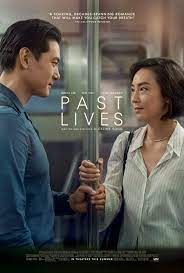
PAST LIVES
US, 2023, 105 minutes, Colour.
Greta Lee, Teo Yoo, John Magaro..
Directed by Celine Song.
It is said that writers should tell their own story. Playwright and director, Celine Song, draws on her own experience of her early years in Korea, her family migrating to Canada, her becoming a writer, marriage. But she enhances it with imagination, exploration of emotions, moments of communication, moments of silence.
There are several layers of meaning in the title, Past Lives. To else remembering their past and connections. However, there is an explanation of In-Yun (in-yuen) a Buddhist influence way of thinking, reincarnation, connections and past lives, bonding in the present, future connections.
Basically, the narrative takes place in three-time eras, opening in the present, going back 24 years, advancing 12 more years, coming back to the present. But the opening is tantalising, three adults at a bar, and a voice urging the audience to look at them, what the connections might be, the possible relationships. And the central character, Nora (Greta Lee) looks directly at camera. What are we thinking? What are we wondering? Who are these three?
The first part of the film takes place in Korea itself, and we are introduced to two 12 year olds, Na Young and Hae Sung, she always getting top marks, this time he beating her, and she crying in distress (something she often does). But, we see them as friends, playing together, their mothers having conversations – where will this lead? The immediate and sad answer is that her family is migrating to Canada. This moves him deeply. For her it is just part of life as she wishes him goodbye.
12 years later, Na Young has become Nora, a successful playwright, becoming very much a Korean North American in Canada. She attends a writing camp, meet writer, Arthur (John Magaro) and they bond. Meanwhile, Hae Sung(Teo Yoo) does his military service, rather unhappily, has a job, not satisfying, a girlfriend, but starts to look online for Na Young, not knowing she is Nora. When Nora he is about this, she makes a move and they have an online conversation, he devotedly remembering her and regretting her absence, she simply remembering a friend.
And then 12 years later again. Nora and Arthur are successful, he had a book launch signing, she writing plays, an apartment in New York City. And then Hae Sung decides to visit New York.
Celine handles this section of the film with great delicacy. The audience has got to know Nora very well and we wonder how this visit will affect her, friendship, affection, the presence of Hae Sung after 24 years. While the audience does know Arthur, we wonder how this visit will affect him and his love, his marriage. And what of Hae Sung, at this age, breaking with his girlfriend, wanting to see Nora again, devotion, rekindling love…?
In one sense, there is a great simplicity in the screenplay, the visit to New York, meeting, discoveries after 24 years, a tourist trip on the Hudson, a pasta meal at the bar. But, there is depth and complexity in the conversation at the bar, key to the whole film and the relationships, Nora between the two men, some speaking in English, some words in Korean, more and more Nora talking with Hae Sung, Arthur somewhat on the outer, but the conversation beautifully opening up Hae Sung’s devotion, Nora’s memories, her friendship and affection, her love for her American life, her love for her husband. And, while this conversation is dramatically telling – and she explains the conversation to Arthur, it is the final scene which so aptly and movingly bring this story to a conclusion, Nora accompanying Hae Sung to an Uber, their standing, silently, a distance between them, waiting for the car to arrive. And Nora returning to Arthur.
Great emotional exuberance – but profound emotional depth.
- The title, the past lives of Nora and Hae Sung, but the connections in past lives in terms of, Buddhist background, Korean interpretation, secular interpretation? Reincarnation?
- The autobiographical aspects of the narrative, the experience of the writer-director? Career, migration, Canada, New York, the literature and theatre world?
- In-Yun (in-yuen) and the Buddhist reflection, contacts in the past, contacts in the present, future contacts?
- The opening, the three people at the bar, the questioning, the possible relationships?
- Transition, 24 years earlier, school, Na Young and 80, the steps, talking, aged 12, her always getting top marks, his beating her in maths, her weeping? Their friendship, the play at the statue, their talk? The two mothers? The father and his filmmaking, home scenes? The decision to migrate? The two daughters, Na Young be unbecoming Nora? Saying goodbye, her friendship, but seemingly offhand, his deep feelings about her? Farewell, the plane trip, arriving in Canada, settling?
- 12 years later, Nora, her writing, theatre, at 24, relationship family, Internet connections, friends and career, discovering that he was looking for her, the contact, his motivations, missing her, memories of the past? Talking via computer, memories, the bonds, a change, his change, promising a visit?
- Nora, going to the writing school, meeting Arthur, working together, bonding? He and his military service, the glimpse, not happy? Flying to China? His friends, the drinking, girlfriend?
- 12 years later, Nora and Arthur in New York, his book signing, her theatrical writing? Married for many years, the apartment?
- Hae Sung, the plan to go to New York, letting Nora know? The flight, his arrival, the friends and the drink, storms and rain in New York?
- Arthur, his bond with Nora, learning some Korean, their shared interests and work? His reaction to the visit of Hae Sung? Nora and her reaction, meeting him at the airport, his settling in, his response, his love for Nora, the memories, the break with his girlfriend? His comment about earning money and supporting the wife?
- The tour of New York, the boat, the vistas of New York for the audience?
- The outing, his meeting Arthur, language, polite, loving pastor, the restaurant, sitting at the bar?
- The core of the film with the scene in the bar, talking, the two talking more and more in Korean, the depth of the conversation, the nature of love, of friendship? The exploration, Arthur patiently present? The conversation with Nora, her love for Arthur, the experience of meeting Hae Sung again?
- The next day, the farewell, the Uber, walking together, the long silence, the embrace, his departing? Her returning to Arthur?
Old Way, The
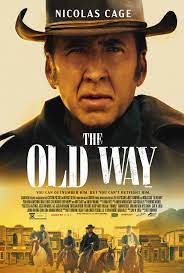
THE OLD WAY
US, 2023, 95 minutes, Colour.
Nicolas Cage, Ryan Keira Armstrong, Noah Le Gros, Nick Searcy, Kerry Kruppe, Clint Howard.
Directed by Brett Donowho.
Westerns seem to have found their place on television rather than on the big screen in the 21st-century. However, as the title suggests, here is a Western that reminds us of the old days, the old ways, including beautiful scenery in Montana, a musical score that is reminiscent of the classic scores of films like The Big Country.
The film opens with a lynching, a wealthy man accusing the victim of non-payment, townspeople crowding around, the son of the victim standing watching. But, also watching is a rather grim character, Briggs, played by Nicolas Cage. And the shooting starts, releasing the accused, the wealthy man shot, Nicolas Cage then taking money from the dead man, shooting those attacking him, shooting dead the father in front of his son.
Then a transition to 20 years later, Briggs now running a store, law and order in the town. He is married and has a young daughter, Brooke (a very strong performance on screen presence by Ryan Keira Armstrong). When a group of gunfighters arrive, we can guess that this is the son grown up and that he is bent on revenge, has served a prison sentence, has rounded up a group of associates, quite ruthless – confronting Briggs’s wife who puts up resistance, her horse killed from under her, her death.
As expected, the film turns into a vengeance pursuit, more complex because of the arrival of the sheriff and his associates, warning Briggs about the law, then caught in an ambush by the criminals and finally left by Briggs in the desert.
Of interest is the relationship between the gunfighter and his daughter (some commentators linking this theme with True Grit). As Briggs explains himself to his daughter, a harsh upbringing, minimal emotions, what we might call aspects of being on the spectrum. The scene of his explanations to his daughter as well as the daughter, very similar to her father, not crying, no grief… Is good strong drama.
And the film has its moments of suspense as to how Briggs will confront his enemies, the role that his daughter will play, and something of a high noon situation in the centre of the town. Not quite the ending we might have expected.
An interesting sequel would be to show what happens to Brooke when she is grown up.
- The title and expectations? A Western? Old stories? Old-style storytelling? For the 21st-century?
- Harsh West, hanging, gunfighters, the law, the changing West, more orderly, legislation, sheriffs? Revenge themes? The musical score, reminiscent of Elmer Burnstein et cetera? The beautiful backgrounds of Montana?
- The opening, the hanging, the taunting of the accused man, the wealthy accuser, the crowd, the little boy watching his father, the gunfighters, the accused cut down, the wealthy man shot?
- The presence of Briggs, silent, unemotional, the shootings, taking the money, being owed? The shooting of the father, the close-up of his son?
- 20 years later, Briggs, quiet, married, the relationship with Ruth, the relationship with Brooke, unemotional, walking his daughter to school, the teacher absent, her going to the store, his work, the long story about the outhouse from the customer (and Brooke later repeating it), stealing the jellybeans, her cleaning them and putting them in separate jars?
- Ruth, putting out the washing, the riders, the confrontation, her resistance, the attack, the house, the barn, riding out on the horse, the horse being shot, their taking her, killing her?
- The audience realising that the leader was the boy grown up, his accomplices, prison, their careers, robberies? The old man, Eustice, and the treatment? The young man and his relationship with the leader? They’re riding off?
- Briggs, walking home with Brooke, the discovery? The sheriff, his posse? Briggs and his not weeping? Brooke and her not weeping, the conversation with the sheriff about her sadness? Briggs burying his wife? The sheriff warning him against vengeance?
- Briggs, packing up, the temptation to kill Brooke, her looking at him? Giving her the rifle, the clothes, the horse, the pursuit, stops, short sleeps, getting water? Hearing the shots?
- The gang, the ambush for the sheriff and his men, the shooting? Briggs arriving, tying up the men, the sheriff and his warnings about the law? His tending to the bullet wound? Taking the horse, promising to leave it, not a horse thief?
- The gang, going to the town, in the saloon, Maria and looking after them? Placing each at the entry, the old man going to sleep, the boss’s treatment of him? the money, to spend it in Mexico? The packages with newspaper?
- Briggs and the plan, the long sequences of the father and daughter talking, insight into their characters, Briggs and his story, at home, emotionless, his way of surviving? A modern analysis – on the spectrum? His career, telling his daughter the truth, the encounter with Ruth, changing him, the store? Feelings of love? Brooke, the same, unable to weep, her father trying to coach her how to weep? Sending her into the town?
- The boss apprehending her, the group on the lookout for Briggs entering, the shooting? The discussions between the boss and Brooke, comparing fathers and fates?
- The buildup to the confrontation, a high noon in the street, the boss and holding Maria, the guns? The talk, the memories of what happened in the past? Briggs quick on the draw, Brooke and her quick action? Wounded, his daughter attending him? The death of the boss?
- The ways of the old west? Changing times? An interesting possibility for a sequel of Brooke in 10 years time…?
