Displaying items by tag: Peter Malone's Movie Reviews
Exorcism, The
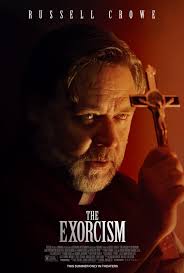
THE EXORCISM
US, 2024, 93 minutes, Colour.
Russell Crowe, Ryan Simpkins, Sam Worthington, Chloe Bailey, Adam Goldberg, David Hyde Pierce, Adrian Pasdar, Samantha Mathis.
Directed by Joshua John Miller.
The Exorcism was released in 2024 although information is at hand that it was filmed at the end of 2019. Russell Crowe appeared as the Vatican exorcist in 2023, The Pope’s Exorcist. This seems to have offered an opportunity for The Exorcism to be released.
Interestingly, the film has been cowritten and directed by Joshua John Miller. He is the son of the actor, Jason Miller, who played Father Karars in The Exorcist – although Joshua John Miller was born the year after the film’s release but he may have been drawing on family discussions in the ensuing years about the film and its effect on his father.
The film opens eerily with an actor walking through the various storeys of the set, rehearsing his lines, then suddenly attacked and killed. Which means that there needs to be re-casting.
This is a film about the making of the film with some scenes of the film within the film. There is an elaborate set, the multi-storyed and a basement, the basement used, of course, for a dramatic climax. On the whole, the film is, literally, very dark. The apartment of the actor is full of shadows, sometimes sinister. Most of the action takes place on the set with some interior darkness. While there are some moments outside the apartment and the studio, they are generally night scenes, also dark.
And, the theme of the film is dark. Russell Crowe plays an actor, a back story of alcoholism and addiction, neglected wife and daughter, to rehab, being offered the role of the exorcist priest in the new film – which has links to the original, the screenplay in the film called The Georgetown Project. The name of the actor is Tony Miller – same surname as the director.
Tony Miller is diffident, is interviewed, does readings, gets the role, ups and downs in performance, some reconciliation with his daughter (Ryan Simpkins), suspended from school, attracted to the young actress who is playing the possessed victim in the film (Chloe Bailey). Things begin to go more wrong, the actor becoming more and more possessed, building up to an exorcism confrontation, especially with the priest adviser to the film, an unexpected appearance by David Hyde Pierce.
Final dramatics and melodramatics of exorcism. Compared with of the Exorcism films, this one seems rather slight in its imagination, not an essential exorcism film at all, but it must be said that Russell Crowe certainly gives his serious best in his performance.
- Continued audience interest in films of exorcisms? The references here to the original Exorcist? The Georgetown Project? And the writer-director, son of Jason Miller, Father Karas?
- A film about the making of the film and the film within the film?
- The opening, the priest, rehearsing his lines, going through the set, the eerie experience, his death?
- The focus on Tony Miller the introduction, his back story, Catholic, altar boy, abuse and the flashbacks to the sequences, alcohol, the death of his wife, neglect of his daughter? Rehab? Only going to the confessional, after 40 years, the return to the confessional? The offer of a comeback? Diffidence? Preparing the lines, his daughter returning, her suspension, his reactions? Rehearsing his lines with her? Encouraged by her? Making her his PA?
- The director, his background, intentions, the choice of Tony, the discussions, the readings, interviews? The decision for Tony to act in the film?
- The darkness of the film, even in the brief outdoor sequences, at night? The apartment dark? The set, the house with its several storeys? The musical score?
- The signalling of the days of shooting? Tony, the scenes, his renditions, the director and his advice, dissatisfaction? The effect on Tony and his performance? At home? The temptation to drink? His finally succumbing?
- The actress, Blake, the role of the possessed woman? Friendship with Lee, sharing, the sexual encounter?
- Tony and his gradual deterioration, his becoming possessed? Not himself, the threats to others, confrontations, with Lee, her desperation?
- Father Conor, expert advice, Tony asking about why he became a priest, his heroes? His study of psychology? The discussions with the Lee, the confrontations with Tony?
- The desperation of the film crew? The pressure to get the film made?
- The buildup to the climax, the basement in the set, the eerie atmosphere, Lee going down, Fr Conor offering himself? The behaviour of the possessed Tony, the priest and Blake, paralysed? Lee and the confrontation? Prayers, the litany of the saints, Tony recovering, Fr Conor and his being overcome, destroyed?
- The culmination of the experience, this film as an exorcist and possession film, and the speculations about the effect of such a theme on the cast and crew?
Kill Room
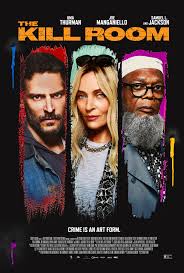
THE KILL ROOM
US, 2023, 98 minutes, Colour.
Uma Thurman, Joe Manganiello, Samuel L.Jackson, Amy Keum, Maya Hawke, Dree Hemingway, Jennifer Kim, Larry Pine, Candy Buckley, Tom Pecinka, Nikolai Tsankhov.
Directed by Nicol Paone.
As the title for a film about competitiveness in the art world, The Kill Room doesn’t seem quite likely.
In fact, the film does open with a murder, a seemingly charming man walking along the street, Joe Manganiello, reacts to an insult and kill someone. It emerges that he is a hitman, completely amoral, but with potential charm. Samuel L.Jackson plays a shady character, involved in the food industry, but with links to organised crime.
The other strand of the film focuses on Patrice, Uma Thurman, director of a Gallery, caught up in high society, but in financial needs. Then comes the strange linking of the two worlds.
The proposal is that the hitman attempt some paintings – but, surprisingly, is successful. The scheme for his paintings is money laundering with the paintings sold but staying in the Gallery. However, Patrice’s enthusiastic assistant, is keen to promote them. Consequently, the hitman becomes a celebrated artist, called The Bagman, with exhibitions and sales.
So, this is a satirical comedy, critique of cut throat action in the art world, paralleling it with the world of organised crime and hits.
The comparison would be Velvet Buzzsaw which had a star cast also critical of cut throat action in the art world.
- The title? The finale and the storage of empty cases?
- The satiric perspective of the film? Serious themes? The hitman, dealing, money laundering, the bosses? The contrast with the art world? Bringing them together?
- The city settings, the bars, the Jewish bagel shop, the art gallery, streets and buildings, but exhibitions, the studio for The Big man? Atmosphere? Musical score?
- Introduction to Reggie, of the incident, the killing? The continued hits? The later background to Reggie’s life, his sister, trouble, her addiction, his helping her out, the murders? The gang bosses? The relationship with Gordon? Is to do the paintings, seeing him at work, his reaction to be an artist, introduction to the art world?
- Patrice, her gallery, her drug habit, financial difficulties, the story of her cutting off a famous artist, her motivations? Leslie as her internal? Discussions with Greece, the paintings, grease and her anger? The various rivals, Fern, Annika, the power of The Kimono and her articles? Different clientele? The exhibition, no sales, her later explaining to Reggie Greece’s childhood and her paintings? Her financial difficulties?
- Her drug habit, connections with Note, discussion about the paintings, note having a painting, Gordon seeing it, the idea for laundering money through art? His visit to Greece, their interactions, her refusal? Growing financial difficulties, going to see Gordon, Gordon commissioning Reggie to paint, her reaction to the paintings, promotion, the sales, the money laundering? Leslie and her enthusiasm, the word getting around, the rival painters, The Kimono, the clients? Are getting in deeper?
- Reggie, the painting, the effect, the demands on his revealing himself, his secrecy, the paintings, the plastic bags, his arrangements, Patrice exhibiting them, the reality of the murders? Her visiting the studio? Talking with him, explanations, finding something of his inner self? The exhibition, the Kimono and the interview, the various jealousies?
- Patrice, having the money, going to the functions, the snide remarks of people? Leslie, her enthusiasm?
- The gang bosses, the control of Reggie, the links with Gordon? The confrontation at the paintings, the session with Patrice and Reggie?
- Patrice, the discovery of Reggie’s being a hitman, her vomiting, the video? Interpreted as response to the art? Her idea, greater fraud, the connection with Annika and her assistant, the information about the oligarchs and their paintings? The plan, Miami, the exhibition, the secrecy, everybody assembled, the filming of the encounter, Reggie in the bag over the oligarch, the mobster coming in, killing the oligarch, killing the assistant? Everybody seeing it as video, applauding?
- The reputation of the bagman? System of carting artworks to diverse, the bodies inside? Reggie, the boat, to Cuba and is disappearing? Patrice, the final conversation with Gordon? And the box arriving at the Kill Room?
Sniper:Rogue Mission
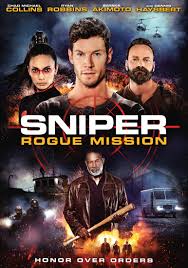
SNIPER: ROGUE MISSION
US, 2022, 96 minutes, Colour.
Chad Michael Collins, Ryan Robbins, Sayaka Akimoto, Dennis Hayesbert, Brendan Sexton III, Josh Brenner, Jocelyn Hudon, Paul Essiembre, Erik Athavale.
Directed by Oliver Thompson.
The Sniper franchise began in the early 1990s, the lead being Tom Berenger. The film was popular but, in the 2000s, quite a number of sequels were made, Tom Berenger appearing in some of them, but the establishing of a character, his son, played by Chad Michael Collins, eventually reuniting and working with his father. This film is the 10th in the series – and there was another to follow.
Chad Michael Collins is not exactly in the pattern of Tom Berenger, rather tall and thin, not quite the military type, but a top Sniper. His friend, Zero, played by Ryan Robbins, appeared in some previous films and continues into the next. And, throughout a number of the films, the CIA chief is played by veteran Dennis Hayesbert. The expert assassin from the previous Sniper film, Sayaka Akimoto is on side with the heroics in this film.
Reactions to this film have been mixed, some praising it as an effective action show, others comparing it quite unfavourably with the previous films. For the record, this reviewer found this episode entertaining in its action drama way.
The focus of the film is on an international human trafficking ring, recruiting in Europe, gathering the women in London, with the support of an American CIA official, transporting them to the United States in containers, setting up outlets for trafficking in the US.
On the one hand, Zero is suspicious of the American official and asks the hero, Beckett, for surveillance on him as he is supposed to arrest the woman who coordinates the trafficking in London. Allegedly, the woman commits suicide, but the official arranges for a false passport and have been transported back to the US in a container with the women.
On the other hand, there is a sequence where a gang, taking orders from the trafficking bosses, invade a caravan where the women are available for online sexual performances – a massacre, though one of the workers advises one woman to escape.
It all comes together when Beckett arrests the corrupt official who demands Beckett’s immediate standing down, challenging the authority of the CIA. Which means, of course, Zero and Beckett will take matters into their own hands, and the assistance of the girl who escapes, are pursued by members of the gang, especially a sniper.
The action keeps moving right throughout – and, there is something of a twist at the end. And audiences should look at the credits, especially at the end, preview of coming attractions and sequels.
- The popularity of the Sniper franchise? Tom Berenger’s presence? The sequels, the revelation about his son? The son, his talent, Sniper?
- This title, the mission, human trafficking, Europe, London, containers to the United States, exploitation? The CIA, corrupt officials, Beckett and Zero and the Rogue Mission? Success?
- The London settings, the Embassy, surveillance, the apartments, the luxury home in the country? The contrast with the United States, the Port, the containers, the setting up of the women, online sexual displays? The raid and the massacre? The city, hotels and refuge, snipers, the shootouts in the street? The musical score?
- The situation, Beckett and the surveillance, the corrupt official, the woman and her not being arrested, the pictures of her suicide in the bath, his arresting the official, reprimanded by the authorities, the challenge of the corrupt official, Beckett and handing in his badge? His friendship with Zero, Zero suspecting the corrupt official, Beckett returning to the US?
- Beckett, his challenge to the corrupt official, the boss of the CIA, the challenge to the official, to pursue him, following him to his country house, the setup, the confrontation, his arrest?
- The scene of the massacre, the squad coming in, the shooting of all the women, Mary Jane being warned by Simon, her escape? Dax as the boss, his rages, Rosie as the tough man, his brother, the sniper? The pursuit of Mary Jane? The sniper, failing to shoot her? The interrogation and the police and shot?
- Mary Jane, the background story, the phone number for Simon? Beckett and Zero, shielding her, her suspicions, relying on Zero’s ex-wife, her reaction, her enthusiastic husband?
- The finale in the town, Sniper on the roof, Beckett in the hotel room, the phone messages, Simon giving them the information, his death?
- Memories of Yuki from the previous film, tracking her down, the diner, her escape, and intelligence Pete helping her, persuading her to collaborate, Pete and his breaking all the codes, Mary Jane with him?
- Yuki, participation, protecting Mary Jane, the thug, the fight? The sniper, the shootings? Zero and his confrontation with the Dax, the fight in the elevator, Dax and his death? The sniper and his fears – taking the car, returning and embraced by his brother?
- The information about the Port, the surveillance, the container, Yuki and the fights at the port, the coordinator and her false passport, escaping, on the road, being picked up, the irony of Mary Jane, killing her? Mary Jane then quietly returning to Intelligence Pete and his podcast puzzles?
- The achievement, the CIA boss, everybody gathering – and getting ready for the next sequel?
Fabulous Four, The
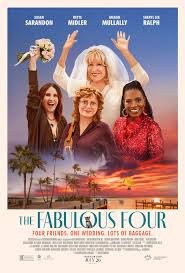
THE FABULOUS FOUR
US, 2024, 98 minutes, Colour.
Bette Midler, Susan Sarandon, Megan Mullaly, Sheryl Lee Ralph, Bruce Greenwood, Kadan Well Bennett, Timothy V.Murphy, Michael Bolton.
Directed by Jocelyn Moorhouse.
On the one hand, a 99 minutes promotion campaign for Tik-Tok. On the other hand, a 99 minutes promotion campaign for Tik-Tok.
The title is exciting. Fabulous. And the four are old friends, definitely old, stars Bette Midler born 1945, Susan Sarandon, 1946 and Megan Mullaly and Sheryl Lee Ralph in the mid-1950s. Their friendship in this story goes back more than half a century, back to college days and shared rooms.
But, Marilyn, an irrepressible Bette Midler, audiences enjoying her irrepressibability, is now a widow, takes off for Ernest Hemingway territory, Key West, Florida, where she and her husband of 48 years used to go on vacation. Suddenly, a chance meeting, engagement, marriage again and lots (and lots) of Tik-Tok, Marilyn confessing she is Tik-Tok addict.
What follows is extroverted, ebullient, so a psychology warning. Strong extroverts will be caught up in all the hoopla. Those more introvertedly inclined may well find this too much, possibly needing some breaks, long and frequent pauses when streaming viewing.
Marilyn’s two friends, Alice, a singer, drugs, promiscuous (Megan Mullaly from Will and Grace only much more so) is hard to take. Kitty, Sheryl Lee Ralph, a botanist, with family problems. But there is the very serious Lou, Susan Sarandon, a noted heart surgeon who has strong emotional responses from being once a best friend of Marilyn, now alienated.
Most of the action takes place in a gaudy-looking Key West, plus some affluent bars and mansions.
A lot of the action is frivolous, even farcical, hedonistic and everyone having a splashy good time. But Susan Sarandon and Bruce Greenwood bring some serious dimensions to characters and the situations. Some of their quiet conversations and self-revelations can be a bit of relief for the quiet audience, but long interruptions for those who want to get on with it. And, of course, ultimately there is a move towards apologies and reconciliation.
Surprisingly, the film was directed by Australian Jocelyn Moorhouse (Proof, The Dressmaker). She is certainly letting her hair down here, culminating in an all-dance sequence, “I can see clearly now, the rain has gone…”..
Calling these characters fabulous is, as the Americans might say, pretty much of a stretch.
Baby Ruby

BABY RUBY
US, 2022, 93 minutes, Colour.
Noemie Merlant, Kit Harrington, Jayne Atkinson, Reed Birney.
Directed by Bess Wohl.
Baby Ruby sounds very nice as a title for a film. However, this is a serious film, touches of anxiety, depression, psychosis.
While the setting is the United States, the leading actors come from outside the US, Noemi Merlant is French and this is referred to, while Kit Harrington, famous for Game of Thrones) is British. He is a butcher in a small American town. She is pregnant, an Influencer with her posts and articles online, with quite a following, especially in the town. At the opening of the film, she is preparing a baby shower for herself and the child to be born.
Response to the film will depend on perspectives and experience. There is the male experience, the experience of fathers. There is the female experience, of pregnancy, giving birth, of post-partum anxiety.
After the birth, Jo finds the continued crying of the baby most stressful. However, over the time, tending the baby, feeding it, getting exasperated, going to the doctor who reassures them that there is nothing wrong with the baby, she becomes more and more depressed, more anxious, some quite erratic behaviour, even sexually, with a neighbour, her husband puzzled, her seeing suspicious aspects everywhere, and the presence and comments from her mother-in-law.
The mother has some hallucinations – and some wondering whether the whole film is something of a hallucination.
The film is a portrait of a mother becoming more and more desperate, a nice husband and his inability to help, a mother-in-law his who is both interfering and supportive.
- The title, a film about mothers and babies, pregnancy, expectations, birth, post-partum anxieties, psychosis?
- The American town, ordinary, the butcher, the influence and her friends, testing, doctors, ordinary life, sinister aspects of ordinary life? The musical score?
- The focus on Jo, French background, in the US, married to Spencer, online, her posts, influence, admired? Spencer, ordinary, the butcher, love for his wife? His mother and her presence, dominating, helpful, critical?
- The pregnancy, the preparation for the Baby shower, the women arriving, the happy situation? The beginnings of Jo and her apprehensions? The birth?
- The consequences for Jo, love for the baby, calling her Ruby? Spencer and his devotion? The friends wanting posts about the baby, Jo not putting them online?
- Audience identification with Jo, women’s perspective, man’s perspective, mothers, fathers, grandparents? Empathy with Jo and her tensions? And the baby crying?
- The effect on Jo, the continued crying, her anxieties, depression, behaviour? Yet her love for the baby, the books, the visit to the doctor, nothing wrong with the baby, his seeming criticism, her reading, thinking that the baby was trying to communicate with her?
- The consequences at home, Spencer and his devotion, trying to help, at work? The baby crying, the nights, during the day, outings? Time passing?
- Doris, her presence, her comments, criticisms, support? Her story about Spencer as a baby and the difficulties?
- The ominous aspects, the memory of the woman approaching Jo at the store, not allowing her to remove the cover to disturb the baby? Her being part of the group? The later encounter is, in the street?
- Jo, more anxious, wanting to go out, the party, her drinking, the sexual encounter, as a dream or reality, the aftermath and the woman explaining the experience? Sinister suggestions and suspicions, the meat from the butchers…?
- The cumulative effect on Jo, medication, institution, becoming calm, coming home again, the baby crying, the baby giving a message?
- The buildup to the ending, ominous, and the tension for the audience, whatever their experience of babies, for anxiety for mother and child?
Deadpool & Wolverine
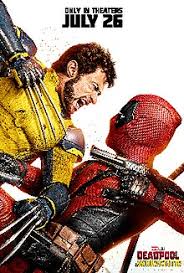
DEADPOOL & WOLVERINE
US, 2024, 128 minutes, Colour.
Ryan Reynolds, Hugh Jackman, Emma Corrin, Matthew McFadyen, Jon Favreau, Marina Baccarin, Rob Delaney, Leslie Uggams, Jennifer Garner, Wesley Snipes, Channing Tatum, Chris Evans, Henry Cavill, Tyler Mane, Blake Lively, Nathan Fillion, Matthew McConnaughey.
Directed by Shawn Levy.
Probably best to say at the outset, Deadpool & Wolverine is beyond review. Within two weeks of its opening around the world, its box office is almost $1 billion. Which means that worldwide, it has been instantly seen by millions. With much more to follow.
It does raise an interesting 2024 question concerning the two films which have been most successful, Inside Out 2 and Deadpool and Wolverine. What they have in common is the animation/cartoon style. And they appeal to a wide audience. However, Inside Out 2 is appealing to deeper human feelings, to sensitivity and empathy. Deadpool & Wolverine is appealing to an emotional bonanza, excitement extravaganza, no holds barred, limitless imagination, potential cosmic destruction, violent visual conflict between good and evil, and superheroes to the rescue. And, not exactly modestly, Deadpool considers himself as a world saviour, a ‘Marvel Jesus’, booking his place in future Christ-figure studies.
There were a lot of writers for this film, including Ryan Reynolds, and it is full of disposable, throwaway quips, some of them very funny, references to the ups and downs of the Marvel film franchise, Disney, a collapsed Fox logo, to Hugh Jackman and his divorce, but there for the attentive satirical ear.
And the film presupposes favourable response to Deadpool in the Ryan Reynolds style (and a later Reynolds variation appears, over nice with the pet dog, Dogpool). Wade Wilson with his mixed history and burnt face, is eager to be in Avengers story, but put on hold. However, as always with American films, there is a bureaucratic British villain, Matthew McFadyen (now widely-known because of his presence in Succession). There is a bureau for saving timelines, there is a threat to the universe, Deadpool is there to combat but the only person he wants to work with is Wolverine. (And a bevy of jokes about a range of alternate Wolverines, visualised comically, all Hugh Jackman-aggressive). Probably this is the moment in a review to mention what one might call hyper-frequent coarse language.
There are also constant references to the previous Deadpool films as well as to the many X-Men films which fans will enjoy (and quite some entertaining references during the final credits). A surprise for the early viewers of the film but now everybody knows, a lot of cameos from previous superheroes like Wesley Snipes as Blade, Jennifer Garner as Electra, and especially Chris Evans as Captain America and a French-accented Channing Tatum. Even Ryan Reynolds’ wife, Blake Lively, appears as Lady Deadpool!
While it is acknowledged with specific reference to Furiosa, a large part of the early film is an extravagant variation on the Mad Max movies. Then we discover a new villain, Cassandra (Emma Corrin), a bald half sister of Patrick Stewart’s Charles (though he and, up till now, we, never knew about her). And she has super destructive powers. Which leads to quite a lot of mayhem, extravagantly high body count, the confrontation with a legion of Deadpool variations and their slaughter – but the power of regeneration and the possibility of it all over again.
So, it looks as though this is the entertainment to cheer worldwide audiences in the Groupe of so many war tensions, civil wars and invasions, terrorism of 2024. As they say, the audiences have been lapping it up – but, those with more restrained sensibilities, might find it more than they can gulp or swallow.
I Love My Dad
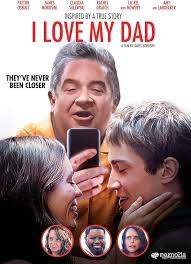
I LOVE MY DAD
US, 2022, 96 minutes, Colour.
Patton Oswalt, James Morosini, Claudia Sulewi, Lil Rel Howery, Rachel Dratch, Amy Landecker.
Directed by James Morosini.
I Love My Dad has been billed as a comedy. But it is a very black comedy, wry, making its audience uncomfortable.
Comedian Patton Oswalt is very effective as the father who has made excuses not to be a at events of his son’s growing up, is worried about his son now an adult, tries to reach out but fails, the son resenting him. He creates the situation of an online friendship, his pretending to be a young woman whom he has seen at a diner, sending her photo, phrasing his own outreach to his son through this waitress character.
The son has mental and emotional problems, resenting his father, lives with his mother, goes to group therapy. But he responds very well to the outreach from Becca, the waitress, the film showing his response, and using the device of having the waitress present in communications with the son, dancing in the street, conversations and advice, sexual encounter.
The father uses his sexual experience with his boss and getting her to phone the son. Later, she realises what she has done, reaches out to the mother who is very angry.
When the father decides to drive his son to meet the waitress, there is a dramatic episode in the diner and the eventual revelation of the truth.
However, there is some forgiveness at the end – and the son himself using the device to get his father to come to live near him and his mother.
The film was written and directed by James Morosini who says that the interaction between father and son is based on his own experience.
- Based on the experience of the writer-director? Serious, comic?
- The emotional response of the audience, uncomfortable, identification with father, with son, with mother, with the boss, with Becca the waitress? Mixed emotions?
- The situation, as explained by the father, the bond with his son, all the excuses for not attending special events, the response of his son? The adult relationship? The father excusing himself, wanting to make amends?
- The situation of the son, mental health, self-destructive, relationship with his mother? Going to meetings, his glum contribution? His skills in design? Prospects? As a personality, audience identification with him, or not?
- The father and his plan, discussions with his friend, the reactions of his friend? Warnings? The father and the diner, seeing Becca? The picture? Setting up the situation on the Internet, contacting his son, the son’s response, the continued correspondence, the father and his outreach? Good sense, common sense, mistakes? His relationship with his boss, persuading her to participate? His own sexual experiences, into the texting?
- The son and his response, enthusing, the correspondence, the device of having Becca present, dancing in the street, the sexual encounter, the conversations, friendship? His complete involvement? His mother’s reaction?
- The father, the complications of the situation, his son wanting to meet Becca, the father driving all the way? The discussions, the devices of the continuing texting, the effect on the son, the father and his dilemmas, at the motel, in the car?
- The boss, her contacting the mother, the mother and her anger, her threats to the father?
- The episode in the diner, the real Becca, the son and his advances and behaviour, the father in the kitchen, keeping the busboy away, the eventual explosion? The father and his confession? The son’s reaction?
- The son, still loving his father, despite the situation? His job and the references from Becca? And his sending his father the letter about the vacant apartment opposite the house, the father’s rival, the mother’s reaction, the realisation of what it happened?
Miller's Girl
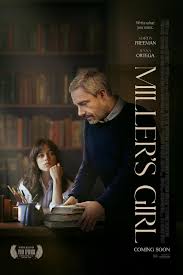
MILLER'S GIRL
US, 2024, 96 minutes, Colour.
Martin Freeman, Jenna Ortega, Bashir Salahuddin, Gideon Adlon, Dagmara Dominczyk.
Directed by Jade Halley Bartlett.
This is not a film for the wide audience. It takes a very serious subject, teacher-student relationships. However, the screenplay is filled with excerpts from literature, especially from Henry Miller, his sexual subjects and style, actually not permitted to be taught in the school in the film. There are many other literary references and literary discussions which may be too much for the wider audience.
British actor, Martin Freeman (The Hobbit, Dr Watson to Benedict Cumberbatch’s Sherlock Holmes) at a small American school, creative writing, himself a published author of short stories, resigned to being a teacher rather than success as a writer. He has a brittle marriage with his wife, preoccupied with her work, alcoholic.
Rising star Jenna Ortega (Wednesday, Scream) is a wealthy 18-year-old living in a mansion while her parents travel abroad. She is well read and has ambitions. In her encounter with her teacher, she reveals her talents, he is intrigued, becomes infatuated and affected by her, she controlling the situation, writing a story based on Henry Miller which has quite a psychological sexual effect on her teacher.
Feeling some rejection and the criticism of her story, she reports him to the school’s principal, leading to questioning, suspension, and her being vindictive, even to her close friend at school.
Another variation on the dangers of teacher-student relationships and involvement.
- The name, Miller? The character, the novelist Henry Miller, his books, his themes, sexuality, relationships, obsessions?
- The American town, remote, school, classes, lecturers, the principal? Other students? The literature class, the students, the reading, the assignments, their stories? Jonathan Miller, leading the class? The friendship with Boris and his presence?
- Martin Freeman as Jonathan Miller, middle-aged, the writer, his ambitions, disappointments, the tension in his marriage, his wife drinking, her work, his resentments? Love of literature, option to teach, the encounter with Cairo, that she had read Finnegan’s Wake, his admiration, comments to Boris? His interest in her, her living alone, coming through the woods, the discussions, the assignment, her story, Henry Miller and his not being allowed to be taught at the school, the continued meetings, the effect on Miller, the effect on Cairo, teacher-student relationship?
- Cairo, the story about her parents, living in the mansion, alone, through the woods, her friendship with Winnie, Winnie and her blasé attitudes, seductive towards Boris, the discussions about sex and sexuality, about her relationship with Miller, the writing of the story, the sexual encounter with each and her later using it to intimidate Winnie? Her background, wanting to be a writer, her extensive reading?
- The teacher-student relationship, the shared discussions, very literary, the meetings, outside, smoking, Boris present, the phone call, calling in at her house in the evening?
- Boris, friend, teacher, sounding board for Jonathan? With Winnie?
- Jonathan, the infatuation, her work, the sexual effect on him? His wife’s interrogation? The consequence of his trying to be detached?
- The effect on Cairo, her reporting into the principal, his being called in, the discussions, his defence, her insistence? The effect on him?
- At home, the taunting of his wife, interrogation? His loneliness, suspended? Cairo’s victim?
- Cairo, vindictive, seductive, and the collapse of her friendship with Winnie?
- The literary nature of the screenplay, limiting the potential audience not familiar with literature or interested in hearing lengthy excerpts and discussions?
- A variation on seduction and the teacher-student relationship?
Ka Whawhai Tonu, Struggle without End
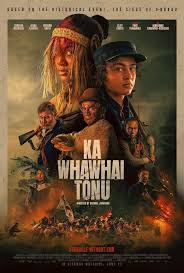
KA WHAWHAI TONU - STRUGGLE WITHOUT END
New Zealand, 2024, 115 minutes, Colour.
Temuera Morrison, Paku Fernandez, Hinerangi Harawira-Nicholas, Jason Flemyng, Ariana Smith, Te Wakaunua Te Kurapa, Cliff Curtis, Jack Barry.
Directed by Mike Jonathan.
The middle of 2024 was a significant time for the release of significant New Zealand films, significant films with Maori themes. Firstly, Lee Tamahori completed his trilogy which began with Once Were Warriors in 1994, and his going back to the 1930s, the tribal warfare, the establishment of colonial towns, conflicts, The Convert. Soon after came the contemporary story The Mountain, directed by Rachel House, symbol of Mount Taranaki and three 11-year-olds wanting to climb it, opening up themes of Maori lore. And now this film with its Maori title, boldly asserting Maori language and presence, and an English subtitle, Struggle Without End.
The action of this film moves thirty years on from the 1830s of The Convert. This is a time of rebellion, a gathering of tribes, a rebellion, the taking of a stand at a fort, the attack of the British colonial soldiers, the onslaught, a subjugation.
Again, as with The Convert, the cinematography of the New Zealand landscapes is beautiful and significant. As is the musical score.
The context of the narrative is the gathering of the tribal leaders, discussions about war, possibilities for peace, the significant leader, Rewi (played by Temuera Morrison 30 years after his significant role in Once Were Warriors) is fierce, traditional beliefs, but acceptance of Christian faith (and a cameo from Cliff Curtis as a priest, Curtis also being a star of Once Were Warriors), wanting the possibilities for peace. However, there are other fierce Warriors who want action, bloodshed.
This is the framework for a central narrative which focuses on a teenage lad, Jack (an effective performance from Paku Fernandez), Maori mother, White soldier father (Jason Flemyng) who is captured, bound and gagged, telling a story of simply wanting to visit his grandmother. Also in the camp is a young woman who is considered to have special powers, contact with the gods, visions. She is Kapu, manipulated by her ambitious mother, set in a kind of shrine, special garb and head coverings, having some mystical experiences and visions, but also young and lonely.
Most of the language of the film is Maori but, just as we might be thinking of Romeo and Juliet, a moment of English-language actually refers to “star-crossed lovers”. So, with the expected sequences, brutal as they are, of the British soldiers’ advance, of the fort defence, of massacre, there is also the story of Jack, at first skilfully helping with making the bullets, but then an escape with some of the younger people from the Fort.
But, there are moral dilemmas for Jack, rejoining his military father, memories of his own service and some of the brutality he had to participate in, at a crossroads in his life, the impact of his British military upbringing, his love for his mother and sadness at her death, and an option for following his Maori heritage.
In many ways, the colonial-Maori clash is as expected, but is enhanced by the personal, young story at its core. And, at the end, there is information about the decline in the Maori population during the 19th century, but also about the changes and developments in place for Maori peoples at the end of the century into the present.
- The title, the Maori language, Maori-assertion, history? For the Maori audience, for the wide New Zealand audience, beyond New Zealand?
- Audience knowledge of colonisation in the 19th century? The British, the towns, the impact on the Maori peoples, tribal warfare, Treaty of Waitangi, the uprisings and rebellions, the massacres, the 19th century history, the beginning of the increase of the Maori population, rights, place in New Zealand society?
- The 1860s, Britain as a colonial power, the soldiers, the forts, weapons, rifles and muskets, uniforms, distinctive? Recruiting among the Maoris? Intermarriages and children? The film’s focus on the uprising, the oncoming British forces, the shooting and deaths? The final colonial victory? The consequences?
- The gathering of the Maori warriors, Rewi and his leadership, status, personality, the Maori markings, his language, yet his wanting peace, the Christian traditions, his relationship with the priest, the singing of hymns? In the tradition of the gods, the regional and tribal gods, mystic communications?
- The other warriors, their fierceness, wanting war, taking of Jack, wanting him to be a sacrifice, the fierceness of the warriors, but their possessing the weapons, readiness to fight?
- The place of Kopu? Her age, set aside by her mother, her mother’s ambitions, as channelling the gods and power? Her adornments, alone? The trances and visions? Yet her not wanting this position, rebelling against her mother? Her mother’s aggressive power? Her mother later with the soldiers?
- Jack, the gradual revealing of his background, his Maori mother and grandmother, his father a soldier, Jack and the army, his being captured, truth and lies, saying he was going to see his grandmother, his being bound and gagged, speaking to Kopu, engaging her sympathy, sharing his loneliness? With the warriors, those wanting him to be sacrificed, those for keeping the peace?
- The younger members of the Maori group, boys and girls, their status? The baby? And the role of the older women?
- Under siege, the making of the bullets, Jack and his skills, working? His attempts at escape? Being returned?
- The advance of the British, the role of Jack’s father, seeing him in the flashbacks, in command, ruthless? The advance, shooting, the many deaths? The remnant?
- Kopu, interactions with Jack, his offering to help her escape, with the young children, the escape, through the bush, hiding, the pursuit of the soldiers? The young boy wounded, their carrying him? The vision of the town where Jack came from? The song? The findings, all the dead? Another town, the different letter in spelling?
- Jack, leaving the group, going back, his father finding him, his salute, his role with the Army, memories of his mother in the flashbacks, his conscience, his father commanding him, especially the people in the hunt, his setting fire, his father getting him to shoot the victim? His father’s love for him, his sternness? Jack, making decisions, the escape?
- Jack with the horses, rejoining the young ones, the death of the boy? The arrival of Jack’s father, the confrontation? The arrival of the warrior? their fight, the sword, the cudgel, the deadly fight? The death of Jack’s father?
- The consequences, Jack and his future, his options, with Kopu and the children?
- The consequent information about the putting down of the Maori peoples, gradually increasing in number, during the 20th century, to the present day?
No Negociable/ Not Negotiable
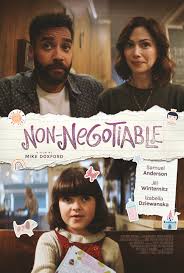
NOT NEGOTIABLE/ NO NEGOCIABLE
Mexico, 2024, 87 minutes, Colour.
Mauricio Ochmann, Tato Alexander, Geraldine Zonat, Fernanda Borches, Enoc Leano, Leonardo Ortizgris.
Directed by Juan Taratuto.
While the film opens with something of a light touch, even in a hostage mediation scene, quickly mediated with success, and the mediator and his psychologist wife are sparring, observed by the young daughter, the possibility divorce, their going to couples therapy and arguing strongly, but six Negotiable has serious political themes.
We are introduced to a mysterious shopkeeper who fixes machines, is revealed, with an associate, to have a huge basement technological operation for surveillance. They then abduct the president who is on a tryst with a Congresswoman from the opposition. And the abductor wants the mediator to be the only person negotiating with him, even abducting his wife through her physical fitness coach.
The latter part of the film moves quite swiftly, the authorities, the mediator, the abductor and his demands, a lie detector and a charge whenever the president answers with false information.
And, there is a revelation of the back story of why the two men are in confrontation. So, time limits, expectations, action, a seeming resolution – and final revelation is about political corruption.
The film serves as something a rallying cry of what might happen to expose corrupt leaders.
- The title? Hostage situations, mediation? Negotiations, blocks?
- Mexican film, the setting, the city, the neighbourhoods, the initial abduction sequence, homes, therapy sessions, apartment blocks, hostages, surveillance headquarters? Atmosphere? The musical score?
- Alan Bender, introduction, with his wife and daughter, in the car, the squabbling, his going to mediation, smooth talking, appealing to the sentiment of the abductor, his dog…? At home, tensions at home, his promise not to be away all the time, not fulfilling it…? Love for his daughter? Arguments with his wife?
- The wife, psychiatrist, therapy, her client, the connection with the school, her daughter, her frustrations with her husband, the arguments of the therapy session? The fitness supervisor, the relationship?
- The introduction to Vicente, kindness towards the old lady, fixing her machine? Underground, the extensive technology, surveillance? His associate? The abduction of the president, in the car park, the guard in the boot of the car, president, his rendezvous, the Congresswoman? Their being tied up, Vicente and his mask on the screen? The motivation, the president and his way of life, the accusations, the buzzer and the charge for every lie?
- Vicente, the back story illustrated, sniper, with Alan, the shooting, the bus exploding, his being dismissed, prison, feeling that Alan had abandoned him? Abducting his wife?
- The government, the secretary of the interior, the revelation of her corruption, the hypothesis of what might happen, the risks to the President, the covering stories?
- The police, Alan and his stuttering assistant, Officer Socorro, her collaboration with Alan, his being warned off, his being singled out, his plans, the pizza and the lie detector, Vicente and his recording the president? The release of the hostages, the revelation that the fitness supervisor was the associate, brother of Vicente’s wife and her death, lack of funds, the money transfers?
- The final meeting, the plan for the release of the president, Vicente willing to go to jail, the video found on the associate, concealed with his wife, the expose, the commentary around the world, in the country, the demonstrations, the janitor hero – and the tongue in cheek ending with his wanting to be President
