Displaying items by tag: Lea Drucker
Tableau Vole, Le/ The Stolen Painting
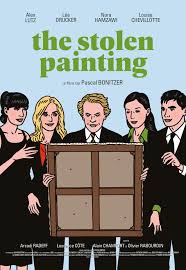
LE TABLEAU VOLE/THE STOLEN PAINTING
France, 2024, 91 minutes, Colour.
Alex Lutz, Lea Drucker, Nora Hamzawi, Louise Chevilotte, Arcadi Radef, Laurence Cote.
Directed by Pascal Bonitzer.
Over many decades, there have been many stories of the art works owned by Jewish families and stolen by the Nazis before and during World War II. More recently there have been too popular stories, George Clooney’s The Monuments Men and Helen Mirren in Woman in Gold.
The artist at the centre of this story is Egon Schiele.
This film opens with a somewhat startling sequence, an elderly woman, blind, discussing the sales of paintings in her house, haughty, racist (and not realising that her servant, African background, is present). In fact, this is not part of the film, but a suggestion for attitudes and bigotry in the art world and an introduction to the central auctioneer, Andre, and his new intern, Aurore..
The core of the film is the discovery of a painting by Egon Schiele in the house of a former German policeman in Mullhouse, now owned by a woman and her shiftwork son, Martin, who have no idea about the treasure on their wall. One of the young man’s friends sees it casually in an art magazine and realises the painting is valuable.
But most of the attention of the film is on the art world, the world of art sales, France, Germany and to the United States, especially where contemporary relatives of the Jews whose artworks were stolen now live.
Andre has a rather prissy manner, not entirely sympathetic, and clashes with his rather aggressive intern (who has a story of her own, alienation from her literary father, questions about her family, and then her schemes and antagonistic attitude towards Andre). But, there is some interest in being introduced to this world, the vast financial implications, for a start, the appreciation of the art or not, just seeing it as another business venture. Then there are the international bidders, sometimes shrewd, trying to undercut auction prices, private international deals…
Andre contacts Bettina, his former wife, an art expert, a much more lively character, but happy to collaborate with Andre in examining the painting, contacting legal help, setting up potential customers, preparing for the auction.
But there is also the story of Martin, the young man, suddenly introduced to an art world that is completely unfamiliar, present at the auction, rather overwhelmed by the sympathy of the representatives of the Jewish family and their generosity towards him and his family.
In fact, the end of the film is quite mellow, Andre having learnt a few more lessons about art and the business world, collaboration with Bettina, but presenting Martin to the banquet of the assembled family and friends after the auction – and their giving Martin, to his bewilderment, a standing ovation.
An interesting story, issues, characters and themes.
- Based on a true story, the Nazis, stealing paintings, rewarding officials? Destruction of paintings? Taken from Jewish families? The aftermath?
- 21st-century art world, the dealers, the auctioneers, the companies, the price of artworks, sales, underselling/overselling, financial perspectives?
- The opening story, setting a tone, the elderly woman, hostility towards her daughter and daughter’s life, her criticisms of people, her maid black, her blindness, the discussions with the dealers?
- Andre Masson, his skills in finance, in art, his deals? Aurora as an intern, the tension between them? Andre and his past, his marriage to Bettina, the separation, his drinking, his being absorbed in his work, his place in the company, his straightforward comments?
- The family, the mother, her friends and conversation, her son, his friends, the card game, their shift work, their friendship, tensions? Having the painting? The young man seeing the art magazine, the contact with the lawyer, her arrival, appraisal, contacting the company?
- Andre, making contact with Bettina, their past life, friendship, the visit to the town, seeing the painting, its authenticity? The discussions with the lawyer, her being away skiing, her return? Andre and his discussions with the members of the company, their personalities, and dominance, plans? The removal of the painting, its exhibition? The German, his entourage and lawyer, his watching the painting, his criticisms of it, his offering 8 million? His plan to undervalue the painting and buy it?
- Martin, his personality, quiet, the clashes with his friends, the friend wanting to touch the painting, the reconciliation? Martin and his mother, his not wanting her to fuss?
- Andre, depression about the secret offer, losing the commission, contacting the member of the family in the US, his visit to France? The offer, the phone calls?
- The background of Aurora, her relationship with her father, lying to him, not want him at home, yet his giving her the rent money, memories of the past, her mother’s leaving, ambiguity about her paternity? Going to the auction, the deal and buying the jacket? Her lies about that? The clashes with Andre, threatening him? Leaving? At the auction, outbidding the bidder, the possibility that he was her father, the clash in the street?
- Her returning to Andre, her experience with her father and books, bids undercutting the real value? Meeting Bettina, the friendship, Andrew and his drinking, the morning after, the discussions, her revealing the plot by the German?
- The phone call, contacting the American, the agreement for the option?
- The auction sequence, Andre and his command, the many bidders, the price rising? Martin present, dressing up, in Paris for the first time, overawed, his lawyer, and her liaison with Bettina? The price, the family offering 10% to Martin? Over $2 million?
- The aftermath, Martin and his weeping, not quite comprehending? The lawyer finding him, the invitation for them to come to the family dinner, Martin and the applause?
- Aurora and her reconciliation with her father, his health? Andre and the offer of the presidency, discussions with Bettina, his refusing, independence, relaxing, his skills in art deals?
- Martin, not telling his friends, continuing the shift work?
- The screenplay’s presumption that people, no matter what, can be their better selves?
Ete Derniere, L'/ Last Summer
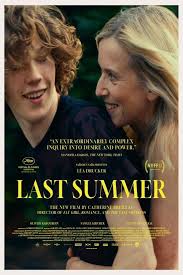
L'ETE DERNIERE/ LAST SUMMER
France, 2023, 104 minutes, Colour.
Lea Drucker, Samuel Kircher, Olivier Rabourdin, Clotilde Courau.
Directed by Catherine Breillat.
The title sounds innocent enough, rather languid in memory. However, this is a film adapted from a novel, written and directed by veteran French director, Catherine Breillat. Over the decades, she has ventured cinematic probes on all kinds of intense personal issues, relationships, sexuality. This is her first film in a decade, taking up an important theme, a relationship between an older woman and a younger man, and this time the younger man is underage.
This issue has been prominent in films in 2023-2024. There was May-December, based on an actual case in the United States. There was the light romantic comedy, A Family Affair, with Nicole Kidman and Zac Efron. There was also the romantic comedy with some serious overtones, especially public targeting of the older woman, The Idea of You, with Anne Hathaway and Nicholas Gallantzine. And, at the same time, there was also a film, Miller’s Girl, with Martin Freeman and Jenna Ortega, taking up relationships between male academics and younger female students.
The film opens strongly with the theme of legal defence for victims of sexual attacks. The central character, Anne (Lea Drucker), strongly professional, intelligent, working with a young survivor for her court appearance, successful in prosecution. She has married an older husband, Pierre, adopted two young girls, her husband having problems with his teenage son, Theo (Samuel Kircher) from his previous marriage.
The drama and the issues begin when Theo moves out from his mother and becomes part of Anne and Pierre's household, surly, on his phone, as always, cantankerous with his father, but delighting in playing with the two little girls who love him. And Theo has a girlfriend who turns up.
Gradually, somewhat surprisingly given Anne’s professional standards, there is an attraction, Theo making advances from his immature perspective, wanting some support and love, Anne succumbing.
Catherine Breillat has always had a very direct, open and frank approach to dramatising this kind of situation. And this is the case here. And, she employs a very forceful cinematic style of photography, the continued use of close-ups, of extreme close-ups of the faces of her protagonists, long takes, letting the audience watch, respond, gauge their reactions, favourable, unfavourable. The affair continues, sometimes lyrical, sometimes passionate. It might seem that we are being invited to favour the relationship.
But, that is the skill of the film. There is the ethical and moral challenge to Anne and her beliefs, legal practice. And the word that some commentators have used about her behaviour is “transgression”. Knowing the ethics, she has allowed herself to be overcome by lustful feelings, compensations, exploitation of the inexperience of the willing teenager.
Which means, that at the end of the film, you six has had to face the reality of her actions, face the consequences, appreciate the impact of the experience on Theo. And, there is a drama of Theo and his reaction, his accusations against Anne, the complexities of his emotions in loving and hating her.
Last Summer is challenging for its protagonists but also offers an emotional and moral challenge to the audience.
- The title, the season, memories, languid?
- The work of the director, themes of relationships, sexuality, conflicts?
- The style of the camera work and its impact for understanding characters, situations, dilemmas? The very long takes, the extreme close-ups of faces and heads? Involving the audience in the personalities, their emotions, choices, decisions?
- The focus on And, her work, the law, abused children, the first client and the discussions, priming her for the court case, the results, her mother, Anne stopping interviews, personality, her manner, style, clothes? Coming home, the relationship with Pierre, his second marriage, his age and job, her love for him, the adoption of the two children, her explanation about the early abortion and inability to have children, her concern about Theo? The life, happy in her work?
- Pierre, his age, divorce, remarrying, the adopting of the two children, the happy domestic sequences, his concern about Theo, Theo living with his mother, adolescent, in trouble, inviting him to come to live with them?
- The background of the two little girls, their backgrounds, adopted, happy, adversity, the martial arts and Theo, playing with him, the trampoline, his being at home with them, their devotion to him?
- Theo, his age, the background, police, trouble, living with his mother, coming to stay in the family, the tension with his father, smoking, the phone, defying his father, his father’s outbursts? Suspicion of An?
- Audiences sensing what was going to happen? The discussion about the tattoos, And her resistance, Theo’s explanations, trying to persuade and, putting the three dots on her arm, the intimacy of the touch? The moment of Theo with his girlfriend, Amanda? The sense of anticipation, wondering, the scenes of An and Theo together, talking, the scooter, the nature of the conversations? The attraction? Passion, lust? The kiss, and at her resistance, the passionate experience, the long time, the focus on faces, the aftermath?
- The comparison with An and her intimacy with Pierre, the long sequence, again the focus on faces? The aftermath?
- And, her relationship with a sister, the beauty salon, with a little girls, her son, coming to the parties? Playing on the trampoline?
- The affair, the further episodes, the effect on each of them? And, the party, Theo and his approach, her sister seeing them? And in the decision to break off, the effect on Theo?
- Pierre, the decision to go away with Theo, his return, the meal, tension, peer telling And what Theo told her him? And is decision to deny?
- The change in and, the denial, her lawyer mode, attacking Theo and his credibility, challenging Pierre and his trust? Her decision to move out?
- Pierre, setting up the confrontation, And her hard stances, Theo and the confused adolescent, his experiences, determination, being taken to the other school, the farewell to the girls?
- The lawyer, Theo and his complaint, the lawyers attitude towards Anne, her professionalism, the deal, the secrecy?
- The seeming piece, her sister and her support? Theo’s arrival, the next encounter, the issue of consent, transcription, the older woman, the law and morality concerning sexual encounters with an underage partner? And her risking her life and career, her family?
- The ending, open, the sister supporting her, the relationship with Theo and his future, and the glimpse of Pierre and his seeming to accept what had happened?
Sainte Famille, La/ The Holy Family

LA SAINTE FAMILLE/ THE HOLY FAMILY
France, 2019, 90 minutes, Colour.
Louis-Do de Lencquesaing, Laura Smet, Marthe Keller, Lea Drucker, Inna Modja, ThIerry Godard.
Directed by Louis-Do de Lencquesaing.
This is very much a film for audiences with a distinctive French sensibility, perhaps, a Western European sensibility. It will probably not appeal or interest audiences with Anglo-Celtic sensibilities.
The title is ironic. The central character, a famous scientist with biology theories about reproduction and the mystery of the developing universe, seen lecturing to a rapt audience at the opening, is certainly not part of a holy family. He has a wife, pregnant, becoming more and more alienated from him, going off to Tangiers to supervise work on the harbour. They have a young daughter together and he has adopted an older girl.
The screenplay by the director and main star, is something of a dramatic jigsaw, introducing a range of characters, having them interact, revealing more and more about them, having them make offhand remarks giving the equivalent of lectures, raising all kinds of themes.
And in this family which is not wholly, the ageing grandmother is dominant, a past relationship revealed which alters relationships within the family, the family planning to move the grandmother in with her daughter who is worried and concerned about everyone, sending her son, the scientist, off to Barcelona for the funeral of the maid who brought them up. His brother is nervy, drinking, about to become a father, then revealed as homosexual breaking off from his partner. And there is a woman connected to the family, in Barcelona, but bought by the scientist’s mother back to France to make an inventory of the grandmother’s possessions – and the family coming in picking and choosing, the scientist having a sexual liaison.
The above paragraph may make the film more immediate coherent than it is as we watch.
The scientist is approached by a woman who knows him, is French with an African background, and makes an appointment for him with the government where he is appointed a government Minister with a focus on science and family. We don’t see much of him in this role because he is much more involved in personal matters, his mother, coping with his brother, intimate relationships with the woman from Barcelona, visits to his grandmother, panic attacks…
Very much for a Francophile audience.
