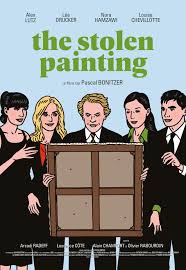
LE TABLEAU VOLE/THE STOLEN PAINTING
France, 2024, 91 minutes, Colour.
Alex Lutz, Lea Drucker, Nora Hamzawi, Louise Chevilotte, Arcadi Radef, Laurence Cote.
Directed by Pascal Bonitzer.
Over many decades, there have been many stories of the art works owned by Jewish families and stolen by the Nazis before and during World War II. More recently there have been too popular stories, George Clooney’s The Monuments Men and Helen Mirren in Woman in Gold.
The artist at the centre of this story is Egon Schiele.
This film opens with a somewhat startling sequence, an elderly woman, blind, discussing the sales of paintings in her house, haughty, racist (and not realising that her servant, African background, is present). In fact, this is not part of the film, but a suggestion for attitudes and bigotry in the art world and an introduction to the central auctioneer, Andre, and his new intern, Aurore..
The core of the film is the discovery of a painting by Egon Schiele in the house of a former German policeman in Mullhouse, now owned by a woman and her shiftwork son, Martin, who have no idea about the treasure on their wall. One of the young man’s friends sees it casually in an art magazine and realises the painting is valuable.
But most of the attention of the film is on the art world, the world of art sales, France, Germany and to the United States, especially where contemporary relatives of the Jews whose artworks were stolen now live.
Andre has a rather prissy manner, not entirely sympathetic, and clashes with his rather aggressive intern (who has a story of her own, alienation from her literary father, questions about her family, and then her schemes and antagonistic attitude towards Andre). But, there is some interest in being introduced to this world, the vast financial implications, for a start, the appreciation of the art or not, just seeing it as another business venture. Then there are the international bidders, sometimes shrewd, trying to undercut auction prices, private international deals…
Andre contacts Bettina, his former wife, an art expert, a much more lively character, but happy to collaborate with Andre in examining the painting, contacting legal help, setting up potential customers, preparing for the auction.
But there is also the story of Martin, the young man, suddenly introduced to an art world that is completely unfamiliar, present at the auction, rather overwhelmed by the sympathy of the representatives of the Jewish family and their generosity towards him and his family.
In fact, the end of the film is quite mellow, Andre having learnt a few more lessons about art and the business world, collaboration with Bettina, but presenting Martin to the banquet of the assembled family and friends after the auction – and their giving Martin, to his bewilderment, a standing ovation.
An interesting story, issues, characters and themes.
- Based on a true story, the Nazis, stealing paintings, rewarding officials? Destruction of paintings? Taken from Jewish families? The aftermath?
- 21st-century art world, the dealers, the auctioneers, the companies, the price of artworks, sales, underselling/overselling, financial perspectives?
- The opening story, setting a tone, the elderly woman, hostility towards her daughter and daughter’s life, her criticisms of people, her maid black, her blindness, the discussions with the dealers?
- Andre Masson, his skills in finance, in art, his deals? Aurora as an intern, the tension between them? Andre and his past, his marriage to Bettina, the separation, his drinking, his being absorbed in his work, his place in the company, his straightforward comments?
- The family, the mother, her friends and conversation, her son, his friends, the card game, their shift work, their friendship, tensions? Having the painting? The young man seeing the art magazine, the contact with the lawyer, her arrival, appraisal, contacting the company?
- Andre, making contact with Bettina, their past life, friendship, the visit to the town, seeing the painting, its authenticity? The discussions with the lawyer, her being away skiing, her return? Andre and his discussions with the members of the company, their personalities, and dominance, plans? The removal of the painting, its exhibition? The German, his entourage and lawyer, his watching the painting, his criticisms of it, his offering 8 million? His plan to undervalue the painting and buy it?
- Martin, his personality, quiet, the clashes with his friends, the friend wanting to touch the painting, the reconciliation? Martin and his mother, his not wanting her to fuss?
- Andre, depression about the secret offer, losing the commission, contacting the member of the family in the US, his visit to France? The offer, the phone calls?
- The background of Aurora, her relationship with her father, lying to him, not want him at home, yet his giving her the rent money, memories of the past, her mother’s leaving, ambiguity about her paternity? Going to the auction, the deal and buying the jacket? Her lies about that? The clashes with Andre, threatening him? Leaving? At the auction, outbidding the bidder, the possibility that he was her father, the clash in the street?
- Her returning to Andre, her experience with her father and books, bids undercutting the real value? Meeting Bettina, the friendship, Andrew and his drinking, the morning after, the discussions, her revealing the plot by the German?
- The phone call, contacting the American, the agreement for the option?
- The auction sequence, Andre and his command, the many bidders, the price rising? Martin present, dressing up, in Paris for the first time, overawed, his lawyer, and her liaison with Bettina? The price, the family offering 10% to Martin? Over $2 million?
- The aftermath, Martin and his weeping, not quite comprehending? The lawyer finding him, the invitation for them to come to the family dinner, Martin and the applause?
- Aurora and her reconciliation with her father, his health? Andre and the offer of the presidency, discussions with Bettina, his refusing, independence, relaxing, his skills in art deals?
- Martin, not telling his friends, continuing the shift work?
- The screenplay’s presumption that people, no matter what, can be their better selves?
