Displaying items by tag: Guillaume de Langquedoc
Dracula: A Love Story
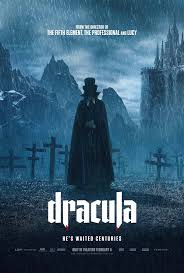
DRACULA: A LOVE TALE
France, 2025, 129 minutes, Colour.
Caleb Landry Jones, Christoph Waltz, Zoe Bleu, Guillaume de Tonquedec, Matilda De Angelis, Ewens Abid.
Directed by Luc Besson.
One wonders about the fascination with the Dracula story, vampires, in the first part of the 2020s, comedy in Redfield, the sombre Voyage of the Demeter, the elaborate Nosferatu. And now, long time action director, Luc Besson, has scripted and directed another variation on Bram Stoker’s novel.
Many of us have a great admiration for Francis Ford Coppola’s 1992, Bram Stoker’s Dracula, with Gary Oldman. It had an extraordinary eight minute opening, Vlad, summoned to war, farewelling his wife, stylised battle sequences, false reporting of his death, his wife killing herself and Vlad defying the priest who refuses her a Christian burial. And Besson has decided to open his film with a rather longer prologue in this vein, fierce battles, death of Vlad’s wife, his defiance of a Cardinal, loss of faith and condemned never to die.
That setting is 1480 then the screenplay moves forward 400 years, Dracula, with Caleb Landry Jones, who had appeared in the Australian film, the trim, is an ageing recluse in his castle, visited by Jonathan Harker, from Paris, to consult him about one of his properties. This gives the opportunity for Dracula to tell Jonathan his story and for it to be visualised, quite lavishly, as a younger Dracula searches incessantly over the world for his wife, infecting a whole range of women (and some pageantry with groups of women and stylised courtly dancing) to help him in his search.
1889, introducing the vampire hunter, not Van Helsing this time, but a priest, devoted to science, determined to find Dracula and put an end to him. And, who better to portray this kind of priest than Christopher Waltz (Oscars for Best Supporting Actor into Tarantino films, Inglourious Basterds and Django Unchained ?
Dracula then travels to Paris, and, with the help of one of his infected women, encounters Mina, sees her as the reincarnation of his wife, determined to take possession of her and return to Romania. Which means then that the priest has to pursue him back to his castle, buildup to a confrontation – and, surprisingly, a rather large scale military assault on the Castle, cannon firing, soldiers invading (and repelled by a team of gargoyles come alive!).
But, the horror emphasis, in the Christopher Lee vein, is not the style of this film. The screenplay has some sympathy for Dracula and his loss, his continued defiance, which means that the ultimate confrontation between him and the priest is not just that the vampire be destroyed but that he make a selfless gesture, enabling Mina to live her life and for him then to be willing to die for her sake, a true love for her. Not exactly what we might have been expecting from a Dracula film.
There are the elements of Bram Stoker’s novel, a strong influence from Francis Ford Coppola’s film, perhaps rather low-key in comparison, but interesting in its sympathetic portrait of the vampire and the priestly variation on Van Helsing.
- The long tradition of Dracula films? Different perspectives? The basis in Bram Stoker’s novel? The influence of Francis Ford Coppola? The several Dracula films in the first half of the 2020s?
- The film as a Luc Besson, fantasy, action?
- The settings, 1480, warfare? The castle? The 1890s, Romania, isolation, the castle and interiors? Paris, society, the hospital? The musical score?
- The prologue, Vlad, Prince, the marriage to Elisabeta, going to war, leading his troops, his guard, the battlers? The pursuit by the enemy? Elisabeta, the carriage, escaping, court, her death?
- Vlad, with the Cardinal, the interactions, his anger, the death of his wife, defying God, defying the church, killing the Cardinal, the image of Christ and the blood? His punishment, not to die? And his perpetual search for his wife?
- The 1890s, Paris, Jonathan Harker, his travels, the property in Paris, the appearance of Dracula, 400 years of age, the welcome, the meal, the cross given by the coach, Dracula drawing it into the fire? Warning Johnthan to stay in his room, Jonathan wandering, the discovery of the coffin? The appearance of the live gargoyles? Johnathan hanging, the blood, Dracula and drinking the blood of the rat? Jonathan his pleading, for Dracula to tell his story?
- The story, his quest for his wife, the decision to infect the women, to have assistants to search for his wife, the stylised dancing, through the centuries, costumes and style, the range of women, attracted, his infecting them? Failure to find this a better way?
- Living in his castle, his personality, the decision to go to Paris, Maria and her fiance, the wedding, her collapse, infected, in the hospital? The doctor, treating her? Her friendship with Nina?
- The central role of the priest, the van Helsing substitute? His talk about the church, science, superstitions? Talking about his order? Independent? His appearance, cassock, hat, his bag? Coming to the hospital, the discussions with the doctor, analysing Maria? Defying her? His researches, the visit to Maria’s room, with her fiance? The book, the image of Dracula? His wife?
- Maria, friendship with Nina, her escape from the hospital, dressed, going out, the celebration, the fair, the rides and excitement, the encounter with Dracula, his charm, the dancing, the effect on Mina?
- Dracula, charming, the love story rather than the threats and horror? His hold on Mina, taking her home, the coffin?
- Jonathan’s escape, with Maria’s fiance, with the doctor, with the priest? The travel into the castle?
- The Castle, the gargoyles of the attack, the priest, the confrontation with Dracula, the discussion, love, immortality, the role of God, God and evil?
- The the Army, the cannon, the soldiers, the invasion, the gargoyles and the destruction?
- The final confrontation between the priest Dracula, the role of Mina, as a little better, her memories, reliving the past and happiness? Pleading with Dracula? His decision, the decision to free her, to die?
- The priest, executing Dracula, the ash, the cloud flying in the sky?
- The basic Bram Stoker story but the emphasis on love story and redemption rather than horror?
