Displaying items by tag: Danny Dyer
Christmas Karma
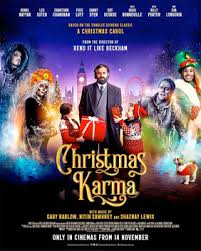
CHRISTMAS KARMA
UK, 2025, 113 minutes, Colour.
Kunal Nayyar, Leo Suter, Charithra Chandran, Pixie Lott, Danny Dyer, Boy George, Rufus Jones, Billal Hasna, Allan Corduner, Billy Porter, Eva Longoria, Hugh Bonneville, Trudie Styler.
Directed by Gurinda Chadha.
The critics who dislike this film complained that it had a week plot! What would Charles Dickens have to say about that!
There have been many, many versions of Charles Dickens popular novel of 1843 A Christmas Carol. And, there have been many variations on the plot, especially with a focus on Scrooge. There have been a number of dramas, there have been musicals, there have been ghost stories…
Gurinda Chadha (Bend it Like Beckham) draws on her Indian cultural background, especially as it has taken root in the United Kingdom, in London. She has chosen to use Dickens’ story and characters, in quite some detail, especially her version of Ebenezer Scrooge, called here Eshaan Sood, the ghosts of Jacob Marley and other Christmases, Bob Cratchit and his family. But they are firmly set in the multi-ethnic, multicultural, communities in and beyond London.
Which means a move from the Christian tradition of Christmas to its being celebrated as a Festival for all cultures, the time of joy, of generosity.
And, the film tries on all kinds of entertainment and movie conventions. First of all, it should be considered as the equivalent of a cinema pantomime, not a straightforward telling of the story, but rather a heightened atmosphere, eccentric characters with exaggerated performances designed to delight and for laughter. And, this version is also a musical drawing on all kinds of music and songs, breakdance, rap, ballads, choral recitals, comic lyrics, and some enjoyment of Bollywood musical styles, and the interweaving of the traditional Christmas songs and carols into the background score. And a reminder of the Christian tradition with a sequence in a church.
With the Scrooge character, played by Kunal Nayaar (popular with his 279 episodes of The Big Bang Theory), a bit younger than usual, but dramatising all of Dickens’ imagining of his meanness, in his company, with his staff celebrating Christmas, no bonuses, exact accounts, even with his assistant, Bob Cratchit (a sympathetic Leo Suter).
The film spends quite a deal of time with the ghosts. According to the credits, Hugh Bonneville is the ghost of his partner, Jacob Marley (though unrecognisable). And the pantomime atmosphere continues in the highly exaggerated presence of the three ghosts, their clothes, their appearances, their mannerisms, Eva Longoria dressed as for the Mexican Day of the Dead for Christmas past, Billy Porter in a very mannered style as Christmas present and, rather briefly compared with the others, Boy George made up as the ghost of Christmas to come.
There are several relatives, his nephew and his wife inviting him to Christmas celebration, and his friends at the shop, their hardships, trying to sell Christmas decorations and gifts.
All the Dickens ingredients are there – and then some, especially Eshaad Sood’s back story of an Indian in Uganda, the Idi Amin era, his coming to England, a poor boy, struggling to make his way, in love, the possibility of happiness in marriage but his fulfilling the expectations of his in-laws to make something of himself, sacrificing everything to build up his fortune, losing his fiancee, devoting himself completely to becoming a millionaire. Ghost of Christmas Present opens Sood’s eyes to the realities of Christmas which he shuns, the Cratchit family and their needs, touching his heart. And the future is grim – his funeral, all alone.
Sood experiences a wonderful conversion, his joy that it is still Christmas morning, and, doing a Warren Buffet with his fortune, distributed to all and sundry, to the charities, to his staff, and, of course, to the Cratchit family and Tiny Tim (who doesn’t get the opportunity to say God bless us all).
The film that Gurinder Chandra is offering to a wide audience who want joy at Christmas, is a happy story, happy songs, comic characters, hard hearts softened. Obviously, this will not appeal to everyone – but it has the potential.
On its release in the UK, several prominent British reviewers offered scathing reviews, one giving it no stars, deriding it as one of the worst Christmas films ever. But, the target audience was not these reviewers, but rather a general public who are open to some light entertainment, even if not perfect, which brings some joy and merriment. (But there is the question concerning these reviewers and why they chose to use such vitriolic language in their condemnatory reviews of what is rather innocent and harmless entertainment.)
- The popularity of Charles Dickens A Christmas Carol. The many versions? The various imaginings?
- The London Christmas Carol, but in the multi-ethnic communities? The target audience? Christmas as a Festival celebration rather than emphasising the Christian tradition? Taking the universal “spirit of Christmas”?
- The work of the director, Indian background, Karma in the title and in the life of Eshaan Sood? Her knowledge of the Indian community in London, UK? Traditions, celebrations, costumes, performance, singing and dancing? Hollywood/Bollywood? The film as a musical, breakdance, rap, choral, ballads, an exuberant Bollywood style?
- Use of Dickens’ narrative, the Scrooge character, a bit younger than might have been expected, his meanness, demands in his office, a millionaire, complaints about taxes, refusing to help charities, in his office, the staff celebrating Christmas and his putting a damper, the assistance of Bob Cratchit? His being alone, no interest or compassion?
- The use of Dickens’ ghosts, Jacob Marley, his partner, warning? Christmas past, the costume of the Day of the Dead, personality of the ghost, her singing, commentary, accompanying Sood, the narrative of Uganda, Indians, migrating? The lonely boy, his experiences, hardships, fiancee, in love, meeting her parents, their expectations, his determination to make something of himself, completely dedicated, alienating his fiancee and her leaving, his loneliness, continued work, becoming a millionaire, his company, the narrowness of his life?
- The presentation of the Cratchit family, husband and wife, the children, Tiny Tim and his weakness, the outing, the joyful songs, Bob singing his ballads?
- The ghost of Christmas present, Billy Porter and his experience, manner, clothes, hair, commentary, singing? Taking Sood on his tour, to see how the other half lived, the hardships, the sacrifices? Tiny Tim, his illness, touching Sood, his own memories? A conversion experience?
- The ghost of Christmas to come, Boy George, not a long performance, singing, presence? Sood taken into the future, the coffin, his funeral, people absent, Bob Cratchit in the church and leaving? Loneliness, nothing personal achieved?
- Waking up, still Christmas morning, the choir, the gifts, their singing, change of clothes, coming down, in the streets, distributing his wealth, the encounters with everyone, going to his nephew’s party and everyone surprised, his reactions and joy? Going to the shop, paying for everything in the shop and the family’s amazement?
- Going to see Bob Cratchit, the family, Mrs Cratchit suspicious, is one Tim, the gifts, the celebration?
- Sood and the experience of Christmas spirit, change of heart, generosity and joy, distributing wealth to make others happy, and the postscript of his return to Uganda, seeing his friend after so many years, remembering his past, happiness – and future joy?
Age of Heroes
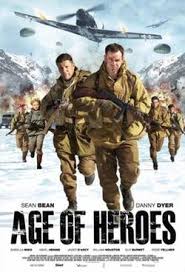
AGE OF HEROES
UK, 2011, 93 minutes, Colour.
Sean Bean, Danny Dyer, Aksel Hennie, Izabella Miko, James D'Arcy, William Houston, John Dalgleish.
Directed by Adrian Vitoria.
During World War II there were many stories of military action, spying, propaganda. And, they formed a staple, especially in England, of movie entertainment in the 1950s. Age of Heroes is very much in this vein 70 years later.
The screenplay follows the general pattern of those old films so we know, more or less, what to expect, except that these are in colour, have saltier language then the films of the past, and have some exciting location photography.
The film has for centres of action, the first with a group of soldiers in occupied France, May 1940, under attack, the small group surviving with their corporal, Rains (Danny Dyer) making decisions and falling foul of a superior officer. The next setting is prison, for those accused of cowardice, drilling, treated harshly by those in charge.
An officer arrives to take away one of the inmates, is confronted by Rains who wants to be a commando. And, eventually, he does. The officer, played by Sean Bean, is in charge of an operation, in collaboration with the Navy authorities, especially Fleming, played by James D’Arcy. The group chosen, including Rains who is at first targeted and challenged, does the expected hard training in Scotland.
And the main action is in Norway, the commandos landing, the plane on fire and crashing. The target is a German radio installation, to get the information and documents, destroy the installation, get out of the country. The snowy Norwegian landscapes always look impressive. The Germans are very familiar in their attitudes and behaviour from those old films. And there are Norwegian loyalists, and a very grim sequence where their leader pleads for their lives, and German soldier filming everything, their being lined up and all shot.
A mixture of the commando troop, some clashes with a local Norwegian soldier, but, ultimately, the kind of action we expect, and a reminder of as the title suggests, war heroism.
It is interesting to note that the film is based on an episode led by the future writer of the James Bond novels, Ian Fleming.
- Ambitious title? World War II, special commando squads, the background of Ian Fleming? Dramatisation of a true story?
- The French settings, may 1940? UK, military prison? The Scots training sequences? The action in Norway, the snowclad landscapes? The musical score?
- The basic formula for World War II action films, in the past, in the 21st century? The appeal of war action films, patriotism, heroics?
- The setting, the French sequence, the isolated group, the Germans, deaths, the encounter with the main group, Rains and his leadership, confrontation with the officer, arrested, prison?
- The prison sequences, the rough treatment, the offices, physical abuse?
- The authorities, Jones, his visit to the camp, taking the injured man away, the confrontation with Rains? His visit to Fleming, the Navy, the collaboration, the plan?
- The choice of the men, Rains included, his friend, going to Scotland, the rigour of the training, targeting Rains, but his being included in the group?
- The meeting with the authorities, the explanation of the mission, Norway, the tower and the information, the Germans, the Norwegian Patriots? The flight, the fire, crash landing?
- The details of the mission, travelling the terrain, the snow on the mountains, morale amongst the men, the encounter with a local group, the female soldier, aggression towards her? Working together, over the mountains?
- The Germans, their presence, the Norwegians, helping, the Germans rounding them up, for information, the plea not to kill the family, their all being lined up, shot, everything filmed?
- The final confrontation, the strategies, the battle, shooting, the pursuit, the capture, the final fights, survival and escape?
- The information to London, Fleming and his decisions, the rescue?
- The finale, the sense of achievement, and the title of the film?
