Displaying items by tag: Bones of Crows movie
Bones of Crows
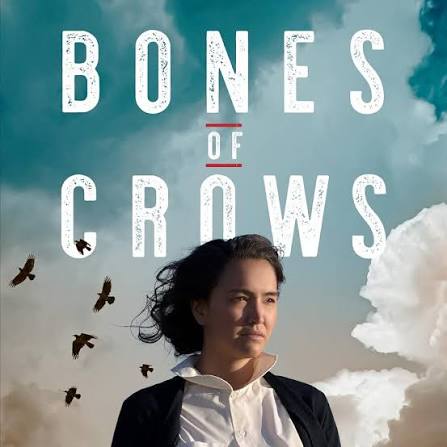
BONES OF CROWS
Canada, 2022, 124 minutes, Colour.
Grace Dove, Philip Forrest Lewitsky, Remi Girard, Karine Vanasse, Ayssa Wapanatahk, Michelle Thrush, Glen Gould, Gail Maurice, Carla-Rae, Caro Gww, Patrick Galloway,
Directed by Marie Clements.
Bones of Crows is a significant Canadian film, a narrative examination of the recent history of the Cree nation, glimpses of their life in the early 19th century, the focus on the early part of the 20th century, moments of freedom, the imposition by the government, the rounding up of the children, taking them from their parents alleging that the children would better cared for an educated, better living in the Residential Schools. (A film parallel to these themes would be the Australian Rabbit-Proof Fence and the taking of indigenous family children from their families.)
Life in the Residential Schools was oppressive, dramatised here by a harsh nun, in her habit, the asserting of her religious vocation, but a sadistic approach to discipline and the children (though, she is allowed in the screenplay, some moments of repentance and apology). And the clergy managed the residential schools, the focus here on Father Jacobs, the chaplain, condescending in his attitude towards the Indians, promoting the central character, Aline, and her skill in piano playing, and an impressive sequence where she plays the piano with a group of clergy having an extra large and hearty meal. There seems to be a sympathetic Deacon who teaches Aline to play the piano and support her – though, at the end, a damning revelation about his previous behaviour.
There are World War II sequences, Aline and code and radio communication, Adam, her husband, war and the experience of Holocaust survivors and the effect on him and depression.
There are sequences over decades, backwards and forwards in time, the intercutting highlighting influences and consequences.
Ultimately, Aline in her 80s is part of commissions to consider the past, especially a visit to the Vatican, an audience with Pope Benedict XVI and the Archbishop present who had sexually attacked her in the past.
Significant but hard themes and an indictment of government and church authorities.
An IMDb note: At one point in the film, Prime Minister John A. MacDonald is quoted to justify the starvation of Indigenous children held in residential schools. In 1882, MacDonald gave a speech in the House of Commons where he addressed the systematic starvation of Indigenous populations who relied on rations from the Canadian government. In MacDonald's words, "I have reason to believe that the agents as a whole ... are doing all they can, by refusing food until the Indians are on the verge of starvation, to reduce the expense."
A Wikipedia note: The film was shot partially at the Kamloops Indian Residential School. Although the revelation of 215 unmarked gravesites at the school took place just one week before shooting was to start, the Tkʼemlúps te Secwépemc nation encouraged production to proceed because of the importance of getting residential school stories publicized and told.
- Canadian history, the Cree nation, racist history, oppression, the government, the Catholic Church?
- The opening, the images, bones, crows, Indian traditions?
- Images from the 19th century, the Cree, pioneers, conflicts?
- The range of time eras throughout the film, from the 1920s and 30s, through the 50s and 60s, to the early 21st-century? The intercutting? The effect for the drama, different revelations of different characters in the eras, and audiences seeing the influences and the effects?
- The exuberance and freedom in the 1930s, the families, riding the horses, the traditions, dancing?
- The reality of the residential schools, the rounding up of the children, separation of boys and girls, families broken, the scene of the distressed mother and her children being taken, blaming her husband, the later sequences and effects?
- The focus on the two sisters, their age, vitality, in the school, the rigidity of the regime, the nun, her severity, discipline, in the name of her vocation, in the name of Christ and the church? The scenes of daily life, classes, hard work, the dormitories…?
- The Deacon, his seeming support of Aline, at the piano, his hands on hers, her skills, the recognition, the sequence of the priests, the Bishop, her playing, enjoying the large lunch, the priest and his recognition of her talents, wanting to promote her? The Deacon, becoming priest, Bishop, the revelation of the assault, the confrontation at the Vatican at the end?
- The nun, her jealousy of Aline, the discipline, hurting her, her fingers, the consequences? Sadistic, the girls walking in line, heads bowed? The nun given the opportunity to reflect on what she had done?
- The cutting to the war, and her skills, the uniform, Adam, his past, memories of the past, the wedding? The severe consequences, his war service, the concentration camp and his presence, the effect, his drinking, violence, the family life, their daughter’s? His death?
- Aline, the years go by, her life, the daughters, social work, her sister?
- Perseverance and her story, in the residential school, the contrast with Aline, later, the addiction, prison, Aline looking after her children?
- The greater involvement in rights for the Indians, the Cree traditions? The role of the daughters, their skills, careers, support of their mother? The decades passing?
- Racism, Canada, civil rights, the commissions, the representation of the Vatican, the meeting with Pope Benedict XVI, the Archbishop present, Aline and her speech, her age, convictions, the accusations, the Archbishop walking out, later speaking with her? Some kind of vindication?
