Displaying items by tag: Agnieszka Holland
Franz
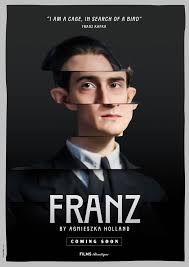
FRANZ
Czech Republic/Poland, 2025, 127 minutes, Colour/Black and white
Idan Weiss, Peter Kurth.
Directed by Agnieszka Holland.
The reputation of Franz Kafka, writer, thinker, has increased over the decades. There is admiration for his writing, his novels and short stories, bleak explorations of human character. Steven Soderberg directed the imaginative exploration of his life and character, Kafka.
This film has been directed by veteran Polish director of many decades, Agnieszka Holland. It is certainly a portrait of Kafka. It has basic biographical elements. But it is also a thoughtful study.
And, the treatment of Kafka, his character, life and career, is highly stylised. There is use of colour and black-and-white photography. There is musical background. There are different timelines, the continual moving around in time, backwards and forwards in his life. And, at times characters look to camera, inviting the audience to respond and reflect.
Quite a number of characters also offer commentary, the blind organist, his friend Max Brod who saved his manuscripts from the Nazis when Kafka had asked them to be burnt.
And, surprisingly, at different times the screenplay moves into the 21st-century, admirers and tourists at the Kafka Museum, the guide, commentary, monuments to Kafka, explanations of his career, writing, and commercial aspects like the Kafka meal at the restaurant.
Which means that the audience is continually changing its perspective, building up an image of Kafka as a little boy, his large dominating father, testing him. Kafka as an adult, the law, as a clerk, his work as a civil servant. And his writing, what his father called scribble, writing stories by hand, novels, an opportunity to read a story aloud (and the graphic torture story being visualised), different reactions, collaboration with friends. And, the film also focuses on his relationship with women, sexual, friendships, love.
There are also issues of belief, his Jewish background, the ghetto in Prague, demolition rebuilding, questions of faith and lack of faith.
This film does not offer a complete portrait of Kafka – but it may be a provocation for audiences to find out more about him, read his books, see film versions of his books like Orson Welles’ The Trial, discover his influence on 20th century thought.
- Franz Kafka, life, career, author, philosopher? Audience knowledge of him, his reputation, achievement?
- The city of Prague, 19th century, into the 20th century, changes, ghetto and rebuilding? The city of Vienna? The experience of World War I? The use of colour, black-and-white?
- The film as a portrait, as a biography, piecemeal episodes, the timeline moving back and forth, the effect?
- The stylised filmmaking, actors talking to camera, the modern era, the 21st-century museum, the tourists and their behaviour? Monuments to Kafka? The effect?
- As a child, his haircut, his father putting him outside to strengthen him, throwing him into the water to swim, the influence of his father, his father’s character, his mother standing back, later support, the strong support of his sister? The family meetings, meals, his brother-in-law and the company?
- As an adult, at home, moving out, the relationship with his father and brother in law, the law, as a clerk, working on contracts, his father’s commands and anger, his volunteering to meet for contracts? The contrast with his writing, by hand, his father referring to his scribble? His imagination? Publication?
- Kafka and his working and his career, his writing? The episode of reading his story and its being visualised, the torture sequences? Audience reaction?
- Max, friendship, writing, later, the burning of His manuscripts on his order, not burning them, preserving, with his wife, the Nazis and his concealing his identity and the papers?
- The variety of characters, commentary and explanations, his uncle, the blind organist, teacher, Max, friends?
- Jewish issues, Prague and its being rebuilt, the discussions about Judaism,?
- The importance of particular incidents, the scene with the coin and the begger, wanting change, sister’s intervention? The role of insects, his father at the table, insects and his stories?
- Relationships, sexual, genteel with the prostitute, meeting Felice, the conversations, his descriptions of her, in Vienna, correspondence? The encounter with Grete, her liveliness, the relationship And his enormous capacity for letter writing, so many a day?
- Issues of health, his swimming, rowing, the sanatorium, the exercise, the naked men, his participation?
- Issues of faith, discussions, existential?
- The overall impact of the film, Kafka as a person, as a writer and creator, complexity of character?
Green Border/ Zielona Granica
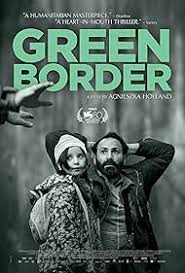
GREEN BORDER/ ZIELONA GRANICA
Poland, 2023, 152 minutes, Black-and-white.
Jalal Altawill, Maja Ostaszewska, Behi Djanati Atai, Tomasz Wlokok.
Directed by Agnieszka Holland.
Here is a sombre and demanding film – demands which should be made on world audiences, considering the events dramatised here, from October 2021 to the epilogue, February 22, 2022, the day of the Russian invasion of Ukraine.
For a moment, before the opening credits, there is an aerial shot of green trees – but, then, 150 minutes of sombre black and white, images and issues in stark black and white. This film was co-written and directed by veteran Polish director, Agnieszka Holland, who has been making films for almost 50 years, in her native Poland in communist times, and moving into Western Europe and many films and contributions to television series in the United States. Agnieszka Holland clearly identifies with the issues raised here.
For almost 40 harrowing minutes, we initially share some hopes with a Syrian family, refugees for Sweden, flown into Belarus, but becoming political and military pawns on the Belarus/Polish border, maltreated by border police on each side, and tipped, literally, over the border and back, a reminder that brutal and inhumane guards were not limited to the Polish concentration camps of World War II. We get to know the family well, parents, two children and a baby, an old grandfather, devout Muslim, a teacher. On the plane they meet a refugee from Afghanistan, an older woman, Leila, who joins them in their quest, victim of people smugglers, in their most unrelieved sufferings, a strong character with whom we can identify, especially in her subsequent fate.
The action then switches to the border guards, the political imperatives on both sides, government authorities not wanting the refugees, guards with a sense of duty but also the callously carefree attitude towards life, including their own. However, one guard, wife pregnant, witnesses what happens – and his conscience is stirred.
Then there is a chapter on the activists, earnest and committed men and women living near the border who are aware of what is going on, being forbidden to go into an “exclusive zone”, trying to rescue the refugees or to secretly bring them some kind of comfort and healing. There is a focus on a psychiatrist who is moved by the situation, volunteers to help, finds herself as the target of the border guards.
While there is some hope, some humanity in key characters, the film is a reminder that in the 2020s, savage wars are still fought around the world, invasions, civil wars, starvation, the desperate need for peace.
And, as mentioned, the film ends at the Ukraine/Poland border, and the information that Poland had received 2 million refugees from Ukraine – and the sad reminder that the hostility towards refugees from Asia and Africa is still sometimes virulent.
- A significant film about Europe in the early 2020s?
- The title, the opening aerial shot, the green, then black-and-white, the sometimes starkness of the black and white? And the musical score?
- The director, her Polish background, history, the history of Poland and Belarus, the communist era, post-communism, 21st century, political alignments, refugees from Asia and Africa, harsh stances and behaviour? And the epilogue of the invasion of Ukraine by Russia?
- The chapters, the focus on the family first, the contrast with the border guards, the further contrast with the activists, the focus on Julia and the connection of the stories?
- The plane ride, the refugees from Syria, the boy, Leila and her glasses, his picking them up, changing seats, the window, in the cloud, his father, the grandfather translating? The mother and the baby, the little girl? The background, refugees, the plan, through Belarus to Sweden, the financial arrangements? The establishing of the characters and audience response?
- Arrival in Belarus, the connection, the van, Leila coming with them, driving to the border, the oppressive driver, the demand for money, the previous payment, and being offloaded? The harsh experience in Belarus, the guards, operation, food and water, phones, batteries dying, trying to communicate? The response of each of the characters, the mother feeding the baby, lacking milk, the father and his desperation, the children and their needs? The old grandfather? Leila with them, her plea about Afghanistan? Their being tipped over into the Polish border, the barbed wire? The experience of the Polish guards, the repetition of the oppression, and then back into Belarus?
- The guards, the politics, attitudes of the government, Europe and refugees, harsh Polish stances, Belarus exploitation and the European Union? The treatment, the camaraderie, the carelessness, the exclusive zone? Day and night? The guards together, drinking, talking? The focus on Jan, his pregnant wife, the lecture and the instructions of the commander, callous, concern about his wife, the visit, the scan? His wife at the supermarket and the scorn for the refugees? At home? The bond between husband and wife? Jan, that the challenge to his consciousness, conscience, later the van, letting it through? And his returning home?
- The activists, the leader, her sister, the men and women, living near the border, their concern about the refugees, the exclusive zone, the vehicles, interactions, the pinning of the locations, and to help, medication, food, the Syrian family? Leila, crossing the border, with the little boy, their trek, the call to them, in the night, in the quicksand, the boy dying, Leila rescued, the hospital, her talking to the camera, begging forgiveness? Her later treatment, hospital, the documentation, plea for refuge?
- Julia, at home, therapy by Zoom, her husband dead from Covid, the encounter with the activists, her being moved, letting them come to her house, erratic sister, the leader, the man, the young couple, going out on expeditions, eluding the police, the driving, going to the zone, encountering the suffering people, the Moroccan man, his phone call, the soup, their leaving him, the rules, survival? Julia’s return, his absence? The decision always to go to those in need, young African men, her helping them, her arrest, the treatment in prison, her lawyer, coming out, the activists moving out, the erratic sister staying? The graffiti on the car, her asking her friend to lend her car, the discussion and her refusal? The driver with the towaway, the concealing of the refugees, the going to the house of Julia’s client, speaking French, the cheerful young men, the family meal, listening to music and singing? Signs of hope?
- The situation in 2021, the narrative, the docudrama, the harrowing emotions, compassion, desperation?
- The epilogue, the railway station, the 2 million refugees in Ukraine, Jan at the station, Polish compassion, yet the final information about the prejudice against the African and Asian refugees, and the conflict remaining on the Belarus Polish border?
