Displaying items by tag: Sherri Shepherd
Way Out, The
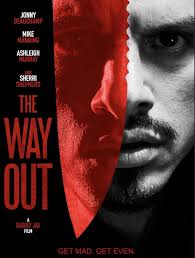
THE WAY OUT
US, 2022, 93 minutes, Colour.
Johnny Beauchamp, Mike Manning, Sherri Shepherd, Ashleigh Murray.
Directed by Barry Jay.
A small budget American feature, raising issues of sexual abuse, violence, vigilante retribution. The setting is the familiar American town, homes and apartments, AA meetings.
At the centre is the character of the young man, Alex, played by Johnny Beauchamp. He has had conflict with his brutal father who is discovered murdered. Alex inherits the house, his sponsors advise to him to sell but he opts to keep the house and lets a room to a dominating personality, Shane (Mike Manning) who takes control of Alex’s life.
Alex, low self-image, has taken to drinking but has been successful in not drinking for a year, attending AA meetings, relying on the strong sponsor, Veronica (Sherri Shepherd).
Shane takes control of Alex’s life, dominates him to acknowledge his gay orientation, but then Shane is revealed as a going to homes, advertising as an escort, but then confronts the men who hire him with their sexual abuses in the past and then murders them. Eventually, he forces Alex to go with him on one such vigilante quest, involving Alex in the violence, Alex reacting badly, drinking, reaching out to sponsors who feel that he has gone too far.
Some audiences may have forgotten about the murder of Alex’s father at the beginning but the screenplay moves effectively to solve the murder and the motivations and the links with Shane.
(This film was seen at the same time as the release of Rian Johnson’s Wake Up Dead Man in the character of the parish priest, played by Josh Brolin, has a lot in common with the character of Shane.)
- Small budget drama? The title, expectations?
- The setting, the American city, apartments, AA meetings, homes of victims? Realism? Musical score?
- The story of Alex, his relationship with his father, dominating and brutal father, his father’s murder, Alex and alcoholism, motivations? AA? The meetings and sharing? Veronica as sponsor? Gracie as friend? Relying on them? One year without drinking? Then the murder?
- The house left to Alex, his decisions, the advice to sell, his wanting to stay, offering the room for rent? Shane, arrival, the interview, the women not wanting him, Alex letting him stay?
- Alex, susceptible to advice, his character, the issue of gay orientation, influenced by Shane, Shane and his trainer background, gymnasium in the house, the influence on Alex, violent approach, to be aware of his sexuality, to train in the gym, to stand up and fight back as a principle?
- Shane, the audience seeing his behaviour, his targets, for hire, in the house, the abuser, the discussions, his being murdered? Shane and the further targets, confrontations, killing them? His motivations, his own abuse, vigilante revenge?
- Shane, turning Alex against Gracie and Veronica, their characters, friendship and advice, Gracie becoming exasperated, staying at a distance?
- Alex, influenced by Shane, Shane taking him to one of the killings, the confrontation, daring Alex to be violent, to kill? The aftermath, Alex’s reaction, drinking?
- Veronica, the story about her son’s death, drink-driving, at the AA meetings, influence on Alex?
- Alex, alienating Veronica, Gracie, his reaching out to them, their not responding?
- The confrontation with Shane, the mystery of Alex’s father’s death, the revelation that Shane had killed him, the father as he of the original abuser?
- The aftermath, the reconciliation with Veronica, trying to start again, Gracie? And Shane disappearing – and continuing his vigilante mission?
Straw
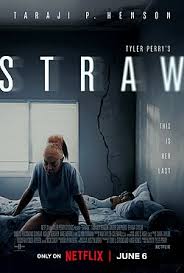
STRAW
US, 2025, 107 minutes, Colour.
Taraji P. Henson, Sherri Shepherd, Tayana Taylor, Sinbad, Rockmond Dunbar, Ashley Versher, Mike Merrill, Glynn Turman.
Directed by Tyler Perry.
Tyler Perry, for many decades, has shown his abilities as a producer, with his own studios in Atlanta, Georgia, as a director, writer, actor. He has quite a list of achievements in directing.
There is an intensity in this storytelling, the focus on a mother with a sick child, working at a supermarket, finding it hard to make ends meet, expenses for her sick child and medication. The film introduces her, and an extraordinarily intense performance by Taraji P. Henson.
What makes the film different is that there is a continued increasing intensity and pressure on Janiyah, with her daughter, getting her to school, unable to buy lunch for her daughter, late for work, pressures from the boss, cantankerous customers, having to go to the school, her daughter taken away by child-welfare, going to the bank to get her a cheque cashed, long lines, thieves entering the store, shootings.
The second half of the film is a bank siege, Janiyah having taken the gun from the supermarket robbery, continuing to wave it around, and with the school project in her daughter’s schoolbag identified as ticking and as a bomb. The intensity in the bank siege is palpable. However, there is sympathy from the bank manager, Sherri Shepherd, and from the negotiator for the police, Tayana Taylor.
What happens is that a crowd gathers, given information about Janiyah, a television interviewer moving amongst the crowd, the transmissions of the crowd and the public response on television, seen by Janiyah and the others in the bank.
The FBI come in, most unsympathetic, wanting to attack, not interested in the negotiator.
The film is highly emotional, building up to a climax, and Tyler Perry showing what might have happened, the FBI entering and a shootout, or a surrendering.
And, of course, while this is very much an American story with guns, it is even more significant in racial terms, that Janiyah is African-American on a lower rung of American society. This film is an intense protest.
- The title? The last straw?
- The American urban setting, homes and interiors, schools, supermarkets and checkout, banks, police precincts, the setting up of the surveillance squad, familiar urban surroundings? The musical score?
- The introduction to Janiyah, mother, her daughter, ill, the bath, criticisms at school, not enough money to buy her lunch, the pressure on her mother, taking her to school, going to her workplace? Audience interested in Janiyah, her age, personality, social situation, pressures, love for her daughter?
- Janiyah at work, the customers, angry, throwing the bottle, the manager making her clear it up, her being late, his harshness, the phone call from the school, his unwillingness to let her go, not paying her, her going to the bank, the long line, the demands, going to the school, the teachers, the social worker, her daughter taken into care? Her coming back to the store, the pressures, in the office with the boss, the robbers, calling her by name, seeing it on her tape, the struggle, the shooting? Her panic, the demands of the boss, her shooting him?
- Travelling back from the school, her car, cutting off the policeman, his angry reaction, threatening her, his associate, the documents expired, the towing away of the car? The traumatic effect of the policeman’s attack on her?
- Her decision to go to the bank, her keeping the gun, the significance of her daughter’s backpack with the science project, the assistant thinking it a bomb, writing the message on the bank window?
- The siege of the bank, Janiyah and her bewilderment, still with the gun in hand, Nicole, knowing her, sympathetic, dealing with the situation? The two young tellers, the response, Tessa and her antagonism, lack of sympathy? The old couple and their being let go, the elderly woman, sympathetic, treatment, letting her go? Officials?
- The police, Raymond and her partner, going to the supermarket, killings, Janiyah being blamed? The bank, the message, shut down? The setting up of the van, Raymond and her military background, ability as a negotiator? Making the contact, Janiyah and her varied reactions, eventually the breakthrough with Raymond, the police chief and his response?
- The crowds gathering, the television interviewer, the information, watching the television program in the bank, the information? The sympathetic crowd, the placards? The range of interviews from the public?
- Time passing, progress not being made, Raymond and her efforts? The arrival of the FBI, taking over, the unsympathetic agent, the phone calls, the plans? Raymond and her objections? The role of the police chief and his sympathies?
- The hours within the bank, Nicole sympathetic, Janiyah telling her story, tensions, the toilet breaks, messages to the outside? Janiyah with the gun, telling her story, her bewildered telling the story and the others uncertain?
- The issue of the policeman, his identity, Janiyah and her demands that he be found? Eventually found, identified, sacked? Janiyah reassured? Raymond going to the door of the bank, reassuring Janiyah?
- The phone call from Janiyah’s mother, the news that her daughter had died? The effect on the audience – and the question of what had really happened during the day and how much was Janiyah’s imagination and hallucinations?
- The FBI, the teams to go in, the preparations, the eventual attack?
- Janiyah, her imagining the attack, her being shot? Nicole and her support?
- The reality, the ending, the gun, giving himself up – her future?
