Displaying items by tag: Peter Malone's Movie Reviews
Intrusa, L'
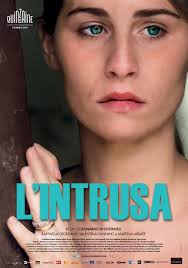
L’INTRUSA
Italy, 2017, 95 minutes, Colour.
Rafaella Giordano, Valentina Vannino, Martina Abbate.
Directed by Leonardo
A well-received film about social conditions in Naples.
The focus is on a middle-aged woman, a hard past, the influence of the Camorra, setting up a school and a refuge for the children of harassed mothers in the area. She is also confronted by the harsh mothers, the wives of the mob leaders. But she herself is very strong character, supported by sincere workers and volunteers, having to answer to the principal of the school who is caught between helping the children and the pressure from the crime bosses.
There is an atmosphere of realism about the film, and it might be called documentary -like. There are some further complications by the wife of a criminal charged with murder, her concealing him on the property, his being taken, a surly teenage daughter, and the issue of letter of the law and the challenge for compassion.
- A slice of Neapolitan life? The influence of the Camorra? Trying to do good in Naples?
- The realism of the film, semi-documentary? In Naples itself, the atmosphere, the school, the house, streets and marketplaces? The musical score?
- Giovanna, her character, her own experience, age, compassion, yet prickly manner, setting up the school, the children of oppressed families, the range of their projects, the delight in creativity, their ages, enthusiasm, play? Their mothers depending on the school? The plan to build the huge robot, everybody involved, the eventual success and its manifestation happy carnival atmosphere?
- The members of the staff, working with children, working with Giovanna? The discussions with the school principal, acknowledgement of the dangers from the Camorra, defying them? Not always possible? Giovanna and her interactions?
- The house on the property, Maria and the children, her husband and the Camorra, murders, the discovery that she was shielding him? His arrest? Her children, the surly teenager, Maria defiant? The return, Giovanna letting them stay, principles versus compassion?
- His arriving, defiant, the Camorra husbands, the threats to Giovanna?
- The cars, the mobsters, their threats, supporting their wives? Their children?
- The background of killings, murders, the effects on families in the neighbourhoods?
- The film as a slice of life, social commentary, Italian in Neapolitan situations and the tradition of mob families and their influence? The possibilities of doing good in such situations?
Tokyo Shaking
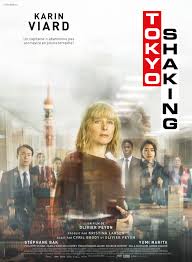
TOKYO SHAKING
France, 2021, 102 minutes, Colour.
Karin Viard, Stephane Bak, Yumi Narita.
Directed by Olivier Peyon.
The setting is Tokyo, 2011. It is the time of a strong earthquake in Japan, in Tokyo, after-shocks, but, significantly for Japan and for the world, the breakdown of the nuclear plants in Fukushima, tsunami and its effect locally and worldwide.
The action he takes place over only a couple of days, a French film with French characters, working with a French bank in Tokyo, meetings, plans, deterioration of the work of the bank, the need for cutbacks and sackings. At the centre is Karin Viard as Alexandra, an expert on risk-assessment, in Tokyo with her children, her husband working in Hong Kong, constant phone contact and Skype.
While Alexandra is trying to soften the blow of the firing of an expert intern, a Congolese banker (Stephane Bak), the earthquake strikes, special effects to show the impact of the quake on the high-rise building, on the staff and its effect on them.
What follows is a focus on French nationals, their being advised to leave Japan, difficulties of getting tickets, crowds at the airports, Alexandra’s children and neighbours children going to Kyoto to get flights, the boss arranging a chartered flight, then the discovery that this was only a plan not a reality and his escaping to Paris, Alexandra staying, the support of the local staff, sealing the office buildings against the incoming radiation.
Alexandra is harassed by frequent calls from her highly anxious husband. And she is disgusted and the action of the boss, destroys his office, resigns. But, she is supported by the local staff and stays with them during the crisis.
An interesting reminder of the effect of earthquakes, a focus on the privileged French workers and their getting out of Japan, issues of Fukushima, the dangers, the visuals on the constant news services – and a final theme of solidarity and support in difficult situations.
- The context of 2011, earthquake, tsunami, the Fukushima nuclear plants and destruction?
- The Tokyo settings, the vistas of the city, high-rise and offices, banks, apartment blocks, the streets and the shops? The musical score?
- The situation, at the bank, the French presence, the difficulties of the bank, the chief and his attitudes, orders from Paris, meetings and discussions, downsizing, the threats to Alexandra, the targeting of Amani?
- Alexandra, her career, success, risk assessment, relationship with a husband, separations from him, phone and Skype, her children with her in Japan? Their dog? The formality, dogs not treating in the vestibule, the carts?
- The decision about Amani, Alexandra praising his work, Besse and his arguments, Alexandra trying to affirm Armani, suggesting further opportunities?
- The quake, the experience, special effects, the staff in the office, shelter? The reactions, on the floor, a money sitting? Alexandra trying to leave, the after-shock? The support of Kimiko?
- Family situation, the husband and his calls, anxiety, situations in the past, wanting Alexandra and the children out?
- The airport, tickets, the rush, the bus to Kyoto, Alexandra putting the children on the bus, with the neighbour and his children? The neighbour, working for Areva, his continued reassurances? The television news, the further collapses at the plant, the danger of radiation?
- Alexandra, the organisation of the list for the chartered flight, Besse and his wife, his return to Paris, the phone calls? Her exasperation, the phone calls, people waiting, discovery that the chartered flight was only a plan?
- Alexandra and her decisions, coming to the office, finding the staff there, supportive, her staying with them? The radiation danger, sealing the office, the news of the danger passing?
- Her anger at Besse, destroying his office, the reaction of the staff? Appreciation of her staying with them? The meal at the restaurant, the news of her daughter’s call, her husband supporting her? Their wanting her to go?
- The hypothesis of such a situation, foreign nationals in an Asian country, the guest status, affluence, opportunities for leaving? Their working with the locals? And issues of self-sacrifice?
If I Were Ruch/ Si Yo Fuero Rico
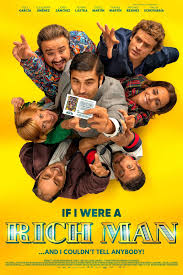
IF I WERE RICH/ SI YO FUERO RICO
Spain, 2019, 98 minutes, Colour.
Alex Garcia, Alexandra Jimenez, Jordi Sanchez, Adrian Lastrop, Diego Martin, Franky Martin.
Directed by Alvaro Fernandez Armero.
This is a broad Spanish comedy, the remake of a French film, Si j’etais riche, which was led by strong cast of Jean-Pierre Darroussin and Valeria Bruni Tedeschi.
This is one of those comedies where audiences are expected to sit back, enjoy the characters and the sometimes crazy situations which they have created, humour with an ambiguous moral about being rich and what one does with one’s fortune.
The Spanish settings are colourful, the Spanish town and homes, a supermarket, golf courses, clubs and restaurants and, especially the beach and the surf.
The central character is Santi who has lost his job, is in process of a divorce from his wife even though he is devoted to her. They have meetings to discuss dividing of the house and property, he wanting to keep his old van, and the promising to live in the same house until it was sold.
Then, one of those strange occasions, an old lady observing him and his difficulties urging him to buy a lottery ticket. He wins.
And, the rest of the film is about consequences, the bank manager literally pursuing him to get his custom to invest the money, the issue of dividing his property with his about to be divorced wife, keeping it a secret. Then the encounter with the cranky policewoman who was previously moved him on from sleeping in his van, but becoming very deferential she hears he is one the lottery.
Santi has two close friends, Marcos and his family, and the rather large Pedro, all enjoying surfing together. He uses some of the money to get Marcos a large car (with a disastrous drive and its going over a cliff into the ocean), arranging for Pedro to be the image for sunglasses commercials. In the meantime, he is able to live something of the high life, an Armani suit, more clothes, a fashionable room in a hotel, meals out (having to learn what decanter wine means)… All comic situations and, the danger of encountering his friends while his wearing the suit or other situations which could give the game away.
In the meantime, his wife has taken up with an entrepreneur who was at school with the men, and very large at the time but has slimmed down and is a champion surfer, setting up a supermarket, employing Santi’s wife, and, at her wish, giving him jobs including store stacking.
The newcomer is also skilled at surfing so Santi invites Spain’s top surfer to visit him and to be seen with him!
So, the audience enjoys seeing what Santi makes of his wealth, keeping it a secret, all the devices to cover his wealth and appear normally poor, but all the time in love with his wife – moving towards a climax where the friends feel their life has been ruined (though one reconciles with his wife and she is pregnant again and the fat man finds a fan who likes his advertisements and has many hits on his page). The unmasking of the entrepreneur – and his finally returning. Fat again.
Frantic climax at the airport with Santi leaving and his wife coming to reconcile – and, of course, his buying the supermarket and giving it to his wife to manage.
And, the moral of the story, what would we do if we won the lottery!
Prince of Egypt Musical, The

THE PRINCE OF EGYPT
UK, 2022, 150 minutes, Colour.
Luke Brady, Liam Tamine, Christine Allado, Alexia Kharmide, Silas Wyatt-Barke, Joe Dixon, Gary Wilmot, Debbie Carew, Adam Pearce.
Directed by Scott Schwartz (Theatre), Brett Sullivan (film).
Famed lyricist and composer, Stephen Schwartz, had had great success with Godspell, Pippin, Wicked and the score for a number of feature films including DreamWorks 1998, The Prince of Egypt. He has used his songs from the film version for this theatrical expansion, adding a number of new songs.
This is a filmed at the Dominion Theatre in London.
Most audiences will be familiar with the plot, their knowledge of the book of Exodus from the Jewish Scriptures, of the story of Moses and so many films like DeMille’s The 10 Commandments in the 1990s telling of Moses story starring Ben Kingsley.
For audiences not familiar with the story, there is quite some drama, played out in the various scenes of this telling, the persecution of the Hebrews, the baby Moses being found by Pharaoh’s daughter, his being brought up as the brother of Pharaoh’s son, Ramses, the youth together, touches of recklessness, Moses and his discovery of his origins, his departure to Midian, the experience of God and the burning bush, his marriage to Jethro’s daughter, his mission of return to plead for the freedom for the Hebrew people, sister Miriam supporting him, his brother Aaron wary of him, the mixed reactions of Ramses who is now married and has an heir, the death of his father. Then there is the drama of the confrontation, the high priest, the 10 plagues, the escape from Egypt, the parting of the Red Sea, the escape.
But, there is a difference in the relationship between Moses and Ramses, Ramses’ assertion of himself as Pharaoh but his memories of bonding with Moses, their meeting at the parting of the waters, Moses telling Ramses to go back and build up Egypt’s, a more positive ending for Egypt as well as for the Hebrews going into the Exodus and desert and the covenant with God on Mount Sinai and the 10 commandments.
The great advantage of this version is the music and the singing performances. However, there are some spoken sequences which sound rather mundane in comparison with the music and the articulation of lyrics. Sometimes, when the dialogue has the pace and tone of the song lyrics, the development of the drama is more credible.
However, the other great advantage is the extraordinary staging, the sets, the use of lighting, projection, creation of all kinds, of the atmosphere of loneliness in the desert to the spectacle of the parting of the waves for going through the Red Sea.
And, there is an interesting reliance on the physicality of the supporting cast and chorus, the dances, often acrobatic, especially the way that such scenes as the chariot race through the market is staged, Moses and Ramses a top the swaying dancers’ support, the colour and height of the burning bush. And, while there is constant loud audience applause, there is the staging of the Exodus from the stage through the theatre aisles themselves.
To that extent, one appreciates the development and possibilities for musical theatre.
And, here is the list of songs.
Titles of songs which appeared in the original 1998 animated film are in bold.
|
Act I
|
Act II
- "Return to Egypt" - Tzipporah, Hotep and Company
- "Always On Your Side" - Ramses and Moses
- "Simcha" - Moses, Miriam, Tzipporah and Company
- "Deliver Us (Reprise II)" - Aaron and Company
- "The Plagues" - Moses, Hotep, Ramses, Nefertari, Miriam, Queen Tuya, Aaron and Company
- "For the Rest of My Life" - Moses
- "Heartless" - Nefertari
- "When You Believe" - Miriam, Tzipporah, Moses and Company
- "Never in a Million Years (Reprise)" - Tzipporah and Moses
- "Act II Finale: When You Believe (Reprise) / Footprints on the Sand (Reprise)" - Miriam, Moses, Yocheved, Tzipporah, Seti, Queen Tuya, Jethro, Aaron, Company
Borderlands

BORDERLANDS
US, 2024, 102 minutes, Colour.
Cate Blanchett, Kevin Hart, Edgar Ramirez, Jamie Lee Curtis, Ariana Greenblatt, Florian Mjnteanu, Gina Gershon, Haley Bennett, voice of Jack Black.
Directed by Eli Roth.
Borderlands is based on the very popular videogame. It is an adaptation by writer-director, Eli Roth (horror films like hostel, fantasies like if the House with a Clock in its Walls, the very effective crime drama, Thanksgiving). On the whole, there are critical response in the box office response has been poor.
It has the usual science fiction ingredients, distant planets, conflict in the universe, power-hungry rulers, a tough bounty Hunter, common tree from a scientist, a young girl at the centre of the conflict. The film depends on its cast, special effects, complex sequences, chases, fantasy imaginings.
It would have been interesting to be a fly on the wall at the discussions with the casting director. The main desire would be a strong tough female figure, warrior type, muscles and force rather than feminine grace, more of a martial arts champion. And the choice was made for Cate Blanchett who is too subtle a screen presence to be persuasive as the bounty Hunter, more convincing in the final transformation to be the saviour of the world. The next question then, a tough warrior, tall and strong, able to resist all comers. And the choice of a for Kevin Hart noted for his wisecracking performances and not the tallest of actors. And what about a scientist, a kind of wisdom figure, able to articulate what is going on in terms of the planets, civilisation, a hidden vault with secrets of the universe? The choice of Jamie Lee Curtis who has a strong history of being a strong woman in difficult situations.
And the other main asset of the action is a one wheel robotic machine whose every thought is voiced allowed, and is also full of wisecracks. Actually, Jack Black fits the role perfectly. And, for this reviewer, one of the more enjoyable aspects of the film.
And, the rest of the cast is strong, Ariana Greenblatt (65, Barbie) is the precocious young teenager who seems to the key of the quest for finding an opening the vault. Edgar Ramirez, Hispanic instead of a British villain, is the power hungry father.
So, that is the cast, the origin of the film is so computer game, the expected action strange planets. Indications, one hopes, for whether Borderlands is a film to see or not.
Life after Fighting
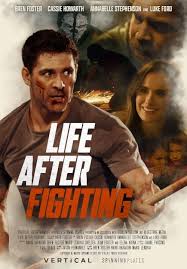
LIFE AFTER FIGHTING
Australia, 2024, 123 minutes, Colour.
Bren Foster, Cassie Howarth, Luke Ford, Annabelle Stephenson.
Directed by Bren Foster.
Prospective audiences might look at the title interested in the aspect of life. But, for many action fans, the emphasis will be the fighting. And, indeed, these fans are the film’s target audience.
The film is the work of filmmaker and martial arts champion, Bren Foster. In his past, he had trained in film and television making and worked in Australia and in the United States, appearing in some films. However, as is evident from his performance in this film, he is expert at multi martial arts. And, interestingly at this stage of his career, he was in his mid-40s but doing all the fight sequences himself, organising the choreography, no special effects.
The film opens at his martial arts Academy, in an Australian suburban shopping centre, many students, and catering especially for children, even as young as five, wanting to train. Immediately, quite a number of training sequences, illustrating the various moves. This may be too much for those not immediately engaged by the martial arts but whetting the appetite for the fans.
And, one might call this a very popular kind of film, appealing to a wide range of audiences, definitely the action fans but, the introduction of a romance, signalled almost instantly but pleasantly pursued, especially with a focus on a harassed mother, a nice little boy of five, and the psychotic ex-husband played by veteran Australian actor, Luke Ford.
There is more besides the martial arts in terms of plot. Some sinister characters arrive at the school, audiences expecting them to turn up later even more sinisterly. And they do. The two little daughters of the manager of the school are abducted, disappearing, despite search. What emerges is a very serious subplot about human trafficking, involving those sinister characters seen earlier but also the psychotic ex-husband very much involved.
Then, for the fans, thinking of all those martial arts films and champions from Jean Claude van Damme to Jackie Chan there is a huge climax of fights, one against so many, the threat to the children, Alex being the hero but not without some personal cost.
Judging from blogging comments, Life after Fighting has well made its mark with fans and should be popular internationally in cinemas, streaming, for action fans who know what they want.
- The title, the focus on fighting, multi-martial arts? Then the thriller dimension?
- The Australian city, shopping centre, martial arts studio, offices, scenes outside, in the streets? The capture of the girls and their imprisonment? The musical score?
- The target audience, martial arts fans? Beyond the fans? The serious thriller dimension?
- The work of Bren Foster, filmmaker, martial arts expert, television experience, writing and directing and starring in his own film? Interesting and attractive screen personality?
- The martial arts aspects, the training sequences, the introduction of the fight sequences, threats and dangers? The choreography? The drama of the moves? The reintroduction of the martial arts for the finale, one again so many, the fights, the skills?
- Alex, his past career, champion, injuries and surgeries? Enjoying teaching, the children, the adults, the scenes of training, his manner? The ominous visitor and his partner, ousting them? The reappearance?
- The romantic element, Samantha coming to enrol Terry, the immediate attraction, Victor and his presence, the marital situation, three years after divorce, Victor and his continued presence? Terry, aged five, the martial arts? Samantha and her coming to work at the school? The issue of the dinner, the night together, the relationship, Victor and his menace? Coming to the office, his tough associate, the fight?
- Julie, her work at the school, her children, the ice cream, their being abducted? With the other children? The human trafficking story, Romania? Victor and his involvement, his past military experience? His psychotic attitudes and behaviour, his types?
- Julie, upset, her husband away with military exercises, taking the pills? Alex and his determination to find the girls?
- The week’s passing, Samantha, following Victor, her discovery of the girls, the captivity? The tough man in charge, his cruelty to the girls, his listening to music, Alex coming, dangers, the rescue of the girls, driving away, the pursuit?
- Victor, abducting Terry, cutting his hand, his cruelty, madness? The phone calls to Samantha, the threats, the police, the bargaining, taken to the school? Hidden? The arrival of Victor and his thugs, masked? The friendly policeman who had tracked information about Alex seeing them pass, his later coming?
- The last part of the film for the martial arts fans, one against so many, the fights, the impact on Alex, having to kill, unwilling to kill? The buildup to Victor’s arrival, the gun, Samantha with the gun, the shots and each being wounded? Alex forcing Victor with his gun, shooting himself? The policeman and the rescue?
- Three weeks later, happy ending, everybody together, the future?
Trap
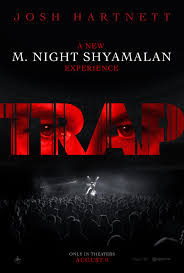
TRAP
US, 2024, 105 minutes, Colour.
Josh Hartnett, Arielle Donoghue, Saleka Shyamalan, Alison Pill, Hayley Mills, Jonathan Langdon, Scott Mescudi.
Directed by M.Night Shyamalan.
It is 25 years since-director, M. Night Shyamalan tantalised audiences with his excellent thriller, The Sixth Sense. He has been making films consistently during the quarter of a century, some highly praised, some considered less so, but an interesting career. Often there is something of a “supernatural” aura in the tale. However, Trap is more down-to-earth, a police investigation, something of a portrait of a serial killer.
The director, Indian background, grew up in Philadelphia which is the background of most of his films. This time it is a very popular concert, in the Taylor Swift vein, crowds of youngsters, especially girls, excited fans, singing and swaying along, rapt. One of the girls is Riley (Ariel Donoghue) accompanied by her beaming father, Cooper (Josh Hartnett). The singer is played by one of the director’s daughters, Saleka, who wrote and performs the songs. Quite lavish productions.
What emerges is that the concert, an extra performance because the previous concerts were sold out, is actually a trap set up to capture the serial killer, The Butcher, profiled by an expert (a surprise performance and presence by Hayley Mills), the police in abundance in attendance at the concert, every door guarded intercepting every man present.
Very soon into the film, so not much of a spoiler, especially because of the trailer and reviews, we first see it in his eyes that Cooper is the killer. On the one hand, he has a devoted wife, children, home life, career as a fireman. On the other, he is haunted by memories and imaginations of his punishing mother. And we soon see that he has a victim trapped in the basement, ready to kill him.
On the one hand, we are disgusted at The Butcher’s murders. On the other hand, we become very involved with Cooper, the first half of the film quite ingenious in the ways that Cooper can head off the police, get information, steal passes, the police communication, and, surprisingly, with the aid of a cameo appearance by the director, get himself and his daughter involved with the singer. We are fascinated – will he escape the trap?
While the concert is the trap, the second half of the film is the singer’s attempt to turn the tables on him, cat and mouse tactics, his threatening to kill his victim, controlling the silence of the singer. And, there is his very nice family at home, something of domestic bliss.
As with the director’s other films, there are a few more unexpected twists, the confronting his wife, the threats to her, the role of the singer, and the unexpected image twist in the final moments.
Some of the bloggers are determined to pick holes in the plot and judge accordingly. But, for the director’s fans and anyone else who happens on Trap, it is an intriguingly entertaining thriller – and with those twists.
- The title? The concert is a trap, elaborate and extensive? Cooper trapped? Means of escape?
- The Philadelphia setting, the city and views, the streets, the theatre, interiors, vast, the concert, backstage? The contrast with home sequences, street sequences? The musical score, the range of songs, the young audience singing along, rapt?
- The plausibility of the plot, the background of the serial killer, crimes, clues, information about the ticket, indications of The Butcher, the plan for the concert, Lady Raven agreeing, the range of police, the elderly profiler, the trap?
- The introduction to Cooper, genial, taking Riley to the concert, enjoying it with her? Her age, clashes with Jody at school, the clashes with Jody’s mother? The revelation that he was the killer, the audience watching him, identifying with his plans for escape, toilet breaks, the T-shirt sales, the discussions with Jamie, information, his taking his pass, testing it out on doors, continued back and forth in the concert, on the roof, after causing the explosion and the injury to the cook, his plausible explanation of his fears? The opportunity with the manager, his sad story of Riley and leukaemia, their being taken backstage, Riley going on stage, the joy, singing and dancing with Lady Raven, and the scene of Jody’s jealousy and anger with her mother? The collapse of the young girl, Cooper carrying her, ingratiating himself, the dilemma of the check at the backstage door? His going to Lady Raven, confronting her, forcing her to take them in her limousine, his escape?
- The profiler, her plan, her presence, the glimpses of her communicating, strategies?
- Cooper and Riley in the limousine, and Lady Raven turning the tables, asking him to go home, in the house, at the piano? Cooper and his phone, Spencer in the basement, the click to release the carbon monoxide? Lady Raven’s dilemma? Her capitalising on the situation? Her denouncing Cooper, taking refuge, the phone calls to the police, to Spencer, her many fans, the message, their taking action, finding the house, the statue of the broken line, the blue door? Saving Spencer? The police coming?
- The family reaction, the police, the profiler, the Taser on Cooper, his being taken? The comment about his OCD, tidying things, the bike in the yard and making it upright – and his ingenuity in taking the strand which would later free his cups?
- The driver of the police, Lady Raven, her escape, with the fans? The crowds, the police driver, the attack on the police car, the irony of the jacket on the helmet and Cooper’s escape?
- The return home, the confrontation with his wife, alone, making the tea, the gradual revelation of his double life, his wife thinking is having an affair, the discovery of the ticket, sending it, the setup so that he would be caught? Is confronting his wife? The police and the rescue?
- In the police car, getting his cups loose, the close-up of his smiling face? To be continued, perhaps?
- And the amusing credit sequence of Jamie and his discovering who The Butcher was?
President's Wife, The/ Bernadette

THE PRESIDENT’S WIFE/ BERNADETTE
France, 2023, 93 minutes, Colour.
Catherine Deneuve, Denis Podalydes, Michel Vuillermoz, Sarah Giraudeau, Laurent Stocker, Maud Wyler.
Directed by Lea Domenach.
A comedy with serious political undertones. And the question is: do audiences outside France know enough about the presidency of Jacques Chirac in the 1990s and early 2000s, aware of the career of his wife, Bernadette, and her influence. It will be very interesting to read the reviews to gauge how much is fact, how much is exaggeration, how much is comedy, how much is serious.
And, of course, to find out whether French audiences like the film or not, depending on their particular political perspectives, in the reassessing of Chirac’s presidency, the influence of the far right and Le Penne 20 years ago, the similarities with the pre-Olympics 2024 elections, the ins and outs of French politics.
The opening of the film is something of an eye and ear delight, a mixed choir, in robes, chanting with polyphony, initial information about who Bernadette was, her family lineage, her political career, her marriage to the future president, her determination, the place of women in French politics in the 19th century, and her husband’s infidelities.
And who better to portray Bernadette Chirac than the doyen of French actresses, Catherine Deneuve, the film released as she turned 80, remembering her rather brilliant career, headlining film credits for 60 years. And, at various stages, she was the image symbol of France, Marianne.
Catherine Deneuve gives a commanding performance as Bernadette even though so often she is at the command, the phone beck and call of her ambitious husband. She has had something of a local political career, her husband is a political male chauvinist, becoming increasingly alarmed at her upfront presence in his campaigns, in her social work, establishing a hospital, television appearances, music and sports stars eager to support her charities.
It needs to be said that the portrait of Jacques Chirac in this film is exceedingly one-dimensional, preoccupied with power, upset at his wife’s increasing public presence, something of the moving equivalent of newspaper cartoons. And, in many ways, that is how his supporters are presented – the exception being Nicholas Sarkozy and his moves against Chirac but who was in line to succeed him.
One of the very interesting characters, but also one-dimensional, is the Chirac’s daughter, Claude, 110% committed to her father’s political career, rather humourless, single-minded, critical of her mother and also trying to control her, but the suggestion that she have a mentor. He is played by Dennis Podylades, the other multi-dimensional character in the film, a touch pedantic, politically shrewd, public relations savvy, becoming a good friend and supporter of Bernadette.
The film is comparatively brief, indicates the timeline with continued jumps of several years from 1995 to the mid-2000’s.
Whether an audience outside France would be eager to see the film is a question. The obvious attraction is Catherine Deneuve. It may well be interesting to make political comparisons with campaigns of other countries (it is the era of Clinton at first, with a visit from Hillary Clinton to France – but there is no mention of George Bush.)
Entertaining in its way but comparatively slight.
- For a French audience? For those outside France? Knowledge of Jacques Chirac? Of Bernadette?
- The settings, Paris, the political world, society world, campaigns, hospital promotion, of the family, political work behind the scenes? The musical score?
- Catherine Deneuve, her status, portraying a public figure, age, appearance, fashion and style?
- The actual story of Jacques Chirac and his wife, the long marriage, his character, single-minded, philandering, dominating his wife, phone calls, expectations, his resenting her being in the limelight, pushing her out of view, her success, his harsh reactions, politicking, her role in the campaigns? His election, his staff, his reliance on Claude managing his business, the resentments against Sarkozy, barracking at the football match, phoning his wife, intervening, his stroke, his retirement?
- Bernadette, local politics, her involvement, popularity, her reaction to her husband, expectations, his affairs, her patience, expressing her views, Claude’s reaction, advising the mentor, Bernadette response, collaborating with him, the hospital, the entertainment and sports stars, publicity, meetings, events? Her relationship with Laurence, her illness, her concern, passed over by her husband, gradually emerging, her support of Sarkozy after meeting with him, given her former resentments?
- The mentor, character, task, responding well to Bernadette, their collaboration, improving her style, appearance, public functions, charities, achievement?
- Her daughters, Claude and her strictness, devoted to her father, referring to him as the president? Is one, her past illness, her concern, her daughter’s resentment and reactions?
- The politicos, their characters, yes-men to Iraq, and vice, situations, elections and campaigns, the far right and its success? Supporting Sarkozy?
- Political comment, the light touch, comic, satiric?
Operation Napoleon
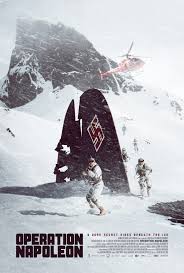
OPERATION NAPOLEON
Iceland, 2023, 104 minutes, Colour.
Vivian Olafsdottor, Jack Fox, Iain Glenn, Wotan Wilke Morhing, Olafur Darri Olafsson, Atli Oskar Fjalarsson, Adesuwa Oni, Annette Badland .
Directed by Oskar Thor Axelsson.
This is something of an old-fashioned action adventure – very popular in the latter part of the 20th century, big budget, fantastic plots from the past.
And, it is a film from Iceland. The focus is on an enterprising young woman, competitive in her field, concerned about her brother. He is out on an expedition in the snowfields and discovers a crashed plane, almost immediately confronted by a tough commando group, and killing, his being taken. His sister and an associate to the rescue.
The back story is a Nazi tale, a plane, gold, Hitler’s plans, possible escape, a crash and disappearance.
The villain of the piece is the CIA official, played by Iain Glenn. He has been searching for the crashed plane and its contents, continual surveillance over the decades, now taking advantage of the opportunity to recover the plane and its contents.
Some interesting characters out there in the snowfields, a big giant of a man who collaborates with the searchers, an elderly woman who has records from her researches of the past.
More or less as might be expected of this kind of adventure but enjoyable in its own way.
- Action adventure in Iceland? From an action novel? Old style action?
- The title, the background of the Nazis, some newsreel footage, plots, Hitler, gold?
- The Iceland scenery, its impact?
- Kristin, her personality, career, critical of collaborators? Her brother, the flashbacks, the bond? The interruption to her argument, his contact?
- Alliance, the expedition, companions, out in the ice, their discoveries?
- The encounter with Julie rat off, her squad, her pencil, ruthlessness? Her mission? The confrontations with Kristin?
- Car, the CIA, the family man with the grandchildren, his power, the mission, the flight, Julie and the squad, the discoveries, the challenge, his arrival, revelations about him, the search, the secrecy, the operation, the name of Napoleon, his son, the encounter with Are in the past, with Sarah? The buildup to the confrontations, the stand-off, shooting, deaths?
- Simon, the killer, stalking Kristin, the attempts to kill her, Steve?
- Kristin Steve, his background, interests, their working together, her being tough, his difficulties? The visit to Owner, to Sarah, the discovery of what it happened? Action together?
- I now, his character, the loner, trusting Kristin, the explanations, the background, his final interventions?
- The clues for Sarah, visiting her, her investigations, her life, age, the confrontations?
- The climax in the snow, good prevailing, the villain is being defeated?
Ete Derniere, L'/ Last Summer
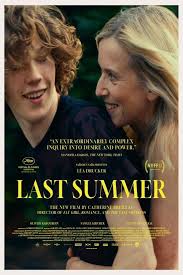
L'ETE DERNIERE/ LAST SUMMER
France, 2023, 104 minutes, Colour.
Lea Drucker, Samuel Kircher, Olivier Rabourdin, Clotilde Courau.
Directed by Catherine Breillat.
The title sounds innocent enough, rather languid in memory. However, this is a film adapted from a novel, written and directed by veteran French director, Catherine Breillat. Over the decades, she has ventured cinematic probes on all kinds of intense personal issues, relationships, sexuality. This is her first film in a decade, taking up an important theme, a relationship between an older woman and a younger man, and this time the younger man is underage.
This issue has been prominent in films in 2023-2024. There was May-December, based on an actual case in the United States. There was the light romantic comedy, A Family Affair, with Nicole Kidman and Zac Efron. There was also the romantic comedy with some serious overtones, especially public targeting of the older woman, The Idea of You, with Anne Hathaway and Nicholas Gallantzine. And, at the same time, there was also a film, Miller’s Girl, with Martin Freeman and Jenna Ortega, taking up relationships between male academics and younger female students.
The film opens strongly with the theme of legal defence for victims of sexual attacks. The central character, Anne (Lea Drucker), strongly professional, intelligent, working with a young survivor for her court appearance, successful in prosecution. She has married an older husband, Pierre, adopted two young girls, her husband having problems with his teenage son, Theo (Samuel Kircher) from his previous marriage.
The drama and the issues begin when Theo moves out from his mother and becomes part of Anne and Pierre's household, surly, on his phone, as always, cantankerous with his father, but delighting in playing with the two little girls who love him. And Theo has a girlfriend who turns up.
Gradually, somewhat surprisingly given Anne’s professional standards, there is an attraction, Theo making advances from his immature perspective, wanting some support and love, Anne succumbing.
Catherine Breillat has always had a very direct, open and frank approach to dramatising this kind of situation. And this is the case here. And, she employs a very forceful cinematic style of photography, the continued use of close-ups, of extreme close-ups of the faces of her protagonists, long takes, letting the audience watch, respond, gauge their reactions, favourable, unfavourable. The affair continues, sometimes lyrical, sometimes passionate. It might seem that we are being invited to favour the relationship.
But, that is the skill of the film. There is the ethical and moral challenge to Anne and her beliefs, legal practice. And the word that some commentators have used about her behaviour is “transgression”. Knowing the ethics, she has allowed herself to be overcome by lustful feelings, compensations, exploitation of the inexperience of the willing teenager.
Which means, that at the end of the film, you six has had to face the reality of her actions, face the consequences, appreciate the impact of the experience on Theo. And, there is a drama of Theo and his reaction, his accusations against Anne, the complexities of his emotions in loving and hating her.
Last Summer is challenging for its protagonists but also offers an emotional and moral challenge to the audience.
- The title, the season, memories, languid?
- The work of the director, themes of relationships, sexuality, conflicts?
- The style of the camera work and its impact for understanding characters, situations, dilemmas? The very long takes, the extreme close-ups of faces and heads? Involving the audience in the personalities, their emotions, choices, decisions?
- The focus on And, her work, the law, abused children, the first client and the discussions, priming her for the court case, the results, her mother, Anne stopping interviews, personality, her manner, style, clothes? Coming home, the relationship with Pierre, his second marriage, his age and job, her love for him, the adoption of the two children, her explanation about the early abortion and inability to have children, her concern about Theo? The life, happy in her work?
- Pierre, his age, divorce, remarrying, the adopting of the two children, the happy domestic sequences, his concern about Theo, Theo living with his mother, adolescent, in trouble, inviting him to come to live with them?
- The background of the two little girls, their backgrounds, adopted, happy, adversity, the martial arts and Theo, playing with him, the trampoline, his being at home with them, their devotion to him?
- Theo, his age, the background, police, trouble, living with his mother, coming to stay in the family, the tension with his father, smoking, the phone, defying his father, his father’s outbursts? Suspicion of An?
- Audiences sensing what was going to happen? The discussion about the tattoos, And her resistance, Theo’s explanations, trying to persuade and, putting the three dots on her arm, the intimacy of the touch? The moment of Theo with his girlfriend, Amanda? The sense of anticipation, wondering, the scenes of An and Theo together, talking, the scooter, the nature of the conversations? The attraction? Passion, lust? The kiss, and at her resistance, the passionate experience, the long time, the focus on faces, the aftermath?
- The comparison with An and her intimacy with Pierre, the long sequence, again the focus on faces? The aftermath?
- And, her relationship with a sister, the beauty salon, with a little girls, her son, coming to the parties? Playing on the trampoline?
- The affair, the further episodes, the effect on each of them? And, the party, Theo and his approach, her sister seeing them? And in the decision to break off, the effect on Theo?
- Pierre, the decision to go away with Theo, his return, the meal, tension, peer telling And what Theo told her him? And is decision to deny?
- The change in and, the denial, her lawyer mode, attacking Theo and his credibility, challenging Pierre and his trust? Her decision to move out?
- Pierre, setting up the confrontation, And her hard stances, Theo and the confused adolescent, his experiences, determination, being taken to the other school, the farewell to the girls?
- The lawyer, Theo and his complaint, the lawyers attitude towards Anne, her professionalism, the deal, the secrecy?
- The seeming piece, her sister and her support? Theo’s arrival, the next encounter, the issue of consent, transcription, the older woman, the law and morality concerning sexual encounters with an underage partner? And her risking her life and career, her family?
- The ending, open, the sister supporting her, the relationship with Theo and his future, and the glimpse of Pierre and his seeming to accept what had happened?
