Displaying items by tag: Maggie Gwin
This Bloody Country
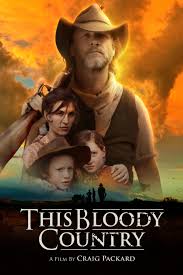
THIS BLOODY COUNTRY
US, 2025, 102 minutes, Colour.
Martin Dingwall Wall, Maggie Gwin, Larry Cedar, Jacob Ward, Rainey Qualley, Cameron Meyer, Georgia Coles.
Directed by Craig Packard.
An American film, a western theme, the title does not sound like American idiom. Rather, Australian. And, this is right because the central character is Australian, brought up there, but living America, keeping his accent and his idiom.
The year is 1869. The Civil War is over. Pioneers are moving west and south-west. There have been many films with this theme, the group, the guide, moving through difficult landscapes, continued threats, gunslingers, and the issues of the Native Americans and their territories.
The difference with this film is that it has a central religious theme. The main characters are Mormons. They have set out from Salt Lake City to establish a new town in Arizona, called Grace. While there are the dangers and difficulties associated with this kind of story, the emphasis is on the group, small, a Mormon family, the patriarchal leader, three wives, his brother, the various children. And, travelling on foot, walking all the way, pulling the carts and loads, camping by night.
And the Australian character? His name is Ned Campbell and he is played by Martin Dingwall Wall. The scenario has him living in the United States, a security guard, a sometime Pinkerton detective, now contracted to accompany the group, protect them, guide them to their destination. He is not a religious man but is committed to his contract.
There are some action sequences. A group of gunslingers arrive, pretending to ask for food and water, declaring themselves unarmed, but Ned has a violent background, suspicious, ready with his gun, and shoots the men – but one, getting away, rounds up a posse on horseback to track the group down. The pressure is on the group to move as fast as possible, create a distance, walk day and night, exhausting because it is mainly the women who actually pull the carts the possessions and the supplies.
The men do return and the issues are raised about violence, Josiah (Larry Cedar), the patriarch, an arrogantly preumptuous character, (and its being revealed that he was sent away from Salt Lake City because of his overpowering personality), arguing that the women should not have access to guns. As with other issues during the trek as regards authority, the role of the guide, the role of the three wives in terms of service, household duties and sexual relationships, his patriarchal attitudes are continually challenged.
Ned plans the confrontation with the gunslingers expertly, everyone shooting. And there is an episode with the Native American, Josiah manifesting himself religiously racist.
The range of locations for the journey offers some spectacular scenery, all filmed in Utah. The elements of the pioneer Western are here but, ultimately, the focus is on the Mormon family, their faith, religious practice, convictions, the role of the patriarch, the situation of polygamy for women, and the audience responding with their own feelings, especially towards Josiah, as well as looking at and assessing this community through the eyes of Ned Campbell.
A thoughtful Western.
- The title and tone, Australian idiom? The central Australian character?
- An American film about pioneers, 1869, from Utah to Arizona, the terrain, landscapes, desert, mountains, the dangers, gunslingers, Native Americans, animals…? The musical score?
- The background of the Mormons, Salt Lake City, central authority Utah, setting up the mission for Arizona, the town, Grace?
- Josiah, his friendship with the founder, an elder, hard, patriarchal, sent away from Salt Lake City, his three wives, his brother, the children? The hardships, pulling the carts, the women pulling, offloading furniture, the death of the child the burial, faith in the afterlife, and her grieving?
- Ned Campbell, Australian, in the US, security guard, Pinkerton Detective, taking on the role of guide, age, personality, tough, walking, guns?
- Establishing the dynamic of the family, Josiah, his age, authority, patriarchal, misogynist, religious fervour and superiority, his dismissal of the savage Native Americans, his attitudes towards the women, the household duties, sexual relationships? His attitude towards his brother, dominating him?
- The women, the three wives and their personalities, the daughters and their religious names? The personalities, age, their roles, the household duties, the wife especially for the sexual relationship, the behaviour of the children, the defiant daughter and outspoken? The religious justification for Josiah as part patriarchal behaviour?
- The arrival of the three gunslingers, asking for food and water, saying they were unarmed, Ned, his harsh attitudes, shooting, discovering the guns, the one that got away? The continued apprehensiveness that they would be pursued, men on horse? The repercussions for speed, walking during the night, Josiah and his demands, Ned confronting him, the women weary, children? Ned and his insistence?
- The issue guns, Nat and his volunteering, his brothers putting him down, Ned insisting, the target practice, Nat and his accuracy? The later issue of the guns of the women, the patriarch forbidding it, the rebellion, the practice and their skills?
- Ned and his stories, talking to Bat, Nat and his gun practice, Ned and his past, the confrontation, shootings, the number of deaths? And Nat’s reaction when shot, his comment about having a story to tell?
- The old man, his coming to warn them, suspicious, Nat shooting him, the aftermath and his conscience?
- The final arrival of the men on horseback, the strategy, hiding in the valley, taking cover, the men and their confidence, rapacious attitudes, the confrontation, their being killed, the man with the horses, his coming in shooting, Nat shot?
- The issue of the Native American, Josiah and his dismissal, religious and cultural superiority? Ned, going to meet him, the discussion, the warning not to travel through the Indian land? Josiah and his dismissal of this opinion?
- Lilith, her personality, different from the other wives, relationship with Josiah, with the girls, the death of her child and burial, the mourning? The attraction to Ned? Her consumption, with the other women, the final confrontations, her taking Ned’s side, his confiding in her, her keeping guard through the night? The bond, but her farewell?
- Ned, his presence, as a guide, the episode of the swimming hole, Lilith seeing him? His response to her? The clashes with Josiah, response to the other members of the group, urging them to walk to avoid the gunslingers, the clash and his walking out, his return, fulfilling his contract?
- The group arriving, setting up the town? Josiah and the women telling the truth about his authoritarianism, the future of the town?
- Ned, his dream, wanting to go back and settle?
