Displaying items by tag: Lee Tamahori
Next
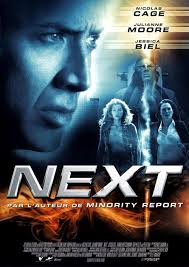
NEXT
US, 2007, 96 minutes, Colour.
Nicolas Cage, Julianne Moore, Jessica Biehl, Thomas Kretschmann, Tory Kittles, Jose Zuniga.
Directed by Lee Tamahori.
Philip K. Dick has become more and more popular over the last quarter of a century, especially since the release of Blade Runner which was based on one of his stories. In recent years, we have had quite a few film versions, especially Steven Spielberg’s Minority Report. Most of the versions seem to be aiming less at being a classic than offering conventional entertainment with a dash of science-fiction and futuristic reflection. There was Imposter, with Gary Sinise and John Woo’s Paycheck with Ben Affleck.
Next is in this category rather than a chapter in the science-fiction movie books. It is directed by New Zealand director, Lee Tamahori, whose excellent Once Were Warriors gave him an entrée to Hollywood where he went into slambang and smasheroo mode with The Edge, the James Bond film Die, Another Day, Along Came a Spider and xXx: The Next Level. This is what he does well and this is how he presents Next.
Nicolas Cage is a small-time Las Vegas magician and mentalist but we soon learn that he is a Philip Dick character because he is able to see two minutes ahead (no more) of what is going to happen to him. This
works well on stage – and in the casinos. It also helps him avoid punches and bullets. However, with a nuclear bomb about to explode somewhere in America, his ability comes to the attention of the FBI. They want to recruit him to prevent the detonation. All would be well but he is involved with the woman of his dreams (or of his, by exception of the two minute rule, long term vision), Jessica Biel. The foreign agents are after him so they will use her to stop him working with the FBI. This description sounds a bit slow in comparison with what is up there on the screen. Editing is fast paced.
There are explosions and chases, confrontations and shootouts and plenty of effects and stunt-work. What is inventive is the sudden insertion of deadly situations followed by what really happens two minutes later.
When the magician has to quickly search a warehouse at the end, he splits into many versions of himself (like the villainous Mr Smith of The Matrix).
Julianne Moore is the tough and almost relentless agent. This 2007 film seems to relish role reversal and feminist achievement. In the past, the Cage character might well have been a woman with visions and the Moore character a tough and macho male, so it is interesting to see the vice versa.
The written story is set in the future. The producers (rightly) saw that it might play more effectively on screen in the present.
- Title? The works of Philip K. Dick, the film versions? Science-fiction, fantasy? Futuristic?
- Screen presence of Nicolas Cage over the decades, action hero?
- The title, Chris Johnson and his gift, foreseeing two minutes? The advantages, the drawbacks? In his life, the magician, Las Vegas, gambling? Going to the diner each day, the vision of Liz Cooper?
- Kelly Ferris, the FBI, agents, the French terrorists, the nuclear bomb, Kelly and her character, leadership, action? Pursuing Chris? His eluding her?
- The terrorists, going to the casino, interrogating the manager, killing him? Learning about Chris? The continued pursuit?
- Liz, in the visions, Chris foreseeing her future, more than two minutes? The consequences? The encounter, her boyfriend? Aggressive? The possibilities, Chris’s choices, Kelly and her pursuit?
- The FBI, the authorities, the nuclear weapons, to Los Angeles? The terrorists and their team work, pursuit?
- Kelly, the encounter with Liz, persuading her, Chris and the truth?
- Chris, evading the terrace, their following him? Acting and not acting? The dilemmas of the two minutes? Saving Kelly? Taking lives?
- The FBI, taking Chris, tying him up, watching the television set, hoping for visions of the future? His seeing Liz, the bomb, escaping to rescue Liz?
- Chris, the confrontation is the terrace, shooting, evading, the action fights, the bombs explosion in the sea?
- Reverting to the past, the various scenarios, changing the future? Saving the day?
Convert, The
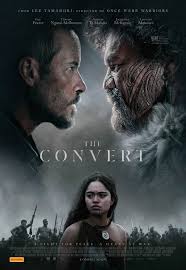
THE CONVERT
New Zealand, 2023, 119 minutes, Colour.
Guy Pearce, Tioreore Ngati-Melbourne, Antonio Te Maioha, Jacqueline McKenzie, Lawrence Makoare, Dean O'Gorman.
Directed by Lee Tamahori.
The Convert is a powerful film in itself, taking its audiences back into New Zealand, the 1830s. As such, it is a significant historical drama.
But, it takes its place in the trilogy of films over a period of 30 years by writer-director, Lee Tamahori. In 1995, he surprised audiences in New Zealand and around the world with a powerful drama of urban Maoris, violence, the consequences of colonial prejudices on people with powerful cultural and religious inheritance. In the title, there was a rueful tone in remembering past history, that they were Warriors. The second film in the trilogy, 2016, The Patriarch, Mahana, going back to the New Zealand in the 1960s, transition into the more modern era, from the strong tribal traditions into more settled situations. And, with The Convert, he goes back to the era when the Maori people were Warriors.
The film opens at sea, a vivid storm, death and funeral at sea, the atmosphere of travellers and the dangers of the period. On board is a lay minister, Thomas Munro, a fine and restrained performance from Guy Pearce. He is to be the preacher, organised by the British settlers on the West Coast of New Zealand, trying to establish something of England in the antipodes, formal clothes, church, stores, and a superior attitude towards the Maori peoples.
The film also introduces quite a fierce Maori leader and his tribe, some visual violence, and the belief that feuds are solved only by death rather than peace. This has an impact on Thomas Munro and the screenplay gradually reveals that he was a soldier, involved in fighting and killing and has turned his back on that.
While there is a picture of life in the early settlement the new settlers actually renting land from the Maoris the focus then turns on possibility of peace between the warring tribes, Munro trying to negotiate with each leader, a fierce battle between them, one mightily defeated, the other embracing peace (and stating acceptance of Christianity because of Munro’s work for peace).
The last part of the film takes place four years later, some presumptuous British officials trying to put order into the settlements, rent, Customs and Excise, business interests. And, in 1840, the Treaty of Waitangi was signed, British governor for New Zealand, and the status for the Maoris.
There is a very strong supporting cast, all Maori performances and, as a woman shown by the white society for having lived with the Maoris, the presence of Jacqueline McKenzie.
- The title, reference to Thomas Munro and his alliance with the Maori tribes? The tribal leader and his acceptance of Christianity because of the peace treaty?
- The work of the writer-director, his trilogy about New Zealand, Maori traditions, violence and the later 20th century, family in the mid-20th century, this film in the 1830s? The Maori wars?
- The cinematography, the opening in the mountains, the bird of prey swooping, the forest scenery, the sea, the coast and beaches, the new town and its buildings, the battle sites? The musical score?
- The opening, the ship, 1830, sails, the storms and waves, the dead sailor, the ritual, Thomas Munro and his words? Coming ashore, the need for repairs, the rule of the Captain, the crew, the captain and his speaking the Maori language, communicating, the encounter with the chief and the tribe, the execution of the man, the saving of the woman?
- Thomas Munro, quiet personality, lay preacher, arriving in the town, the contract to have him, the church building? The gradual revelation of his past, home life, in the Army, the narrative about the attack in the smoke, the deaths of the women and children, the school? His leaving the Army, changing his life? From London to the New Zealand settlement? Intentions for a ministry, the reality of what happened?
- The settlement, the re-creation of life in England, formal clothes, hierarchy of officials, the church, the attitude towards the Maoris, renting the land? The holding of the dance, Munro going with the wife, her dresses? Daily life, church service, the Catholic storekeeper and his bitterness, wanting to return to Ireland?
- Thomas, the young wife, her grief, her father and tribal customs, enmity towards the other tribe? Allowing Thomas to take her, the young man for protection? The young woman in the town, an eye on him, visiting him, the relationship? The night of the dance, the killing of the young man? The blaming of the shopkeeper, arrest, violence towards him, his hanging himself, allegedly?
- Mrs Hegarty, her story, theft, but Botany Bay, marriage, New Zealand, with the Maoris, not accepted? Her healing skills? Helping the young woman to health? Treatment by the townspeople? The friendship with Thomas, the development of the relationship? Supporting Thomas and the battle, the dangers, her death?
- The return of the ship, supplying of muskets, negotiating with each of the tribal leaders, the prices, playing off each other, the Captain shot, the members of the crew?
- The buildup of the tensions between the two tribes, Thomas and his idea of peace, talking with each of the leaders, the Maori belief that feuds ended with deaths, the buildup to the confrontation, the violent fighting? The guns, target practice, the wife and her gun, using it? The strategies of the lesser tribe, preparation for the assault, the trenches, the attack? The leader and his being stranded on the beach, his death?
- The possibilities for peace? The dangers for Thomas, with the wife, on the beach, his being willing to die? He is serving as a mediator?
- The years passing, the settlement growing, the inhabitants, the arrival of the king’s representatives, the issue of rent, Customs and Excise, Thomas and his taking a stance for the Maoris?
- The 1830s, the 1840 treaty of Waitangi? And subsequent history, colonialism, racial prejudices, the developments of the 20th century?.
